
2027 Best Career Paths After an International Business Bachelor's Degree

Co-Founder and Chief Data Scientist
An international business bachelor’s degree can lead to many different careers, but that range of options is exactly what makes the next step difficult. Graduates may be weighing corporate roles, trade-focused jobs, consulting, logistics, marketing, finance, nonprofit work, or remote global business positions—and each path rewards a different mix of skills.
This guide breaks down the strongest career directions after an international business degree, including entry-level roles, higher-paying options, future-proof fields, certification-dependent careers, advanced-degree pathways, and flexible work opportunities. It is designed for students, recent graduates, and career changers who want to compare realistic options and choose a path based on skills, salary potential, market demand, and long-term fit.
Key Things to Know About the Best Career Paths After a International Business Bachelor's Degree
- Common entry-level roles include trade compliance specialist, market analyst, and business development associate, with over 35% of graduates securing these positions within six months post-graduation.
- Aligning your academic specialization, such as finance, marketing, or logistics, directly impacts career options and increases placement success in targeted industries.
- Long-term progression depends on cross-cultural communication skills, international networking, and adaptability to evolving global market trends, critical factors for leadership roles.
What Are the Top Career Paths by Industry for International Business Graduates?
International business graduates are most competitive in industries where organizations need people who understand global markets, trade rules, cross-border operations, and cultural differences. Approximately 68% obtain employment within six months, which points to steady demand for graduates who can connect business strategy with international execution.
The best industry fit depends on whether you prefer analysis, client-facing work, operations, policy, or market expansion. The major career paths include:
- Finance and Banking: Roles such as international financial analyst and foreign exchange trader focus on global markets, currency movement, economic policy, and investment risk. These jobs are a strong fit for graduates who enjoy quantitative analysis and high-stakes decision-making.
- Consulting Industry: Management consultants and strategy analysts help companies evaluate international expansion, improve operations, and compete in unfamiliar markets. Consulting can be demanding, but it offers broad exposure to industries, executives, and global business problems.
- Marketing and Sales: Global brand managers, export marketing specialists, and international sales professionals adapt campaigns, pricing, messaging, and customer acquisition strategies for different regions. These careers suit graduates who combine cultural awareness with persuasion and market research.
- Logistics and Supply Chain Management: International logistics coordinators and supply chain analysts manage shipments, suppliers, customs requirements, and distribution networks. This path is practical, operations-heavy, and valuable in companies that depend on reliable global sourcing.
- Government and Nonprofit: Trade analysts, foreign service officers, and international development professionals work on trade policy, economic development, diplomacy, and global programs. These roles often appeal to graduates who want public impact rather than a purely corporate career.
A common mistake is choosing an industry only because it sounds global. Instead, compare the daily work. Finance is data-intensive, consulting is client-driven, logistics is process-oriented, marketing is audience-focused, and government work is policy-centered. Students comparing faster or alternative academic routes may also review a degree in 6 months online, but career fit should be based on role requirements, not speed alone.
What Are the Future-Proof Careers After a International Business Bachelor's Degree?
Future-proof careers after an international business bachelor’s degree are roles that remain valuable even as technology, automation, regulation, and global trade patterns change. Jobs in business and finance sectors are projected to grow by around 8% from 2022 to 2032, and the most resilient roles tend to require judgment, regulatory understanding, risk analysis, and coordination across people and systems.
The strongest long-term options are not necessarily the trendiest. They are careers where companies need professionals who can interpret uncertainty and act responsibly in complex international environments.
- Global Supply Chain Management: Supply chain professionals coordinate production, shipping, sourcing, inventory, and distribution across countries. Technology can automate tracking and forecasting, but employers still need people who can manage supplier risk, respond to disruptions, and make trade-offs between cost, speed, and reliability.
- International Trade Compliance: Compliance specialists help companies follow import-export rules, sanctions requirements, documentation standards, and country-specific regulations. Because trade policies change frequently, this work is difficult to automate fully and remains important for companies that want to avoid penalties and shipment delays.
- Risk Management: Risk professionals evaluate financial, operational, political, and regulatory exposure in international markets. This path suits graduates who are analytical, detail-oriented, and comfortable making recommendations when information is incomplete.
- Sustainability and Transparency Roles: Companies are under growing pressure to understand where products come from, how suppliers operate, and whether global practices meet environmental and ethical expectations. Graduates who understand both business operations and international stakeholder expectations can build durable careers in this area.
To strengthen long-term employability, build evidence of technical and practical skill: spreadsheet modeling, data visualization, contract review, compliance research, vendor analysis, and written business communication. Graduates considering broader graduate study may encounter options such as a masters in psychology online, but future-proofing an international business career usually starts with role-specific experience and industry credentials.
What Are the Highest-Paying Careers After a International Business Bachelor's Degree?
The highest-paying careers for international business graduates usually combine global business knowledge with measurable business impact. Employers pay more for professionals who can increase revenue, reduce risk, improve efficiency, manage teams, or guide major decisions across markets. Management roles in business and financial operations can report median wages above $100,000 annually, although actual pay depends on employer, location, experience, performance, and industry.
| Career | Typical salary range stated | Why it can pay well |
| Management Consultant | $80,000 to $140,000 per year | Consultants advise organizations on efficiency, market entry, operating models, and strategic change, often under tight deadlines and high expectations. |
| Financial Analyst | $70,000 to $120,000 | Financial analysts evaluate investment opportunities, market risks, and business performance for companies operating across borders. |
| Marketing Manager | $90,000 and $150,000 | Marketing managers influence revenue by building campaigns, positioning products, and adapting strategy for different international audiences. |
| International Trade Compliance Manager | $85,000 to $130,000 annually | Compliance managers help companies avoid costly legal, customs, sanctions, and documentation problems in international transactions. |
| Supply Chain Manager | $75,000 to $130,000 | Supply chain managers control costs, improve delivery performance, and reduce disruption risk across complex supplier and logistics networks. |
High pay rarely comes from the degree alone. Graduates usually move into these roles by adding experience in analytics, project ownership, client management, compliance, procurement, financial modeling, or team leadership. Internships, rotational programs, language ability, and industry-specific experience can also make a candidate more credible.
A professional who secured a high-paying job after completing an International Business bachelor's degree described the transition this way: "The challenge was not just understanding global business concepts but applying them in real-time to complex situations." He noted that continuous learning and communication with diverse teams helped him advance. "Landing the role required patience and a willingness to embrace unfamiliar markets," he explained.
What Are the Entry-Level Jobs for International Business Bachelor's Degree Graduates?
Entry-level jobs after an international business bachelor’s degree are designed to build the practical skills employers want: documentation accuracy, market research, customer communication, trade awareness, data analysis, and coordination across departments or time zones. With approximately 60% of these graduates securing employment within six months, early-career opportunities can be strong for candidates who present a focused skill set rather than a general interest in “global business.”
- International Sales Associate: Supports global client relationships, prepares sales materials, tracks prospects, and helps adapt selling strategies for different markets. This is a good starting point for graduates who want to move into account management, sales leadership, or international marketing.
- Logistics Coordinator: Coordinates shipments, communicates with vendors and carriers, monitors delivery timelines, and helps ensure customs documentation is complete. This role builds a strong foundation for supply chain and operations careers.
- Market Research Analyst: Collects and interprets data on international customers, competitors, pricing, and demand. Graduates who enjoy research, spreadsheets, and presentations may find this path especially useful for moving into strategy or marketing roles.
- Export Coordinator: Handles export documentation, shipment records, compliance checks, and communication with freight partners or customers. This job is a practical entry point into international trade compliance.
- Business Development Representative: Identifies potential partners, customers, and market opportunities across regions. It is often fast-paced and metric-driven, but it can lead to roles in partnerships, market expansion, or corporate strategy.
When comparing first jobs, look beyond the title. A smaller company may give broader responsibility, while a large multinational may offer better training and internal mobility. Graduates who are still comparing degree costs before entering the field may find resources on the cheapest online bachelor's degree business administration useful when evaluating business education options.
These roles are among the best career opportunities for international business graduates because they create evidence of workplace readiness. If you are considering education in a different professional field, resources such as the shortest online PsyD programs may be relevant, but for international business careers, early experience in trade, sales, analytics, or operations is usually the more direct next step.
What Career Paths Align With Your Skills After a International Business Bachelor's Degree?
The right career path depends less on the degree title and more on the skills you can prove. A bachelor’s degree in international business typically develops communication, analysis, cultural awareness, leadership, and problem-solving. According to the National Association of Colleges and Employers, 93% of employers emphasize communication, problem-solving, and leadership as top priorities for hiring.
Use your strongest skills to narrow your options:
- Analytical Thinking: If you enjoy interpreting market trends, financial reports, customer data, or economic indicators, consider business analyst, market research analyst, financial analyst, or strategy roles in multinational companies or consulting firms.
- Effective Communication: If you are strong at explaining ideas, negotiating, writing clearly, and adapting messages for different audiences, explore international sales, corporate communications, account management, public affairs, or international relations roles.
- Leadership Skills: If you are comfortable coordinating teams, managing timelines, and taking ownership of outcomes, project management, operations, human resources, and business development can be strong matches.
- Problem-Solving: If you like diagnosing messy issues and finding workable solutions, consider supply chain management, trade compliance, risk management, or consulting.
- Adaptability and Cultural Awareness: If you are energized by different business customs, languages, and work styles, roles in diplomacy, export-import coordination, tourism management, global partnerships, or international program management may fit well.
A graduate who moved into international project management described the value of this alignment clearly. She was initially unsure which direction to take, but the combination of cultural knowledge and strategic problem-solving helped her choose a path. She said that "the ability to navigate different business practices and lead multicultural teams became my greatest asset." Her experience shows why graduates should evaluate not only what they studied, but also what they repeatedly do well.
What Jobs Require an Advanced Degree After a International Business Bachelor's Degree?
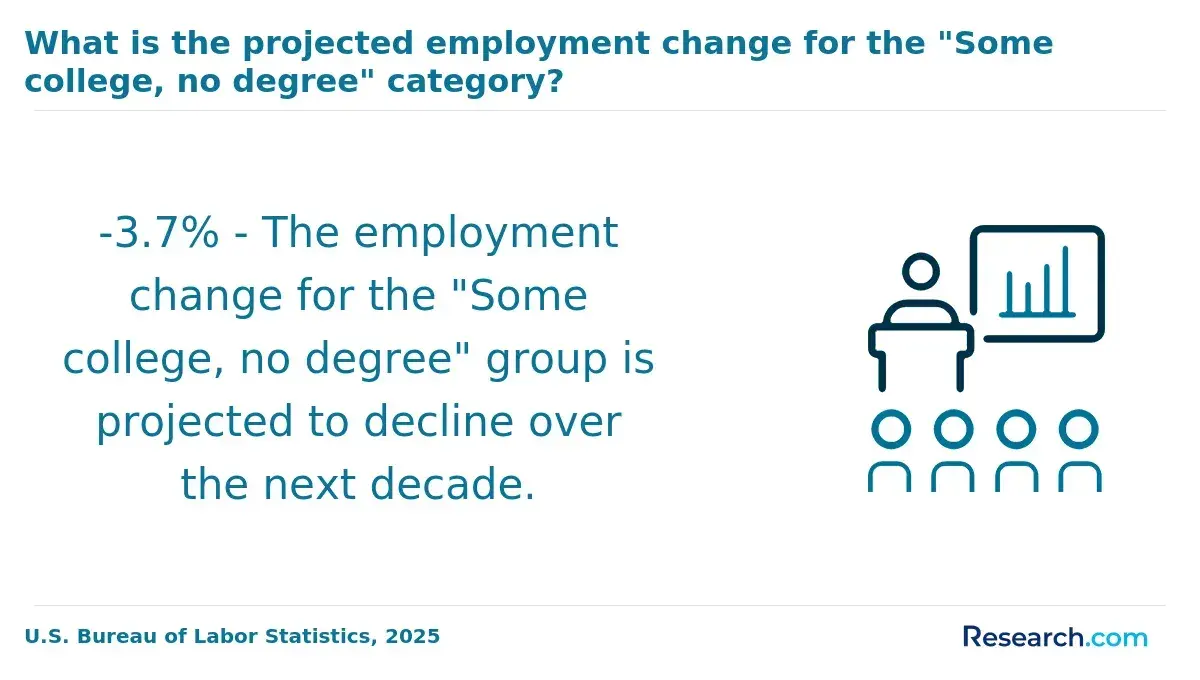
Some international business careers are accessible with a bachelor’s degree, but others become more realistic with graduate education. Nearly half of individuals in international business management hold a master's degree or higher, which reflects the value employers place on advanced preparation for strategic, analytical, and leadership-heavy roles.
An advanced degree is most useful when it helps you qualify for a specific career outcome. It may not be necessary for every job in global business, and it should be weighed against cost, time, work experience, and the return you expect.
- International Business Consultant: Consulting roles that involve market entry, global restructuring, trade strategy, or executive advising often favor candidates with a master's degree or MBA. Graduate study can strengthen analytical frameworks, case-based reasoning, and credibility with clients.
- Global Marketing Manager: Leading campaigns across countries requires knowledge of consumer behavior, analytics, digital strategy, localization, and brand management. A graduate degree may help candidates move from execution-focused roles into leadership.
- International Trade Compliance Manager: Compliance leadership can involve complex legal, regulatory, and operational decisions. Advanced education may be valuable when combined with practical trade experience and relevant certifications.
- Economist or International Trade Analyst: Roles focused on global economic patterns, trade impacts, and quantitative analysis usually require deeper training in economics, statistics, and research methods.
- Academic or Researcher in International Business: University teaching and scholarly research generally require a doctorate, especially for tenure-track or independent research roles.
Before enrolling in graduate school, compare job postings for your target role. If employers consistently request an MBA, master’s degree, quantitative training, or research background, advanced education may be worth considering. If postings emphasize experience, software skills, certifications, or industry knowledge, a job move or credential may be the better first step.
What Careers Require Certifications or Licensure After a International Business Bachelor's Degree?
Certifications and licensure matter most in international business roles where mistakes can create legal, financial, or operational risk. A bachelor’s degree can provide the business foundation, but specialized credentials may be needed to prove knowledge of customs rules, procurement standards, trade finance, compliance systems, or ethics requirements. According to the U.S. Bureau of Labor Statistics, over 20% of business-related positions now mandate certification or licensure to meet evolving industry and ethical standards.
- Customs Brokerage: Customs brokers must obtain a Customs Broker License from U.S. Customs and Border Protection. This path involves an exam and experience criteria, and it is highly relevant for professionals who want to work directly with import regulations, tariffs, documentation, and customs clearance.
- Supply Chain Management: Credentials such as the Certified Supply Chain Professional (CSCP) or Certified Professional in Supply Management (CPSM) can strengthen a candidate’s profile for procurement, logistics, supplier management, and global operations roles.
- International Trade Finance: The Certified International Trade Finance Professional (CITFP) credential supports professionals who work with trade financing instruments, transaction risk, and anti-money laundering expectations in multinational commerce.
- Compliance and Ethics: International compliance roles may value designations such as Certified Compliance & Ethics Professional (CCEP), especially when the work involves regulatory oversight, investigations, training, and risk reduction across jurisdictions.
Choose credentials carefully. A certification is most valuable when it is recognized in your target industry, requested in job postings, and connected to work you actually want to do. Do not collect credentials as a substitute for experience; the strongest candidates usually combine education, certification, and real examples of solving business problems.
What Are the Alternative Career Paths for Bachelor's in International Business Graduates?
An international business degree can also lead outside traditional corporate tracks. Nearly 40% of graduates find themselves working outside their primary field within five years, which shows how transferable the degree can be when paired with communication, analysis, project coordination, and cultural awareness.
Alternative paths may be a better fit if you want mission-driven work, technology exposure, sustainability impact, or a role that blends business with another field.
- Corporate Social Responsibility: CSR and sustainability roles help companies manage ethical sourcing, stakeholder expectations, environmental commitments, and responsible global operations. International business graduates can contribute by understanding how business decisions affect suppliers, communities, and cross-border relationships.
- International Nonprofit Work: Global nonprofits and development agencies need professionals who can manage projects, budgets, partnerships, grants, and reporting requirements. This path can be rewarding, but compensation, travel expectations, and funding stability may differ from corporate roles.
- Product Management in Tech: Technology companies often need employees who can support product launches, localization, pricing, partnerships, and market analysis across regions. International business graduates who add technical fluency and user research skills may be able to move into product-adjacent roles.
- Intellectual Property and Supply Chain Analytics: IP-related roles involve protecting assets across borders, while supply chain analytics roles focus on using data to improve logistics and sourcing decisions. Both paths reward attention to detail and comfort with regulations, documentation, and multi-country operations.
Alternative does not mean unfocused. To make a nontraditional path credible, connect your degree to the employer’s problem: entering new markets, managing partners, coordinating international programs, reducing risk, or understanding regional differences. Graduates considering a very different field may also compare options such as a child and adolescent psychology masters, but switching fields should involve careful review of prerequisites, licensure rules, and career outcomes.
What Remote and Flexible Career Options Are Available With a International Business Bachelor's Degree?
Remote and flexible work can be a strong fit for international business graduates because many global roles already involve distributed teams, virtual meetings, asynchronous communication, and partners in different time zones. As of 2023, nearly 30% of the U.S. workforce participates in some form of remote work, creating more possibilities for graduates who can communicate clearly and manage work without constant in-person supervision.
- International Marketing Management: Remote marketing roles may involve market research, campaign coordination, content localization, analytics reporting, and collaboration with regional teams. Success depends on strong writing, digital tools, and the ability to adapt messaging without losing brand consistency.
- Global Supply Chain Coordinator: Cloud-based systems allow professionals to monitor shipments, inventory, supplier updates, and logistics issues from different locations. Some roles may still require site visits or fixed hours, especially when problems affect production or delivery schedules.
- Export Compliance Consulting: Much of the work involves research, documentation review, policy interpretation, training, and advising clients. This makes it suitable for remote or hybrid work, though accuracy and confidentiality are essential.
- International Business Development: Business development professionals can identify prospects, conduct outreach, manage partner conversations, and coordinate proposals through virtual communication. Time-zone flexibility is often necessary when clients and stakeholders are worldwide.
Remote global business roles require more than a laptop. Employers look for written communication, meeting discipline, cultural sensitivity, responsiveness, and comfort with project management tools. Students exploring flexible learning in other disciplines may review online architecture programs, but for international business careers, the most relevant preparation is evidence that you can coordinate complex work across distance and cultures.
How Do You Choose the Best Career Path After a International Business Bachelor's Degree?
Choosing a career path after an international business bachelor’s degree requires more than scanning job titles. Nearly 60% of graduates feel uncertain about their professional direction shortly after completing their studies, so it is normal to need a structured decision process.
Start by comparing five factors:
- Personal Interests: Identify the work you can see yourself doing repeatedly. If you like numbers, consider finance or analytics. If you like people and persuasion, sales or business development may fit. If you like systems, supply chain or operations may be stronger.
- Long-Term Goals: Decide whether you want leadership, specialization, entrepreneurship, public service, remote flexibility, international travel, or stability. Different paths support different versions of success.
- Market Demand: Review postings for roles you want and note recurring requirements. Look for patterns in skills, software, credentials, language ability, experience level, and industry knowledge.
- Preferred Work Environment: Consulting and sales may be fast-paced and client-facing. Compliance may be detail-heavy and structured. Logistics may be operational and deadline-driven. Government and nonprofit roles may involve policy, reporting, or stakeholder coordination.
- Global Engagement: Consider how much international exposure you actually want. Some roles involve daily cross-border communication; others use global knowledge with little travel.
A practical way to decide is to choose two or three target roles, then build evidence for them over the next six months through internships, projects, certifications, networking conversations, or entry-level applications. Avoid trying to market yourself for every international business job at once. A focused candidate is easier for employers to understand.
What Graduates Say About the Best Career Paths After a International Business Bachelor's Degree
- : "Choosing an international business bachelor's degree was driven by my passion for exploring diverse markets and cultures. I quickly realized that this field opened doors to roles in global trade and multinational companies, where cross-cultural communication is key. The degree not only equipped me with essential business skills but also helped me understand the importance of adaptability in a fast-changing world. — Kian"
- : "After pursuing an international business degree, I was drawn to remote work opportunities that allowed me to collaborate with teams across continents. The versatility of this degree enabled me to transition easily into a consulting role focused on global expansion strategies. Looking back, it's clear that the most valuable aspect was learning how to navigate complex international regulations and business environments. — Leonard"
- : "The impact of my international business bachelor's degree on my professional growth has been profound. It gave me the confidence to enter emerging markets and take on roles in supply chain management and international marketing. Reflecting on my journey, I appreciate how the degree combined practical knowledge with a global perspective, preparing me for leadership roles in diverse corporate settings. — David"
Other Things You Should Know About International Business Degrees
In 2027, industries like technology, renewable energy, and e-commerce offer strong career paths for international business graduates. These sectors require global strategies and cross-border operations, making the degree a valuable asset for employers looking for globally-minded professionals.
Language proficiency greatly enhances career prospects in 2027, allowing graduates to work effectively across diverse markets. It facilitates communication, cultural understanding, and relationship-building, making candidates more competitive in fields like international management, consulting, and diplomacy.
Networking is crucial for career growth in international business. Building relationships with professionals in diverse regions can open doors to job opportunities, partnerships, and mentorship. Attending industry conferences, joining relevant organizations, and leveraging alumni connections are effective ways to expand one's professional network.
Yes, an international business degree develops transferable skills applicable to a variety of sectors beyond global trade, such as consulting, finance, marketing, and supply chain management. The critical thinking, cultural awareness, and strategic planning skills gained allow graduates to adapt to roles in multinational corporations, nonprofits, and government agencies focused on international development or relations.
References
- International Business Careers You Can Pursue with a Bachelor’s | Tiffin University https://www.tiffin.edu/news/international-business-careers-you-can-pursue-with-a-bachelors/
- What Kind of Career Should I Strive for with an International Business Degree? https://www.global-business-school.org/content-type/blog/what-kind-of-career-should-strive-an-international-business-degree/
- Top 15 Highest Paying Business Degree Jobs in 2025 UK & Global Guide https://apexlearning.org.uk/highest-paying-business-degree-jobs-2025-2026/
- Remote Entry Level International Business Jobs | Remotely.jobs https://www.remotely.jobs/entry-level-international-business-jobs
- Future-Proof Your Career with Business Degrees for a Post-AI World https://www.enderuncolleges.com/articles/future-proof-your-career-business-degrees-that-lead-in-a-post-ai-world/
- 15 Job roles after a master's in international business management | Master's in management Jobs https://www.gisma.com/blog/15-job-roles-after-masters-in-international-business
- 5 Global Impact Careers After an MSc in International Business - EMLV Business School Paris https://www.emlv.fr/en/5-global-impact-careers-msc-international-business/
- Career Paths for International Business Graduates - ISBSS https://isbss-edu.org/career-paths-for-international-business-graduates/
- What to do after a Bachelor's degree in International Business https://www.ipag.edu/en/blog/what-do-after-bachelors-degree-international-business
- International Business Degree: Career Opportunities, Salary & Job Prospects - University of the Potomac https://potomac.edu/international-business-salary/


