
2027 How To Become an ICU Nurse: Salary & Career Paths

Co-Founder and Chief Data Scientist
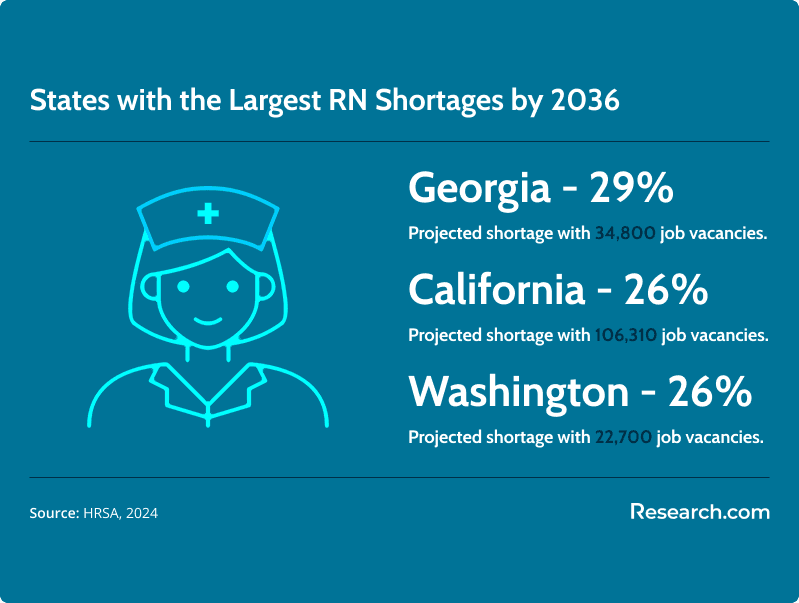
Deciding a career in nursing can feel overwhelming for those fresh out of high school. With so many specialties to consider, it’s not always clear which path offers the best prospects and stability. One specialty with growing opportunities is ICU nursing. States like Georgia, California, and Washington are expected to face shortages of ICU nurses, with projected deficits of 29% and 26% by 2036.
In this guide, you'll discover the steps to becoming an ICU nurse and insights into salary expectations and career advancement opportunities. Prepared by career planning experts, this information is designed to help you make a confident, informed decision as you embark on your nursing journey.
Key Things You Should Know About ICU Nurses
- Steps to Becoming an ICU Nurse - To become an ICU nurse, earn a nursing degree, pass the NCLEX-RN exam, gain bedside experience, and obtain relevant certifications like the CCRN.
- ICU Nurse Duties - ICU nurses care for critically ill patients, manage life-support equipment, and respond to emergencies while maintaining a lower nurse-to-patient ratio.
- Certifications for ICU Nurses - While not mandatory, certifications such as the CCRN can enhance ICU nurses' job prospects and salary potential.
- Types of ICU Nurses - ICU nurses specialize in medical, surgical, pediatric, and trauma ICUs, each requiring specific expertise and offering varying salary potentials.
- Salary and Career Advancement - ICU nurses earn higher wages than general nurses and have various opportunities for career growth in leadership, advanced practice, education, and research.
- How to Become an ICU Nurse for 2027?
- What does an ICU nurse do?
- What certifications do ICU nurses need?
- What are the different types of ICU nurses?
- How to Get ICU Nursing Experience as a New Graduate
- What is the average salary of an ICU nurse?
- How can further education enhance ICU nursing careers?
- Can ICU nurses transition into advanced practice roles?
- How can ICU nurses effectively manage job stress?
- Can non-nurses transition into ICU nursing roles?
- How can mentorship and networking boost ICU nurse career growth?
- How can advanced training programs accelerate ICU nurses’ career progression?
- Can ICU nurses transition to women's health advanced practice roles?
- Can flexible online programs support ICU nurse career growth?
- What career advancement opportunities are available for ICU nurses?
- What are the biggest challenges of being an ICU nurse?
- What is the career outlook for ICU nurses?
How to Become an ICU Nurse for 2027?
To become an Intensive Care Unit (ICU) nurse, you must earn a nursing degree and pass the NCLEX-RN exam. Most ICU nurses complete an Associate Degree in Nursing (ADN) or a Bachelor of Science in Nursing (BSN), with many employers prefer the BSN.
What are the steps to becoming an ICU nurse?
- Earn a nursing degree: Complete an Associate Degree in Nursing (ADN) or a Bachelor of Science in Nursing (BSN). Most employers prefer a BSN. The program typically takes two to four years to complete.
- Pass the NCLEX-RN exam: After graduation, you must pass the NCLEX-RN exam to become a licensed registered nurse. The pass rate for the NCLEX-RN exam in 2023 was 80.3%.
- Gain bedside experience: Many hospitals prefer ICU nurses to have experience in general nursing. However, some facilities offer residency programs that allow new graduates to work in the ICU directly, though availability varies by region and institution.
- Obtain certifications: ICU nurses often pursue specialty certifications, such as the Critical Care Registered Nurse (CCRN) credential. In 2024, over 138,000 nurses hold certifications from the AACN Certification Corporation. These credentials can enhance career opportunities and improve patient care.
What does an ICU nurse do?
An ICU nurse provides critical care to patients with life-threatening conditions. They monitor vital signs, administer medications, manage life-support equipment, and respond promptly to medical emergencies.
Unlike general nurses, ICU nurses care for critically ill patients who require constant, specialized attention. Common conditions treated in the ICU include severe infections, organ failure, and traumatic injuries.
ICU nurses typically handle fewer patients to ensure intensive monitoring. For example, California mandates a 1:2 nurse-to-patient ratio in intensive care units.
Working in the ICU presents challenges such as high stress, emotional demands, and long shifts, contributing to burnout among ICU nurses. Essential skills for this role include critical thinking, rapid decision-making, and effective communication.
ICU nurses are crucial in delivering specialized care to the most vulnerable patients, significantly impacting their recovery and survival.
What certifications do ICU nurses need?
ICU nurses are not mandated to obtain the Critical Care Registered Nurse (CCRN) certification; however, earning this credential is highly encouraged as it demonstrates specialized expertise in critical care nursing.
CCRN Certification Requirements
The Critical Care Registered Nurse (CCRN) certification is a prestigious credential that demonstrates specialized expertise in critical care nursing. To earn this certification, nurses must meet specific eligibility requirements and pass a comprehensive exam focused on critical care knowledge and clinical practice.
Eligibility
Candidates must hold a current, unencumbered U.S. Registered Nurse (RN) or Advanced Practice Registered Nurse (APRN) license. Additionally, applicants must accrue 1,750 hours of direct bedside care of acutely and/or critically ill patients within two years or 2,000 hours over the past five years, with a minimum of 144 hours in the most recent year. Online LPN to RN programs also offer an efficient pathway for advancing nursing careers, helping students meet the RN requirements and gain the necessary experience for advanced clinical roles.
Exam Details
The CCRN exam consists of 150 questions, 125 of which are scored and 25 used for statistical analysis. The content focuses on clinical judgment (80%), professional caring, and ethical practice (20%).
Benefits of Certification
A certified ICU nurse often receives higher compensation. Their average salaries range from $74,700 to $114,270, depending on experience and location.
Preparation and Costs
The time required to prepare for the CCRN exam varies by individual, depending on experience and study habits. The application fee for the CCRN exam is approximately $255 for AACN members and $370 for non-members. Additional costs may include study materials and review courses.
Certification Maintenance
The CCRN certification is valid for three years. To maintain it, nurses must complete 432 hours of direct bedside care of acutely and/or critically ill patients as an RN or APRN within the certification period. At least 144 of those hours must be completed in the 12 months before renewal.
Over 100,000 nurses hold the CCRN certification, reflecting its value and recognition in critical care nursing.
In addition to the CCRN, other certifications, such as Basic Life Support (BLS) and Advanced Cardiovascular Life Support (ACLS), are essential for ICU nurses. Employers often require these certifications and contribute to the nurse's skill set and career development.
What are the different types of ICU nurses?
ICU nurses specialize in caring for patients with life-threatening conditions, with each type focusing on specific patient needs. Here are some typical ICU specialties:
Key ICU Specialties
ICU nurses specialize in providing critical care to patients with severe or life-threatening conditions. Each specialty focuses on distinct patient needs and requires specific skills and knowledge tailored to the type of care required.
- Medical ICU (MICU): Care for patients with severe medical conditions such as respiratory failure or infections.
- Surgical ICU (SICU): Focus on post-operative care for patients recovering from major surgeries.
- Pediatric ICU (PICU): Specializes in the care of critically ill children.
- Neonatal ICU (NICU): Provide care for newborns with serious health conditions. Neonatal nurse practitioner online programs provide a flexible path to specialize, equipping nurses with advanced skills to care for critically ill newborns.
- Trauma ICU: Focus on patients who have sustained severe injuries, often from accidents or violence.
Salary and Demand
ICU nurses earn between $75,000 and $105,000 on average, with trauma ICU nurses often making the most due to the high demands of their role. The highest-paid ICU nurses can earn up to $115,000.
Career Growth and Demand
It typically takes 2-3 years of general ICU experience before a nurse specializes in a specific ICU area.
How to Get ICU Nursing Experience as a New Graduate
New graduate nurses can pursue ICU positions by participating in specialized residency programs, completing clinical rotations during nursing school, volunteering in related areas, and obtaining relevant certifications.
1. ICU Nurse Residency Programs
Many hospitals offer residency programs that help new nurses transition into ICU roles. These programs last 6 to 12 months and provide a mix of hands-on training and classroom education. For example, Mayo Clinic and Cedars-Sinai offer programs with online learning, workshops, and clinical orientations.
2. Gaining ICU Experience During Nursing School
Student nurses can gain ICU experience through clinical rotations focused on critical care. Volunteering or working in related areas, such as emergency rooms or step-down units, can also provide valuable experience. Arranging job shadowing opportunities in ICUs can also be beneficial.
3. Certifications to Enhance ICU Employment Opportunities
Certifications like Basic Life Support (BLS) and Advanced Cardiovascular Life Support (ACLS) are often required by hospitals and can enhance a new graduate's qualifications for ICU nurse positions.Additionally, pursuing online PNP programs can further improve career prospects by providing specialized training for those interested in pediatric nursing and critical care.
4. Demand and Turnover Rates in ICUs
The demand for ICU nurses, especially in trauma, neonatal, and pediatric specialties, is rising. While about 25% of new nurses start their careers in critical care, turnover rates in ICUs can be high, with an average nurse turnover rate of 18.4% in 2023.
Approximately 25% of new nurses begin their careers in critical care settings. However, due to the demanding nature of the work, turnover rates in ICUs can be high.
By engaging in residency programs, gaining relevant experience, and obtaining necessary certifications, new graduate nurses can successfully transition into ICU roles and meet the growing demand for critical care professionals.
What is the average salary of an ICU nurse?
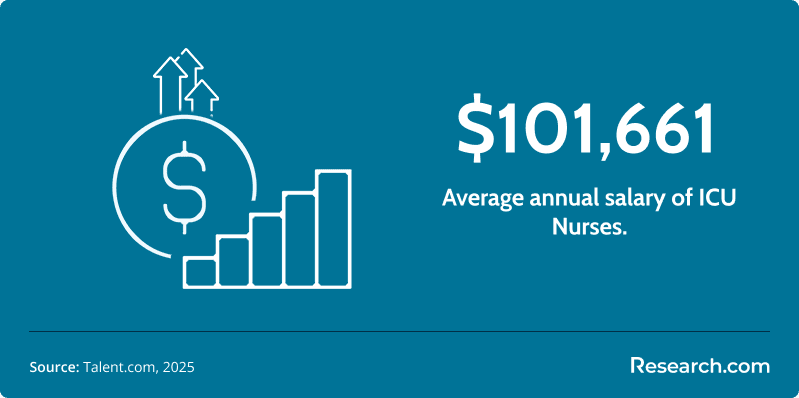
ICU nurses earn an average annual salary of approximately $101,661, which is higher than that of regular registered nurses. Hourly wages for ICU nurses average around $48.88.
Comparison with Regular Nurses
The national average salary for registered nurses is about $86,070. Therefore, ICU nurses typically earn more due to their specialized skills and the demanding nature of their work. Those pursuing easy RN to MSN online programs can increase their earning potential by advancing to higher nursing roles that demand specialized expertise, often leading to greater compensation in the ICU setting.
State Variations
ICU nurses' salaries vary by state and are influenced by the cost of living and demand. For instance, ICU nurses in Delaware earn an average of $65,420 annually, equating to $31.45 per hour. In contrast, states like California and Hawaii offer higher salaries, reflecting their higher living costs and demand for healthcare professionals.
Overtime and Shift Differentials
ICU nurses often receive additional compensation through overtime and shift differentials. Overtime pay averages around $12,375 per year. Night shifts, weekends, and holidays may also have higher pay rates.
How can further education enhance ICU nursing careers?
Advanced education plays a pivotal role in expanding clinical competencies and leadership skills beyond traditional bedside roles. ICU nurses who pursue higher-level degrees not only deepen their understanding of complex patient care but also position themselves for opportunities in management, education, and research. Structured educational pathways, such as ADN to MSN bridge programs, offer nurses a systematic approach to obtaining a master's degree while leveraging existing clinical experience. These programs facilitate the integration of advanced theoretical knowledge with practical application, ultimately leading to improved patient outcomes and enhanced career growth in specialized critical care settings.
Can ICU nurses transition into advanced practice roles?
ICU nurses seeking to broaden their scope of practice can transition into advanced roles like Nurse Practitioners by leveraging their critical care experience and pursuing targeted educational programs. A focused curriculum enhances skills in diagnostics, therapeutics, and complex patient management, paving the way for increased autonomy and specialized practice. For a streamlined pathway to advanced clinical roles, consider exploring our guide on accelerated online NP programs.
How can ICU nurses effectively manage job stress?
ICU nurses can adopt targeted strategies to mitigate stress and maintain optimal mental health. Practical approaches include scheduled debriefing sessions following critical incidents, utilization of peer-support networks, and regular access to mental health resources. Institutions that invest in resilience training and flexible scheduling further empower ICU professionals to manage workload pressures. Additionally, some may consider accelerating educational qualifications through initiatives such as the fastest RN to BSN program to enhance coping strategies and advance their clinical expertise.
Can non-nurses transition into ICU nursing roles?
Non-nursing professionals with a passion for critical care can explore accelerated academic pathways that bridge the gap between a non-nursing background and the competencies required for ICU settings. These programs integrate foundational medical coursework with early clinical exposure, allowing candidates to acquire specialized skills and adjust to the high-stakes environment of intensive care. For those seeking an accelerated route to advanced practice, it is essential to verify the program’s accreditation, curriculum rigor, and clinical partnerships to ensure a thorough preparation. To explore a streamlined pathway into the field, consider MSN direct entry programs online.
How can mentorship and networking boost ICU nurse career growth?
ICU nurse mentorship and professional networking are essential for accelerating career development and enhancing clinical expertise. Establishing relationships with experienced professionals provides targeted guidance for refining decision-making skills and adapting to evolving care models. Regular interaction within professional associations and specialized conferences facilitates the exchange of innovative practices and emerging trends. Additionally, considering advanced educational opportunities, such as the cheapest online PMHNP programs, can further diversify skill sets and broaden career pathways.
How can advanced training programs accelerate ICU nurses’ career progression?
ICU nurses can amplify their expertise and move beyond bedside roles by embracing specialized training programs focused on critical care innovations and leadership. Targeted courses and certifications not only bolster clinical decision-making skills but also streamline the transition into roles that demand greater autonomy and advanced problem-solving. For individuals eyeing rapid transition into advanced practice roles, accelerated nurse practitioner programs for non-nurses provide an efficient pathway by integrating intensive clinical practice with rigorous academic learning.
Can ICU nurses transition to women's health advanced practice roles?
ICU nurses possess robust critical care expertise that can serve as a valuable foundation for advancing into specialized roles in women's health. Their proficiency in rapid decision-making, complex patient management, and high-stakes clinical scenarios positions them well for a transition into advanced practice. By pursuing targeted educational pathways, such as an affordable online WHNP program, these professionals can acquire essential competencies in reproductive health, prenatal care, and postpartum management. This focused training not only expands their clinical portfolio but also meets the growing demand for specialized care within women's health.
Can flexible online programs support ICU nurse career growth?
Flexible online programs offer ICU nurses a pathway to advance their education without the additional burden of extensive clinical placements. These programs are designed to accommodate the demanding schedules of healthcare professionals, allowing nurses to earn higher degrees while continuing to work full time. By enrolling in accredited online RN to BSN programs no clinicals required, ICU nurses can update their theoretical knowledge and leadership skills, ultimately positioning themselves for roles that require advanced critical thinking and administrative expertise.
What career advancement opportunities are available for ICU nurses?
ICU nurses have various career advancement opportunities, including leadership roles, advanced practice positions, education, and research.
Leadership Roles
Experienced ICU nurses can transition into leadership positions such as Nurse Manager or Clinical Nurse Leader. These roles involve overseeing nursing teams, managing administrative tasks, and improving patient care quality. For example, Clinical Nurse Leaders earn an average salary ranging from $67,900 to $216,750, depending on experience and location.
Advanced Practice Roles
An ICU nurse can further their education to become a Nurse Practitioner (NP), specializing in areas like critical care. This path requires a Master of Science in Nursing (MSN) or Doctor of Nursing Practice (DNP). Nurse Practitioners often enjoy increased autonomy and higher salaries. If you're wondering how much do DNPs make, they typically earn a significantly higher income compared to registered nurses, with salaries depending on experience, location, and specialization.
Education and Research
Some ICU nurses transition into teaching roles, educating future nurses in academic settings. Others engage in research to advance nursing practices and patient care outcomes. These positions allow nurses to contribute to the profession's development and influence healthcare practices.
Salary Enhancement
Pursuing advanced certifications and specialized training can lead to salary increases. For instance, earning an MSN or DNP can result in an average salary boost of 10% to 20%. Additionally, leadership and advanced practice roles often come with higher compensation packages.
What are the biggest challenges of being an ICU nurse?
ICU nurses face significant challenges, including high-stress levels, emotional strain, and the risk of burnout and post-traumatic stress disorder (PTSD).
Stressful Work Environment
Working in the ICU is inherently stressful due to the critical condition of patients and the need for rapid decision-making. The fast-paced environment demands constant vigilance and quick responses to emergencies.
Emotional Strain
Dealing with life-threatening situations and witnessing patient deaths can take a heavy emotional toll on an ICU nurse. Studies have found that ICU nurses experience PTSD rates comparable to those of combat veterans, with prevalence ranging from 3.3% to 73.3%, depending on various factors.
Burnout
Burnout is prevalent among ICU nurses. Studies indicate that between 25% and 33% exhibit severe burnout symptoms, and up to 86% experience at least one symptom. Contributing factors include long working hours, high patient acuity, and emotional demands.
Retention and Job Satisfaction
High burnout rates negatively impact job satisfaction and retention among ICU nurses. Addressing these challenges is crucial to maintaining a stable and effective nursing workforce in critical care settings.
What is the career outlook for ICU nurses?
ICU nurses can expect a positive career outlook, with growing demand driven by factors such as an aging population and advancements in medical technology.
Job Growth
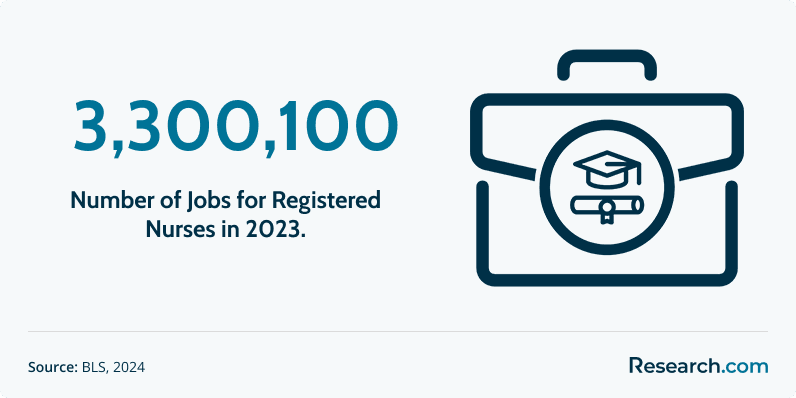
Employment of registered nurses, including ICU nurses, is projected to grow by 6% from 2023 to 2033, faster than the average for all occupations. Approximately 194,500 openings for registered nurses are projected each year over the decade, primarily due to the need to replace workers who transfer to different occupations or retire.
Regional Demand
The demand for ICU nurses varies by state. Georgia, California, and Washington are projected to experience significant shortages, with deficits of 29%, 26%, and 26%, respectively by 2036. In contrast, states like North Dakota, South Dakota, and Utah are expected to have a surplus of nurses.
Impact on Aging Population
The aging baby boomer population is leading to an increased prevalence of chronic conditions, resulting in a higher demand for healthcare services, including intensive care. This demographic shift contributes to the growing need for ICU nurses.
Technological Advancements
Medical technology advances enhance patient care but also require an ICU nurse to acquire new skills to operate sophisticated equipment. This continuous evolution presents both challenges and opportunities for professional development.
Here’s What Graduates Have to Say about ICU Nurses
Becoming an ICU nurse has given me the chance to work in a high-stakes environment where my skills are constantly tested. I’ve gained valuable experience and have learned how to handle complex situations with confidence. Each day presents new challenges and opportunities for growth. – Ellen
Working in the ICU allows me to apply my knowledge in critical care while supporting patients and their families. The work is demanding, but the feeling of knowing I’ve helped make a positive impact is always rewarding. It’s a role that requires focus and adaptability. – Thaddeus
In the ICU, I am part of a dedicated team that works together to deliver patient-centered care. While it’s a high-pressure job, the work brings a sense of accomplishment knowing that my actions directly affect patient recovery. It’s both fulfilling and motivating to continue learning in this field. – Iris
Key Findings
- In 2023, the pass rate for the NCLEX-RN exam required to become a licensed registered nurse was 80.3%, indicating the preparation needed to succeed in the nursing field.
- As of 2024, more than 138,000 nurses held certifications from the AACN Certification Corporation, demonstrating their specialized expertise in critical care nursing. This expertise can enhance job opportunities and improve patient care.
- ICU nurses earn an average annual salary of around $101,661, significantly higher than the general nurse salary. Their hourly wage typically averages $48.88, reflecting the specialized skills and high demand for critical care professionals.
- The turnover rate for ICU nurses in 2023 was 18.4%, a statistic highlighting the high-pressure environment and emotional demands of ICU nursing, which can contribute to burnout and turnover in these roles.
- Employment of registered nurses, including those specializing in intensive care, is projected to grow by 6% from 2023 to 2033, leading to about 194,500 job openings each year due to retirements and the growing need for healthcare services.
References:
- Monti, J., PhD, & Bsn, J. D. R. (2024, November 18). States with the Highest NCLEX Pass Rates. NurseJournal.org. https://nursejournal.org/resources/nclex/states-with-highest-nclex-pass-rates
- Msn, A. D., RN. (2024, October 3). ICU Nurse Job Description Template. IntelyCare. https://www.intelycare.com/facilities/resources/icu-nurse-job-description-template
- Msn, A. R., RN. (2023, October 3). Nurse-Patient ratios: These states have these controversial policies in place. NurseJournal.org. https://nursejournal.org/articles/nurse-patient-ratios
- Ighani, L. (2024, August 1). RN Nurse-to-Patient ratios by state [2024]. Find Nursing Jobs Near You | Nursa. https://nursa.com/blog/rn-to-patient-staffing-ratios
- Review, C. (n.d.). CCRN certification. https://www.ccrnreview.com/ccrn-certification
- Get your CCRN certification - AACN. (n.d.). AACN. https://www.aacn.org/certification/get-certified/ccrn-adult
- Kalosieh, J., & Bsn, M. H., RN. (2024, December 5). What is CCRN certification in nursing? IntelyCare. https://www.intelycare.com/career-advice/what-is-ccrn-certification-in-nursing
- Frequently asked questions: CCRN Certification (Direct Care Pathway) - AACN. (n.d.). AACN. https://www.aacn.org/certification/get-certified/ccrn-frequently-asked-questions
- Lecturio. (2024, July 8). CCRN certification requirements: Everything you need to know. Lecturio. https://www.lecturio.com/blog/ccrn-certification-requirements-everything-you-need-to-know
- Bowman, D. (2024, March 7). Do ICU Nurses Get Paid More? Understanding ICU Salaries. TravelNurseSource.com. https://www.travelnursesource.com/notes/do-icu-nurses-get-paid-more-understanding-icu-salaries
- Nurse residency and training programs. (n.d.). https://jobs.mayoclinic.org/nurseresidencyprograms
- New-Graduate RN Residency Program | Cedars-Sinai. (n.d.). https://careers.cshs.org/nursing-new-grads
- Statista. (2024b, July 10). Registered nurse turnover rate in the U.S. 2023, by discipline. https://www.statista.com/statistics/1251525/registered-nurse-turnover-rate-in-hospitals-in-the-united-states
- Coleman, J. (2024, May 21). Healthcare Turnover Rates [2024 Update]. DailyPay. https://www.dailypay.com/resource-center/blog/employee-turnover-rates-in-the-healthcare-industry
- Salary in USA - Average salary. (n.d.). Talent.com. https://www.talent.com/salary
- ZipRecruiter. (n.d.). Salary: Icu Nurse Salary (March 2025). https://www.ziprecruiter.com/Salaries/Icu-Nurse-Salary
- Nurse salary by State & Highest-Paying States for RNs & NPs - Nightingale College. (n.d.). https://nightingale.edu/blog/nurse-salary-by-state.html
- ICU Nurse Salary by State [2021] - Nightingale College. (n.d.). https://nightingale.edu/blog/icu-nurse-salary.html
- ICU nurse salary by state – (2025 figures). (n.d.). https://www.nursingprocess.org/icu-nurse-salary.html
- What are the career paths in critical care nursing? | NursingEducation. (2024, February 5). NursingEducation. https://nursingeducation.org/insights/critical-care-career-paths
- How much do clinical nurse leaders make? | NursingEducation. (2024, December 3). NursingEducation. https://nursingeducation.org/careers/clinical-nurse-leader/salary
- Alexander, R. (2022, January 17). ICU workers in the UK are experiencing probable PTSD rates during the pandemic comparable to Afghanistan war veterans, a new survey finds. Business Insider. https://www.businessinsider.com/uk-intensive-care-staff-mental-health-ptsd-rates-pandemic-19-2022-1
- Which type of nurse is most prone to burnout? (2018, July 19). https://online.walsh.edu/news/nurse-burnout
- Burnout in critical care - AACN. (n.d.). AACN. https://www.aacn.org/newsroom/burnout-in-critical-care
- ICU nurses face high rate of burnout | AMN Healthcare. (2016, July 22). https://www.amnhealthcare.com/blog/nursing/travel/nurses-face-high-rate-of-burnout-in-critical-care
- Registered nurses. (2024c, August 29). Bureau of Labor Statistics. https://www.bls.gov/ooh/healthcare/registered-nurses.htm
- Nightingale College. (2025, March 2). Is there a nursing shortage in the US? 2024 statistics by state. Fort Collins Coloradoan. https://www.coloradoan.com/story/sponsor-story/nightingale-college/2024/08/14/is-there-a-nursing-shortage-in-the-us-2024-statistics-by-state/74797364007
- Nursing Shortage: 2025 US Statistics by State - Nightingale College. (n.d.). https://nightingale.edu/blog/nursing-shortage-by-state.html
- McGhee, M. K. (2025, February 18). A crisis by the numbers: Nursing Shortages in 2025 by State | Vivian Community Hub. Vivian Community Hub. https://www.vivian.com/community/industry-trends/nursing-shortage-by-state
- Kalosieh, J., & Bsn, A. R., RN. (2024a, January 23). Report: Trends in nursing 2024. IntelyCare. https://www.intelycare.com/career-advice/report-trends-in-nursing
- Rothstein, A. (2021, May 7). How do nurses stay up to date? - Gwinnett Colleges and Institute. Gwinnett Colleges and Institute. https://www.gwinnettcollege.edu/how-do-nurses-stay-up-to-date
- Admin, L. (2018, May 24). LeaderStat. LeaderStat. https://www.leaderstat.com/knowledge-base/4-tips-to-help-nurses-stay-up-to-date
- How nursing technology is enhancing patient care | ANA. (2024, February 21). ANA. https://www.nursingworld.org/content-hub/resources/workplace/how-technology-is-changing-the-nursing-industry
- National Society of Health Coaches. (2024, December 3). 16 of The Best Hospitals for Nurses: Supportive Work Environments and Growth Opportunities. NSHCOA. https://www.nshcoa.com/best-hospitals-for-nurses
- Harder, B. (2024, July 16). America’s Best Hospitals: the 2024-2025 Honor Roll and Overview. US News & World Report. https://health.usnews.com/health-care/best-hospitals/articles/best-hospitals-honor-roll-and-overview
- Travel nurse salary: How much do travel nurses make? (n.d.). Nurse.org. https://nurse.org/education/travel-nurse-salary
- Travel Nurse salary by State [2024] - Nightingale College. (n.d.). https://nightingale.edu/blog/travel-nurse-salary-by-state.html
Other Things You Should Know About ICU Nurses
ICU nurses in 2027 typically need to complete 20–30 hours of continuing education every two years to maintain licensure, depending on state regulations. This may include courses in advanced cardiac life support, trauma nursing, and other specialized training mandated by employers or state boards.
It typically takes around six to eight years to become an ICU nurse in 2026. This includes earning a four-year Bachelor of Science in Nursing degree, obtaining licensure, and gaining 1-3 years of clinical experience before specializing in ICU nursing.


