2027 Entry-Level Jobs With an Exercise Science Degree

Co-Founder and Chief Data Scientist
An exercise science degree can lead to several first jobs, but the best starting point depends on whether you want to work in fitness, rehabilitation, sports performance, wellness, healthcare support, or graduate study later. The job market is active, with employment in exercise-related fields projected to grow by 11% over the next decade, but many roles still require candidates to show practical experience, strong communication skills, and in some cases, certifications or licensure.
This guide explains the entry-level jobs exercise science graduates commonly pursue, which industries hire them, which roles tend to pay more, and how to improve your chances of getting hired. It also covers internships, certifications, remote work, promotion timelines, and what graduates say helped them move from a degree into a real career path.
Key Benefits of Entry-Level Jobs With an Exercise Science Degree
- Entry-level jobs offer hands-on experience, enabling graduates to apply exercise science theories practically while developing essential clinical and fitness assessment skills.
- These roles often serve as stepping stones, fostering career advancement through exposure to diverse specialties and industry certifications.
- Working early in the field helps graduates build professional connections and strengthen their resumes, with networking linked to 70% of job placements in health sciences.
What Entry-Level Jobs Can You Get With an Exercise Science Degree?
With an exercise science degree, entry-level opportunities are most common in fitness training, rehabilitation support, wellness programming, exercise testing, and health coaching. Employment in health-related fields is expected to grow 13% from 2021 to 2031, but graduates should understand that “entry-level” does not always mean “degree alone is enough.” Some employers may still expect a certification, supervised experience, or familiarity with assessment equipment.
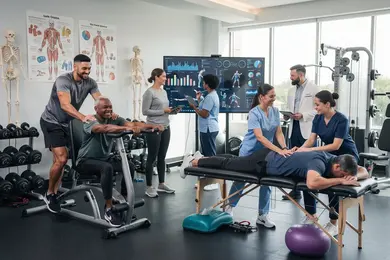
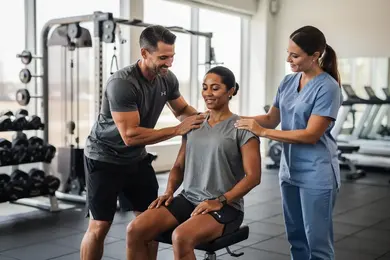
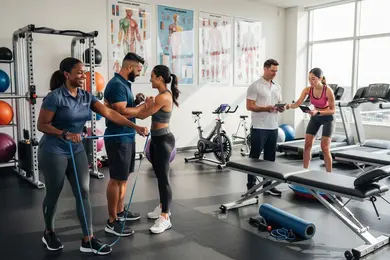
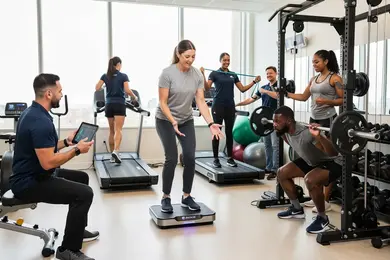
- Fitness Trainer: Fitness trainers work with individuals or small groups to improve strength, mobility, endurance, and overall conditioning. This role is a common first step because it lets graduates apply exercise programming, anatomy, and client motivation skills in a practical setting. It can also lead to specializations in corrective exercise, sports performance, or corporate wellness.
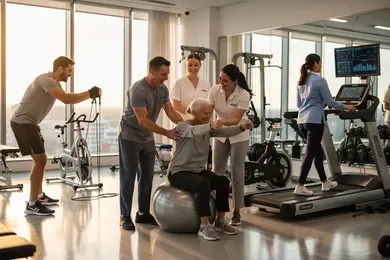
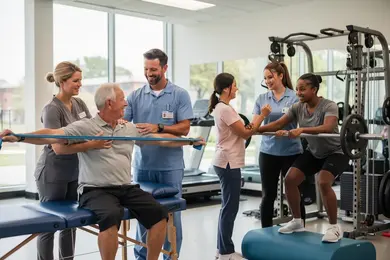
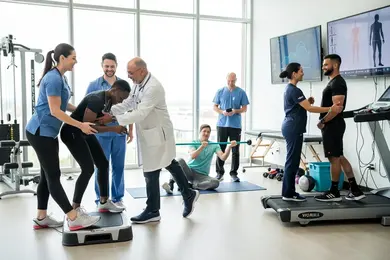
- Rehabilitation Aide: Rehabilitation aides support physical therapists, occupational therapists, or other clinical staff by preparing equipment, helping patients complete prescribed exercises, cleaning treatment areas, and documenting basic activity. It is a strong option for graduates considering physical therapy, occupational therapy, or other allied health careers because it provides direct exposure to patient care.
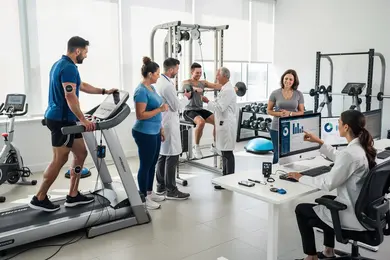
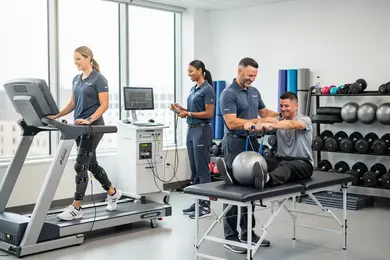
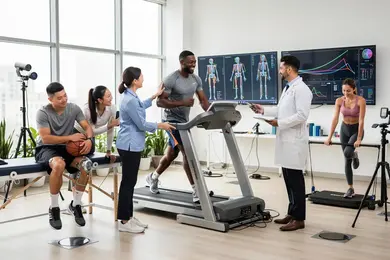
- Exercise Technician: Exercise technicians may help conduct fitness assessments, collect physiological data, monitor clients during testing, or assist with wellness and research protocols. This role is especially useful for graduates interested in clinical exercise physiology, sports science, or research because it builds comfort with testing procedures and data accuracy.
- Health Coach: Health coaches help clients set goals around physical activity, lifestyle habits, stress management, and general wellness. The role requires more than exercise knowledge; employers usually value listening skills, behavior-change strategies, and the ability to explain health information clearly without giving advice outside the role’s scope.
These roles help graduates build the experience that many employers want but do not always define clearly in job postings. If you are trying to widen your options in healthcare support, a related credential such as medical assistant certification may complement an exercise science background and open additional entry-level paths.
Which Industries Hire the Most Exercise Science Graduates?
Exercise science graduates are hired across healthcare, fitness, sports, and education because their training applies to movement, conditioning, injury prevention, wellness, and performance. Around 40% of these graduates initially enter healthcare-related positions, which reflects the demand for support roles in rehabilitation, clinical wellness, and patient-centered exercise programs.
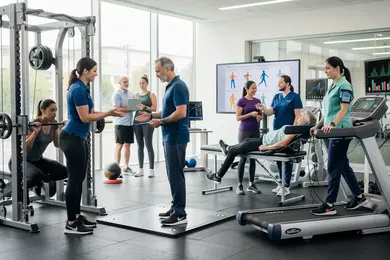
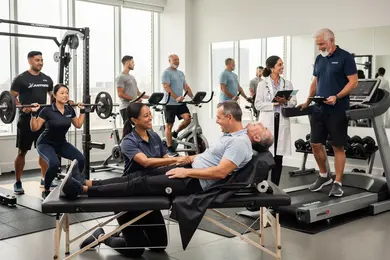
- Healthcare: Hospitals, rehabilitation centers, physical therapy clinics, cardiac rehabilitation programs, and outpatient care settings often hire exercise science graduates for support roles. These jobs are a good fit for graduates who want clinical exposure, but they may require comfort working under supervision and following strict documentation and safety procedures.
- Fitness: Commercial gyms, boutique studios, community centers, and corporate wellness programs hire graduates as trainers, fitness staff, group exercise instructors, and wellness coordinators. These positions can be easier to enter quickly, but pay and stability may depend on client volume, scheduling, and sales expectations.
- Sports: Athletic departments, private performance centers, youth sports organizations, and teams may hire graduates for strength and conditioning support, performance testing, or coaching-related roles. These opportunities can be competitive because many candidates want to work with athletes, so practical experience and recognized certifications matter.
- Education: Schools, colleges, and universities may employ exercise science graduates in coaching, fitness programming, recreation, or instructional support roles. Teaching positions may require additional state-specific credentials, so graduates should check requirements before assuming a degree alone qualifies them.
A common early-career challenge is choosing between a broader fitness role and a more specialized healthcare or sports role. One graduate described the search as difficult at first because the field was wider than expected: “I realized how diverse the field is, and it took some time to understand where my skills matched best.” After accepting a role in a rehabilitation clinic, he found that working with healthcare professionals helped him clarify his long-term direction.
Which Entry-Level Exercise Science Jobs Pay the Highest Salaries?
The highest-paying entry-level exercise science jobs are usually those with clinical responsibilities, specialized performance training, regulated duties, or direct patient care. Salaries vary by location, employer type, credential requirements, and whether the position is full time, part time, salaried, or based on billable client sessions.
- Clinical Exercise Physiologist: Clinical exercise physiologists design, monitor, and adjust exercise programs for patients, often including those with heart or lung conditions. Starting salaries typically range from $45,000 to $60,000. These roles may require strong assessment skills, clinical judgment, and relevant certification depending on the employer.
- Athletic Trainer: Athletic trainers work on injury prevention, emergency care, evaluation, and rehabilitation for athletes and physically active populations. Starting pay usually falls between $40,000 and $55,000. Graduates should note that athletic trainer roles generally have specific education, certification, and state licensure requirements, so an exercise science degree alone may not qualify someone for the title.
- Strength and Conditioning Coach: Strength and conditioning coaches develop performance programs for athletes and teams. Entry-level salaries average $40,000 to $55,000. These jobs often reward practical coaching experience, internship hours, and respected credentials because employers want candidates who can train athletes safely and effectively.
- Occupational Therapy Assistant: Occupational therapy assistants help patients build or regain daily living skills under the supervision of occupational therapists. Starting pay ranges from $45,000 to $60,000. This path typically requires the appropriate occupational therapy assistant education and certification, so exercise science knowledge can be useful but is not usually sufficient by itself.
- Exercise Technician: Exercise technicians support fitness testing, wellness programs, and clinical or community exercise services. Salaries are generally lower, around $30,000 to $40,000, but the role can be valuable for building hands-on experience before moving into clinical, research, or graduate-level pathways.
For salary-focused graduates, the best strategy is to compare both the starting pay and the credential pathway. A job with slightly lower first-year pay may still be worthwhile if it provides supervised clinical hours, mentorship, or experience required for a higher-paying role later.
What Skills Do Employers Look for in Entry-Level Exercise Science Graduates?
Employers want entry-level exercise science graduates who can apply technical knowledge safely, communicate clearly, and work well with clients, patients, athletes, and supervisors. A 2022 survey by the National Association of Colleges and Employers revealed that 85% of employers find communication skills notably lacking in recent graduates, making communication one of the most important ways to stand out.
- Communication: Graduates must be able to explain exercises, safety precautions, progressions, and expectations in plain language. Strong communication also helps with client motivation, patient compliance, and teamwork.
- Exercise Assessment: Employers value graduates who can help with movement screens, fitness tests, basic measurements, and progress tracking. Accuracy matters because poor assessment can lead to weak programming or safety issues.
- Data Analysis and Critical Thinking: Many roles involve tracking heart rate, workload, repetitions, mobility, recovery, or adherence. Graduates who can interpret this information and adjust recommendations appropriately are more useful than candidates who only know theory.
- Teamwork: Exercise science employees often work with physical therapists, nurses, physicians, coaches, dietitians, administrators, or senior trainers. Employers look for candidates who can take direction, document clearly, and contribute without overstepping their role.
- Problem-Solving: Clients may have pain, low motivation, scheduling issues, inconsistent progress, or limited equipment access. Entry-level employees need to adapt within approved guidelines rather than applying one generic program to everyone.
- Professionalism and Ethics: Trust is essential in health and fitness roles. Employers expect confidentiality, accurate records, punctuality, appropriate boundaries, and awareness of when to refer a client or patient to a licensed professional.
Graduates who want to move closer to clinical healthcare may also explore adjacent education options such as online RN programs, but they should compare prerequisites, licensure requirements, and career goals before changing direction.
Do Employers Hire Exercise Science Graduates With No Internships?
Yes, employers do hire exercise science graduates without internships, but those candidates usually need another way to prove readiness. Studies show that about 70% of employers favor applicants with internship experience, so a lack of internship can make the job search harder, especially for clinical, rehabilitation, or sports performance roles.
If you do not have an internship, focus your resume on evidence of applied learning. Relevant coursework, lab projects, research assistance, campus recreation work, volunteer coaching, fitness assessments, CPR training, and part-time customer-facing jobs can all help show that you can work with people and follow procedures. The key is to describe what you did, what tools or methods you used, and what populations you served.
Graduates without internships should also be realistic about their first job. A rehabilitation aide, front-desk fitness role with training responsibilities, wellness assistant, or exercise technician position may be a practical starting point. Once hired, ask for more observation opportunities, document new competencies, and pursue certifications that match your target role.
What Certifications Help Entry-Level Exercise Science Graduates Get Hired?
Certifications can make an exercise science graduate more competitive because they signal role-specific knowledge and readiness for supervised practice. Industry data shows that graduates with relevant certifications have a 20% higher likelihood of securing employment within their first year. The best certification depends on whether you want to work in general fitness, athletic performance, clinical exercise, or health education.
- ACSM Certified Personal Trainer (ACSM-CPT): This credential is useful for graduates pursuing personal training, fitness coaching, or wellness roles. It supports knowledge of exercise programming, client assessment, and safe progression.
- NSCA Certified Strength and Conditioning Specialist (NSCA-CSCS): This certification is valued in athletic performance and strength and conditioning settings. It is often a strong choice for graduates who want to train athletes or work in performance facilities.
- Certified Exercise Physiologist (CEP): Offered by ACSM, this credential is relevant for graduates pursuing clinical exercise testing, cardiac rehabilitation, or medically supervised exercise programs. Candidates should review eligibility requirements carefully before planning around this certification.
- Certified Health Education Specialist (CHES): This credential fits roles in community health, wellness education, prevention programs, and public health communication. It is especially useful for graduates who prefer education and outreach over one-on-one training.
- NASM Certified Personal Trainer (NASM-CPT): This is a widely recognized option for fitness training roles. It emphasizes exercise programming, client goals, and injury-conscious training approaches.
One graduate said the certification process felt overwhelming at first because there were many options and each pointed toward a different career track. After choosing credentials aligned with her goals, she found that they helped her translate academic knowledge into employer-recognized skills. “Having certifications definitely opened doors I wasn't sure were accessible right after graduation,” she said.
How Can Students Prepare for Entry-Level Exercise Science Jobs While in College?
Students can prepare for entry-level exercise science jobs by building practical experience before graduation, not waiting until the final semester to think about employability. Research shows that 69% of employers prefer candidates with practical skills and applied experience, so students should treat labs, volunteer work, campus jobs, and certifications as part of career preparation.
- Get hands-on experience early: Work in campus recreation, assist with wellness events, volunteer at physical therapy clinics, help with fitness assessments, or support athletic programs. Even a few hours a week can give you examples to discuss in interviews.
- Choose coursework strategically: Prioritize classes that strengthen anatomy, physiology, biomechanics, exercise testing, motor learning, nutrition basics, and program design. If you are comparing flexible degree formats, reviewing a sports science degree online can help you understand how online programs may structure applied learning.
- Develop technical and soft skills together: Employers want graduates who can use assessment tools and communicate results clearly. Practice explaining exercise plans, safety instructions, and progress updates to people who do not have a science background.
- Participate in academic projects: Faculty research, biomechanics projects, exercise physiology labs, and poster presentations can strengthen your resume, especially if you want a research, clinical, or graduate school pathway.
- Use career services before senior year: Ask for help with resumes, mock interviews, internship searches, alumni contacts, and employer introductions. A generic resume is a common mistake; tailor each application to the setting, population, and responsibilities in the posting.
- Start certifications at the right time: Do not collect credentials randomly. Choose certifications based on the jobs you plan to apply for first, then schedule the exam so the credential is active when you enter the market.
How Competitive Is the Entry-Level Job Market for Exercise Science Graduates?
The entry-level job market for exercise science graduates is moderately competitive. Demand is supported by interest in health, fitness, rehabilitation, and physical activity, and employment in related fields like exercise physiologists is projected to grow about 11% over the next decade. Still, many graduates compete for the same visible roles in gyms, rehabilitation clinics, athletic departments, and wellness centers.
Competition is usually strongest for jobs that offer clinical exposure, athlete contact, mentorship, or a clear pathway to graduate school. Employers in these settings often prefer applicants with internships, volunteer experience, certifications, and strong references. In contrast, some fitness and wellness roles may be easier to enter but may offer less predictable schedules or require client-building responsibilities.
Location also matters. Urban and college-town markets may have more facilities but also more applicants. Smaller communities may offer fewer postings but less competition. Graduates can improve their chances by applying across several related job titles instead of searching only for “exercise science” roles. If you are considering adjacent allied health pathways, reviewing options such as the best medical coding programs may help you compare more stable administrative healthcare routes with movement-focused careers.
What Remote Entry-Level Jobs Can You Get With an Exercise Science Degree?
Remote entry-level jobs for exercise science graduates are available, but they are usually concentrated in coaching support, digital wellness, content, telehealth assistance, and data-related roles rather than hands-on assessment. Gallup reports that remote work among early-career employees increased by more than 40% over the past five years, creating more flexible options for graduates who can communicate well online.
- Virtual Fitness Coach: Virtual fitness coaches guide clients through workouts using video platforms, apps, and online programming tools. This role requires clear cueing, strong screening practices, and the ability to modify exercises when equipment or space is limited.
- Health and Wellness Content Creator: Content roles involve writing, editing, filming, or planning educational material about fitness, movement, and healthy habits. Graduates need research skills and should avoid making claims beyond their training or credentials.
- Remote Exercise Technician: Some research teams, digital health companies, or wellness programs hire technicians to support data collection, participant communication, or protocol tracking. Attention to detail is critical because remote work can make errors harder to catch.
- Online Health Coach Assistant: Assistants may handle scheduling, client check-ins, telehealth support, progress tracking, or educational follow-ups. This is a practical role for graduates who want exposure to coaching or wellness operations before managing clients independently.
- Digital Rehabilitation Support Specialist: These specialists may help patients follow home exercise programs, track adherence, and communicate progress to supervising rehabilitation professionals. Because rehabilitation can involve medical considerations, graduates must work within clearly defined responsibilities.
Remote roles can be convenient, but graduates should check whether the job provides supervision, clear documentation procedures, privacy safeguards, and realistic expectations. For those who want to combine exercise and nutrition interests, a nutritionist degree online may be worth comparing with exercise science pathways.
How Quickly Can Exercise Science Graduates Get Promoted?
Exercise science graduates can often expect their first promotion within two to four years, although about 45% achieve this milestone within three years. Promotion speed depends on the type of employer, the size of the organization, the availability of senior roles, and whether the graduate builds skills that solve higher-level problems.
In fitness settings, advancement may mean moving from trainer to lead trainer, fitness manager, program coordinator, or specialty coach. In rehabilitation or clinical support settings, promotion may involve senior aide responsibilities, exercise specialist roles, administrative leadership, or preparation for graduate study. In sports performance, advancement often depends on coaching results, mentorship, certifications, and the ability to manage athletes or teams safely.
Graduates who want faster advancement should document measurable contributions, ask for feedback, seek mentorship, and pursue credentials that align with their target role. Further education can also support leadership goals. For example, professionals interested in administration or healthcare operations may consider an affordable online MBA healthcare management degree after gaining relevant work experience.
What Graduates Say About Entry-Level Jobs With an Exercise Science Degree
- : "Starting my career in exercise science, I quickly learned that flexibility mattered. I chose a hybrid role that combined remote work with onsite practical experience, and I paid close attention to whether the employer offered hands-on training and mentorship. That first job helped me build clinical skills, expand my network, and understand where I wanted to grow next. — Arthur"
- : "Applying for entry-level exercise science jobs showed me how varied the field really is. Remote and onsite roles felt very different, so I focused on workplaces that offered community engagement and professional development. Looking back, those early roles were not just jobs; they shaped my confidence and helped me understand the kind of professional I wanted to become. — Roger"
- : "The biggest lesson from my entry-level search was to look for organizations with clear career pathways and values that matched mine. Most of the roles I considered were onsite, but the direct experience helped me specialize and later move toward research-oriented projects. That first stage gave me practical skills and a better strategy for building a long-term career. — Miles"
Other Things You Should Know About Exercise Science Degrees
Continuing education is crucial for entry-level exercise science professionals in 2027 to stay current with evolving industry standards and practices. Pursuing certifications and attending workshops expands knowledge and enhances career prospects. It also demonstrates a commitment to professional growth and can lead to opportunities in specialized areas of exercise science.
Entry-level roles can be both full-time and part-time depending on the employer and setting. Many graduates begin with part-time or flexible schedules, especially in fitness or wellness centers, before advancing to full-time positions. Flexibility is common in this field and often supports the continuation of further education or certification.
New exercise science graduates frequently encounter challenges such as gaining practical experience and building client or patient trust. Navigating diverse health conditions and adapting exercise plans accordingly can also be demanding. Additionally, limited job availability in specialized areas may require willingness to start in general roles or pursue advanced certifications.
References
- 8 Rewarding Careers for Aspiring Exercise and Sport Scientists https://www.sacredheart.edu/news-room/news-listing/8-rewarding-careers-for-aspiring-exercise-and-sport-scientists/
- Choosing the Right Certification - NSCA https://www.nsca.com/certification/Choose-Certification/
- Sports Science Certifications https://www.scienceforsport.com/certifications/waitlist/
- What you can do with a degree in Exercise and Sport Science: careers and opportunities in Australia today https://www.curtin.edu.au/news/advice/exercise-sport-science-careers-australia/
- Tips for starting your career in the health and fitness industry https://blogs.surrey.ac.uk/careers/2025/03/07/tips-for-starting-your-career-in-the-health-and-fitness-industry/
- Careers in Focus: Becoming a Sport & Exercise Scientist https://www.morrisby.com/blog/career-focus-of-the-month-sport-exercise-scientist