
2027 Is a Forensic Science Master's Degree Worth It? ROI, Salary & Career Impact

Co-Founder and Chief Data Scientist
A forensic science master’s degree can be a smart move for some professionals, but it is not automatically worth the cost. The decision depends on the kind of forensic work you want, whether your target employers prefer graduate training, how much debt you would take on, and whether the program provides credible laboratory, research, or internship experience.
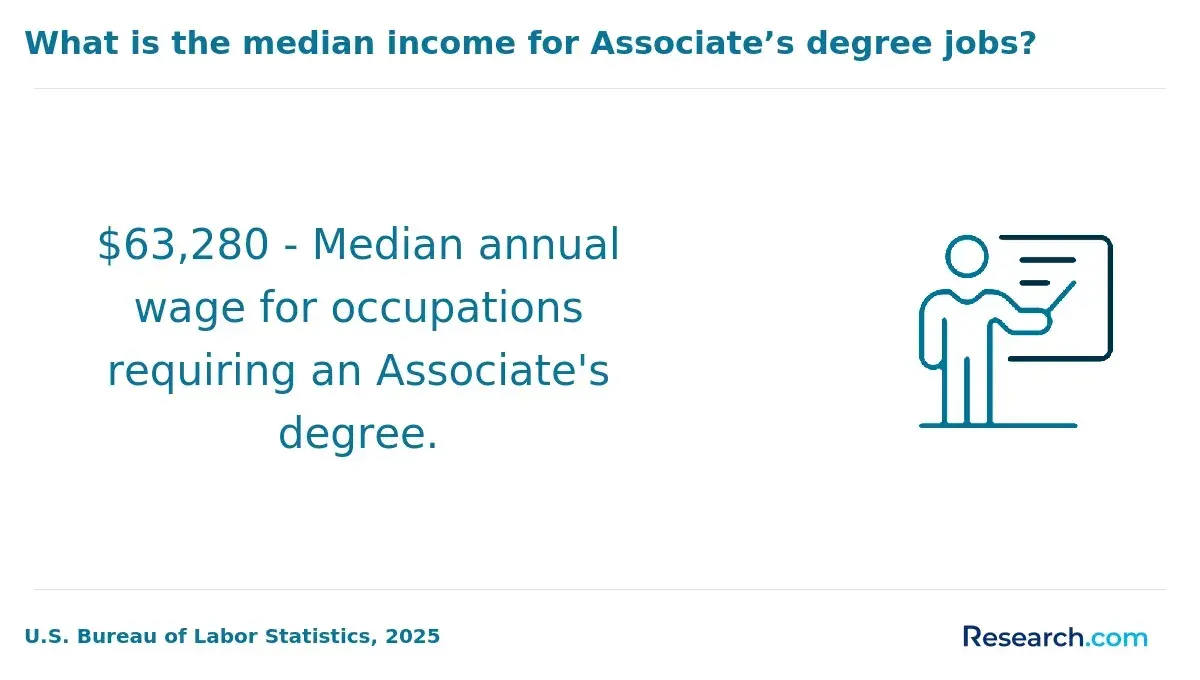
The job outlook requires a realistic reading. According to the Bureau of Labor Statistics, forensic science technician roles are projected to grow 7% from 2022 to 2032, which is near the average for all occupations. Median salaries hover around $63,000, so students should compare program cost against likely earnings rather than assuming that a graduate credential will quickly pay for itself.
This guide explains the major financial and career questions behind the degree: tuition and living costs, aid options, salary potential, admission requirements, online versus in-person value, employer expectations, job paths, and return on investment. It is designed for prospective graduate students, working laboratory professionals, criminal justice graduates, and science majors deciding whether a forensic science master’s program fits their long-term goals.
Key Things to Know About the Value of Forensic Science Master's Degree
- Forensic Science master's programs typically require a science background and include coursework in lab techniques, legal issues, and research methods; flexible online and on-campus options vary in cost and accreditation.
- Graduates' median salaries range from $55,000 to $80,000 annually, depending on location and role, with positions in forensic analysis, law enforcement, or lab management common.
- Long-term growth includes leadership roles and specialization, where advanced credentials often boost earning potential and enhance competitiveness in a niche, evolving job market.
How Much Does a Forensic Science Master's Degree Cost?
A forensic science master’s degree can cost substantially different amounts depending on the institution, residency status, format, and whether you study full time or part time. Because projected employment growth of 14% in forensic science occupations over the next decade suggests continued demand for qualified professionals, the degree may be a reasonable investment for students who choose an affordable program aligned with their career plans. Still, cost control matters because forensic salaries vary widely by role, agency, and location.
Typical cost components
- Tuition fees: Public universities generally charge between $10,000 and $25,000 per year for in-state students. Out-of-state tuition commonly ranges from $20,000 to $40,000 annually. Private institutions are often more expensive, typically from $30,000 to $50,000 per year. Online programs vary widely, but they may reduce commuting or relocation costs for working professionals.
- Program length and delivery format: Most forensic science master’s degrees take 1.5 to 2 years of full-time study. Part-time and online formats can make the program easier to manage with employment, but they may extend the time before you see a career payoff. Accelerated programs may charge more per credit, yet they can reduce living costs if they shorten the total time in school.
- Ancillary costs: Textbooks, lab supplies, technology fees, and similar expenses typically add $1,000 to $2,000 annually. Housing and living costs vary by location but usually fall between $12,000 and $20,000 per year, making location one of the biggest drivers of total cost.
- Total investment range: When tuition and additional expenses are included, students generally invest between $40,000 and $100,000 for a full forensic science master’s degree. Residency status, institution type, pace of study, and living arrangements can move the final cost toward either end of that range.
How to judge whether the price is reasonable
Do not compare programs by tuition alone. A lower-cost program that lacks strong lab access, internships, faculty expertise, or employer recognition may be less valuable than a moderately priced program with better career outcomes. At the same time, a high-cost private program should be able to justify its price through specialized training, placement support, research opportunities, or access to employers that match your goals.
- Ask whether the program publishes graduate employment outcomes.
- Compare total cost of attendance, not just tuition per credit.
- Check whether required labs or residencies add travel costs.
- Confirm whether the curriculum matches your intended specialty, such as toxicology, DNA analysis, digital forensics, or crime scene investigation.
- Estimate loan payments before enrolling, especially if you plan to work in public-sector roles with moderate salaries.
Students who want a shorter or more flexible pathway may compare forensic science programs with broader accelerated options, including a reputable 1 year masters degree online. The main goal is to reduce unnecessary cost without sacrificing accreditation, practical training, or employer credibility.
What Financial Aid and Scholarships Are Available for Forensic Science Master's Students?
Forensic science master’s students can use several funding sources, but graduate aid is often less grant-heavy than undergraduate aid. Nearly 60% of graduate students depend on financial aid, so applicants should start planning early, compare net costs across programs, and avoid assuming that admission automatically comes with funding.
Main financial aid options
- Federal graduate loans: Most graduate loans are unsubsidized, meaning interest begins accruing when funds are disbursed. Subsidized loans are uncommon at the graduate level, so students should calculate the full repayment cost, not just the amount borrowed.
- Institutional grants and fellowships: Universities may offer merit-based grants, fellowships, research assistantships, or teaching assistantships. These funds do not require repayment and can significantly reduce the net cost of a forensic science master’s degree.
- External scholarships: Professional organizations such as the American Academy of Forensic Sciences offer scholarships that may recognize research excellence, academic promise, or efforts to increase diversity in the field. These awards can be competitive, but they are worth pursuing because they are tied directly to the discipline.
- Employer tuition assistance: Students already working in laboratories, law enforcement, healthcare, or related technical roles should ask whether their employer offers tuition reimbursement. Some employers may fund coursework that supports promotion or specialization.
- Assistantships and campus work: Some programs provide paid research or teaching roles. These can be especially valuable because they combine financial support with experience relevant to forensic careers.
Eligibility factors to check
- Citizenship or residency status may affect access to federal aid.
- Enrollment status matters because some aid requires half-time or full-time study.
- Students must usually maintain satisfactory academic progress.
- International students may face more restrictions, but private scholarships or institutional awards may still be available.
- Some awards are limited to specific forensic specialties, research interests, or career goals.
How to strengthen scholarship applications
Strong applications usually connect academic preparation with a specific forensic science goal. A generic statement about being interested in crime shows or criminal justice is rarely enough. Instead, explain the scientific questions you want to work on, the populations or agencies you hope to serve, and how the program’s training will help you contribute.
- Request recommendation letters early from faculty or supervisors who can discuss your scientific ability.
- Use your personal statement to show focus, maturity, and knowledge of the field.
- Highlight laboratory, research, data analysis, or investigative experience.
- Track deadlines carefully because graduate scholarships often close before admission decisions are finalized.
- Apply broadly; small awards can reduce borrowing when combined.
The planning process is similar to other graduate pathways that require early comparison of cost, time, and admission fit, such as a fast track psychology degree online. For forensic science students, the best aid strategy is to combine institutional funding, external scholarships, employer support, and careful borrowing.
What Is the Average Salary for Forensic Science Master's Degree Holders?
Salary outcomes for forensic science master’s degree holders depend heavily on specialty, employer, geography, and experience. A master’s degree can improve access to specialized roles, supervisory tracks, and higher-paying technical positions, but it does not guarantee a large salary increase immediately after graduation.
Salary patterns by career stage
- Entry-level professionals: Graduates with a master’s typically earn about $60,000 to $70,000 annually, especially when entering analyst, technician, or laboratory roles.
- Mid-career professionals: Those with several years of experience often see salaries rise to between $75,000 and $90,000, particularly if they develop expertise in high-demand specialties or move into senior analyst roles.
- Senior experts: Experienced professionals in specialized, supervisory, consulting, or leadership positions can surpass $100,000 per year, according to data from platforms like Glassdoor.
How a master’s compares with a bachelor’s degree
Research from the Bureau of Labor Statistics indicates that individuals with a master’s degree in forensic science earn roughly 15%-25% more than those holding only a bachelor’s degree. That wage premium reflects advanced technical training, stronger research preparation, and eligibility for roles that may not be open to bachelor’s-level applicants.
The premium is not uniform. A graduate degree may have the greatest payoff when it leads to a defined role change, such as moving from general technician work into toxicology, DNA analysis, digital forensics, quality assurance, laboratory supervision, or expert consulting.
Factors that affect pay
- Sector: Private consulting firms and corporate laboratories often pay more than public-sector or nonprofit employers, though government jobs may offer stability, benefits, and structured advancement.
- Location: Metropolitan regions such as Washington D.C., California, and New York tend to offer higher pay because of cost of living, agency budgets, and demand for forensic expertise.
- Specialty: Digital forensics, toxicology, DNA analysis, and laboratory leadership may command stronger compensation than more general roles.
- Experience: Employers value documented casework, lab competency, testimony experience, quality assurance knowledge, and familiarity with forensic standards.
One graduate described the degree as “both demanding and rewarding.” He balanced rigorous coursework with part-time lab work while managing financial pressure. His goal was to move into specialized forensic analysis roles that required stronger credentials. “The challenges were real,” he said, “but obtaining the master’s opened doors I hadn’t imagined possible, especially when competing in metropolitan job markets.” His experience illustrates the main salary lesson: the degree is most valuable when it is tied to a specific career step, not pursued as a vague credential.
How Does a Forensic Science Master's Degree Impact Long-Term Career Advancement?
A forensic science master’s degree can support long-term advancement by building technical depth, research ability, courtroom credibility, and leadership readiness. Its career value is strongest for professionals who want to move beyond entry-level laboratory or field roles into specialized analysis, supervision, expert testimony, research, or management.
Career advancement benefits
- Faster promotion potential: Graduates may be better positioned for senior analyst, lead scientist, quality assurance, or supervisory roles because graduate training signals advanced preparation.
- Access to leadership roles: Many employers prefer master’s-prepared candidates for positions that involve managing evidence workflows, overseeing teams, validating methods, or interpreting complex findings.
- Professional credibility: A master’s degree can strengthen credibility in sensitive investigations and courtroom settings, especially when combined with case experience and relevant certifications.
- Specialized expertise: Graduate programs often allow students to focus on areas such as toxicology, DNA analysis, forensic chemistry, digital evidence, or forensic biology. Specialization can make a candidate more competitive than a generalist.
- Professional networks: Faculty, alumni, internship supervisors, and research collaborators can help students learn about openings, certification pathways, and employer expectations.
- Eligibility for further education: The degree can serve as preparation for doctoral study, advanced research, or professional certifications that support senior-level forensic roles.
Where the degree helps most
The degree is most likely to affect long-term advancement in settings where scientific rigor, method validation, documentation, and expert interpretation are central to the job. Specialized forensic laboratories, federal law enforcement environments, private testing firms, and consulting practices may give greater weight to graduate education than employers hiring for general technician roles.
When experience may matter more
A master’s degree is not a substitute for casework experience. Employers may still prefer a bachelor’s-level applicant with years of validated lab performance over a new graduate with limited applied experience. The strongest long-term profile combines the degree with internships, research, professional references, certifications, and documented technical competence.
Students comparing long-term earnings across majors can also review broader salary and ROI patterns in degrees that make the most money. For forensic science, the key question is not only whether the master’s degree raises pay, but whether it opens the specific advancement path you want.
What Is the Return on Investment (ROI) of a Forensic Science Master's Degree?
The ROI of a forensic science master’s degree depends on the gap between total program cost and the additional earnings or career opportunities the degree creates. For some students, especially those choosing affordable public programs and entering specialized roles, the payoff can be reasonable. For others, especially those taking on high debt without a clear career target, the return may be slower.
Core ROI factors
- Total program cost: Tuition, fees, books, and related expenses vary widely, typically ranging from about $20,000 at public institutions to above $60,000 at private ones. This is the baseline for any ROI calculation.
- Lifetime salary premium: A forensic science master’s usually boosts earning potential by 10% to 20% over a bachelor’s degree. Median salaries for forensic science technicians hover near $65,000 annually, with higher earnings possible in specialized, private-sector, or leadership roles.
- Best-case scenario: A student who attends an affordable program, keeps debt low, completes relevant internships, and moves into a higher-paying specialty may see a stronger return.
- Worst-case scenario: A student who pays private-school tuition, borrows heavily, and remains in a role that does not reward graduate education may need much longer to recover the cost.
- Payback period: It generally takes between 5 and 8 years to recover the cost of the degree through higher income, although the timeline depends on job stability, raises, debt amount, and whether the student works while enrolled.
- Opportunity cost: Full-time study can mean lost wages and delayed work experience. Part-time study or an accelerated format can reduce this cost, but may add scheduling pressure.
- Use of ROI calculators: Online calculators can help students enter actual tuition, loan amounts, expected salary, and regional employment assumptions to produce a more personal estimate.
ROI questions to ask before enrolling
- Will this program qualify me for roles I cannot realistically get with my current degree?
- Does my target employer require, prefer, or merely accept a master’s degree?
- How much debt will I have at graduation?
- Can I work while studying without harming my academic performance?
- Does the program include internship, research, or laboratory experiences that improve employability?
- Are graduates moving into the kinds of roles I want?
One graduate said the financial commitment was intimidating, but the program became more worthwhile because it offered a structured curriculum, faculty support, and hands-on internships. “I worried about the financial hit upfront,” he said, “but seeing clearer career pathways and connections during the program helped me feel confident about the long-term payoff.” His experience points to an important ROI principle: the degree pays off best when the program actively helps students convert academic training into job-ready experience.
What Are the Admission Requirements for a Forensic Science Master's Program?
Admission requirements for forensic science master’s programs usually combine academic preparation in the sciences with evidence of professional focus. Programs differ in selectivity, but most want applicants who can handle graduate-level biology, chemistry, statistics, research methods, and laboratory work.
Common admission requirements
- Undergraduate GPA: Programs generally expect a minimum GPA around 3.0 on a 4.0 scale. More competitive schools usually look for stronger records, often 3.3 or above.
- Standardized tests: Some institutions waive GRE or GMAT requirements, while others still consider scores, especially quantitative and analytical sections. Applicants should verify current testing policies directly with each program.
- Prerequisite coursework: Foundational courses in biology, chemistry, and statistics are frequently required. Students without this background may need to complete prerequisite courses before admission or early in the program.
- Statement of purpose: This essay should explain why the applicant wants graduate forensic science training, which specialty areas are of interest, and how the program fits specific career goals.
- Letters of recommendation: Programs typically ask for two to three letters from professors, research mentors, laboratory supervisors, or work supervisors who can evaluate the applicant’s readiness.
- Relevant experience: Internships, research, laboratory work, criminal justice experience, or related employment can strengthen an application by showing commitment and practical awareness.
- Program-specific requirements: Some programs may request interviews, writing samples, prerequisite grades, background checks for certain placements, or proof of technical competencies.
How to build a stronger application
The strongest applications show a clear match between the applicant’s background and the program’s strengths. A student interested in forensic toxicology, for example, should emphasize chemistry preparation, lab experience, and interest in analytical methods. A student targeting digital forensics should highlight computing, cybersecurity, data analysis, or evidence-handling experience.
- Review prerequisite courses before applying, not after admission.
- Choose recommenders who can give specific examples of scientific ability.
- Use the statement of purpose to show focus rather than general interest.
- Explain any academic weaknesses honestly and briefly, then show evidence of improvement.
- Apply to a balanced list of programs that includes realistic and more competitive options.
What Is the Minimum GPA Requirement for a Forensic Science Master's Program?
The minimum GPA requirement for a forensic science master’s program typically ranges from 3.0 to 3.5 on a 4.0 scale. More competitive programs at top-tier universities frequently expect applicants to meet or exceed a 3.5 GPA, while less selective or newer forensic science graduate programs may consider applicants with GPAs as low as 2.8 if the rest of the application is strong.
How GPA is evaluated
- Program selectivity matters: Higher-ranked forensic science programs often maintain stricter GPA expectations, commonly above 3.3. State universities and less competitive programs may admit students closer to 3.0 or slightly below.
- Science grades may matter more than overall GPA: Admissions committees often look closely at performance in biology, chemistry, statistics, and laboratory courses because these subjects predict graduate readiness.
- Recent academic performance can help: Strong grades in upper-division or post-baccalaureate science courses may reduce concern about a weaker early undergraduate record.
- GPA is rarely the only factor: Programs often review experience, recommendations, statements, prerequisite coursework, and test scores alongside GPA.
What to do if your GPA is below the target
- Use relevant work experience: Professional experience in forensic laboratories, criminal justice, scientific research, healthcare laboratories, or technical analysis can help offset a lower GPA.
- Write a focused personal statement: Explain your goals, show that you understand the field, and briefly address academic weaknesses if there is a clear reason or evidence of improvement.
- Submit strong GRE scores where accepted: High GRE scores can demonstrate academic readiness when a program still considers standardized tests.
- Consider conditional admission: Some programs offer conditional acceptance or probationary enrollment, allowing borderline applicants to prove themselves through initial graduate coursework.
- Take additional coursework: Post-baccalaureate classes in biology, chemistry, statistics, or forensic science can show readiness and improve your academic profile.
- Strengthen recommendations: Ask for letters from people who can speak directly to your laboratory skills, research ability, reliability, and readiness for graduate study.
Students who are unsure how competitive their GPA is may benefit from comparing admission standards across fields, including programs such as msw online. The comparison can help applicants understand how GPA expectations differ and how to position their strengths strategically.
Is an Online Forensic Science Master's Degree as Valuable as an In-Person Degree?
An online forensic science master’s degree can be as valuable as an in-person degree when it is accredited, academically rigorous, and includes appropriate laboratory or applied learning experiences. Employers increasingly accept online graduate credentials, especially after remote learning became more common during the COVID-19 pandemic. However, the value depends on program quality, not the delivery format alone.
What makes an online program credible
- Accreditation: Employers typically care most about whether the institution and program meet recognized standards. Accreditation is central to credibility regardless of whether courses are online or in person.
- Comparable curriculum: Strong online programs use faculty, assessments, and learning outcomes similar to campus programs. Students should expect serious coursework in forensic methods, scientific analysis, research, and evidence interpretation.
- Applied experience: Forensic science is practice-oriented. Online students should confirm how the program handles labs, residencies, internships, simulations, or local placements.
- Faculty access: Online programs should offer meaningful interaction with instructors, advisors, and career services rather than relying only on recorded lectures.
- Employer recognition: Programs with established alumni networks, agency relationships, and transparent outcomes may carry stronger market value.
Online versus in-person: practical trade-offs
- Online advantages: Online programs are often better for students who work full time, have family responsibilities, live far from campus, or need scheduling flexibility.
- Online limitations: Students may need to be more proactive about networking, mentorship, and securing hands-on experience.
- In-person advantages: Campus programs may offer easier access to laboratories, faculty research, local forensic agencies, peer relationships, and informal professional connections.
- In-person limitations: Relocation, commuting, housing, and schedule rigidity can increase cost and reduce flexibility.
Choose online study if you need flexibility and the program provides credible applied training. Choose in-person study if your goals depend heavily on laboratory immersion, direct mentorship, local agency relationships, or research facilities that are difficult to access remotely.
What Jobs Can You Get With a Forensic Science Master's Degree?
A forensic science master’s degree can lead to roles in crime laboratories, medical examiner systems, law enforcement agencies, private laboratories, cybersecurity firms, consulting practices, and research organizations. Some jobs require additional degrees, certifications, or experience, so students should verify requirements before choosing a program.
Common career paths
- Forensic Pathologist: This role typically requires a medical degree in addition to any forensic science graduate training. Forensic pathologists determine causes of death in clinical and legal contexts and often earn top-tier salaries, regularly exceeding $200,000.
- Forensic Toxicologist: Toxicologists identify drugs, alcohol, poisons, and other substances in biological samples. Many hold master’s degrees and often pursue board certification. Salaries generally range between $70,000 and $120,000, depending on experience and location.
- Digital Forensics Analyst: These analysts examine computers, mobile devices, networks, and other digital evidence. Cybercrime demand has increased the importance of this specialty. Many employers require or prefer a master’s degree for advanced roles, with typical earnings ranging from $80,000 to $130,000.
- Crime Lab Director: Laboratory leadership requires scientific expertise, management ability, quality assurance knowledge, and experience with evidence procedures. A master’s degree is commonly essential, and compensation varies widely but frequently surpasses $100,000 annually.
- Forensic Consultant: Consultants provide case review, technical interpretation, expert witness support, and independent analysis. A master’s degree is not always mandatory, but it can strengthen credibility and support substantial per-case fees, sometimes reaching six figures.
- Research Scientist in Forensic Technologies: These professionals develop, validate, and improve forensic tools and methods. They work in academia, government, and private industry, earning approximately $75,000 to $115,000 based on employer and funding availability.
How to match the degree to a job goal
Before enrolling, identify the job title you want and work backward. A student interested in digital forensics should not choose a program focused almost entirely on wet-lab methods. A student targeting toxicology should prioritize chemistry depth, instrumentation, and laboratory placements. A student who wants to become a forensic pathologist should understand that a medical degree is the primary requirement, not only a forensic science master’s.
- Review job postings from agencies or employers you want to work for.
- Note whether they require a master’s degree, certification, experience, or specific lab methods.
- Choose electives and internships that match those requirements.
- Ask programs where recent graduates work, not just what careers are theoretically possible.
How Do Employers and Industries Value a Forensic Science Master's Degree?
Employers value a forensic science master’s degree most when the role requires advanced scientific analysis, specialized methods, research ability, or leadership. The credential is usually strongest when paired with hands-on experience, professional certifications, strong references, and a clear specialty.
Employer perspectives by sector
- Large corporations: Forensic, chemical analysis, biotechnology, cybersecurity, and testing companies may view a master’s degree as important for specialized technical roles. The degree can also support advancement into research, validation, or supervisory work.
- Government agencies: Federal, state, and local law enforcement agencies often prefer or require graduate training for forensic examiner, analyst, or leadership positions. Certifications and case experience may also be central to hiring and promotion.
- Startups and small firms: Smaller employers may emphasize demonstrated skills and flexibility, but a master’s degree can help candidates stand out for research and development, technical leadership, or expert-facing roles.
- Nonprofit organizations: Legal advocacy, innocence work, policy research, and forensic reform organizations may value the degree’s scientific and ethical training, while still placing high importance on practical experience.
- Specialized laboratories: In fields such as DNA analysis and toxicology, the master’s degree may function as a major professional credential. In forensic psychology or management-oriented paths, a doctorate or MBA may be more relevant for senior roles.
How to communicate the degree’s value
Applicants should not simply list the degree and expect employers to infer its relevance. Resumes and interviews should connect graduate training to employer needs: validated methods, statistical reasoning, quality control, lab safety, chain of custody, report writing, expert communication, or digital evidence handling.
- Translate coursework into job skills.
- Describe research or capstone projects in practical terms.
- Highlight instruments, software, methods, or evidence types you have used.
- Pair the degree with internships, certifications, or case-relevant experience.
- Explain how your training reduces risk, improves accuracy, or supports defensible findings.
Students weighing educational value may also compare costs across professional degrees. For example, looking at construction management degree cost can help value-focused students think more carefully about tuition, credential utility, and career payoff across fields.
Is a Forensic Science Master's Degree Worth It?
A forensic science master’s degree is worth it if it helps you qualify for a specific role, specialize in a higher-value area, advance within a laboratory or agency, or build the scientific credibility needed for expert work. It is less likely to be worth it if you enroll without a clear career target, choose an expensive program with weak applied training, or expect the degree alone to produce a major salary jump.
When the degree is likely worth it
- You need it for your target role: Some specialized forensic analyst, examiner, laboratory leadership, and research positions prefer or require graduate training.
- You are moving into a technical specialty: Areas such as toxicology and digital forensics often reward advanced preparation, especially when paired with relevant tools, methods, or certifications.
- You can manage the cost: The ROI is stronger when tuition is affordable, aid is available, or you can keep working while enrolled.
- The program provides applied experience: Internships, laboratory work, research, and agency connections can make the degree more useful in the job market.
- You want long-term advancement: About 60% of government forensic laboratories consider a master’s degree a significant asset for both hiring and promotion.
When the degree may not be worth it
- Your target job does not reward graduate education: Some entry-level forensic technician roles may prioritize a bachelor’s degree, lab skills, and experience.
- The program is too expensive relative to expected salary: Heavy debt can weaken ROI, especially in public-sector positions with moderate pay.
- You lack prerequisite science preparation: Students without strong biology, chemistry, statistics, or technical foundations may need additional coursework before graduate study becomes practical.
- You are using the degree to explore rather than advance: A master’s program is a costly way to discover whether you like forensic science. Shadowing, internships, or entry-level lab work may be better first steps.
Bottom line
The degree can be a strong investment for students with a defined forensic specialty, a credible and affordable program, and a plan to gain hands-on experience. It is not a guaranteed shortcut into high-paying work. The best decision comes from comparing program cost, employer requirements, expected salary, accreditation, and your readiness for scientific graduate study.
What Graduates Say About Their Forensic Science Master's Degree
- : "Applying to the forensic science master’s program felt intimidating at first, but the university’s academic catalog and accreditation information made the requirements clear. I used that information to plan prerequisites and choose courses that supported my goal of working in crime lab analysis. Looking back, understanding the official requirements early helped me enter the job market with more confidence. — Taylor"
- : "After completing my forensic science master’s, I realized how important it was to verify program quality before enrolling. I relied on federal education resources and accrediting agencies to confirm that my degree would be respected in law enforcement and private-sector settings. That research helped me focus on roles in forensic toxicology with real growth potential. — Cruz"
- : "My forensic science master’s program was challenging, but it gave me structure, technical depth, and a clearer professional direction. The admission process was easier to manage because the catalog listed prerequisites and expectations in detail. Throughout the program, the emphasis on federal educational standards and applied training helped me transition into forensic data analysis roles within government agencies. — Luka"
Other Things You Should Know About Forensic Science Degrees
A master's degree in Forensic Science can enhance salary prospects in 2027 by opening doors to advanced roles such as forensic analyst or crime lab supervisor. Graduates may see a salary increase of approximately 20% compared to those with a bachelor's, with potential earnings ranging from $60,000 to $100,000 per year, depending on experience and region.
Yes, the demand for forensic scientists is expected to grow in 2027, driven by the increasing reliance on forensic evidence in legal cases. A master's degree can enhance job prospects by equipping graduates with specialized skills needed for advanced forensic roles.
References
- 25 Affordable CSI & Forensic Science Master's Degrees 2025 https://www.crimesceneinvestigatoredu.org/most-affordable-masters-degrees-in-crime-scene-investigation-and-forensic-science/
- Criminalists: Salary, career path, job outlook, education and more - RaiseMe https://www.raise.me/careers/life-physical-and-social-science/forensic-science-technicians/criminalists/
- Careers in Forensic Science - Careers in Forensics https://www.forensicscolleges.com/careers
- Top 10 Career Paths with an Online Master’s in Forensic Science https://www.stevenson.edu/online/about-us/news/top-10-career-paths-with-an-online-masters-in-forensic-science/
- Forensic Science, M.S. - University of New Haven https://www.newhaven.edu/lee-college/graduate-programs/forensic-science/index.php
- How Much Does A Forensic Scientist Make? A Salary Overview https://www.salemu.edu/blog/how-much-does-forensic-scientist-make/
- Forensic Sciences Careers https://www.dea.gov/careers/forensic-sciences
- Is Grad School Worth It? A Comprehensive Return on Investment Analysis - FREOPP https://freopp.org/whitepapers/is-grad-school-worth-it-a-comprehensive-return-on-investment-analysis/
- Careers in Forensic Science https://www.aafs.org/careers-forensic-science
- Forensic Scientist Salary: State-by-State Median Guide https://www.allcriminaljusticeschools.com/forensics/salary/


