
2027 Is Demand for Business Law Degree Graduates Growing or Declining?

Co-Founder and Chief Data Scientist
Choosing a business law degree is really a question about career fit: will legal knowledge tied to contracts, compliance, governance, finance, and risk management lead to enough opportunity to justify the time and cost? The answer depends on the role you want, the degree level you pursue, your location, and how well you build practical skills that employers can use immediately.
The outlook is steady rather than explosive. Data from the U. S. Bureau of Labor Statistics shows a 4% projected growth in legal occupations, including business law-related roles, from 2022 to 2032. That growth is being shaped by stricter regulation, more complex corporate transactions, cybersecurity and data privacy concerns, and the increasing use of AI in legal work. At the same time, entry-level candidates face competition, and routine legal tasks are becoming easier to automate.
This guide explains where demand is strongest, which industries hire business law graduates, how degree level affects employability, what skills matter most, and how AI is changing the field. It is written for prospective students, current business law majors, career changers, and working professionals deciding whether additional legal-business training is worth it.
Key Things to Know About the Demand for Business Law Degree Graduates
- Employment for business law degree graduates shows steady demand, with a 5% growth in legal advisory roles linked to corporate compliance from 2022 to 2032.
- Projected job increases are strongest in fintech and international trade sectors, offering expanding opportunities beyond traditional legal practice.
- Specializing in emerging areas like data privacy or environmental regulations significantly enhances long-term career prospects within evolving legal frameworks.
What Factors Are Driving Demand for Business Law Degree Professionals?
Demand for business law professionals is driven by one central reality: organizations need people who can reduce legal risk while helping business move forward. Employers value graduates who understand contracts, regulation, governance, liability, ethics, and commercial strategy—not just legal theory.
- More complex regulation: Companies must respond to changing rules in labor, finance, privacy, trade, environmental compliance, and corporate governance. This creates steady demand for professionals who can interpret obligations and help prevent penalties, disputes, and reputational harm.
- Growth in compliance and risk management: Compliance is no longer a back-office function. Financial institutions, healthcare organizations, technology companies, manufacturers, and government contractors all need staff who can monitor policies, document controls, and identify legal exposure before problems escalate.
- Corporate transactions and contract-heavy operations: Mergers, acquisitions, vendor agreements, licensing arrangements, employment contracts, and cross-border deals all require business law knowledge. Graduates who can review terms, flag risks, and coordinate with attorneys or executives are useful in many business settings.
- Technology, cybersecurity, and intellectual property issues: Digital contracts, data protection, software licensing, AI use, and intellectual property ownership have expanded the legal questions businesses face. Candidates who combine legal literacy with technology awareness are better positioned than those who only understand traditional business law topics.
- Employer preference for practical judgment: Hiring managers increasingly look for communication, negotiation, research, documentation, and ethical decision-making. The strongest candidates can translate legal issues into business consequences for non-lawyers.
- Program quality and accreditation: Accreditation matters because it affects transfer credit, graduate school eligibility, employer confidence, and access to certain forms of financial aid. Students comparing programs should verify institutional accreditation and review how well the curriculum covers contracts, compliance, business organizations, legal research, and applied writing.
Students comparing flexible business-related programs may also review BCBA degree options to understand how accreditation, career alignment, and employer expectations affect the value of any professional degree path.
Which Business Law Occupations Are Seeing the Highest Growth Rates?
The fastest-growing opportunities for business law graduates are usually not labeled simply “business law.” They often appear under compliance, contracts, risk, corporate governance, intellectual property, legal operations, and consulting. The U.S. Bureau of Labor Statistics forecasts an overall 5% increase in legal occupations through 2032, but demand varies widely by specialization, location, employer size, and required credentials.
- Corporate Compliance Officers: These roles are expected to grow by about 10% in the next decade. Demand is tied to stricter regulatory oversight, internal controls, audits, privacy rules, anti-fraud programs, and governance requirements. A bachelor's degree in business law or a related field may support entry into compliance analyst roles, while senior positions often favor advanced education, industry knowledge, or certifications.
- Legal Consultants in Mergers and Acquisitions: Companies involved in acquisitions, restructuring, private equity, and cross-border expansion need professionals who understand due diligence, contracts, liabilities, disclosure obligations, and regulatory approvals. These positions often require advanced legal education, corporate law experience, or a strong finance background.
- Intellectual Property Attorneys: Technology, media, biotech, software, and consumer product companies need help protecting innovations, brands, content, and licensing revenue. This field has an 8% growth projection. Attorney roles require a law degree and specialized training in patent and trademark law, while non-attorney IP support roles may involve docketing, licensing coordination, research, and portfolio administration.
- Contract Managers and Paralegals: These roles are growing at approximately 9%. Contract managers help draft, organize, negotiate, and monitor agreements, while paralegals support attorneys with research, filings, document preparation, and case management. A bachelor's degree in business law can be useful, but paralegal training, certification, or experience with contract lifecycle management software can improve employability.
The best occupational choice depends on whether you want a legal support role, a business-side compliance role, or a path toward becoming an attorney. Students interested in interdisciplinary public-service or advocacy careers may also compare options such as an accelerated social work degree online, especially if their long-term goals involve policy, nonprofit compliance, or regulated community programs.
Which Industries Hire the Most Business Law Degree Graduates?
Business law graduates are most employable in industries where contracts, regulation, transactions, and liability are part of daily operations. The strongest hiring markets are usually corporate, financial, government, consulting, technology, and regulated industry environments.
- Corporate Legal Departments: Large and midsize companies hire legal analysts, contract administrators, compliance specialists, legal operations coordinators, and governance support staff. These roles typically involve reviewing documents, maintaining records, supporting attorneys, tracking obligations, and coordinating with business units.
- Financial Services: Banks, insurers, investment firms, fintech companies, and credit organizations need employees who understand risk, consumer protection rules, reporting requirements, fraud prevention, and regulatory review. Business law training can be especially useful when paired with finance or data skills.
- Government and Regulatory Agencies: Public agencies hire graduates for compliance monitoring, policy support, enforcement assistance, investigations, procurement, and administrative work. These positions often reward careful writing, procedural accuracy, and knowledge of statutory frameworks.
- Consulting and Compliance Firms: Advisory firms help clients prepare for audits, build compliance programs, respond to regulatory change, and improve governance practices. These jobs can offer broad exposure but may require strong client communication and the ability to learn industry-specific rules quickly.
- Intellectual Property and Technology Companies: Technology employers need support with licensing, privacy, data use, software agreements, patents, trademarks, and vendor contracts. Candidates who understand both legal risk and digital business models can stand out.
- Healthcare, energy, and manufacturing: These sectors are highly regulated and contract-intensive. Business law graduates may support procurement, vendor management, environmental compliance, employment policies, safety documentation, or corporate reporting.
Students who are still deciding between legal-business work and broader management roles may find it useful to compare curricula in online business degrees, especially if they want flexibility to move into compliance, operations, finance, or entrepreneurship.
How Do Business Law Job Opportunities Vary by State or Region?
Business law hiring is highly regional because employers cluster around industries, corporate headquarters, courts, regulators, financial centers, and technology hubs. A strong résumé may perform very differently depending on the local market.
- High-demand states: States with large corporate, finance, healthcare, energy, technology, or government sectors tend to produce more openings. Regions with numerous corporate headquarters, such as Texas, Illinois, and Massachusetts, often create demand for compliance, contracts, corporate governance, and legal operations professionals.
- Industry clusters: Local industry mix matters. Silicon Valley creates business law opportunities tied to start-ups, venture-backed companies, intellectual property, software licensing, privacy, and AI governance. Houston’s energy market creates demand for regulatory, environmental, transactional, and commercial contract knowledge.
- Urban versus rural markets: Large metropolitan areas usually offer more jobs, more specialized roles, and more law firms or corporate legal departments. They also attract more applicants. Rural and smaller markets may have fewer openings, but candidates may face less competition and may handle broader responsibilities earlier.
- Cost of living: Higher salaries in major cities do not always translate into higher disposable income. Graduates should compare compensation against rent, commuting, taxes, relocation costs, and long-term advancement opportunities.
- Remote and hybrid work: Some compliance, contract management, legal operations, and consulting roles can be performed remotely or in hybrid formats. However, court-related work, government positions, and roles requiring frequent executive or client interaction may still be location-bound.
Before choosing a region, review job postings for the exact titles you want, not only broad legal occupation data. Pay attention to required credentials, preferred software, industry experience, and whether the employer requires a law degree, paralegal certificate, compliance certification, or state-specific knowledge.
How Does Degree Level Affect Employability in Business Law Fields?
Degree level affects which business law jobs you can realistically target. It also influences salary potential, advancement, and whether you can perform legal work independently. A business law degree can support many roles, but it is not the same as a license to practice law unless it is followed by the required legal education, bar eligibility, and licensure process in the relevant jurisdiction.
- Associate Degree: An associate degree may support entry-level legal assistant, administrative, records, or paralegal-adjacent positions. It can be a cost-conscious starting point, but advancement may be limited without additional education, certification, or specialized experience.
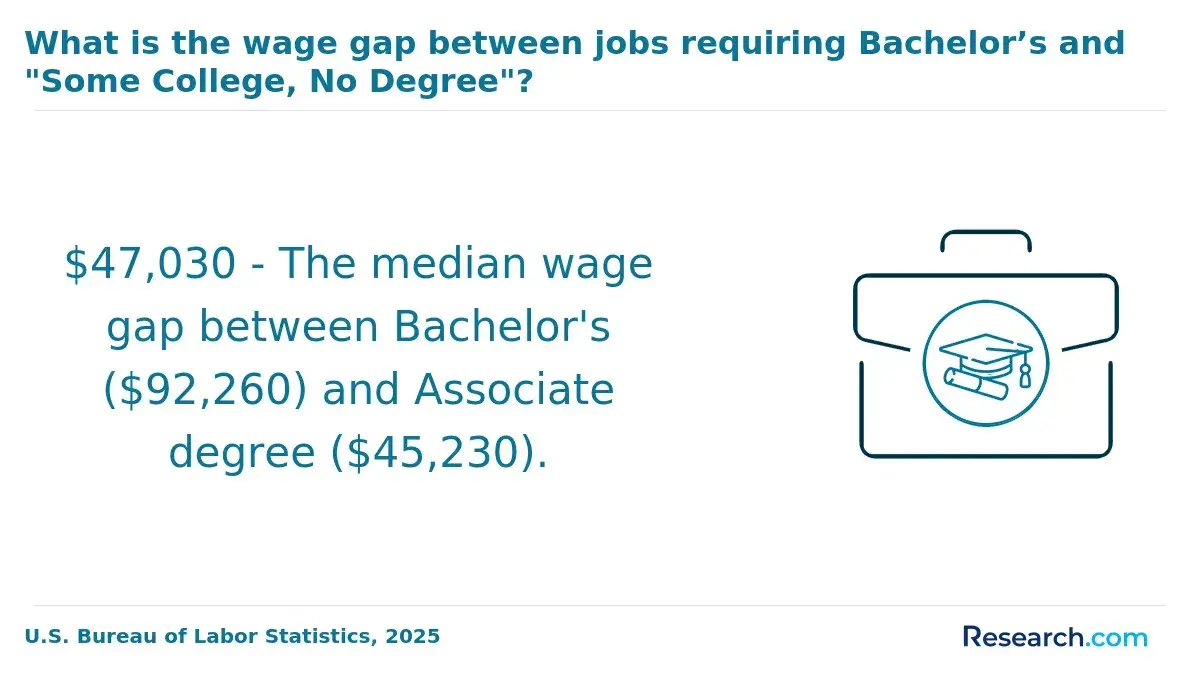
- Bachelor's Degree: A bachelor's degree can qualify graduates for compliance analyst, contract specialist, legal operations assistant, risk coordinator, claims, procurement, or junior consulting support roles. Employment rates improve notably at this level, with graduates enjoying about 20% higher job placement compared to those with only an associate degree.
- Master's Degree: A master's degree can help professionals move into specialized or senior roles in compliance, policy, governance, risk management, corporate ethics, or regulatory affairs. It is especially useful for people who already have work experience and want to strengthen their legal-business expertise without necessarily becoming attorneys.
- Doctorate Degree: Doctoral-level study is generally aimed at academic, research, advanced policy, or high-level consulting paths. If the degree is a Juris Doctor, graduates must still meet bar admission requirements to practice law. If it is a research doctorate, it may be more relevant to teaching, scholarship, or specialized advisory work.
The right degree level depends on your target role. If you want to become an attorney, verify law school admission requirements and licensure rules. If you want compliance, contracts, legal operations, or risk management, compare employer postings to see whether a bachelor's degree, master's degree, certification, or industry experience offers the strongest return. Some professionals also explore an online masters degree psychology when their work involves organizational behavior, employment issues, negotiation, or human-centered risk management.
What Skills Are Employers Seeking in Business Law Graduates?
Employers want business law graduates who can do more than identify legal concepts. They need people who can read carefully, write clearly, manage risk, work with business teams, and make sound recommendations under pressure.
- Legal and regulatory analysis: Graduates must be able to interpret contracts, policies, statutes, internal procedures, and regulatory guidance. The practical goal is to identify risk, explain options, and recommend next steps.
- Clear business communication: Strong candidates can explain legal issues in plain language to managers, clients, vendors, and non-lawyer colleagues. This includes concise emails, accurate summaries, executive briefings, and well-organized documentation.
- Contract review and negotiation: Employers value familiarity with common contract terms, obligations, deadlines, indemnification, confidentiality, payment clauses, termination rights, and dispute resolution procedures.
- Attention to detail: Small errors in names, dates, definitions, filing requirements, or contract language can create major problems. Accuracy is a core employability skill in legal-business roles.
- Compliance mindset: Business law graduates should understand how policies, training, monitoring, audits, documentation, and escalation procedures reduce organizational risk.
- Technology fluency: Legal research platforms, document management systems, contract lifecycle management tools, e-discovery systems, spreadsheets, and AI-assisted review tools are increasingly common. Candidates do not need to be engineers, but they should be comfortable learning new systems.
- Ethical judgment: Business law work often involves conflicts of interest, confidentiality, disclosure obligations, and pressure from stakeholders. Employers look for candidates who can recognize ethical issues early and handle them responsibly.
A recent business law graduate described the transition this way: “When I started, I realized just having theoretical knowledge wasn't enough. I had to quickly learn specific software and navigate changing regulations.” He also noted that communicating with non-legal colleagues took practice: “It took deliberate effort to translate legal jargon into clear terms so everyone was on the same page.” His experience reflects a common hiring reality: technical knowledge helps you get considered, but adaptability and communication often determine whether you succeed.
How Does Job Demand Affect Business Law Graduate Salaries?
Job demand affects salaries by changing how much employers must pay to attract and retain people with the right combination of legal knowledge, industry expertise, and practical skills. The U.S. Bureau of Labor Statistics reports median annual wages for legal professions related to business can reach approximately $127,000, although compensation varies widely by role, credential, location, employer type, and whether the position requires attorney licensure.
- Starting salaries: Entry-level pay is generally stronger when employers need candidates with hard-to-find skills, such as compliance monitoring, contract management, privacy knowledge, financial regulation, or industry-specific experience. Graduates with internships, software skills, or certifications may be more competitive than those with coursework alone.
- Wage growth: Salaries tend to rise faster for professionals who become trusted specialists. Examples include regulatory compliance in finance, intellectual property support in technology, contract management for large procurement teams, or governance work for public companies.
- Long-term earnings: Higher earnings are more likely when graduates move into management, senior compliance, legal operations, consulting, corporate counsel, or partnership-track legal roles. Some of these paths require advanced degrees, attorney licensure, or significant industry experience.
- Market sensitivity: Salaries can soften when a region has many applicants, when companies reduce legal budgets, or when routine tasks are automated. Local demand, industry health, and specialization matter as much as the degree title.
- Credential differences: A business law bachelor's degree, master's degree, paralegal credential, compliance certification, and Juris Doctor do not lead to identical salary ranges. Students should compare compensation by specific job title rather than assuming all business law careers pay like attorney roles.
The practical takeaway is to connect your education to a marketable function. Contracts, compliance, privacy, governance, and risk management often provide clearer salary pathways than a general interest in business law alone.
How Is AI Changing Demand for Business Law Professionals?
AI is changing business law work by automating routine review, speeding up research, and increasing the need for professionals who can evaluate technology-related risk. Estimates indicate that up to 40% of routine legal tasks may become automated in the coming decade, so graduates should expect the field to reward judgment, oversight, and technology fluency more than repetitive document work.
- Routine work is becoming less defensible as a career strategy: Basic contract comparison, document sorting, initial legal research, compliance checklists, and template drafting can increasingly be supported by AI tools. Entry-level professionals will still be needed, but they must learn to verify outputs, spot errors, and add context.
- AI creates new legal questions: Businesses need guidance on AI governance, bias, privacy, data ownership, intellectual property, vendor risk, cybersecurity, employment implications, and regulatory compliance. These areas create demand for professionals who understand both law and technology operations.
- Human judgment remains essential: AI can summarize and generate text, but it cannot replace accountability, ethical reasoning, negotiation strategy, client counseling, or business judgment. Employers will value graduates who can decide when an AI output is incomplete, misleading, or risky.
- Hiring standards are shifting: Candidates may be expected to know legal technology tools, prompt responsibly, protect confidential information, and understand AI-use policies. Employers increasingly favor applicants who show continuous learning rather than relying only on static coursework.
- Legal operations roles may expand: As companies adopt AI tools, they need people to manage workflows, evaluate vendors, set usage policies, train staff, and measure risk. Business law graduates with process improvement and technology skills can compete well in this space.
A graduate of a Business Law degree program described the change clearly: “At first, the shift was daunting-so many processes I knew were being automated. But learning to interpret AI-generated analyses and counsel clients on emerging regulations opened up new opportunities. It's challenging but rewarding to combine legal insight with technology fluency.” That experience points to the safest strategy for students: learn the law, but also learn how legal work is being redesigned.
Is Business Law Considered a Stable Long-Term Career?
Business law can be a stable long-term career area, but stability depends on specialization, credentials, adaptability, and the industry you enter. The field benefits from ongoing demand for contracts, compliance, governance, risk management, dispute prevention, and corporate transactions. However, graduates who rely only on broad classroom knowledge may face more competition than those who build applied skills.
- Steady need across business cycles: Even when hiring slows, organizations still need to manage contracts, comply with regulations, handle disputes, protect intellectual property, and reduce liability. The nature of the work may change, but the need for legal-business judgment does not disappear.
- Strong connection to regulated industries: Finance, healthcare, technology, energy, insurance, education, and government contracting all require ongoing legal and compliance support. These sectors can provide more durable demand than less regulated markets.
- Resilience through specialization: Professionals who develop expertise in privacy, AI governance, corporate compliance, employment law, procurement, intellectual property, or financial regulation are often better positioned than generalists.
- Automation risk for routine tasks: Stability is weaker for roles focused mainly on repetitive document review or administrative processing. It is stronger for professionals who can supervise systems, interpret results, negotiate, advise, and make risk-based decisions.
- Advancement through continuous learning: Certifications, industry knowledge, graduate education, law school, or specialized training can improve long-term mobility. The most stable careers are built by updating skills as regulations and business models change.
Business law should be viewed as a practical career platform rather than a guaranteed outcome. To judge fit, compare specific roles, required credentials, salary ranges, and advancement paths. Resources such as highest paying college majors can provide broader context when comparing business law with other fields.
Is a Business Law Degree Worth It Given the Current Job Demand?
A business law degree can be worth it if it supports a clear career target such as compliance, contract management, legal operations, risk analysis, governance, policy, procurement, consulting, or preparation for law school. It is less compelling if chosen only because it sounds versatile without a plan for credentials, experience, and specialization.
The demand for business law degree graduates in the United States shows moderate but steady growth, closely aligning with average employment trends across all occupations. Employers continue to need professionals who understand regulatory complexity, corporate governance, and the legal dimensions of business decisions.
The strongest return usually comes from matching the degree to marketable skills. Contract negotiation, compliance documentation, intellectual property management, dispute resolution, legal research, business writing, data privacy awareness, and technology fluency can all improve employability. Internships, applied projects, clinics, certifications, and industry experience often matter as much as the degree name.
Degree level also affects value. Graduates with advanced degrees such as juris doctorates or dual qualifications often experience better prospects for attorney, advisory, or senior roles, but those paths require more time, cost, and, where applicable, licensure steps. Students aiming for non-attorney roles should confirm whether employers in their target market prefer a bachelor's degree, master's degree, certification, or direct experience.
Before enrolling, compare accredited programs, total cost, transfer policies, career services, internship access, and graduate outcomes. Flexible study options can help working adults build skills while employed, and accredited online college courses may be useful for exploring business law-related subjects before committing to a full program.
What Graduates Say About the Demand for Their Business Law Degree
- Rory: "Pursuing a business law degree was a pivotal choice for me, opening doors I never imagined. The return on investment was tangible within the first year, as I secured a role that valued my specialized knowledge greatly. This degree has equipped me with the confidence and skills to navigate complex contracts and corporate regulations with ease."
- Gayan: "Looking back, enrolling in a business law program was a thoughtful decision that paid off in unexpected ways. Beyond financial gains, it broadened my perspective on how legal frameworks shape commercial success. The impact on my career has been profound, enabling me to provide nuanced advice and strategic solutions."
- Mariz: "From a professional standpoint, the business law degree has been an asset that continuously enhances my work performance. The investment of time and resources was justified by the advancement opportunities I encountered shortly after graduation. This degree strengthened my ability to interpret legal language and advocate effectively in business environments."
Other Things You Should Know About Business Law Degrees
The demand for business law degree graduates is evolving due to increasing complexities in corporate regulations and international trade. Businesses seek legal experts who can navigate new compliance landscapes, which is expected to sustain or even boost demand through 2026.
Yes, business law graduates who aim to practice as attorneys must pass the bar exam in the state where they intend to work. Other professionals, such as compliance officers or contract managers, may benefit from certifications like Certified Compliance and Ethics Professional (CCEP) but typically do not require licenses. These credentials help demonstrate expertise and can enhance career advancement opportunities.
Business law degree holders operating as lawyers must adhere to state bar association rules, professional ethics, and continuing legal education requirements. Those involved in corporate compliance work must follow industry-specific regulations, such as securities laws or labor regulations. Understanding these frameworks is essential to ensure lawful and effective guidance in business transactions and disputes.
Prospective students should focus on developing strong analytical and communication skills, network during internships, and stay updated on the latest legal trends. These steps will prepare them for opportunities in corporate law, compliance, and consultancy, enhancing their marketability in 2027.
References
- Twelve jobs you can do with a law degree https://targetjobs.co.uk/careers-advice/law/twelve-jobs-you-can-do-law-degree
- Disparities in Law Graduates' Earnings and Elite Lawyers' Salary Surge https://www.legal.io/articles/5513161/Disparities-in-Law-Graduates-Earnings-and-Elite-Lawyers-Salary-Surge
- The most competitive states for Attorneys in 2025 https://www.distinctrecruitment.com/us/resources/blog/the-most-competitive-states-for-attorneys-in-2025/
- Artificial Intelligence: The Impact on the Legal Industry - Bloomberg Law https://pro.bloomberglaw.com/insights/business-of-law/artificial-intelligence-the-impact-on-the-legal-industry/
- Your Practical Guide to Studying Business Law | StudyNext Australia https://studynext.com/au/resources/guide-to-studying-business-law
- Job Hunting in the Legal Industry: Where to Start? | CEB https://www.ceb.com/job-hunting-in-the-legal-industry-where-to-start/
- 2025 labour outlook and salary benchmarks in legal. https://www.randstad.com.hk/hr-trends/workforce-trends/legal-job-market-outlook-salary-trends-2025/
- Soft Skills Employers are Looking for in a Graduate https://www.law.ac.uk/resources/blog/soft-skills-employers-are-looking-for-in-a-graduate/
- Is a bachelor’s in business law right for you? Explore career outcomes https://ema.education/en/blog/is-a-bachelor-s-in-business-law-right-for-you-explore-career-outcomes/
- The Best States for Lawyers: Where to Grow Your Legal Career | CosmoLex https://www.cosmolex.com/blog/best-states-for-lawyers/


