
2027 Business Law Degree Levels Explained: Bachelor's vs Master's vs Doctorate

Co-Founder and Chief Data Scientist
The main question in choosing a business law degree is not simply “Which level is best?” It is “Which level matches the work I want to do, the time I can commit, and the return I need from the credential?” A bachelor’s degree can support entry-level business, compliance, paralegal, and legal support roles. A master’s degree can deepen expertise for professionals who already work in business, law-adjacent roles, compliance, contracts, or risk management. A doctorate is usually for people pursuing research, university teaching, senior advisory work, or high-level policy and leadership roles.
Business law degrees also differ from professional law degrees. A business law program can build strong legal and commercial knowledge, but it does not automatically qualify a graduate to practice law as an attorney. In the United States, becoming a licensed lawyer typically requires completing a qualifying law degree and meeting state bar requirements. For many students, however, business law is valuable precisely because it connects legal reasoning with corporate decision-making, regulation, contracts, employment, finance, and governance.
Industry data shows that 42% of business law graduates pursue advanced degrees to remain competitive in an evolving market. This guide compares bachelor’s, master’s, and doctorate options so prospective students can evaluate curriculum depth, admissions, completion time, cost, financial aid, careers, and salary potential before choosing a path.
Key Things to Know About Business Law Degree Levels
- Bachelor's degrees provide foundational knowledge in business law, suitable for entry-level roles; master's programs offer advanced specialization, often boosting leadership prospects and higher earnings.
- Doctorate degrees emphasize research and policy shaping, preparing graduates for academic, high-level consultancy, or executive roles within complex legal environments.
- Bachelor's typically require 3-4 years and lower costs, master's add 1-2 years with moderate expenses, while doctorates demand 3-6 years with significant financial and time commitments.
How Are Business Law Degree Levels Structured Academically?
Business law degree levels are structured by depth, independence, and professional purpose. A bachelor’s degree introduces legal and business foundations. A master’s degree adds specialization and applied analysis. A doctorate requires advanced scholarship, original research, or executive-level problem-solving.
| Degree level | Academic focus | Typical learning style | Best fit |
| Bachelor’s | Foundational business, law, ethics, communication, and analytical skills | Structured courses, general education, case studies, introductory legal research | Students seeking entry-level legal support, compliance, business, or graduate-school preparation |
| Master’s | Specialized legal-business topics such as compliance, contracts, corporate governance, tax, or international trade | Advanced seminars, applied projects, professional writing, capstones, or theses | Working professionals who want deeper expertise or advancement into specialist and managerial roles |
| Doctorate | Original research, high-level theory, policy analysis, or executive application | Independent research, dissertation or doctoral project, methodology, scholarly writing | Professionals targeting academia, senior consulting, policy, research leadership, or executive advisory work |
How academic expectations change by level
- Coursework intensity: Bachelor’s programs combine business law fundamentals with general education. Master’s programs become more concentrated and demanding, often allowing students to focus on a field such as international business law, compliance, or employment law.
- Research expectations: Undergraduate research is usually introductory. Master’s students often complete a substantial capstone, thesis, or applied project. Doctoral students are expected to produce original work that contributes to scholarship or professional practice.
- Independence: Graduate study requires stronger self-direction. Doctoral work, in particular, depends on sustained independent reading, research design, writing, revision, and faculty mentorship.
- Professional alignment: The higher the degree level, the more important it becomes to match the program’s curriculum with a clear career goal. A doctorate is rarely necessary for entry-level legal support work, while a bachelor’s may not be enough for advanced research or senior policy roles.
Students comparing business law with other specialized graduate paths can also review resources such as online BCBA master’s programs to understand how advanced online programs differ by specialization, structure, and professional outcome.
What Do You Learn in a Bachelor's Degree in Business Law?
A bachelor’s degree in business law teaches students how legal rules affect business decisions. The curriculum usually combines core business courses, introductory legal studies, writing, ethics, and practical analysis. It is designed for students who want to work in law-adjacent business roles or build a foundation for graduate study.
Common subjects in a business law bachelor’s program
- Contracts: Students learn how agreements are formed, interpreted, breached, and enforced. This is useful for roles involving procurement, sales, operations, and contract administration.
- Corporate governance: Courses examine how companies are organized and managed, including duties of directors, shareholder rights, internal controls, and accountability.
- Employment law: Students study workplace rules, hiring practices, discrimination issues, wage and hour concerns, and employee protections.
- Intellectual property: Coursework introduces copyrights, trademarks, patents, trade secrets, and licensing issues that affect businesses in technology, media, retail, and product development.
- Business ethics and compliance: Students learn how organizations reduce legal risk, respond to regulation, and build ethical decision-making into daily operations.
- Legal research and writing: Programs typically teach students how to read statutes, summarize cases, prepare memoranda, and communicate legal concepts clearly to nonlawyers.
Skills students should expect to build
- Issue spotting: Recognizing when a business decision raises legal risk.
- Analytical writing: Explaining legal and business problems in clear, evidence-based language.
- Negotiation awareness: Understanding how legal terms, business priorities, and risk allocation interact.
- Professional judgment: Knowing when a matter requires attorney review rather than informal business handling.
- Document review: Reading contracts, policies, case summaries, and regulatory materials with attention to detail.
Many programs include case studies, internships, simulations, or moot court-style exercises. These experiences matter because business law is not only about memorizing rules; it is about applying those rules to real organizational decisions.
Students interested in interdisciplinary options can compare how different online bachelor’s programs build transferable skills, including options such as an accelerated online psychology degree, while keeping in mind that psychology and business law prepare students for different academic and career outcomes.
What Specializations Are Available in a Business Law Master's Degree?
A master’s degree in business law is most useful when the specialization matches a specific career direction. Unlike a bachelor’s program, which is broad, a master’s program usually lets students focus on complex legal-business issues such as corporate transactions, compliance, taxation, intellectual property, dispute resolution, or international trade.
| Specialization | What it emphasizes | Common career relevance |
| Corporate Law | Business transactions, governance, mergers, contracts, regulatory obligations, and risk management | Corporate compliance, contract management, legal operations, business advisory roles |
| Intellectual Property Law | Copyrights, trademarks, patents, trade secrets, licensing, and protection of creative or technical assets | Technology firms, media companies, product companies, licensing teams, IP administration |
| International Business Law | Cross-border transactions, trade rules, multinational agreements, jurisdictional issues, and global regulation | Global corporations, trade agencies, import-export businesses, international compliance |
| Tax Law | Corporate taxation, fiscal policy, tax planning, compliance, and reporting obligations | Tax advisory, consulting, finance departments, corporate planning |
| Employment Law | Workplace rights, labor relations, employee protections, hiring practices, and organizational policies | Human resources, employee relations, labor compliance, workplace investigations |
| Dispute Resolution | Negotiation, mediation, arbitration, conflict management, and settlement strategy | Mediation, arbitration support, legal consulting, contract dispute management |
How to choose a specialization
- Choose corporate law if you want broad usefulness across contracts, governance, risk, and business operations.
- Choose compliance-related coursework if your target employers operate in highly regulated industries or if you already work in risk, audit, healthcare, finance, or human resources.
- Choose intellectual property if you are drawn to technology, entertainment, software, branding, product development, or creative industries.
- Choose international business law if your work involves global supply chains, trade, cross-border contracts, or multinational organizations.
- Choose tax law only if you are comfortable with technical rules, financial documentation, and detail-heavy analysis.
- Choose dispute resolution if you want a negotiation-centered path that may apply across corporate, employment, vendor, and commercial conflicts.
The best specialization is not always the most prestigious-sounding one. It is the one that fits your prior experience, target job postings, and long-term professional direction.
What Types of Doctoral Degrees Exist in Business Law?
Doctoral study in business law is for advanced learners who want to create scholarship, lead complex legal-business initiatives, advise organizations at a high level, or teach. In the U.S., approximately 5,000 doctoral degrees related to law and business are awarded each year, which reflects how specialized and competitive this level of study can be.
Main doctoral pathways
- Professional doctorates: Degrees such as a Doctor of Business Administration with a business law focus emphasize applied leadership. Students often study real organizational problems, legal risk, governance, regulation, ethics, and decision-making. This path is usually more practice-oriented than a traditional research doctorate.
- Research-focused doctorates: A PhD-style path centers on theory, methodology, academic research, and dissertation work. Graduates often pursue university teaching, policy research, scholarly publishing, or research leadership in organizations that need deep legal-business analysis.
- Specialized or interdisciplinary tracks: Some doctoral programs connect business law with economics, public policy, international trade, finance, or regulation. These options suit students whose research questions cross traditional academic boundaries.
Professional doctorate vs research doctorate
| Factor | Professional doctorate | Research-focused doctorate |
| Primary purpose | Apply advanced knowledge to professional and executive problems | Create original academic research |
| Final project | Applied doctoral project or practice-based research | Dissertation based on original scholarly inquiry |
| Typical student profile | Experienced professionals, managers, consultants, executives | Future professors, researchers, policy scholars, academic specialists |
| Best career fit | Senior leadership, consulting, corporate governance, advisory work | Academia, research institutes, policy analysis, scholarly leadership |
When asked about his experience, a graduate of a doctoral business law program described the journey as rigorous yet transformative. He remembered the “intense pressure of balancing ongoing research deadlines with unexpected shifts in relevant business regulations,” which demanded adaptability and resilience. He also valued the mentorship and collaborative environment that helped refine his analytical skills and deepen his understanding of complex legal-business intersections. His advice to prospective students was to “embrace the challenges as opportunities for growth, knowing that the process sharpens both expertise and leadership qualities.”
What Are the Admission Requirements for Each Business Law Degree Level?
Admission requirements become more selective as students move from bachelor’s to master’s to doctoral study. Applicants should review each program carefully because business law may be offered through a business school, legal studies department, continuing education unit, or interdisciplinary program, and each may evaluate applicants differently.
Bachelor's
- Educational background: Applicants usually need a high school diploma or equivalent. Schools may review GPA, course rigor, and academic readiness.
- Standardized testing: Many programs ask for SAT or ACT scores, although requirements vary by institution and admissions policy.
- Prerequisite preparation: English, writing, mathematics, social science, and business-related courses can help students prepare for legal analysis and business coursework.
- Application materials: Students may need transcripts, an application essay, recommendations, and evidence of extracurricular or work experience.
Master's
- Prior degree: Applicants must hold a bachelor’s degree, often in business, legal studies, political science, economics, accounting, management, or a related field.
- Academic performance: Admissions committees usually review undergraduate GPA, transcript patterns, writing ability, and readiness for graduate-level analysis.
- Professional experience: Relevant work experience may strengthen an application, especially for programs designed for working professionals in compliance, contracts, human resources, legal operations, or management.
- Testing requirements: Some programs may require the GRE or GMAT, while others make testing optional or waive it for qualified applicants.
- Supporting documents: Letters of recommendation, a resume, and a statement of purpose help the school assess fit, motivation, and career direction.
Doctorate
- Advanced degree: Candidates usually need a master’s degree or equivalent preparation with a strong academic record.
- Research focus: Doctoral admissions often require a research proposal or statement describing the applicant’s intended area of inquiry.
- Recommendations: Multiple letters from faculty, supervisors, or senior professionals should speak to the applicant’s analytical ability, discipline, and readiness for advanced independent work.
- Scholarly evidence: Prior research, publications, major writing projects, policy work, or professional thought leadership can strengthen an application.
- Faculty fit: For research-focused programs, applicants should confirm that faculty members can supervise their proposed topic before applying.
How Long Does Each Business Law Degree Level Take to Complete?
Business law degree timelines depend on the credential, enrollment pace, transfer credits, format, and research requirements. Bachelor’s programs generally require about four years of full-time study. Master’s degrees commonly take one to two years after the bachelor’s level. Doctoral degrees can range from three to seven years, especially when dissertation or applied research requirements are extensive. The National Center for Education Statistics reports an average of 4.5 years to finish a bachelor’s degree, reflecting part-time enrollment and other factors.
| Degree level | Common completion time | What can change the timeline |
| Bachelor’s | About four years of full-time study | Transfer credits, part-time study, accelerated courses, changing majors, internship requirements |
| Master’s | One to two years beyond the bachelor’s level | Full-time versus part-time enrollment, capstone or thesis requirements, work schedule, course availability |
| Doctorate | Three to seven years depending on research demands | Dissertation progress, faculty review, research design, professional obligations, publication expectations |
Factors that affect completion time
- Enrollment status: Full-time students usually finish faster. Part-time students may need more calendar time but can continue working while enrolled.
- Credit transfer: Prior college coursework accepted by the program can reduce required credits, especially at the bachelor’s level.
- Program format: Online, evening, hybrid, and accelerated formats may help working adults progress, but flexibility does not remove the need for consistent study time.
- Prior experience: Some programs may recognize relevant academic or professional preparation through waivers or placement decisions.
- Research requirements: Doctoral students should expect the research phase to be less predictable than coursework because approval, data collection, writing, and revision can take longer than planned.
When asked about completion time, a graduate of an online master’s business law program said that balancing full-time employment with coursework extended her studies beyond the typical two years. “I had to carefully balance deadlines and work obligations, which slowed my progress at times but made me more disciplined,” she explained. The online format gave her flexibility, but it also required strong time management and self-direction. Her experience shows that program length is not only a number of years; it is also a function of workload, personal circumstances, and realistic pacing.
Breakdown of Private Fully Online For-profit Schools

How Much Does Each Business Law Degree Level Cost?
Business law degree costs vary widely by institution, residency status, delivery format, credit requirements, and fees. Students should compare total program cost rather than tuition alone because registration fees, technology fees, textbooks, software, legal database access, travel, and lost work hours can change the real price of attendance.
| Degree level | Tuition range stated by credit | Total tuition range stated | Cost considerations |
| Bachelor’s | $200 to $600 per credit | $40,000 to $120,000 | General education requirements, transfer credits, mandatory fees, books, software, online technology costs |
| Master’s | $400 to $1,000 per credit | $20,000 to $60,000 | Specialized materials, legal databases, shorter program length, employer reimbursement possibilities |
| Doctoral | Frequently exceeding $1,000 per credit | $30,000 to over $80,000 | Longer enrollment, dissertation or project costs, research resources, travel, conference or residency expenses |
How to evaluate the real cost
- Calculate total credits: A lower per-credit rate may still be expensive if the program requires significantly more credits.
- Check mandatory fees: Online programs may charge technology fees, distance learning fees, proctoring fees, or platform access fees.
- Ask about transfer policy: Accepted credits can substantially reduce undergraduate cost.
- Compare part-time and full-time costs: Part-time study can make payments more manageable but may extend fees over more terms.
- Review employer benefits: Working students should ask whether tuition assistance applies to business law, compliance, management, or legal studies coursework.
- Consider opportunity cost: A full-time program may reduce working hours, while a part-time program may delay advancement.
Students comparing affordable business-related pathways may also review the cheapest online bachelor's degree business administration options to understand how tuition, transfer credits, and online delivery can affect total cost.
For broader context on cost comparison strategies across online programs, resources such as the most affordable online psychology degree programs can also help students think through pricing, fees, and affordability, even though psychology and business law serve different academic goals.
What Financial Aid Options Are Available for Business Law Degrees?
Financial aid can make a business law degree more attainable, but students should understand the difference between aid that reduces cost and aid that delays payment through borrowing. Nearly 85% of undergraduate students in the United States receive some form of financial aid, with the average award amounting to about $14,000 annually. Graduate and doctoral students may have different aid packages, so applicants should ask each school for a full financial aid estimate before enrolling.
Common financial aid options
- Grants and scholarships: These do not require repayment. Awards may be based on need, merit, academic performance, leadership, professional goals, or membership in a relevant organization.
- Federal student loans: Federal loans can help cover remaining costs after grants and scholarships. Students should review interest rates, repayment terms, and borrowing limits before accepting the full amount offered.
- Private loans: Private loans may be available through banks and other lenders, but they often have less flexible repayment protections than federal loans.
- Work-study programs: Eligible students may earn money through part-time work, often through campus or approved positions.
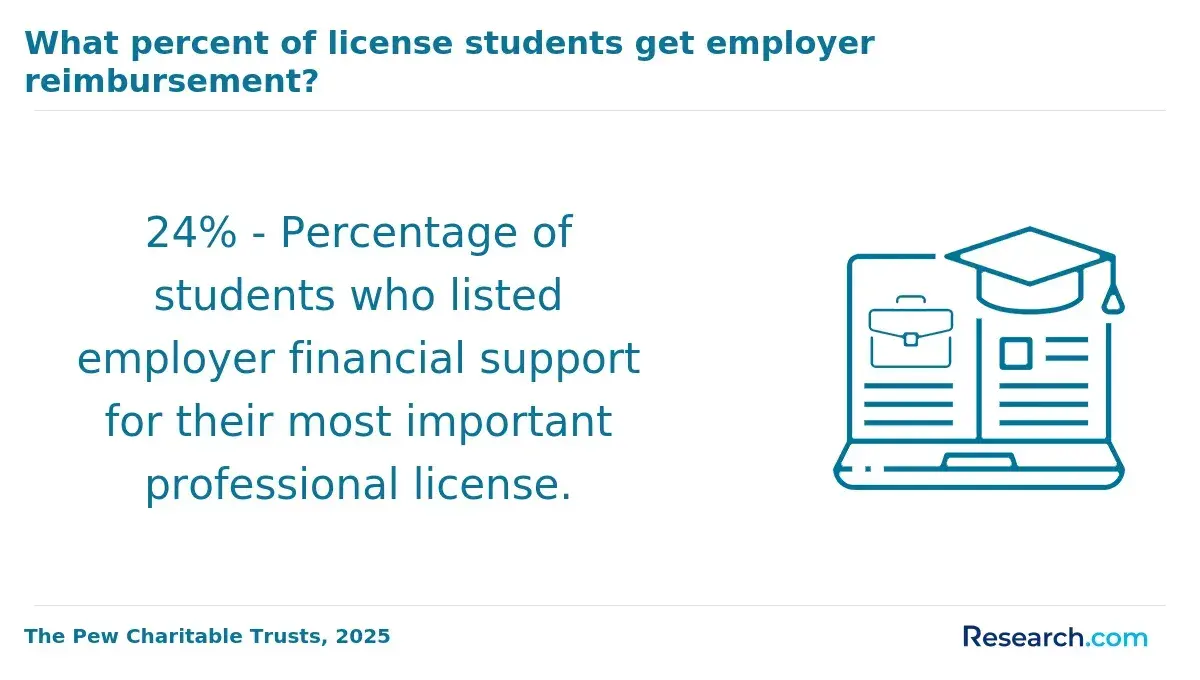
- Employer tuition assistance: Professionals working in compliance, contracts, legal operations, human resources, risk management, finance, or corporate administration may be able to connect coursework to employer reimbursement policies.
- Military education benefits: Veterans and active service members may be able to use benefits such as the GI Bill to support a business law degree.
- Graduate assistantships or fellowships: Doctoral and some master’s students may find teaching, research, or administrative assistantships, depending on the institution and program format.
Questions to ask before accepting aid
- How much of the award is gift aid, and how much is a loan?
- Is the scholarship renewable, and what GPA or enrollment status is required?
- Will aid change if I enroll part time?
- Are summer, online, or accelerated courses covered?
- Does the school provide clear cost-of-attendance estimates for each year?
- Will employer reimbursement be paid upfront or only after successful course completion?
Students who want to shorten their time in school can compare flexible formats such as an online accelerated bachelor’s degree, while verifying that faster pacing will not reduce eligibility for financial aid or create an unrealistic workload.
What Careers Are Available at Each Business Law Degree Level?
Career options in business law depend on the degree level, prior experience, jurisdiction, employer expectations, and whether the role requires attorney licensure. A business law degree can support many law-adjacent and business-facing roles, but jobs that involve practicing law or representing clients as an attorney generally require meeting professional licensing requirements.
Bachelor's Degree
- Paralegal roles: Paralegals help attorneys conduct research, organize case materials, draft documents, and manage legal information. Some employers may prefer or require a paralegal certificate in addition to a bachelor’s degree.
- Compliance officers: Compliance professionals help organizations follow regulations, internal policies, reporting rules, and ethical standards. Entry-level roles may focus on monitoring, documentation, and policy support.
- Legal assistants: Legal assistants support legal departments or law firms through scheduling, document management, client communication, filing, and administrative coordination.
- Contract or procurement assistants: Graduates may support contract tracking, vendor documentation, purchase agreements, and review workflows under supervision.
- Human resources support roles: Business law coursework can be useful for HR positions involving workplace policies, employee documentation, and compliance procedures.
Master's Degree
- Legal consultants: Graduates may advise organizations on compliance processes, contracts, risk management, and legal-business strategy, depending on their background and local rules about legal practice.
- Contract managers: Contract managers oversee contract drafting workflows, negotiation support, renewals, vendor terms, and performance obligations.
- Compliance directors: Experienced professionals with graduate training may lead compliance teams, develop internal policies, manage audits, and coordinate responses to regulatory changes.
- Risk management specialists: These professionals identify legal, operational, and financial risks and help organizations design controls to reduce exposure.
- Legal operations managers: In corporate settings, legal operations professionals improve budgeting, technology, process management, vendor relationships, and reporting within legal departments.
Doctorate Degree
- Academic professors: Doctoral graduates may teach, publish research, mentor students, and contribute to curriculum development in business law, legal studies, management, or policy programs.
- Senior legal strategists: Advanced experts may influence governance, compliance frameworks, regulatory strategy, or corporate policy in large organizations or public-sector settings.
- Research leaders: Doctorate holders may lead studies on regulation, corporate responsibility, business ethics, global trade, or law and economics.
- Policy advisors: Some graduates work with government agencies, nonprofits, think tanks, or industry groups on legal-business policy issues.
Professionals who already hold a bachelor’s degree and want a shorter graduate pathway can compare options such as one-year master’s programs, but they should confirm that the curriculum is deep enough for their target business law role.
How Do Salaries Compare Among Bachelor's vs Master's vs Doctorate Business Law Graduates?
Salaries tend to rise with advanced education, but degree level is only one factor. Location, industry, employer size, job function, experience, certifications, performance, and licensure can all affect pay. A doctorate does not guarantee the highest salary in every setting, and a master’s degree may have a stronger financial return than a doctorate for professionals aiming for corporate advancement rather than academia.
| Degree level | Typical salary range stated | Common salary drivers |
| Bachelor’s | $50,000 to $70,000 annually | Entry-level legal support, compliance, contract administration, industry, location, prior internships |
| Master’s | $70,000 to $95,000 | Specialization, management responsibility, compliance expertise, contract complexity, work experience |
| Doctorate | Frequently surpassing $100,000 per year | Senior advisory work, consulting, research leadership, executive roles, academic rank, employer type |
How to interpret salary differences
- A bachelor’s degree can be enough for entry-level roles: Students who want to start working quickly may find the undergraduate path more practical than delaying employment for graduate study.
- A master’s degree can improve specialization: The strongest salary benefit often comes when the degree aligns with a high-demand function such as compliance, contracts, tax, governance, or risk management.
- A doctorate is a long-term investment: It may be appropriate for teaching, research, policy, consulting, or senior leadership, but the time and cost should be weighed carefully.
- Experience still matters: Employers often value demonstrated judgment, writing ability, regulatory knowledge, and business impact as much as the credential itself.
What Graduates Say About Their Business Law Degree Level
- Jin: "Choosing to pursue a Bachelor's in business law was a turning point for me. While the average cost was a concern, I found that the investment was worthwhile considering the practical knowledge I gained. This degree opened doors to entry-level opportunities that allowed me to grow confidently in the corporate legal field."
- Aimee: "Reflecting on my master's in business law, I initially hesitated due to the program's expense, which is often higher than the undergraduate level. However, the depth of expertise and the strategic thinking skills I developed have been invaluable in my role as a legal consultant. The degree truly enhanced my ability to navigate complex business environments."
- Sherina: "Pursuing a doctorate in business law was undeniably demanding and costly, but it was a commitment that profoundly shaped my career. The advanced research and leadership skills I acquired have empowered me to influence policy and mentor emerging professionals effectively. I recommend this path to those serious about making a lasting impact in the legal business arena."
Other Things You Should Know About Business Law Degrees
Yes, dual degree programs combining business law with fields like business administration (MBA) or public policy are increasingly popular. These programs provide interdisciplinary knowledge and can enhance a graduate's competitiveness in both legal and business environments. They often require additional time but offer comprehensive skills applicable to corporate governance, compliance, and strategic decision-making.
Employers typically reserve preference for a doctorate in business law for academic, research, or highly specialized legal consulting roles rather than standard corporate or legal practice positions. Master's degrees are usually sufficient for most advanced business law careers in industry or government. Doctorate holders are often sought after for their deep expertise and contribution to policy development or complex legal frameworks.
References
- Doctor of Laws - Wikipedia https://en.wikipedia.org/wiki/Doctor_of_Laws
- Average Cost of a Master's Degree: 2025 Analysis https://educationdata.org/average-cost-of-a-masters-degree
- Master's degree in Business Law https://dauphine.psl.eu/en/training/masters-degrees/business-law
- Bachelor's vs Master's degree: Key differences and how to choose https://www.edhec.edu/en/news/master/bachelors-vs-masters-degree-differences
- Average fees for a bachelor's, master's and PhD degree today https://studyinternational.com/news/degree-fees-bachelor-master-phd/
- Master Droit des affaires - Parcours Droit des affaires et fiscalité (DAF) https://formation-en.univ-orleans.fr/en/training-offer/master-lmd-XB/master-droit-des-affaires-parcours-droit-des-affaires-et-fiscalite-daf-JDK2DU4Q.html
- MBA or JD: Which Is the Better Career Path? https://teach.com/online-ed/business-degrees/online-masters-business-administration/mba-vs-jd/
- How Need-Based Aid Works https://law.yale.edu/admissions/cost-financial-aid/how-need-based-aid-works
- Understanding Graduate Degrees: Types, Duration, and Benefits https://www.monash.edu.my/news-and-events/trending/graduate-degrees-types-duration-and-benefits
- LL.M. Concentrations | LLM GUIDE https://llm-guide.com/concentrations


