
2027 Is a 2-Year Business Law Degree Worth It: Accelerated Bachelor's ROI & Time Trade-Offs

Co-Founder and Chief Data Scientist
A 2-year accelerated business law degree can be appealing if you want to finish school faster, reduce time out of the workforce, and move into roles that combine legal knowledge with business operations. The harder question is whether the faster timeline produces enough career value to justify the workload, tuition, and financial risk.
This guide is for students comparing accelerated business law programs with traditional bachelor’s pathways, online options, and other career-focused degrees. It explains how these programs are structured, what admissions and weekly workload usually look like, how costs and financial aid work, and which jobs and salary outcomes are realistic. It also highlights an important limitation: a business law degree can support careers in compliance, contracts, legal support, and corporate administration, but it is not the same as earning a JD or becoming licensed to practice law.
With average student debt for undergraduate degrees reaching over $30, 000, the decision should come down to fit, affordability, employer recognition, and return on investment—not speed alone.
Key Benefits of a 2-Year Business Law Degree
- A 2-year accelerated business law degree reduces time to enter the workforce, enabling faster salary earnings and minimizing opportunity costs compared to traditional 4-year degrees.
- Graduates often see competitive entry-level salaries, improving ROI by balancing educational costs against quicker career advancement in legal compliance and corporate sectors.
- Intensive curriculum focuses on practical skills and current regulations, boosting employability and reducing further training costs, a critical factor in assessing value for time invested.
How Do 2-Year Business Law Programs Work?
A 2-year business law program usually works by compressing a standard undergraduate pathway into a faster academic calendar. Instead of taking long breaks between semesters, students move through shorter terms, heavier course loads, and year-round enrollment. The goal is to cover core business and legal topics in less time without removing essential degree requirements.
These programs are typically best suited for students who can study consistently every week and manage deadlines without much downtime. They may be offered as accelerated bachelor’s degrees, degree-completion programs for students with transfer credits, or intensive business-law-focused programs depending on the institution.
- Accelerated pacing: The curriculum condenses the usual 120-credit program into a schedule built around faster completion. Students should expect less time between assignments, exams, and major projects.
- Year-round enrollment: Many programs use summer and winter sessions so students continue earning credits when traditional students may be on break.
- Condensed course terms: Courses may run in shorter blocks, which means reading, research, and assessments arrive quickly.
- Credit load expectations: Students often take 15-18 credits during a term. That pace can be difficult for learners with unpredictable work schedules or heavy family responsibilities.
- Instructional format: Programs may include synchronous online lectures, asynchronous assignments, discussion boards, recorded lectures, and occasional in-person activities depending on delivery format.
- Assessment methods: Students are commonly evaluated through quizzes, case studies, legal writing assignments, research papers, group projects, and exams.
- Curriculum progression: Core topics often include contracts, corporate law, ethics, intellectual property, legal research, compliance, and business regulation.
The main benefit is speed. Graduates can enter the workforce sooner and start building experience earlier. The trade-off is intensity: students have less time to absorb complex legal concepts, revise written work, or recover from a difficult term.
The U.S. Bureau of Labor Statistics predicts a 6% growth in legal support roles related to business law over the next decade, which can make this pathway attractive for students targeting legal support, compliance, and corporate operations roles. Still, prospective students should compare program format, accreditation, total cost, and employer expectations before enrolling.
For a comparison with another accelerated degree model, students can review RN to BSN no clinicals programs to see how condensed pathways work in a different professional field.
What Are the Admission Requirements for a 2-Year Business Law Degree?
Admission requirements for a 2-year business law degree depend on whether the program is designed for first-time college students, transfer students, or working adults completing a bachelor’s degree. Because accelerated programs move quickly, schools often look for evidence that applicants can handle college-level reading, writing, and analytical work from the start.
Common admission requirements include the following:
- Prior education: Applicants generally need a high school diploma or equivalent, such as a GED. Degree-completion programs may also require previous college credits.
- GPA expectations: Many programs require a minimum GPA, often ranging from 2.5 to 3.0 on a 4.0 scale. A stronger GPA can help demonstrate readiness for an accelerated workload.
- Standardized tests: SAT or ACT scores may be optional, especially for adult learners, transfer students, and online accelerated programs. Requirements vary by institution.
- Prerequisite courses: Some programs expect prior coursework in English, mathematics, business fundamentals, or introductory legal studies.
- Work experience: Relevant experience in administration, business operations, legal offices, human resources, finance, or compliance may strengthen an application. In some programs, it may also support prior learning credit.
Students should read admissions pages carefully rather than assuming every 2-year option is open to beginners. Some “2-year” programs are realistic only for students who already hold an associate degree or have enough transfer credits to enter with advanced standing.
Before applying, ask each school these questions:
- Is the program a full bachelor’s degree, an associate degree, or a degree-completion track?
- How many transfer credits are required to finish in two years?
- Are credits accepted from community colleges, military training, or prior institutions?
- Does the program require a minimum grade in prerequisite courses?
- Are online students held to the same admission standards as campus students?
Students comparing career-focused online pathways may also review medical billing and coding online schools to understand how admissions, accreditation, and financial aid differ across practical programs.
What Does a Typical Week Look Like in a 2-Year Business Law Program?
A typical week in a 2-year business law program is structured and deadline-heavy. Students may attend live or recorded classes, read legal and business materials, analyze cases, complete writing assignments, participate in group projects, and prepare for frequent assessments. The pace is closer to a full-time academic commitment than a casual part-time program.
Students should expect the week to include:
- Class sessions: Students attend multiple lectures each week totaling about 12 to 18 credit hours. Topics may include contract law, corporate governance, business ethics, and regulatory compliance.
- Assignments and assessments: Coursework often includes case briefs, research papers, problem-solving exercises, quizzes, and exams. Missing one deadline can quickly affect performance because terms are compressed.
- Group work: Collaborative projects and presentations are common. These assignments help students practice communication, negotiation, and team-based problem solving.
- Independent study: Students need time outside class to review legal concepts, read assigned materials, prepare written analysis, and study for assessments.
- Instructor interaction: Office hours, discussion forums, email, and virtual meetings can be important for clarifying difficult topics before the program moves on.
- Time management: A weekly schedule is essential. Students who wait until the end of the week to start assignments may struggle to keep up.
What the workload feels like
When asked about his experience, a professional who earned a bachelor's in business law within two years shared how overwhelming the initial weeks felt. "Balancing back-to-back classes and deadlines was intense," he recalled, emphasizing that developing a strict study schedule was crucial.
He also noted, "Group projects often tested our coordination, especially when juggling full-time work." Despite the pressure, he found that regular instructor guidance was invaluable, explaining, "Having that support made complex subjects more manageable."
Ultimately, he reflected that the fast pace pushed him to build strong habits in time management and problem-solving, skills that continue to benefit his career today.
Before enrolling, students should map a sample week honestly. If work hours change frequently, caregiving duties are unpredictable, or internet access is unreliable, an accelerated program may require extra planning or a slower part-time alternative.
Are 2-Year Business Law Programs Available Online?
Yes. Many 2-year business law programs are available online or in hybrid formats, although availability depends on the school, degree level, and whether the program is designed for transfer students. Online delivery can make accelerated study more accessible, but it does not make the workload easier.
Students should compare delivery formats carefully:
- Fully online programs: These allow students to complete coursework remotely, often without campus visits. They are useful for working adults, military students, caregivers, and students who do not live near a campus.
- Hybrid programs: These combine online coursework with occasional in-person classes, residencies, exams, or presentations. Hybrid formats may offer more direct interaction but less scheduling flexibility.
- Asynchronous learning: Students watch lectures and complete assignments on their own schedule within weekly deadlines. This format is flexible but requires strong self-discipline.
- Synchronous learning: Students attend live online sessions at set times. This can improve accountability and discussion but may be harder for students with irregular work hours.
- Technology requirements: Students need reliable internet, a suitable computer, video conferencing access, document software, and sometimes specialized platforms or proctoring tools.
- Student support services: Online students should look for virtual tutoring, library access, writing support, academic advising, career services, and technical support.
The most important quality marker is not whether the program is online, but whether it is properly accredited, transparent about total cost, and aligned with the jobs students want. Employers may be comfortable with online degrees from recognized institutions, especially when students can show relevant projects, internships, work experience, or certifications.
How Much Does a 2-year Business Law Degree Cost?
The cost of a 2-year business law degree depends on tuition rates, transfer credits, fees, delivery format, books, technology, and the amount of financial aid a student receives. The advertised tuition price is only one part of the total cost. Students should calculate the full cost of attendance before deciding whether the accelerated timeline is financially worthwhile.
Major cost categories include:
- Tuition structure: Tuition is often charged per credit hour. Accelerated students may pay more in a shorter period because they take more credits each term, even if the total degree cost is similar to or lower than a traditional route.
- Mandatory fees: Registration, technology, student services, graduation, and online learning fees can add to the total price.
- Textbooks and learning materials: Business law courses may require textbooks, case materials, legal research tools, or digital access codes.
- Technology and lab fees: Some programs charge for software, proctoring, simulations, or online platforms used in business and legal coursework.
- Accelerated program savings: Accelerated programs can save up to two years of tuition and related expenses compared to traditional degrees. According to the National Center for Education Statistics, average yearly tuition at public institutions ranges from $7,000 to $15,000, so completing a business law degree in two years may halve overall tuition costs.
Cost savings are not automatic. Students should also consider opportunity cost. A heavy course load may reduce the ability to work full time, take overtime, or accept promotions during the program. For some students, graduating faster offsets that short-term income pressure. For others, a slower and cheaper part-time path may be more sustainable.
When comparing options, ask schools for a written estimate that includes tuition, fees, books, expected transfer credits, and the number of terms required to graduate. Students comparing business-focused pathways may also want to review an online business degree to see how affordability differs across related programs.
For another example of a cost-conscious accelerated pathway, prospective students can examine a low-cost medical coding and billing online program.
Can You Get Financial Aid for 2-Year Business Law Programs?
Yes, students may be able to receive financial aid for 2-year business law programs if the school and program meet eligibility requirements. The most important starting point is accreditation. Federal financial aid generally depends on attending an eligible institution and completing the required application process.
Common funding options include:
- Federal student aid eligibility: Qualifying students can access Pell Grants and Direct Loans for accredited accelerated programs. Because the curriculum is compressed, disbursements may follow semester or credit completion milestones.
- Scholarships and grants: Students may find awards for business majors, legal studies students, adult learners, transfer students, or accelerated degree candidates. Scholarships do not always renew automatically, so students should check conditions carefully.
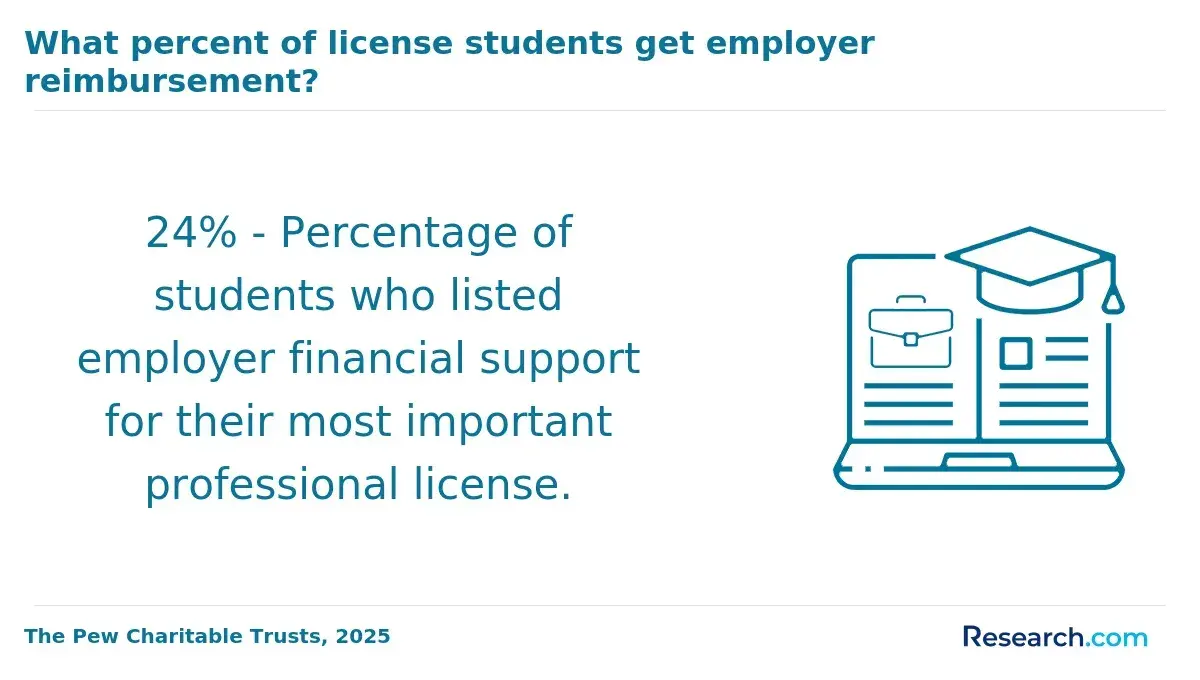
- Employer tuition assistance: Working adults may be able to use employer-sponsored tuition support if the degree relates to their current role or advancement plan.
- Institutional payment plans: Some schools let students divide tuition into installments during the term. This can help with cash flow but does not reduce the total price.
- Accelerated program considerations: A faster calendar can change when aid arrives and when bills are due. Students should ask the financial aid office how disbursement works before classes begin.
Financial aid can make an accelerated program possible, but students should avoid borrowing based only on the promise of graduating faster. Review loan amounts, interest, repayment timing, and expected entry-level salaries in the roles you plan to pursue.
What students should clarify before enrolling
- Is the program eligible for federal student aid?
- Will transfer credits change the cost or aid package?
- Are scholarships renewable for every term in the accelerated schedule?
- How are tuition bills timed in short academic terms?
- Will dropping a course affect aid eligibility or satisfactory academic progress?
When I spoke with a professional who completed an accelerated bachelor's degree in business law, she emphasized how important financial aid was to her success. "It was challenging to keep up with the tight schedule while making sure my funding was in place," she explained.
Navigating the aid application alongside a full-time job required careful organization and persistence. She recalled, "My employer's tuition assistance was a game changer, but coordinating it with federal aid disbursements took some patience."
Reflecting on the experience, she shared that securing multiple forms of aid and understanding how the accelerated format affected payments ultimately allowed her to finish faster without excessive debt. "It felt empowering to manage my finances well and graduate on time," she said, highlighting how crucial transparent aid options are for students tackling accelerated paths.
What Jobs Can You Get With a 2-Year Business Law Degree?
A 2-year business law degree can prepare students for roles where legal knowledge supports business decision-making, documentation, risk management, and regulatory compliance. It is not a substitute for law school and does not qualify graduates to practice law as attorneys. Its value is strongest in business, corporate, administrative, compliance, and legal support settings.
Common career paths include:
- Legal assistants and paralegals: These roles support attorneys by organizing documents, conducting legal research, preparing drafts, maintaining case files, and communicating with clients or internal teams. Business law coursework can be useful for contract-heavy or corporate practices.
- Compliance officers: Compliance roles focus on helping organizations follow laws, regulations, policies, and internal procedures. Graduates may work in finance, insurance, healthcare administration, manufacturing, or other regulated industries.
- Contract administrators: Contract administrators help track, review, organize, and manage business agreements. A foundation in contract law and risk analysis can be directly relevant.
- Business operations and risk roles: Some graduates use the degree in procurement, vendor management, human resources, corporate governance support, or internal audit assistance.
- Pathway to advancement: Graduates may strengthen their prospects with relevant work experience, industry certifications, internships, or later graduate study.
The accelerated format can help students enter the workforce sooner, which is valuable for career changers or students trying to minimize time in school. However, entry-level outcomes vary by location, employer, prior experience, and whether the degree is a full bachelor’s degree or a shorter credential.
Students comparing fast, career-oriented education models can also review cheap online nursing programs to understand how different industries structure accelerated pathways around workforce demand.
How Do Salaries Compare for 2-year Business Law Degree vs. Traditional Bachelor's Degrees?
Salary comparisons depend on the exact credential, employer, location, work experience, and industry. In general, accelerated business law graduates benefit from entering the workforce sooner, while traditional bachelor’s degree holders may benefit from a broader academic experience, more time for internships, and stronger employer familiarity with the degree format.
Key salary considerations include:
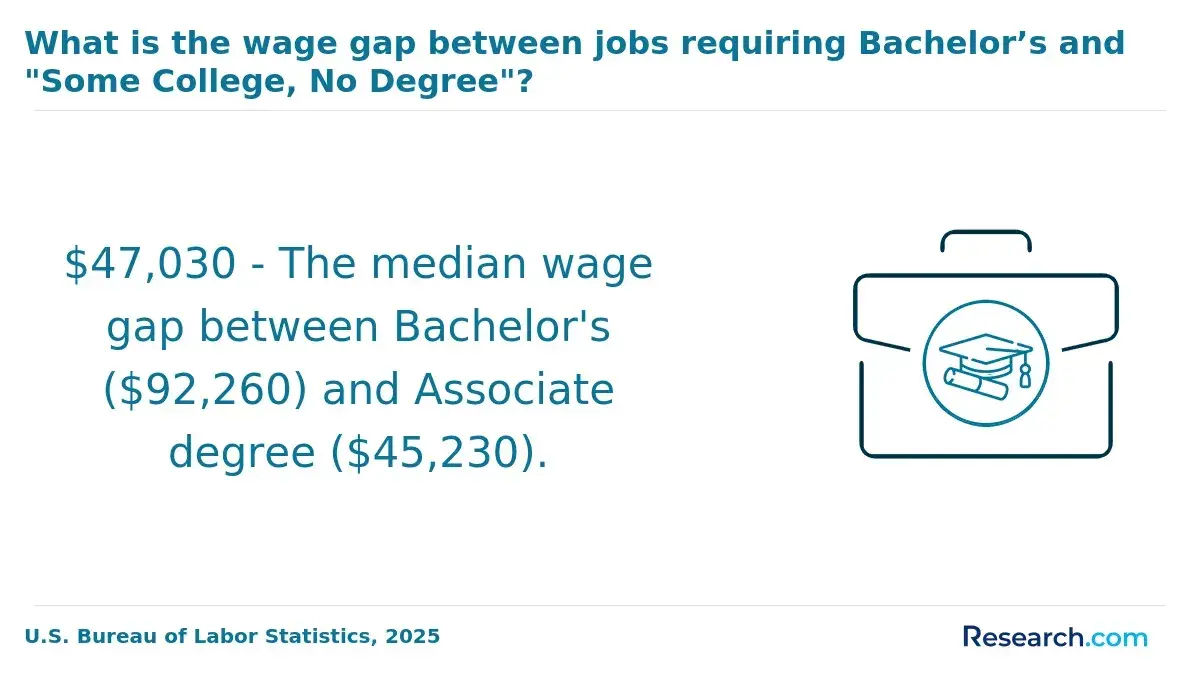
- Early-career earnings: Graduates holding a 2-year business law degree typically start with median salaries ranging from $46,000 to $55,000, while traditional bachelor's degree holders tend to begin with slightly higher salaries of $50,000 to $60,000.
- Long-term earning potential: Over 10 to 20 years, individuals with bachelor's degrees often reach median salaries above $70,000, especially when advancing to supervisory or managerial roles in business or legal fields.
- Employer perception: Some employers still prefer traditional bachelor’s degrees for advancement, especially in larger organizations with formal degree requirements. Relevant experience, strong references, internships, and certifications can help offset this gap.
- Career progression timelines: Accelerated graduates may need additional experience before qualifying for the same leadership roles as candidates with more extensive academic or internship backgrounds.
- Faster workforce entry: A major advantage is entering the workforce about two years earlier. Earlier earnings and earlier experience can improve overall ROI, especially if the student avoids taking on excessive debt.
The right comparison is not just starting salary versus starting salary. Students should compare total program cost, debt, lost income while enrolled, time to first job, likelihood of promotion, and whether employers in their target field recognize the credential.
For a broader look at how accelerated healthcare pathways balance cost and career outcomes, students may compare this decision with affordable RN to BSN online programs.
Which Factors Most Affect ROI for Accelerated Business Law Degrees?
The return on investment for an accelerated business law degree depends on whether the program helps you earn a recognized credential faster, at a manageable cost, and with clear access to jobs you actually want. A shorter timeline improves ROI only if the degree is credible and the workload does not force you to take on unsustainable debt or abandon employment unnecessarily.
The most important ROI factors are:
- Time-to-completion: Accelerated programs typically shorten the degree timeline to around two years, allowing students to enter the workforce earlier than traditional four-year options. Earlier employment can improve the financial value of the degree.
- Tuition and total cost: Per-credit rates may be higher or lower depending on the school, but students should evaluate the full cost, including fees, materials, technology, and any credits that do not transfer.
- Opportunity cost savings: Spending less time in school may reduce lost income compared with longer programs. However, a demanding schedule may also limit work hours while enrolled.
- Employment outcomes and salary growth: Graduates with business law knowledge may pursue roles in compliance, contract management, legal support, and corporate administration. Starting salaries typically range from $45,000 to $60,000 with potential for increased earnings as experience and certifications accumulate.
- Industry demand: Organizations continue to need employees who understand contracts, regulations, documentation, and risk. Demand may be stronger in regulated industries and larger corporate environments.
- Transferability of skills: Skills such as legal analysis, contract review, business writing, critical thinking, and regulatory awareness can apply beyond legal support roles.
- Accreditation and employer recognition: A low-cost or fast program may have weak ROI if employers do not recognize the institution or if credits do not transfer to future education.
- Prior experience: Students who already work in business, administration, finance, compliance, or legal support may see stronger ROI because the degree builds on an existing career base.
A practical ROI test is simple: compare the total amount you will pay and borrow with the roles you are realistically qualified for after graduation. If the program requires heavy borrowing but does not improve your access to better jobs, the faster timeline may not be enough to justify enrollment.
How Do You Decide If a 2-year Business Law Degree Is Right for You?
A 2-year business law degree may be right for you if you need a faster route into business, compliance, contracts, or legal support roles and you can handle a compressed academic schedule. It may not be the best fit if you need a slower pace, want extensive campus experiences, require maximum transfer flexibility, or plan to become an attorney without understanding the additional education required.
Use these questions to guide your decision:
- What credential will you actually earn? Confirm whether the program is a bachelor’s degree, associate degree, certificate, or degree-completion pathway.
- Can you finish in two years with your current credits? Some programs advertise a 2-year timeline only for students who already have transfer credits.
- Is the school accredited? Accreditation affects financial aid eligibility, credit transfer, graduate school options, and employer confidence.
- Can you manage the workload? Accelerated study requires consistent weekly availability, strong reading skills, and disciplined time management.
- Can you afford the program? Review tuition, fees, books, technology, lost income, and financial aid before committing.
- Do target employers value the degree? Search job postings for compliance, contract administration, paralegal, legal assistant, and business operations roles in your area.
- Does it support your long-term plan? Consider whether you may later need certifications, graduate study, or additional legal education.
This pathway is strongest for students who are career-focused, organized, and clear about the jobs they want after graduation. It is less ideal for students who are unsure of their direction or who need significant academic support before taking advanced business and legal courses.
The best next step is to compare several programs side by side using the same criteria: accreditation, total cost, transfer policy, format, graduation timeline, career services, and job outcomes. A fast program should still be a good program.
What Graduates Say About Their 2-Year Business Law Degree
- Dominic: "Choosing a 2-year accelerated bachelor's degree in business law was a no-brainer for me because I wanted to fast-track my education without sacrificing quality. Though the schedule was intense, balancing work and study taught me incredible discipline and time management. This degree has already opened doors in my career, helping me land a role at a top consultancy firm-all while keeping my student debt around the average cost of attendance, which was manageable."
- Chelsea: "Pursuing a 2-year business law degree gave me the flexibility I needed to continue supporting my family while advancing my education. The compact schedule was demanding, but I learned to prioritize and stay focused, which made the experience rewarding. Reflecting on my journey, this degree provided a solid foundation that enhanced my professional confidence and allowed me to transition smoothly into legal advising roles within the corporate sector."
- Garrett: "I chose the accelerated business law program because it offered an efficient path to enter the legal field without the typical time commitment. Managing the rigorous pace required a strategic approach to my daily routine, but it refined my organizational skills tremendously. Since graduating, this degree has been instrumental in shaping my career as a corporate compliance officer, providing expertise that is highly valued in my workplace. Considering the reasonable average cost of attendance, it was a smart investment."
Other Things You Should Know About Business Law Degrees
A 2-year accelerated business law degree can provide focused, intensive training, potentially sacrificing depth for speed. This format often includes enhanced resources and support to ensure students grasp essentials, aligning education closely with swift career readiness by 2026.
A 2-year business law degree in 2027 offers a quick entry into the job market, appealing to employers with its focus on core skills. However, perception varies by industry, and networking or internships can enhance career prospects, ensuring alignment with employer expectations.
The accelerated time frame in a 2-year business law degree can intensify the learning experience by focusing on essential topics and skills. However, students must be prepared for a more rigorous schedule that requires strong time-management skills to maintain learning quality while balancing an increased workload.
References
- Law School ROI Report: Expected Net Lifetime Income of U.S. Law School Graduates https://www.bcgsearch.com/bcgnews/900056171/Law_School_ROI_Report_Expected_Net_Lifetime_Income_of_U_S_Law_School_Graduates/
- Law https://www.euruni.edu/en/BA-Hons-in-Business/Law.html
- What Types of Law Should I Study? Law Degrees & Areas https://www.immerse.education/university-preparation/choosing-a-degree/what-types-of-law-should-i-study/
- 5 best two-year degrees for international students in the UK https://studyinternational.com/news/two-year-degree-uk/
- Is Grad School Worth It? A Comprehensive Return on Investment Analysis - FREOPP https://freopp.org/whitepapers/is-grad-school-worth-it-a-comprehensive-return-on-investment-analysis/
- 6 Fast-Growing Jobs You Can Land with a Master of Business, Law, and Technology Degree | The Colleges of Law https://www.collegesoflaw.edu/blog/2025/09/09/fast-growing-jobs-masters-business-law-technology/
- MBA or JD: Which Is the Better Career Path? https://teach.com/online-ed/business-degrees/online-masters-business-administration/mba-vs-jd/
- Fees & Financial Aid https://www.law-school.de/international/education/master-of-law-and-business/finances
- How To Determine If Law School Is Right For You https://cbaatthebar.chicagobar.org/2022/11/17/how-to-determine-if-law-school-is-right-for-you/
- M101 LLB Law Accelerated Programme 7254 (2 years) | University of Southampton https://www.southampton.ac.uk/courses/law-accelerated-programme-degree-llb


