2027 Online BA in Psychology - General Psychology After an AAS in Occupational Therapy Assisting: Compare Transfer Credit and Remaining Coursework
Audited and Verified:
Our Editorial and Data Verification Process
Research.com uses government datasets, official education statistics and primary institutional information to support its career and degree guides. Our review process checks factual accuracy, occupational definitions, source dates and the requirements associated with the credentials discussed.
How This Article Was Fact-Checked
Our editorial team verifies salary estimates, employment projections, education requirements and program information against original data providers and official organizations. Salary figures are checked against the relevant occupational definitions and reporting periods. Information about licensure, accreditation and required in-person training is reviewed separately.
Fact-checked and verified on:

Co-Founder and Chief Data Scientist
An occupational therapy assistant AAS gives you health-care experience, but it may not clear as much of an online psychology BA as its credit total suggests. Applied clinical courses can transfer as electives while general education, psychology methods, and upper-division requirements remain.
This guide is for OTA graduates comparing degree-completion options. It shows how to read a transfer evaluation, estimate the coursework and cost still ahead, and decide whether a general psychology BA serves your career goal better than a more direct route.
Key Things You Should Know
- An OTA AAS can provide general education and elective credit, but clinical OTA courses rarely replace upper-division psychology or research requirements without an approved equivalency.
- For an illustrative 120-credit BA, 60 credits that apply to the degree leave 60 credits to earn; accepted credits alone do not establish that balance.
- Compare written degree audits, residency rules, course schedules, and total remaining cost before treating any program's transfer-credit maximum as a completion plan.
What Can You Transfer From an Occupational Therapy Assistant AAS to an Online Psychology Bachelor's Degree?
An Associate of Applied Science (AAS) in occupational therapy assisting is designed primarily for occupational preparation. A receiving college may accept its credits without treating the AAS as equivalent to a transfer-oriented associate degree or as completion of the college's general education requirements.
The distinction is accepted credit versus applied credit: a course can appear on your transcript as a transfer elective yet satisfy no outstanding requirement. This table shows where common OTA coursework might fit; only the receiving institution can assign the actual equivalencies.
| Prior coursework | Possible BA application | Key uncertainty |
| English composition, mathematics, humanities | General education | Whether each course meets a specific writing, quantitative, or breadth requirement |
| Introductory psychology, lifespan development | Psychology major or general education | Course content, level, and the major's minimum-grade rule |
| Anatomy, physiology, medical terminology | Science requirement or electives | Lab requirements and whether health-science courses count toward the BA |
| OTA intervention, clinical, and fieldwork courses | Usually electives, if accepted | Transfer limits on technical coursework and available elective space |
| Statistics | Quantitative requirement or psychology prerequisite | Whether the syllabus matches the required statistics course |
Send official transcripts and, for uncertain courses, syllabi with learning outcomes to the transfer-credit office. Ask the psychology department to review major substitutions separately. For a broader explanation of transferring college credits into a psychology degree, keep the focus on where credits apply - not merely how many the school accepts.
How Many Credits Remain After an Occupational Therapy Assistant AAS?
Subtract credits that fulfill degree requirements from the BA's total credit requirement, then check whether major, upper-division, general education, and institutional residency minimums require additional coursework. The final number comes from an approved degree audit, not the credit count printed on the AAS diploma.
For example, in a hypothetical 120-credit BA, an evaluation that applies 60 OTA-era credits leaves 60 credits. If the school accepts 72 credits but applies only 60 because electives are full, the student still has 60 credits of requirements to finish. Prerequisite sequencing can also affect how quickly those credits can be earned.
Compare audits from multiple colleges using the same categories: credits accepted, credits applied, unmet requirements, required credits at that institution, and courses offered in your intended terms. If your goal is specifically substance-use work, compare that audit with the requirements and bachelor's-level substance use counseling tuition and career value; a different major could change both your remaining courses and the credential's relevance.
Is an Online General Psychology Bachelor's Degree Accredited?
Check the institution's accreditation and confirm that it covers the college offering the online BA. Accreditation belongs to an institution or a defined program within its stated scope; an online format does not make a degree separately accredited. The college should identify its accreditor and current status, which you can confirm with the accreditor or the U.S. Department of Education's accreditation records.
Do not require American Psychological Association accreditation for a general psychology BA: APA accreditation applies to specified professional psychology training programs, not general undergraduate psychology majors. Nor does institutional accreditation make a psychology BA a counseling qualification. If counseling is your intended occupation, compare the degree's purpose and applicable state credential rules with online study options for addiction counseling before assuming similar course titles lead to the same eligibility.
A general psychology BA typically builds from introductory psychology into research methods, statistics, and advanced study of behavior and development. Requirements differ by college. An OTA graduate may have relevant exposure to disability, lifespan development, and client communication while still needing psychology's approach to study design, evidence, and interpretation.
Examine the catalog for required courses in biological, cognitive, developmental, social, and abnormal psychology; electives; a seminar, capstone, or internship if required; and the prerequisites for each. Statistics before research methods is a consequential sequence where required: missing a statistics equivalency may delay later courses even when you have plenty of transfer credit. Ask whether methods and upper-division courses are offered often enough for your planned pace.
If a future clinical career is the reason for choosing the BA, review the eventual qualifying graduate program's prerequisites now. Studying psychopathology as an undergraduate is not clinical training; clinical counseling master's time-to-degree and salary outlook concern a separate educational step, not a credential conferred by the psychology BA.
Requirements vary: a college may specify prior college credits, a minimum GPA, official transcripts, and good academic standing. Some admit students to the institution before formally admitting them to the psychology major. Ask whether an AAS qualifies for any associate-degree transfer policy and whether that policy waives general education or simply provides elective credit.
Admission does not approve a course substitution. Assemble your OTA and any other college transcripts, course descriptions, and syllabi - especially for psychology and statistics - then request a written evaluation from the transfer-credit office and a major-requirement review from psychology advising. Confirm the appeal process before enrolling if a close match is classified only as an elective.
Ask the financial-aid office how your proposed enrollment and previously attempted credits affect aid eligibility. Guidance on reducing undergraduate substance abuse counseling tuition through aid may offer questions worth asking, but eligibility and charges must be checked for the psychology program you actually choose.
Time depends on remaining required courses, enrollment pace, prerequisites, and course availability - not just the number of transferred credits. As an illustration, 60 remaining credits taken at 12 credits per semester amount to five semesters of coursework if every needed class is available in sequence. That is an arithmetic example, not a graduation estimate.
Request a term-by-term plan showing when statistics, research methods, upper-division courses, and any capstone are offered. Check whether summer classes, part-time enrollment, or a required internship change that plan. If graduate study is part of your goal, add it as a separate time and cost decision rather than treating the BA as the endpoint; tuition-focused psychology master's program choices should be evaluated against the specific job or further training you want.
For an OTA graduate working while studying, delivery format matters most when it affects required attendance and access to methods training. An online BA may reduce travel but still require scheduled discussions, group work, proctored assessments, or meetings for research and advising. A campus program may offer easier access to faculty projects while imposing a less workable commute.
Compare the same requirements across formats: which courses are fully asynchronous, whether an internship or capstone needs an approved site, how statistics support is delivered, and whether credits from your AAS apply differently. Request a sample course schedule rather than relying on the label "online." For price comparisons, economical online psychology program choices are useful only after you know each school's remaining-credit count and required fees.
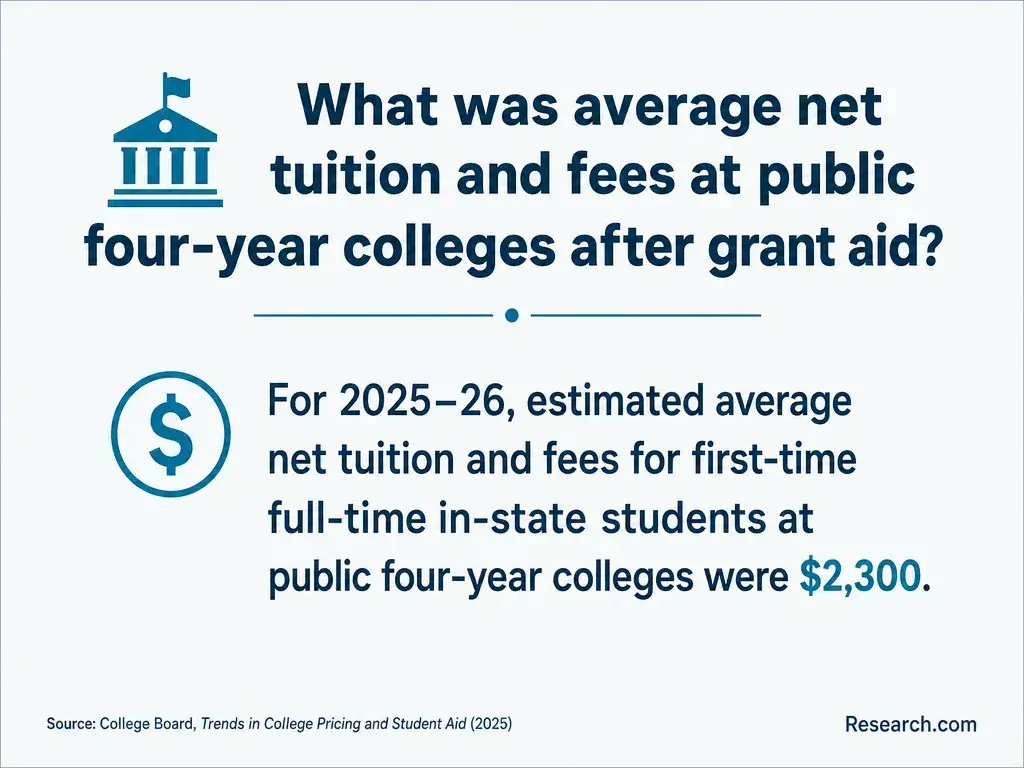
The relevant price is the cost to complete your audited requirements, not an advertised annual tuition figure or a school's maximum transferable credits. Ask for the tuition rate applicable to your enrollment, mandatory online and course fees, and any extra cost tied to a capstone, internship, or campus visit.
A useful comparison multiplies each school's required billable credits by its applicable per-credit tuition, then adds mandatory fees and realistic travel or materials costs. Keep the assumptions visible; a lower per-credit price can cost more overall if fewer OTA credits apply. Check financial-aid eligibility and employer education assistance before deciding what you would pay out of pocket.
If the long-term goal is licensed mental-health counseling, budget for the separate qualifying education rather than pricing only the BA. Information about paying for an online mental health counseling degree belongs in that longer-range comparison; a general psychology BA alone does not meet counseling licensure requirements.
Your OTA background may be more immediately valuable than the new major for rehabilitation support and patient-facing work. A psychology BA can add research literacy, behavioral-science knowledge, and a bachelor's credential for positions whose employers require one. Depending on the job description and your experience, possibilities include service coordination, community-program support, rehabilitation administration, research support, and human-services roles.
Check each position's duties and credential rules rather than relying on its title. Your OTA qualification and state requirements remain relevant to OTA practice; a psychology BA does not authorize psychotherapy, diagnosis, or independent psychological assessment. For work focused on substance-use services, compare the duties and credential expectations described in addiction recovery career paths with the BA and any state-recognized training you would still need.
If your target position accepts an OTA credential and experience, ask whether a bachelor's degree is actually necessary for advancement. Employer training, a targeted course, or supervised experience may be a more direct investment.
What Salary and Job Outlook Can Psychology Bachelor's Graduates Expect?
There is no reliable single salary or growth rate for "psychology BA graduates." Pay follows the occupation, location, employer, and required credentials. An OTA who continues practicing should compare OTA labor-market data with actual offers for bachelor's-entry roles, not assume the new degree raises pay in the same job.
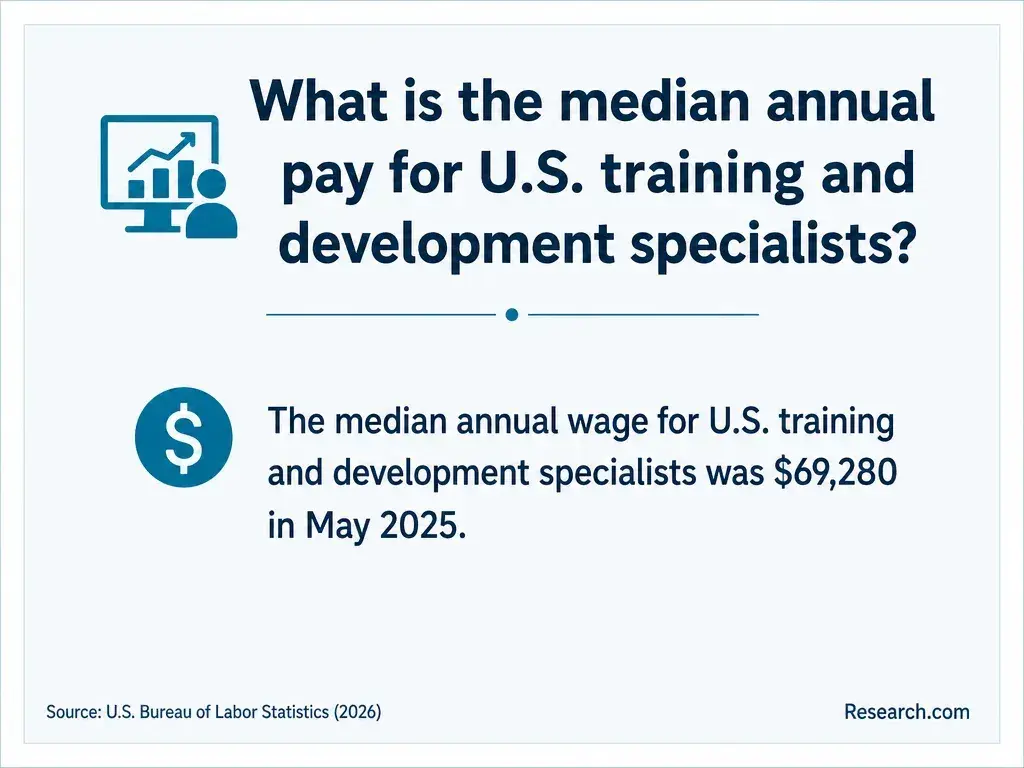
For a defensible comparison, identify the precise occupation that matches a prospective position, then consult its most recent U.S. Bureau of Labor Statistics Occupational Outlook Handbook wage and employment projections alongside local postings. An occupation-wide median includes workers with different experience and education; it is not a starting offer or a degree-specific outcome. Likewise, pay comparisons across forensic psychology-related careers cannot predict earnings from a general psychology BA, because those jobs can have substantially different duties and qualification requirements.
Other Things You Should Know About Psychology
No. The BA is a separate academic credential. Continuing to practice as an OTA depends on applicable state requirements for that occupation.
Not automatically. Ask the psychology department whether prior work meets its internship rules; programs may require advance approval, defined learning objectives, and faculty oversight.
Possibly. Obtain written preapproval for the exact course and equivalency first, and check how concurrent enrollment affects aid and graduation requirements.
Ask each college when it provides an official evaluation. If one is available only after admission, request a preliminary review and avoid committing based solely on an advertised transfer maximum.
- Cost of Attendance (Budget) | 2025-2026 Federal Student Aid Handbook https://fsapartners.ed.gov/knowledge-center/fsa-handbook/2025-2026/vol3/ch2-cost-attendance-budget
- Pre-Occupational Therapy Guide, 2026-2027 | Academic Advising Center https://advisingcenter.uiowa.edu/pre-health/pre-occupational-therapy/guide
- Bachelor of Arts in Psychology - Texas State's online programs https://online.txst.edu/degrees/undergraduate/ba-psychology/
- Occupational Therapy Assistant Associate Degree | Madison College https://madisoncollege.edu/academics/programs/occupational-therapy
- What Classes Do You Need for an Occupational Therapy Program? | duny.edu https://www.duny.edu/what-classes-do-you-need-to-be-an-occupational-therapist/
- Psychology B.S. | University of Alaska Fairbanks Catalog https://catalog.uaf.edu/bachelors/psychology-bs/
- Bachelor of Arts (BA) in Psychology Degree Program | California Southern University https://www.calsouthern.edu/online-degree-programs/behavioral-sciences/bachelors-psychology-ba/
- Occupational Therapy | Pre-Health Advising https://prehealth.ucmerced.edu/health-careers/occupational-therapy
- Transfer Credit Evaluation | University of Arizona Office of the Registrar https://registrar.arizona.edu/records-enrollment/transfer-credit/transfer-credit-evaluation
- Transfer Evaluations | TCC.edu https://www.tcc.edu/service-support/registrar/transfer-evaluation/