2027 Online BA in Psychology - General Psychology After an Unfinished Biology Degree: Compare Transfer Credit and Remaining Coursework
Audited and Verified:
Our Editorial and Data Verification Process
Research.com uses government datasets, official education statistics and primary institutional information to support its career and degree guides. Our review process checks factual accuracy, occupational definitions, source dates and the requirements associated with the credentials discussed.
How This Article Was Fact-Checked
Our editorial team verifies salary estimates, employment projections, education requirements and program information against original data providers and official organizations. Salary figures are checked against the relevant occupational definitions and reporting periods. Information about licensure, accreditation and required in-person training is reviewed separately.
Fact-checked and verified on:

Co-Founder and Chief Data Scientist
If you left a biology degree unfinished, an online general psychology BA may let you use much of that work - but accepted credits do not always satisfy psychology requirements. The distinction matters before you pay for another application or enroll in courses you may not need. This guide shows where biology classes commonly fit, which psychology courses are likely to remain, and how to compare degree audits, schedules, and costs. You can use it to identify the program that offers the clearest, most efficient route to graduation rather than the largest advertised transfer allowance.
Key Things You Should Know
- Compare requirements satisfied, not just credits accepted: biology labs may fill science or elective slots while leaving psychology methods and upper-level major courses untouched.
- An illustrative 120-credit degree with 75 accepted transfer credits still has at least 45 credits remaining - and possibly more coursework if required courses, residency rules, or credit limits intervene.
- Request a written, term-specific degree audit and a course-by-course completion plan from each school before relying on a time or cost estimate.
How Do Biology Credits Transfer to an Online General Psychology BA?
Schools evaluate prior biology courses individually. A course can be accepted as transfer credit without fulfilling a particular graduation requirement. For an unfinished biology major, introductory biology and chemistry may cover natural-science general education; mathematics may satisfy a quantitative requirement; and excess science courses may become free electives.
Their placement depends on the receiving school's curriculum and the courses you have already completed.
Biology research or biostatistics is especially worth reviewing, but neither automatically substitutes for psychological research methods or statistics. An evaluator may require comparable content, credit hours, grades, or course level. Courses taken on a quarter system also need conversion to the receiving school's credit system.
This table separates the outcomes that can look identical on a transfer-credit total.
| Prior biology coursework | Possible application to a psychology BA | Common unresolved issue |
| Biology or chemistry with laboratory | Science general education or free elective | May not replace biological psychology |
| Calculus or other mathematics | Quantitative general education or elective | May not replace statistics |
| Biostatistics | Statistics requirement, subject to review | May lack content required by the psychology major |
| Biology research or laboratory methods | Elective or possible substitution | May not cover psychology research design or human-participant ethics |
Send official transcripts from every institution attended, including any college where you completed general education. For disputed equivalencies, gather catalog descriptions, syllabi, lab information, and evidence of statistical or research content.
Ask the transfer-credit office who decides equivalencies and the psychology department who approves major substitutions. An admission offer alone is not approval of either. To identify schools worth evaluating, start with psychology degree options for college transfer students, then obtain each school's own evaluation.
What Coursework Remains After Transferring Credits From a Biology Degree?
Most students changing from biology to general psychology still need the psychology major's foundation, methods sequence, and upper-level courses. The exact balance depends on whether earlier classes also completed writing, social-science, diversity, or other general-education requirements. A general psychology BA may also require language study or BA-specific coursework that was absent from a biology degree plan.
The most useful number on a degree audit is not simply "credits remaining." Separate the work into general education, psychology prerequisites, psychology major courses, electives, and credits that must be earned at the new school.
A student with many accepted science electives can still face a substantial psychology sequence. Conversely, completed general education may make the switch more efficient than the change of major suggests.
Biology preparation can be an advantage in courses on brain and behavior, sensation, health, and research design. It does not remove the need to study behavior from psychological, developmental, social, and cultural perspectives.
If your actual goal is addiction-related study rather than a broad major, compare the remaining requirements with choosing an accredited addiction psychology bachelor's; a narrower curriculum is worthwhile only if its courses and transfer evaluation better serve that goal.
How Long Does an Online General Psychology BA Take to Finish?
Completion time depends on applicable credits and course availability, not on the age of your unfinished biology degree. As an illustration - not a prediction - if a school requires 120 credits and applies 75 of your credits toward graduation, at least 45 remain. The schedule could still lengthen if an introductory course precedes research methods, a capstone is offered infrequently, or the school requires a minimum number of its own upper-level credits.
Ask an advisor for a term-by-term plan showing prerequisite order, the frequency of required online courses, allowable term loads, and any final-term graduation rules. Then compare the plan with the hours you can actually study while working or caring for others. Accelerated terms are not necessarily faster if they force you to take fewer courses at once.
If a later master's degree is part of your plan, keep its timeline separate from the BA completion estimate. Resources on online psychology master's completion planning concern a subsequent degree; they cannot shorten unmet undergraduate requirements.
A returning biology student usually applies as a transfer undergraduate, but each school defines transfer status and sets its own transcript, academic-standing, and deadline rules. Admission to the university, declaration of the psychology major, and approval of transfer equivalencies can be separate decisions. An unfinished prior degree is not, by itself, a bar to applying.
Check whether the program requires a particular introductory psychology course or grade before entering the major, and whether you can complete it after admission. Also disclose all prior colleges, even if some coursework was unsuccessful; schools generally evaluate an academic record rather than just the transcript you prefer to use. If you attended more than one institution, ask how repeat courses and earlier grades affect admission versus the new degree's GPA.
Future graduate interests should not be mistaken for undergraduate admission requirements. For example, forensic psychology master's pathways under two years may have their own prerequisites and application standards. Review those separately if they are your eventual goal; they do not determine whether you can transfer into a general psychology BA.
First, confirm the institution's accreditation status with its recognized accreditor and confirm that the degree awarded is the advertised BA in psychology. Then compare written transfer evaluations and degree maps for the same entry term. A generous maximum-transfer policy has little value if your biology courses land in elective slots while required psychology courses remain unavailable online.
Verify who advises transfer students, how major substitutions are appealed, whether required courses have live meetings or campus visits, and whether online students can access research opportunities and career services.
Ask whether an internship is required or optional and what approval it needs. The American Psychological Association does not accredit general undergraduate psychology BAs; do not treat the absence of APA accreditation for a BA as evidence that the institution lacks recognized accreditation.
Accreditation becomes a different question if your eventual aim is licensed counseling. Counseling programs can have profession-specific recognition and state-dependent requirements, so accredited mental health counseling education by program pace is a separate comparison - not a way to verify an undergraduate psychology program.
Typical general psychology curricula introduce psychological science and cover research methods, statistics, development, social behavior, cognition, biological foundations, and upper-level electives. Some programs also require a seminar, capstone, or applied experience.Course titles alone are not reliable equivalency evidence: a biology neuroscience class, for example, may overlap with biological psychology without meeting the major's specific learning objectives.
Check the sequence as carefully as the course list. Statistics may be required before methods; methods may precede a research seminar; and some advanced electives may require introductory psychology.
Your biology laboratory experience can strengthen your preparation for evaluating evidence, but psychology methods may add survey design, behavioral measurement, and ethical treatment of human participants.
Electives should follow your intended use of the degree rather than a promising course title. If you hope to work in substance-use services, compare academic psychology coursework with the training and credentials expected for the specific role. An addiction counseling degree comparison resource can help clarify that distinction; a general psychology elective alone does not establish counseling eligibility.
An online BA may make lectures and assignments easier to fit around employment, but delivery format does not change the need to meet the same school's degree requirements. Compare whether classes are asynchronous, require scheduled discussions or exams, or include group research work. Also check access to faculty, tutoring, library resources, and supervised projects - not just whether lectures are recorded.
Campus programs may offer more convenient in-person laboratory, research-team, or networking access; online programs may offer a better schedule or a clearer route for transfer students. Neither format is automatically superior for graduate preparation.
What matters is whether you can complete strong methods coursework, build relationships for recommendations, and obtain relevant experience if your next step calls for it.
Keep undergraduate format decisions distinct from later graduate-program marketing. For instance, short-format forensic psychology graduate program choices raise different questions about specialization and advanced coursework. They should not outweigh the immediate question of which BA will apply your existing credits and provide the preparation you need.
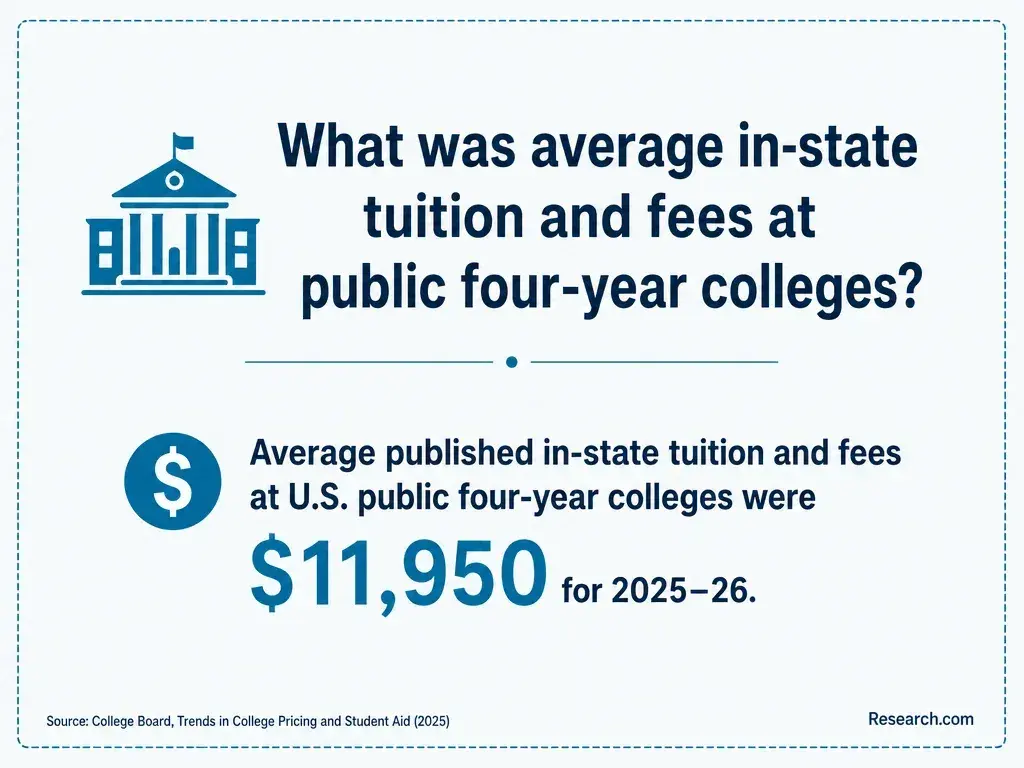
For a transfer student, the meaningful comparison is the estimated cost of remaining required coursework, not a school's advertised full-degree price or per-credit rate alone. Multiply the credits you must take at each school by its applicable tuition rate, then account for mandatory fees, textbooks, technology charges, and any travel or placement costs. Use each school's written audit to determine the credit count; do not assume every accepted biology elective reduces it.
Compare financial-aid eligibility with the actual enrollment plan. Aid and satisfactory-academic-progress rules can affect students who have accumulated many prior credits, and taking prerequisite courses that do not apply to the degree can complicate funding.
Ask the financial-aid office - not just an admissions representative - to review your circumstances. If an employer offers tuition assistance, confirm which institution, course loads, and grades qualify before including it in your budget.
For a student considering graduate study, add its cost as a separate decision rather than treating the BA as the entire investment. Economical routes to graduate psychology study may help with that later comparison, but the lowest-cost undergraduate option is the one with the best verified combination of remaining requirements and charges for your record.
Your biology coursework plus a psychology BA may be relevant to research support, human-services coordination, community outreach, recruiting, or program support. The fit depends on the job's tasks and your experience.
For example, biology lab experience may help demonstrate careful documentation and data handling; psychology methods coursework can add behavioral research literacy. Neither substitutes automatically for an employer's required software, client-service experience, or professional credential.
Evaluate postings by duties rather than by "psychology" in the title. A research assistant may help recruit participants and organize data under supervision, while a service coordinator may handle referrals and records within agency policy.
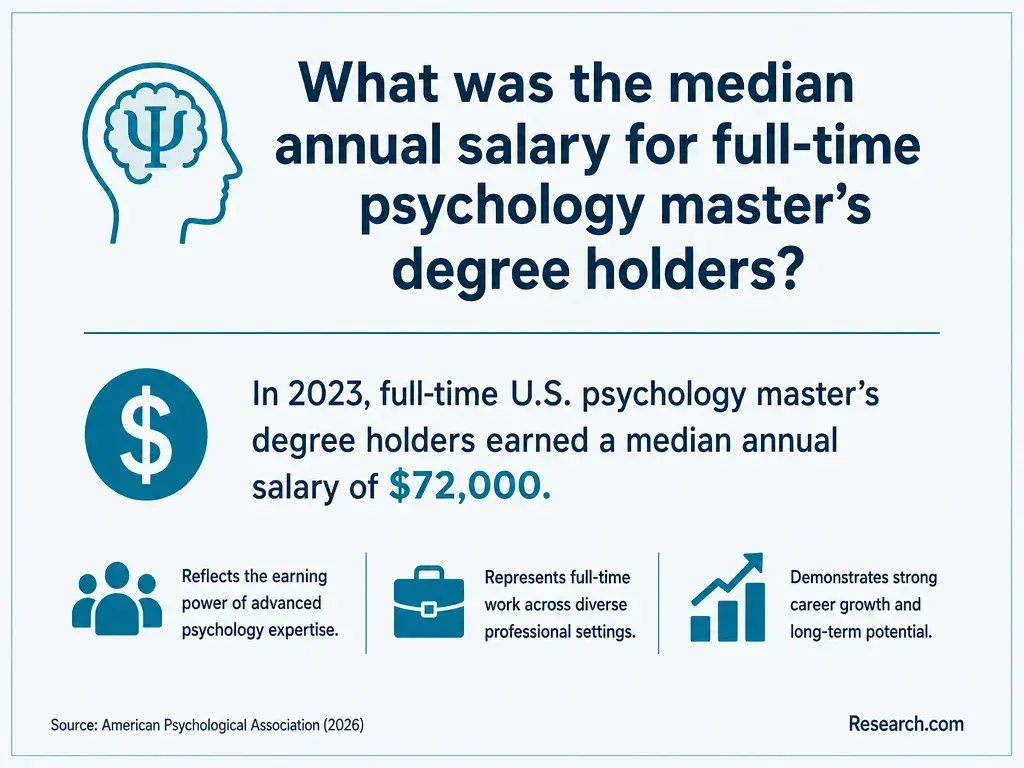
If you are considering justice-related work, understanding pay and entry requirements in forensic psychology careers can help distinguish support roles from positions requiring further education or licensure. Occupation-wide pay figures should not be read as expected earnings from a general psychology BA.
If you already have experience in a target field, ask whether completing your original biology degree, adding selected psychology courses, or earning the BA would best meet actual job requirements. Changing majors is most valuable when the completed credential and its specific skills close a demonstrable gap.
Does a Psychology Bachelor's Degree Qualify You for Licensure?
A general psychology BA does not by itself authorize psychotherapy, diagnosis, independent psychological assessment, or use of a protected psychologist title.
Licensing requirements depend on the occupation and state and typically involve a qualifying professional degree and additional supervised training or examinations. Studying abnormal psychology or completing a nonclinical undergraduate internship does not change that boundary.
If your goal is licensed therapy, identify the exact license and state first, then check that jurisdiction's educational and supervised-practice requirements. A psychology BA can provide academic preparation, but a qualifying counseling, social-work, or other professional pathway may be more direct.
When time and expense are central, comparing the value of shorter clinical counseling degrees is useful only after verifying that a specific program meets the rules where you intend to practice.
Other Things You Should Know About Psychology
Ask your former department or registrar for archived catalog descriptions and syllabi. The receiving school can tell you what evidence it accepts for a course-equivalency review.
Often, transfer grades are reviewed for admission but are not calculated into the new institution's GPA. Confirm the receiving school's policy, including how it treats repeated courses.
A minor in psychology requires that school's designated psychology courses. Biology credits might support a biology minor instead, but only a degree audit can establish whether you meet its requirements.
Compare both remaining-course plans. If biology requires less time and meets your career or graduate-school prerequisites, finishing it and taking targeted psychology courses may be the more efficient choice.
- BS in Psychology - College of Liberal Arts https://cla.umn.edu/psychology/undergraduate/majors-minors/bs-psychology
- Psychology Bachelor of Science (PSYBS) - Penn State https://psych.la.psu.edu/undergraduate/degrees-and-requirements/psychology-bachelor-of-science/
- Transferring Credit | Undergraduate Admissions | University of Houston https://www.uh.edu/undergraduate-admissions/apply/transfer/transferring-credit/
- Psychology Program FAQs | University of La Verne https://health.laverne.edu/psychology/faq/
- Transfer Credit Evaluation | University of Arizona Office of the Registrar https://registrar.arizona.edu/records-enrollment/transfer-credit/transfer-credit-evaluation
- Online Psychology Bachelor's Degree | University of West Florida https://uwf.edu/programs/online/psychology-ba/
- Transfer Credit Evaluation - TXST Admissions https://www.admissions.txst.edu/future-students/transfer-credit-evaluation.html
- Transfer Credit and Credit for Prior Learning | University of the District of Columbia https://www.udc.edu/admissions/transfer-students/transfer-credit-policy
- Transfer Requirements | Orange Coast College https://orangecoastcollege.edu/services-support/counseling/transfer-center/transfer-requirements.html
- Psychology - Academic Program Guide - Florida State University https://academic-guide.fsu.edu/program-guide/Psychology