2027 Online BA in Psychology - General Psychology After Quarter-System College Credits: Compare Transfer Credit and Remaining Coursework
Audited and Verified:
Our Editorial and Data Verification Process
Research.com uses government datasets, official education statistics and primary institutional information to support its career and degree guides. Our review process checks factual accuracy, occupational definitions, source dates and the requirements associated with the credentials discussed.
How This Article Was Fact-Checked
Our editorial team verifies salary estimates, employment projections, education requirements and program information against original data providers and official organizations. Salary figures are checked against the relevant occupational definitions and reporting periods. Information about licensure, accreditation and required in-person training is reviewed separately.
Fact-checked and verified on:

Co-Founder and Chief Data Scientist
Quarter-system credits can bring you closer to an online psychology BA - but the converted total does not tell you how close you are to graduation. A school may accept a course without using it to satisfy a psychology requirement, and its residency or course-sequencing rules may add time.
If you studied on a quarter calendar and want to finish a general psychology degree, this guide shows how to compare transfer evaluations, remaining coursework, and likely costs before you enroll.
Key Things You Should Know
- Quarter credits generally convert to semester credits at a 2:3 ratio: 90 quarter credits equal 60 semester credits before the receiving school evaluates how they apply.
- For a BA requiring 120 semester credits, 135 accepted quarter credits would convert to 90 semester credits, but the remaining coursework may exceed 30 credits if major, upper-division, or residency requirements are unmet.
- Compare written, program-specific degree audits - not transfer totals alone - and check course sequencing, online availability, and tuition for every remaining requirement.
What Is an Online BA in General Psychology?
An online BA in general psychology is a bachelor's degree covering psychological science across several subjects rather than a narrow specialty. Its curriculum commonly includes research methods, statistics, development, cognition, social behavior, and biological or behavioral foundations. A BA may leave room for electives or language and humanities requirements, but the distinction between a BA and a BS depends on the institution.
For a transfer student, the useful question is not whether the degree is broadly flexible; it is which required courses your previous work can replace. When evaluating psychology degree programs for online learning, compare their transfer policies alongside course delivery, advising, and access to upper-division classes. Online does not necessarily mean asynchronous, and an optional internship or research opportunity may involve scheduled meetings or local site work.
How Do Quarter Credits Convert to Semester Credits for Transfer?
The standard arithmetic is quarter credits × 2 ÷ 3 = semester-credit equivalent. Conversion establishes a credit value; it does not establish that a course meets a particular degree requirement. The examples below show why a large quarter-credit total is a starting point for comparison, not a graduation forecast.
| Completed quarter credits | Semester-credit equivalent | What still needs evaluation |
| 90 | 60 | Which general education and psychology requirements are satisfied |
| 135 | 90 | Whether major, upper-division, and residency requirements remain |
| 180 | 120 | Whether any accepted credits fit the receiving BA's requirements |
A five-quarter-credit statistics course, for example, converts to about 3.33 semester credits, but the psychology department must still decide whether its content and level match the required statistics course. Conversely, a four-quarter-credit course converts to about 2.67 semester credits; a school may apply it, combine it with other work, or identify a credit shortfall under its own policy. Rounding rules also vary.
Request an evaluation using your official transcript and, for potential major equivalents, course descriptions or syllabi. Lost degree-applicable credits can change affordability more than a small difference in advertised tuition; that is worth considering when comparing psychology degree affordability for returning adults.
How Much Coursework Remains After Transferring Quarter Credits?
Start with the receiving school's graduation requirements, then subtract only credits that its degree audit applies. In an illustrative 120-semester-credit BA, 135 quarter credits convert to 90 semester credits. That suggests a 30-credit difference, not a promise that ten three-credit courses will finish the degree. If most transferred work counts as electives, required psychology courses or general education may push the remaining total higher.
A useful comparison separates the following figures for each school. Together, they show where accepted credit reduces actual coursework and where it does not.
- Total accepted credit: Credits recorded by the institution, including any that become electives.
- Requirements satisfied: General education, introductory and upper-division psychology, statistics, research methods, and electives.
- Requirements still open: Include prerequisites, a capstone, and any minimum upper-division or in-residence credits.
- Courses you can take when needed: Check prerequisites and how often remaining online courses are offered.
Ask for a written audit for your intended entry term. If you are also weighing a specialty, compare its separate course map rather than assuming it uses the same credits: online forensic psychology degree costs versus career outcomes illustrates the kind of different academic and financial decision a specialized route requires.
Receiving institutions set their own transfer rules. They may consider the sending institution's accreditation, course grade, academic level, subject matter, credit value, and any transfer-credit ceiling. Acceptance is only the first decision: a psychology department may separately review whether a course substitutes for a major requirement. Older coursework, especially statistics or research methods, may need additional review under a school's recency rules.
Prior psychology courses are not the only valuable credits. Writing, mathematics, laboratory science, and humanities work may satisfy general education; an associate degree may affect general education under a specific transfer agreement. Applied, military, competency-based, or international learning needs its own evaluation. Do not assume that a degree title or a posted equivalency automatically resolves every requirement.
Compare each proposed substitution against the exact major you intend to enter. For instance, a general BA and choosing an accredited addiction psychology bachelor's may use different electives or major requirements even at the same degree level. If a course is assigned only elective credit, ask the registrar or transfer-credit office how to appeal the evaluation and whether the psychology department must approve a major substitution.
Requirements vary, but a general psychology BA typically combines introductory psychology, statistics, research methods, core subject-area courses, advanced electives, and a capstone or other culminating requirement. General education and a minimum number of upper-division credits may sit outside the major checklist. Review prerequisites closely: a transferred introductory course may open advanced classes, while an unevaluated methods course can hold up a capstone.
Match courses by content and level, not title alone. A quarter-system course called "Behavioral Research" might cover the receiving school's methods requirement - or it might not include the required design or writing work. Send the syllabus when the match is unclear, and ask whether a combined sequence of quarter courses can satisfy one semester-course requirement.
If your goal is a regulated addiction-counseling role rather than broad psychology study, check the relevant state credential requirements before choosing electives. Planning a degree focused on addiction counseling is a different decision from completing a general psychology BA; neither a course on addiction nor the BA alone establishes counseling authority.
Check that the institution holds accreditation recognized by the U.S. Department of Education and that the accreditation covers the school awarding your degree. Then verify the program's actual degree name and whether its online offering is available to students in your state. Institutional accreditation matters for credit recognition and federal-aid eligibility, but the receiving school still decides which outside credits it will accept.
Do not treat a general psychology BA as "APA-accredited." APA accreditation applies to specified professional psychology doctoral programs and related training, not general undergraduate psychology majors. If you later consider graduate study, evaluate that program and its intended credential pathway separately. This distinction also matters when reviewing inexpensive psychology master's degree pathways: an accredited institution does not, by itself, make a nonclinical master's degree licensure-qualifying.
Transfer admission usually requires an application and transcripts from previously attended colleges; schools may also set GPA, completed-credit, or good-standing conditions. Admission to the university, admission to the psychology major, and approval of course substitutions can be separate decisions. Ask which office handles each one and whether you can receive a full degree audit before committing to enroll.
Gather official transcripts, course descriptions, and syllabi for psychology, statistics, and methods courses. If you have an associate degree or other documented learning, ask how it will be evaluated. Confirm deadlines for transcript receipt and appeals, particularly if a prerequisite decision affects your first term's schedule.
A general BA can provide preparation for later study, but it is not itself admission to a graduate professional program. If your longer-term goal is counseling, review that route's distinct prerequisites and supervised-training requirements; faster clinical mental health counseling graduate pathways should not be mistaken for shortcuts through undergraduate transfer requirements.
Your timeline depends on the courses still required, not just the number of credits accepted. Compare schools using the audit's remaining credits, prerequisites, course frequency, term lengths, and any residency rule. A required course offered only in certain terms can delay completion even when your credit shortfall is small. Ask whether courses are asynchronous and whether exams, group work, research, or a capstone have fixed meeting times.
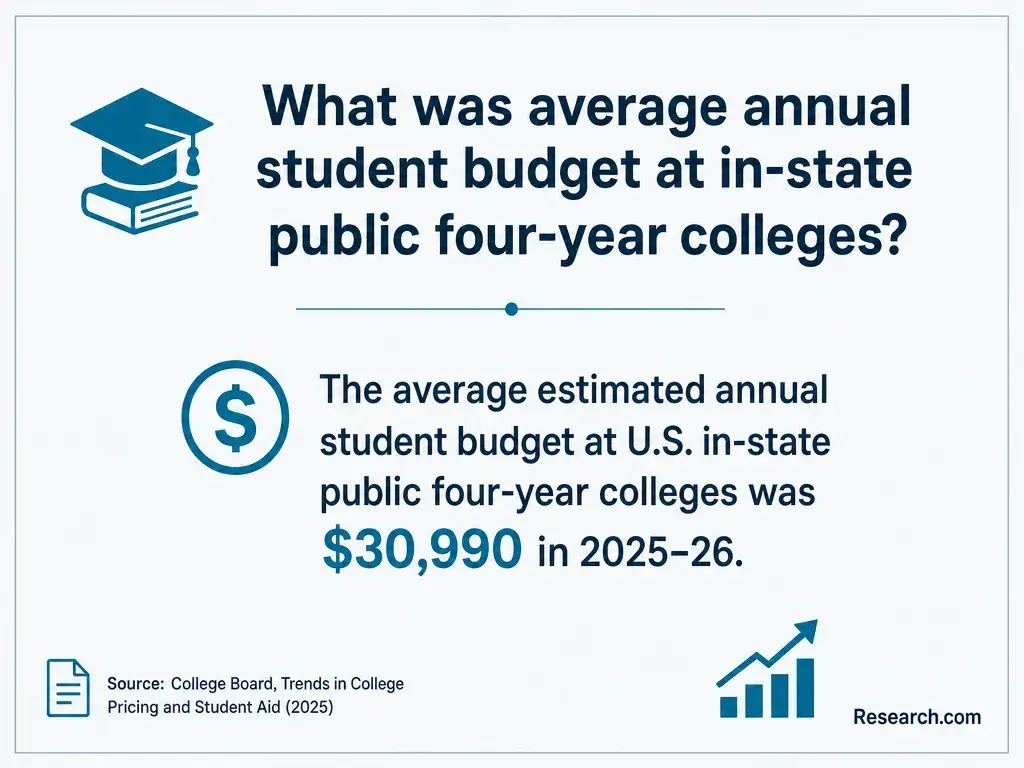
For cost, multiply the tuition rate by the credits you must actually take, then add mandatory fees, materials, and any travel or placement expenses. Compare that total across written degree plans; a lower per-credit price may cost more overall if more coursework must be repeated. Check whether your planned enrollment and courses qualify for the financial aid you expect, and obtain an aid estimate from each school.
Do not blend undergraduate completion costs with the price of an optional future graduate credential. If counseling is your eventual objective, comparing tuition assistance for mental health counseling study belongs in a separate budget that includes that program's requirements.
A general psychology BA can support applications for nonclinical roles in human services, community programs, research support, recruiting, and other work that values communication, data literacy, and understanding of behavior. Actual eligibility depends on the employer, your experience, and any job-specific training or state rules. Relevant coursework is stronger evidence when paired with supervised work, research assistance, or a project that demonstrates appropriate data handling and clear writing.
A BA alone does not authorize psychotherapy, diagnosis, independent psychological assessment, or use of a protected professional title. If you are considering a specialized graduate route instead, examine the jobs it actually prepares you to pursue. A forensic psychology master's employment and pay guide, for example, addresses a different credential and labor market from a general psychology BA.
What Salary and Job Outlook Can Psychology Graduates Expect?
There is no single salary or job-growth rate for "psychology BA graduates." The U.S. Bureau of Labor Statistics reports wages and projections by occupation, and each occupation includes workers with different degrees and experience. To judge a prospective role, look up its current Occupational Outlook Handbook profile, note its typical entry education and duties, and compare the published median with local job postings. An occupation-wide median is not a starting-pay offer or a degree-specific outcome.
That distinction matters most when comparing nonclinical support work with licensed counseling. The latter generally requires qualifying graduate education and other jurisdiction-specific steps, so its pay cannot be attributed to an undergraduate psychology degree. If that is your target, use a mental health counseling master's investment and pay outlook to examine the full pathway rather than treating a BA salary comparison as the final decision.
Other Things You Should Know About Psychology
Often, yes. Ask whether the receiving school will issue a preliminary evaluation using an in-progress transcript and when it needs final grades. Do not rely on planned courses as approved substitutions until they are confirmed.
Not necessarily. Admission and credit evaluation are commonly separate processes. Ask the school whether an appeal affects only the degree audit or also your eligibility for the major.
Possibly, but get written preapproval before registering. The university may restrict concurrent enrollment, require a particular course equivalent, or reserve final credits for work completed there.
That can happen because each school applies its own curriculum and transfer policies. Compare the remaining required courses and obtain clarification on any unexplained elective credit; the larger transfer total is not always the shorter path to graduation.
- Transfer Students | New York State Education Department https://www.nysed.gov/standards-instruction/transfer-students
- Cost of Attendance (Budget) | 2025-2026 Federal Student Aid Handbook https://fsapartners.ed.gov/knowledge-center/fsa-handbook/2025-2026/vol3/ch2-cost-attendance-budget
- Program Integrity Questions and Answers - Credit Hour http://www.ed.gov/laws-and-policy/higher-education-laws-and-policy/program-integrity-information-questions-and-12
- Online Bachelor's Degree in Psychology | Purdue Global https://www.purdueglobal.edu/degree-programs/psychology/bachelor-degree-psychology-online/
- Frequently Asked Questions - Semester Conversion - Cal Poly https://semesters.calpoly.edu/frequently-asked-questions
- Transfer Credits | CUNY BA https://cunyba.cuny.edu/transfer-credits/
- PSYC: BA - Bachelor of Arts in Psychology | Florida International University Catalog https://catalog.fiu.edu/programs/PSYC%3ABA/requirements-uz47h
- Transferring Credit | Undergraduate Admissions | University of Houston https://www.uh.edu/undergraduate-admissions/apply/transfer/transferring-credit/
- Degree Requirements | Psychological Science https://psychology.uark.edu/undergraduate/degree-requirements.php
- Converting Credits - Tusculum University https://catalog.tusculum.edu/content.php