2027 Online BA in Psychology - General Psychology: Should You Finish Your Current Major Before Switching?
Audited and Verified:
Our Editorial and Data Verification Process
Research.com uses government datasets, official education statistics and primary institutional information to support its career and degree guides. Our review process checks factual accuracy, occupational definitions, source dates and the requirements associated with the credentials discussed.
How This Article Was Fact-Checked
Our editorial team verifies salary estimates, employment projections, education requirements and program information against original data providers and official organizations. Salary figures are checked against the relevant occupational definitions and reporting periods. Information about licensure, accreditation and required in-person training is reviewed separately.
Fact-checked and verified on:

Co-Founder and Chief Data Scientist
Switching to an online psychology major can feel like the quickest route to work you care about. But if you are close to finishing another major, the switch could add requirements without improving your next step.
This guide is for students weighing an unfinished bachelor's degree against an online BA in general psychology. It shows how to compare degree audits, transfer decisions, costs, schedules, and career goals so you can choose a route based on what you still need - not just the appeal of a new major.
Key Things You Should Know
- Finish your current major first if you are near graduation and your target job or graduate program accepts applicants from other majors; targeted psychology and statistics courses may fill any gaps.
- Switch if a written degree audit shows that psychology better serves your goal without substantially increasing remaining credits, cost, or time. Credit acceptance alone does not mean a course satisfies a major requirement.
- Compare the credits still required at each school, not just credits already earned. A typical bachelor's plan may be built around 120 semester credits, but transfer limits, prerequisites, and residency rules determine your actual finish line.
Should you finish your current major before switching to an online psychology degree?
Usually, finish your current major if you are close to graduating and psychology is not a formal prerequisite for your next step. Consider switching sooner if you have substantial coursework left, the psychology curriculum develops skills your goal requires, and an official evaluation shows an acceptable path to graduation. A completed bachelor's degree plus selected psychology prerequisites can be more efficient than restarting a major.
The comparison below focuses on what each choice changes. It is a decision framework, not a prediction of how a school will evaluate your transcript.
| Situation | Option worth testing first | Reason |
| Few requirements remain in your current major | Finish, then take any needed psychology courses | Preserves a near-complete degree while addressing specific gaps |
| Many requirements remain, and psychology fits your goal | Request a psychology transfer evaluation | A switch may be worthwhile if prior work applies to the new degree |
| Your goal is a licensed helping profession | Check the qualifying graduate pathway first | A psychology BA is generally preparation, not a license |
| You want a nonclinical role that values existing experience | Compare finishing with gaining relevant experience | A new major may add less value than a completed degree and demonstrated skills |
Get a written audit for your current degree and a prospective audit from the receiving institution. Ask where each accepted course applies: general education, psychology major, prerequisite, elective, or no graduation requirement. Confirm upper-division and residency credits, course availability, and any substitution approvals with the registrar and psychology department. For a closer look at this distinction, see transfer credit reviews for psychology applicants.
What is an online bachelor's degree in general psychology?
An online BA in general psychology is a bachelor's degree covering psychological science across several subfields rather than training for one regulated occupation. "Online" describes delivery; "BA" describes the degree awarded; and "general psychology" describes its broad academic focus. A school may offer a BS instead, with different science or quantitative requirements, so compare catalogs rather than assuming the labels determine rigor.
For a student changing majors, breadth is useful when interests are still developing or several nonclinical paths remain possible. It is less useful if you need only a few prerequisites for a specific graduate application. Compare psychology degrees available through online study against your current degree audit, not against one another in isolation. Neither an online nor a campus-based psychology BA authorizes psychotherapy, diagnosis, or independent psychological assessment.
How do you choose an accredited online psychology bachelor's program?
First, verify that the institution holds recognized institutional accreditation and that the advertised online BA is the degree you would actually enter. Then examine the requirements that determine whether switching pays off: approved transfer equivalencies, upper-division psychology credits, residency rules, course rotation, advising, research access, and any live or in-person obligations. The institution - not a comparison site - has final authority over your coursework.
Do not look for APA accreditation of a general psychology BA; APA's accreditation of professional psychology training does not serve as a blanket approval of undergraduate majors. If your goal is counseling, check the intended profession's graduate education and state licensing rules separately. That may also make mental health counseling degree fees and aid planning more relevant than paying to change undergraduate majors.
Programs commonly combine introductory psychology with statistics, research methods, and study of areas such as development, cognition, social behavior, biological foundations, and psychological disorders. Electives and capstones vary. For a transfer student, the important question is not whether a course sounds familiar but whether the department accepts it as equivalent to a required course.
Ask how statistics leads into research methods and whether required upper-level courses are offered when you can take them. A short calendar does not help if a prerequisite delays the next course in the sequence. Use planning an intensive online psychology degree to frame scheduling questions, but rely on the school's current course rotation and your approved audit for a completion estimate.
Admission to a university, entry into its psychology major, and permission to graduate are separate decisions. Transfer applicants typically need records of prior college work; a school may also set GPA, prerequisite, or minimum-credit conditions. If you previously attended the same institution, ask whether a change-of-major process applies instead of a new transfer application.
Gather official transcripts, course descriptions or syllabi for disputed equivalencies, and any documents needed for credit earned through military training, an applied degree, or study abroad. Ask admissions which records establish eligibility, then ask the registrar and psychology department who approves equivalencies and substitutions. Enrollment may also affect aid eligibility; substance use counseling bachelor's financial aid options provide related aid questions, but aid and program requirements must be checked for the psychology degree you actually choose.
Your remaining requirements - not the program's advertised duration - determine the likely timeline. Compare each school's written audit, then account for prerequisites, when courses run, your manageable course load, and any minimum number of credits that must be earned there. An accepted transfer credit can reduce the total credits needed while leaving a required psychology course unfinished.
For cost, request the tuition rate that applies to your residency and enrollment status, mandatory online or course fees, and the cost of every remaining requirement. Include books, technology, possible travel, and earnings you would forgo if switching delays graduation. Check whether changing programs affects your aid under the school's satisfactory academic progress rules. Listings of affordable bachelor's study in psychology online can help identify candidates, but the lowest advertised tuition is not necessarily your lowest remaining cost to graduate.
Online delivery may remove a commute, but it does not guarantee self-paced study. Check deadlines, live meetings, group work, exams, research opportunities, and any internship or campus-visit requirements. Campus study may make in-person faculty contact or research participation easier; an online program may fit better around work or caregiving if its actual schedule supports that.
If you expect to study beyond the BA, do not assume the next degree has the same flexibility. Requirements for research meetings, intensive terms, or placements can change substantially at the graduate level; descriptions of intensive online graduate psychology study illustrate why format needs checking at each stage. Choose the bachelor's format you can complete while still building the preparation your next step requires.
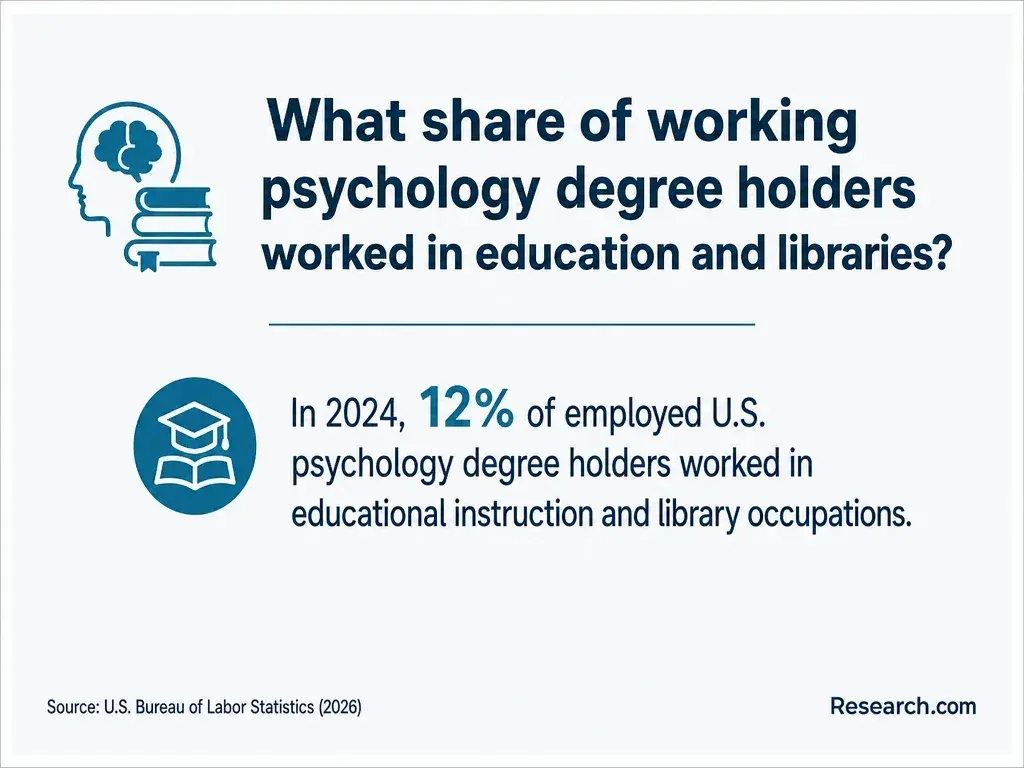
A psychology BA can support applications for nonclinical work in human services, research support, community programs, recruiting, and related settings. Job duties and entry requirements differ by employer. Relevant experience from your current major, employment, or volunteering may matter as much as changing the name of your degree.
For example, recovery-support and service-coordination jobs may involve outreach, documentation, and referrals rather than treatment. Explore jobs supporting addiction recovery, then check local postings for required experience or state credentials. A psychology course about addiction does not qualify someone to provide substance-use counseling. If a role accepts your current major, finishing it and gaining supervised, nonclinical experience may be the more direct route.
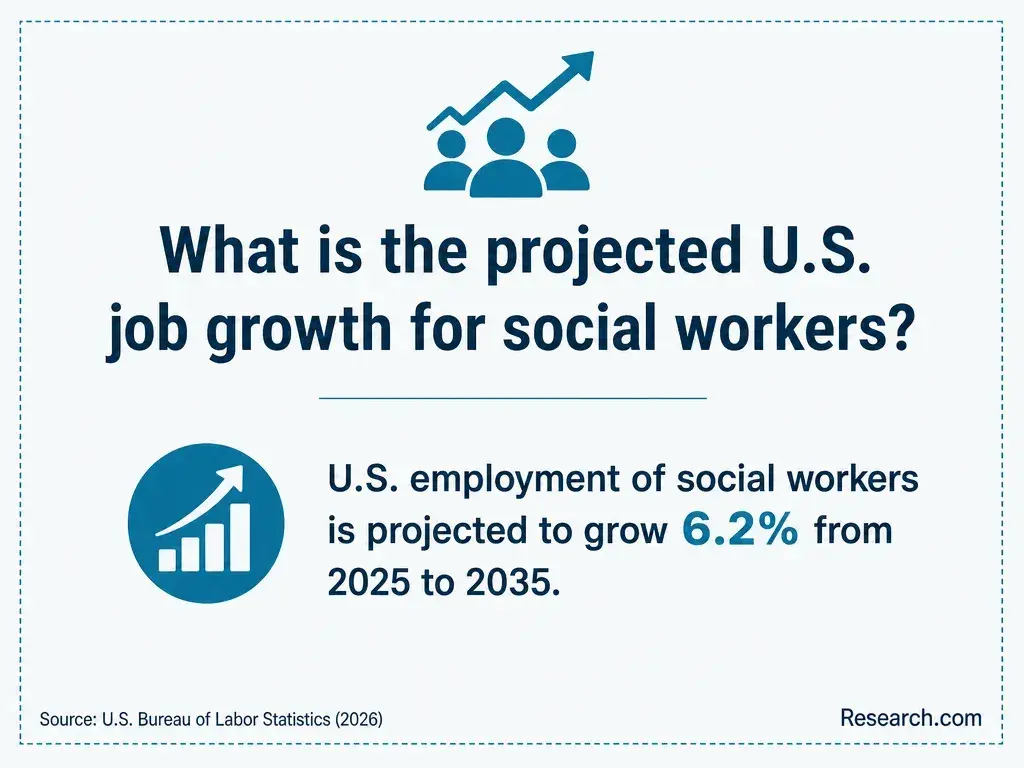
There is no single salary or job-growth figure for "psychology graduates." The US Bureau of Labor Statistics reports wages and projections by occupation, not by undergraduate major. A community-services role, research-support job, and licensed counseling position have different duties and qualification requirements; their occupational figures should not be presented as the expected earnings from a psychology BA.
Identify jobs you could realistically seek after each degree option. For each, check the latest Bureau of Labor Statistics Occupational Outlook Handbook entry for its wage reference year, projection period, and typical entry requirements, then compare local postings and pay. If you are considering a specialized helping role, weighing tuition against substance abuse counseling career outcomes offers a useful financial comparison to examine - provided you separately verify your state's credential rules. A projected pay difference does not justify a longer degree path unless it applies to a job you can qualify for and pursue.
What education and licensing are required to become a psychologist?
In the United States, becoming a licensed psychologist generally requires qualifying doctoral education, supervised experience, examinations, and approval by a state licensing board. Details vary by jurisdiction and area of practice. A general psychology BA can provide academic preparation, but it does not itself permit someone to use a protected psychologist title or provide independent clinical services.
Work backward from the state and role you intend to pursue. Check the licensing board's rules and prospective doctoral programs' admissions requirements before switching majors: some accept applicants from other undergraduate disciplines who have suitable psychology and research preparation. Nor is a psychology master's degree universally required for doctoral admission. Even forensic psychology graduate study in an intensive format should be evaluated for its actual training and next-step value, not mistaken for a psychologist license.
Other Things You Should Know About Psychology
Possibly. Ask whether a minor fits your remaining electives and includes the courses your goal requires. A minor can document focused study, but its title does not replace specific prerequisites.
Only if your target path requires substantial undergraduate preparation you cannot obtain more directly. Compare second-degree requirements with individual courses or a postbaccalaureate option before applying.
Ask about appropriate nonclinical projects, shadowing, or internal roles. Relevant work can clarify your goal before you commit to a new major; obtain any required approvals and respect client and data confidentiality.
Ask both departments about return-to-major rules before switching. A later reversal may be possible, but catalog changes or course sequencing could affect graduation, so keep copies of both degree audits.
- Accreditation in the U.S. | ed.gov http://www.ed.gov/laws-and-policy/higher-education-laws-and-policy/college-accreditation/accreditation-in-the-us
- Psychology careers guide | apa.org https://www.apa.org/education-career/guide/careers
- Psychology Major | Department of Psychology https://psychology.columbia.edu/content/psychology-major
- Online Bachelor's Degree in Psychology for Illinois Residents | Herzing University https://www.herzing.edu/behavioral-health/psychology/illinois
- Psychology Major Requirements | upenn.edu https://psychology.sas.upenn.edu/node/199
- Access to online college courses can speed students' degree completion | Brookings https://www.brookings.edu/articles/access-to-online-college-courses-can-speed-students-degree-completion/
- Psychology, BS | Syracuse University Academic Catalog https://coursecatalog.syracuse.edu/undergraduate/arts-sciences/psychology-bs/
- Bachelor of Arts in Psychology - Degree Completion Program https://iowastateonline.iastate.edu/programs-and-courses/human-development/bachelor-of-psychology-degree-completion-program/
- Bachelor of Arts in Psychology - Online Program | CSULB CPaCE https://www.cpace.csulb.edu/courses/bachelor-of-arts-in-psychology
- What Can You Do with a Bachelor's Degree in Psychology? | CU Denver News https://news.ucdenver.edu/bachelors-degree-in-psychology/