
2027 How to Become an Electrician in Alaska

Co-Founder and Chief Data Scientist
Becoming an electrician in Alaska offers a promising career path, especially given the state's ongoing infrastructure development and demand for skilled tradespeople. As of 2023, the Alaska Department of Labor reports a steady employment growth rate of approximately 5% for electricians, reflecting consistent job opportunities. The average annual wage for electricians in Alaska is notably higher than the national average, reaching around $75,000, which makes the profession financially attractive.
Additionally, the state's unique climate and geographical challenges create a need for specialized electrical work, offering electricians diverse and rewarding projects. For those interested in a stable and well-compensated trade, pursuing electrician training in Alaska is certainly worthwhile.
Key Things to Know About Becoming an Electrician in Alaska
- Electricians in Alaska earn an average annual salary of approximately $70,000, higher than the national average, reflecting the state's demand and cost of living.
- The job outlook for electricians in Alaska shows steady growth due to ongoing infrastructure projects and maintenance needs in remote areas.
- Licensing in Alaska requires completing an apprenticeship, passing a journeyman exam, and meeting specific state electrical codes and safety standards.
- Working as an electrician in Alaska often involves travel to remote locations and adapting to harsh weather, requiring physical endurance and flexibility.
- What education is required to become an electrician in Alaska?
- How do you get into an electrician apprenticeship program in Alaska?
- How much do electricians make in Alaska?
- What certifications do electricians need in Alaska?
- How long does an electrician apprenticeship take in Alaska?
- How much does electrician training cost in Alaska?
- What license do you need to be an electrician in Alaska?
- What are the key challenges facing electricians in Alaska?
- Can diversifying trade skills boost an electrician’s career in Alaska?
- How can business education improve the career prospects of electricians in Alaska?
- What are the key safety and risk management practices for electricians in Alaska?
- What insurance and liability measures should electricians consider in Alaska?
- How often do you need to renew your electrician license in Alaska?
- What are the essential skills needed to be a successful electrician in Alaska?
- What is the job outlook for electricians over the next 10 years in Alaska?
What education is required to become an electrician in Alaska?
Aspiring electricians in Alaska must complete specific educational and training requirements to become licensed professionals. Most start by enrolling in formal electrical training programs that cover essential topics such as electrical theory, circuitry, blueprint reading, and the National Electrical Code (NEC). These programs are commonly available at technical schools, community colleges, and union-sponsored apprenticeship programs.
Apprenticeships play a crucial role in electrician training. Typically lasting four to five years, apprenticeships combine paid on-the-job experience with classroom instruction. In Alaska, apprentices must complete at least 8,000 hours of hands-on work and 576 hours of classroom education. This blend helps apprentices develop skills in wiring, troubleshooting, safety protocols, and compliance with local and state electrical codes.
Three of the top institutions offering electrician training in Alaska include the Alaska Vocational Technical Center (AVTEC) in Seward, the University of Alaska Anchorage’s Community & Technical College, and the Anchorage Electrical Joint Apprenticeship & Training Committee (JATC). AVTEC provides a comprehensive program focused on residential and commercial electrical systems. The University of Alaska Anchorage offers flexible programs that balance classroom learning with practical experience. Anchorage Electrical JATC specializes in apprenticeship placements and continuing education.
To excel in licensure exams, candidates should prioritize mastering the NEC and practice interpreting electrical diagrams. Staying updated with Alaska-specific electrical codes is essential. Local organizations such as the Alaska Electrical League and trade unions offer review classes and seminars designed to help candidates prepare effectively. Additionally, utilizing online practice tests and study guides tailored to Alaska’s licensing requirements can improve exam readiness.
How do you get into an electrician apprenticeship program in Alaska?
To apply for electrician apprenticeship programs in Alaska, candidates typically need to meet several baseline requirements. Organizations such as the International Brotherhood of Electrical Workers (IBEW) Local 1547 and the Alaska Joint Electrical Apprenticeship and Training Committee (AJCATC) offer structured programs that require applicants to be at least 18 years old, hold a high school diploma or GED, and pass an aptitude test covering math and reading comprehension. Some programs also ask for a valid driver’s license and the ability to pass a drug screening. These prerequisites ensure that apprentices are prepared for both the academic and practical challenges ahead.
Alaska’s electrician apprenticeship requirements include unique elements tailored to its environment. Apprentices receive specialized training on weather-resistant wiring and working in remote, often harsh locations. This is critical because Alaska’s climate and geography demand skills that are less emphasized in other states. Local training adheres to the Alaska Electrical Code, which has specific amendments to address these conditions, making regional knowledge essential for success. This combination of general and Alaska-specific skills prepares apprentices to work confidently across the state’s diverse environments.
Completing an apprenticeship provides more than technical training; it offers essential networking opportunities. For example, IBEW Local 1547 connects apprentices with experienced journeymen who can mentor and guide them through their careers. According to the Alaska Department of Labor, the construction industry, including electrical trades, is expected to grow by 8% through 2026, increasing demand for skilled electricians. Taking advantage of local review classes and seminars, such as those offered by the Alaska Center for Construction Education and Training (ACET), can enhance understanding of safety standards and code updates, helping apprentices stay current and competitive.
An electrician from Alaska shared that their apprenticeship experience was both challenging and rewarding. They recalled early mornings traveling to remote job sites where weather conditions tested their skills and adaptability. The hands-on training combined with classroom lessons helped them grasp complex wiring techniques specific to Alaska’s environment. They emphasized how mentorship from seasoned electricians was invaluable, providing guidance and boosting confidence. Attending additional seminars on code updates and safety standards enabled them to excel and feel prepared for the state’s unique demands. This journey taught them the importance of persistence, continuous learning, and building relationships within the trade.
For those seeking to understand the value of vocational training and how to navigate the process, resources discussing high demand trades definition can provide further insight into the promising outlook of electrician apprenticeships in Alaska.
How much do electricians make in Alaska?
Electricians in Alaska earn annual salaries typically ranging from $70,000 to $85,000, which translates into monthly wages between approximately $5,800 and $7,100. Entry-level electricians usually start with lower pay, often between $40,000 and $50,000 annually, depending on the employer and location within the state. This pay scale reflects Alaska’s cost of living and the demand for skilled trades in the region.
The cities offering the highest wages for electricians in Alaska are Anchorage, Fairbanks, and Juneau. Anchorage, being the largest city, frequently offers salaries exceeding $90,000 per year for experienced electricians, especially those with specialized skills. This is due to the city's higher construction activity and industrial projects requiring advanced electrical expertise.
Salary progression in Alaska’s electrical trade generally starts with apprentices earning the least, then moving up to journeyman status with increased wages, and finally to master electrician or contractor roles commanding the highest pay. Many electricians enhance their income by obtaining specialized certifications, such as solar panel installation or industrial controls, which also align well with the growing renewable energy sector in Alaska. This strategic certification aligns with the structured and diligent approach aspiring medical billers and coders in Alaska take to prepare for certification, highlighting the importance of focused training in career advancement.
An electrician from Alaska shared their experience about navigating salary growth and career development. They described starting as an apprentice with modest wages but gaining confidence and skills through a local apprenticeship program. The most significant challenge was balancing long hours during peak construction seasons with continuing education and certification courses. However, joining the International Brotherhood of Electrical Workers (IBEW) local chapter brought valuable benefits, including better wage negotiations and health coverage. This electrician found that perseverance, combined with targeted certifications, allowed them to move into specialized industrial electrical work, significantly increasing their earnings and job satisfaction.
For those considering further education, pursuing advanced degrees can open more doors. For example, combining practical trade skills with higher education credentials helps in landing the best rated jobs for trade school graduates.
For quick context, the graphic below lays out the national wage spread for U.S. electricians in May 2024—the lowest-earning tenth at roughly $39 K, the median at about $62 K, and the top tenth clearing more than $106 K. Comparing those figures with Alaska’s elevated pay bands helps underscore just how much the state’s higher cost of living and demand for specialized skills can push earnings well above the national norm.
What certifications do electricians need in Alaska?
To work as an electrician in Alaska, obtaining the proper certifications is essential. The certification requirements for electricians in Alaska start with registering as an Apprentice Electrician, which allows individuals to gain supervised practical experience and technical training. Apprenticeships typically last 4 to 5 years, combining around 8,000 hours of on-the-job work with nearly 576 hours of classroom education. This foundation prepares candidates to advance in the Alaska electrician licensing process.
Once apprenticeship requirements are met, electricians can pursue the Journeyman Electrician license by passing a state exam. This license permits electricians to work independently on various electrical systems and increases job opportunities and earning potential. For those aiming higher, the Master Electrician license represents the pinnacle of professional certification. It requires years of journeyman experience, advanced coursework, and a rigorous exam. Master electricians in Alaska can design systems, pull permits, and supervise others, positioning themselves for leadership roles and higher salaries.
Several institutions support electricians seeking certification in Alaska. The Alaska Vocational Technical Center (AVTEC) in Seward offers comprehensive programs blending classroom and hands-on training. Regional community colleges such as the University of Alaska Anchorage and Prince William Sound College also provide relevant courses and apprenticeship assistance. Additionally, joining unions like the International Brotherhood of Electrical Workers (IBEW) Local 1547 can provide access to specialized apprenticeship programs and continuing education tailored to Alaska’s unique industry needs.
Given Alaska’s challenging climate and infrastructure, electricians should prioritize certifications that emphasize safety and compliance with state codes. Certifications related to renewable energy systems are increasingly valuable as well, reflecting the state’s investment in sustainable technologies. For practical guidance on training options, prospective electricians may also explore resources on what is the best HVAC trade school and certification online to understand comparable trade certifications and training paths.
How long does an electrician apprenticeship take in Alaska?
In Alaska, completing an electrician apprenticeship typically takes about 4 to 5 years, which aligns with national standards of approximately 8,000 hours of on-the-job training paired with 576 hours of classroom instruction. This timeframe is essential for meeting the electrician certification requirements in Alaska and preparing for the journeyman electrician license process. However, some apprenticeships offer accelerated formats, allowing dedicated individuals to finish in as little as 3.5 to 4 years. These faster tracks are often provided by unions or trade organizations with intensive, year-round training schedules.
The duration of an apprenticeship can vary based on several factors, including the sponsoring organization’s curriculum, the apprentice’s prior technical experience, and their ability to balance work and study commitments. Apprentices working part-time or needing extra time to master complex skills might take longer than five years. Seasonal fluctuations in Alaska's construction market also affect available work hours, potentially extending the apprenticeship period.
To make the most of the apprenticeship duration and potentially accelerate completion, apprentices should maintain regular communication with mentors to track their progress and training hours. Taking advantage of any accelerated learning modules or additional classroom offerings can help, as can enrolling in relevant pre-apprenticeship courses that might count toward required hours. Staying current with Alaska-specific electrical codes and licensing requirements enhances exam readiness. Networking within the local electrical community is another effective strategy to secure continuous work and gain diverse experience.
For those exploring educational options, researching the best online trade schools and construction programs can provide valuable opportunities to supplement hands-on training with flexible coursework, further supporting timely apprenticeship completion.
The chart below reveals the education mix among working electricians—about one-third enter the trade with only a high-school diploma, while another third bring an associate degree and fewer than one in five hold a bachelor’s. It’s a quick reminder that Alaska’s 4-to-5-year apprenticeship track remains open to a wide range of academic backgrounds, but adding some post-secondary coursework can make you more competitive when apprenticeship spots open up.
How much does electrician training cost in Alaska?
The cost to become an electrician in Alaska varies depending on the type of training program chosen. Certificate or diploma programs typically last between 6 months and 1 year and cost from $5,000 to $15,000. More comprehensive associate degree programs at community colleges or technical schools usually require about 2 years and can cost between $15,000 and $30,000 in tuition and fees. These figures reflect the broad range in electrician training cost in Alaska and can help prospective students budget their education accordingly.
Several factors influence these costs. Programs offering extensive hands-on apprenticeships and in-depth theoretical training tend to be pricier. Additionally, longer program durations accumulate higher tuition and ancillary expenses such as textbooks and supplies. Students must also consider the cost of specialized tools, safety gear, and work boots, which can add roughly $500 to $1,500 to initial expenses. Geographic challenges in Alaska, including travel and higher living costs in remote areas, also contribute to the overall expense.
The Alaska electrician apprenticeship expenses can be offset in some cases by paid on-the-job training, where apprentices earn wages while gaining experience. Furthermore, financial aid options are available to help manage costs. Alaska provides state-specific grants and scholarships such as the Alaska Performance Scholarship and funding through the Alaska Vocational Technical Center. Federal aid, including Pell Grants and student loans, is also accessible for qualifying students enrolled in accredited programs.
For those seeking flexible and affordable training alternatives, researching the best online trade school options can be a valuable strategy. These programs can reduce relocation and commuting expenses, making electrician training in Alaska more accessible.
What license do you need to be an electrician in Alaska?
To work as a licensed electrician in Alaska, individuals must obtain an electrical license issued by the Alaska Department of Labor and Workforce Development, specifically managed by the Division of Labor Standards and Safety. The primary licenses available are the Journeyman Electrician and the Master Electrician. Each license has distinct experience and examination requirements, granting different levels of responsibility and scope of work.
The process to become licensed involves several key steps designed to ensure competency and safety compliance:
- Complete a formal apprenticeship or gain equivalent work experience, usually a minimum of four years (8,000 hours) under a licensed electrician’s supervision.
- Accumulate approximately 576 hours of classroom instruction covering electrical theory, the National Electrical Code (NEC), and safety practices.
- Submit a detailed application to the Alaska Division of Labor Standards and Safety, including proof of apprenticeship and education.
- Pass the licensing exam, which tests knowledge of the NEC, Alaska Electrical Code amendments, and practical electrical skills.
- Pay the required licensing fees and commit to continuing education for license renewal every two years.
Alaska’s licensure process differs from many other states due to its unique geographic and climate challenges. The state enforces the Alaska Electrical Code, an adaptation of the NEC with additional regulations for cold weather and remote installations. This means electricians must be familiar with specialized safety standards relevant to Alaska’s environment.
The licensure and renewal process is overseen by key agencies:
- Alaska Department of Labor and Workforce Development, Division of Labor Standards and Safety, which issues licenses, administers exams, and enforces regulations.
- Alaska State Electrical Board, responsible for policy guidance and disciplinary actions relating to electrician licensing.
To navigate this process effectively, aspiring electricians should enroll in accredited apprenticeships early, maintain thorough records of their work and schooling, and stay current with updates to the Alaska Electrical Code and NEC. Engaging in continuing education well before renewal deadlines helps prevent lapses. Additionally, contacting the Division of Labor Standards and Safety for clarification on licensing requirements can provide valuable support throughout the process.
What are the key challenges facing electricians in Alaska?
Electricians in Alaska face challenges that extend beyond technical proficiency. Extreme weather conditions and remote work sites demand strict adherence to specialized safety protocols and rapid adaptation to changing environmental factors. Navigating logistical constraints, such as delayed material shipments and limited local resources, requires superior planning and problem-solving skills. Additionally, staying current with evolving regulations and regional modifications in the Alaska Electrical Code is critical to ensuring compliance and operational safety. For an alternative technical pathway that complements electrical expertise, see how to become an HVAC technician in Alaska.
Can diversifying trade skills boost an electrician’s career in Alaska?
Electricians seeking to enhance their career stability in Alaska can benefit from expanding their expertise into related trades. Cross-training in complementary skills not only improves problem-solving capabilities but also increases market competitiveness in regions with fluctuating seasonal demands. Diversification through additional technical training can open doors to roles in integrated systems maintenance and project management while potentially leading to higher earnings and broader career opportunities. For example, gaining insights into adjacent fields such as automotive or heavy equipment repair may provide an advantageous edge. Explore resources on how to become a mechanic in Alaska to understand how intersecting skills can enrich your professional profile.
How can business education improve the career prospects of electricians in Alaska?
Gaining business education can empower electricians in Alaska to transition from technical roles to management and entrepreneurial positions. Expanding skills in project management, budgeting, and contract negotiation can lead to establishing a successful electrical contracting business or assuming supervisory responsibilities. Integrating business strategies with technical expertise allows electricians to streamline operations, improve client relationships, and enhance competitive positioning in a dynamic market. For those interested in supplementing technical training, exploring programs offered by the top business schools in Alaska can provide valuable insights and practical tools to support long-term career growth.
What are the key safety and risk management practices for electricians in Alaska?
Electricians working in Alaska must implement rigorous safety protocols to manage risks associated with extreme weather, remote job sites, and unpredictable environmental conditions. Adhering to state-specific guidelines and frequently updated versions of the Alaska Electrical Code is essential for mitigating hazards on every worksite. Emphasis on comprehensive training in emergency response, proper use of personal protective equipment, and systematic risk assessments underpins daily operational safety. Regular safety audits, participation in targeted professional development seminars, and close collaboration with regulatory bodies ensure that electricians remain vigilant and compliant. Expanding technical expertise through supplementary resources, such as guidance on how to become a radiology technician in Alaska, can further support adherence to high safety standards across related fields.
What insurance and liability measures should electricians consider in Alaska?
Electricians operating in Alaska face distinct risks related to remote job sites and extreme weather conditions. Securing comprehensive liability coverage—encompassing general liability, professional liability, and workers’ compensation—is critical to protecting both personal assets and business operations. Evaluating policies from providers familiar with high-risk trade environments can ensure appropriate risk management. Additionally, maintaining rigorous documentation of work practices and safety audits helps mitigate potential liability issues. Diversifying technical expertise through specialized certifications may also enhance operational safety, much like exploring how to become an ultrasound technician in Alaska can broaden one’s understanding of cross-industry safety protocols.
How often do you need to renew your electrician license in Alaska?
In Alaska, renewing an electrician license is mandatory every three years to remain legally authorized to work. The renewal process is managed by the Alaska Department of Labor and Workforce Development, specifically through the Division of Occupational Licensing. Electricians must submit a renewal application and pay the applicable fees before the license expires to avoid any interruption in their professional activities.
Key requirements for renewing an electrician license in Alaska include:
- Completion of at least 24 hours of continuing education over the three-year period, focusing on updates to the National Electrical Code (NEC), Alaska-specific regulations, and safety protocols.
- Providing proof of completed continuing education along with the renewal application.
- Payment of renewal fees, which differ depending on whether the license is for a journeyman or master electrician.
- Maintaining a clean disciplinary record with no unresolved complaints or violations.
What distinguishes Alaska’s renewal process is its emphasis on continuing education tailored to the state’s unique challenges, such as extreme weather conditions and remote work environments. This specialized training ensures electricians are equipped to handle Alaska’s demanding infrastructure and environmental factors safely.
To navigate the renewal process smoothly, electricians should:
- Keep detailed records of all completed continuing education credits to avoid last-minute issues.
- Submit renewal applications well before deadlines to allow time for processing and any unforeseen delays.
- Choose state-approved training programs that address Alaska-specific electrical codes and safety requirements.
- Regularly check for updates from the Division of Occupational Licensing to stay informed about any changes in renewal policies or requirements.
By carefully following these steps and meeting all requirements, electricians in Alaska can ensure their licenses remain valid, supporting continuous employment and career growth in a steadily expanding market.
What are the essential skills needed to be a successful electrician in Alaska?
Electricians in Alaska need a blend of hard and soft skills to handle the unique challenges of the state’s environment and industry demands. Developing these skills is crucial for success and safety in this growing field.
Key skills essential for electricians in Alaska include:
- Technical Proficiency: Mastery of electrical systems, wiring, and safety protocols is fundamental. Given Alaska’s extreme weather and remote work sites, electricians must be skilled at troubleshooting complex issues and using equipment designed for harsh conditions.
- Proficiency with Technology: Familiarity with modern digital tools such as circuit design software and diagnostic devices improves accuracy and efficiency in installations and repairs.
- Physical Stamina and Dexterity: The job demands good hand-eye coordination, strength, and endurance to work safely with tools and materials, often in challenging weather conditions.
- Excellent Communication Skills: Clear communication with clients, contractors, and team members is essential, including the ability to interpret technical documents and explain details to non-technical stakeholders.
- Problem-Solving Abilities: Electricians must quickly evaluate problems and determine effective solutions, especially when working independently in remote locations without immediate supervision.
- Attention to Detail: Precision in measurements, installations, and strict adherence to local electrical codes ensures safety and compliance.
- Time Management and Reliability: Meeting deadlines while maintaining high-quality work builds trust and job security in Alaska’s construction industry.
Aspiring electricians can develop these skills through registered apprenticeship programs such as those offered by the Alaska Joint Electrical Apprenticeship and Training Committee (JATC), which combine on-the-job training with classroom instruction. Community colleges, including the University of Alaska Anchorage, also provide relevant technical courses.
Continuous learning via workshops and certification programs focused on safety and technology updates is highly recommended. Networking through local professional organizations like the Alaska Electrical Association can offer valuable mentorship and career growth opportunities.
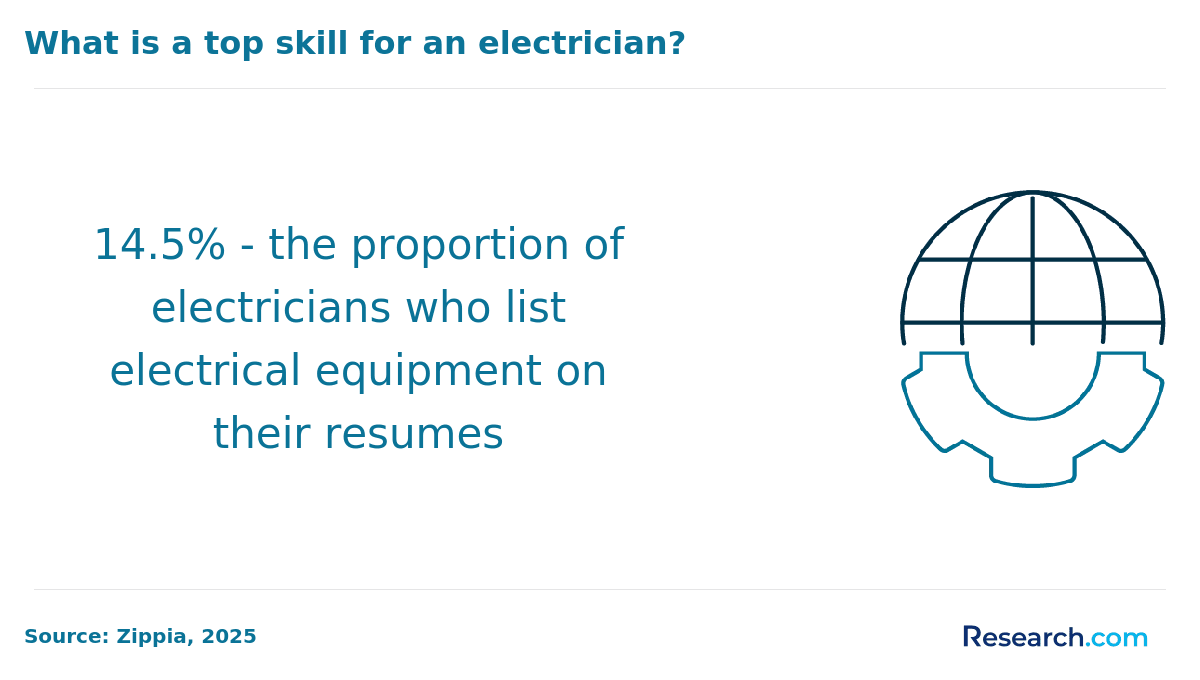
The visual below drives home why technical mastery tops the list—just over 14 percent of working electricians explicitly highlight “electrical equipment” expertise on their résumés, underscoring how vital hands-on familiarity with gear and tools is to thriving in Alaska’s demanding worksites.
What is the job outlook for electricians over the next 10 years in Alaska?
The job outlook for electricians in Alaska over the next decade is positive, with employment projected to grow about 7% through 2033, according to the U.S. Bureau of Labor Statistics (BLS) data from 2023. This growth rate is slightly above the national average of 6%, driven by ongoing investments in residential, commercial, and industrial electrical systems. Aspiring electricians should recognize that Alaska’s expanding energy and natural resource sectors contribute significantly to this steady demand.
Urban centers such as Anchorage, Fairbanks, and Juneau lead in employing electricians. Anchorage, the largest city, accounts for approximately 45% of the state’s electrician workforce. Here, demand is especially strong due to new construction projects, renovations, and upgrades to aging electrical infrastructure. Fairbanks and Juneau also maintain consistent opportunities, particularly within commercial construction and public utilities sectors.
The primary industries employing electricians in Alaska include construction, utilities, and manufacturing. The construction sector, which covers residential building, commercial projects, and renewable energy installations, remains the largest employer. Utilities companies also provide significant work, especially as Alaska focuses on modernizing electrical grids and pursuing energy independence.
Electricians in Alaska earn a median annual salary of about $72,000 as of 2023, notably higher than the national median of roughly $60,000. However, this wage advantage is offset by Alaska’s high cost of living. Cities like Anchorage have living expenses approximately 30% above the national average, particularly in housing and transportation. Prospective electricians should weigh these factors carefully when evaluating their potential disposable income and lifestyle.
For those considering an electrician career in Alaska, obtaining relevant certifications and apprenticeships is crucial. Certification programs that focus on residential, commercial, and renewable energy electrical systems can enhance employability. Additionally, preparing for the unique challenges posed by Alaska’s climate and geographic conditions will increase job readiness and long-term career stability.
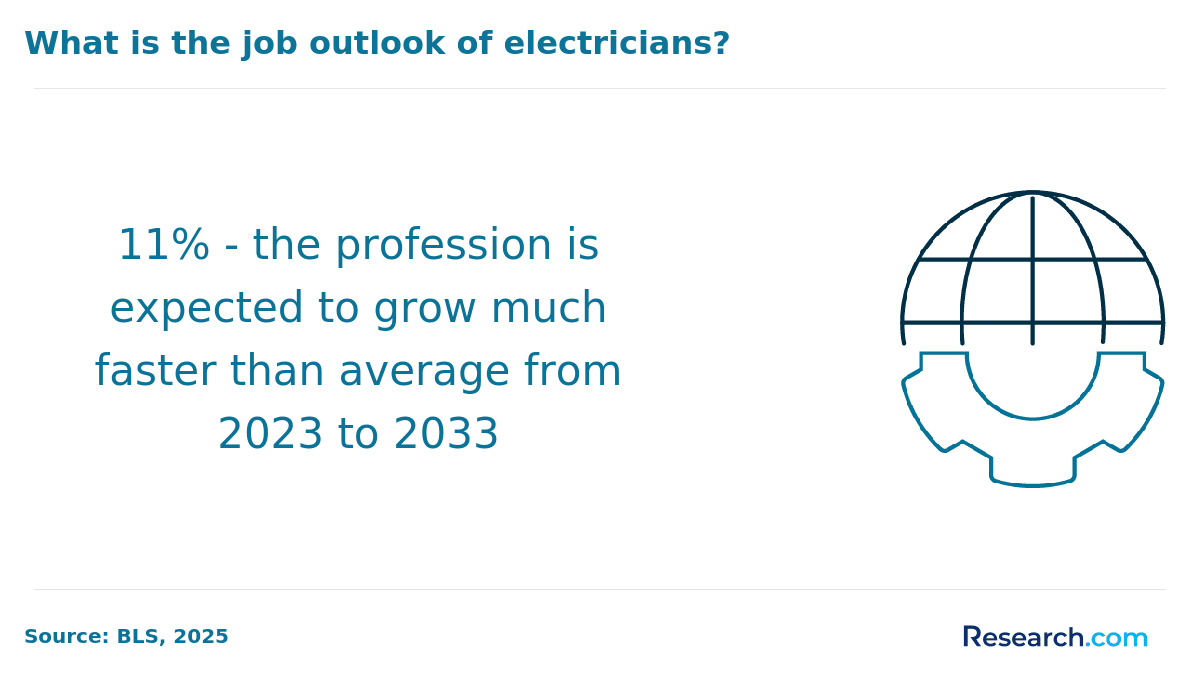
The visual that follows zooms out to the national picture—highlighting the BLS projection that electrician jobs will expand 11 percent between 2023 and 2033, well above the average for all occupations. Setting Alaska’s own 7 percent growth against this broader backdrop helps illustrate just how consistently strong demand is across the country, even in the state’s uniquely challenging market.
What Electricians in Alaska Say About Their Careers
- Completing my apprenticeship through the University of Alaska Anchorage gave me not only the technical skills necessary to excel but also a deep appreciation for the unique challenges of working in Alaska's rugged environment. The hands-on experience with cold-weather installations and remote locations has been invaluable. I love knowing my work directly contributes to the safety and well-being of our communities, especially during harsh winters. This career has truly helped me grow personally and professionally in ways I never expected. James
- Attending the Alaska Technical Center opened doors I didn’t know existed. The program’s focus on both traditional electrical skills and emerging technologies prepared me for a dynamic career path. Working in Alaska offers unique opportunities to collaborate closely with local communities and tackle projects that respect our cultural heritage and natural resources. It’s rewarding to see how my work supports sustainable development here. I’m proud to be part of a profession that values continuous learning and community impact. Mark
- With a degree from the Interior Alaska Campus, I’ve found that the professional advancement opportunities in Alaska’s electrical field are abundant, especially as infrastructure grows across the state. The challenges of the environment push me to stay sharp and adaptable, which is both stimulating and rewarding. I appreciate the stable job market and the sense of purpose that comes from building and maintaining essential services in remote areas. This career has given me a platform to develop leadership skills while contributing to something bigger than myself. Alexandra
Related Articles for Nearby States
- 2027 How to Become an Electrician in Washington
- 2027 How to Become an Electrician in Oregon
- 2027 How to Become an Electrician in California
- 2027 How to Become an Electrician in Hawaii
- 2027 How to Become an Electrician in Idaho
- 2027 How to Become an Electrician in Montana
- 2027 How to Become an Electrician in Nevada
- 2027 How to Become an Electrician in Utah
- 2027 How to Become an Electrician in Arizona
- 2027 How to Become an Electrician in Wyoming
References:
- Ableskills.co.uk. What Is the Fastest Route to Get Fully Qualified as an Electrician?
- Fieldcomplete.com. What Is Electrician School Cost? A Complete Breakdown of Tuition and Fees.
- Getjobber.com. How to Become an Electrician in 8 Steps.
- Iec-cincy.com. How Much Does It Cost To Become An Electrician?
- Iecrm.org. How to Become an Electrician | IECRM | Independent Electrical Contractors Rocky Mountain.
- Outsource.net. How Much Will It Cost to Become an Electrician?
- Rsi.edu. Understanding Electrician Training Costs | Learn with RSI.
- Sofi.com. How Much Electrician School Costs and How to Pay for It.
- Tradeskills4u.co.uk. Electrical Courses | Electrician Courses | C&G Courses & Training.
- Uscareerinstitute.edu. Online Electrician School: Trade Classes.
Other Things You Need to Know About Becoming an Electrician in Alaska
In 2027, to become an electrician in Alaska, you need to complete an apprenticeship with at least 8,000 hours of on-the-job training and 1,000 hours of classroom instruction. This ensures you gain the practical and theoretical knowledge necessary for licensure.
To begin a career as an electrician in Alaska in 2027, you must first complete an apprenticeship program, which typically lasts four to five years. It's required to register with Alaska's Department of Labor and Workforce Development and pass a state licensing exam after completing your apprenticeship.
Yes, Alaska offers apprenticeship programs for aspiring electricians. These programs typically last four years and involve 8,000 hours of on-the-job training plus related classroom instruction. You can enroll through local unions or state-registered programs recognized by the Alaska Department of Labor.


