
2027 How to Become a Mechanic in Ohio: Requirements & Certification

Co-Founder and Chief Data Scientist
Becoming a mechanic in Ohio is a practical career path for people who like solving mechanical problems, working with tools, and learning how modern vehicles operate. The decision is not as simple as “go to mechanic school,” though. You need to understand whether Ohio requires a license, which training route fits your budget, how long the process takes, which certifications employers value, and whether specialization in diesel, diagnostics, electric vehicles, or fleet work could improve your long-term options.
This guide explains how to become a job-ready mechanic in Ohio, using the salary, employment, certification, and training details available in the source material. It is written for high school students, adults changing careers, military-connected learners, and current entry-level shop workers who want a clearer path into automotive service. By the end, you should know what steps to take, what mistakes to avoid, and how to compare Ohio mechanic programs before investing time or money.
Quick answer: How do you become a mechanic in Ohio?
Ohio does not require a statewide mechanic license for general automotive repair work. Most aspiring mechanics prepare for employment by earning a high school diploma or equivalent, completing a certificate or associate degree program, building hands-on experience through an apprenticeship, co-op, or entry-level shop role, and earning ASE certifications once they meet the required experience standards. In 2025, Ohio employed 22,950 automotive service technicians and mechanics, and mechanic training programs commonly take between 6 months and 2 years.
Key Things to Know About Becoming a Mechanic in Ohio
- Ohio does not have a general state license requirement for automotive mechanics, but employers often prefer applicants with formal training, documented experience, and ASE credentials.
- The job growth rate for mechanics in Ohio is projected at 5% over the next decade, which is in line with the national average for automotive service technicians.
- The median annual salary for mechanics in Ohio is approximately $47,010, while experienced and specialized technicians can earn over $70,000 depending on credentials, employer type, location, and skill set.
- Most Ohio mechanic programs take between 6 months and 2 years and may combine classroom instruction, lab work, shop safety, diagnostics, and paid or unpaid hands-on experience.
- The strongest career prospects usually go to technicians who can diagnose electrical and computerized systems, work safely around hybrid and electric vehicles, and keep certifications current.
- What are the steps to become a mechanic in Ohio?
- What training and education options are available in Ohio?
- Do you need certifications to work as a mechanic in Ohio?
- How long does it take to become a mechanic in Ohio?
- How much does it cost to become a mechanic in Ohio?
- What job opportunities are available for mechanics in Ohio?
- Can expanding into HVAC services benefit my automotive career in Ohio?
- Should mechanics in Ohio expand their expertise to include advanced electrical systems?
- Can business acumen boost a mechanic’s career in Ohio?
- Can expanding your technical expertise boost your career prospects in Ohio?
- Can diversifying technical certifications boost my career in Ohio?
- How much do mechanics make in Ohio?
- What tools and skills do mechanics need to succeed?
- What are the career growth opportunities for mechanics in Ohio?
- What are the pros and cons of becoming a mechanic in Ohio?
What are the steps to become a mechanic in Ohio?
The best path depends on your starting point. A high school student may begin with a career technical program, while an adult career changer may prefer a short certificate or paid apprenticeship. In most cases, the process follows the same basic sequence: build academic fundamentals, learn vehicle systems, get supervised shop experience, earn credentials, and keep upgrading your skills as vehicle technology changes.
1. Finish high school or earn an equivalent credential
A high school diploma or equivalent is typically the minimum educational foundation for mechanic training and entry-level employment. Helpful courses include math, physics, computer applications, electronics, welding, and career technical education. Modern automotive work involves measurements, wiring diagrams, diagnostic software, customer documentation, and safety procedures, so basic academic skills matter more than many beginners expect.
2. Choose a training route that matches your goal
You can prepare through a high school career technical program, an adult education program, a trade school certificate, a community college associate degree, or an employer-sponsored apprenticeship. A short program may be enough for entry-level lube, tire, or maintenance roles, while a longer automotive technology program may be better if you want broader diagnostic training or dealership opportunities.
3. Get hands-on shop experience as early as possible
Mechanic work cannot be learned from lectures alone. Look for programs with lab hours, co-ops, internships, apprenticeships, or employer partnerships. Entry-level work in a repair shop, dealership, fleet garage, tire center, or quick-service facility can help you build speed, safety habits, tool familiarity, and confidence around real vehicles.
4. Use Ohio workforce resources and employer connections
Workforce programs, school career offices, local employers, and dealership apprentice tracks can help you find openings and reduce the guesswork of entering the field. Ohio Means Jobs and similar workforce resources may help job seekers identify training opportunities, apprenticeships, and employer demand in their region.
5. Earn certifications and keep learning
ASE certification is not a state license, but it is one of the most recognized ways to show employers and customers that you have verified technical knowledge. As vehicles become more computerized, mechanics should also keep learning diagnostics, electronics, hybrid systems, emissions systems, software-driven repairs, and safety procedures for high-voltage components.
| Step | What to do | Why it matters |
| Education foundation | Complete high school or an equivalent credential and strengthen math, electronics, and computer skills. | Employers and schools expect basic academic readiness, and diagnostics require technical reading and measurement skills. |
| Formal training | Enroll in a certificate, associate degree, adult education, or career technical program. | Structured programs teach safety, vehicle systems, repair procedures, and diagnostic methods. |
| Experience | Seek co-ops, apprenticeships, internships, or entry-level shop work. | Hands-on practice is essential for speed, accuracy, safety, and employability. |
| Certification | Plan for ASE exams and any employer- or manufacturer-specific credentials relevant to your job. | Credentials can strengthen your resume and may help with advancement or specialization. |
| Specialization | Build skills in diagnostics, diesel, hybrid and electric vehicles, ADAS, emissions, or fleet maintenance. | Specialized skills can improve job options and may support higher earning potential over time. |
The chart below lists the top ASE specialties by number of professionals, as reported by the ASE in 2024.
What training and education options are available in Ohio?
Ohio offers several ways to train for automotive service work. The right choice depends on your age, schedule, budget, prior experience, and target job. Before enrolling, compare program length, lab time, employer partnerships, transfer options, accreditation or industry recognition, job placement support, and whether the curriculum covers diagnostics and newer vehicle technologies.
- Ohio Technical College in Cleveland offers an automotive technology degree program that covers core repair skills and newer areas such as alternative fuels and advanced electronics.
- The University of Northwestern Ohio offers mechanic and repair technologies programs with an emphasis on practical training and career-focused preparation.
- Collins Career Technical Center provides an automotive mechanics option that may appeal to adult learners, career changers, and people seeking structured skill development.
- Community colleges and trade schools across Ohio offer certificates and associate degrees in automotive technology, often with local employer relationships that can support internships or job leads.
- Programs aligned with ASE Education Foundation and NATEF standards can help students identify training that follows recognized industry expectations.
| Training option | Best for | Typical advantage | Possible drawback |
| High school career technical program | Students who want to start early | Can build shop skills before graduation | May need additional postsecondary training for advanced roles |
| Short certificate program | Adults seeking a faster entry route | Focused training with a shorter timeline | May provide less general education or advanced diagnostics depth |
| Associate degree | Students who want broader preparation | More comprehensive academic and technical coursework | Usually takes longer and may cost more |
| Apprenticeship or paid shop training | Learners who need income while training | Real workplace experience and employer mentoring | Training quality can vary by employer and supervisor |
| Manufacturer or dealership program | Students targeting dealership work | Brand-specific systems, tools, and procedures | Skills may be tied closely to one manufacturer’s platforms |
Students exploring the broader value of technical education can also review related career paths for trade school graduates. That comparison can help you decide whether automotive technology is the strongest fit or whether another skilled trade better matches your interests.
Do you need certifications to work as a mechanic in Ohio?
Ohio does not require a general statewide license or certification to work as an automotive mechanic. That said, certification still matters. Many employers use ASE credentials, manufacturer training, emissions-related knowledge, and documented hands-on experience to judge whether an applicant can diagnose and repair vehicles safely and accurately.
ASE certification is especially important because it is widely recognized in the automotive repair industry. It can help a technician demonstrate competence in areas such as brakes, engine repair, electrical systems, suspension, heating and air conditioning, and other specialties. The five-year ASE recertification cycle also reinforces a key reality of this field: automotive technology changes, and technicians must keep their knowledge current.
Certification is not only about getting hired. It can affect what work you are trusted to perform, whether you qualify for higher-level diagnostic roles, and how customers and employers perceive your expertise. Mechanics who want to work on diesel engines, commercial vehicles, electric and hybrid systems, or emissions-related repairs should pay close attention to specialized training. If diesel work interests you, Research.com’s guide to the diesel technician career path can help you compare that option with general automotive repair.
| Credential or training type | Required by Ohio? | Why it can still be useful |
| ASE certification | No general statewide requirement | Recognized by many employers and customers as evidence of technical knowledge |
| Manufacturer-specific training | No general statewide requirement | Helpful for dealership roles and brand-specific systems |
| Diesel training | No general statewide requirement | Useful for trucks, buses, agricultural equipment, and fleet maintenance |
| Hybrid and electric vehicle training | No general statewide requirement | Important for high-voltage safety, battery systems, and newer drivetrain technology |
| Emissions and inspection-related preparation | Depends on the work setting and applicable program rules | Can support shops that handle emissions-related diagnostics and compliance work |
How long does it take to become a mechanic in Ohio?
Most mechanic training programs in Ohio last between 6 months and 2 years. A shorter certificate can prepare you for basic maintenance and entry-level shop work, while a two-year associate degree can provide broader training in vehicle systems, diagnostics, electronics, and general education. The timeline may be shorter if you already have shop experience or longer if you attend part time while working.
Hands-on experience is often the factor that determines when you are truly job-ready. A student may finish classroom training quickly but still need months of supervised practice to become efficient with diagnostics, repairs, customer concerns, and shop workflow. Paid co-ops and apprenticeships can be valuable because they allow students to connect theory with real repair situations.
| Path | Approximate timeline | Best fit |
| Short certificate or focused adult program | As little as 6 months, depending on the program | Students seeking faster entry into basic automotive service roles |
| Comprehensive trade school program | Often less than 2 years, depending on intensity and schedule | Learners who want concentrated hands-on technical preparation |
| Associate degree | Commonly about 2 years | Students who want broader training and possible long-term advancement options |
| Apprenticeship or entry-level shop route | Varies by employer and skill progression | People who want to earn income while developing practical skills |
One challenge to expect is the workload. Students in co-op or apprenticeship settings may spend long days balancing classes, shop shifts, homework, and tool requirements. The benefit is that real shop exposure can build confidence faster than classroom training alone.
How much does it cost to become a mechanic in Ohio?
The estimated cost to become a mechanic in Ohio ranges from approximately $8,000 to nearly $30,000, depending on program type, length, school, tools, fees, and specialization. Do not compare programs by tuition alone. A lower-cost program may be a strong choice if it has solid lab training and employer connections, while a more expensive option may make sense if it includes advanced equipment, strong placement support, or specialized instruction aligned with your career goal.
- Basic automotive mechanic programs: $8,050 to $16,100 for two-year courses
- Comprehensive programs such as Polaris Career Center’s 600-hour course: Around $11,546
- Specialized training, including aircraft mechanics at PIA Youngstown: Up to $28,440
- Tools and equipment: Approximately $2,500, with the final amount varying by school and tool list
- Certification and exam fees, including ASE or FAA exams: $1,500 to $1,700
- Registration, uniforms, technology, materials, and other term-based fees: Several hundred dollars per term
| Cost factor | What to ask before enrolling |
| Tuition | Is the quoted amount for the full program or only one term? |
| Tools | Are tools included, discounted, rented, or purchased separately? |
| Certification fees | Does the school pay for any ASE or related exam fees? |
| Hands-on training | How many lab hours, shop hours, co-op hours, or internship opportunities are included? |
| Financial aid | Is the program eligible for aid, scholarships, employer sponsorship, or workforce funding? |
| Job placement | Which local shops, dealerships, fleets, or manufacturers recruit from the program? |
Apprenticeships and employer-connected training can reduce upfront cost if you are able to earn while learning. When comparing mechanic school costs in Ohio, also consider the broader outlook for trades careers so you can weigh automotive repair against other skilled occupations.
The chart below illustrates the distribution of automotive mechanics in the US by age, as reported by Zippia in 2025.
What job opportunities are available for mechanics in Ohio?
Mechanics in Ohio can work in dealerships, independent repair shops, tire and brake centers, fleet maintenance operations, logistics companies, agricultural equipment settings, government garages, and manufacturing-related maintenance environments. The best opportunities often go to technicians who can combine mechanical fundamentals with electrical diagnostics, software-based troubleshooting, and strong documentation habits.
Automotive Service Technicians
Automotive service technicians diagnose, maintain, and repair passenger vehicles and light trucks. Their work may include oil changes, brake service, suspension repair, engine diagnostics, electrical troubleshooting, heating and air conditioning service, and customer concern verification. As vehicles rely more heavily on sensors, modules, and software, technicians who understand scan tools and electrical testing can stand out.
Diesel Mechanics
Diesel mechanics work on trucks, buses, agricultural machinery, construction equipment, and other diesel-powered systems. Ohio’s logistics, agriculture, and commercial transportation activity can make this a practical specialization. Diesel technicians may need to understand emissions systems, heavy-duty drivetrains, preventive maintenance schedules, and fleet uptime requirements.
Industrial Machinery Mechanics
Some mechanically skilled workers move into industrial machinery maintenance. These roles may involve maintaining production equipment rather than passenger vehicles. Technicians who add electrical, automation, and programmable logic controller knowledge may have more flexibility if they want to work in manufacturing or industrial maintenance environments.
Electric and Hybrid Vehicle Specialists
Electric and hybrid vehicle service requires high-voltage safety awareness, battery system knowledge, electrical diagnostics, and familiarity with manufacturer procedures. Not every entry-level mechanic will start in this specialty, but building these skills can improve long-term adaptability. Students comparing training options can review Research.com’s guide to automotive mechanic trade school programs when deciding where to study.
| Role | Common employers | Skills that help |
| General automotive technician | Independent shops, dealerships, service chains | Maintenance, brakes, diagnostics, customer concern verification |
| Diesel technician | Fleet shops, trucking companies, agricultural operations | Heavy-duty systems, preventive maintenance, diesel emissions knowledge |
| Diagnostic technician | Dealerships, advanced independent shops | Scan tools, wiring diagrams, electrical testing, data interpretation |
| Fleet maintenance technician | Delivery, logistics, public agencies, commercial operators | Preventive maintenance, documentation, uptime-focused repairs |
| Hybrid and EV technician | Dealerships, specialized shops, fleet operators | High-voltage safety, battery systems, electric drivetrains |
Can expanding into HVAC services benefit my automotive career in Ohio?
HVAC training can be useful for mechanics who want broader technical options, especially because vehicle climate control systems require electrical testing, refrigerant handling awareness, airflow diagnostics, and customer comfort troubleshooting. It can also provide a backup or complementary trade if you later decide to work outside automotive repair. If you are comparing vehicle service with building systems work, review the guide on how to become an HVAC tech in Ohio.
Should mechanics in Ohio expand their expertise to include advanced electrical systems?
Yes, electrical knowledge is one of the most valuable skill areas for modern automotive technicians. Vehicles increasingly rely on modules, sensors, cameras, high-voltage components, driver-assistance systems, and computerized diagnostics. Mechanics who understand circuits, voltage drop testing, wiring diagrams, scan data, and safe testing procedures are better positioned for advanced diagnostic work. If you are considering a separate but related skilled trade, Research.com’s guide on becoming an electrician in Ohio can help you compare the requirements.
Can business acumen boost a mechanic’s career in Ohio?
Business skills can help mechanics move into service advising, shop management, fleet supervision, parts operations, customer relations, or business ownership. Technical ability alone is not always enough to run a profitable service operation. Mechanics who understand pricing, workflow, payroll, marketing, customer communication, inventory, and financial planning may have more advancement options. Those considering formal management education can compare options through Research.com’s overview of the top business schools in Ohio.
Can expanding your technical expertise boost your career prospects in Ohio?
Additional technical training can make you more adaptable, but it should be chosen strategically. Automotive mechanics usually benefit most from related areas such as diesel, electrical systems, welding, HVAC, diagnostics, ADAS, or industrial maintenance. Looking at other technical careers can also help you understand how training, certification, and employer expectations differ across fields. For example, the guide to Ohio ultrasound technician requirements shows how another technical occupation uses structured training and credentialing, even though it is a healthcare path rather than an automotive one.
Can diversifying technical certifications boost my career in Ohio?
Additional certifications can help if they support a clear career goal. A mechanic who adds diesel, electrical, HVAC, emissions, diagnostic, or manufacturer training may become more valuable to certain employers. However, collecting unrelated credentials can waste time and money if they do not lead to a realistic job target. If you are exploring non-automotive technical careers as alternatives, Research.com’s guide on how to become a radiology technician in Ohio can help you compare a healthcare technology route with skilled trades training.
How much do mechanics make in Ohio?
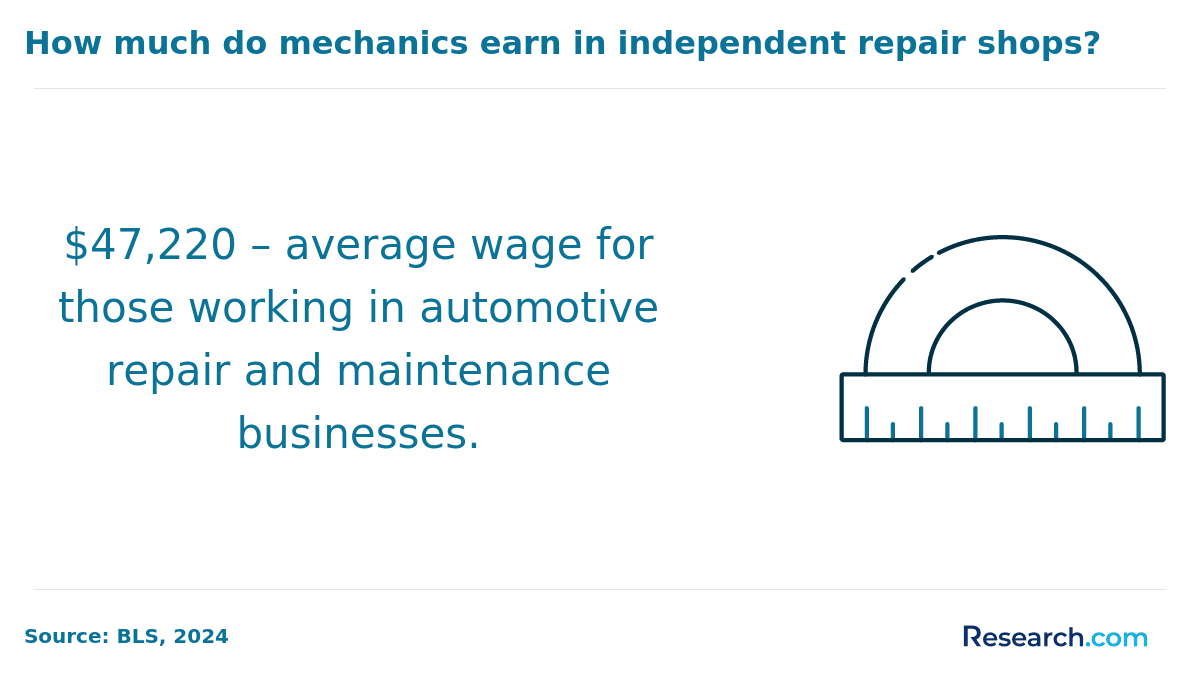
The median annual salary for mechanics in Ohio is approximately $47,010. Average hourly pay ranges from approximately $24.78 to $26.96, depending on location, experience, employer, and specialization. Entry-level salaries typically start around $41,000 annually, while seasoned mechanics can earn upwards of $60,000. Top earners can make over $70,000, and some niche roles in urban centers such as Columbus and Cleveland may reach $40 per hour.
Pay is not guaranteed, and individual outcomes can vary. Earnings are influenced by shop type, flat-rate versus hourly pay structure, diagnostic ability, ASE credentials, manufacturer training, customer volume, benefits, overtime, and whether the technician works in general repair, dealership service, diesel, fleet maintenance, or advanced diagnostics.
- ASE certification can improve credibility and may support higher-level job opportunities.
- Dealerships may offer stronger benefits or structured advancement, though expectations and productivity targets can be demanding.
- Technicians with electrical diagnostics, diesel, hybrid, or EV experience may have access to more specialized roles.
- Management, service advising, training, and shop ownership can increase income potential but require business and communication skills.
Mechanics who enjoy engineering concepts, vehicle design, or advanced technology may also compare automotive repair with broader technical education. Research.com’s guide on whether an engineering degree is hard can help readers understand a more academic technical pathway.
What tools and skills do mechanics need to succeed?
Successful mechanics need more than a socket set. They need diagnostic thinking, safety discipline, comfort with technology, physical stamina, and the ability to communicate clearly with supervisors, service advisors, and customers. Many beginners focus only on tools, but the most valuable technicians are often the ones who can verify a concern, test systematically, document findings, and avoid unnecessary parts replacement.
- Computerized diagnostic tool and scan software proficiency
- Electrical testing skills, including reading wiring diagrams and interpreting circuit behavior
- Understanding of electric vehicle systems, battery technology, and high-voltage safety procedures
- Ability to diagnose and service hybrid systems that combine mechanical and electrical components
- Familiarity with ADAS features such as lane-keeping assist, collision warning, and adaptive cruise control
- Skill in interpreting electronic control unit data and performing software-related service procedures when appropriate
- Strong troubleshooting habits that move from symptoms to evidence-based conclusions
- Safe use of lifts, hand tools, power tools, measuring instruments, and shop equipment
- Clear written documentation for repair orders, inspections, customer concerns, and recommended service
- Commitment to continuing education as vehicle systems, emissions rules, and repair standards change
| Skill category | Examples | Why employers care |
| Mechanical fundamentals | Brakes, suspension, engines, steering, cooling, drivetrain service | These are the core repair areas in many shops. |
| Diagnostics | Scan tools, test plans, fault codes, symptom verification | Accurate diagnostics reduce comebacks and unnecessary repairs. |
| Electrical and electronics | Circuits, sensors, modules, wiring diagrams, voltage testing | Modern vehicles depend heavily on electronic systems. |
| Safety | Lift safety, PPE, hazardous materials, high-voltage precautions | Unsafe work can injure technicians and damage vehicles. |
| Communication | Repair notes, customer explanations, teamwork, service advisor coordination | Clear communication improves trust, efficiency, and shop workflow. |
What are the career growth opportunities for mechanics in Ohio?
Mechanics can grow by becoming more specialized, moving into diagnostic roles, supervising other technicians, joining a fleet or dealership career ladder, teaching, becoming a service advisor, or eventually opening a shop. The most reliable growth strategy is to keep adding skills that employers can directly use.
Advanced diagnostics and vehicle technology
Newer vehicles contain more sensors, software, driver-assistance systems, and electronic control modules. Technicians who can diagnose these systems accurately may become more valuable than those who only perform routine maintenance.
Electric and hybrid vehicle service
Hybrid and electric vehicles require specialized safety procedures and technical knowledge. Mechanics who pursue training in batteries, high-voltage systems, regenerative braking, and electric drivetrains can prepare for a changing vehicle market.
Data-based troubleshooting
Diagnostic work increasingly involves interpreting scan data, freeze-frame information, live sensor readings, and technical service information. Mechanics who can connect data to mechanical symptoms are better equipped for complex repairs.
Fleet and commercial maintenance
Fleet employers value preventive maintenance, reliability, fast turnaround, and accurate records. A mechanic who understands uptime, scheduled service, and commercial vehicle needs may find stable opportunities in logistics, government, delivery, or industrial settings.
Emissions, alternative fuels, and environmental compliance
Emissions systems, fuel efficiency, and alternative technologies continue to shape repair work. Mechanics who understand emissions-related diagnostics and environmentally responsible service practices can serve shops that handle compliance-sensitive work.
| Growth path | How to prepare | Good fit for |
| Lead technician | Build broad repair experience and earn respected certifications. | Mechanics who enjoy solving difficult technical problems. |
| Diagnostic specialist | Strengthen electrical, scan tool, and data interpretation skills. | Technicians who prefer analysis over repetitive service work. |
| Fleet maintenance supervisor | Learn preventive maintenance systems, documentation, and team coordination. | Mechanics interested in stable operations and leadership. |
| Service advisor or manager | Develop customer communication, estimating, scheduling, and business skills. | Technicians who want less physical work and more customer-facing responsibility. |
| Shop owner | Combine repair expertise with finance, marketing, hiring, and compliance knowledge. | Experienced mechanics with entrepreneurial goals. |
The chart below lists the different career advancement opportunities available for mechanics in general auto repair shops, as reported by PartsTech in 2025.
What are the pros and cons of becoming a mechanic in Ohio?
Automotive repair can be a strong choice for hands-on learners, but it is not ideal for everyone. Before enrolling, weigh the work environment, physical demands, technology changes, tool costs, and the time it takes to move from entry-level work to higher-paying roles.
| Pros | Cons |
| Ohio has a sizable automotive service workforce, with 22,950 technicians and mechanics employed statewide in 2025. | Entry-level earnings may be modest until you gain experience, certifications, and diagnostic skill. |
| The projected 5% job growth rate suggests continued need for trained technicians. | The work can be physically demanding and may involve heat, noise, chemicals, awkward positions, and heavy components. |
| Training can often be completed in 6 months to 2 years, making it shorter than many four-year degree paths. | Tools, fees, exams, and uniforms can add significantly to the cost of training. |
| Specializations in diesel, diagnostics, hybrid and electric vehicles, fleet maintenance, or management can support advancement. | Technology changes quickly, so mechanics must keep learning throughout their careers. |
| The work provides visible, practical results for people who like troubleshooting and fixing real problems. | Some shops use productivity expectations or flat-rate systems that can create pressure for less experienced technicians. |
Who should consider this path?
- People who enjoy hands-on problem-solving and do not want a desk-only career
- Students who want a faster training route than a traditional bachelor’s degree
- Workers who are comfortable learning technology, electronics, and diagnostic software
- Detail-oriented learners who can follow safety procedures and repair documentation
- People interested in long-term specialization, shop leadership, or business ownership
Who may want a different path?
- People who want mostly remote or office-based work
- Students who are not willing to keep learning as vehicle technology changes
- Workers who want to avoid physical labor, grease, noise, and shop hazards
- People who cannot budget for tools, exam fees, or unpaid training time
- Learners who prefer engineering design, software, healthcare technology, or another technical field over repair work
Common mistakes to avoid when becoming a mechanic in Ohio
- Assuming Ohio licensure is the same as employer qualification. Ohio may not require a general mechanic license, but employers still care about training, experience, and certifications.
- Choosing a school based only on tuition. Compare lab time, tool costs, exam fees, employer connections, financial aid, and job placement support.
- Ignoring electronics and diagnostics. Brakes and oil changes matter, but long-term advancement increasingly depends on electrical and computerized systems knowledge.
- Buying tools without checking the program list. Schools and employers may require specific brands, sets, or safety equipment.
- Assuming all programs prepare you for the same jobs. A short certificate, associate degree, diesel program, and dealership training track can lead to different opportunities.
- Waiting too long to get shop experience. Employers value hands-on practice, punctuality, safety habits, and real-world workflow experience.
- Overlooking recertification and continuing education. ASE recertification and ongoing training help technicians stay aligned with changing systems and repair standards.
Questions to ask before choosing an Ohio mechanic program
- Is the program aligned with ASE Education Foundation or NATEF standards?
- How many hours are spent in the shop or lab, not just in the classroom?
- Does the program include diagnostics, electrical systems, hybrid or electric vehicle topics, and emissions-related training?
- Are tools included in tuition, or do students buy them separately?
- What is the total cost after tuition, fees, tools, uniforms, exams, and materials?
- Does the school help students find apprenticeships, co-ops, internships, or paid shop roles?
- Which local dealerships, independent shops, fleets, or employers hire graduates?
- Are classes offered in formats that fit your schedule, especially if you work full time?
- Can credits transfer into another credential if you later want an associate degree or additional training?
- What support is available for financial aid, workforce funding, veterans benefits, or employer sponsorship?
What do mechanics say about their careers in Ohio?
The Ohio vocational program helped me learn by doing. Working on engines and transmissions in a real shop setting gave me the confidence that classroom study alone could not provide. – Syd
The state-supported training route gave me structure, practice, and a smoother transition into full-time repair work. The focus on safety and efficient habits made a lasting difference. – Ellis
The nonprofit program gave me access to tools, shop space, and daily practice. The more I worked on vehicles, the more I understood how much precision and problem-solving the trade requires. – Aden
Related Articles for Nearby States
- 2027 How to Become a Mechanic in Indiana: Requirements & Certification
- 2027 How to Become a Mechanic in Kentucky: Requirements & Certification
- 2027 How to Become a Mechanic in West Virginia: Requirements & Certification
- 2027 How to Become a Mechanic in Pennsylvania: Requirements & Certification
- 2027 How to Become a Mechanic in Michigan: Requirements & Certification
- 2027 How to Become a Mechanic in Illinois: Requirements & Certification
- 2027 How to Become a Mechanic in Virginia: Requirements & Certification
- 2027 How to Become a Mechanic in Tennessee: Requirements & Certification
- 2027 How to Become a Mechanic in North Carolina: Requirements & Certification
- 2027 How to Become a Mechanic in Missouri: Requirements & Certification
Key Insights
- Ohio does not require a general statewide mechanic license, but training, experience, and ASE certification can strongly influence employability.
- Most mechanic programs in Ohio take between 6 months and 2 years, so the right timeline depends on whether you choose a short certificate, associate degree, apprenticeship, or employer-based route.
- The estimated cost ranges from approximately $8,000 to nearly $30,000, and students should budget for tools, exam fees, uniforms, technology, and materials in addition to tuition.
- Ohio’s median annual mechanic salary is approximately $47,010, with top earners making over $70,000 depending on specialization, location, employer, and experience.
- The best long-term opportunities are likely to favor technicians who can diagnose electrical systems, use computerized tools, understand hybrid and electric vehicles, and document repairs accurately.
- Before enrolling, ask about program standards, lab hours, employer partnerships, total cost, certification preparation, and job placement support.
- Mechanic work is a strong fit for hands-on learners who like troubleshooting, but it requires physical stamina, continuous learning, and a realistic plan for paying for tools and training.
References:
- Auto Mechanic Schools. (n.d.). Guide to becoming an automotive technician or mechanic in Ohio. Auto Mechanic Schools.
- Bureau of Labor Statistics (BLS). (2025a). 49-3023 Automotive Service Technicians and Mechanics. Occupational Employment and Wage Statistics (OEWS) Profiles. BLS.
- Bureau of Labor Statistics (BLS). (2025b). Area: Rhode Island. Occupational Employment and Wage Statistics Query System. BLS.
- Bureau of Labor Statistics (BLS). (2025c). Automotive Service Technicians and Mechanics. Occupational Outlook Handbook. BLS.
- Cochran. (2022). How to Become a Mechanic in Ohio. Cochran.
- Columbus State Community College (CSCC). (n.d.). Automotive Technology program information. CSCC.
- Gyfted. (n.d.). How to become a certified mechanic in Ohio. Gyfted.
- Herald-Tribune. (2018). Learn to be an automotive technician and get paid while you do it. Special-Sections. Herald-Tribune.
- National Institute for Automotive Service Excellence (ASE). (2024). ASE Certified professionals and specialty statistics. ASE.
- PartsTech. (2025). The State of General Auto Repair Shops in the U.S. PartsTech.
- Ricart Automotive Group. (n.d.). Technician Career Path - Apprentice Program. Ricart Automotive Group.
- University of Northwestern Ohio (UNOH). (n.d.). Automotive Technology program overview. UNOH.
- Universal Technical Institute (UTI). (2025). 7 Steps To Become an Auto Mechanic. UTI.
- Zippia. (2025). Automotive mechanic demographics and statistics in the US. Zippia.
Other Things You Should Know About Becoming a Mechanic in Ohio
In Ohio, gaining work experience as a mechanic requires working under the supervision of a certified professional. This hands-on training provides necessary skills and knowledge. Aspiring mechanics should seek apprenticeships or entry-level positions in repair shops to fulfill this requirement by 2026.
In 2027, aspiring mechanics in Ohio typically need a high school diploma or GED. Enrolling in a vocational program or community college for automotive technology is recommended to gain foundational skills. Courses should cover engine repair, electrical systems, and diagnostics, preparing students for entry-level positions and certification exams.
The Ohio Board of Motor Vehicle Repair regulates the certification of mechanics in Ohio, ensuring compliance with state laws and standards. Applicants must meet educational and experience requirements, and potentially undergo exams overseen by this board to achieve certification in 2027.


