
2027 How to Become an Electrician in Oregon

Co-Founder and Chief Data Scientist
Homes and offices have wiring networks that can pose a safety hazard, with more than 22% of non-residential fires being electrical fires. This is where a skilled electrician comes in, expertly diagnosing and resolving electrical issues to keep homes and businesses safely powered. Aspirants in Oregon can become one with the right training and by obtaining relevant certifications and gaining licensure.
As such, this guide shines a light on the stages of the education and licensure processes for becoming an electrician in Oregon. In addition, the article features the job outlook, salary projections, education costs, and the time it takes to become a licensed professional. Upon reading, aspirants can identify whether a career as an electrician is worth pursuing.
Key Things to Know About Becoming an Electrician in Oregon
- Oregon requires electricians to complete an approved apprenticeship program, typically lasting four to five years, combining paid work and classroom instruction.
- The job outlook for electricians in Oregon is strong, with projected growth driven by construction and renewable energy developments.
- The average annual salary for electricians in Oregon is approximately $65,000, varying based on experience, location, and specialization.
- Licensing in Oregon mandates passing a state exam and continuing education to stay updated on electrical codes and safety standards.
- What education is required to become an electrician in Oregon
- How do you get into an electrician apprenticeship program in Oregon?
- How much do electricians make in Oregon?
- What certifications do electricians need in Oregon?
- How long does an electrician apprenticeship take in Oregon?
- How much does electrician training cost in Oregon?
- Can electricians diversify their expertise with HVAC training in Oregon?
- How can ongoing professional development shape an electrician’s career in Oregon?
- Can electricians benefit from developing business acumen in Oregon?
- What license do you need to be an electrician in Oregon?
- Can Electricians Transition to Other Technical Careers in Oregon?
- How often do you need to renew your electrician license in Oregon
- What are the essential skills needed to be a successful electrician in Oregon?
- What is the job outlook for electricians over the next 10 years in Oregon?
- Do Electricians Need Liability Insurance in Oregon?
What education is required to become an electrician in Oregon
Aspiring electricians typically enroll in classroom courses covering electrical theory, circuitry, safety protocols, and the National Electrical Code (NEC), which are essential for licensing exams. Common coursework includes electrical mathematics, blueprint reading, residential and commercial wiring, electrical systems design, and occupational safety. These build the foundational knowledge needed to safely and effectively work in the electrical trade.
Apprenticeships play a critical role in electrician training and generally last four to five years. During this period, apprentices accumulate at least 8,000 hours of on-the-job experience paired with classroom instruction. The Oregon Construction Contractors Board mandates completion of such apprenticeships before candidates can take the journeyman electrician exam.
Top educational programs in Oregon include the Oregon Institute of Technology, which offers an Electrical Engineering Technology program with strong industry ties. The Portland Community College Electrical Apprenticeship program emphasizes both theory and practical skills. Additionally, the Lane Community College Electrical Technology program prepares students for apprenticeship and licensing requirements.
How do you get into an electrician apprenticeship program in Oregon?
To join an electrician apprenticeship program in Oregon, applicants generally must be at least 18 years old, hold a high school diploma or GED, and possess a valid driver’s license. Programs such as those offered by the International Brotherhood of Electrical Workers (IBEW) Local 48, the Associated Oregon Industries Electrical Apprenticeship Program, and the Oregon Electrical JATC (Joint Apprenticeship and Training Committee) follow these standard requirements. Additionally, candidates must pass an aptitude test evaluating math and reading comprehension, which ensures they have the foundational skills necessary for the electrical trade.
Oregon’s apprenticeship system stands out due to oversight by the Oregon Bureau of Labor and Industries (BOLI), which enforces strict standards including a mandatory minimum of 2,000 on-the-job training hours and 144 classroom hours annually. This dual focus on practical and theoretical learning equips apprentices with a comprehensive skill set in electrical theory, safety protocols, and installation techniques. Such structured training not only enhances technical competence but also ensures consistent wage progression, making the apprenticeship both educational and financially viable.
Beyond skill acquisition, apprenticeships in Oregon facilitate invaluable professional networking. Working closely with licensed electricians allows apprentices to gain hands-on experience and insights into industry best practices. For example, IBEW Local 48 organizes seminars and review classes tailored to help apprentices stay current with evolving electrical codes and technologies. Engaging with these resources can significantly boost career prospects. Aspiring electricians can also benefit from workshops offered by the Oregon Construction Contractors Board and local community colleges, providing further reinforcement of core competencies.
One Oregon electrician I spoke with reflected on their apprenticeship journey as transformative yet challenging. They emphasized that while the rigorous hours and coursework demanded strong commitment, the mentorship received was instrumental in building confidence and technical ability. The electrician recalled early tasks involving complex wiring setups under supervision, which initially felt daunting but gradually became rewarding as skills improved. Their advice to new apprentices is to prioritize safety, actively seek feedback, and take advantage of every learning opportunity throughout the program.
Aspirants looking for possible alternatives to becoming an electrician can view the list of high demand trades on various educational sites. In doing so, you can pursue a career that aligns with your goals, needs, and preferences.
How much do electricians make in Oregon?
Electricians in Oregon are some of the highest paid in the country. The average annual salary for electricians in Oregon is approximately $85,330, equating to about $6,563.85 per month. Entry-level electricians typically start with annual wages ranging from $48,930 to $62,040, varying by city and apprenticeship experience. Salary progression is closely tied to gaining certifications and experience. After completing apprenticeship programs and achieving journeyman status, electricians see steady wage increases, with master electricians and specialists in commercial or industrial sectors often earning over $110,000 annually.
The highest-paying cities for electricians in Oregon include Portland, Eugene, and Bend. Portland electricians tend to have a six-figure annual salary, reflecting the city's robust construction industry and higher living expenses. Eugene and Bend offer competitive wages as well. This aligns with Oregon’s growing construction industry, which supports steady demand for skilled electricians and potential for wage growth.
For aspiring electricians looking to boost their credentials and earnings, pursuing a program with the best rated online vocational trade school in the area is a good idea. The programs offered by such an institution are likely to be accredited by recognized organizations and designed to yield desirable outcomes.
The visual below from the United States Bureau of Labor Statistics (BLS) shows that Oregon has the highest median annual wage for electricians among all states.
What certifications do electricians need in Oregon?
The primary certifications to legally work as an electrician in Oregon include the Apprentice Electrician Certification, the Residential Electrician License, and the General Journeyman Electrician License.
The Apprentice Electrician Certification serves as the entry-level credential, allowing apprentices to gain hands-on experience under licensed electricians while completing required classroom instruction. Oregon mandates a minimum of 8,000 hours of combined work and related education before candidates are eligible to pursue the journey-level license, emphasizing the importance of apprenticeship programs in the certification requirements for electricians in Oregon.
For those seeking to work independently or operate their own electrical business, obtaining the General Journeyman Electrician License is essential. This license requires passing a comprehensive exam covering the National Electrical Code (NEC), Oregon state electrical laws, and electrical theory. Additionally, electricians focused on residential installations and repairs can obtain the Residential Electrician License, which is specialized for single-family and multifamily dwelling wiring.
Several institutions in Oregon provide training aligned with these certifications. Noteworthy examples include the Electrical Apprenticeship and Training Trust of Oregon, Portland Community College Electrical Program, and Lane Community College's Electrical Apprenticeship. These programs combine classroom education with practical apprenticeship experience, helping candidates meet state licensure prerequisites and stay current with the NEC 2023 code updates.
Electricians interested in exploring related trades and later upskilling can check the offerings of the list of the best automotive mechanic trade school programs as part of a broader career strategy. They can practice as an electrician and a mechanic after completing a program.
How long does an electrician apprenticeship take in Oregon?
Completing an electrician apprenticeship in Oregon typically requires 4 to 5 years, encompassing about 8,000 hours of on-the-job training combined with related classroom instruction. This aligns with standard expectations for electrician apprenticeships nationally and is influenced by state-specific licensing criteria. Variations in duration occur due to factors such as program structure, apprentice availability, and employer or union requirements.
Some apprenticeships in Oregon may extend beyond five years if the individual works part-time, faces scheduling conflicts, or must complete additional coursework due to licensing changes. Conversely, accelerated apprenticeship programs exist, often through the Joint Apprenticeship and Training Committee (JATC) affiliated with NECA and IBEW, which allow qualified candidates with prior experience or certifications to complete training in as little as 3 years. These programs typically require intensive coursework and a higher initial skill level.
Apprentices looking to optimize their time should focus on consistent attendance, active engagement in both practical and theoretical training, and seeking mentorship from experienced electricians. Prioritizing certifications recognized in Oregon’s electrical market, such as the Oregon Electrical Journeyman License, can also facilitate faster progression and improved job prospects. Staying current with updates to the National Electrical Code (NEC) and Oregon-specific regulations supports exam readiness and compliance.
Aspiring electricians who are unsure about which institution to enroll in can check the ranking of the best online trade schools and construction programs on education sites and find electrician programs that offer agreeable terms and rates.

How much does electrician training cost in Oregon?
The electrician training cost in Oregon varies significantly based on the program type and educational level pursued. Certificate or diploma programs at community colleges or trade schools typically range from $4,000 to $12,000 for courses lasting six months to one year. More comprehensive associate degree programs, which often include general education credits, can cost between $10,000 and $25,000 over two years.
Duration is a critical factor influencing total expenses. Shorter certificate programs reduce upfront tuition but often require extended on-the-job training through apprenticeships. Apprenticeships, while paid positions, can prolong the time before full licensure is achieved. Students must also consider necessary equipment costs; basic electrician toolkits range from $500 to $1,500 depending on quality, with additional expenses for textbooks and safety gear.
Oregon electrician apprenticeship expenses are generally lower since apprenticeships combine paid work experience with classroom instruction. Classroom fees for apprenticeships may range from $500 to $1,500 annually, but wages earned during the typically four- to five-year apprenticeship help offset these costs. Public community colleges offer more affordable tuition compared to private or out-of-state institutions, while urban living expenses, such as in Portland, can increase overall costs.
Financial aid options are available to help manage these expenses. Oregon residents can apply for state programs like the Oregon Opportunity Grant, supporting eligible students. Federal aid such as Pell Grants and Stafford Loans also assists qualifying individuals enrolled in accredited programs. Additionally, many apprenticeship sponsors—including unions and trade associations—offer scholarships, grants, and subsidized tools, enhancing affordability. Furthermore, prospective students are encouraged to explore the best online trade schools since they grant access to many financial aid options.
Can electricians diversify their expertise with HVAC training in Oregon?
Electricians seeking to broaden their technical portfolio in Oregon may explore cross-training in HVAC systems as a strategic move to access new career opportunities. Integrating electrical competency with HVAC skills meets the growing demand for professionals who can manage interconnected building systems, resulting in improved job flexibility and potential increases in earnings. For detailed guidance on acquiring this dual expertise, refer to how to become an HVAC technician in Oregon.
How can ongoing professional development shape an electrician’s career in Oregon?
Continuous learning is a critical factor for electricians seeking to maintain a competitive edge and adhere to evolving industry standards. Various professional development avenues—such as accredited short courses, specialized workshops, and advanced certification programs—offer practical insights into the latest electrical codes, safety protocols, and renewable energy integrations. These opportunities, often provided by trade organizations and local community colleges, enable electricians to update their technical skills, refine problem‑solving abilities, and improve overall career prospects. For professionals evaluating complementary technical fields, learning how to become a mechanic in Oregon can offer an additional perspective on cross‐industry skills development.
Can electricians benefit from developing business acumen in Oregon?
Electricians considering an independent career or looking to advance into management roles may enhance their prospects by acquiring robust business skills. Combining technical expertise with competencies in financial planning, marketing strategies, client relations, and project management can differentiate professionals in this competitive field. Further education in these areas helps streamline operations and improve decision-making, which is essential when managing projects and building a reliable client base. For tailored academic pathways that integrate business fundamentals with trade-specific challenges, consider exploring programs offered by top business schools in Oregon.
What license do you need to be an electrician in Oregon?
Becoming a licensed electrician in Oregon requires obtaining one of several specific licenses regulated by the Oregon Building Codes Division (BCD), which operates under the Department of Consumer and Business Services. The main licenses available are the Residential Electrician, General Journeyman Electrician, Master Electrician, and Residential Electrician Trainee licenses.
The licensure process involves meeting distinct experience and education requirements based on the type of license pursued:
- Residential Electrician License: Requires 4,000 hours of on-the-job training and 144 hours of approved classroom instruction, allowing work on electrical installations in one- and two-family dwellings.
- General Journeyman Electrician License: Requires 8,000 hours of documented experience and 288 hours of classroom training for permission to work on all types of electrical installations.
- Master Electrician License: Requires at least two years of journeyman experience, additional education, and passing an advanced examination.
- Residential Electrician Trainee: Designed for beginners to work under supervision while completing training hours.
Applicants must also pass rigorous licensing exams that evaluate knowledge of electrical theory, state electrical codes, and safety regulations, reflecting the National Electrical Code adopted by Oregon.
Can Electricians Transition to Other Technical Careers in Oregon?
Electricians in Oregon possess a robust technical foundation that can be advantageous when exploring alternative technical fields. Many professionals leverage their expertise in troubleshooting complex systems, adhering to rigorous safety standards, and managing technical projects to ease transitions into related careers. For instance, technical skills acquired as an electrician can provide a valuable basis for roles in biomedical equipment maintenance or diagnostic imaging support. Those interested in diversifying their technical portfolio may consider exploring specialized training in emerging fields such as medical imaging. See how to become an ultrasound technician in Oregon for further guidance on pursuing such opportunities.
How often do you need to renew your electrician license in Oregon
Electrician licenses must be renewed every three years. The renewal process includes several critical requirements, designed to keep electricians current with evolving electrical codes and safety standards. Failure to comply can result in license suspension or revocation, potentially hindering career opportunities.
Key requirements for renewing an electrician license in Oregon include:
- Completion of at least 24 hours of continuing education during the three-year renewal cycle, with a focus on updates to the National Electrical Code (NEC) and Oregon-specific regulations
- Submission of the renewal application through the Oregon BCD’s official online portal before the license expiration date
- Payment of the applicable renewal fee, which depends on the license classification held
- Verification of compliance with any additional local jurisdictional requirements or endorsements, if applicable
What are the essential skills needed to be a successful electrician in Oregon?
To succeed as an electrician in Oregon, a blend of hard and soft skills is critical, reflecting the sector’s growth and technological advancements. The essential skills include the following:
- Technical Proficiency: Mastering electrical systems, wiring, and troubleshooting is foundational. Hands-on experience gained through apprenticeships or technical programs at community colleges enhances practical knowledge.
- Technology Literacy: Understanding digital tools and smart technologies is increasingly vital. Familiarity with circuit design software and diagnostic equipment aligns with Oregon’s evolving construction industry standards.
- Problem-Solving Skills: Electricians must quickly address unexpected challenges. Developing critical thinking through real-world scenarios and practical training improves decision-making under pressure.
- Communication Skills: Effective communication with clients and contractors ensures clarity and safety. The ability to interpret technical instructions and simplify complex concepts is essential for project success.
- Attention to Detail: Precision in installations and strict adherence to Oregon’s electrical codes prevent costly errors and accidents, highlighting the need for meticulous work habits.
- Physical Dexterity and Stamina: The job requires manual dexterity and resilience to work in diverse, sometimes physically demanding environments.
What is the job outlook for electricians over the next 10 years in Oregon?
Employment for electricians in Oregon is projected to increase by approximately 12% between 2023 and 2033, according to the U.S. Bureau of Labor Statistics. This surpasses the national average for all occupations, indicating strong demand within the state. The expansion is primarily driven by ongoing construction projects spanning residential, commercial, and public infrastructure, alongside modernization efforts of existing electrical systems.
Major metropolitan areas such as Portland, Salem, and Eugene employ the largest numbers of electricians. Portland stands out as the primary employment hub, fueled by a robust construction sector and a growing focus on renewable energy technologies like solar installations and energy-efficient building upgrades. These developments create diverse job opportunities, requiring skills in both traditional electrical wiring and specialized renewable energy systems.
Electricians in Oregon earn a median annual wage of about $65,000. While this is competitive compared to many other skilled trades, it must be considered in the context of Oregon’s relatively high cost of living. Urban centers, particularly Portland, have housing and transportation expenses above the national average, which can impact disposable income for electricians living in these areas. Despite this, opportunities for overtime and union membership often enhance overall compensation packages.
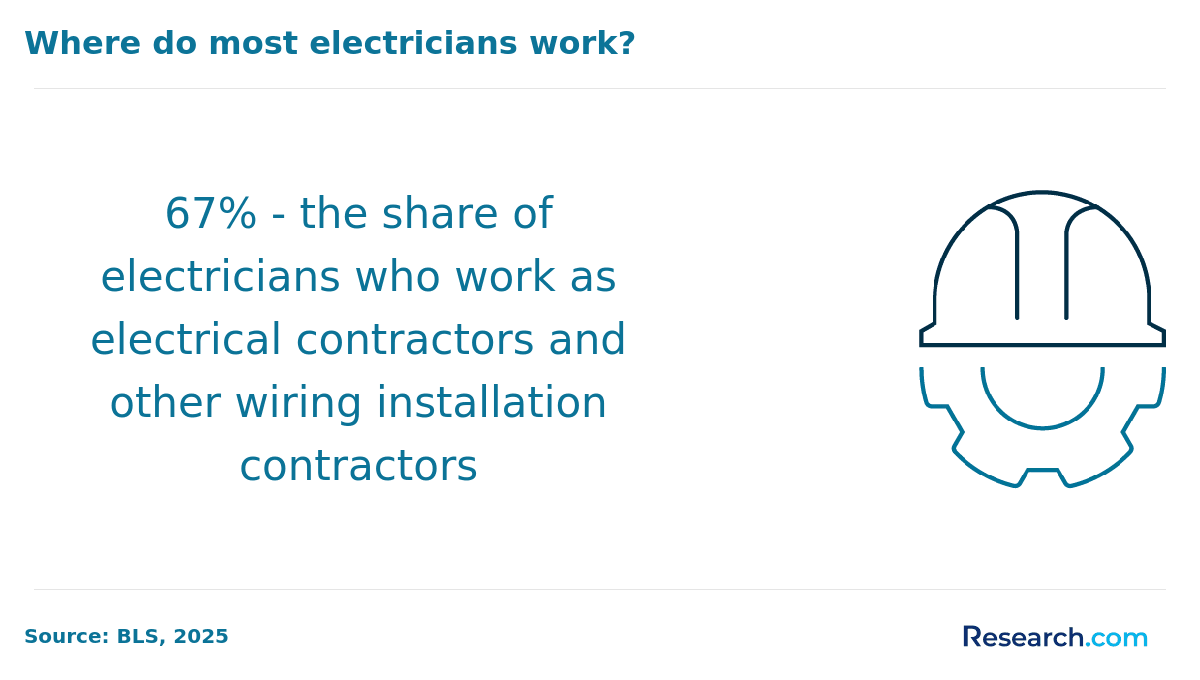
The construction industry employs nearly 60% of Oregon’s electricians, making it the dominant sector for job availability. Manufacturing and utilities sectors also provide stable employment options. Furthermore, emerging trends such as the adoption of smart grid technologies and the development of electric vehicle infrastructure are expected to increase demand for electricians with advanced technical training and certifications.
The visual below shows how the employment growth of electricians measures up to that of other professions.
Do Electricians Need Liability Insurance in Oregon?
Licensed electricians, especially those operating independently or managing their own contracting businesses, are required to address liability risks through appropriate insurance coverage. Liability and workers’ compensation insurance protect professionals from potential claims related to property damage, personal injuries, or unintentional errors on the job. While state regulations do not always mandate specific policies, many client contracts and licensing bodies expect proof of insurance as part of a comprehensive risk management strategy. Electricians should consult with insurance specialists to tailor coverage that matches the scale of operations and project requirements. Staying informed of evolving policy standards is a key element of maintaining both professional credibility and consumer trust. Additionally, professionals looking to diversify their technical skill set may find it beneficial to explore related career advancements, such as by learning how to become a radiology technician in Oregon.
What Electricians in Oregon Say About Their Careers
"Completing my apprenticeship through the Oregon Tradeswomen program was a game changer. The hands-on experience combined with supportive mentors helped me build confidence and truly master the craft. I love that I get to work outdoors in such a beautiful state while contributing to sustainable building projects that respect Oregon’s environment. It’s fulfilling to know my skills directly improve the safety and quality of homes in my community." - Rico
"Attending Portland Community College’s Electrical Technology program opened doors I never expected. The curriculum was challenging but rewarding, and it prepared me for a career with strong job stability and room for growth. Oregon’s focus on clean energy means there are unique opportunities to work on innovative projects, which keeps every day interesting. I appreciate how this career has allowed me to continuously learn and advance professionally." - Nathan
"Working as an electrician in Eugene has been a deeply meaningful journey. After finishing my training at Lane Community College, I’ve seen firsthand how our work supports vital infrastructure and helps local businesses thrive. Oregon’s diverse landscape presents unique challenges that keep me sharp and adaptable. Most importantly, I take pride in being part of a profession that contributes to the well-being and progress of my hometown." - Mark
Related Articles for Nearby States
- 2027 How to Become an Electrician in Washington
- 2027 How to Become an Electrician in California
- 2027 How to Become an Electrician in Idaho
- 2027 How to Become an Electrician in Nevada
- 2027 How to Become an Electrician in Montana
- 2027 How to Become an Electrician in Utah
- 2027 How to Become an Electrician in Wyoming
- 2027 How to Become an Electrician in Arizona
- 2027 How to Become an Electrician in Colorado
- 2027 How to Become an Electrician in New Mexico
References:
- Becoming an electrician - Electrical Trades Union https://www.etunational.asn.au/apprentices/becoming-an-electrician/
- How Long is an Electrician Apprenticeship | EGT https://egt.net.au/news-insights/how-long-is-an-electrician-apprenticeship-when-you-can-start-working
- Electrician Apprenticeships - About Apprenticeships https://www.aboutapprenticeships.com/get-in/electrician-apprenticeships/
- How Long Does it Take to Become an Electrician? https://www.lincolntech.edu/news/skilled-trades/electrical/how-long-does-it-take-become-electrician
- How Long is Electrician Trade School? | RSI https://www.rsi.edu/blog/skilled-trades/how-long-is-electrician-trade-school/
- Electrician Apprenticeship: 7 Things You Should Know Before Joining IBEW - InterCoast Colleges https://intercoast.edu/articles/electrician-apprenticeship-ibew/
- Adult Electrical Apprenticeships - How Old is Too Old? https://www.myelectriccareer.com/adult-electrical-apprenticeships
- Is 29/30 years age too late to start an sparky apprenticeship? - in - Electrician Courses : Electrical Quals https://www.electriciansforums.net/threads/is-29-30-years-age-too-late-to-start-an-sparky-apprenticeship.207838/
- Rewiring Your Career Path: The Journey to Becoming an Electrician at 30 https://www.tnssolutions.co.uk/post/rewiring-your-career-path-the-journey-to-becoming-an-electrician-at-30
- How to Become an Electrician in the UK https://www.tradeskills4u.co.uk/become-an-electrician
Other Things You Should Know About Becoming an Electrician in Oregon
To become an electrician in Oregon in 2027, start by earning a high school diploma or GED. Then, apply for and complete an apprenticeship program approved by the Oregon Building Codes Division. After finishing the required training hours, pass the licensing exam to become a journeyman electrician.
In 2027, to become an electrician in Oregon, you must be at least 18 years old, have a high school diploma or GED, and complete an approved apprenticeship program. You'll also need to pass a licensing exam to work legally in the state.
Electricians in Oregon must complete 24 hours of continuing education every three years to renew their licenses. This includes four hours of Oregon Electrical Specialty Code and four hours of laws and rules specific to Oregon, according to the Oregon Building Codes Division.


