2027 Online MS in Psychology - Forensic Psychology After a Completed Master's in General Psychology: Compare Prerequisites and Admission Options
Audited and Verified:
Our Editorial and Data Verification Process
Research.com uses government datasets, official education statistics and primary institutional information to support its career and degree guides. Our review process checks factual accuracy, occupational definitions, source dates and the requirements associated with the credentials discussed.
How This Article Was Fact-Checked
Our editorial team verifies salary estimates, employment projections, education requirements and program information against original data providers and official organizations. Salary figures are checked against the relevant occupational definitions and reporting periods. Information about licensure, accreditation and required in-person training is reviewed separately.
Fact-checked and verified on:

Co-Founder and Chief Data Scientist
A completed master's in general psychology may make you a strong applicant for an online forensic psychology MS - but it may also make a second degree unnecessary. The decision depends on what the new program requires, how much of your previous work it will recognize, and whether its training advances your goal in research, justice-system support, or professional practice.
This guide shows you how to compare admission options, remaining coursework, cost, and career value without mistaking a forensic specialization for a clinical license.
Key Things You Should Know
- A general psychology master's often provides relevant preparation, but each forensic program decides whether your prior degree meets its specific course and GPA requirements.
- Admission and credit transfer are separate decisions: qualifying to enroll does not mean your graduate courses will shorten a second master's.
- A nonclinical forensic psychology MS does not, by itself, qualify you for psychologist licensure or independent forensic evaluations; compare its full cost with the experience or credential your target role actually requires.
What is an online forensic psychology master's after a general psychology master's?
For someone who already holds a general psychology master's, an online forensic psychology MS is usually a second graduate degree focused on psychological science in legal and justice settings. Its value lies in coursework, research, and relevant professional connections that your first degree did not provide - not in earning a higher academic level.
Program titles alone reveal little about the difference. One curriculum may emphasize research on eyewitness memory and decision-making; another may focus on victim services, corrections, or the legal system. Compare the required courses and final project against your existing transcript. If most content overlaps, a targeted course, supervised project, or relevant job experience may be a better investment.
Comparing the curriculum you already completed with affordable online psychology master's programs can also clarify whether you need a new specialization or simply an opportunity to apply your current training.
Can a general psychology master's satisfy forensic psychology admission requirements?
Often, yes - but the prior degree is not a blanket waiver. A general psychology master's may demonstrate graduate-level preparation in theory, statistics, and research methods. Admissions staff may still evaluate your undergraduate degree, cumulative or graduate GPA, particular prerequisites, and the recency or content of specific courses. Some programs accept applicants from several disciplines; others specify psychology coursework or relevant experience.
The distinction is between an official requirement and evidence that strengthens an application. A methods course might satisfy a named prerequisite if the program approves its syllabus.
A thesis, justice-system job, or victim-services experience may demonstrate fit without replacing a required course. Ask the program to review your undergraduate and graduate transcripts, course descriptions, and any thesis or applied-project summary before you commit to additional classes. Get any prerequisite waiver or conditional-admission terms in writing.
Do not assume you need another bachelor's because a program asks about undergraduate preparation. Resources such as a bachelor's-level addiction psychology program guide describe a different degree pathway; for an applicant with a completed psychology master's, the forensic program's own prerequisite review is the relevant test.
Does an online forensic psychology master's lead to psychologist licensure?
Do not assume it does. A nonclinical forensic psychology MS teaches about psychology and the law but does not, by itself, authorize independent diagnosis, psychotherapy, restricted psychological testing, or the protected title of psychologist. Psychologist licensure generally involves a qualifying professional degree, supervised experience, examinations, and state-specific requirements. Studying forensic assessment is not the same as being qualified to conduct one.
If your goal is therapy, investigate a program designed around the educational requirements for the specific counseling or social-work license you seek, rather than adding another nonclinical psychology degree. A comparison of choosing a shorter clinical mental health counseling master's can help frame the time trade-off, but confirm recognition and placement requirements with the relevant state board before applying.
If your goal is licensed forensic evaluation, ask that board what professional training is required; a counseling degree is not automatically a substitute for psychologist preparation either.
Start by verifying the university's institutional accreditation through a U.S. Department of Education-recognized accreditor. Check the institution's current status and confirm that the online MS is offered by that institution. Accreditation matters for basic institutional oversight, but it does not establish that every course meets a licensing board's rules.
Do not reject a nonclinical forensic MS because it lacks American Psychological Association accreditation: APA accreditation applies to specified professional psychology doctoral programs and internships, not generally to stand-alone forensic psychology master's programs.
If you are comparing a different credential, identify the accreditor relevant to that program type and the requirements of the state where you intend to practice. For example, addiction counseling academic preparation must be evaluated against the particular state's credential rules, not a forensic MS's marketing description.
Expect substantial variation. Relevant offerings may cover psychology and the legal system, research methods, ethics, cultural considerations, victimization, correctional settings, or psychological evidence. A program may end in a thesis, capstone, examination, or applied project. Look beyond course titles: compare learning outcomes, required versus elective status, faculty supervision, and whether a proposed project can use data you are permitted to access.
Your first master's changes what counts as a meaningful curriculum. If you already completed advanced statistics and a thesis, repeated introductory methods courses may add little; coursework on legal decision-making and a supervised justice-related research project might add more.
Conversely, an intensive schedule can leave limited time to develop new field experience. Compare the actual course sequence with intensive forensic psychology master's admissions and study plans before treating speed as an advantage. An online class may still require live meetings, group work, campus visits, or an approved local placement.
Possibly, but admission does not guarantee transfer. Schools may limit the number of graduate credits accepted, require a minimum grade, assess course age and equivalence, or require a substantial portion of the second degree to be completed in residence at the awarding institution. A school may also waive a prerequisite without awarding degree credit for it.
Request two separate written decisions: which requirements your prior coursework satisfies for admission, and which credits, if any, apply to the new degree plan. Send syllabi as well as transcripts, then ask for an updated plan showing remaining courses and tuition-bearing credits. General advice on transfer credit reviews for psychology applicants is a starting point, not a substitute for the graduate program's own evaluation; undergraduate transfer policies may differ substantially.
Length and price depend on required credits, course availability, enrollment pace, accepted transfer credit, and any project or placement requirements. An advertised accelerated timeline may assume continuous full-time enrollment and no delays finding a supervisor or approved site.
For a working applicant, asynchronous lectures may help, but scheduled meetings and project collaboration can still constrain weekly availability. Review under-two-year forensic psychology graduate program options against those practical obligations, not just the published minimum duration.
Ask each school for a personalized estimate covering remaining tuition-bearing credits, mandatory fees, books or software, possible travel, and charges if a capstone extends beyond the planned term. Then compare that total with the likely benefit of the second credential. Employer education assistance, if available under your plan's terms, can change the calculation; an unapproved transfer request or assumed tuition benefit should not.
A second master's may support a move into nonclinical justice-related research, program evaluation, victim services, corrections program support, or case coordination. Hiring depends on the actual position, your prior employment, and agency rules. For someone already working in an agency, the strongest return may be a project that demonstrates improved research or program-support skills rather than the degree title alone.
These roles have different boundaries. A research employee may analyze approved, appropriately accessed data; a victim advocate may provide information and referrals; a case coordinator may help people navigate services. None of those duties automatically includes psychotherapy, independent psychological assessment, criminal investigative authority, or legal practice.
Check job postings for required experience, public-sector hiring classifications, background checks, and any occupation-specific credential. If a target support role can be reached through an existing degree and experience, another master's may not be necessary. Even inexpensive undergraduate substance use counseling degree choices address a different pathway; pursue one only if its curriculum and the applicable state credential rules fit the job you actually want.
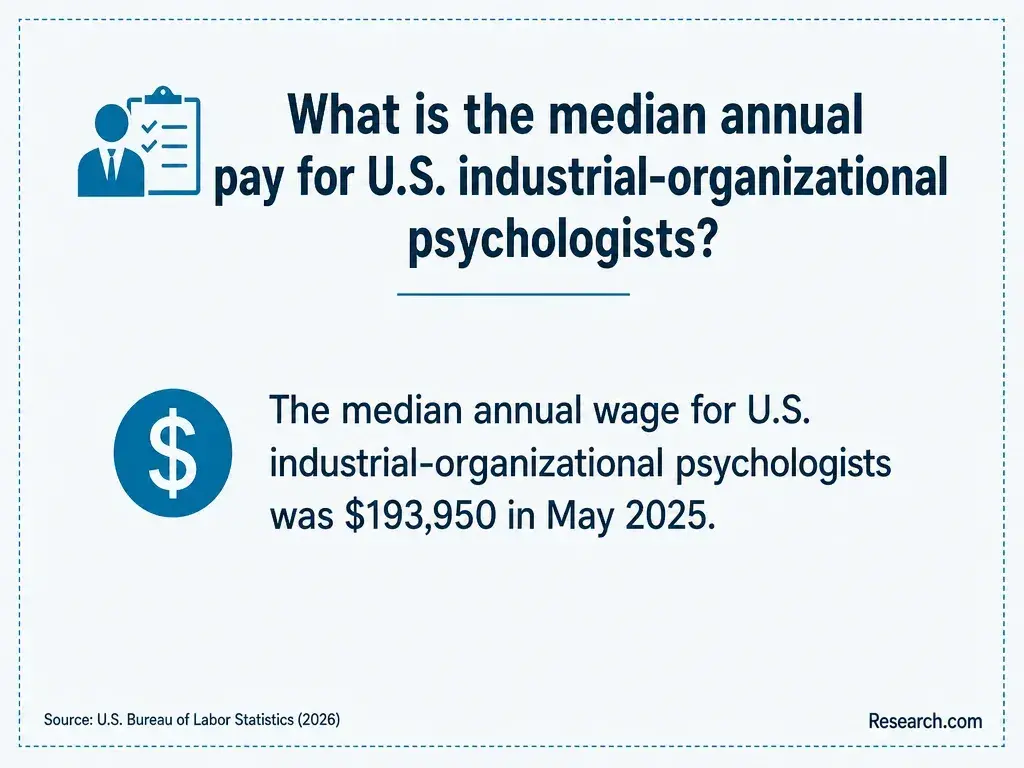
There is no single reliable salary or job-growth figure for holders of a forensic psychology MS. U.S. Bureau of Labor Statistics figures describe occupations, not graduates of a particular degree. A psychologist wage figure, for example, should not be presented as the expected pay for someone with a nonclinical master's who is not licensed as a psychologist.
For a useful estimate, identify a specific target job and location, then compare its current BLS occupational wage and projections with local agency postings and their education requirements. Public-sector pay grades, prior experience, and required credentials may matter more than the specialization on your diploma.
Comparisons involving short counseling master's formats and career planning also need to account for a different occupation and its licensing steps; their salary figures are not forecasts for forensic MS graduates.
How do you choose a reputable online forensic psychology program?
Choose the program that closes a documented gap between your existing master's and your next role. A distinctive concentration is not enough if it repeats your coursework, lacks relevant supervision, or does not meet the credential requirements of the job you want.
Before applying, obtain comparable answers from each school on the decisions that most affect a second-degree applicant:
- Ask for written prerequisite and graduate-credit evaluations based on both of your transcripts and relevant syllabi.
- Map required courses, research or applied projects, supervision, and any in-person obligations to the skills in your target job postings.
- Confirm institutional accreditation, the exact degree awarded, and any claims about licensure with the appropriate accreditor or state board.
- Request a personalized remaining-credit plan, full cost estimate, realistic schedule, and available completion and career-outcome evidence.
If the target is licensed counseling rather than nonclinical forensic work, compare a qualifying program's total cost and required field training instead. Guidance on paying for an online mental health counseling degree can inform that separate financial decision. If your current master's already meets employers' education requirements, prioritize relevant experience or targeted training before paying for another full degree.
Other Things You Should Know About Psychology
If the program offers a thesis or faculty-supervised research, yes. Ask whether your interests fit available supervision and what support online students receive. Do not assume a professor's interest guarantees admission or a project placement.
Only if the program and employer approve the project and your access to any information it uses. Employment alone does not provide permission to use confidential client, personnel, or agency records.
It may, particularly if it adds strong research work or recommendations missing from your first degree. Check the doctoral programs you intend to apply to; another master's is not universally required.
Some programs consider applicants whose degree is in progress. Ask whether admission would be conditional and when the final transcript showing the awarded degree must arrive.
- Training, practice, and career considerations in forensic... - PMC https://pmc.ncbi.nlm.nih.gov/articles/PMC11638730/
- Rule 3352-3-04 | Graduate degree requirements. https://codes.ohio.gov/ohio-administrative-code/rule-3352-3-04
- Program Requirements | John Jay College of Criminal Justice https://www.jjay.cuny.edu/academics/graduate-programs/ma-forensic-psychology/program-requirements
- Admissions | Department of Psychology - Illinois State University https://psychology.illinoisstate.edu/academics/doctorate-in-school-psychology/admissions/
- UNC Charlotte Academic Policy: Credit for Prior Learning and Graduate Transfer Credit - Office of the Provost https://provost.charlotte.edu/unc-charlotte-academic-policy-credit-for-prior-learning-graduate-transfer-credit/
- Forensic Psychology Graduate Certificate Requirements | Rosemont College https://rosemont.edu/college/academics/professional-studies/graduate/forensic-psychology-graduate-certificate/requirements/
- Master's in Psychology Requirements | louisiana.edu https://psychology.louisiana.edu/programs/masters/requirements
- Master's in Forensic Psychology | du.edu https://psychology.du.edu/forensicpsychology
- Online Forensic Psychology Master's Degree | ASU Online https://asuonline.asu.edu/online-degree-programs/graduate/master-science-forensic-psychology/
- MS in Forensic Psychology | Online Master's Degree | Capella University https://www.capella.edu/online-psychology-degrees/ms-clinical-psychology-program/masters-forensic-psychology/