2027 Online MS in Psychology - Forensic Psychology for Employee Benefits Specialists: Compare Prerequisites, Workload, and Career Fit
Audited and Verified:
Our Editorial and Data Verification Process
Research.com uses government datasets, official education statistics and primary institutional information to support its career and degree guides. Our review process checks factual accuracy, occupational definitions, source dates and the requirements associated with the credentials discussed.
How This Article Was Fact-Checked
Our editorial team verifies salary estimates, employment projections, education requirements and program information against original data providers and official organizations. Salary figures are checked against the relevant occupational definitions and reporting periods. Information about licensure, accreditation and required in-person training is reviewed separately.
Fact-checked and verified on:

Co-Founder and Chief Data Scientist
Employee benefits specialists already work with sensitive information, disability-related processes, and policies that affect people under stress. An online master's in forensic psychology may deepen their understanding of behavior in legal settings - but it is not necessarily the best route to advancement in benefits.
This guide compares admission prerequisites, coursework, scheduling demands, costs, and career possibilities. It also distinguishes useful nonclinical applications from licensed forensic practice, so you can decide whether the degree, a different qualification, or targeted training is worth pursuing.
Key Things You Should Know
- A bachelor's degree is generally the starting credential for master's admission, but required psychology and statistics coursework varies by program; benefits experience may strengthen an application without replacing formal prerequisites.
- The strongest career fit is often benefits, disability-program, or workplace-policy work with a legal or behavioral component - not a move directly into licensed forensic practice.
- Before enrolling, compare the full program cost and weekly obligations against a specific target job; an online format can still require live meetings, group work, or an approved project.
What Is an Online Master's in Forensic Psychology for Employee Benefits Specialists?
An online master's in forensic psychology studies psychological science in relation to legal systems, public policy, and justice settings. Depending on the institution, it may be a forensic psychology degree or a psychology degree with a forensic concentration. "Online" describes course delivery, not a separate professional credential.
For a benefits specialist, the relevant question is whether the curriculum helps with actual responsibilities: explaining policies, evaluating program evidence, coordinating with counsel or clinical professionals, and communicating fairly with employees. Studying forensic topics does not confer authority to decide diagnoses, independently assess disability, investigate crimes, or offer legal advice.
If you have not completed a bachelor's degree, graduate admission is a later decision. Short-duration undergraduate forensic psychology programs may be worth comparing, but advertised timelines depend on accepted credits, course availability, and remaining requirements.
Can Employee Benefits Specialists Use Forensic Psychology in Their Careers?
Yes, particularly when the job intersects with disability benefits, workplace disputes, or programs serving justice-involved populations. The value is usually better reasoning and communication - not a new scope of practice. A specialist might use research literacy to question whether a proposed workplace intervention has sound evidence, while leaving medical determinations and legal interpretations to qualified professionals.
The comparison below separates plausible uses of the degree from goals that call for different preparation.
| Career goal | Potential degree value | More direct consideration |
| Remain in benefits or disability-program administration | Research appraisal, ethics, and understanding of legal-system contexts | Benefits credentials, disability-program training, and applicable law may be more immediately useful |
| Move into justice-related program coordination | Knowledge of forensic research and service systems | Employers may prioritize agency experience, policy knowledge, and case-coordination skills |
| Provide counseling or clinical assessment | Academic background only | A qualifying professional program and jurisdiction-specific credential pathway |
If the intended change is specifically toward substance-use counseling, compare online substance use counseling degrees against your state's credential rules rather than assuming forensic coursework meets them.
What Careers Can an Online Forensic Psychology Master's Degree Lead To?
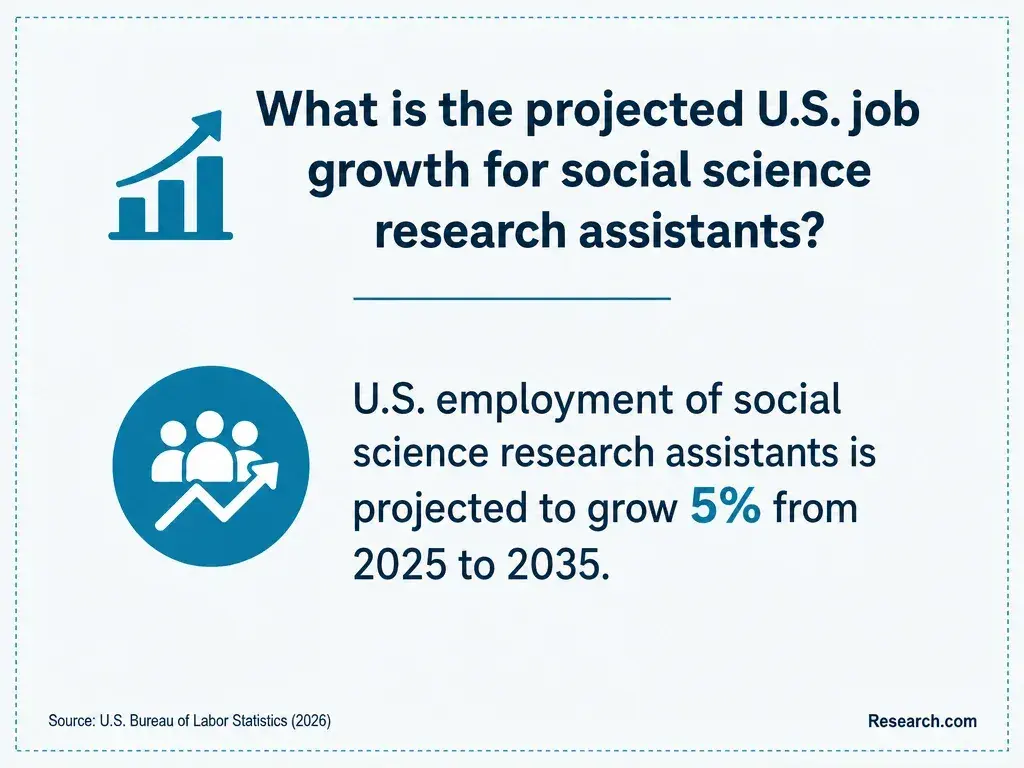
The most credible transition builds on existing benefits experience. Possible targets include disability-program analyst, employee-support program coordinator, justice-agency program specialist, victim-services program coordinator, or research and evaluation assistant. These are examples of roles to investigate, not jobs for which every forensic psychology graduate automatically qualifies.
Benefits specialists already bring documentation, policy communication, confidentiality, and stakeholder coordination skills. A transition into justice or human services may additionally require agency experience, knowledge of referral systems, trauma-informed communication, and familiarity with public-sector hiring. Seek a supervised nonclinical project or relevant volunteer role if job postings consistently ask for experience you lack; never use identifiable employee records for a course project without authorization.
Job titles can obscure important differences in duties. When comparing forensic psychology master's career earnings, check each role's required credentials and experience before treating its pay as a realistic return on this degree.
Programs generally expect a completed bachelor's degree, but they set their own rules for acceptable majors, GPA, prerequisite courses, recommendations, and application materials. A business or human resources degree does not automatically rule out admission. Psychology, statistics, and research-methods preparation may be required, recommended, or available through bridging coursework, depending on the school.
Benefits work can demonstrate relevant judgment and communication, yet it is not the same as documented academic preparation in research design. Compare each program's published requirements with your transcript, then ask admissions staff whether any missing course must be finished before applying, before enrolling, or during the program. If you still need to complete a bachelor's degree, investigate using previous coursework toward a psychology degree; only the receiving school can confirm how credits apply to graduation requirements.
Relevant study may include psychology and law, research methods, statistics, ethics, behavior in justice settings, and the evaluation of forensic research. Some programs emphasize a thesis or methods-intensive capstone; others emphasize applied coursework. Course titles alone will not show how much supervised research, writing, or practical feedback you receive.
For benefits work, prioritize assignments that teach you to distinguish a measured outcome from a diagnosis, assess limitations in workplace or service-program evidence, and communicate findings without overstating them. If a capstone could involve your employer, obtain academic and workplace approval before proposing access to employee information; deidentification alone does not settle every privacy or data-use obligation.
If your main gap is foundational psychology or statistics rather than forensic specialization, targeted courses may be more efficient. Applicants still completing undergraduate study can use cost-focused comparisons of psychology degrees to consider that earlier step before committing to graduate tuition.
Online study can reduce commuting, but it does not eliminate fixed deadlines or collaboration. For a full-time benefits specialist, the useful comparison is the actual weekly schedule and access to relevant projects - not the delivery label alone.
This table highlights obligations to confirm with each program before assuming one format fits your work calendar.
| Feature | Online program | Campus program |
| Class participation | May be asynchronous, live, or mixed | Usually tied to scheduled on-site meetings |
| Research and group work | May require scheduled virtual meetings | May offer more routine in-person collaboration |
| Applied requirements | May still require an approved local site or visit | May offer nearby partners, without guaranteeing placement |
Ask for a sample term schedule, including live sessions, project meetings, examination rules, and any residency. Twelve-month forensic psychology graduate study pathways deserve particular scrutiny: faster pacing can compress demanding reading and research tasks into fewer terms.
Duration depends on required credits, term structure, enrollment pace, prerequisites, and the thesis or capstone. A working specialist should request a term-by-term plan showing when required courses run and what happens if work obligations interrupt enrollment. The fastest published route may not be feasible at a sustainable weekly workload.
For cost, calculate required credits multiplied by the applicable tuition rate, then add mandatory fees, books or software, possible travel, and any continuation charges. Compare that total with employer education assistance and the pay requirements of jobs you actually intend to pursue. Do not count reimbursement until you have confirmed eligibility, approval timing, and any repayment condition.
If you have not yet earned a bachelor's degree and are considering a different, substance-use-focused undergraduate route, scholarship options for online addiction counseling undergraduates are a separate funding question; undergraduate aid should not be assumed to cover this master's program.
Not by its title alone. A nonclinical forensic psychology master's generally should not be treated as authorization to practice as a licensed psychologist, provide psychotherapy, or independently conduct forensic psychological evaluations. Licensure rules depend on the profession and jurisdiction, including qualifying education, supervised experience, and examinations.
If your goal is clinical or forensic assessment, identify the exact professional title and state where you plan to work, then check that board's educational requirements before applying. If your goal is nonclinical analysis or program coordination, licensure may not be necessary, but employers can still require particular experience or credentials.
Speed does not resolve this distinction. Shorter completion routes for psychology master's students should be evaluated against their actual curriculum and your target credential, not assumed to provide a faster route to licensed practice.
First verify that the institution holds recognized institutional accreditation and that it covers the school awarding the degree. Then confirm the exact program name, academic level, delivery format, and any separately claimed programmatic recognition. Institutional accreditation supports basic educational legitimacy; it does not prove a particular capstone quality, job outcome, or licensing pathway.
Do not reject a nonclinical master's merely because it lacks APA accreditation: APA accreditation applies to specified professional psychology doctoral programs and training, not every general or forensic psychology master's. Conversely, an accreditation claim elsewhere at the university does not automatically apply to this degree.
When comparing online forensic psychology degree costs versus career outcomes, confirm accreditation and program details with the institution and relevant accreditor, and request outcomes defined for this specific program rather than the university as a whole.
What Are the Salary and Job Outlook for Forensic Psychology Careers?
There is no single forensic psychology master's salary. A benefits specialist remaining in benefits administration, a justice-program coordinator, and a licensed psychologist belong to different labor markets with different entry requirements. A psychologist's occupation-wide pay is especially misleading as an estimate for graduates of a nonclinical master's.
For a defensible comparison, find the closest matching occupation in the U.S. Bureau of Labor Statistics Occupational Outlook Handbook, note its wage reference year and projection period, and compare its typical entry requirements with local job postings. Then weigh any plausible increase over your current compensation against the program's full cost and time away from work. Broad occupational medians describe workers in those occupations; they do not predict your offer or establish that the degree caused a pay difference.
If the degree's strongest likely outcome is advancement within your existing function, compare it with narrower qualifications and affordable distance learning in graduate psychology before paying for a forensic specialization you may seldom use.
Other Things You Should Know About Psychology
Possibly, if the program approves the project and your employer authorizes the work, supervision, and any data access. Ordinary job duties do not automatically satisfy academic requirements.
Tell the appropriate manager if you seek tuition assistance, schedule changes, or a workplace project. Be clear that the degree does not expand your authority over medical, legal, or employee-benefit determinations.
Do not share identifiable claims or sensitive workplace details without explicit authorization and a permitted educational use. Ask your employer and instructor about safe hypothetical or public-source alternatives.
Ask how predictable the weekly schedule was, whether research supervision was accessible, and which assignments proved useful at work. Their experience can inform your choice, but confirm current requirements with the school.
- Depression, PTSD, & Other Mental Health Conditions in the Workplace: Your Legal Rights https://www.eeoc.gov/laws/guidance/depression-ptsd-other-mental-health-conditions-workplace-your-legal-rights
- Types of Financial Aid: Grants, Work-Study, and Loans | studentaid.gov https://studentaid.gov/understand-aid/types
- Frequently Asked Questions - California Board of Psychology https://www.psychology.ca.gov/licensees/faq.shtml
- Cost of Attendance (Budget) | 2025-2026 Federal Student Aid Handbook https://fsapartners.ed.gov/knowledge-center/fsa-handbook/2025-2026/vol3/ch2-cost-attendance-budget
- Work Disability Examinations - Ohio Board of Psychology https://psychology.ohio.gov/laws-rules-resources/advisories-resources/work-disability-examinations-forensic-psychology-competence-and-resources
- Training, practice, and career considerations in forensic... - PMC https://pmc.ncbi.nlm.nih.gov/articles/PMC11638730/
- How to Become a Licensed Psychologist | Texas Behavioral Health Executive Council https://bhec.texas.gov/texas-state-board-of-examiners-of-psychologists/applying-for-a-psychology-license/how-to-become-a-licensed-psychologist/
- What do graduate programs look for in clinical applicants? | apa.org https://www.apa.org/gradpsych/2007/11/cover-gradprograms
- Online Forensic Psychology Master's Degree | ASU Online https://asuonline.asu.edu/online-degree-programs/graduate/master-science-forensic-psychology/
- Student Workload in Online Learning | Florida Gulf Coast University https://www.fgcu.edu/digitallearning/online-education/student-workload-in-online-learning