
2027 Steps to Become a Registered Dietitian in New York

Co-Founder and Chief Data Scientist
Many aspiring nutrition professionals face uncertainty about becoming registered dietitians in New York. With over 8,000 dietitians statewide and projected 12% job growth over the next decade, demand continues to rise, offering rewarding opportunities in diverse healthcare settings.
This article, crafted by career planning experts, outlines New York’s education, supervised practice, and licensure requirements. It provides clear guidance to help readers navigate their career path and pursue success in this vital field.
Key Things to Know About Becoming a Registered Dietitian in New York
- In New York, dietitians need a bachelor’s degree, ACEND-accredited coursework, supervised practice, and a graduate degree for exam eligibility.
- They must complete 800–1,200 supervised practice hours under licensed supervision.
- New York City ranks among the top U.S. cities with the highest employment levels for dietitians.
- What degree is required to become a registered dietitian in New York?
- How many supervised practice hours are needed to become a registered dietitian in New York?
- What are the eligibility requirements for the dietetic registration exam in New York?
- How can you get a license after passing the dietetic registration exam in New York?
- What types of dietitian specializations can you pursue in New York?
- What is the average salary of a registered dietitian in New York?
- What do you need to keep your dietitian registration active in New York?
- What additional certifications can boost my credentials in New York?
- Should I explore allied healthcare roles alongside my dietetics career?
- How long does it take to become a registered dietitian in New York?
- Can international students qualify to become registered dietitians in New York?
- What career paths can registered dietitians pursue in New York?
What degree is required to become a registered dietitian in New York?
In New York, becoming a registered dietitian requires completing accredited programs that combine academic study with supervised practice. Below are the key degree requirements:
- Bachelor’s Degree: A bachelor’s degree from an accredited institution is the first step, providing core knowledge in nutrition, biology, and chemistry.
- Didactic Program in Dietetics (DPD): Completion of an ACEND-accredited dietetics program in New York ensures students receive specialized coursework that prepares them for supervised practice.
- Supervised Practice Experience: Following academic coursework, candidates must complete a supervised internship or coordinated program to gain applied skills in clinical, community, and foodservice settings.
- Master’s Degree (Optional but Encouraged): While not always required, pursuing a master’s degree deepens expertise, aligns with evolving credential standards, and enhances career opportunities in the field.
With these educational milestones, you position yourself well for a meaningful career. For those interested in related healthcare professions, exploring the highest paying job in medical field can offer additional inspiration and guidance.
How many supervised practice hours are needed to become a registered dietitian in New York?
Becoming a registered dietitian in New York requires completing supervised practice hours that meet both state and national requirements. These hours ensure that candidates gain clinical, community, and foodservice experience under professional supervision. Below are the key points regarding supervised practice hours in New York:
- ACEND Accreditation Standards: Accredited programs typically require 1,000 to 1,200 hours of supervised practice, exceeding the state’s legal minimum and aligning with national standards.
- State Law Minimums: New York mandates a minimum of 800 supervised practice hours to qualify for licensure.
- Program Variability: Requirements vary by institution; for example, NYU’s Dietetic Internship requires 1,000 hours over 26 weeks, while Lehman College requires 1,100 hours plus optional alternative activities.
- Types of Programs: Coordinated Programs combine coursework with supervised practice, generally requiring at least 1,200 hours for completion.
- Supervision Standards: Hours must be overseen by a New York State Certified Dietitian-Nutritionist or a registered dietitian affiliated with an approved professional association.
- Professional Endorsements: Licensure applicants must provide endorsements from three qualified dietitians-nutritionists, confirming supervised practice compliance.
- Degree Requirements: As of 2024, candidates must also hold or pursue a graduate degree alongside completing supervised practice.
- State-Specific Certification: While optional, the Certified Dietitian-Nutritionist (CDN) license may be required by certain employers in New York.
What are the eligibility requirements for the dietetic registration exam in New York?
To qualify for the dietetic registration exam in New York, candidates must meet both national education standards and state-specific credentialing rules. These requirements ensure applicants are fully prepared to practice as registered dietitians.
Below are the key requirements:
- Minimum Educational Qualification: Candidates must hold a graduate degree from a U.S. Department of Education-accredited institution or an equivalent foreign credential. The degree may be in any field of study, effective January 1, 2024.
- Required Nutrition Coursework: Completion of an ACEND-accredited program is mandatory. Acceptable pathways include a Didactic Program in Dietetics (DPD), Coordinated Program (CP), or Graduate Program (GP). Coursework must include at least 45 semester hours in dietetics and nutrition, plus 20 semester hours in human biological and social sciences.
- Submission of Eligibility: The program director of the ACEND-accredited program must submit verification of eligibility to the Commission on Dietetic Registration (CDR). Only then can candidates register for the national exam.
- Registration and Completion of the National Exam: Candidates must register for and pass the national registered dietitian exam administered by the CDR. Exam results are sent directly to the New York State Office of the Professions.
- State-Specific Credential Requirements and Licensure Pathways: New York requires state certification to use protected titles such as certified dietitian or certified nutritionist. This includes meeting education and age requirements, submitting a state application, and following licensure pathways that may differ for nutritionist roles.
Alongside these requirements, supervised practice hours remain an essential part of the journey. For those exploring career options and wondering about the nutrition nurse salary and related fields, understanding these eligibility requirements is a crucial foundation for success.
How can you get a license after passing the dietetic registration exam in New York?
After passing the dietetic registration exam, candidates in New York must complete specific steps to achieve licensure. These steps ensure compliance with state law and recognition as a certified dietitian-nutritionist.
Below are the key steps:
- Verify Eligibility: Confirm that you meet New York’s requirements, including being at least 18 years old and completing a graduate-level dietetics-nutrition program.
- Document Education: Have your school submit Form 2 with official transcripts directly to the New York State Education Department (NYSED).
- Document Examination: Ensure your CDR exam results are sent to NYSED as proof of professional competency.
- Submit Application: Complete the licensure application through NYSED’s online portal, providing accurate personal and educational details.
- Pay Fees: Submit the non-refundable $294 application and registration fee to initiate processing.
- Provide Supplemental Documents: Mail any additional materials requested by NYSED, such as proof of name changes or international transcript evaluations.
- Await Review: Allow time for the NYSED Office of the Professions to review and verify your application.
- Receive License: Once approved, you will be authorized to use the protected title “Certified Dietitian-Nutritionist” and legally practice in New York.
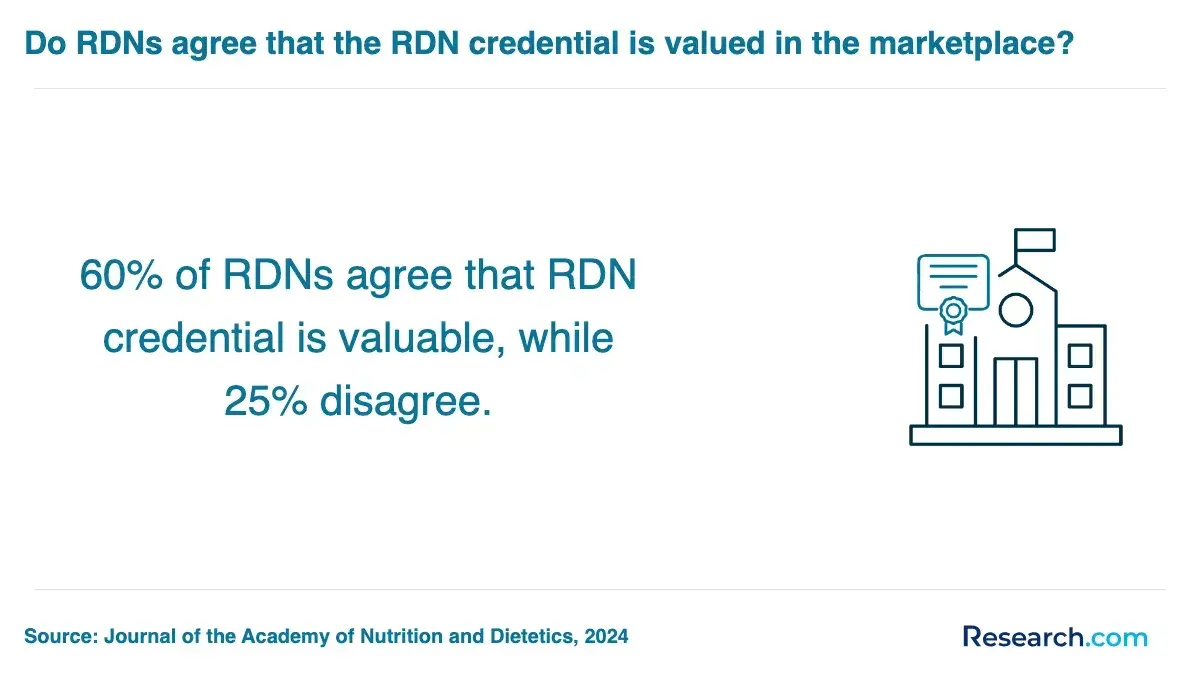
As you navigate the licensing process, it’s worth noting how dietitians view their credentials—the image below shows how many RDNs believe their credentials are valuable.
What types of dietitian specializations can you pursue in New York?
Dietitians in New York can pursue a wide range of specializations that reflect the state’s diverse healthcare environment and population needs. These roles allow professionals to develop expertise in targeted areas, making a meaningful impact in clinical care, public health, and private practice.
Below are the key dietitian specializations available in New York:
- Clinical Dietitian: Provides medical nutrition therapy in hospitals and clinics, focusing on chronic illnesses such as diabetes and cardiovascular disease.
- Community Nutritionist: Develops public health programs in schools and local agencies, addressing challenges such as childhood obesity and food insecurity.
- Food Service Management Dietitian: Oversees food operations in institutions, ensuring compliance with safety and nutrition standards as required in New York.
- Pediatric Dietitian: Specializes in nutrition for infants and children, managing allergies, growth, and special dietary needs.
- Geriatric Dietitian: Focuses on the dietary needs of older adults, supporting healthy aging and chronic disease management.
- Sports Dietitian: Provides tailored nutrition guidance for athletes and active individuals to enhance performance and recovery.
- Culinary Nutrition Specialist: Combines culinary expertise with nutrition education to promote healthy cooking and therapeutic recipes.
- Integrative and Functional Nutrition Dietitian: Using holistic methods like nutrigenomics and microbiome analysis for personalized nutrition plans; learn more about holistic nutrition certification.
- Research Dietitian: Conducts scientific studies in nutrition and public health, often requiring advanced education and academic collaboration.
- Private Practice Dietitian: Offers personalized counseling in areas such as weight management and preventive health, often holding RDN and CDN credentials.
What is the average salary of a registered dietitian in New York?
Registered dietitians in New York earn salaries shaped by location, experience, and work setting. Below are key factors influencing compensation:
- Average Annual Salary: Dietitians in New York earn approximately $83,147 per year, or about $39.97 per hour.
- Comparison to National Average: This rate is slightly higher than the national hourly average of $40.31, reflecting New York’s competitive healthcare market.
- Location Variations: Salaries are highest in New York City due to demand and cost of living, while upstate areas pay less but offer lower living expenses.
- Experience Level: Seasoned professionals can earn over $100,000 annually, showing significant growth potential.
- Work Setting Influence: Hospitals and specialized centers typically provide higher pay than public health or community-based roles.
- Specialization and Demand: Expertise in areas such as pediatric or oncology nutrition increases earning potential, particularly in metropolitan hospitals.
- Regional Trends: Salaries in Long Island and Westchester often rival New York City due to similar healthcare markets. Steady salary growth is expected as preventive health initiatives expand statewide.
What do you need to keep your dietitian registration active in New York?
Maintaining an active dietitian registration in New York is essential for legal practice and professional credibility. Staying current demonstrates commitment to lifelong learning and supports recognition by employers, clients, and regulatory bodies.
Below are the key requirements:
- Continuing Education: Complete 75 hours of approved continuing professional education every five years to maintain national credentials with CDR.
- Renewal Frequency: Renew your CDR registration every five years. Renew your New York State license online as required, though the state does not mandate continuing education for license renewal.
- Fees: Pay the $80 annual maintenance fee to CDR, which increases to $90 in 2027. At initial state licensure, submit the $294 application fee to the New York State Education Department.
- Documentation and Deadlines: Submit timely payments and maintain detailed records of continuing education. Accurate tracking helps avoid termination, late fees, or reinstatement penalties.
- Status Notification: Notify CDR in writing if you choose to voluntarily terminate your registration. Include your CDR identification number and the reason for termination.
What additional certifications can boost my credentials in New York?
Registered dietitians in New York looking to expand their professional portfolio may consider pursuing specialized certifications. Attaining credentials in areas such as clinical nutrition, sports dietetics, or public health nutrition can open pathways to advanced roles and niche practices. These certifications validate targeted expertise and demonstrate a commitment to continual professional development. Candidates should review the eligibility criteria, exam requirements, and renewal processes offered by reputable organizations to ensure the certification aligns with their career goals. For further guidance on career diversification, explore how to become a nutritionist in New York.
Should I explore allied healthcare roles alongside my dietetics career?
Diversifying your expertise by integrating allied healthcare roles can provide a competitive edge in New York’s evolving healthcare landscape. Expanding into complementary areas may enhance clinical insight and broaden practical skills, which are valuable in multidisciplinary settings. For professionals seeking additional hands-on patient care training, consider exploring options such as learning how to become a medical assistant in New York to diversify your credentials and strengthen your career portfolio.
How long does it take to become a registered dietitian in New York?
The process of becoming a registered dietitian in New York typically spans six to eight years, encompassing undergraduate and graduate study, supervised practice, and successful completion of the national registration exam. This timeline underscores the rigorous preparation required to enter the profession and ensures candidates are fully equipped with both academic knowledge and applied skills. For those mapping out their education and career path, understanding this timeframe allows for clearer planning and goal setting.
Aspiring dietitians generally begin with a four-year bachelor’s degree, followed by a graduate degree, which is now a requirement for exam eligibility. Supervised practice through an accredited dietetic internship provides vital hands-on training, usually lasting several months to a year. While the overall duration may vary depending on program structure, study pace, or internship availability, New York’s education requirements emphasize quality preparation, enabling graduates to begin practice with confidence and competence.
Exploring options like an integrated master’s program or even a nutrition degree online can offer flexible pathways to meet education requirements efficiently.
Can international students qualify to become registered dietitians in New York?
International students have a clear pathway to becoming registered dietitians in New York by fulfilling specific academic and credentialing requirements tailored to their backgrounds. This process ensures that their education and training align with U.S. standards, preparing them for a rewarding career in dietetics.
Below are the key requirements:
- Degree Equivalency Evaluation: International degrees must be evaluated to confirm equivalency to a U.S. bachelor’s or master’s degree from a regionally accredited institution. This evaluation is required before proceeding with credentialing through CDR.
- Completion of ACEND-Accredited Coursework: Candidates must complete core coursework in DPD or an equivalent program accredited by ACEND, either in the U.S. or through approved international pathways.
- Supervised Practice Requirement: A minimum of 1,200 hours of supervised practice is required through an ACEND-accredited Dietetic Internship (DI), Individualized Supervised Practice Program (ISPP), Coordinated Program (CP), or International Dietitian Education (IDE) program.
- Language Proficiency: Applicants may need to demonstrate English language proficiency through standardized exams such as TOEFL or IELTS to ensure readiness for academic and professional success.
- Passing the Registration Examination: After completing the required coursework and supervised practice, candidates must pass the CDR Registration Examination for Dietitians to earn the Registered Dietitian (RD/RDN) credential.
- Obtaining New York State Licensure: Once nationally credentialed, applicants must apply for licensure with the New York State Education Department to practice legally in the state.
International students are encouraged to visit the International Student Guide and Checklist from ACEND for detailed guidance on these essential steps toward a successful dietetics career.
What career paths can registered dietitians pursue in New York?
Registered dietitians in New York can pursue careers across healthcare, education, research, and corporate environments. These roles provide rewarding work, competitive salaries, and promising growth prospects.
Below are the key career options:
- Clinical Dietitian: Provide medical nutrition therapy in hospitals and clinics. Salaries average $80,500 statewide, reaching $85,140 in New York City, where demand is especially high.
- Community/Public Health Dietitian: Design nutrition programs for public agencies or nonprofits. Salaries range from $64,120 to $103,500, with a projected 7% job growth rate.
- Food Service Manager/Director: Lead food operations in schools, hospitals, and healthcare facilities. This role offers leadership opportunities and salaries above the state average.
- Nutrition Educator: Teach in schools, colleges, or community programs. Educators enjoy job stability, steady pay, and opportunities to shape public health knowledge.
- Certified Diabetes Educator: Specialize in diabetes care within clinical or consulting settings. Hourly pay averages $50–$60, with strong demand for expertise.
- Nutrition Researcher: Conduct studies in universities, hospitals, or industry. These positions require advanced degrees and offer variable but competitive salaries.
- Private Practice/Consultant: Provide independent counseling, wellness coaching, or corporate consulting. Earnings depend on client reach, with flexibility and growth potential.
- Sports Nutritionist: Advise athletes and active populations on diet and performance. Salaries are competitive, reflecting specialized expertise in sports health.
For those looking to advance their expertise, exploring a list of most affordable online masters degrees in nutrition can be an excellent step toward career growth and specialization.
What do registered dietitians in New York say about their careers?
- Starting my career as a registered dietitian in New York has been both challenging and inspiring, especially working with such a diverse population. Designing nutrition programs that reflect cultural variety keeps me engaged while directly impacting children’s health. The community support makes this work deeply rewarding. —Lotte
- Being a dietitian in New York has given me opportunities to combine education with health promotion in meaningful ways. Seeing how nutrition education improves students’ performance and well-being motivates me daily. Strong professional development resources here continue to fuel my growth. —Dave
- Working in New York schools as a registered dietitian pushes me to adapt to a fast-paced, multicultural environment. Addressing health disparities and creating inclusive programs has strengthened both my professional skills and personal outlook. Advocating for healthier futures is incredibly fulfilling. —Albert
Related Articles for Nearby States
- 2027 Steps to Become a Registered Dietitian in New Jersey
- 2027 Steps to Become a Registered Dietitian in Pennsylvania
- 2027 Steps to Become a Registered Dietitian in Connecticut
- 2027 Steps to Become a Registered Dietitian in Massachusetts
- 2027 Steps to Become a Registered Dietitian in Vermont
- 2027 Steps to Become a Registered Dietitian in Rhode Island
- 2027 Steps to Become a Registered Dietitian in Delaware
- 2027 Steps to Become a Registered Dietitian in Maryland
- 2027 Steps to Become a Registered Dietitian in New Hampshire
- 2027 Steps to Become a Registered Dietitian in Ohio
References:
- Be Well Solutions Dietetic Internship. (n.d.). What to do after passing the RD exam. Retrieved from Be Well Solutions Dietetic Internship
- Become a Nutritionist. (n.d.). How to become a registered dietitian in New York - NY. Retrieved from Become a Nutritionist
- CUNY Graduate School of Public Health and Health Policy. (n.d.). State certification and licensure – Nutrition and dietetic internship. Retrieved from CUNY Graduate School of Public Health and Health Policy
- Commission on Dietetic Registration. (n.d.). Licensure. Retrieved from Commission on Dietetic Registration
- New York Distance Dietetic Internship. (n.d.). RDN requirements. Retrieved from New York Distance Dietetic Internship
- NutritionED.org. (n.d.). How to become a registered dietitian in New York - NY | Exam, license, and education requirements in New York. Retrieved from NutritionED.org
- NYS Office of the Professions. (n.d.). Dietetics and nutrition: License requirements. Retrieved from New York State Education Department
- Russell Sage College. (n.d.). Becoming a registered dietitian nutritionist. Retrieved from Russell Sage College
- SUNY Oneonta. (n.d.). Becoming a registered dietitian nutritionist. Retrieved from SUNY Oneonta
- NYU Steinhardt. (n.d.). How to become a registered dietitian nutritionist. Retrieved from NYU Steinhardt
Other Things You Should Know About Becoming a Registered Dietitian in New York
In 2027, to become a Registered Dietitian in New York, you must earn a minimum of a bachelor's degree from an ACEND-accredited program, complete a supervised practice dietetic internship, and pass the CDR exam. A master's degree requirement is under consideration but not yet mandatory.
In 2027, New York requires a minimum of 1,200 hours of supervised practice experience, typically completed through an accredited dietetic internship program. This hands-on training is essential for developing practical skills in various nutrition and dietetics settings.
In 2027, to become a Registered Dietitian in New York, you must hold a bachelor's degree or higher from an ACEND-accredited program. Complete a dietetic internship, pass the CDR exam, and obtain state certification. Key updates may include changes in internship hours or exam requirements, so check for the latest regulations.


