2027 Online MS in Psychology - Forensic Psychology for Violence Prevention Research: Which Courses Should You Look For?
Audited and Verified:
Our Editorial and Data Verification Process
Research.com uses government datasets, official education statistics and primary institutional information to support its career and degree guides. Our review process checks factual accuracy, occupational definitions, source dates and the requirements associated with the credentials discussed.
How This Article Was Fact-Checked
Our editorial team verifies salary estimates, employment projections, education requirements and program information against original data providers and official organizations. Salary figures are checked against the relevant occupational definitions and reporting periods. Information about licensure, accreditation and required in-person training is reviewed separately.
Fact-checked and verified on:

Co-Founder and Chief Data Scientist
A forensic psychology master's can cover crime and behavior without teaching you how to evaluate a violence prevention program. That distinction matters if you hope to work in research, a justice agency, or a community organization.
This guide shows you which courses and supervised opportunities build useful research skills, how to judge an online program's access to data and mentorship, and when a different degree or shorter training route may fit your goal better.
Key Things You Should Know
- Prioritize research design, statistics, measurement, research ethics, and program evaluation; forensic subject courses alone are not enough to prepare you to study prevention outcomes.
- Look for a supervised project that lets you define a violence-related outcome, assess data quality, and explain limitations - not merely summarize criminal cases.
- A nonclinical forensic psychology MS can support research and evaluation work, but it does not by itself qualify you to provide therapy, conduct independent forensic assessments, or practice as a psychologist.
What Is an Online Forensic Psychology Master's for Violence Prevention Research?
It is a master's program in psychological science applied to legal or justice-related settings, selected for its ability to teach how to study and evaluate efforts to prevent harm. Violence prevention research may examine risk and protective factors, assess whether services reach intended groups, or evaluate outcomes of a community or justice-system initiative. It is distinct from predicting whether a particular person will be violent or providing treatment.
Program names are not reliable guides to research depth. One forensic psychology MS may emphasize legal concepts and case analysis; another may offer advanced statistics, faculty-led research, and a thesis. For applicants still completing an undergraduate degree, shorter routes through forensic psychology bachelor's coursework may provide a starting point, but a fast bachelor's curriculum is not a substitute for graduate-level research training.
If your goal is to deliver counseling or conduct licensed forensic evaluations, begin with the requirements for that profession instead. A nonclinical MS selected for research may not meet them.
Which Courses Should You Look For in Violence Prevention Research?
Read course descriptions and recent syllabi rather than counting classes with "forensic" in the title. The strongest curriculum connects psychological theory to defensible measures, comparisons, and decisions about prevention services.
The following course groups offer a practical way to compare programs. The final column explains what you should be able to produce or critique after completing each group.
| Course group | Content to look for | Evidence of useful learning |
| Research design and graduate statistics | Longitudinal and observational designs, comparison groups, regression, uncertainty, missing data, and causal limits | A study plan and analysis that distinguish an association from an intervention effect |
| Psychological measurement | Construct definitions, reliability, validity, reporting bias, and appropriate use of screening or survey tools | A justified choice of outcomes and an explanation of what the measures cannot establish |
| Violence prevention and developmental or social psychology | Risk and protective factors, relationships, community context, exposure to violence, and differences across the lifespan | A prevention question grounded in psychological evidence rather than stereotypes |
| Program evaluation or implementation science | Logic models, reach, fidelity, outcomes, and practical constraints in agencies | An evaluation plan an agency could review before collecting data |
| Research ethics and forensic systems | Consent, confidentiality, safeguarding, institutional authority, and limits of justice-system records | A data-access and protection plan with appropriate approvals identified |
Courses on substance use can be relevant because prevention initiatives may address overlapping risks, but they should not displace methods training. If substance-use prevention is your primary interest and you have not settled on a graduate pathway, compare the curricular emphasis of online colleges for addiction-focused psychology study with the research depth of the MS you are considering. Neither subject area alone establishes counseling qualifications.
Is an Online Forensic Psychology Master's Degree Accredited?
Accreditation must be checked at the correct level. Verify that the institution holds accreditation recognized by the U.S. Department of Education or the Council for Higher Education Accreditation, then confirm that the accreditation applies to the institution awarding the degree. Online delivery does not, by itself, change the level of the award.
Do not expect APA accreditation of a general, nonclinical forensic psychology MS: APA accreditation covers specified professional psychology training programs, not every psychology master's degree.
Institutional accreditation also does not prove that a program offers a thesis, qualifies graduates for licensure, or provides access to research placements. Forensic psychology degree accreditation comparisons can help you identify candidates, but confirm each program's current status and credential claims with the institution and, if relevant, a state board.
Online coursework may let you remain in a job or community organization while studying. Campus study may make it easier to join a research group or use institutionally controlled data. Neither format guarantees mentorship, and an asynchronous lecture does not mean that research meetings, group work, or agency collaboration will be asynchronous.
For violence prevention research, compare access rather than format alone: Can online students work with faculty on a real question? Is a thesis available? Who arranges agency partnerships, and can students use an approved local site? Ask whether any residency, live session, site visit, or scheduled presentation is mandatory. Working applicants should map those obligations against their actual weekly availability before enrolling.
Accelerated calendars deserve particular scrutiny. When reviewing one-year online forensic psychology master's options, check whether the schedule leaves enough time to obtain project approval, secure lawful data access, analyze results, and revise a substantial research paper. A shorter program may suit someone with existing methods skills and an approved project, but not someone who needs to build both from scratch.
Requirements vary by institution. Programs commonly evaluate a completed bachelor's degree, academic record, statement of purpose, and recommendations; some specify psychology or statistics prerequisites, while others admit applicants from criminal justice, public health, sociology, or other fields. Check the program's published requirements for your intended entry term rather than treating a recommended course as a universal admission rule.
If you are changing fields, your immediate preparation question is whether you can read a research paper, understand basic statistics, and explain a feasible prevention research interest. Ask admissions which prerequisites must be completed before entry, which can be taken after entry, and whether prior work can document readiness without replacing a formal course.
Applicants finishing a bachelor's should also check psychology program transfer policies; accepted credits do not necessarily satisfy a statistics or research-methods requirement.
Completion time depends on required credits, course availability, enrollment pace, and whether a thesis or agency project requires approvals. Compare a school's published full-time and part-time plans with the sequence you could actually follow. A course offered only occasionally, or a project dependent on an external partner, can extend study beyond the advertised minimum.
For cost, request the current tuition and fee schedule for your entry term. Calculate required credits at the applicable tuition rate, then add mandatory fees and any travel, software, project, or continuation charges. Compare that full estimate - not a per-credit headline - with psychology master's tuition comparisons. Ask the financial aid office about your eligibility and the consequences of part-time enrollment; do not assume an assistantship or employer reimbursement is available.
Methods training is most valuable when it matches a question an organization can answer responsibly. For example, a student evaluating a proposed violence prevention workshop might define attendance as reach and a later, consistently recorded outcome as a separate measure. Attendance alone would not show that the workshop prevented violence.
Look for practice with observational and longitudinal data, appropriate comparison groups, qualitative interviews, and mixed-methods evaluation. Students should learn to assess selection bias, changes in reporting, incomplete records, and differences between statistical and practical importance.
Publicly available aggregate data can support some questions; identifiable agency, health, school, or justice records may require additional authorization and protections. Faculty and the relevant institution or site must determine whether a proposed activity needs ethics review, consent, or a data-use agreement.
If the work you actually want is direct substance-use counseling rather than research evaluation, compare that occupation's state credential rules before investing in advanced methods coursework. Someone still choosing an undergraduate route can review online substance use counseling bachelor's aid resources as part of that separate education decision.
Relevant nonclinical work may include research coordination, program evaluation, data analysis, prevention-program support, and victim-services or justice-agency roles. The title on a job posting matters less than its duties: an evaluation analyst may need stronger statistics and reporting skills, while a program coordinator may need partnership, documentation, and service-referral experience. Employers may also require prior agency work, technical skills, or a different degree.
For an early-career applicant, a supervised project, research assistantship, or agency evaluation can provide clearer evidence of readiness than the concentration name alone. Applicants already working in community services may be able to build on their knowledge of referral pathways and program operations, provided their employer and university approve the project and data use.
Career options in recovery services illustrate another community-facing direction, but support roles and regulated counseling positions have different requirements.
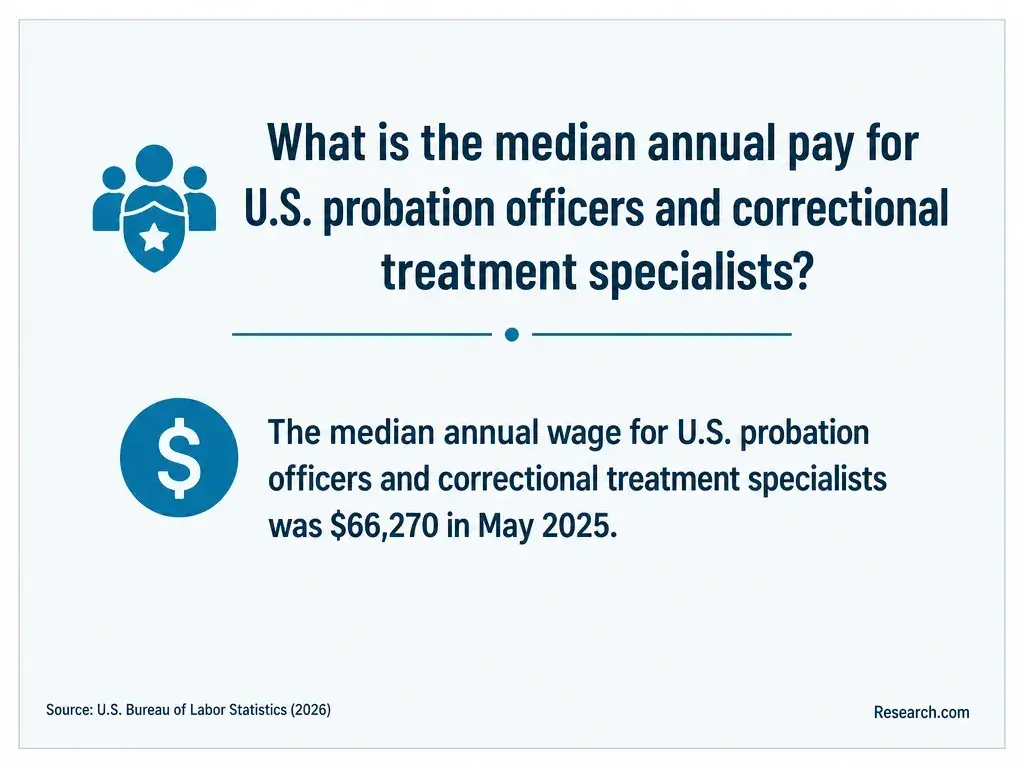
Do not interpret an occupation-wide salary figure as an expected return on this degree. Before committing, examine current postings in your preferred location and compare their required methods, experience, credentials, and pay with your existing qualifications.
Research and program-evaluation roles generally do not require a psychology practice license solely because they concern violence. An employer may still set its own degree, background-check, training, or data-security requirements. Requirements change if the intended work is psychotherapy, independent psychological assessment, or another regulated service.
A nonclinical forensic psychology MS does not by itself authorize someone to diagnose, treat, perform independent forensic evaluations, or use a protected psychologist title. If counseling is the goal, compare the relevant state licensing rules with a qualifying professional program; mental health counseling graduate costs and career outcomes address a different educational pathway.
Check the state board's requirements for education, supervised experience, and examination before assuming any program meets them.
How Can You Choose a Reputable Online Forensic Psychology Program?
Start with a concrete target, such as evaluating a community prevention initiative or preparing for a research assistant role. Then ask each program for a current degree plan, descriptions of methods courses, thesis or capstone rules, and examples of the kinds of research support available to online students. A promise of "applied learning" is less useful than a named supervisor, a workable project process, and clear limits on data access.
When comparing forensic psychology master's programs by study length, put research opportunity and total cost beside time to completion. Ask whether every required course is available on your proposed schedule, who approves outside sites, what happens if a partner cannot share data, and whether you could complete a rigorous project using permitted alternatives.
Choose the program whose documented curriculum and supervision fit your intended work - not simply the fastest forensic-sounding credential.
Other Things You Should Know About Psychology
Yes. A literature review, analysis of suitable public aggregate data, or evaluation plan may be feasible. Confirm the assignment's requirements and any data-use restrictions with your supervisor.
Not universally. Employers may value a well-documented analysis, evaluation report, or supervised research experience. A thesis can be especially useful when you need evidence of independent research ability.
Not without the appropriate permissions. Employment access does not automatically authorize academic use, disclosure to faculty, or publication. Check agency policy, university oversight, and any applicable data agreement first.
For violence prevention research, choose the curriculum with better methods training, relevant supervision, and a feasible project. The concentration label matters less unless its required courses serve your specific research question.
- Step 4 - Gather Credible Evidence | Program Evaluation https://www.cdc.gov/evaluation/php/evaluation-framework-action-guide/step-4-gather-credible-evidence.html
- Violence Risk Assessment Tools | WPVHC | NIOSH https://wwwn.cdc.gov/WPVHC/Nurses/Course/Slide/Unit6_8
- The Effectiveness of College Dating Violence Prevention Programs: A Meta-Analysis - PMC https://pmc.ncbi.nlm.nih.gov/articles/PMC10009487/
- Trauma-Informed Care: A Sociocultural Perspective - NCBI https://www.ncbi.nlm.nih.gov/books/NBK207195/
- Principles for doing trauma-informed research and program evaluation | Australian Institute of Family Studies https://aifs.gov.au/resources/practice-guides/principles-doing-trauma-informed-research-and-program-evaluation
- Violence Prevention in Practice | VetoViolence https://vetoviolence.cdc.gov/apps/violence-prevention-practice/
- K-12 Threat Assessment Training | pa.gov https://www.pa.gov/agencies/pccd/programs-and-services/training/school-safety-training/k-12-threat-assessment-training
- What Is Risk Assessment | PSRAC | Bureau of Justice Assistance https://bja.ojp.gov/program/psrac/basics/what-is-risk-assessment
- The Graduate Field Program and Capstone Evaluation Project | Applied Learning in Social Work Education Journal https://alswe.simmons.edu/article/the-graduate-field-program-and-capstone-evaluation-project/
- Quantitative Methods in Evaluation | NYU SPS https://www.sps.nyu.edu/courses/GLOB1-CE9035-quantitative-methods-in-evaluation.html