
2027 Online MS in Psychology - Forensic Psychology: How to Compare Degrees When You Want Both Employment and Graduate Study
Audited and Verified:
Our Editorial and Data Verification Process
Research.com uses government datasets, official education statistics and primary institutional information to support its career and degree guides. Our review process checks factual accuracy, occupational definitions, source dates and the requirements associated with the credentials discussed.
How This Article Was Fact-Checked
Our editorial team verifies salary estimates, employment projections, education requirements and program information against original data providers and official organizations. Salary figures are checked against the relevant occupational definitions and reporting periods. Information about licensure, accreditation and required in-person training is reviewed separately.
Fact-checked and verified on:

Co-Founder and Chief Data Scientist
An online MS in forensic psychology can serve two goals that do not always fit neatly together: building skills for justice-related work now and preparing for graduate study later. A program with convenient coursework may offer limited research mentorship; a strong thesis option may be difficult to complete while working.
This guide is for prospective students weighing both outcomes. It explains which program features matter, what the degree does and does not qualify you to do, and how to compare the evidence before committing time and money.
Key Things You Should Know
- For employment and doctoral preparation, prioritize a program that offers both relevant nonclinical experience and demonstrable research work—not merely a forensic-sounding degree title.
- A nonclinical forensic psychology MS does not by itself qualify you as a licensed psychologist, forensic evaluator, or therapist; check the credential required for your target role.
- Compare the full cost and schedule of a thesis, capstone, internship, or research project. Online classes do not necessarily make those requirements remote or flexible.
What Is an Online Master's Degree in Forensic Psychology?
An online MS in forensic psychology studies psychological science in legal and justice-related contexts. Depending on the program, students may examine eyewitness memory, decision-making, victimization, corrections, research methods, or the interpretation of behavioral evidence. "Forensic" describes the subject matter; it does not confer investigative authority or permission to perform psychological evaluations.
The critical distinction for a student with two goals is between learning about a field and producing evidence of capability. Employers may value experience with documentation, research, service coordination, or program evaluation. Doctoral admissions committees may look for method preparation, sustained research work, and detailed academic recommendations. Ask whether the same thesis, supervised project, or research assistantship could help demonstrate both.
A bachelor's specialization is not the same credential or depth of study. If you are still choosing undergraduate preparation, a guide to online addiction psychology bachelor's admissions and coursework illustrates a different undergraduate route; compare its preparation with the prerequisites of any MS you hope to enter.
Does an Online Forensic Psychology Master's Degree Lead to Licensure?
Generally, a nonclinical forensic psychology MS is not a direct route to psychologist licensure. Licensed psychologists ordinarily need qualifying doctoral education and other jurisdiction-specific requirements. A course in assessment, psychopathology, or interviewing does not authorize a graduate to diagnose, provide psychotherapy, conduct independent forensic evaluations, or use a protected title.
Some programs may advertise preparation for a different credential. Treat that as a claim to verify, not a property of every forensic MS: obtain the curriculum and supervised-training requirements, then compare them with the rules of the licensing board in the state where you intend to practice.
If providing therapy is the actual goal, investigate a qualifying counseling or social-work degree instead. For a contrasting route, review clinical mental health counseling accreditation and pacing; counseling and forensic psychology programs serve different credential pathways.
What Careers Can You Pursue With a Forensic Psychology Master's Degree?
For someone who already works in public service, human services, research, or a justice agency, the degree may strengthen an application for a related nonclinical role or internal advancement. For a career changer, it rarely replaces the experience, civil-service qualifications, security screening, or occupation-specific credential an employer requires.
The distinctions below help separate plausible duties from roles that need substantially different training. Job titles vary across agencies, so evaluate postings by their actual responsibilities.
| Target work | How the MS might help | What to verify |
| Victim services or case coordination | Knowledge of trauma research, service systems, documentation, and referrals | Required experience, safeguarding rules, and any agency-specific training |
| Corrections or justice-program support | Behavioral-science literacy and program-evaluation skills | Civil-service criteria, background checks, and scope of duties |
| Research or policy support | Statistics, research design, writing, and an independently assessed project | Data skills, work samples, and experience sought by the hiring team |
| Forensic psychologist or independent evaluator | Possible academic preparation for later training | Qualifying doctoral education, licensure, supervised experience, and other applicable requirements |
Before enrolling, collect several real job descriptions and mark each requirement as already met, achievable through the MS, or requiring separate experience or credentials. For more examples of master's-level forensic psychology employment pathways, check each job's stated qualifications rather than assuming the degree alone establishes eligibility.
Delivery format matters most where learning depends on people and sites. An asynchronous lecture can fit around employment, while scheduled seminars, group analysis, faculty meetings, and an approved placement may not. A campus program may make it easier to join a lab or meet justice sector partners, but proximity alone does not guarantee a research position or internship.
For each online option, request a sample term schedule and ask where recent students completed projects, how they met supervisors, and whether the school finds placements or students must arrange them. Confirm any residency, live-session, travel, or in-person site requirement before comparing prices.
If your primary aim changes from research or justice-related work to therapy, choosing a shorter clinical mental health counseling master's involves a separate comparison of required supervised training—not just online convenience.
Curricula vary, but relevant offerings may cover psychology and law, social or cognitive psychology in legal settings, research design, statistics, ethics, and writing. Some include victim services, correctional settings, or psychological assessment as academic subjects. Course titles alone do not establish competence to administer restricted tests or perform clinical work.
For a dual employment-and-study goal, inspect the sequence rather than counting forensic electives. Stronger preparation may include advanced methods, measurement, opportunities to work with appropriately authorized data, and a thesis or rigorous capstone. An applied project can also be useful if it produces a defensible report without disclosing confidential client information. Ask who supervises the work, whether students can pursue their own research question, and how projects are assessed.
If your intended job centers on substance use treatment rather than justice-related research or support, compare the distinct online addiction counseling coursework and admissions requirements before choosing a forensic elective as a substitute for professional preparation.
Programs commonly evaluate prior undergraduate study, academic performance, writing, and evidence that applicants can handle graduate-level psychology and research. Specific prerequisites, tests, recommendations, and experience requirements belong to the individual program; a non-psychology major is not automatically disqualifying. An applicant from criminal justice or social work, for example, may bring valuable context while needing additional statistics or research-methods preparation.
Compare each program's stated prerequisites with your transcript before applying. If you have not completed a bachelor's degree, finish that eligibility step first: evaluating transfer options before psychology enrollment can help you frame questions about accepted credits, but only the receiving institution can confirm how credits apply to its degree requirements. For MS admission, ask whether missing courses must be finished before application or enrollment and whether relevant professional work can strengthen—but not replace—required academic preparation.
Completion time depends on the required credits, course availability, enrollment pace, and whether a thesis or placement can be completed on schedule. A short advertised timeline may assume continuous enrollment or a heavy course load. Compare short-duration online forensic psychology graduate options against the time you can actually devote to research, work, and any site obligations.
For cost, obtain the school's current charges for the full program—not just a per-credit tuition figure. Add mandatory fees, travel, software, possible unpaid project time, and any continuation charges if a thesis extends beyond coursework. Then compare that total with employer education assistance, available aid, and a less expensive route to the same target job. An inexpensive or fast MS is poor value if it omits the experience or research access on which your plans depend.
Yes, if it helps you meet the specific doctoral program's prerequisites and demonstrate research readiness. An MS is not universally required for psychology doctoral admission, and earning one does not guarantee admission or make credits transferable. For research-focused applications, a well-supervised thesis, sound statistics and methods training, faculty relationships, and a clear fit with prospective research areas may matter more than the forensic label.
Start with the doctoral programs you might actually pursue. Compare their coursework expectations, research interests, faculty availability, funding information, and—for professional psychology—relevant training and accreditation requirements. Then ask the MS director whether online students can work with faculty throughout the program, rather than meeting an advisor only at the final capstone.
If you are still completing undergraduate study, faster psychology degree timelines online are a separate planning question; accelerating a bachelor's degree should not crowd out foundational methods courses or research experience.
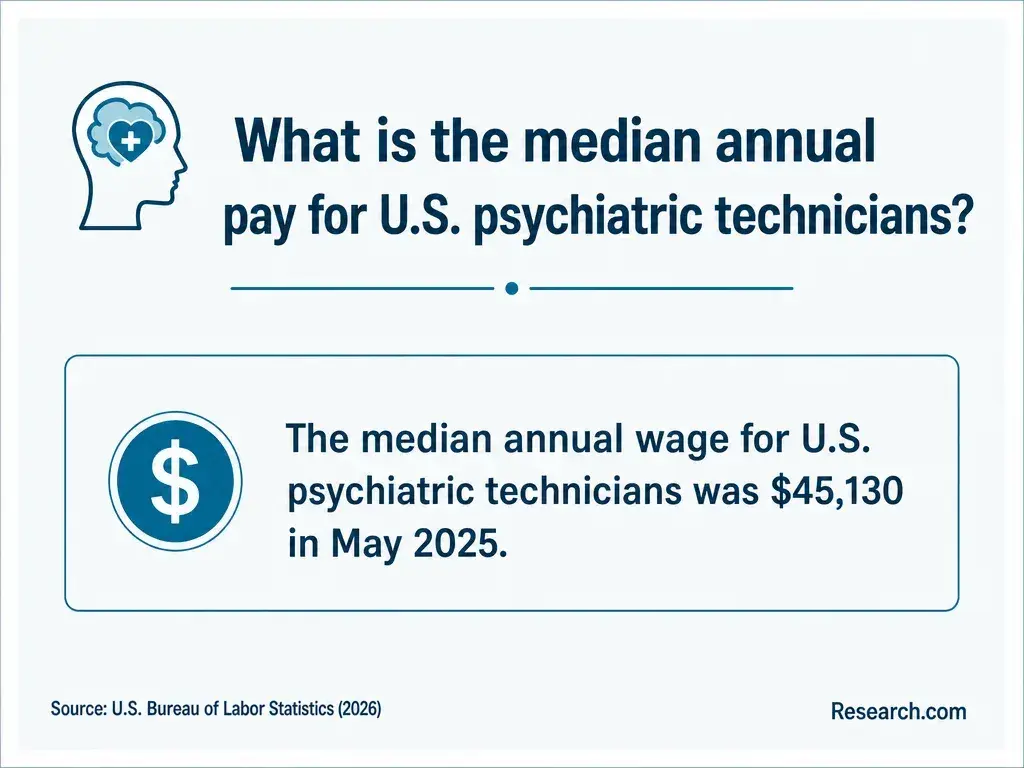
There is no reliable single salary for "forensic psychology MS graduates." Pay follows the occupation, employer, location, experience, and required credentials. As one relevant benchmark, the US Bureau of Labor Statistics reported a $45,120 median annual wage in May 2024 for social and human service assistants. That occupation spans many settings and education levels; its median is neither a starting offer nor a measured outcome for forensic psychology graduates.
Use salary evidence only after identifying jobs you could qualify for in your location. Public-sector pay schedules and job postings may provide a more useful comparison than a psychologist wage figure, which generally describes an occupation with different credential requirements. When reviewing evaluating intensive forensic psychology graduate degree timelines, weigh possible earnings against total program cost and the experience you would give up—or gain—while studying.
How Can You Choose an Accredited Forensic Psychology Master's Program?
First confirm that the institution holds recognized institutional accreditation and that the advertised degree, delivery mode, and curriculum apply to your intended entry term. Do not look for APA accreditation of a general, nonclinical forensic psychology MS as though it were the same type of program as a professional psychology doctorate. Institutional accreditation also does not prove licensure eligibility, research access, or strong employment outcomes.
For a shortlist, request written answers about research supervision, thesis or capstone options, approved placement responsibilities, online-student access to faculty, total charges, and graduate outcomes. Ask how outcomes were collected and whether they distinguish job placement from admission to further study. If you are comparing an undergraduate retraining route as well, online substance use counseling bachelor's aid resources address a different degree level; check MS funding and aid directly with each graduate school.
Choose the program only after matching its documented opportunities to both of your goals. If neither a viable research path nor relevant work experience is available, a targeted methods course, research position, or different professional degree may be the more direct next step.
Other Things You Should Know About Psychology
Not necessarily. It may be the degree name, a formal concentration, or simply an area represented by electives. Check the catalog and ask how the credential appears on the transcript and diploma.
Possibly, with program and employer approval. Your usual duties may not meet academic requirements, and using workplace information may require separate privacy, data-use, or research review.
Check the school's authorization and enrollment policies for your state before applying. Confirm separately whether any required local placement can be approved where you live.
It can help you identify expected methods skills and research fit. An encouraging conversation, however, is not an admissions commitment or a promise that a faculty member will be available later.
- Cost of Attendance (Budget) | 2026-2027 Federal Student Aid Handbook https://fsapartners.ed.gov/knowledge-center/fsa-handbook/2026-2027/vol3/ch2-cost-attendance-budget
- Accreditation in the U.S. | ed.gov http://www.ed.gov/laws-and-policy/higher-education-laws-and-policy/college-accreditation/accreditation-in-the-us
- Graduate Assistantships | 5 Public Administration Careers for MPA Graduates https://www.augusta.edu/gradschool/assistantships.php
- Careers With a Forensic Psychology Master's Degree | The Chicago School https://www.thechicagoschool.edu/insight/career-development/career-options-masters-degree-forensic-psychology/
- Career Options for Forensic Psychology Students | LSU Online https://online.lsu.edu/newsroom/articles/what-can-you-do-forensic-psychology-degree/
- MS in Forensic Psychology | Neumann University https://www.neumann.edu/academics/grad/masters-degree-in-forensic-psychology
- Specialty guidelines for forensic psychology | apa.org https://www.apa.org/practice/guidelines/forensic-psychology
- Practicum Education | Columbia MSSW https://onlinemsw.socialwork.columbia.edu/practicum-education/
- MA in Forensic Psychology | John Jay College of Criminal Justice https://www.jjay.cuny.edu/academics/graduate-programs/ma-forensic-psychology
- Accreditation | Walden University https://www.waldenu.edu/about/accreditation


