2027 Online MS in Psychology - Forensic Psychology: How to Evaluate a Part-Time Graduation Plan
Audited and Verified:
Our Editorial and Data Verification Process
Research.com uses government datasets, official education statistics and primary institutional information to support its career and degree guides. Our review process checks factual accuracy, occupational definitions, source dates and the requirements associated with the credentials discussed.
How This Article Was Fact-Checked
Our editorial team verifies salary estimates, employment projections, education requirements and program information against original data providers and official organizations. Salary figures are checked against the relevant occupational definitions and reporting periods. Information about licensure, accreditation and required in-person training is reviewed separately.
Fact-checked and verified on:

Co-Founder and Chief Data Scientist
A part-time online forensic psychology MS may fit around work, but the advertised completion time may not fit your schedule. Course rotations, live meetings, capstone requirements, and enrollment rules can extend a plan that looks manageable on paper.
This guide is for prospective students comparing programs while balancing employment, caregiving, or other commitments. You'll learn how to test a graduation timeline against actual academic policies, estimate its full cost, and decide whether the degree advances your intended career or whether a more direct route would serve you better.
Key Things You Should Know
- Build your timeline from required courses, their offering terms, prerequisites, and your sustainable course load, not an advertised completion estimate.
- Ask whether part-time enrollment changes access to aid, capstone supervision, placements, or leave options before committing to a start date.
- A forensic psychology MS is generally a nonclinical academic degree; confirm that its outcomes match your target job, because it does not itself confer psychologist licensure.
What Is an Online MS in Forensic Psychology?
An online MS in forensic psychology is graduate study of psychological science in legal and justice-related contexts. Depending on the program, it may emphasize research, behavior in legal settings, victim services, corrections, or the operation of justice systems.
"Online" describes delivery, not necessarily flexibility: a program can still require live classes, scheduled group work, campus visits, or an approved local experience.
Check the exact degree and curriculum rather than relying on the concentration name. A forensic psychology MS is different from an undergraduate psychology degree and from professional training designed for clinical licensure.
If you are still deciding whether graduate study is necessary, compare your target role with psychology degree options with lower tuition before paying for a specialization.
Is an Online Forensic Psychology Master's Degree Worth It?
It may be worth pursuing if you already work in a justice, public-service, or human-services setting and can identify responsibilities the degree would help you perform: evaluating research, communicating evidence, supporting programs, or qualifying for a position that specifies relevant graduate education.
It is a weaker investment if the hoped-for promotion has no graduate-degree requirement or the goal is to become a licensed forensic psychologist without planning for the necessary professional training.
Start with actual job postings and your employer's advancement rules. Separate required credentials from preferred education, then ask whether a capstone, research project, or approved agency experience would provide evidence of the skills employers seek.
A career changer targeting recovery services rather than justice work should also compare the financial value of addiction counseling bachelor's study and any state-specific credential route; a forensic MS may be an indirect and more expensive way to reach that goal.
How Long Does a Part-Time Online Forensic Psychology MS Take?
There is no reliable universal part-time completion time. Dividing required credits by your planned credits per term gives only a starting estimate. A course offered annually, a prerequisite sequence, or a capstone that begins only after coursework can determine the actual graduation date.
The comparison below shows why the same credit total can produce different timelines. Request a term-by-term course plan for your intended entry term before treating any published estimate as achievable.
| Schedule feature | Why it affects a part-time plan | Evidence to request |
| Course rotation | Missing a required offering may delay the next available term. | Upcoming schedule and frequency of each required course |
| Prerequisite sequence | Some courses cannot be taken together or out of order. | Catalog prerequisites and an advisor-approved sequence |
| Capstone, thesis, or placement | Approval, supervision, or site availability may extend beyond the last class. | Eligibility rules, milestones, and recent completion patterns |
| Enrollment and leave policies | Reduced loads or a pause may affect aid, course access, and time limits. | Part-time minimums, leave rules, and degree-completion deadline |
For a workable plan, mark each term you can realistically attend, including summers. Ask whether classes are asynchronous, when live sessions occur, and whether project meetings or field activities require daytime availability.
Build in a contingency for a missed course offering or a delayed project approval. If you are weighing a much faster schedule, use evaluating intensive forensic psychology graduate degree timelines as a separate comparison; acceleration can increase weekly demands rather than remove requirements.
Verify that the university holds recognized institutional accreditation and that it applies to the institution awarding the degree. Check the accreditor and institutional status directly, then confirm that the online program is offered under that institution's approved arrangements. Accreditation supports institutional oversight, but it does not verify a particular course rotation, placement opportunity, or career outcome.
Do not reject a nonclinical forensic psychology MS because it lacks APA accreditation: APA accreditation does not generally cover this type of master's program. Conversely, institutional accreditation does not establish eligibility for a professional license.
The distinction matters when comparing accelerated counseling study and accreditation requirements, which must be evaluated against the credential and jurisdiction the student intends to pursue.
Typically, a nonclinical forensic psychology MS does not by itself qualify a graduate for psychologist licensure, independent forensic assessment, psychotherapy, or use of a protected professional title. Coursework about psychological testing or mental disorders does not authorize a student to administer restricted assessments, diagnose, or provide treatment.
If your goal is a licensed role, identify the exact license and state first. Ask the relevant board what education, program recognition, supervised experience, and examinations it requires; then obtain a written explanation from each school of how its program addresses those requirements.
For readers whose intended work is psychotherapy rather than forensic research or support, accelerated online master's preparation in mental health counseling is a distinct pathway to investigate, not an interchangeable version of a forensic psychology MS.
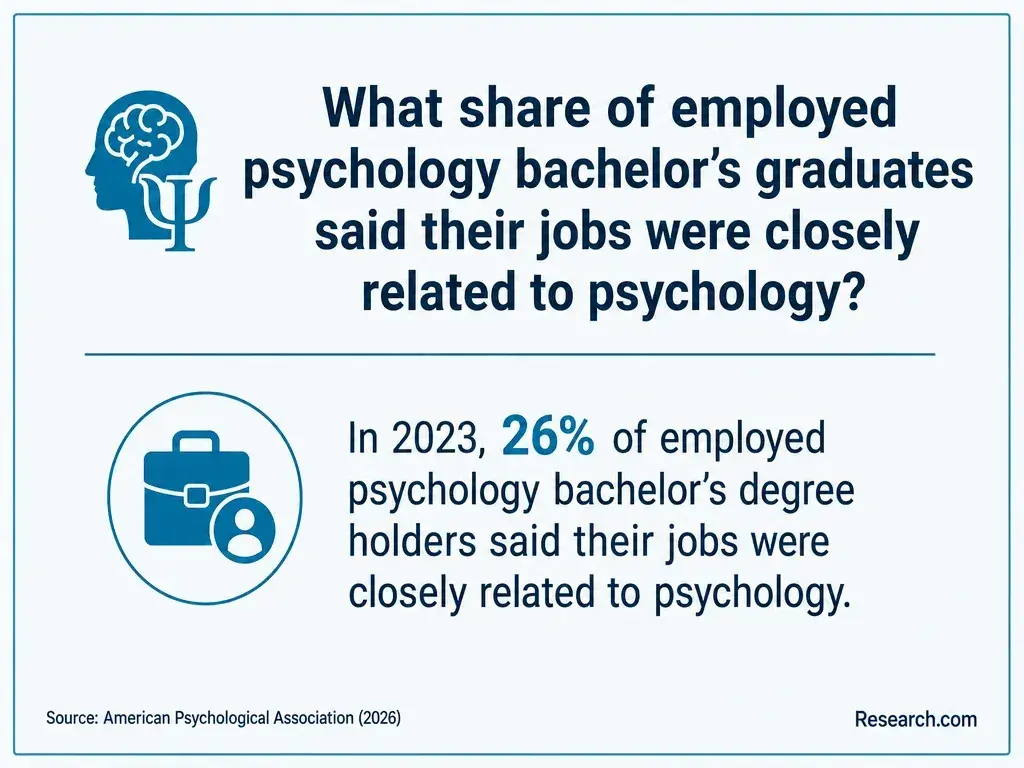
Curricula vary, but relevant study may include psychology research methods, statistics, ethics, psychopathology as an academic subject, psychology and law, victimization, corrections, or behavior in investigative and court settings. A thesis or capstone may require substantially different time and faculty access than a course-only finish.
For part-time planning, examine sequence as well as content. Determine when methods courses must be completed, whether electives rotate, and whether the final project requires a proposal before registration. If a project involves people or agency records, ask about faculty oversight, site permission, privacy, and any required research review; enrollment alone does not grant access to client data.
Students whose interests center on addiction and recovery rather than legal settings may find online undergraduate addiction psychology program comparisons useful for identifying a different curricular starting point.
Schools set their own requirements. Common application components can include an earned bachelor's degree, transcripts, a statement of purpose, and recommendations; particular programs may also specify a GPA threshold, prerequisite psychology or statistics coursework, or relevant experience.
An unrelated undergraduate major does not automatically rule out admission, but applicants should distinguish a formal prerequisite from preparation the school merely recommends.
Before applying, send admissions staff your transcript and ask which prerequisite gaps must be closed before enrollment and which, if any, can be completed alongside graduate courses. That answer belongs in the graduation plan: an additional prerequisite can change both the starting term and cost.
If you are comparing programs chiefly to enter a licensed counseling profession, assess short counseling master's formats and career planning separately rather than assuming that admission to a forensic program advances the same credential.
Calculate the cost from the school's charges for your entry term: required credits multiplied by applicable tuition, plus mandatory fees and any project, technology, travel, or placement expenses. Ask whether tuition is charged per credit or term and whether a slower schedule triggers continuation fees or a later tuition rate. A lower payment each term does not necessarily mean a lower total price.
Confirm how your proposed load affects federal aid eligibility, employer reimbursement, and satisfactory academic progress. Graduate borrowing terms differ from undergraduate aid; for readers comparing a bachelor's-level support-work route, the distinction between grants versus loans for substance abuse counseling bachelor's students is a reminder not to carry undergraduate funding assumptions into a master's budget.
Request a written estimate for your part-time sequence, not only the school's standard full-time budget. Include income you might forgo for required daytime activities and the cost of an extra term if a necessary course or project milestone is missed.
Potential nonclinical directions include victim-services program support, justice-agency research or evaluation, corrections program coordination, and related human-services administration.
Hiring depends on the position's duties, employer rules, relevant experience, and sometimes a background check or separate credential. The degree alone does not establish eligibility for investigative authority, clinical practice, forensic evaluation, or expert testimony.
For a realistic shortlist, compare postings by duties and minimum qualifications, not title alone. A current public-sector employee might use the MS to strengthen research or program responsibilities while remaining subject to agency hiring rules and pay scales.
A career changer may need supervised nonclinical experience or a portfolio showing data analysis, careful documentation, and ethical communication. When reviewing jobs associated with forensic psychology graduate education, check whether each position actually accepts this degree without an additional license or substantial experience.
What Salary and Job Outlook Can Forensic Psychology Graduates Expect?
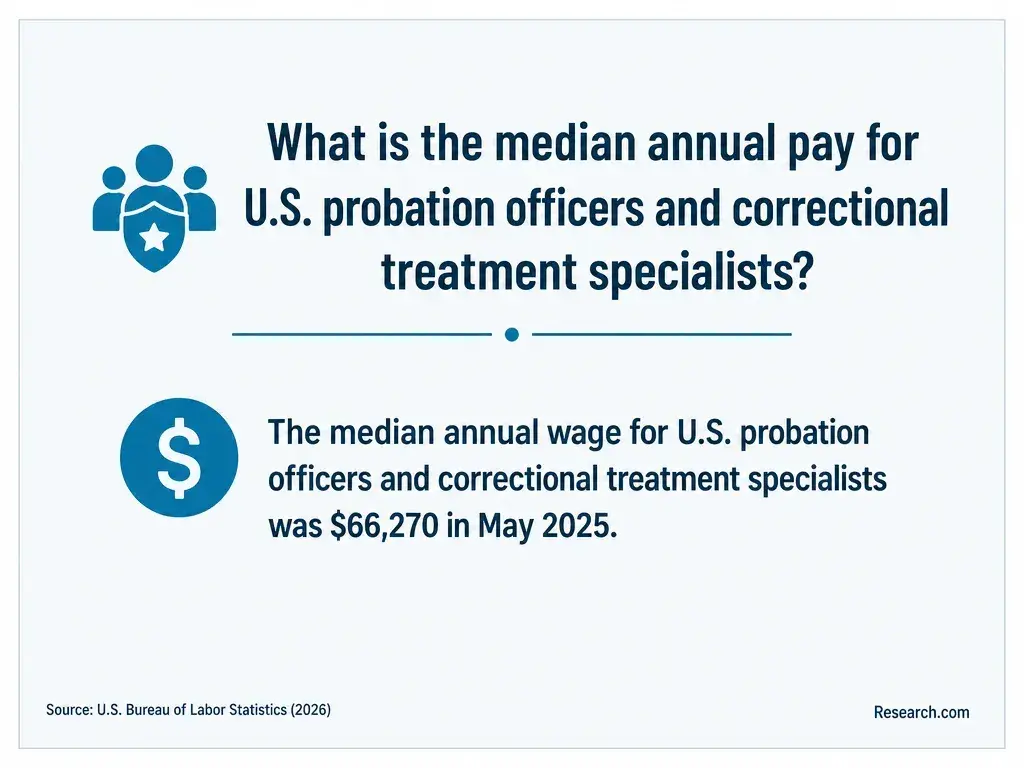
There is no single defensible salary or growth rate for "forensic psychology MS graduates." Federal occupational figures describe defined jobs across many educational backgrounds; psychologist wages, for example, should not be treated as the expected pay of someone holding a nonclinical master's degree. Location, agency pay grades, experience, and required credentials can matter more than the degree title.
Choose a target occupation first, then consult its current US Bureau of Labor Statistics Occupational Outlook Handbook entry for the wage reference year, projection period, and typical entry requirements. Compare that evidence with local postings and your likely starting level.
For the financial decision, weigh the proposed MS cost and foregone time against the pay range of jobs you could realistically obtain, not the highest wage in a related profession. If your actual goal is counseling, compare mental health counseling education costs after aid alongside that profession's qualification requirements instead.
Other Things You Should Know About Psychology Programs
Possibly. Ask for the live-session schedule, group-work expectations, project meeting times, and any placement hours before enrolling. An online course may still have fixed commitments during your workday.
Only if the program approves the site, tasks, supervision, and any use of workplace information. Employment there does not automatically satisfy an academic requirement or authorize access to confidential records.
Check the leave and reentry policy before you need it. A pause may affect course sequencing, aid, tuition, and the deadline for finishing the degree.
Request your intended-entry-term degree requirements, a proposed part-time course sequence, applicable tuition and fees, and the rules for the final project. Keep those documents when comparing schools.
- Accreditation in the U.S. | ed.gov http://www.ed.gov/laws-and-policy/higher-education-laws-and-policy/college-accreditation/accreditation-in-the-us
- Understanding College Costs | studentaid.gov https://studentaid.gov/resources/prepare-for-college/students/choosing-schools/consider-costs
- Cost of Attendance (Budget) | 2025-2026 Federal Student Aid Handbook https://fsapartners.ed.gov/knowledge-center/fsa-handbook/2025-2026/vol3/ch2-cost-attendance-budget
- Recommended Course Sequence | Texas Higher Education Coordinating Board https://www.highered.texas.gov/data-submission-reporting/recommended-course-sequence/
- Trinity Policies for Online Teaching and Learning | trinitydc.edu https://discover.trinitydc.edu/catalog-25-26/online-teaching-and-learning-policy/
- Online MS in Forensic Psychology | Walden University https://www.waldenu.edu/online-masters-programs/ms-in-forensic-psychology
- Online Forensic Psychology Master's Degree | ASU Online https://asuonline.asu.edu/online-degree-programs/graduate/master-science-forensic-psychology/