2027 Online MS in Psychology - Forensic Psychology: How to Evaluate a Policy Analysis Project Instead of Direct Client Contact
Audited and Verified:
Our Editorial and Data Verification Process
Research.com uses government datasets, official education statistics and primary institutional information to support its career and degree guides. Our review process checks factual accuracy, occupational definitions, source dates and the requirements associated with the credentials discussed.
How This Article Was Fact-Checked
Our editorial team verifies salary estimates, employment projections, education requirements and program information against original data providers and official organizations. Salary figures are checked against the relevant occupational definitions and reporting periods. Information about licensure, accreditation and required in-person training is reviewed separately.
Fact-checked and verified on:

Co-Founder and Chief Data Scientist
An online forensic psychology master's may offer a policy analysis project instead of direct client contact. That difference matters if you want experience relevant to justice-system research or administration - or if you expect preparation for clinical practice.
This guide shows how to judge the project's question, evidence, supervision, ethical safeguards, and final deliverable. It also explains which education and career goals the project supports, so you can compare programs without mistaking an applied academic assignment for a clinical placement.
Key Things You Should Know
- Favor a project with an approved, narrow policy question, accessible evidence, faculty feedback, and a decision-ready brief - not merely a paper about a forensic topic.
- Confirm whether the project uses public documents or restricted agency data before enrolling; client records, interviews, and publication may require separate permissions and review.
- A nonclinical forensic psychology MS and its policy project do not, by themselves, qualify you to diagnose, provide therapy, conduct forensic evaluations, or become a licensed psychologist.
What Is an Online Master's in Forensic Psychology Policy Analysis Project?
A policy analysis project examines a decision affecting people or services in a legal setting. For example, a student might compare published approaches to connecting people leaving jail with community behavioral-health services. The intended audience could be an agency administrator deciding what procedures to review - not a clinician seeking a diagnosis or treatment plan.
A useful project states the decision, identifies whose interests are affected, compares credible evidence and policy options, and produces a brief that explains trade-offs and limitations. It need not claim that a proposed change will improve outcomes. For a broader view of how this work fits a degree, consult forensic psychology academic pathways and tuition.
The distinction between these experiences is central to choosing a program:
| Experience | Primary work | What it demonstrates |
| Policy analysis project | Evaluate documents, research, implementation constraints, and options | Evidence appraisal and recommendations for an organizational decision |
| Nonclinical agency placement | Perform approved support or administrative tasks under site supervision | Workplace practice within the assigned role |
| Clinical practicum | Perform supervised clinical activities in a qualifying professional program | Specified clinical training; requirements depend on the profession and jurisdiction |
A strong project can be entirely document-based. If it proposes interviews, surveys, or agency-record analysis, the student must establish feasibility and obtain the necessary approvals before collecting or using information.
Is a Forensic Psychology Master's Degree Without Client Contact Right for You?
This route fits a justice-system or community-service professional who wants to improve procedures, assess research, write policy briefs, or support evaluation without providing treatment. Existing experience in case coordination, administration, research, or public service can make the project more relevant, provided the program approves its scope and any workplace involvement.
It is a weaker fit if your goal is to counsel clients, conduct psychological assessments, or establish hours toward a clinical credential. A project on victim services, corrections, or addiction-related policy may deepen subject knowledge, but it does not replace supervised contact required by a qualifying professional program. If your target is substance-use counseling rather than policy work, an addiction counseling degree comparison resource is a more relevant starting point.
Before choosing the MS, compare its total cost with the value of a narrower methods course, an evaluation certificate, or a supervised research opportunity. If you already hold a relevant degree and your employer mainly needs stronger data analysis or policy-writing skills, another full degree may be unnecessary.
Does an Online Forensic Psychology Master's Lead to Licensure?
Not by virtue of its title, online format, or policy project. A nonclinical forensic psychology MS does not itself authorize psychotherapy, diagnosis, independent psychological assessment, expert forensic evaluation, or use of a protected professional title. Requirements for licensed psychologists and other mental-health professionals depend on the occupation and jurisdiction.
If licensure is your objective, identify the precise credential and state first. Then ask the relevant board whether a particular program meets its educational requirements, including required coursework and supervised training. A counseling pathway has different requirements from a psychology MS; online clinical counseling graduate completion options can help you investigate that distinct route, but each program's eligibility still needs verification.
First, confirm that the degree-awarding institution holds recognized institutional accreditation and that it applies to the institution offering the online program. This establishes an institutional quality-review baseline; it does not verify the quality of a specific capstone, agency access, or licensure eligibility.
Do not reject a nonclinical MS merely because it lacks APA program accreditation: APA accreditation covers specified professional psychology doctoral programs and related training, not general forensic psychology master's programs. Conversely, do not treat institutional accreditation as a substitute for applicable professional-program recognition when comparing licensure-oriented degrees. For that different decision, accredited clinical counseling program timeline comparisons provide a useful contrast.
Ask for the current catalog description of the exact degree, its project requirements, and the policies that will apply to your entry term. An accreditation claim on a university homepage is not evidence that your proposed policy project will be approved.
Course titles vary, but the most useful preparation for policy analysis combines forensic or legal-context psychology with research design, statistics, ethics, and clear scientific writing. Coursework on program evaluation, psychological measurement, or public systems can help students judge whether a policy's stated goals match the evidence used to assess it.
Look beyond the presence of a forensic elective. Ask whether students learn to distinguish a research measure from a clinical assessment, evaluate selection bias in justice-system data, and describe uncertainty without claiming causation. A student examining referral procedures, for instance, should be able to explain why a change in referral counts alone cannot establish better client outcomes.
Relevant electives may touch substance use or recovery services; they teach about those settings rather than confer counseling authority. Students considering that adjacent work can explore career choices across recovery service settings while checking each role's separate requirements.
Programs set their own requirements. Common items to check include an accredited bachelor's degree, academic transcripts, a statement of purpose, and any specified psychology, statistics, or research-methods preparation. A criminal justice, social science, health, or other undergraduate major may be acceptable; relevant experience does not automatically waive a formal prerequisite.
Ask admissions to separate required courses from recommended preparation and to explain whether outstanding prerequisites can be completed before or after admission. If you have not finished a bachelor's degree, address that eligibility issue first; psychology degree transfer pathways may help you frame questions about a completion route, although the receiving school decides how credits apply.
In your application, a focused proposed policy question can demonstrate fit. Describe the evidence you expect to use and acknowledge that agency data or stakeholder access would require permission; do not present hoped-for access as secured.
Duration and cost depend on the published credit requirement, course sequence, enrollment pace, tuition basis, and fees of the specific program. The project can add time if topic approval, an agency agreement, or a required review takes longer than expected. Compare published schedules with online forensic psychology master's graduation planning, then confirm what is actually available in your entry term.
For an apples-to-apples estimate, obtain the program's required credits and current tuition and fee schedule. Add any technology, software, travel, project, or continuation charges that apply, and ask whether the final project is offered every term. No reliable total price follows from the degree title alone.
Online delivery also does not guarantee an asynchronous project. Working students should ask about live advisor meetings, group deadlines, agency meetings, and the policy for changing a project when an outside partner withdraws.
A well-executed project can supply work samples for policy, program-support, research-coordination, or evaluation roles in justice agencies, community organizations, and related contractors. Employers will still assess prior experience, technical skills, hiring rules, and whether the applicant can work with their data and stakeholders.
The project is especially relevant when a job asks someone to synthesize evidence, document a process, compare options, and explain recommendations to nonresearch audiences. It is less direct preparation for roles centered on client treatment, forensic assessment, or criminal investigation. For some entry-level support goals, paid experience or a less costly qualification may be preferable to a master's; comparing the financial value of addiction counseling bachelor's study illustrates why the target role should drive the education decision.
For interviews, describe your own contribution precisely: the question, sources, analytic choices, limitations, and proposed recommendation. Do not describe a classroom proposal as an implemented agency policy or imply that you handled confidential records if you did not.
There is no single reliable salary or growth figure for graduates of a forensic psychology policy-project track. "Forensic psychology graduate" is a degree description, not a Bureau of Labor Statistics occupation. Pay depends on the actual job, employer, location, experience, and - in public agencies - classification and pay scale.
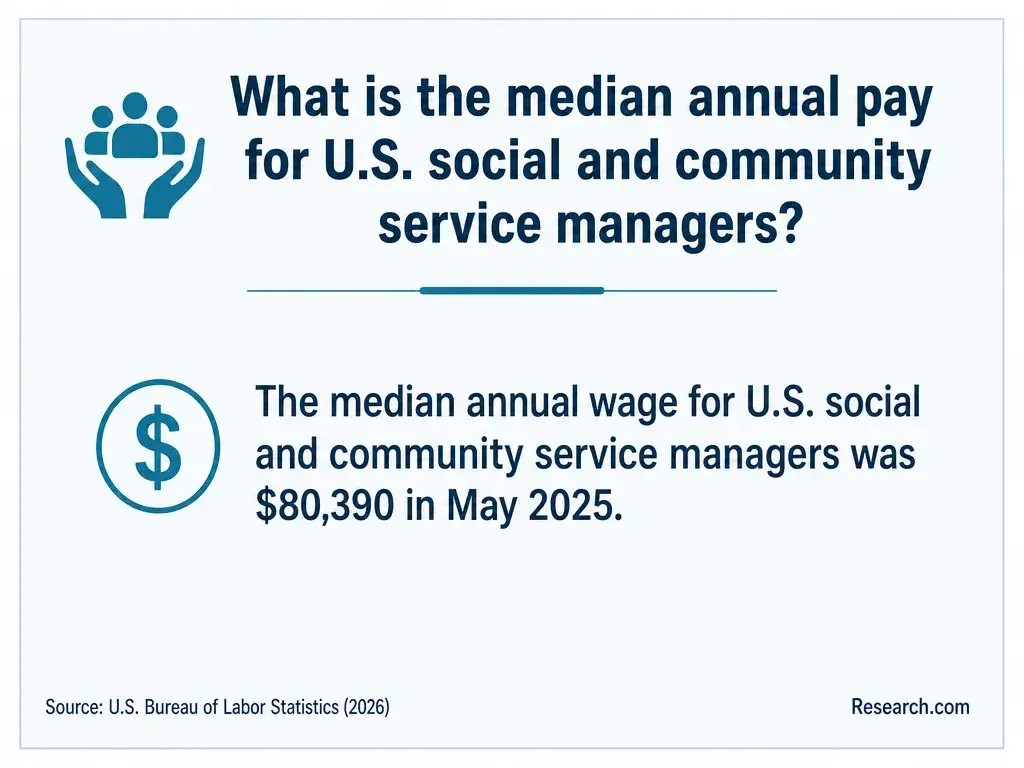
For a realistic comparison, match prospective job postings to a specific Bureau of Labor Statistics Occupational Outlook Handbook occupation, then check that occupation's published wage reference year, projection period, typical entry requirements, and duties. A management or community-service occupational median, for example, should not be presented as the expected pay of a new MS graduate. Compare likely earnings with the full education cost and any earnings forgone while studying. Accelerated psychology master's study for working adults may reduce time away from other work, but faster completion does not establish a better financial return.
How Can You Compare Reputable Online Forensic Psychology Programs?
Compare the actual project requirement, not just the concentration name. Request a current syllabus or project handbook and ask an advisor whether your proposed question could meet the learning objectives. The following checks reveal whether a policy-analysis route is feasible and worthwhile:
- Define the decision-maker, policy question, intended deliverable, and criteria used to assess the work.
- Identify permitted sources: public documents, published studies, or agency data requiring authorization.
- Confirm who supervises the analysis, when feedback occurs, and what happens if the topic or data source becomes unavailable.
- Ask who determines whether interviews, surveys, or records need institutional review, consent, data-use permission, or other safeguards.
- Check whether a redacted brief may be shown to employers without disclosing confidential information or implying agency endorsement.
A practical quality test is whether you could produce an evidence table, explain competing policy options and limitations, and revise a concise recommendation after faculty feedback using evidence you can lawfully obtain. If access to restricted data is essential but not assured, favor a project with a public-source fallback.
Finally, compare your readiness with the program's entry requirements. If you still need an undergraduate degree, shorter routes to an online psychology major address an earlier decision; they should not be confused with proof that any later MS will accept particular coursework. Choose the master's only after its project, scheduling, cost, and career fit withstand these checks.
Other Things You Should Know About Psychology
Usually, you can propose an analysis based on public policies and published evidence, subject to instructor approval. Do not imply agency participation or use nonpublic materials without authorization.
Possibly, but clear the plan with your instructor and the organization before contacting staff. The purpose, questions, consent arrangements, and applicable review requirements matter.
Only if you have permission to share it. A shorter brief that removes restricted information and clearly identifies your contribution may be safer and more useful to employers.
Report that limitation. A defensible brief can recommend better data collection, a small-scale review, or postponing a decision rather than claiming a policy works without adequate evidence.
- Privacy and Health Research - HHS ASPE https://aspe.hhs.gov/reports/privacy-health-research
- Secondary Data Analysis: Ethical Issues and Challenges - PMC https://pmc.ncbi.nlm.nih.gov/articles/PMC4441947/
- Professional Standards of Care in Mental Health Practice | nysed.gov https://www.op.nysed.gov/professions/psychology/professional-practice/professional-standards-care-mental-health-practice
- Using Research for Investigative Decision-Making | fbi.gov https://leb.fbi.gov/articles/featured-articles/using-research-for-investigative-decision-making
- Ethical Issues in Conducting Forensic Evaluations | tamusa.edu https://digitalcommons.tamusa.edu/cgi/viewcontent.cgi
- A Career in Forensic and Public Service Psychology | apa.org https://www.apa.org/education-career/guide/subfields/forensic/education-training
- 4 Collaborating with the Institutional Review Board (IRB) | mit.edu https://admindatahandbook.mit.edu/book/v1.0-rc6/irb.html