2027 Online MS in Psychology - Forensic Psychology vs. an MS in Cyberpsychology: Compare Curriculum, Cost, and Career Fit
Audited and Verified:
Our Editorial and Data Verification Process
Research.com uses government datasets, official education statistics and primary institutional information to support its career and degree guides. Our review process checks factual accuracy, occupational definitions, source dates and the requirements associated with the credentials discussed.
How This Article Was Fact-Checked
Our editorial team verifies salary estimates, employment projections, education requirements and program information against original data providers and official organizations. Salary figures are checked against the relevant occupational definitions and reporting periods. Information about licensure, accreditation and required in-person training is reviewed separately.
Fact-checked and verified on:

Co-Founder and Chief Data Scientist
An online MS in forensic psychology and an MS in cyberpsychology both study behavior, but they prepare students to apply that knowledge in different settings. The distinction matters if you are choosing courses around an existing job or hoping a degree will open a specific career path.
This comparison is for prospective graduate students and career changers who need to weigh curriculum, full program cost, practical experience, and professional limits. It will help you identify which degree fits your target work - or whether a more direct qualification would serve you better.
Key Things You Should Know
- Choose forensic psychology for research or nonclinical work connected to courts, corrections, and victim services; choose cyberpsychology for work involving behavior and interaction in digital environments.
- Neither MS, by itself, qualifies a graduate for psychologist licensure, forensic evaluations, or psychotherapy. Check the requirements of your intended job before paying for either degree.
- Compare total required credits multiplied by current tuition, plus fees and project costs; there is no reliable single price or graduate salary that applies to both types of program.
What is the difference between forensic psychology and cyberpsychology master's degrees?
Forensic psychology applies psychological science to questions arising in legal and justice settings. A nonclinical MS might examine eyewitness memory, offending, victimization, correctional environments, or how research informs policy. Cyberpsychology examines behavior in digital environments, such as online communities, social media, games, technology use, and human interaction with digital systems.
The distinction is an application setting, not a division between "people skills" and "technical skills." Both paths should teach students to evaluate research and handle sensitive information responsibly. Neither degree name establishes authority to investigate crimes, conduct restricted psychological assessments, or practice clinically.
If your immediate goal is justice-system support work, first determine whether it requires a master's at all. A relevant bachelor's degree and experience may be a more direct starting point; forensic psychology bachelor's study with accelerated pacing is one option to compare if you have not yet completed an undergraduate degree.
How do forensic psychology and cyberpsychology curricula compare?
Course titles vary, so compare required assignments and methods training rather than relying on the concentration label. The table shows the curricular differences most likely to affect your readiness for a target role.
| Curriculum feature | Forensic psychology MS | Cyberpsychology MS |
| Applied subject matter | Behavior in legal, victim-service, and correctional contexts | Behavior, communication, and decision-making in digital contexts |
| Useful methods | Research design, statistics, evidence appraisal, and justice-related program evaluation | Research design, statistics, surveys or interviews, and evaluation of digital experiences |
| Ethical emphasis | Confidentiality, vulnerable populations, and limits on legal or clinical claims | Consent, platform data access, privacy, and limits on inference from online behavior |
| Potential applied output | A literature review or evaluation plan for a justice-related service | A study proposal or evaluation plan for a digital product or community |
A strong cyberpsychology curriculum should explain how to measure behavior online without treating clicks or posts as direct measures of a person's mental health. A strong forensic curriculum should teach students to distinguish research findings from conclusions about an individual legal case. For either path, ask whether a thesis, capstone, or supervised project is required and who approves access to any participant or agency data.
If your interest is specifically substance-use services in justice settings, compare the proposed master's courses with your existing preparation. Addiction psychology bachelor's degree planning may be relevant for foundational study, but neither that focus nor a forensic MS substitutes for a state-required counseling credential.
What careers can you pursue with each psychology master's degree?
A forensic psychology graduate might pursue nonclinical victim-services coordination, corrections program support, justice-policy research, or evaluation roles. A cyberpsychology graduate might pursue user research, digital well-being program evaluation, online community research, or behavioral insights work. In both areas, employers may value relevant work samples and experience more than the specialization printed on a transcript.
Forensic work in a court or correctional agency can carry hiring, security, and confidentiality requirements independent of degree coursework. Cyberpsychology is not the same as cybersecurity engineering: security analyst roles generally require distinct computing and security skills. A career changer with product, data, community-management, or public-sector experience should identify which skills transfer and which must be demonstrated through projects or supervised work.
Students still completing a bachelor's should establish their actual graduation path before budgeting for an MS. An approved degree audit - not a general transfer estimate - determines remaining coursework after transferring into psychology.
There is no dependable universal tuition figure for either specialization. The useful comparison is the price to finish each specific program, based on its current credit requirements and charges. A seemingly cheaper per-credit option can cost more if it requires additional courses, travel, or a longer period of enrollment.
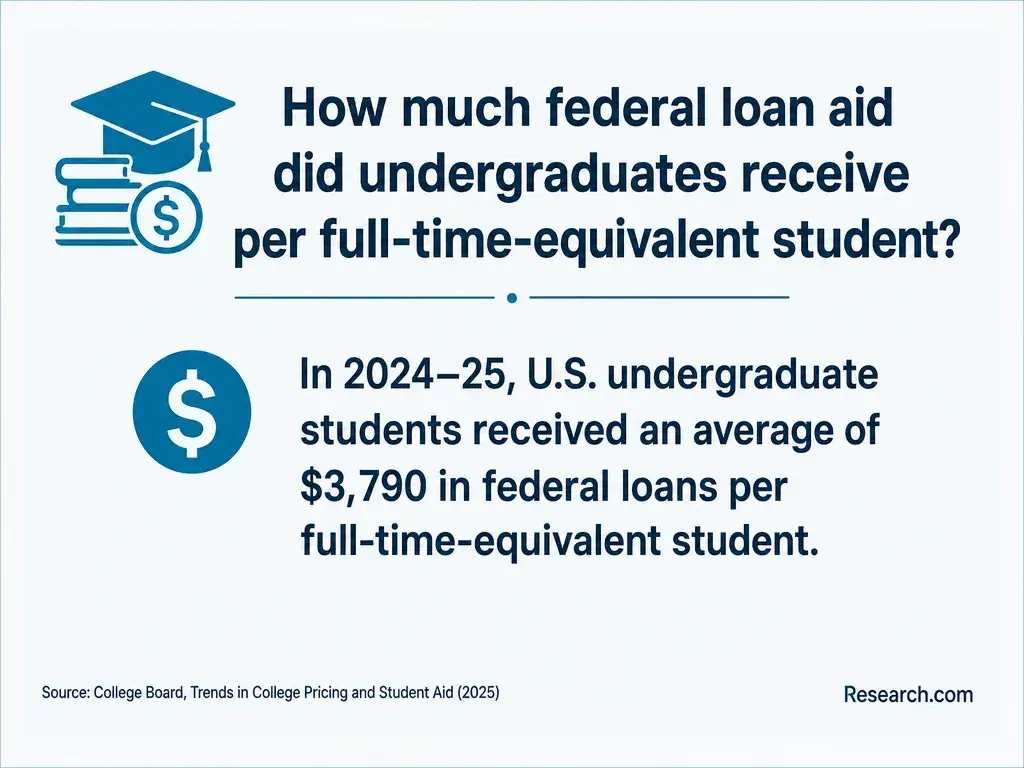
Request an itemized estimate from each school. Include required credits and tuition, mandatory online or technology fees, books and software, any residency travel, and expenses tied to a thesis or placement. If you plan to study while working, account for reduced hours or unpaid project time. Compare financial-aid eligibility and employer reimbursement rules separately; neither is automatic.
For a student who still needs an undergraduate degree, comparing affordable psychology colleges online can help establish the cost of that prerequisite. It should not be mistaken for a price comparison between graduate programs.
Check whether the institution holds recognized accreditation and whether the exact online degree is awarded by that institution. Then ask a separate question: does your intended employer, doctoral program, or licensing board recognize this particular education for its purpose?
Institutional accreditation is not proof of clinical training or licensure eligibility. APA accreditation does not generally apply to standalone nonclinical psychology MS programs; its accreditation scope includes specified professional psychology doctoral programs and training sites. Do not reject a nonclinical MS merely because it lacks APA program accreditation - or assume an institution's accreditation makes its graduates licensed psychologists.
When comparing schools, confirm the exact credential rather than treating a concentration, elective sequence, and separately awarded MS as interchangeable. A guide to online forensic psychology tuition admissions and outcomes can help organize questions, but verify each school's current accreditation status and program details directly before enrolling.
Programs commonly ask for an accredited bachelor's degree, transcripts, an application statement, and evidence that the applicant can handle graduate-level reading and research. Specific GPA thresholds, prerequisite courses, recommendations, tests, and experience requirements vary. An unrelated undergraduate major does not automatically rule out admission.
Match your background to the curriculum: statistics and research methods are especially useful in either specialization; criminal justice or human-services experience may strengthen a forensic application, while computing, design, communications, or data experience may support a cyberpsychology application. Ask admissions whether missing coursework is mandatory before entry, recommended preparation, or available after admission.
If you have not completed a bachelor's degree, investigate fast-track bachelor's study in psychology only after checking credit acceptance and remaining degree requirements. An accelerated undergraduate schedule does not waive graduate prerequisites.
Completion time depends on the required credits, course frequency, enrollment pace, and whether a thesis, capstone, internship, or residency has its own schedule. "Online" describes delivery, not necessarily scheduling freedom: live seminars, group projects, research meetings, and approved placement hours can constrain a working student's week.
Ask each program for a term-by-term plan at the pace you can actually sustain. Check whether required courses run every term, whether summer enrollment is necessary, and what happens if you pause your studies. Forensic psychology master's completion time comparisons can identify faster options, but a published fastest-case timeline may not reflect part-time study or project delays.
Do not assume either degree qualifies you for psychologist licensure. Licensed psychologist pathways generally require a qualifying doctoral education and additional jurisdiction-specific supervised experience and examinations. A forensic psychology MS does not independently authorize forensic evaluations or expert psychological opinions; a cyberpsychology MS does not authorize diagnosis or psychotherapy.
If your goal is to provide counseling, compare programs expressly designed around the educational rules for the license you seek. Counseling is a different credential from psychologist licensure, and its requirements also vary by state. Researching faster completion planning for accredited clinical counseling study is more useful than assuming a nonclinical MS will count toward that pathway. Obtain written guidance from the relevant state board about the exact program before enrolling.
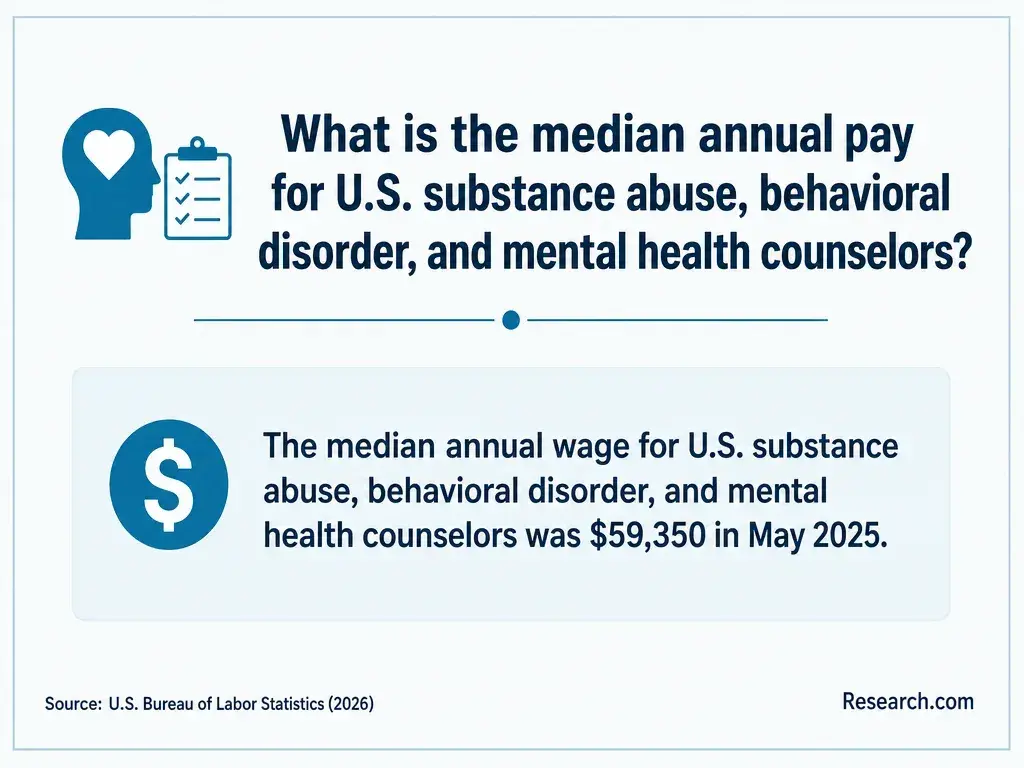
Neither "forensic psychology MS graduate" nor "cyberpsychology MS graduate" is a single occupation with one defensible salary or growth rate. Pay depends on the actual job, employer, location, and experience. The US Bureau of Labor Statistics publishes occupation-wide wages and projections, not earnings attributable to either specialization.
For a justice-services goal, investigate the BLS occupation that matches the duties of your target posting, such as social and human service assistant - not the psychologist category unless you are evaluating a licensed psychologist role.
For a digital research goal, first determine whether postings call for research, product, analytics, or technical security work; these occupations have different qualifications and pay. Compare the latest BLS wage reference year and projection period for the correctly matched occupation, then check local postings for required skills and offered pay.
Return on investment changes substantially if the target role requires a different credential. Someone aiming to deliver therapy should compare the total education and supervision pathway, not an MS salary assumption; comparing the value of shorter clinical counseling degrees is a more relevant exercise for that goal.
How should you choose a reputable online psychology master's program?
Start with a target job or next degree, then test each program against that outcome. Request the current catalog and ask for examples of approved capstones or projects, not identifiable student or client records. The following checks expose differences that a program name cannot.
- Confirm the exact degree, institutional accreditation, required courses, faculty expertise, and whether the methods training fits your target work.
- Ask how online courses are scheduled and whether projects, placements, live meetings, or campus visits require time you cannot commit.
- Get a written estimate of required credits, tuition, fees, and likely additional expenses at your planned pace.
- Check how students obtain research supervision or approved project sites, and whether the school reports outcomes for this specific program rather than a broader department.
- For a regulated goal, ask the relevant licensing board - not only admissions - whether the exact program meets its rules.
Accelerated study is worthwhile only if required courses run in the needed sequence and you can complete the applied work on time. Use accelerated graduate psychology course sequencing as a comparison point, then request an individualized plan from each school.
Choose forensic psychology for a well-defined justice-related research or support goal, cyberpsychology for a defined digital-behavior goal, and neither when the job principally requires clinical licensure, technical security training, or experience you can gain more directly.
Other Things You Should Know About Psychology
No. Cyberpsychology studies behavior in digital settings. Cybercrime investigation typically requires investigative authority and specialized technical or law-enforcement preparation.
Possibly, in a role whose hiring requirements they meet, such as research or program support. The degree alone does not authorize psychological evaluations or legal practice.
It may be if you already have the degree your target job requires and need only a specific research, data, or subject-matter skill. Compare actual job postings before committing to another degree.
Only with the permissions your employer and university require. Confidentiality, data-use rules, participant protections, and any applicable research review still matter when the project is completed remotely.
- Post-Secondary Employment Outcomes Tool Shows What You Might Earn Depending on the College You Attend | Census.gov https://www.census.gov/library/stories/2022/06/job-and-earnings-prospects-by-college-and-degree.html
- Field of Study in College and Lifetime Earnings in the United States - PMC https://pmc.ncbi.nlm.nih.gov/articles/PMC5198720/
- Online MS in Forensic Psychology | Walden University https://www.waldenu.edu/online-masters-programs/ms-in-forensic-psychology
- Admission Requirements https://graduate.appstate.edu/graduate-admissions/apply-graduate-school/application-requirements
- Internships, Field Experiences, and Practicums | umn.edu https://morris.umn.edu/academic-affairs/internships-field-experiences-and-practicums
- MS in Forensic Psychology | Neumann University https://www.neumann.edu/academics/grad/masters-degree-in-forensic-psychology
- How to Become a Forensic Psychologist in California (2026) | Touro University Worldwide https://www.tuw.edu/psychology/how-to-become-a-forensic-psychologist-in-california/
- Forensic Psychology | Ocean County College - https://www.ocean.edu/area-of-study/behavioral-science-public-service/forensic-psychology-foren/
- Doctor of Philosophy (PhD) in Forensic Cyberpsychology | Capitol Technology University https://www.captechu.edu/degrees-and-programs/doctoral-degrees/forensic-cyberpsychology-phd
- A Career in Forensic and Public Service Psychology | apa.org https://www.apa.org/education-career/guide/subfields/forensic/education-training