
2027 Return on Investment (ROI) of a Healthcare Administration Degree Program

Co-Founder and Chief Data Scientist
The core question is not whether healthcare needs administrators. It is whether a healthcare administration degree is the right investment for your career stage, budget, and timeline. The U. S. healthcare sector is projected to add over 50, 000 administrative roles annually through 2031, but demand alone does not guarantee a strong personal return on investment.
A strong ROI depends on what you pay, how long you study, whether you can keep working, how quickly the credential helps you move into better roles, and whether the program is respected by employers. For some students, the degree can support a move into management, operations, compliance, finance, or healthcare consulting. For others, especially those facing high tuition without aid or unclear career goals, the payoff may take longer.
This guide explains how to evaluate the ROI of a healthcare administration degree using practical factors: total education cost, opportunity cost, financial aid, completion time, online versus on-campus formats, salary outcomes, promotion potential, industry choice, and accreditation. Use it to compare programs with a clear view of both the upside and the trade-offs.
Key Things to Know About Healthcare Administration Degree ROI
- Healthcare administration graduates can expect a median salary of approximately $100,980 annually, reflecting competitive earning potential compared to other management roles.
- Graduates benefit from career advancement opportunities in hospitals, clinics, and insurance firms, with a projected employment growth of 18% through 2031.
- Job stability is strong due to healthcare's ongoing demand, enabling long-term salary growth and flexibility to transition across various healthcare sectors.
How Is ROI Calculated for a Healthcare Administration Degree Program?
ROI for a healthcare administration degree compares the financial value you gain after graduation with the total cost of earning the credential. A useful ROI estimate looks beyond tuition. It should include the money you spend, the income you may give up while studying, and the career benefits you can reasonably expect after completing the program.
The simplest way to think about ROI is this: the degree pays off when the increase in earnings, job mobility, and promotion potential outweighs the cost of tuition, fees, time, and debt. Because healthcare administration careers vary widely by role, employer, and location, ROI should be estimated conservatively rather than based only on best-case salary outcomes.
Key factors in a healthcare administration degree ROI calculation
- Tuition and fees: Include tuition, university fees, textbooks, technology charges, graduation fees, and any required course materials. This is the most visible cost, but not the only one.
- Opportunity cost: If you reduce your hours, pause work, or turn down overtime to study, that lost income is part of the real cost of the degree.
- Time to completion: A shorter program may reduce costs and help you reach higher earnings sooner. A longer part-time path may cost more time but allow you to keep earning while enrolled.
- Post-graduation salary outcomes: Starting salary matters, but so does the likelihood of moving into higher-paying roles over several years.
- Career advancement and long-term earning potential: Healthcare administration degrees often create value through promotions, leadership eligibility, and access to roles that require formal education.
- Debt and repayment terms: A degree with strong salary potential can still feel financially weak if loan payments are high relative to income.
- Program reputation and employer fit: ROI improves when the program aligns with the roles and employers you are targeting.
A practical healthcare administration degree cost versus earnings analysis should compare several schools side by side. Estimate total cost, likely completion time, expected debt, and realistic salary growth. Students comparing healthcare careers with high education costs can also review related paths such as pharmacy school to understand how program cost, licensing requirements, and long-term earnings affect ROI differently.
How Much Does a Healthcare Administration Degree Program Cost?
The cost of a healthcare administration degree depends on school type, degree level, format, enrollment pace, and whether you receive aid. Accurately estimating the full cost matters because graduate tuition fees in the U.S. have consistently increased by roughly 3% annually, while student loan debt for graduate programs often surpasses $70,000.
Do not judge a program only by its advertised tuition. The better question is: “What will this degree cost me from enrollment through graduation, including debt and lost income?” That total is the number that should be compared with expected career gains.
Costs to include before enrolling
- Tuition and fees: Public universities, private institutions, and online programs can have very different pricing models. Some charge per credit, while others charge by term or program.
- Books and materials: Textbooks, case-study subscriptions, data tools, software, and exam materials can add a meaningful expense over the length of the program.
- Living and relocation expenses: On-campus students may face housing, parking, transportation, and relocation costs. Online students may avoid many of these expenses but can still pay technology-related fees.
- Opportunity cost: Students who leave work, reduce hours, or turn down advancement opportunities while enrolled should count that lost income as part of the investment.
- Hidden or indirect costs: Application fees, transcript fees, technology fees, background checks, professional memberships, conference travel, internship transportation, and graduation charges can increase the total price.
- Loan interest: If you borrow, the final cost may be higher than the billed cost because interest continues to affect repayment after graduation.
When I spoke with a graduate of a healthcare administration degree about the true cost, he said, “Balancing part-time work while managing a full course load was tough. The unexpected costs, like software fees and travel for networking events, caught me off guard.”
He also described feeling “stressed about the lost income during intense study periods but motivated by the career growth opportunities the degree promised.” His experience highlights an important point: ROI is not only about tuition. The real cost includes financial pressure, time, energy, and trade-offs during the program.
How to keep program cost under control
- Ask for a full cost-of-attendance estimate, not just tuition per credit.
- Compare online, hybrid, and on-campus options using the same cost categories.
- Check whether your employer offers tuition reimbursement before applying.
- Choose a pace that lets you maintain income if leaving work would create too much debt.
- Confirm whether transfer credits or prior graduate credits can reduce your required coursework.
What Financial Aid Is Available for Healthcare Administration Degree Programs?
Financial aid improves ROI by reducing the amount you pay out of pocket or borrow. Around 85% of graduate students rely on federal loans, which makes it especially important to look for aid that does not require repayment before taking on debt.
The best funding strategy usually combines several sources: scholarships, employer support, grants, fellowships, savings, and federal loans only as needed. Before accepting any loan package, estimate the monthly payment and compare it with realistic post-graduation earnings.
Common financial aid options
- Scholarships: Scholarships may be merit-based, need-based, or tied to healthcare leadership, public service, diversity, or professional association membership. Because they do not require repayment, they directly improve ROI.
- Grants: Grants are typically based on financial need and can reduce the total program cost without adding debt.
- Fellowships: Fellowships may include tuition support, stipends, research opportunities, or professional development. They are often competitive but can significantly lower net cost.
- Employer tuition assistance: Many healthcare employers support workers pursuing degrees related to management, operations, compliance, or administration. This can be one of the strongest ROI boosters because it allows students to keep working while reducing tuition cost.
- Federal loans: Federal loans can help cover remaining costs and may offer repayment protections that private loans do not. However, loans still reduce ROI if borrowing is high relative to salary growth.
Questions to ask before accepting aid
- Is this aid renewable each term, or is it a one-time award?
- Does my employer require me to stay for a certain period after receiving tuition assistance?
- Will changing from full-time to part-time enrollment affect my aid eligibility?
- Are there GPA or course-load requirements?
- How much debt will I have at graduation if I use the full loan amount offered?
Students should complete required financial aid forms early, contact the school’s financial aid office, and ask the program department about healthcare-specific scholarships. The most affordable program is not always the one with the lowest sticker price; it is the one with the lowest net cost after reliable aid is applied.
How Long Does It Take to Complete a Healthcare Administration Degree?
Completion time affects ROI because it changes both cost and earning timeline. Finishing faster can help you reach better-paying roles sooner, but an accelerated schedule may be difficult if you work full time or have family responsibilities. A slower path may preserve income and reduce borrowing, even if it delays graduation.
The right timeline depends on your career stage. A working healthcare professional may benefit from a flexible part-time program that allows continued employment. A student trying to enter the field quickly may prefer a full-time or accelerated format if the cost and workload are manageable.
Factors that affect completion time
- Enrollment status: Full-time enrollment usually shortens the path to graduation but can reduce the ability to work. Part-time enrollment takes longer but may protect income.
- Program format: Online and accelerated programs may offer flexible pacing, shorter terms, or multiple start dates. Self-paced formats require strong discipline to avoid delays.
- Transfer credits: Previously earned credits can reduce the number of courses needed, lowering both time and cost.
- Internship or thesis requirements: These requirements may extend the timeline but can improve job readiness, networking, and credibility with employers.
- Scheduling flexibility: Programs with evening courses, asynchronous classes, and frequent course availability make it easier to stay on track.
- Work and personal responsibilities: Students balancing demanding jobs or caregiving may need a longer timeline to avoid burnout.
When I spoke with a healthcare administration graduate about how long her degree took, she reflected on balancing full-time work and evening classes. She shared, “I originally planned to finish in two years, but due to a demanding internship and my job schedule, it stretched closer to three years.”
She added that the experience was challenging but valuable because it gave her practical skills and confidence that helped her career. Her story shows why the fastest route is not always the best route. A program that lets you keep earning and build relevant experience may produce a stronger overall ROI than a faster option that forces you to take on too much debt or leave a stable job.
Is ROI Higher for Online or On-Campus Healthcare Administration Programs?
ROI can be higher for either online or on-campus healthcare administration programs depending on the student. Online programs often reduce commuting, relocation, and opportunity costs. On-campus programs may offer stronger in-person networking, structured internships, and direct access to campus career services. Online enrollment in higher education increased by 12% in 2023, reflecting greater acceptance of remote learning, but format alone does not determine value.
The best choice is the format that helps you complete the degree, control debt, and connect with the employers you want to reach.
Online healthcare administration programs: common ROI advantages
- Lower indirect costs: Online students may avoid relocation, campus housing, parking, and commuting expenses.
- Ability to keep working: Flexible schedules can reduce lost income, which is one of the biggest drivers of ROI.
- Accelerated options: Some online formats allow students to complete courses more quickly, depending on program structure.
- Geographic flexibility: Students can enroll without moving, which may expand affordable choices.
On-campus healthcare administration programs: common ROI advantages
- In-person networking: Campus-based programs may offer stronger local connections with hospitals, clinics, agencies, and alumni.
- Structured career support: Some on-campus students benefit from internship pipelines, employer events, and direct faculty referrals.
- Peer learning: Face-to-face discussions and group projects can help students build professional relationships.
- Employer familiarity: Local employers may know nearby campus programs well, which can help with regional placement.
Key factors in an online versus on-campus healthcare administration ROI comparison
- Tuition and fees: Online programs may cost less overall, but some on-campus students receive scholarships or assistantships that lower net cost.
- Opportunity cost: Online programs often make it easier to continue full-time work. Traditional full-time on-campus study may involve more income loss.
- Time to completion: Flexible or accelerated online formats can shorten completion time, while structured campus schedules may help students stay on pace.
- Networking and career services: On-campus programs may have stronger in-person opportunities, but high-quality online programs can still offer virtual career coaching and employer connections.
- Employer perception: Employer views of online education continue to evolve, but students should still choose accredited programs with clear outcomes and reputable institutions.
Students comparing timelines and career entry options may also review alternatives such as the fastest medical assistant program, while recognizing that short clinical training programs and healthcare administration degrees prepare graduates for different types of roles. For ROI, compare cost, duration, credential value, and the specific jobs each path supports.
What Is the Average Salary After Earning a Healthcare Administration Degree?
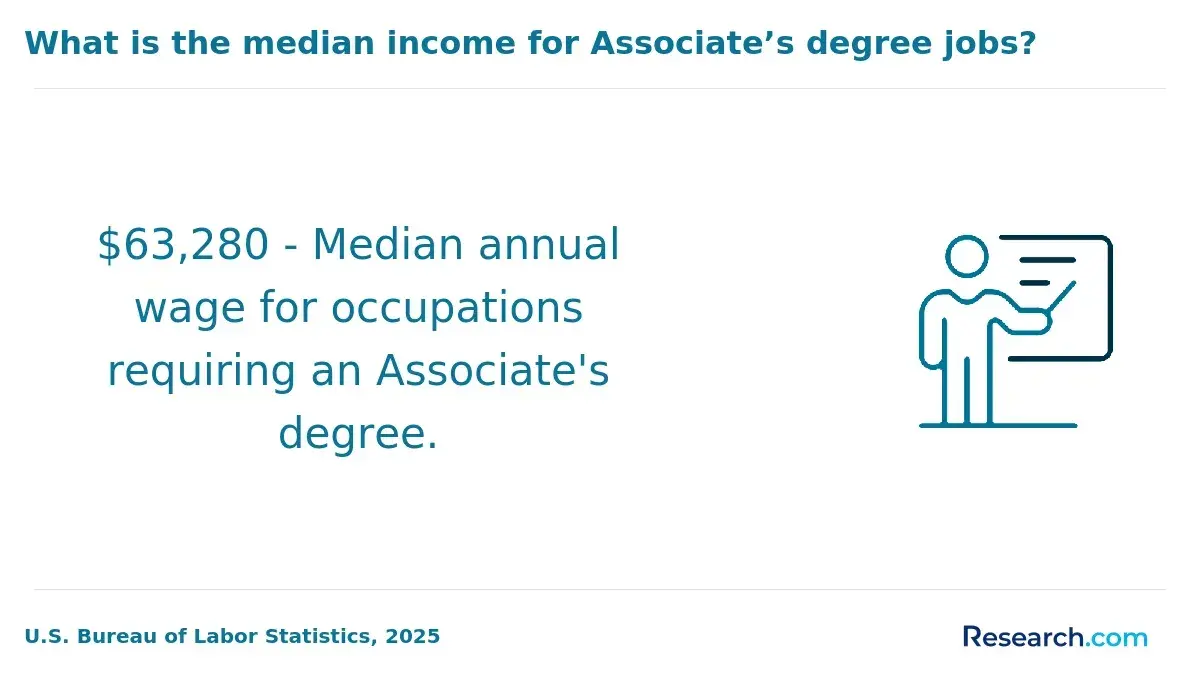
Salary after earning a healthcare administration degree is one of the biggest drivers of ROI. Typical earnings after healthcare administration degree completion range from $60,000 to $120,000 annually, depending on role, employer, location, experience, and specialization.
Students should avoid assuming they will start at the top of that range. Entry-level administrative or coordinator roles may pay less than leadership positions, while experienced professionals moving into management may see faster salary growth. A realistic ROI estimate should use conservative starting salary assumptions and then account for promotion potential over time.
What affects healthcare administration salary outcomes?
- Industry sector: Hospitals, outpatient care centers, insurance companies, consulting firms, government agencies, and pharmaceutical or biotechnology firms may offer different compensation structures.
- Geographic location: Metropolitan areas may offer higher salaries because of greater demand and larger healthcare systems, but cost of living can reduce the practical value of higher pay.
- Prior experience: Students who already work in healthcare, finance, operations, human resources, compliance, or management may be positioned for stronger starting salaries.
- Specialization: Skills in health informatics, policy, finance, quality improvement, compliance, and operations can improve competitiveness for higher-paying roles.
- Career level: Entry-level administrators typically earn less than department managers, directors, senior administrators, and executives.
- Employer size: Larger systems may have more layers of management and broader advancement paths, while smaller organizations may offer faster responsibility growth with fewer formal promotion levels.
Salary also depends on how intentionally students use the degree. Those who complete internships, build healthcare-specific experience, and target roles aligned with their coursework may see better outcomes than graduates who rely on the credential alone. Students seeking flexible ways to prepare for the field can compare online healthcare degrees while paying close attention to accreditation, curriculum, career support, and total cost.
Breakdown of All 2-Year Online Title IV Institutions

Does a Healthcare Administration Degree Lead to Promotions?
A healthcare administration degree can support promotions, especially for professionals who already have healthcare experience and want to move into supervisory, managerial, or director-level roles. The degree does not guarantee advancement, but it can help meet education requirements, strengthen leadership skills, and signal commitment to healthcare management.
Promotion-related ROI is often where the degree becomes most valuable. The initial salary after graduation matters, but the larger payoff may come from qualifying for roles that were previously out of reach.
How the degree may improve promotion potential
- Credential requirements: Many leadership roles prefer or require formal education in healthcare administration, business, public health, or a related field.
- Leadership preparation: Coursework in healthcare finance, operations, ethics, policy, quality improvement, and strategic planning can prepare students for broader responsibility.
- Tuition support: Employer tuition reimbursement can reduce the personal cost of the degree and improve ROI, especially for employees pursuing internal advancement.
- Internal promotion policies: Some organizations give preference to employees who combine strong performance with relevant academic credentials.
- Experience and education: A degree is strongest when paired with measurable workplace results, such as improving workflows, managing teams, reducing costs, or supporting compliance.
For working professionals, an affordable healthcare administration degree can be a practical way to pursue advancement without stepping away from employment. Before enrolling, ask your manager or human resources department whether the degree aligns with promotion pathways, tuition reimbursement policies, and future leadership openings.
The degree’s promotion value is highest when students choose programs that build job-relevant skills and then apply those skills at work before graduation. Waiting until after completing the degree to build relationships, document achievements, or explore leadership openings can weaken ROI.
Which Industries Offer the Best ROI for Healthcare Administration Graduates?
ROI for healthcare administration graduates varies by industry because salaries, advancement speed, job stability, and skill demand differ across the healthcare economy. The highest-paying path is not always the best fit. Some graduates may prefer stability and predictable advancement, while others may pursue consulting or corporate healthcare roles with higher upside and more pressure.
Students should evaluate industries based on compensation, growth potential, work environment, mission fit, and the kinds of skills they want to use daily.
Industries that can offer strong ROI
- Hospital systems: Hospitals and health systems often need administrators in finance, operations, compliance, quality, patient services, and department management. These organizations can offer clear advancement ladders, especially for graduates who understand complex clinical operations.
- Health insurance providers: Insurance organizations value analytical, regulatory, operational, and management skills. This sector can be one of the highest paying industries for healthcare administration graduates, particularly for those interested in claims, network management, utilization, compliance, or strategy.
- Pharmaceutical and biotechnology firms: These employers may offer strong compensation for administrators who can manage operations, regulatory demands, projects, and cross-functional teams.
- Government healthcare agencies: Government roles may appeal to graduates who prioritize stability, public service, structured benefits, and long-term career security over rapid salary growth.
- Private healthcare consulting: Consulting can offer strong compensation and performance-based opportunities for graduates with analytical ability, communication skills, and comfort with travel or demanding client work.
How to choose the right industry for ROI
- Choose hospital systems if you want operational leadership in direct care environments.
- Choose insurance if you are interested in analytics, policy, payment systems, and managed care.
- Choose pharmaceutical or biotechnology firms if you want corporate healthcare roles with regulatory and project-management complexity.
- Choose government agencies if you value stability, public health impact, and predictable career structures.
- Choose consulting if you want fast-paced problem-solving and are comfortable with performance expectations.
Education cost still matters regardless of industry. Students comparing healthcare education pathways may also review the cheapest BSN programs, especially if they are weighing clinical and administrative routes into healthcare leadership. The best ROI comes from aligning the degree with the industry where your experience, skills, and career goals are most likely to translate into advancement.
Does Accreditation Affect ROI for a Healthcare Administration Degree?
Yes. Accreditation can directly affect ROI because it influences financial aid eligibility, credit transfer, employer confidence, and, in some cases, eligibility for credentials or career pathways. An accredited healthcare administration degree signals that the institution or program has been reviewed against recognized quality standards.
Students should distinguish between institutional accreditation and programmatic accreditation. Institutional accreditation applies to the college or university. Programmatic accreditation applies to a specific academic program or field. Both can matter, depending on the degree level and career goal.
Why accreditation matters for ROI
- Employer trust: Many employers prefer candidates from accredited institutions because accreditation provides a basic quality assurance signal.
- Financial aid access: Accreditation can affect eligibility for federal financial aid, which may reduce financial barriers and improve affordability.
- Credit transfer: Credits from accredited schools are often easier to transfer, which matters if you change schools or continue into another degree.
- Graduate study options: If you plan to pursue a higher degree later, accredited prior education may be required or strongly preferred.
- Professional mobility: Accreditation can make your credential more portable across employers and regions.
A non-accredited or poorly recognized program may appear cheaper at first, but it can reduce ROI if employers question the credential, credits do not transfer, or students lose access to certain funding options. Before applying, confirm accreditation through the school, the accreditor, and official accreditation databases. Do not rely only on marketing language.
Is a Healthcare Administration Degree Worth It?
A healthcare administration degree can be worth it for students who want to move into healthcare management, improve promotion eligibility, or shift from clinical, administrative, business, or public health roles into leadership. Its value is strongest when the program is affordable, accredited, aligned with career goals, and flexible enough to limit lost income.
The investment is less clear for students who are unsure about working in healthcare administration, who would need to borrow heavily without a realistic salary plan, or who choose a program with weak career support. Tuition costs and program duration, typically ranging from two to four years, influence the initial outlay. Graduates often see median annual salaries between $60,000 and $100,000, reflecting the career's earning potential.
When the degree is more likely to be worth it
- You already work in healthcare and need a credential to move into management.
- Your employer offers tuition assistance or promotion pathways tied to education.
- You choose an accredited program with reasonable total cost.
- You can continue working while enrolled or otherwise control opportunity cost.
- You are targeting roles where healthcare operations, compliance, finance, policy, or leadership training is valued.
When to be cautious
- You are considering a high-cost program without scholarships, grants, or employer support.
- You do not yet know whether you want administrative, clinical, policy, consulting, or insurance-related work.
- You expect the degree alone to produce a major salary increase without relevant experience.
- The program lacks accreditation, career services, internship options, or transparent outcomes.
The strongest ROI usually comes from treating the degree as part of a career strategy, not as a standalone solution. Compare programs carefully, speak with alumni, review job postings for your target roles, and calculate the likely debt burden before enrolling.
What Graduates Say About The ROI of Their Healthcare Administration Degree
- Maribel: "Choosing to pursue a healthcare administration degree as a traditional student was a big commitment, especially considering the average cost can be around $40,000. However, I saw it as a valuable investment with a promising long-term ROI, and it certainly paid off. Since graduating, I've advanced quickly in my career, landing roles that wouldn't have been accessible otherwise."
- Violet: "As an online student, I appreciated the flexibility of a healthcare administration program that balanced cost-typically less than traditional paths-and convenience. Despite the price tag, I believe the degree is worth it because it opened doors in management positions I never imagined attainable. The skills I gained have translated directly into career growth in a competitive industry."
- Ashley: "Working full-time while pursuing my healthcare administration degree part-time was challenging, but the investment felt justified despite the estimated expense near $35,000. Reflecting on it, the ROI has been strong; the degree boosted my professional credibility and paved the way for leadership opportunities. I consider it a foundational step in my career progression."
Other Things You Should Know About Healthcare Administration Degrees
Strong demand for healthcare administrators driven by an aging population and expanding healthcare services typically results in favorable job prospects and salary growth for graduates. This demand helps increase the ROI, as graduates often experience quicker employment and higher starting salaries compared to fields with weaker demand.
Continuing education, such as obtaining certifications or advanced degrees, often enhances a graduate's expertise and qualifications, leading to better job opportunities and higher salaries. This ongoing investment into professional development can improve long-term ROI by increasing career advancement potential and earning capacity.
References
- Master’s in Healthcare Administration (MHA) Programs https://nursinglicensemap.com/resources/healthcare-degree-programs/masters-in-healthcare-administration/
- Bachelor of Science in Healthcare Administration https://www.desales.edu/programs/undergrad/healthcare-administration
- 11 Highest Paying Healthcare Administration Jobs https://potomac.edu/highest-paying-healthcare-administration-jobs/
- Healthcare Administration Salary & Career Guide https://nurse.org/healthcare/healthcare-administration/
- Is Healthcare Administration a Good Career Choice? https://online.champlain.edu/blog/is-healthcare-administration-a-good-career-choice
- Online Health Administration Degree Program | University of Phoenix https://www.phoenix.edu/online-healthcare-degrees/health-administration-bachelors-degree.html
- High-Paying Healthcare Careers You Can Pursue with a Bachelor's Degree in 2025 https://goelective.com/blogs/high-paying-healthcare-careers-with-a-bachelors-degree
- Exciting Health Admin Job Opportunities: Making the Most of Your Healthcare Administration Degree https://www.park.edu/blog/exciting-health-admin-job-opportunities-making-the-most-of-your-healthcare-administration-degree/
- How long does it take to get an associate degree in healthcare administration? | Herzing University https://www.herzing.edu/faq/how-long-degree-healthcare-administration
- Is A Master’s Degree in Healthcare Management A Good Investment? - Healthcare Management Degree Guide https://www.healthcare-management-degree.net/faq/is-a-masters-degree-in-healthcare-management-a-good-investment/


