
2027 Is a 2-Year Healthcare Administration Degree Worth It: Accelerated Bachelor's ROI & Time Trade-Offs

Co-Founder and Chief Data Scientist
A 2-year healthcare administration degree can be a practical route into healthcare management, but it is not automatically the best value for every student. The main decision is whether a compressed schedule, heavier weekly workload, and faster career entry are worth the cost, pressure, and possible trade-offs in experience-building.
This guide is for students comparing accelerated healthcare administration programs with traditional bachelor’s pathways, online options, and related healthcare credentials. It explains how these programs work, what admissions teams usually look for, what a typical week may involve, how online formats differ, what costs and financial aid to review, and which jobs and salary outcomes may follow.
The appeal is clear: healthcare administration jobs are projected to grow 20% from 2022 to 2032, and accelerated programs can help motivated students enter the field sooner. The challenge is equally real: finishing faster requires consistent time management, careful financial planning, and a clear understanding of how employers will view the credential.
Key Benefits of a 2-Year Healthcare Administration Degree
- Accelerated 2-year degrees reduce time to workforce entry, allowing graduates to start earning sooner, improving overall return on investment compared to traditional 4-year programs.
- Healthcare administration roles show steady demand growth of 18% over ten years, ensuring strong job prospects and salary gains after degree completion.
- Lower tuition and reduced living expenses during the shorter program length significantly decrease student debt, enhancing net financial benefits post-graduation.
How Do 2-Year Healthcare Administration Programs Work?
A 2-year healthcare administration program usually compresses a longer bachelor’s-level curriculum into a faster format. Instead of following a traditional fall-and-spring rhythm with long breaks, students move through shorter terms, heavier course loads, and continuous enrollment. The goal is to help qualified students finish sooner without removing the core management, finance, policy, law, ethics, and healthcare systems coursework they need.
Before enrolling, confirm whether the program is an accelerated bachelor’s degree, a degree-completion pathway for transfer students, or an associate-level program. The title matters because employers and graduate schools may treat these credentials differently.
- Accelerated pacing: Courses move quickly and may require multiple assignments, discussions, exams, or projects in the same week. Students cover material that would normally be spread across a longer calendar.
- Year-round enrollment: Many programs reduce or eliminate long academic breaks so students can keep earning credits. This can shorten completion time but leaves less room for recovery between terms.
- Condensed course terms: Classes often run in 6 to 8 week blocks. This format helps students focus on fewer subjects at a time, but missing even one week can put a student behind.
- Credit load expectations: Students may carry 12 to 15 credits quarterly. That load can be manageable for disciplined learners, but it is demanding for students working full time or managing family responsibilities.
- Instructional format: Programs may be online, hybrid, or campus-based. Online formats can improve access, while hybrid programs may offer more structured interaction and local networking.
- Assessment methods: Expect exams, case analyses, policy briefs, finance assignments, group projects, and applied scenarios based on healthcare operations.
- Curriculum progression: Students typically start with healthcare systems, management principles, and policy before moving into healthcare law, ethics, finance, quality improvement, and organizational leadership.
According to the National Center for Education Statistics, accelerated degrees can cut 1 to 2 years off traditional timelines, potentially reducing tuition and allowing quicker workforce entry. The U.S. Bureau of Labor Statistics also forecasts 32% employment growth for medical and health services managers through 2031, which is one reason students look for faster credentialing options.
Working adults comparing healthcare leadership pathways may also consider related credentials, including online DNP programs for advanced nursing practice and healthcare leadership roles.
What Are the Admission Requirements for a 2-Year Healthcare Administration Degree?
Admission requirements vary by school, but accelerated healthcare administration programs usually look for evidence that applicants can handle college-level work at a faster pace. Because the timeline is compressed, programs may place extra weight on academic readiness, transfer credits, work experience, and the applicant’s ability to stay continuously enrolled.
Review requirements early. Missing one prerequisite, transcript, or transfer-credit deadline can delay your start date and reduce the benefit of choosing an accelerated path.
- Prior Education: Applicants generally need a high school diploma or equivalent, such as a GED. Some accelerated bachelor’s pathways may also expect prior college credits, especially if the program is designed as a degree-completion option.
- GPA Expectations: Many schools expect a minimum cumulative GPA between 2.5 and 3.0. A higher GPA can strengthen an application, especially for programs with limited seats or competitive transfer-credit review.
- Standardized Tests: Some schools may request SAT or ACT scores, while many accelerated and adult-focused programs are test-optional. Always verify the current policy directly with the admissions office.
- Prerequisite Coursework: Programs may require English, math, and basic science coursework. These subjects support the writing, budgeting, data interpretation, and communication skills used in healthcare administration.
- Work Experience: Healthcare, office, customer service, billing, records, or administrative experience can help show readiness for applied coursework. It may not replace academic requirements, but it can make an application more convincing.
Questions to ask admissions before applying
- Is this a full bachelor’s program or a degree-completion program?
- How many transfer credits can be accepted?
- Are courses offered every term, or can a missed course delay graduation?
- Is the program accredited by an institutionally recognized accreditor?
- Are internships, practicums, or capstone projects required?
Students comparing healthcare administration with adjacent administrative careers can also review accredited medical billing and coding schools online to understand shorter, more specialized options in healthcare operations.
What Does a Typical Week Look Like in a 2-Year Healthcare Administration Program?
A typical week in an accelerated healthcare administration program is structured and assignment-heavy. Students should expect regular lectures or modules, readings, discussion posts, case work, group meetings, and independent study. The biggest difference from a traditional program is not only the number of tasks, but how little unused time exists between deadlines.
- Class Sessions or Lectures: Students generally spend around 12 to 15 hours each week in classes, lectures, live sessions, or online modules. Topics may include healthcare policy, ethics, finance, management, quality improvement, and healthcare delivery systems.
- Assignments and Assessments: Weekly work often includes case studies, short papers, quizzes, exams, presentations, or applied management exercises. In 6 to 8 week terms, major assignments can arrive quickly.
- Group Work: Many programs use team projects to simulate healthcare workplace collaboration. This can be valuable, but it requires scheduling discipline when classmates work different shifts or live in different time zones.
- Independent Study: Students may spend an additional 15 to 20 hours weekly reading, researching, preparing assignments, and reviewing concepts. This time is often where students either keep pace or fall behind.
- Instructor Interaction: Office hours, virtual meetings, email feedback, and discussion boards help students clarify expectations. In accelerated formats, asking questions early is essential.
- Time Management: Students need a weekly calendar that accounts for class time, assignment deadlines, work shifts, commuting, family care, and rest. Trying to “catch up later” is one of the most common mistakes.
| Weekly activity | What it usually involves | Why it matters |
| Lectures or modules | Live classes, recorded lessons, readings, and discussions | Builds the foundation for assignments and exams |
| Applied assignments | Case studies, policy reviews, budgeting tasks, and papers | Connects theory to healthcare workplace decisions |
| Group projects | Team meetings, shared research, presentations, and peer coordination | Develops communication and leadership skills |
| Independent study | Reading, writing, exam preparation, and research | Determines whether students can keep pace with condensed terms |
When asked about his experience, a healthcare administration professional who completed a two-year accelerated bachelor’s shared that “the biggest challenge was learning to organize every hour of my day.” He recalled nights spent balancing group calls with individual assignments and often giving up social time.
Despite the pressure, he found that “the intense pace forced me to develop a discipline that has been invaluable in my career.” He also said the collaboration and immediate use of concepts made the workload feel purposeful rather than disconnected from real healthcare administration work.
Breakdown of All 2-Year Online Title IV Institutions

Are 2-Year Healthcare Administration Programs Available Online?
Yes. Many 2-year healthcare administration programs are available online, and online delivery is often the format that makes accelerated study realistic for working adults. However, “online” does not always mean self-paced. Some programs require live attendance, group meetings, proctored exams, practicum hours, or scheduled presentations.
When comparing online programs, look beyond convenience. The best fit depends on your schedule, learning style, technology access, and need for support.
- Fully Online vs. Hybrid: Fully online programs can reduce commuting and make enrollment possible for students outside the campus area. Hybrid programs may require occasional in-person sessions but can offer more direct networking and structured interaction.
- Asynchronous and Synchronous Learning: Asynchronous courses let students review materials and complete work within set deadlines. Synchronous courses require live attendance, which can improve engagement but may be harder for students with changing work schedules.
- Technology Requirements: Students need reliable internet, a capable computer, video conferencing access, and comfort using learning management systems. Technology problems can quickly become academic problems in a fast term.
- Student Support Services: Strong online programs provide virtual advising, tutoring, library access, technical support, writing help, and career services. These services are especially important when courses move quickly.
- Program Pacing and Engagement: Online accelerated programs may allow faster completion, but students must be proactive. Logging in only near deadlines is risky because discussions, group work, and faculty feedback often happen throughout the week.
How to evaluate online quality
- Confirm accreditation and transfer-credit policies before enrolling.
- Ask whether courses are available in every accelerated term.
- Review graduation requirements, including capstones or field experiences.
- Check whether career services support online students, not only campus students.
- Ask how group projects, exams, and presentations are handled online.
How Much Does a 2-year Healthcare Administration Degree Cost?
The cost of a 2-year healthcare administration degree depends on tuition, fees, transfer credits, course load, materials, technology requirements, and how much income you may reduce while studying. Accelerated programs can lower total time in school, but they do not always lower the bill automatically. Students should calculate total cost, not just tuition per credit.
- Tuition: Schools may charge by credit hour, term, or program. Accelerated formats can raise the cost per term because students take more credits at once, but a shorter timeline may reduce the number of years spent paying tuition-related expenses.
- Fees: Registration, technology, online learning, graduation, and student service fees vary by institution. These fees can affect affordability even when advertised tuition appears competitive.
- Textbooks and learning materials: Required materials typically range from $1,200 to $1,500 for the entire degree, depending on whether courses use digital materials, physical textbooks, access codes, or specialized resources.
- Technology and lab costs: Online and hybrid students may need updated hardware, software, webcam access, secure testing tools, or a more reliable internet connection.
Compared with traditional four-year degrees, accelerated options may save students roughly two years of tuition and living costs, according to the National Center for Education Statistics. The trade-off is intensity: some students reduce work hours during heavy terms, which can offset part of the financial advantage.
For a realistic ROI estimate, compare the full program price, expected aid, loan repayment, lost wages, and the salary range for your target job. If cost is your top constraint, you may also want to compare programs listed as the cheapest online healthcare management degree options before committing to a school.
Students researching program formats and tuition models can also explore healthcare administration online degree opportunities.
Can You Get Financial Aid for 2-Year Healthcare Administration Programs?
Yes, financial aid may be available for 2-year healthcare administration programs, but eligibility depends on the school, program accreditation, enrollment status, course load, and federal aid rules. Accelerated calendars can also affect when aid is disbursed, so students should talk with the financial aid office before enrolling, not after tuition is due.
- Federal Student Aid Eligibility: Accelerated programs that meet accreditation standards and enrollment requirements often qualify for federal aid, including Pell Grants and Direct Loans. Students must complete the FAFSA and maintain satisfactory academic progress.
- Scholarships and Grants: Healthcare associations, nonprofits, schools, and community organizations may offer scholarships or grants for students pursuing healthcare administration. Awards may depend on financial need, academic performance, enrollment status, or career goals.
- Employer Tuition Assistance: Students already working in healthcare may qualify for tuition reimbursement or education benefits. Employer assistance can reduce borrowing, but students should check grade requirements, repayment clauses, and required work commitments.
- Institutional Payment Plans: Some schools allow students to divide tuition into scheduled payments. This can help manage cash flow, but it is not the same as grant aid and may not reduce total cost.
- Effects of Accelerated Pacing: Shorter terms can change the timing of aid disbursement. Aid may be prorated, tied to enrollment intensity, or delayed if paperwork is incomplete. Continuous enrollment also means students must stay alert to deadlines across the full year.
Financial aid steps to take before enrolling
- Confirm the program’s accreditation and federal aid eligibility.
- Submit the FAFSA as early as possible.
- Ask how aid is disbursed across accelerated terms.
- Request a full cost-of-attendance estimate, including fees and materials.
- Compare loan amounts with expected starting roles and realistic salary outcomes.
One professional who recently completed a two-year accelerated healthcare administration degree said financial aid was available, but the process required careful timing. She was working full time while trying to understand grants, loans, scholarships, and employer tuition support.
“It was challenging to time my FAFSA and scholarship applications correctly,” she noted, especially because faster terms affected loan disbursement timing. Employer tuition assistance helped her reduce financial stress and focus more on coursework.
She also found institutional payment plans useful when grants and loans did not cover every expense. Her advice was direct: start early, read every deadline carefully, and ask the financial aid office how accelerated terms change the usual process.
What Jobs Can You Get With a 2-Year Healthcare Administration Degree?
A 2-year healthcare administration degree can prepare graduates for entry-level and early supervisory roles in healthcare offices, clinics, hospitals, long-term care settings, outpatient centers, insurance organizations, and related service environments. The exact jobs available depend on the credential level, prior experience, local employer expectations, and whether the degree is a bachelor’s degree or an associate-level credential.
- Medical Office Manager: Medical office managers help oversee scheduling, staffing, patient flow, billing coordination, records processes, and daily administrative operations. Smaller practices may offer faster responsibility, while larger systems may require more experience.
- Healthcare Coordinator: Healthcare coordinators support patient services, department communication, compliance tasks, referrals, care navigation, or program operations. Coursework in healthcare systems, ethics, and policy can be useful in this role.
- Administrative Assistant: Administrative assistants handle records, communication, scheduling, documentation, and front-office support. These roles can be a starting point for graduates who need healthcare experience before moving into management.
- Patient Services Representative: Patient services representatives work directly with patients on scheduling, intake, insurance questions, and service navigation. Strong communication and problem-solving skills are essential.
- Career Advancement Opportunities: Graduates may move into supervisory roles or specialize in billing, health information management, operations, compliance, or quality improvement. Advancement usually depends on experience, performance, certifications, and sometimes further education.
| Role | Typical focus | Best fit for |
| Medical Office Manager | Daily operations, staffing, scheduling, patient flow | Students with leadership ability and office experience |
| Healthcare Coordinator | Service coordination, communication, compliance support | Students who like organizing people, processes, and information |
| Administrative Assistant | Records, scheduling, correspondence, front-office support | Graduates seeking an entry point into healthcare administration |
| Patient Services Representative | Patient intake, scheduling, service navigation | Students with strong customer service and communication skills |
The degree may help open doors, but it does not guarantee a management job immediately after graduation. Students with healthcare work experience, internships, software skills, and strong references are often better positioned than students who rely on the credential alone.
Students comparing healthcare administration with clinical education pathways can also review cheapest online BSN programs for broader context on healthcare career options.
How Do Salaries Compare for 2-year Healthcare Administration Degree vs. Traditional Bachelor's Degrees?
Salary comparisons depend on the credential, job title, location, employer type, and prior experience. In general, a 2-year healthcare administration pathway may help students earn sooner, while a traditional bachelor’s degree may provide broader preparation and stronger positioning for leadership roles. The better ROI depends on whether faster workforce entry offsets potential differences in advancement and salary growth.
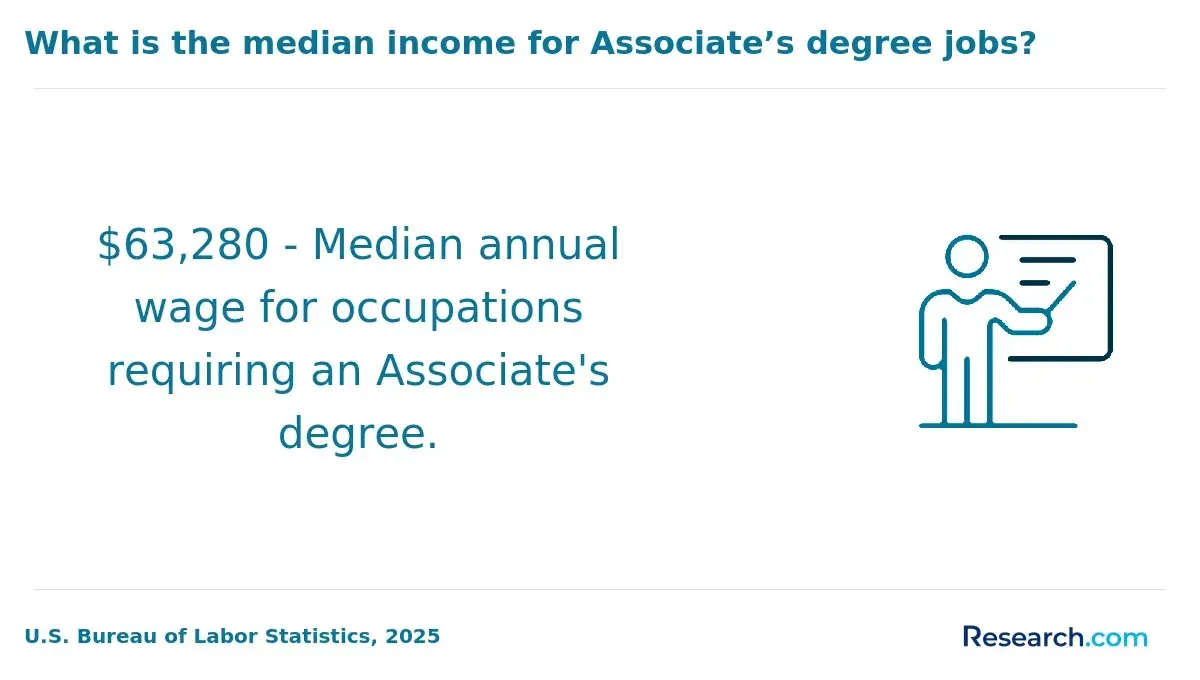
- Early-career earnings: Graduates with 2-year healthcare administration degrees typically start with median salaries ranging from $40,000 to $50,000, according to the BLS. Those holding traditional bachelor’s degrees often command entry-level salaries around $60,000, reflecting employer preferences for broader educational backgrounds.
- Long-term earning potential: The median wages for healthcare managers, who usually require a bachelor’s degree, reach about $100,000 annually (BLS). Graduates with only a 2-year degree may see slower wage growth if employers reserve higher-level management roles for bachelor’s-prepared candidates.
- Employer perception: Employers may value the depth, general education, and leadership preparation associated with traditional bachelor’s programs. However, relevant experience and measurable workplace performance can also influence hiring and promotion decisions.
- Career progression timelines: Completing a 2-year program typically allows students to enter the workforce approximately two years earlier than traditional students (National Center for Education Statistics). That can mean earlier income and experience, but the advantage may narrow if traditional bachelor’s graduates move into higher-paying roles faster.
- Impact on lifetime earnings: Faster entry can improve early cash flow, while stronger advancement pathways can improve long-term earnings. Students should compare both short-term income and long-term promotion potential.
| Factor | 2-year healthcare administration path | Traditional bachelor’s path |
| Speed to workforce | Usually faster | Usually slower |
| Early income | May begin sooner | May begin later but at a higher starting level |
| Typical early salary range stated | $40,000 to $50,000 | Around $60,000 |
| Leadership positioning | May require experience or further education | Often stronger for management-track roles |
| Main ROI advantage | Earlier earnings and shorter time in school | Potentially stronger long-term advancement |
Students considering accelerated bachelor’s paths should also explore related advanced healthcare education options such as cheapest BSN to DNP programs if their long-term goals include higher-level clinical leadership or nursing administration.
Which Factors Most Affect ROI for Accelerated Healthcare Administration Degrees?
The ROI of an accelerated healthcare administration degree is shaped by more than tuition. Students should consider time saved, debt, lost wages, transfer credits, employer recognition, career services, and the type of jobs they can realistically obtain after graduation.
- Time to completion: Accelerated programs can condense a traditional four-year timeline into roughly two years. Finishing faster can help students start earning sooner and reduce the time spent out of the workforce.
- Tuition and total cost: A shorter program may reduce total expenses, but students should compare tuition, fees, books, technology, and payment schedules. A low per-credit price does not always mean the lowest total cost.
- Opportunity cost savings: Graduating sooner can reduce the income students give up while studying. However, if the workload forces a student to cut work hours, that lost income should be included in the ROI calculation.
- Employment outcomes and industry demand: Strong demand can improve the value of a healthcare administration credential, but local job markets differ. Students should review employer requirements in their region before assuming a degree will lead directly to management work.
- Transferability of skills: Programs that develop leadership, budgeting, healthcare policy, data interpretation, communication, compliance, and operations skills may offer more career flexibility than programs focused too narrowly on one setting.
Common ROI mistakes to avoid
- Comparing only tuition and ignoring fees, materials, and lost income.
- Assuming every accelerated program leads to the same jobs.
- Failing to confirm accreditation before enrolling.
- Choosing the fastest option without checking student support and course availability.
- Overestimating starting salary without considering experience and local employer expectations.
A strong ROI case usually includes a reasonable total cost, accepted transfer credits, manageable debt, credible accreditation, solid career services, and a clear path to jobs that match the student’s experience level.
How Do You Decide If a 2-year Healthcare Administration Degree Is Right for You?
A 2-year healthcare administration degree may be right for you if you need a faster route into healthcare administration, can handle a demanding schedule, and have a clear plan for using the credential. It may not be the best fit if you need a slower pace, extensive campus support, broad elective exploration, or a credential that employers in your target market expect to be a traditional bachelor’s degree.
Choose this path if:
- You are organized enough to manage compressed terms and frequent deadlines.
- You already have transfer credits or relevant healthcare work experience.
- You want to enter or advance in healthcare administration as soon as possible.
- You can verify that the program is accredited and respected by employers.
- You have compared total cost, aid, debt, and realistic salary outcomes.
Be cautious if:
- You are already overextended at work or home and cannot protect study time.
- You need long breaks between terms to stay academically successful.
- The program is unclear about accreditation, transfer credits, or graduation requirements.
- You expect immediate access to senior management roles without experience.
- The cost requires borrowing more than your likely early-career income can support.
Median wages for healthcare administration roles remain competitive, and the field’s projected expansion through 2031 suggests ongoing opportunities for graduates. Still, the best decision is personal. Compare the accelerated path with traditional bachelor’s programs, online formats, employer tuition benefits, and shorter healthcare administrative credentials before enrolling.
If the program fits your schedule, budget, learning style, and career goals, the accelerated route can be a practical investment. If it forces unsustainable debt or an unrealistic weekly workload, a slower or less expensive pathway may produce a better outcome.
What Graduates Say About Their 2-Year Healthcare Administration Degree
- Camilla: "Opting for a 2-year healthcare administration degree was a strategic decision to enter the workforce rapidly and start gaining experience. I maintained a disciplined schedule, dedicating evenings and weekends to coursework. This degree significantly boosted my resumé and credibility, leading to key opportunities in the healthcare sector, all while keeping education costs relatively low compared to longer programs."
- Eden: "The intense pace of the 2-year healthcare administration program initially felt overwhelming, but it taught me invaluable time management skills. Reflecting on my journey, the commitment was worthwhile as it quickly equipped me with the credentials to advance professionally. The program's affordability was also a significant factor that allowed me to pursue this career without heavy debt."
- Ross: "I chose the 2-year healthcare administration program because I wanted to fast-track my education without compromising quality. Balancing work and study was tough, but the accelerated schedule kept me motivated and focused. Since graduating, the degree has opened doors to management roles I never thought possible, and the average cost was much more accessible than traditional programs."
Other Things You Should Know About Healthcare Administration Degrees
In 2027, completing an accelerated bachelor's program after a 2-year healthcare administration degree can enhance career opportunities by providing a deeper understanding of healthcare systems, improving management skills, and increasing earning potential. This path offers a faster way to gain advanced qualifications compared to traditional four-year programs.
In 2027, work experience significantly enhances the benefits of an accelerated bachelor's degree after a 2-year program in healthcare administration by increasing employability and possibly leading to higher starting salaries. Employers often value practical experience when considering candidates for advanced roles.
References
- Healthcare Administration Scholarships https://www.healthadministrationdegrees.com/healthcare-administration-scholarships/
- Is Healthcare Administration a Difficult Major? How Hard Is It? | CSU Global https://csuglobal.edu/blog/is-healthcare-administration-hard
- 10 careers you can pursue with a Healthcare Administration Degree - SMWC https://www.smwc.edu/10-careers-you-can-pursue-with-a-healthcare-administration-degree-blog-december-22/
- Exploring 12 Healthcare Jobs You Can Launch in 2 Years or Less https://www.rasmussen.edu/degrees/health-sciences/blog/list-healthcare-jobs-launch-two-years-less/
- Quiz: Is Healthcare Administration Right for Me? https://www.herzing.edu/blog/is-health-administration-right-for-me
- Inside Accelerated Online Healthcare Administration Programs https://www.edumed.org/online-schools/healthcare-administration-degrees/bachelors/accelerated/
- Online Healthcare Administration Program with Brookline https://www.brooklinecollege.edu/programs/healthcare/bachelors-degree-in-healthcare-administration/


