
2027 How to Become an Elementary Education Teacher: Salary & Career Paths

Co-Founder and Chief Data Scientist
In 2023, over 1.4 million elementary education teachers were working in the US, but more than 36,500 teacher vacancies remain unfilled. This shortage creates a promising opportunity for aspiring teachers and those looking to switch careers. However, many are unsure of the necessary steps, from educational requirements to certification, and how to navigate the process effectively. This article will guide you through the key requirements for becoming an elementary education teacher, the potential career paths you can pursue, and the salary expectations for this rewarding profession.
Key Things You Should Know About How to Become an Elementary Education Teacher
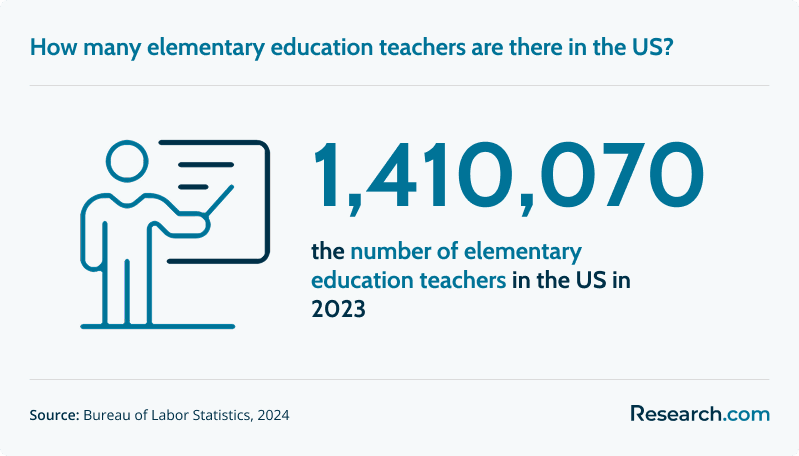
- Elementary education teachers are generalists. These teachers typically instruct students in a wide range of subjects such as math, science, reading, and social studies. They are crucial in laying the foundation for students’ academic growth. With 1,410,070 elementary education teachers in the US in 2023, they are central to the education system.
- Becoming an elementary education teacher requires specific educational pathways. Aspiring teachers typically need at least a bachelor’s degree in elementary education, though there are alternative pathways available, such as online certification programs. In 2022, 42,862 elementary education degrees were awarded in the US, with most graduates obtaining a bachelor’s degree in this field.
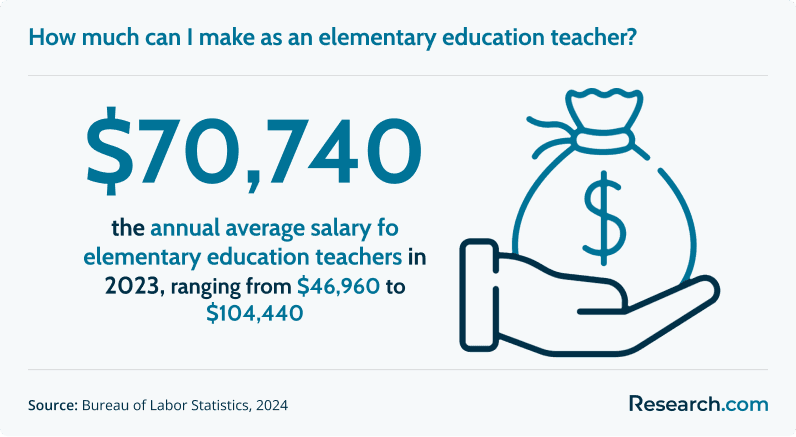
- The average salary for elementary education teachers is $70,740 per year. Salaries can range from $46,960 to $104,440 depending on location, experience, and the specific school district. Teachers in high-paying states like New York and California earn more, with averages of $94,600 and $93,880, respectively.
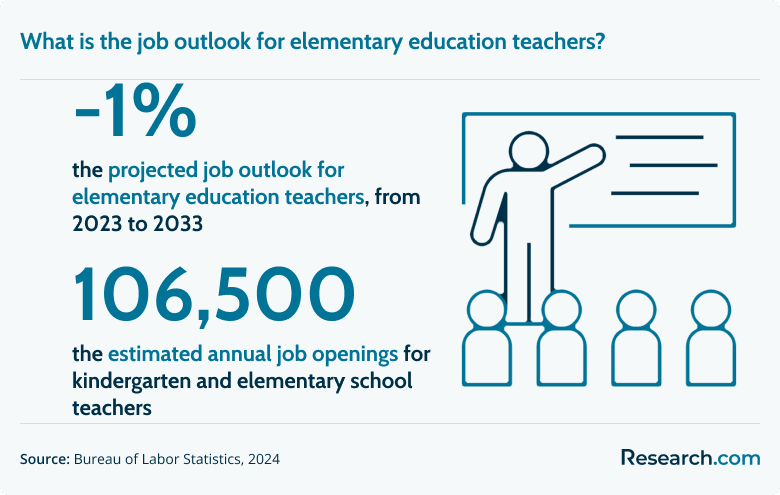
- The job outlook for elementary education teachers is slightly negative. The overall job growth for elementary education teachers is projected to decrease by 1% from 2023 to 2033. Despite this, approximately 106,500 job openings are expected annually due to teacher retirements and the ongoing demand in specific regions.
- Career advancement opportunities are available for elementary education teachers. Teachers can specialize in areas such as special education, STEM, or literacy. Additionally, they may advance into leadership roles like principals or education administrators, with opportunities to further their careers through advanced degrees or certifications.
- What is an elementary education teacher?
- How to Become an Elementary Education Teacher for 2027
- What are the educational requirements to become an elementary education teacher?
- Are there online elementary education teacher degree programs?
- What are the licensing requirements to become an elementary education teacher?
- How long does it take to become an elementary school teacher?
- Are there specializations for elementary school teachers?
- How much can I make as an elementary education teacher?
- What challenges do elementary education teachers face in today's evolving education landscape?
- How can I streamline my teaching credential process?
- How can an affordable online master’s degree in education boost my career?
- Can additional qualifications enhance teaching effectiveness?
- What are the financial considerations for pursuing a teaching degree?
- What is the job outlook for elementary education teachers?
- How can interdisciplinary studies, such as political science, enrich elementary education teaching?
- Can acquiring expertise in speech pathology complement teaching strategies?
- What career paths are available for elementary education teachers?
- What trends should elementary education teachers know about?
- How can additional academic credentials enhance classroom effectiveness?
What is an elementary education teacher?
An elementary education teacher is a professional who is responsible for teaching young children, typically in kindergarten through fifth grade. These teachers play a critical role in the foundational education of students, often covering a wide range of subjects. Unlike high school or middle school teachers, who specialize in specific subjects, elementary education teachers are generalists. This means they teach core subjects such as math, reading, writing, science, and social studies, all within the same class. Their goal is to create a comprehensive learning environment where students develop essential skills in multiple disciplines.
Elementary education teachers can be found in both public and private schools, as well as in religious schools. While public schools represent the largest sector, private and religious schools often have smaller class sizes, which can provide a different teaching experience and allow for more individualized instruction. The scope and environment can vary, but their mission remains the same—guiding young learners through critical stages of academic, social, and emotional growth.
Key Responsibilities of an Elementary Education Teacher
- Designing lesson plans. These teachers develop lesson plans that align with state standards, ensuring they cover key academic subjects such as literacy, math, science, and social studies.
- Creating a positive learning environment. Elementary educators are tasked with fostering a classroom atmosphere that is safe, welcoming, and conducive to learning.
- Assessing student progress. Teachers regularly assess their students' academic progress and make adjustments to their teaching methods based on assessments, tests, and observations.
- Supporting social and emotional growth. Aside from academic development, elementary school teachers help children navigate social situations, teaching them important life skills such as teamwork, conflict resolution, and respect.
- Engaging with parents and colleagues. Communication with parents and collaboration with other teachers and school staff are essential parts of the teacher’s role in ensuring a supportive educational environment for students.
As of 2023, there are approximately 1,410,070 elementary education teachers across the United States.
How to Become an Elementary Education Teacher for 2027
To become an elementary education teacher for 2027, there are several pathways available, each catering to different educational backgrounds and career aspirations. Below is an overview of the primary routes one can take to enter this fulfilling profession:
Traditional Bachelor's Degree in Elementary Education
- Complete a bachelor's degree. The most common route is earning a bachelor's degree in elementary education from an accredited university or college. This degree covers a variety of essential topics such as child development, teaching strategies, and classroom management.
- Student Teaching. Most programs include a hands-on student-teaching requirement, giving you the opportunity to practice in a real classroom under the guidance of an experienced educator.
- Certification Exams. After completing the degree, you will need to pass state-specific exams to obtain your teaching certification.
Alternative Certification for Career Changers
- For those with a bachelor's in another field: If you already hold a bachelor's degree in another area of study, alternative certification programs offer a way to transition into teaching. These programs typically offer coursework and practical teaching experience, designed to equip you with the necessary skills.
- Complete a Teacher Preparation Program. These programs also include child development and pedagogy courses, along with a student-teaching component, preparing you for certification exams and teaching positions.
Final Steps: Apply for Jobs and Obtain Your Teaching License
- Complete Your Application. With your degree and certification in hand, the next step is applying for teaching positions. Opportunities exist at both public and private elementary schools across the country.
- Maintain Certification. Once employed, you'll need to maintain your teaching certification by completing professional development courses and fulfilling any renewal requirements established by your state.
Note that for both certified teachers and individuals holding a bachelor's degree in another field, a master’s degree in education or teaching can serve as an additional pathway into the profession. However, this is not a requirement for entry and is more suited for those pursuing specialized roles, such as school administrator or curriculum coordinator. Generally, it is more relevant for career advancement than for initial entry into the teaching profession.
In the upcoming sections, we will delve deeper into each of these routes, exploring the details of educational requirements, certification processes, and other essential steps to help you determine the best path for your career.
What are the educational requirements to become an elementary education teacher?
To become an elementary education teacher, the minimum educational requirement is typically a bachelor’s degree. However, the field of study can vary based on the pathway you choose.
The most common route is earning a bachelor’s degree in elementary education, which provides the foundational training necessary to teach in public and private schools. This degree typically includes coursework in subjects like child development, educational psychology, and classroom management, preparing you to teach multiple subjects to elementary-aged children.
Alternatively, those with a bachelor’s degree in another field can still transition into teaching through alternative certification programs. These programs offer targeted training in pedagogy and classroom management, with many states offering flexible pathways, including accredited online teacher certification programs, making it easier to become certified without completing another full degree.
Lastly, a master’s degree in education is another option, either for those looking to deepen their qualifications or for individuals who already hold a bachelor’s degree in another field. In the latter case, many programs are designed to lead directly to teacher certification, making them a viable entry point into the profession. While a master’s degree is not required to begin teaching, it can offer advantages such as broader job opportunities, higher earning potential, and pathways to leadership roles, such as curriculum specialist or school administrator. Note that elementary education teachers do not typically hold a master's degree.
In 2022, there were around 30,778 bachelor's degrees in education and teaching awarded in US, the most popular type of degree in the field. See the chart below for a breakdown of degrees awarded by level.
Are there online elementary education teacher degree programs?
Yes, there are online elementary education degree programs from reputable accredited academic institutions available, offering a flexible option for those looking to pursue a career in teaching. For individuals starting their academic journey, an online bachelor’s degree in elementary education provides the foundational coursework and student teaching experience needed to meet state certification requirements. These programs deliver the same academic rigor as traditional on-campus options while allowing students to study remotely.
For those who already hold a bachelor’s degree in another field, pursuing an online master’s degree in elementary education can serve as a direct route into the profession. These graduate programs are often designed for career changers and working professionals, offering a streamlined pathway to licensure with flexible scheduling and a focus on practical, classroom-ready skills. Both online pathways—at the bachelor’s and master’s level—can prepare students to become effective and certified elementary education teachers.
It’s important to ensure that any online program you consider is accredited by a recognized body such as the Council for the Accreditation of Educator Preparation (CAEP) or the Association for Advancing Quality in Educator Preparation (AAQEP), as this impacts both licensure eligibility and program quality.
What to Expect in Online Elementary Education Degree Programs
- Flexible Learning Schedule: Most online programs allow students to complete coursework at their own pace, making it easier to balance other responsibilities like work or family.
- Combination of Online and In-Person Components: While the majority of coursework is completed online, many programs require in-person student teaching experiences or internships to provide hands-on classroom experience.
- Interactive Learning Tools: Online programs often use discussion forums, video lectures, and virtual simulations to create an engaging learning environment. This allows students to collaborate with peers and instructors, despite being remote.
- Rigorous Curriculum: Similar to traditional on-campus programs, online programs cover the core subjects of elementary education, including reading, mathematics, science, and social studies, while also integrating teaching strategies and classroom management skills.
Online elementary education degree programs are an excellent option for those who require flexibility in their studies but still want to receive high-quality, accredited education. These programs ensure that students can meet certification requirements and gain valuable teaching experience, setting them up for success as future elementary educators.
What are the licensing requirements to become an elementary education teacher?
Licensing involves several key steps that are generally consistent across different pathways, although specific requirements may vary by state. The process typically includes completing an accredited teacher preparation program, passing state exams, fulfilling practical teaching hours, and applying for certification. Here's what you can expect across the different pathways to licensure.
Licensing Requirements for All Pathways
- Complete a teacher preparation program. Whether you pursue a traditional degree, an alternative certification program, or a master’s degree, you’ll need to complete a program that meets state and national standards for teacher preparation. This includes coursework in subjects like child development, pedagogy, and classroom management.
- Pass the necessary exams. All aspiring elementary education teachers must pass exams that assess their knowledge of general teaching skills as well as subject-specific content. These exams commonly include:
- Praxis Core: A basic skills test that assesses reading, writing, and math.
- Praxis II: Subject-specific exams for elementary education, including tests on literacy, math, science, and social studies.
- State-specific exams: Some states may require additional assessments or tests tailored to state-specific education requirements.
- Complete student teaching or supervised teaching experience. Most programs require hands-on classroom experience where you work under the supervision of an experienced teacher. This is typically a semester-long placement and is designed to allow you to apply the knowledge you’ve gained in real classroom settings.
- Submit an application for certification. After passing exams and completing the required student teaching hours, you will apply for certification through your state’s department of education.
How to Maintain Your License
Once you’ve earned your teaching license, you’ll need to maintain it by meeting continuing education and professional development requirements. Most states require teachers to complete additional coursework, workshops, or professional learning activities to renew their licenses. Additionally:
- Continuing Education: Teachers are typically required to complete a certain number of hours of continuing education every few years to maintain their license.
- Recertification Exams: Depending on your state’s requirements, you may need to take recertification exams or demonstrate knowledge in new teaching practices and educational policies.
- Interstate Mobility and License Reciprocity: If you decide to move to another state, you may be able to transfer your teaching license through interstate mobility or reciprocity agreements. These agreements allow you to more easily obtain certification in a new state, though requirements may vary.
Navigating the licensing process is a crucial step in becoming an elementary education teacher. While the specific requirements may vary from state to state, following the general steps outlined above will guide you toward obtaining and maintaining your certification. Staying informed about ongoing professional development and licensing renewals will ensure you remain a qualified educator, ready to make an impact in the classroom.
In 2023, the states with the highest employment levels of elementary education teachers were California (151,820) and Texas (136,580). See the chart below for further details.
How long does it take to become an elementary school teacher?
Becoming an elementary school teacher involves a significant time commitment, but the duration can vary depending on the pathway you choose. Whether you pursue a traditional degree program, an alternative certification route, or a master's degree, each pathway comes with its own timeline. Here’s a breakdown of how long each option typically takes:
Traditional Degree Program (4 years)
The most common pathway to becoming an elementary school teacher is through a traditional four-year undergraduate program in elementary education. This program usually takes four years to complete and includes both coursework and supervised student teaching. Note that there are online programs available, providing the flexibility to complete your degree at your own pace. The overall time to graduation, however, remains similar.
Alternative Certification Program (1-2 years)
For individuals who already hold a bachelor's degree in another field, alternative certification programs offer a faster route to teaching. These programs generally take anywhere from one to two years to complete, depending on whether you’re attending part-time or full-time. Some programs are designed to be completed online, allowing you to balance your coursework with other responsibilities. They often combine coursework with a period of student teaching, which is required for licensure.
Master's Degree in Education (2 years)
For those seeking a higher level of specialization or a quicker path to teaching, a master’s degree in education can be an option. Typically, a master's program for those with a prior bachelor’s degree can take about two years to complete. Many online colleges for teaching offer master’s programs that allow you to work at your own pace, while also meeting state certification requirements. A master’s degree is a great option if you want to fast-track your teaching career or if you're looking to specialize in areas like special education.
Overall, the time required to become an elementary school teacher can range from four years (for traditional degree programs) to as little as one to two years (for alternative certification and master’s programs), depending on the pathway chosen.
Are there specializations for elementary school teachers?
Elementary school teachers are typically generalists, responsible for teaching a broad range of subjects across multiple grade levels. However, there are several ways for teachers to specialize in specific subjects or grade levels, either by being assigned to a particular grade or by pursuing additional certifications. Specializing can provide opportunities for career growth and the ability to focus on subjects or age groups of particular interest.
Teachers can also pursue advanced degrees or certifications in specific areas, such as literacy, math, or special education, to expand their expertise and qualifications. These specializations can lead to roles with greater responsibility, increased job satisfaction, and higher earning potential. For example, obtaining a masters in elementary math can help teachers deepen their expertise in the subject, enhancing their ability to teach students in a focused and effective way.
Common and useful certifications for elementary education teachers
- Special education certification: Teachers can earn certification in special education to work with students who have disabilities or learning challenges. This certification typically requires additional coursework and supervised teaching experience.
- English as a Second Language (ESL) certification: ESL certification enables teachers to work with students for whom English is a second language, helping them develop language proficiency and academic skills.
- Reading specialist certification: This specialization focuses on literacy and reading instruction, allowing teachers to help students develop essential reading skills. It may involve additional coursework or training in phonics, comprehension strategies, and literacy interventions.
- STEM certification: Teachers can pursue STEM certifications to specialize in science, technology, engineering, and mathematics. Given the increasing emphasis on STEM in education, specializing in these subjects can be particularly beneficial, enabling teachers to focus on these critical areas, especially in upper elementary grades.
Specializing in these areas can make elementary school teachers more competitive in the job market and open up new avenues for career advancement. Teaching roles at the elementary level can vary significantly based on location, school district policies, and the individual needs of students, so pursuing one of these certifications can greatly enhance your professional qualifications and impact.
How much can I make as an elementary education teacher?
The average annual salary for elementary education teachers in 2023 is $70,740. However, salaries can vary widely depending on factors such as location, years of experience, and the specific school district. Teachers can expect to earn anywhere from $46,960 to $104,440 annually. In general, teachers in states with a higher cost of living or those employed in specific industries, such as public schools or colleges, tend to earn on the higher end of the salary range.
What challenges do elementary education teachers face in today's evolving education landscape?
Elementary education teachers navigate a complex environment marked by evolving curriculum standards, increasing class size diversity, and the integration of advanced technology. Balancing the demands of differentiated instruction while adapting to new digital tools and remote learning models poses continual operational and pedagogical challenges. Proactive engagement in targeted professional development and leadership training is essential to address these issues. Educators may consider pursuing advanced qualifications through specialized programs, such as online EdD programs, to enhance instructional strategies, streamline classroom management, and effectively meet the dynamic needs of their students.
How can I streamline my teaching credential process?
For aspiring elementary education teachers, identifying streamlined pathways is key to reducing the time between education and classroom entry. Exploring alternative certification programs and online options can help manage components such as application deadlines, background verifications, and student teaching commitments more efficiently. Leveraging digital platforms and dedicated teacher preparation resources may also assist in organizing essential documentation and meeting state-specific requirements. For detailed guidance on navigating these processes, review how to earn a teaching credential.
How can an affordable online master’s degree in education boost my career?
Advancing your qualifications through an online master’s program can refine pedagogical skills, enhance leadership abilities, and expand opportunities for specialized roles without interrupting your current teaching position. Evaluating factors such as course flexibility, accreditation, and practical applications is essential to ensure a program aligns with your career objectives. Consider programs that integrate emerging educational technologies and classroom management strategies to meet evolving demands in education. For instance, enrolling in the cheapest online master's degree in education may provide a cost-effective pathway to accelerate professional growth while mitigating financial constraints.
Can additional qualifications enhance teaching effectiveness?
Advanced qualifications like a library science degree online can broaden an elementary education teacher’s skill set and enrich classroom strategies without duplicating core training. Specialized studies in areas such as library science equip educators with evidence-based techniques to develop students’ research, digital literacy, and information management skills. This complementary expertise fosters innovative curriculum design and supports differentiated instruction, ultimately enhancing student engagement and learning outcomes.
What are the financial considerations for pursuing a teaching degree?
When evaluating your pathway to becoming an elementary education teacher, it is essential to assess tuition costs, available scholarships, loan forgiveness programs, and other financial aid options. Compare traditional on-campus programs against alternative and accelerated certification routes, as the latter can reduce the overall cost and duration of your training. Prospective educators may benefit from programs that offer predictable fees and streamlined enrollment processes. For those seeking to minimize both financial burden and time investment, consider the fastest path to becoming a teacher available through accredited online programs.
What is the job outlook for elementary education teachers?
The job outlook for elementary education teachers from 2023 to 2033 is expected to decline by about 1%, indicating a slight decrease in the overall demand for new teachers. However, this should be viewed in the context of ongoing shortages and high turnover rates within the profession. Despite the projected decline, there are still approximately 106,500 annual job openings for kindergarten and elementary school teachers, driven largely by the need to replace teachers who retire or leave the profession.
The teacher shortage is particularly pronounced, with 86% of public schools struggling to hire enough educators and over 51,000 teachers leaving the profession in 2023. This shortage, combined with high job dissatisfaction and an aging workforce (elementary school teachers have an average age of 46), highlights the ongoing demand for new teachers. Although the overall job growth is projected to be modest, opportunities remain significant, especially for those entering the profession through alternative pathways or in regions facing high teacher vacancies.
How can interdisciplinary studies, such as political science, enrich elementary education teaching?
Interdisciplinary studies offer elementary educators innovative methods to weave civic awareness and critical thinking into their curriculum. By integrating key principles from political science, teachers can design lessons that foster an understanding of governance, rights, and community involvement among young learners. This cross-disciplinary approach broadens pedagogical techniques while cultivating a more holistic educational experience. Additionally, educators can expand their expertise by exploring affordable online bachelor degree programs political science, which provides a flexible pathway to enhance their professional skill set without compromising their core focus in elementary education.
Can acquiring expertise in speech pathology complement teaching strategies?
Elementary educators increasingly encounter students with diverse speech and language needs. Integrating specialized knowledge in speech pathology can empower teachers to implement targeted communication strategies that support early language development and literacy without overlapping established curriculum content. By acquiring focused skills through dedicated online programs—such as the master's in speech pathology online—teachers can tailor instructional approaches to foster clearer classroom communication and more personalized student support.
What career paths are available for elementary education teachers?
Elementary education teachers have many opportunities to grow professionally and take on new roles within the education sector. While many teachers continue to thrive in the classroom, others may explore leadership roles, specialized positions, or expand their expertise through further education and certifications. Below are some of the ways elementary education teachers can develop their careers and contribute to the field in meaningful ways.
- School Leadership Roles: Many elementary education teachers transition into leadership positions within schools. These roles include becoming a principal, assistant principal, or instructional coordinator. These positions often involve overseeing the curriculum, managing teachers, and shaping school policy. Teachers with years of classroom experience and additional certifications in school administration are often well-positioned for these positions.
- Curriculum Developer: Curriculum developers work to design, implement, and assess educational materials and instructional strategies. They often collaborate with other educators and educational organizations to ensure that the curriculum meets state and national standards. This path allows teachers to impact education on a broader scale, moving beyond the classroom and into strategic development.
- Private School Teaching: Teaching in private schools can be a rewarding career path for elementary education teachers. Private schools often offer smaller class sizes and may have fewer licensing requirements compared to public schools. Additionally, private schools may allow teachers more flexibility in the curriculum and teaching styles. Teachers in these settings can also explore specialized roles such as arts, music, or STEM teacher, and may have the opportunity to take on leadership roles within smaller school communities.
- Educational Consultant: Experienced elementary education teachers can work as educational consultants, providing expertise to schools, districts, and educational companies. They help develop teaching methods, improve student outcomes, or create professional development programs for teachers. Educational consultants may work independently or for consulting firms, often focusing on particular educational issues or challenges.
- Higher Education and Advanced Teaching Roles: Some elementary education teachers pursue further education, including obtaining a part-time PhD in education, to prepare for roles in teacher training or higher education. With an advanced degree, teachers can become university professors, educators in teacher preparation programs, or lead professional development courses. This path offers a way to influence the next generation of educators and contribute to the academic field of education.
These career paths provide elementary education teachers with a wide array of options to further their professional development, specialize in different areas, or move into leadership roles. Whether through private school teaching, educational consulting, or pursuing advanced degrees, the future of an elementary education teacher can be as diverse and impactful as the students they teach.
What trends should elementary education teachers know about?
The landscape of elementary education is constantly evolving, and it’s important for teachers to stay informed about key trends that may influence their careers, teaching methods, and the future of education. Understanding these trends can help teachers remain adaptable and continue to thrive in a changing classroom environment.
- Integration of technology: The integration of technology in classrooms is expanding rapidly. Teachers are increasingly expected to incorporate digital tools, virtual learning environments, and interactive media into their teaching. Being tech-savvy and familiar with the latest educational software can greatly enhance a teacher's effectiveness and marketability.
- Focus on social-emotional learning (SEL): Many schools are placing a stronger emphasis on SEL to help students build emotional intelligence and resilience. Teachers who are skilled in SEL strategies can offer invaluable support to students and help foster a positive classroom culture, which is becoming an essential part of the educational framework.
- Personalized learning: As educational philosophies evolve, more schools are moving toward personalized learning models that cater to each student’s needs and pace. Teachers who can adapt their teaching styles to accommodate diverse learners, through differentiated instruction or adaptive technologies, are in high demand.
- Cultural competence and inclusivity: With increasingly diverse student populations, there is a growing emphasis on cultural competence and inclusivity in the classroom. Teachers who understand the importance of creating inclusive environments for all students, regardless of background or learning needs, will be better positioned to succeed in today’s educational settings.
- Educational leadership roles: There’s a rising demand for teacher-leaders who can contribute to curriculum development, teacher training, and school improvement initiatives. Teachers with an online education administration degree are well-positioned to pursue management and leadership roles, such as principal, school coordinator, or district-level administrator. This can be an excellent pathway for educators looking to expand their influence and impact beyond the classroom.
- Sustainability and environmental education: As global awareness of environmental issues grows; schools are increasingly incorporating sustainability and environmental education into their curricula. Teachers who integrate these topics into their lessons and inspire students to think about the environment will be at the forefront of this important trend.
Staying informed about these trends will allow teachers to adapt their methods, enhance their professional development, and remain competitive in the evolving field of education.
How can additional academic credentials enhance classroom effectiveness?
Advanced academic credentials can complement elementary teaching by deepening subject matter expertise and refining instructional techniques. Pursuing specialized studies—particularly in language arts—enables educators to design innovative lesson plans, support differentiated instruction, and engage students more effectively. For instance, programs that strengthen language and literacy competencies can provide valuable tools for nurturing critical thinking and effective communication in early learners. Teachers seeking flexible pathways to boost these skills might explore options such as an affordable English bachelor degree online, which offer quality coursework aligned with professional development goals.
Here's What Elementary Education Teachers Have to Say About Their Careers
- Teaching elementary school has given me the chance to grow alongside my students. I've learned just as much about resilience, curiosity, and kindness as I've taught. The professional support and summer breaks make the work-life balance manageable too. It's a career that's both demanding and deeply fulfilling. Edward
- I became an elementary teacher because I wanted to be the adult I needed when I was a child. Watching students develop confidence in reading or finally master long division—those are real victories, both for them and for me. It's incredibly rewarding to see their eyes light up when something clicks. The days are long, but the sense of purpose is worth every moment. I genuinely feel like I’m building something lasting. Christina
- I transitioned into education after ten years in corporate marketing, and earning my master’s degree online in elementary education was the bridge. The coursework was flexible but rigorous, and it prepared me well for licensure. Now, I’m teaching third grade and loving the collaborative, creative energy of the classroom. I often feel like I found my calling later in life—but I found it nonetheless. Bailey
Key Findings
- In 2023, there were over 1.4 million elementary education teachers in the US, yet more than 36,500 vacancies remained unfilled—revealing a persistent supply-demand imbalance in the profession.
- The average salary for elementary education teachers was $70,740, with significant variation by state and industry; New York led with $94,600 annually, highlighting regional disparities in compensation.
- Despite an overall projected job decline of -1% through 2033, the field still expects 106,500 annual openings, driven by retirements and turnover rather than growth.
- The average age of elementary education teachers is 46, underscoring a workforce that is steadily aging and potentially approaching retirement in large numbers.
- With over 42,000 education degrees awarded in 2022 and 86% of public schools struggling to hire, the current pipeline is insufficient to meet ongoing staffing needs.
- Tuition for teaching degrees varies widely, from a median of $7,070 for in-state public programs to $31,698 for private institutions—raising questions about access and affordability for future educators.
References
- Bureau of Labor Statistics. (2024). Kindergarten and elementary school teachers. U.S. Department of Labor. Retrieved April 8, 2025, from BLS.
- Bureau of Labor Statistics. (2024). Occupational employment and wages - 25-2021 elementary school teachers, except special education. U.S. Department of Labor. Retrieved April 8, 2025, from BLS.
- Data USA. (2025). Elementary education & teaching. Retrieved April 8, 2025, from Data USA.
- Statista. (2025). Elementary schools in the United States - statistics & facts. Retrieved April 8, 2025, from Statista.
Other Things You Should Know About How to Become an Elementary Education Teacher
Securing a teaching certification in 2027 involves completing a bachelor's degree, passing exams like the Praxis series, and meeting state-specific requirements. In most states, you must also complete a teacher preparation program and undergo a background check to obtain certification.
To become an elementary education teacher in 2027, you typically need a bachelor's degree in elementary education or a related field and a teaching license. Requirements vary by state, but alternative certification programs are available for those with degrees in other fields.
The fastest way to become an elementary school teacher is through an accelerated bachelor's degree program in elementary education, coupled with a state-approved teacher preparation program. Some states also offer alternative certification routes for those with a bachelor's degree in another field, enabling them to start teaching while earning certification.


