
2027 What Does a Business Lawyer Do: Roles & Responsibilities

Co-Founder and Chief Data Scientist
A business lawyer plays a crucial role in helping entrepreneurs and companies protect their interests, avoid costly disputes, and ensure legal compliance. Whether you are launching a startup, negotiating a deal, or handling an employee issue, understanding what a business lawyer does can help you make informed decisions that safeguard your business. However, many business owners and professionals struggle to determine when they need legal counsel or what specific services a business lawyer provides.
Ignoring legal concerns or handling them without expertise can lead to lawsuits, financial losses, or regulatory penalties. This guide breaks down the key roles and responsibilities of a business lawyer, helping you understand when and why legal assistance is essential.
Key things you should know about being a business lawyer:
- Business lawyers handle contracts, regulatory compliance, intellectual property, employment law, and dispute resolution for companies of all sizes.
- Becoming a business lawyer requires a law degree (J.D.), passing the bar exam, and staying updated on corporate laws and regulations.
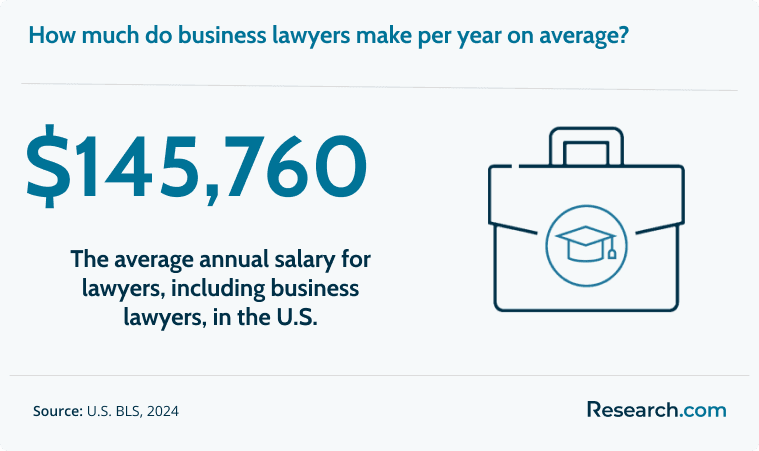
- The average salary for lawyers in the U.S. is around $145,760 per year, though it can vary based on experience, location, and firm size.
Table of Contents:
- Why do businesses need a business lawyer?
- What are the roles and responsibilities of a business lawyer for 2027?
- How much do business lawyers make per year on average?
- What is the difference between a business lawyer and a corporate lawyer?
- How many years does it take to become a business lawyer?
- What legal structures can a business lawyer help set up?
- What types of contracts do business lawyers draft and review?
- How do you choose the right business lawyer for your company?
- How does advanced education influence a business lawyer’s career?
- What are the emerging trends in business law practice?
- Can an MBA bolster a business lawyer’s strategic expertise?
- Can an additional business qualification enhance a business lawyer’s career?
- How can project management skills benefit business lawyers?
- What are the ethical challenges faced by business lawyers?
- What are the highest-paid law specializations in the U.S.?
- What types of business disputes require a lawyer?
- What is the job outlook for business lawyers?
Why do businesses need a business lawyer?
Businesses need a business lawyer to navigate complex legal matters, ensure compliance with regulations, and protect their interests. From the moment a company is formed, legal considerations play a crucial role in structuring the business, drafting contracts, securing intellectual property, and complying with tax and labor laws. Without proper legal guidance, businesses risk costly mistakes, lawsuits, and regulatory penalties that can threaten their operations and financial stability. A business lawyer helps mitigate these risks by providing expert advice on corporate governance, liability protection, and strategic decision-making.
Additionally, a business lawyer is essential for handling disputes, mergers, acquisitions, and other major transactions. Whether negotiating contracts, resolving employment issues, or representing the company in legal proceedings, their expertise ensures that businesses operate smoothly while minimizing legal exposure. As laws evolve and industries become more regulated, having a knowledgeable business lawyer provides companies with a proactive approach to legal challenges, allowing them to focus on growth and long-term success.
What are the roles and responsibilities of a business lawyer for 2027?
The responsibilities of a business lawyer cover various aspects of business operations, from contract management to regulatory compliance and dispute resolution. Strong communication skills, often developed through a journalism degree, can be valuable for business lawyers when drafting legal documents, presenting arguments, and negotiating settlements. Here are some of the main roles and responsibilities of a business lawyer:
- Business Formation & Structure – A business lawyer helps entrepreneurs choose the right legal structure, such as an LLC, corporation, or partnership, and assists with business registration, licensing, and governance to ensure compliance with state and federal laws.
- Contract Drafting & Negotiation – Business lawyers draft, review, and negotiate contracts with employees, vendors, clients, and business partners to ensure clarity, fairness, and legal enforceability while protecting the company’s interests.
- Regulatory Compliance – They help businesses comply with industry-specific regulations, tax laws, labor laws, and other government requirements to prevent fines, lawsuits, or operational restrictions.
- Employment Law & HR Compliance – Business lawyers assist companies with employment-related legal matters, such as drafting employee agreements, creating workplace policies, handling wrongful termination claims, and ensuring compliance with labor laws.
- Intellectual Property Protection – They help businesses protect their intellectual property by securing trademarks, copyrights, and patents, ensuring that the company’s brand and proprietary assets remain legally protected.
- Mergers, Acquisitions & Business Transactions – Business lawyers oversee corporate transactions, including mergers, acquisitions, and partnerships, by conducting due diligence, drafting agreements, and ensuring compliance with corporate and securities laws.
- Litigation & Dispute Resolution – If a company faces a lawsuit or legal dispute, business lawyers represent their clients in negotiations, mediation, arbitrations, or court proceedings to resolve conflicts effectively.
- Risk Management & Liability Protection – They identify potential legal risks, advise on liability issues, and develop strategies to minimize exposure to lawsuits, regulatory fines, or financial losses.
- Debt Collection & Financial Matters – Business lawyers assist with financial legal matters such as debt collection, bankruptcy proceedings, loan agreements, and securing financing to support business growth. Pursuing an online master's in taxation can provide valuable expertise in tax law and financial regulations, enhancing a business lawyer's ability to navigate complex financial legal issues.
- Corporate Governance & Ethics – They guide businesses in implementing corporate policies, managing board responsibilities, and maintaining ethical standards to ensure transparency and legal compliance in decision-making.
How much do business lawyers make per year on average?
The average annual salary for business lawyers in the United States varies based on factors such as experience, location, and the size of the employing firm. According to the U.S. Bureau of Labor Statistics, as of May 2023, the median annual wage for all lawyers was $145,760. However, business lawyers often earn higher salaries due to the specialized nature of their work, making law one of the best degrees to make money for those interested in corporate and commercial legal fields.
Experience plays a major role, with entry-level business lawyers typically earning lower salaries, while those with years of expertise or specialized knowledge in areas like mergers and acquisitions or securities law can command significantly higher pay. Additionally, industry specialization matters—lawyers who focus on high-stakes corporate transactions, intellectual property, or regulatory compliance often earn more than general business attorneys.
What is the difference between a business lawyer and a corporate lawyer?
The terms business lawyer and corporate lawyer are often used interchangeably, but they have distinct areas of focus. Here are ways that they vary:
- Scope of Work – A business lawyer handles a wide range of legal issues for businesses, including contracts, employment law, intellectual property, and regulatory compliance, while a corporate lawyer focuses specifically on corporate structures, governance, mergers, and acquisitions.
- Client Base – Business lawyers work with companies of all sizes, from startups to large enterprises, assisting with general legal matters, whereas corporate lawyers primarily serve large corporations, advising on high-level legal and financial strategies.
- Legal Focus – Business lawyers deal with everyday operational legal needs, such as drafting contracts and resolving disputes, while corporate lawyers specialize in complex transactions, such as company mergers, acquisitions, and compliance with securities laws.
- Work Environment – Business lawyers may work in private practice, as in-house counsel, or in law firms, handling a variety of legal issues for different industries, while corporate lawyers are often employed by large corporations or major law firms to focus on corporate legal affairs.
- Specialization – While all corporate lawyers are business lawyers, not all business lawyers are corporate lawyers, as corporate law is a specialized branch that deals with the legalities of corporate entities rather than general business operations. Interestingly, history majors often develop strong analytical and research skills that can be beneficial for understanding the legal frameworks governing corporate and business law.
How many years does it take to become a business lawyer?
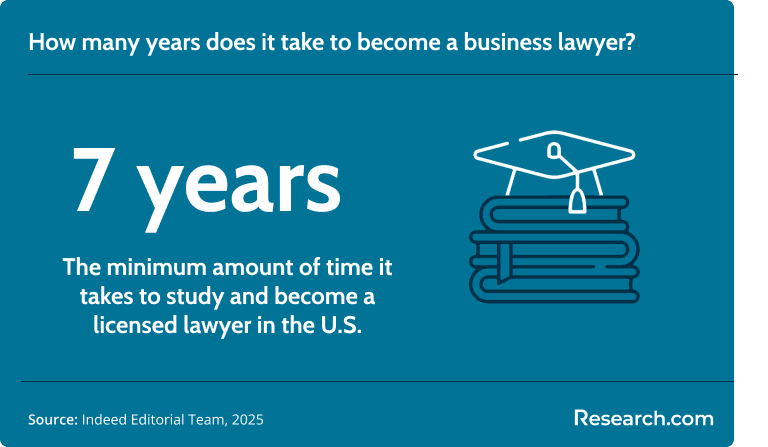
Becoming a business lawyer typically takes around seven years of higher education, followed by additional time to gain experience and establish a career. The process begins with earning a bachelor’s degree, which usually takes four years. While there is no required major, students often study fields like business, political science, or economics to build a strong foundation for law school. After completing an undergraduate degree, aspiring business lawyers must attend law school, which takes three years to earn a Juris Doctor (J.D.) degree. During law school, students can specialize in business law through relevant coursework, internships, or extracurricular activities.
After law school, graduates must pass the bar exam in their chosen state, which can take several months of preparation. Once licensed, new lawyers often start as junior associates at law firms, or in-house counsel for corporations, or government agencies. Gaining specialized experience in business law may take several more years, with many lawyers advancing to senior positions or partnerships within five to ten years.
What legal structures can a business lawyer help set up?
A business lawyer helps entrepreneurs choose and establish the most suitable legal structure for their company based on liability protection, tax implications, and operational needs. Each legal structure has its own advantages and legal requirements, and a business lawyer ensures proper compliance with state and federal laws during the formation process. Here are some examples:
- Sole Proprietorship – A business lawyer can guide sole proprietors on licensing requirements, tax obligations, and personal liability risks, as this structure does not provide legal separation between the owner and the business.
- Partnership – Business lawyers assist in forming general partnerships (GP) and limited partnerships (LP) by drafting partnership agreements that define roles, responsibilities, profit-sharing, and dispute-resolution mechanisms.
- Limited Liability Company (LLC) – A lawyer helps draft the operating agreement, file the necessary documents with the state, and ensure compliance with tax and liability regulations to provide personal asset protection for owners.
- Corporation (C Corp & S Corp) – For corporations, a business lawyer handles articles of incorporation, shareholder agreements, and governance policies while ensuring compliance with corporate regulations and tax laws.
- Nonprofit Organization (501(c)(3)) – A lawyer assists in filing for tax-exempt status, drafting bylaws, and ensuring compliance with nonprofit regulations to secure donations and grants.
What types of contracts do business lawyers draft and review?
Business lawyers draft and review a wide range of contracts to ensure legal protection, clarity, and enforceability in business transactions. These contracts help define the rights and obligations of all parties involved while minimizing the risk of disputes or legal complications. Here are some examples:
- Business Formation Agreements – These include partnership agreements, operating agreements (for LLCs), and shareholder agreements, outlining ownership structure, management responsibilities, and profit distribution.
- Employment & Independent Contractor Agreements – These contracts define employment terms, compensation, confidentiality clauses, and termination conditions to ensure compliance with labor laws.
- Vendor & Supplier Contracts – Business lawyers draft agreements that specify payment terms, delivery schedules, quality standards, and dispute resolution methods to protect a company’s interests when dealing with suppliers.
- Client & Service Agreements – These contracts outline the scope of work, pricing, timelines, and liability clauses, ensuring clarity in business relationships and preventing misunderstandings.
- NDAs & Confidentiality Agreements – Business lawyers create Non-Disclosure Agreements (NDAs) to protect trade secrets, proprietary information, and sensitive business data from unauthorized disclosure.
- Intellectual Property Agreements – These include licensing agreements, trademark assignments, and copyright protections, ensuring that businesses retain control over their intellectual assets.
- Mergers, Acquisitions & Joint Venture Agreements – Business lawyers oversee contracts related to company sales, mergers, partnerships, and investment deals, ensuring compliance with corporate and securities laws.
How do you choose the right business lawyer for your company?
Evaluate the lawyer’s specialized expertise and proven track record in handling comparable business issues. Consider factors such as industry-specific experience, client testimonials, fee transparency, and the ability to communicate complex legal concepts clearly. Scrutinize consultation reports and compare strategic approaches to ensure alignment with your company’s long-term objectives, while also weighing service quality against cost. Assess how the lawyer’s methodology adds value to your legal framework, much like evaluating the overall cost of online business degree helps determine educational investment value.
How does advanced education influence a business lawyer’s career?
Pursuing further education can significantly enhance a business lawyer’s expertise by deepening their understanding of complex financial and regulatory environments. Advanced academic programs enable practitioners to integrate legal strategies with business analytics, fostering stronger decision-making when advising on corporate transactions and risk management. Specialized coursework and continuous education opportunities have proven beneficial in addressing emerging trends and market dynamics. For example, targeted financial studies, such as the cheapest online master's in finance, can equip lawyers with critical skills to interpret economic data and support sophisticated negotiation strategies.
What are the emerging trends in business law practice?
Business law practice is rapidly evolving under the influence of technological advancements, global market dynamics, and shifting regulatory landscapes. Today’s business lawyers are increasingly integrating legal tech solutions for document automation, compliance tracking, and risk assessment, thereby streamlining traditional processes. There is also a heightened emphasis on cybersecurity, data privacy, and intellectual property issues as digital transactions become more prevalent. In response to these transformations, many professionals are turning to continuous education and specialized programs, such as the best online DBA programs, to stay ahead in the competitive legal market.
Can an MBA bolster a business lawyer’s strategic expertise?
Integrating advanced business education, such as an MBA, with legal expertise can sharpen a business lawyer’s strategic and financial acumen. Pursuing an MBA enables these professionals to better understand complex market dynamics, optimize client negotiations, and add value in cross-disciplinary corporate transactions. Complementary business training provides insight into operational management, financial modeling, and risk assessment, which may facilitate a smoother transition to leadership roles. For professionals considering an expedited and focused curriculum, exploring the best one year online MBA programs could be highly beneficial.
Can an additional business qualification enhance a business lawyer’s career?
Integrating advanced business education with legal expertise can expand a lawyer’s strategic toolkit and refine client advisory capabilities. Supplemental qualifications like an MBA provide deeper insight into financial modeling, operational management, and market dynamics—skills that complement legal acumen in high-stakes commercial environments. These enhanced competencies not only boost a lawyer’s credibility but also facilitate cross-disciplinary collaborations and leadership opportunities. For further educational resources, consider exploring affordable AACSB online MBA programs.
How can project management skills benefit business lawyers?
Integrating project management skills into legal practice can streamline complex case workflows, improve deadline management, and enhance coordination among multiple stakeholders. By adopting methodologies such as agile or lean practices, business lawyers can optimize document tracking, interdepartmental communication, and overall project efficiency. This strategic approach not only minimizes operational risks but also contributes to clearer case planning and execution. For professionals seeking to strengthen these essential skills, consider exploring the quickest online degree project management.
What are the ethical challenges faced by business lawyers?
Business lawyers must navigate a complex landscape of ethical obligations, including managing conflicts of interest in multi-party negotiations, ensuring strict client confidentiality, and maintaining transparency in billing and case management. They are expected to uphold professional codes of conduct while balancing aggressive representation with fiduciary responsibilities. Additionally, staying current with emerging ethical standards and continuous education is important. For instance, supplementing legal expertise with insights from a reputable online MBA can enhance strategic decision-making and further reinforce ethical practices.
What are the highest-paid law specializations in the U.S.?
Some of the highest-paid legal careers involve intellectual property, corporate transactions, and high-stakes litigation. Below are some of the most lucrative law specializations in the U.S., along with their average annual salaries:
- Patent Attorney – Patent attorneys specialize in helping clients secure patents and protect their inventions, typically working with technology, pharmaceutical, and engineering companies. They are among the highest-paid legal professionals, with an average annual salary of $180,000.
- Intellectual Property (IP) Attorney – IP attorneys focus on protecting trademarks, copyrights, and trade secrets, often representing businesses in creative and tech industries. Their salary is around $162,000 per year, depending on experience and specialization.
- Trial Lawyer – Trial lawyers handle litigation and represent clients in court, often in high-stakes cases involving personal injury, corporate disputes, or criminal defense. Their earnings vary widely, but top trial lawyers can make an average of $134,000 annually, with some earning even more through contingency fees.
- Tax Attorney – Tax attorneys advise individuals and businesses on complex tax laws, helping them navigate IRS regulations, audits, and tax disputes. Their average salary is around $122,000 per year, with higher earnings for those specializing in corporate tax law. Earning an accounting degree online can provide a strong foundation in financial principles, making it easier to understand tax law complexities.
- Corporate Lawyer – Corporate lawyers handle mergers and acquisitions, compliance, and business transactions, often working for large firms or multinational corporations. They earn an average annual salary of $115,000, with those at top firms making significantly more.
Choosing the right law specialization can have a major impact on career earnings, with some fields offering six-figure salaries even at mid-career levels. The chart below provides a clear comparison of the average salaries for the highest-paid legal specializations, helping you understand which fields offer the best financial rewards.
What types of business disputes require a lawyer?
Business disputes can arise in various areas of operations, and having a business lawyer is essential to resolving conflicts efficiently while protecting legal and financial interests. A lawyer helps businesses navigate negotiations, mediation, arbitration, or litigation when necessary. Below are the types of business disputes that require a lawyer:
- Breach of Contract Disputes – When one party fails to fulfill its contractual obligations, a lawyer helps enforce the contract, seek damages, or negotiate a resolution.
- Partnership & Shareholder Disputes – Disagreements between business owners over profit distribution, decision-making, or breach of fiduciary duty often require legal intervention to protect the company’s stability. Pursuing an online PhD organizational leadership can help business leaders develop the skills needed to navigate these conflicts effectively while ensuring long-term business success.
- Employment Disputes – Issues such as wrongful termination, workplace discrimination, wage disputes, and breaches of non-compete agreements require legal guidance to ensure compliance with labor laws.
- Intellectual Property Disputes – Lawyers help businesses protect trademarks, copyrights, patents, and trade secrets when they face infringement claims or unauthorized use of proprietary assets.
- Business Fraud & Misrepresentation – Cases involving fraudulent contracts, false advertising, or deceptive business practices often require legal representation to seek compensation or defend against allegations.
- Mergers & Acquisitions Disputes – Disagreements during business sales, acquisitions, or joint ventures may arise over valuation, terms, or undisclosed liabilities, requiring legal expertise.
- Commercial Lease Disputes – Businesses facing conflicts with landlords or tenants over lease terms, property maintenance, or eviction issues need legal representation to negotiate or litigate.
- Regulatory & Compliance Violations – If a business is accused of violating industry regulations, tax laws, or environmental policies, a lawyer helps navigate investigations and defend against penalties.
- Consumer & Product Liability Claims – Businesses facing lawsuits over defective products, false advertising, or consumer protection violations require legal defense to mitigate liability.
- Debt Collection & Payment Disputes – If a company struggles to recover unpaid invoices or is accused of failing to meet financial obligations, a lawyer can assist with legal action or settlement negotiations.
What is the job outlook for business lawyers?
The job outlook for business lawyers remains strong, with steady growth expected in the legal industry over the next decade. According to employment projections, the total number of lawyers in the U.S. is expected to increase from 859,000 in 2023 to 903,300 by 2033, reflecting a 5% growth rate. This growth is on par with the average for all occupations, driven by the continued demand for legal expertise in corporate governance, regulatory compliance, and business transactions.
However, competition for top positions remains high, particularly in prestigious law firms and large corporations. While automation and legal technology may streamline some routine legal tasks, businesses will continue to require experienced attorneys for high-stakes matters such as litigation, corporate structuring, and regulatory compliance. Business lawyers with expertise in emerging fields like artificial intelligence law, cybersecurity regulations, and international trade law may see even greater demand. The chart below shows the projected employment numbers for all types of lawyers in the U.S. within the next 10 years:
Here’s what graduates have to say about their law degrees
Becoming a business lawyer has been an incredibly rewarding journey, allowing me to combine my passion for law with my interest in corporate strategy. Every day, I help businesses navigate complex legal challenges, from mergers to intellectual property protection, making a real impact on their success. The financial stability and career growth opportunities in this field have exceeded my expectations. — Jerome
Pursuing a law degree and specializing in business law opened doors I never imagined, from working with startups to negotiating multi-million-dollar contracts. The intellectual challenge keeps me engaged, and I love the sense of accomplishment that comes with protecting my client's interests. If you enjoy problem-solving and strategic thinking, this career is incredibly fulfilling. — Diane
As a business lawyer, I get to work at the intersection of law and entrepreneurship, helping companies grow while ensuring they stay compliant with regulations. The variety of cases and industries I work with keeps my job exciting, and the ability to build strong professional networks has been invaluable. Looking back, choosing this career was the best decision I ever made. — Michelle
Key Findings
- It typically takes seven years to become a business lawyer, including a four-year bachelor's degree and three years of law school, followed by passing the bar exam.
- Business lawyers can work in law firms, corporations, government agencies, or as independent consultants, handling contracts, compliance, and litigation.
- Lawyers in the U.S. earn an average salary of around $145,760 per year, with top professionals making even more.
- Companies rely on business lawyers for risk management, contract negotiation, intellectual property protection, and regulatory compliance.
- Employment for lawyers is projected to grow 5% from 2023 to 2033, driven by the increasing complexity of business regulations and corporate transactions.
Resources:
- Indeed Editorial Team. (2025). How To Become a Corporate Lawyer in 8 Steps. https://www.indeed.com
- Juris Education. (2025). Highest-Paid Lawyers: Most Profitable Law Careers. https://www.juriseducation.com
- U.S. Bureau of Labor Statistics. (2024). OOH: Lawyers. https://www.bls.gov
Other things you should know about being a business lawyer
In 2027, a business lawyer helps prevent legal disputes by drafting clear contracts, advising on regulatory compliance, and conducting risk assessments. They guide businesses on employment law and intellectual property rights, ensuring companies adhere to lawful practices and reduce potential conflicts.
To become a business lawyer in 2026, you need a law degree (J.D.), pass your state's bar exam, and may benefit from additional certifications in business law or related fields. Skills in negotiation, contract law, and business management are also advantageous.


