
2027 Best Accelerated CNA to RN Online Bridge Programs

Co-Founder and Chief Data Scientist
As an experienced Certified Nursing Assistant, you know you can do more, and with the potential to more than double your salary to an average of $98,430, the motivation is clear. Yet the path to becoming a registered nurse can feel complex and overwhelming.
To help you navigate this journey, our team of career planning experts, with over 10 years of experience, has created this guide. It goes beyond just listing top online CNA to RN bridge programs to provide a complete, step-by-step roadmap, giving you the clarity and confidence to take the next step.
What are the benefits of getting an accelerated CNA to RN online bridge program?
- Becoming a licensed RN opens the door to dozens of new career opportunities, along with the professional autonomy and respect that the role commands.
- A life-changing salary increase is the most immediate benefit, with the average RN salary of $98,430 more than doubling the average CNA salary of $41,270.
- The online format provides essential flexibility, making it possible to balance rigorous studies with an existing job and family commitments.
What can I expect from an accelerated CNA to RN online bridge program?
You can expect a program that is demanding and fast-paced, but also specifically designed to be flexible for working CNAs like you. The most important thing to understand is that these are hybrid programs. While your lectures, assignments, and discussions happen online, your clinical training does not.
All accredited online CNA to RN bridge programs require you to complete hundreds of hours of hands-on practice in a real healthcare setting, like a local hospital or clinic. This is a non-negotiable requirement for licensure.
This structure gives you the best of both worlds. You get the flexibility to study theory and complete coursework around your work schedule. But you also get the essential, real-world experience needed to become a competent and confident Registered Nurse. It's a model that demands excellent time management and self-discipline, but it's what makes earning a respected nursing degree possible while you continue to work.
Where can I work with an accelerated CNA to RN online bridge program?
As a Registered Nurse, your career options expand significantly. You can work in a wide variety of settings that go far beyond the traditional hospital floor.
Many RNs build successful careers in physicians' offices, home health care services, outpatient care centers, and skilled nursing facilities. Others find roles in schools, public health agencies, or corporate wellness programs. Your background as a CNA provides a strong foundation for any of these paths, but the RN license is the key that unlocks these doors.
This diversity is one of the biggest advantages of the profession. As healthcare continues to grow beyond the hospital, you have more choices than ever to find a work environment that fits your skills, interests, and lifestyle. The RN credential gives you the flexibility to build the career you want.
How much can I make with an accelerated CNA to RN online bridge program?
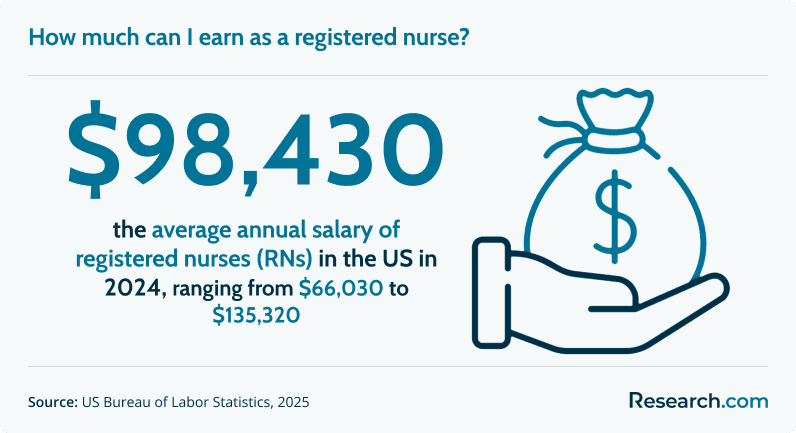
The average annual salary for a Registered Nurse is around $98,430. That's a powerful number, and it's a key reason this career move is so attractive.
It's important to know that this is a national average, and your actual earnings will depend on several key factors. The most significant is location, as salaries vary from state to state to reflect local demand and cost of living.
The industry you choose to work in and your level of experience will also play a major role. Think of the average salary as a strong baseline. From there, your specific choices will determine your earning potential.
- List of the Best Accelerated CNA to RN Online Bridge Programs for 2027 List of Programs
- How long does it take to complete an accelerated CNA to RN online bridge program? Completion Time
- How does an accelerated CNA to RN online bridge program compare to an on-campus program? How does an accelerated CNA to RN online bridge program compare to an on-campus program?
- What is the average cost of an accelerated CNA to RN online bridge program? Program Cost
- What are the financial aid options for students enrolling in an accelerated CNA to RN online bridge program? Financial Aid
- What are the prerequisites for enrolling in an accelerated CNA to RN online bridge program? What are the prerequisites for enrolling in an accelerated CNA to RN online bridge program?
- What courses are typically in an accelerated CNA to RN online bridge program? What courses are typically in an accelerated CNA to RN online bridge program?
- What types of specializations are available in an accelerated CNA to RN online bridge program? What types of specializations are available in an accelerated CNA to RN online bridge program?
- How to Choose the Best Accelerated CNA to RN Online Bridge Program How to Choose the Best Accelerated CNA to RN Online Bridge Program
- What career paths are available for graduates of an accelerated CNA to RN online bridge program? Career Paths
- What is the job market for graduates with an accelerated CNA to RN online bridge program? Job Market
- What are the common challenges in an accelerated CNA to RN online bridge program? What are the common challenges in an accelerated CNA to RN online bridge program?
- How can I verify the quality and accreditation of an accelerated CNA to RN online bridge program? How can I verify the quality and accreditation of an accelerated CNA to RN online bridge program?
Best Accelerated CNA to RN Online Bridge Programs for 2026
If you are already working as a certified nursing assistant, the next major career question is usually whether the time, cost, and clinical requirements of becoming a registered nurse are worth it. Accelerated CNA to RN online bridge programs are designed for CNAs who want to move into higher-responsibility nursing roles without starting from zero. They may combine online coursework, in-person labs, supervised clinical rotations, prerequisite science courses, and NCLEX preparation.
This guide explains how CNA-to-RN pathways work, how long they usually take, what they cost, what to check before enrolling, and how to compare online, hybrid, PN, ASN, and BSN options. It also highlights programs and related bridge routes that may help CNAs advance, including pathways similar in purpose to accelerated certified nursing assistant programs online but aimed at the next stage of nursing education.
Quick Answer: What Is the Fastest Path From CNA to RN?
The fastest realistic route from CNA to RN is usually an accredited associate degree in nursing or bridge pathway that accepts your CNA background, allows online didactic coursework, and arranges required in-person clinical training. Most accelerated online CNA to RN bridge programs take 1 to 2 years after prerequisites are complete, but the full timeline is often closer to 2 to 3 years when science and general education requirements are included.
Before choosing a program, confirm three things: whether the program actually leads to RN licensure eligibility, whether it is approved by the state board of nursing where you plan to practice, and whether it has the accreditation and clinical placements needed for NCLEX preparation.
How We Evaluated Accelerated CNA Bridge Programs
Because nursing education is a major investment, students need more than a list of schools. They need transparent information about cost, completion requirements, accreditation, licensure preparation, and student outcomes. Research.com’s ranking approach draws from public and institutional data sources, including the IPEDS database, Peterson's database, the College Scorecard database, and the National Center for Education Statistics. You can learn more about the broader evaluation process on Research.com’s methodology page.
Important note: not every CNA advancement option below leads directly to RN licensure. Some programs move CNAs into PN/LPN or clinical medical assistant roles first. That can still be useful for some students, but it is not the same as completing an RN-qualifying ASN, ADN, or BSN program.
Featured Accelerated CNA Bridge Programs and Related Advancement Options
| Program | Credential or pathway | Length | Credits | Cost | Accreditation or approval listed |
| Washington State University Tri-Cities | CNA to BSN Nursing Bridge Program | 2 years | 32 | $610 (in-state); $1,465 (out-of-state) | National League for Nursing Commission for Nursing Education Accreditation (NLN CNEA) |
| North Palm College of Nursing | CNA to RN Advancement Program, Associate of Science in Nursing | 9-12 Months | 74 | $569 per credit | Florida Board of Nursing (FBN) |
| Herzing University | CNA to PN Program | 12 months | 48 | $525 per credit | Commission on Collegiate Nursing Education (CCNE) |
| University of Hawaiʻi Maui College | CNA+ to PN Bridge Program | 12 months | 46 | $7,958 total tuition | National League for Nursing Commission for Nursing Education Accreditation (NLN CNEA) |
| Lincoln Land Community College | CNA to Clinical Medical Assistant Bridge Program | 3 months | 5 | $2,149 total tuition | National Healthcareer Association (NHA) |
| Community College of Rhode Island | CNA-to-LPN Bridge Option | 12 months | 38 | $245 (in-state); $728(out-of-state) per credit | Accreditation Commission for Education in Nursing (ACEN) |
1. Washington State University Tri-Cities - CNA to BSN Nursing Bridge Program
Washington State University Tri-Cities offers a pathway that connects paid hospital employment with prerequisite preparation for CNAs who want to enter nursing school. Students complete two years of structured hospital work and required coursework, receive mentorship, and earn direct admission to the WSU College of Nursing's BSN program after successful completion.
- Program Length: 2 years
- Required Credits: 32
- Cost per Credit: $610 (in-state); $1,465 (out-of-state)
- Accreditation: National League for Nursing Commission for Nursing Education Accreditation (NLN CNEA)
2. North Palm College of Nursing - CNA to RN Advancement Program (Associate of Science in Nursing)
North Palm College of Nursing provides an accelerated Associate of Science in Nursing route for CNAs that can be completed in as few as nine months. The program delivers theory courses online and requires 585 hours of face-to-face clinical practice so students can build RN-level competencies and prepare for the NCLEX exam.
- Program Length: 9-12 Months
- Required Credits to Graduate: 74
- Cost per Credit: $569
- Accreditation: Florida Board of Nursing (FBN)
3. Herzing University - CNA to PN Program
Herzing University gives CNAs a route into practical nursing rather than directly into RN practice. The hybrid format blends online general education classes with campus-based nursing courses and is designed to prepare students for LPN licensure in as few as 12 months.
- Program Length: 12 months
- Required Credits to Graduate: 48
- Cost per Credit: $525.
- Accreditation: Commission on Collegiate Nursing Education (CCNE)
4. University of Hawaiʻi Maui College - CNA+ to PN Bridge Program
The University of Hawaiʻi Maui College offers a hybrid bridge option for employed CNAs who want to become practical nurses. The program is supported by local healthcare employer partnerships, includes tuition assistance for prerequisites, and prepares graduates for supervised PN practice in clinical environments.
- Program Length: 12 months
- Required Credits to Graduate: 46
- Tuition (total): $7,958
- Accreditation: National League for Nursing Commission for Nursing Education Accreditation (NLN CNEA)
5. Lincoln Land Community College - CNA to Clinical Medical Assistant Bridge Program
Lincoln Land Community College offers a short advancement program for experienced CNAs who want to move into clinical medical assisting. The curriculum covers patient-facing clinical responsibilities such as triage along with administrative functions such as medical billing and office procedures.
- Program Length: 3 months
- Required Credits to Graduate: 5
- Tuition (total): $2,149
- Accreditation: National Healthcareer Association (NHA)
6. Community College of Rhode Island - CNA-to-LPN Bridge Option
The Community College of Rhode Island provides a CNA-to-LPN bridge option built around prerequisite readiness and focused nursing coursework. The 12-month pathway uses the student’s CNA foundation as preparation for LPN licensure and practical nursing responsibilities.
- Program Length: 12 months
- Required Credits to Graduate: 38
- Cost per Credit: $245 (in-state); $728(out-of-state)
- Accreditation: Accreditation Commission for Education in Nursing (ACEN)
How Long Does an Accelerated CNA to RN Online Bridge Program Take?
Most accelerated online CNA to RN bridge programs take between 1 and 2 years once all required prerequisites have been completed. The key phrase is “once prerequisites have been completed.” Many students underestimate this step and compare programs only by the nursing-course timeline.
Prerequisite coursework is often the first major phase. Students commonly need science and general education courses before they can begin core nursing classes, and completing those requirements may add 6 to 12 months. For many CNAs, a practical full-path estimate from prerequisites through graduation is 2 to 3 years.
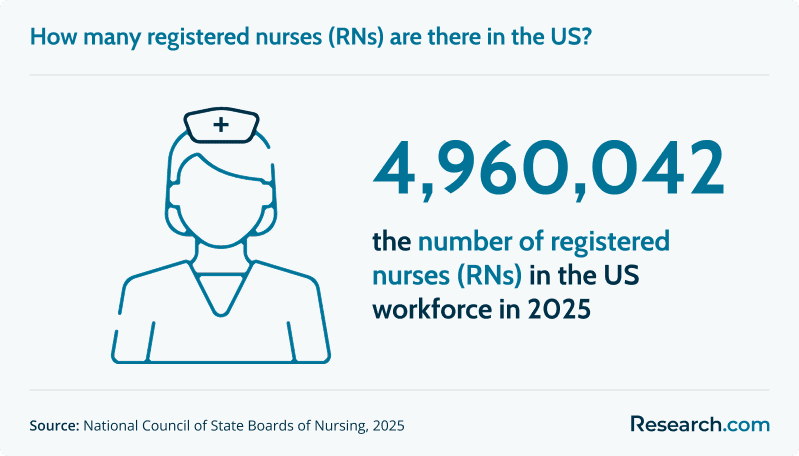
The payoff is entry into a large and essential profession. More than 262,000 students earn RN degrees each year, and nearly 5 million Registered Nurses currently work across the United States.
The First Step: Confirm Your CNA Starting Point
If you are not yet certified as a nursing assistant, choose your CNA program carefully. Starting with one of the cheapest online certified nursing assistant programs may help you enter healthcare with less upfront debt before pursuing a longer RN pathway.
| Stage | Typical time involved | What to verify |
| CNA training and certification | Varies by state and program | State CNA eligibility, clinical hour requirements, exam process |
| Prerequisite courses | 6 to 12 months | Anatomy, physiology, microbiology, English, math, and transferability |
| Nursing bridge coursework | 1 to 2 years | Online course format, lab requirements, clinical placement support |
| Licensure preparation | After graduation | NCLEX eligibility and state board of nursing requirements |
Online vs. On-Campus CNA to RN Bridge Programs: Which Format Is Better?
An accredited online or hybrid CNA to RN bridge program can lead to the same nursing credential as a campus program, but the learning experience is different. Online programs usually deliver lectures, assignments, discussions, and exams through a learning platform, while labs and clinical rotations still happen in person. Nursing cannot be completed fully online because students must demonstrate hands-on patient care skills.
The better choice depends on how you learn, how much schedule control you need, and how reliably you can attend clinical rotations. Employers generally focus on licensure, accreditation, clinical readiness, and NCLEX success rather than whether theory courses were completed online or in a classroom.
| Factor | Online or hybrid bridge program | On-campus bridge program |
| Best for | Working CNAs who need flexible coursework | Students who prefer fixed schedules and face-to-face instruction |
| Course delivery | Online lectures and assignments with required in-person clinicals | Classroom instruction with scheduled labs and clinicals |
| Main advantage | More control over study time | More built-in structure and direct campus access |
| Main challenge | Requires strong self-discipline and time management | Less flexible for students with work or family obligations |
| Clinical requirements | Still required in person | Required in person |
How Bridge Pathways Differ Across Healthcare Roles
Bridge programs are common in healthcare because they recognize prior patient care experience while adding the academic preparation needed for a new scope of practice. CNAs are not the only group that uses this model. Similar options exist for other healthcare workers, including cheapest EMT to RN online bridge programs for emergency medical professionals moving into nursing.
What Is the Average Cost of an Accelerated CNA to RN Online Bridge Program?
Average tuition for these programs is around $17,700 for in-state students and about $24,300 for out-of-state students. Treat those numbers as a starting point, not the full cost of attendance.
Students should also budget for program fees, textbooks, exam preparation, background checks, immunizations, drug screening, uniforms, clinical supplies, software, commuting to clinical sites, and possible lost work hours. A program with lower tuition may not be the lowest-cost option if it requires expensive travel, has limited transfer credit acceptance, or delays your graduation.
How to Estimate Return on Investment
The financial case for becoming an RN depends on your total cost, how much debt you take on, your local labor market, and how quickly you pass the NCLEX. One useful comparison point is the average RN salary of $98,430 per year. For many CNAs, the difference between CNA wages and RN wages can make the education investment worthwhile, but outcomes are not guaranteed and vary by region, employer, experience, and specialty.
Students who plan to continue beyond the RN level should also think about future education costs. That same long-term planning is common among nurses comparing accelerated RN to MSN online programs after initial licensure.
| Cost item | Why it matters |
| Tuition | The headline cost, usually charged by credit or term |
| Mandatory fees | Can include technology, lab, clinical, graduation, and student service fees |
| Clinical expenses | May include travel, parking, uniforms, health records, and background checks |
| Books and supplies | Nursing texts, software, stethoscope, scrubs, and exam preparation can add up |
| Time away from work | Accelerated programs may reduce income if you must cut work hours |
Financial Aid Options for Accelerated CNA to RN Online Bridge Students
Financial aid may be available for eligible students, especially when the program is offered by an accredited institution and leads to a qualifying credential. Working CNAs should look for funding from several sources rather than relying on one option.
- Federal Student Aid. Start with the FAFSA (Free Application for Federal Student Aid). It determines eligibility for federal grants, work-study, and federal student loans.
- Employer Tuition Reimbursement. Hospitals, long-term care facilities, and health systems may help CNAs pay for RN education in exchange for continued employment or a work commitment.
- Nursing-Specific Scholarships. Some nursing organizations and government programs support students who agree to serve in high-need communities. One example is the HRSA Nurse Corps Scholarship Program, which can cover tuition, fees, and related costs in exchange for service.
- Community College Transfer Savings. If allowed by the nursing program, completing prerequisites at a community college can reduce the total cost before entering the bridge curriculum.
Plan for the Next Credential Before You Enroll
Many RNs later pursue a Bachelor of Science in Nursing because some employers prefer or require the BSN for leadership, specialty, public health, or advancement roles. Comparing an RN to BSN online cost comparison early can help you avoid choosing an RN program that limits your transfer or progression options later.
Common Admission Requirements for CNA to RN Bridge Programs
Admission requirements vary by state and school, but accelerated nursing programs usually expect applicants to show both academic readiness and healthcare experience. Because seats can be competitive, meeting the minimum requirements may not guarantee admission.
- Current CNA credential. Most programs require an active, unencumbered Certified Nursing Assistant license or certification in good standing.
- Direct patient care experience. Many schools prefer or require at least one to two years of hands-on CNA work.
- Minimum GPA. Applicants commonly need a cumulative GPA of 2.5 or 3.0 from prior college coursework.
- Prerequisite coursework. Common requirements include Anatomy & Physiology, Microbiology, and English Composition. Taking these courses at a local community college can be more affordable if the bridge program accepts the credits.
- Health and background requirements. Nursing students often need immunization records, CPR certification, background checks, drug screening, and proof of physical ability to participate in clinical training.
CNA or LPN First?
If you are still deciding where to begin, compare the duties, training time, and scope of practice of each role. A guide to CNA or LPN which is better can help you decide whether CNA experience is enough for your goals or whether an LPN pathway makes more sense before RN education.
Typical Courses in an Accelerated CNA to RN Online Bridge Program
An online CNA to RN bridge program builds on your bedside care experience and adds the science, clinical judgment, medication knowledge, and care planning skills expected of a Registered Nurse. CNAs often enter with strong patient interaction skills, but RN education requires a deeper understanding of assessment, prioritization, delegation, documentation, and clinical decision-making.
| Course area | What you learn | Why it matters in RN practice |
| Anatomy, physiology, and pathophysiology | Body systems, normal function, and disease processes | Helps you recognize changes in patient condition |
| Pharmacology | Medication classes, dosing principles, side effects, and safety | Prepares you for safe medication administration |
| Health assessment | Patient interviews, physical assessment, and documentation | Supports accurate nursing judgment and care planning |
| Medical-surgical nursing | Care of adults with acute and chronic conditions | Builds a foundation for hospital and clinic roles |
| Mental health, maternal-child, and community nursing | Care across populations and settings | Expands readiness beyond long-term care or basic bedside support |
| Nursing leadership | Delegation, teamwork, ethics, and professional standards | Prepares you to coordinate care and supervise within RN scope |
Where RN Skills Are Used
RN coursework prepares graduates for employment in hospitals, physicians' offices, home health, outpatient centers, and other care settings. Like career-focused programs such as a top exercise science degree online, the value of the program depends on whether the curriculum connects classroom learning to real clinical work.
Do Accelerated CNA to RN Bridge Programs Offer Specializations?
Most accelerated CNA to RN bridge programs do not include formal specializations. Their main purpose is to prepare students for entry-level RN practice and NCLEX licensure. That generalist foundation can be an advantage because new RNs often need exposure to several patient populations before choosing a specialty.
Specialization usually happens after licensure through employer training, continuing education, graduate study, and professional certification. Common areas include pediatrics, emergency nursing, oncology, critical care, perioperative nursing, informatics, public health, and case management.
How Specialization Can Affect Earnings
Specialty experience and nontraditional RN roles may influence long-term earning potential. Industries such as federal government service ($124,460), medical equipment manufacturing ($116,040), and computer systems design ($115,210) report some of the highest average salaries for RNs. Advanced education can also expand options, as seen in pathways such as accelerated MSN degree in public health nursing programs.
How to Choose the Best Accelerated CNA to RN Online Bridge Program
The best program is not automatically the shortest or cheapest. It is the program that leads to the license you want, fits your state’s requirements, supports clinical placement, prepares students for the NCLEX, and gives you a manageable total cost.
- Verify state board approval. A nursing program should meet the requirements of the state where you plan to become licensed.
- Check recognized accreditation. Look for appropriate institutional and nursing program accreditation, such as ACEN or CCNE where applicable.
- Review NCLEX pass rates. First-time pass rates can help you judge whether the program prepares students effectively.
- Ask how clinical placements work. Do not assume an online program will find a site near you. Ask who arranges placements, where students train, and what happens if no site is available.
- Compare total cost, not just tuition. Include fees, books, supplies, travel, prerequisite costs, and lost work time.
- Confirm transfer and progression options. If you plan to earn a BSN or MSN later, ask how credits transfer.
- Assess student support. Strong advising, tutoring, faculty access, simulation support, and NCLEX preparation can make a major difference in an accelerated format.
Questions to Ask Before You Apply
| Question | Why it matters |
| Will this program make me eligible for RN licensure in my state? | Licensure rules vary, especially for online and out-of-state programs. |
| Who arranges clinical rotations? | Clinical placement problems can delay graduation. |
| What is the first-time NCLEX pass rate? | It helps indicate how well students are prepared for licensure. |
| How many credits can I transfer? | Transfer credit can reduce both time and cost. |
| What happens if I fail or withdraw from a course? | Accelerated programs may have strict progression rules. |
| Are online students eligible for the same services as campus students? | Advising, tutoring, library access, and technical support affect completion. |
Career Paths After Completing a CNA to RN Bridge Program
After graduation, passing the NCLEX, and receiving RN licensure, you can pursue roles across direct patient care, public health, care coordination, informatics, and leadership. Your CNA background may also help you communicate with patients and support staff because you already understand the realities of bedside care.
- Medical-Surgical Nurse. Provides care to adult patients with a wide range of acute and chronic conditions, often in hospitals.
- Emergency Department Nurse. Cares for patients with urgent injuries, sudden illness, trauma, or rapidly changing conditions.
- Public Health Nurse. Focuses on prevention, health education, community outreach, and population-level care.
- Clinical Informatics Specialist. Uses nursing knowledge and health technology to improve documentation, electronic health records, and care systems.
Advancing Beyond the Initial RN Credential
The RN license can be a long-term career credential, but it can also be the foundation for further education. Many nurses later pursue a BSN for broader advancement options, management preparation, or graduate school eligibility. If you want to move quickly after licensure, review how an RN to BSN fast track program may fit into your plan.
Job Market Outlook for CNA to RN Bridge Graduates
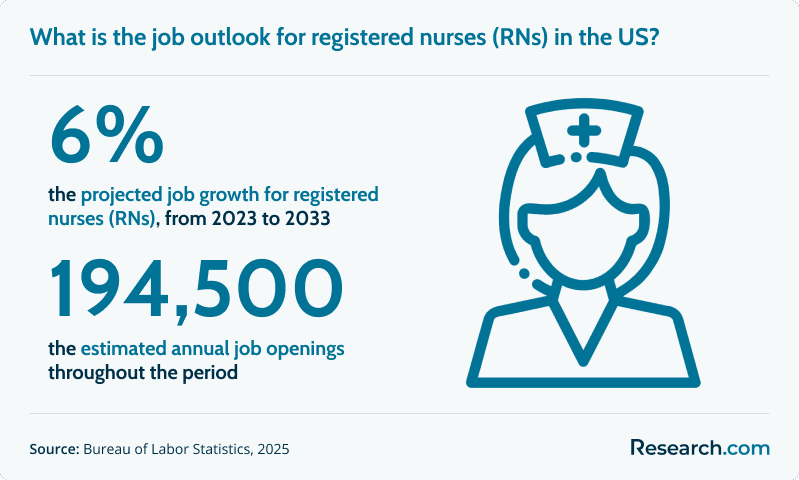
The RN job market remains strong. Job growth is projected to be 6% over the next decade, with about 194,500 job openings each year. For CNAs considering whether to invest in nursing school, that demand is one of the strongest arguments for completing an RN pathway.
Workforce demographics also matter. The median age of an RN is 46, and more than 25% of the profession plans to retire or leave the field within the next five years. That creates ongoing demand for new nurses who can step into hospitals, clinics, long-term care, home health, and community settings.
Common Challenges in Accelerated CNA to RN Online Bridge Programs
Accelerated bridge programs are demanding because they compress difficult science content, nursing theory, exams, labs, and clinical rotations into a shorter schedule. CNAs often continue working while enrolled, which can make time management the biggest barrier to success.
| Challenge | Why it happens | Better approach |
| Underestimating prerequisites | Students focus on the nursing program length and forget the science courses required first. | Create a prerequisite map before applying and confirm which credits transfer. |
| Working too many hours | Clinical rotations and accelerated exams can conflict with CNA shifts. | Talk with your employer early about schedule flexibility or tuition support. |
| Choosing based only on speed | The fastest program may not offer strong clinical support or NCLEX preparation. | Compare pass rates, clinical placement, accreditation, and student support. |
| Assuming online means fully remote | Nursing education requires in-person labs and supervised clinical practice. | Ask exactly where and when labs and clinicals occur. |
| Ignoring long-term education goals | Some credits may not transfer smoothly into BSN or MSN programs. | Ask about articulation agreements and compare future options such as an accelerated BSN degree. |
What Graduates Say About Accelerated CNA to RN Online Bridge Programs
- Martha: "I did not think nursing school was possible while I was working full time and taking care of my children. The online format made the difference because I could study at night. Being a CNA helped me during clinicals because I already knew how to talk to patients and handle the pace of a unit. I am now an RN on a cardiac floor, and it changed what my family’s future looks like."
- Giselle: "I spent 15 years as a CNA and knew I had more to offer, but I felt stuck. The bridge program helped me understand the science behind the care I had been providing for years. As an RN, I can participate more fully in care decisions, and my experience is finally recognized in a different way."
- Celine: "I considered going directly into a BSN program, but the cost and time commitment were too much for my situation. The bridge option gave credit for the experience I already had and helped me finish with much less debt. For me, it was the most practical path forward."
How to Verify the Quality and Accreditation of a CNA to RN Online Bridge Program
Quality verification should happen before you submit an application or pay a deposit. Start with the state board of nursing where you plan to practice, then confirm institutional accreditation, nursing program accreditation, NCLEX outcomes, and clinical partnerships. Recognized nursing accreditors include the Commission on Collegiate Nursing Education (CCNE) and the Accreditation Commission for Education in Nursing (ACEN).
You should also contact admissions and ask direct questions about clinical placement, faculty access, student completion rates, transfer policies, and career support. If possible, speak with current students or graduates. A program that looks convenient online may be a poor choice if it lacks clinical support or does not meet your state’s licensure rules. If you plan to continue after RN licensure, compare options such as the easiest accredited online RN to BSN programs before committing.
Common Mistakes to Avoid
- Assuming every CNA bridge program leads to RN licensure. Some lead to PN, LPN, or medical assisting roles instead.
- Choosing a program before checking state approval. Online nursing programs may not meet licensure requirements in every state.
- Comparing only tuition. Fees, supplies, clinical travel, and lost work hours can change the real cost.
- Ignoring NCLEX preparation. A nursing degree is valuable only if it helps you reach licensure.
- Not planning for clinical rotations. Clinical scheduling can affect work, childcare, transportation, and graduation timing.
- Waiting too long to explore financial aid. FAFSA, scholarships, and employer tuition reimbursement may have deadlines or work commitments.
Key Insights
- Accelerated CNA to RN online bridge programs can shorten the path to registered nursing, but most still require in-person labs and clinical rotations.
- A realistic timeline is often 2 to 3 years when prerequisite courses are included, even if the nursing sequence itself takes 1 to 2 years.
- Average tuition is around $17,700 for in-state students and about $24,300 for out-of-state students, but total cost should include fees, supplies, clinical travel, and reduced work hours.
- Not every CNA advancement program leads directly to RN licensure. Confirm whether the outcome is RN, PN/LPN, BSN admission, or another healthcare credential.
- State board approval, accreditation, NCLEX pass rates, and clinical placement support are more important than speed alone.
- The RN labor market is supported by projected job growth of 6% over the next decade and about 194,500 openings each year.
- CNAs bring valuable patient care experience to nursing school, but success in an accelerated program requires strong study habits, schedule planning, and support from employers or family.
References:
- American Association of Colleges of Nursing. (2025). Nursing shortage. Retrieved May 24, 2024, from AACN.
- National Council of State Boards of Nursing. (2025). 2024 study highlights. Retrieved May 24, 2024, from NCSBN.
- National Council of State Boards of Nursing. (2025). Active RN licenses. Retrieved May 24, 2024, from NCSBN.
- University of St. Augustine for Health Sciences. (2024). Nursing shortage: A 2024 data study reveals key insights. Retrieved May 24, 2024, from USA.ed.
- U.S. Bureau of Labor Statistics. (2025). Occupational employment and wage statistics (OEWS) profiles. Retrieved May 24, 2024, from BLS.
- U.S. Bureau of Labor Statistics. (2025). Occupational outlook handbook: Nursing assistants and orderlies. Retrieved May 24, 2024, from BLS.
- U.S. Bureau of Labor Statistics. (2025). Occupational outlook handbook: Registered nurses. Retrieved May 24, 2024, from BLS.
- U.S. Census Bureau. (2021, April 5). Who are our health care workers?. Retrieved May 24, 2024, from Census.gov.
Other Things You Should Know About accelerated CNA to RN online bridge Programs
Yes, in 2027, accelerated CNA to RN online bridge programs typically require students to complete 500–700 hours of clinical practice in approved healthcare facilities. These hours must be supervised by licensed medical professionals to ensure comprehensive hands-on experience.
To enroll in a 2027 accelerated CNA to RN online bridge program, you'll typically need a valid CNA certification, a high school diploma or GED, and some prerequisite courses such as anatomy or physiology. Additionally, some programs may require a minimum GPA and relevant work experience. Always check specific program requirements as they can vary.


