
What Is eLearning? Types, Advatages, and Drawbacks for 2027

Co-Founder and Chief Data Scientist
The COVID‑19 pandemic accelerated the digital transformation of education, forcing institutions worldwide to adopt remote learning models and integrate digital tools like learning management systems (LMS) and online platforms to maintain instructional continuity during widespread school closures.
What had been an optional supplement to traditional classroom instruction became an essential component of education, with e‑learning and digital platforms rapidly evolving from emergency responses into foundational elements of teaching and learning practice (Cahyani & Aminudin, 2025).
The pandemic‑driven shift toward digitalization not only expanded the use of LMS and video conferencing tools but also catalyzed broader changes in educational paradigms, prompting institutions to explore hybrid and adaptive learning approaches that extend beyond crisis management into long‑term educational strategy (Cahyani & Aminudin, 2025).
To help improve understanding of this emerging educational method, this article provides a picture of what is e learning. This article also discusses the history of elearning, its various types, and the approach’s commonly used delivery methods.
What Is eLearning 2027 Table of Contents
- What is eLearning for 2027?
- A Brief History of eLearning
- Types of eLearning
- eLearning Delivery Methods
- Future Trends in eLearning
- Are eLearning Credentials Accredited and Recognized?
- What are the best practices for designing effective eLearning courses?
- How do eLearning credentials compare to traditional degrees?
- How Should Prospective Students Choose an eLearning Program?
- Benefits of eLearning
- What emerging trends are shaping eLearning credentialing?
- How can eLearning quality be consistently maintained?
- Drawbacks of eLearning
- eLearning During the COVID-19 Pandemic
- How does eLearning impact student engagement and motivation?
- Is eLearning a Cost-Effective Alternative to Traditional Education?
- What are the job prospects for students who complete eLearning programs?
Mason and Rennie argued that eLearning had generated “wildly inaccurate predictions,” claiming that the technology had only experienced modest growth in both education and training. However, the landscape has changed substantially since then, as the global education technology market has expanded rapidly. According to HolonIQ’s 2025 Global Education Outlook, education technology expenditure continues to grow, driven by digital transformation and adoption worldwide, with eLearning as a major component of this expansion and investment rising across regions including Asia (HolonIQ, 2024).
eLearning methods have become a strategic tool in corporate settings, with nearly all organizations planning to implement digital learning for employee training and development as part of their business strategies (Continu, 2025). In 2025, corporate eLearning is recognized not just for its accessibility but for its effectiveness: digital training programs are improving knowledge retention, enhancing workforce productivity, and helping companies close skills gaps in a rapidly changing economy (Continu, 2025). To shed light on the reasons behind the popularity of this educational technology, this article provides an overview of the eLearning format, the different types of online learning, and the methods through which it is delivered in corporate contexts.
What is elearning for 2027?
In contemporary educational research, eLearning is defined as learning experiences delivered through digital technologies—including internet‑connected platforms, multimedia, and interactive tools—that enable learners to access instructional content and participate in learning activities without the constraints of traditional classroom settings (Devlin Peck, 2025). Electronic learning (or eLearning) is thus also referred to as online learning or electronic learning because of the digital means through which instruction is provided (Devlin Peck, 2025).
Definitions of eLearning remain diverse within the education and educational technology communities, reflecting varied emphases depending on researchers’ perspectives and the evolving role of digital tools in learning. Recent research highlights that eLearning can be conceptualized broadly as the use of information and communication technologies to support and deliver instruction, but definitions differ in terms of whether they emphasize pedagogical practices, the role of technology, or learning outcomes in specific contexts such as higher education (ScienceDirect, 2025). This divergence mirrors ongoing debates about whether eLearning should be understood primarily as a technological medium, a pedagogical approach, or a flexible learning environment that expands beyond traditional classroom constraints (ScienceDirect, 2025).
Because researchers emphasize different elements of technology, pedagogy, and learner experience, there is no single agreed‑upon definition of eLearning; at its broadest, it can be understood as any form of learning that is enabled or enhanced through electronic technologies (ScienceDirect, 2025). Common materials used in eLearning include online resources such as educational websites, video lectures, interactive modules, and digital texts that support independent study and flexible access to content (ScienceDirect, 2025).
eLearning vs Distance Learning
While the terms “elearning" and “distance learning" are often used interchangeably, industry experts have identified some differences between these concepts. One of the key differences between elearning and distance learning is location. In elearning, learners and instructors can be together in one place while using digital tools to enhance the learning experience.
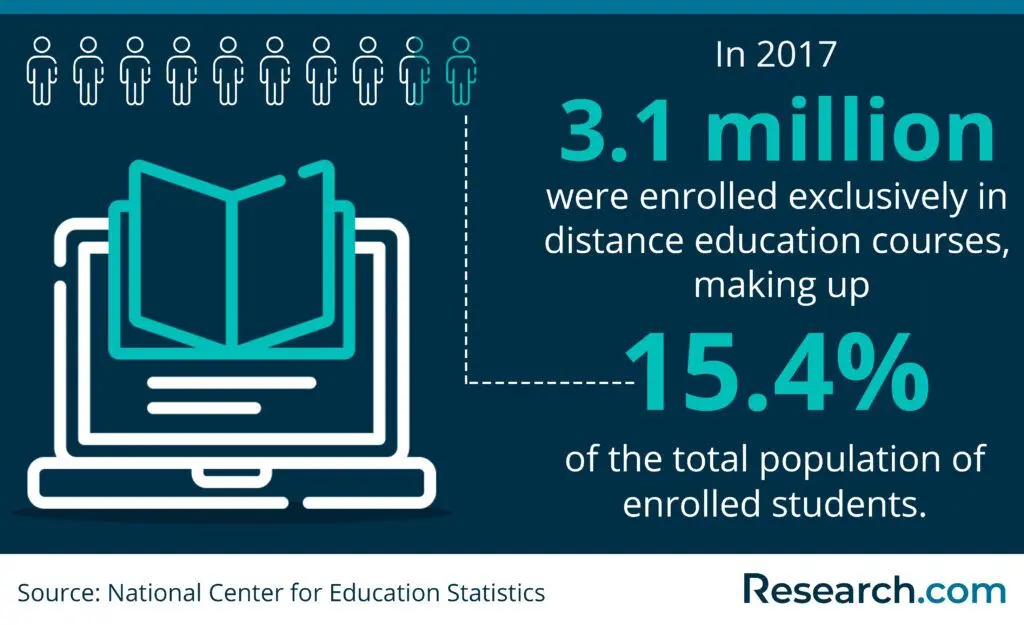
Meanwhile, distance learning is more about using technology to bridge the distance between students and instructors. Through distance learning, for instance, a student in the United States can attend a university in Europe without having to relocate.
A Brief History of eLearning
The term “elearning" was coined by Elliot Masie at his TechLearn Conference in 1999; this was the first instance that the term was used in a professional context. However, the use of computers and other digital tools predates this by around three decades. In the mid-1960s, psychology professors at Stanford tried using computers and teleprinters to teach arithmetic and spelling to elementary school students.
Likewise, in 1960, elearning began to take root in the University of Illinois. The university had created an Intranet for its students, allowing them to access course materials and listen to recorded lectures through a system of linked computer terminals. By the mid-1980s, many college libraries had followed suit, allowing students to access course content from library terminals.
The first online courses were offered by the Electronic University Network, for use with DOS and Commodore 64 computers. To access these courses, students had to use proprietary software and telephones to communicate. With the advent of the Internet and its spread, thanks to local internet service providers, online education took root not only in the U.S. but also in Europe.
The first purely online high school—CALCampus—came into existence in 1995, based in New Hampshire (Origins of CALCampus, n.d.). The institution offered real-time instruction and interaction to students over the Internet. In the early 90s, Open University in the United Kingdom also started to offer the first “real" resource-based online learning courses delivered across Europe. The Netherlands and Germany followed suit, establishing institutions that focus on elearning.
Aside from schools, corporations have also heavily invested in developing technology to improve elearning methods. In 1993, for instance, Cisco pushed an initiative to design practical cost-effective networks for schools. This initiative resulted in the creation of the Cisco Network Academy Program, which now has more than 400,000 students across high schools, colleges and universities, and community-based organizations.
Since the 1990s, online learning has grown substantially around the world, evolving from a niche offering to a major component of education globally. By 2025, the global eLearning market is projected to be worth over $320 billion, reflecting rapid expansion in both formal education and corporate training as digital delivery becomes mainstream (Prosperity for America, 2025).
Worldwide adoption trends show that the number of learners engaging in online education has expanded dramatically over the past two decades, with some estimates reporting more than 900 % growth in the online learning industry since 2000 (Devlin Peck, 2025). These growth patterns underscore how distance learning has moved from the margins into the core of educational delivery and workforce development worldwide.
Types of eLearning
Given the broad answer to the question “what is elearning," educational scientists have identified different types and paradigms of elearning, according to categories such as learning style, delivery method, educational tools, and online course platforms used. The following are the types of e-learning used today.
Computer-Managed Learning (CML)
In modern digital learning environments, educators leverage technology to set learning objectives, deliver instructional content, and assess student performance through analytics and automated feedback (ScienceDirect, 2025). Contemporary computer‑managed learning systems are capable of generating assessments, analyzing learner data, and tracking progress in real time, enabling adaptive instruction that responds to individual learner needs (ScienceDirect, 2025). These systems use ranking and performance parameters to personalize the learning experience, facilitating adjustments to content pacing, difficulty, and support strategies based on each student’s preferences and demonstrated mastery (ScienceDirect, 2025).
Institutions also use CML systems for storing and retrieving teaching aids and tools, such as lecture information, training materials, and curriculum information.
Computer-Assisted Instruction (CAI)
Also referred to as computer-assisted learning, CAI is a type of elearning that uses computers together with traditional teaching. This method includes a wide variety of activities, including drill-and-practice, tutorial, and simulation activities. These activities can be offered by themselves or as supplements to traditional teacher-directed instruction. Most online and traditional schools today use various CAI methods to facilitate skills development in students. Tamm further explains that the primary value of CAI is interactivity, as the method allows students to become more active during the learning process.
Synchronous Online Learning
Synchronous online learning enables students to participate in activities in real‑time, connecting learners and instructors simultaneously through digital platforms such as live video conferencing and chat tools. Research shows that synchronous formats can enhance engagement and interaction by allowing immediate questions, feedback, and collaborative discussion, more closely simulating a traditional classroom experience even when participants are geographically dispersed (Easygenerator, 2025; Springer BMC, 2025).
Meta‑analytic evidence from 2025 also indicates that synchronous learning supports both cognitive and affective outcomes—such as learner satisfaction, motivation, and perceived competence—better than asynchronous or traditional formats, highlighting the value of real‑time interaction for building learning community and reducing feelings of isolation (ScienceDirect, 2025).
Asynchronous Online Learning
In contrast with synchronous online learning, asynchronous elearning methods allow students to study independently at different times and locations, without real-time communication. This self-paced learning approach allows students to have more flexibility in their schedules. Technologies used for asynchronous elearning methods include email, blogs, ebooks, discussion forums, CDs, and DVDs.
Fixed eLearning
In fixed elearning, the content used during the course of learning does not change once it is created. This means all participating students receive the same content. The material is usually determined by instructors; as such, it cannot be adjusted to adapt the content to the student’s learning pace or preferences. Because of its rigid nature, this type of elearning is often not ideal in elearning environments.
Adaptive eLearning
In adaptive elearning, learning materials are redesigned and adapted to fit the needs of each individual learner. Parameters such as student performance, abilities, and goals are considered so that educational approaches are more student-centered and individualized. Technology has advanced to the point where it is possible to implement laboratory-based techniques to assess higher-level skills more effectively and efficiently. The resulting information can further guide the assessment of instructional design processes.
Adamu further notes that adaptive elearning benefits from artificial intelligence (AI) and the technology’s ability to personalize the learning experience. AI is particularly crucial in knowledge management and retrieval, which in turn serve as core modules of adaptive elearning systems.
Through AI, teaching tools will also be able to identify and focus on areas where learners need improvement.
Linear eLearning
eLearning can also be classified by the communication model used. In a linear elearning approach, information is passed from sender to receiver. The time, order, and pace at which the information is received are determined by the sender, and there is no feedback from the receiver to the sender (E-Learning Models Explained, n.d.). Instruction delivered through television, radio, and newspapers is a classic example of linear elearning.
Interactive eLearning
In contrast with linear elearning, interactive elearning enables two-way communication between the parties involved. In this approach, the sender can become the receiver and vice versa. Modern examples include instant messaging and discussion boards or forums (E-Learning Models Explained, n.d.). Through this easier communication model, instructors and students can modify teaching and learning methods as necessary.
Individual eLearning
eLearning can also be classified into its group dynamics. In individual elearning, learners study the material individually and students are expected to meet learning objectives on their own. This mirrors learning practices in traditional classrooms.
There are a number of ways to evaluate or measure students’ performance against learning objectives throughout the learning process. In many massive open online courses such as Coursera, for instance, coursework and exams undergo automated evaluation or peer grading.
Collaborative eLearning
Compared to individual elearning, collaborative elearning is a more modern approach. In this method, two or more students engage in the learning process as a group. Collaborative elearning works on the idea that knowledge is best developed in a group setting, where individuals can interact, learn from each other, and play to each other’s strengths and weaknesses.
eLearning Delivery Methods
Technology has allowed for the development of various methods of delivery for elearning to suit the various preferences and needs of learners. Some educators do not even need to pay for systems since the best free LMS are powerful enough to conduct learning. Below are some commonly used delivery methods for elearning.
Computer-Based Training or Web-Based Training
In Computer-Based Training (CBT), learners can access content through media such as CDs and DVDs. CBT is usually run on the learner’s system. Web-Based Training (WBT), on the other hand, uses the internet as a platform. Learning management systems are commonly used in WBT approaches. With either CBT or WBT, courses are self-paced and there is no interaction among instructors and learners. These delivery methods typically work well for adult learners who want to learn new skills.
Blended eLearning
Blended elearning combines face-to-face instruction and computer-mediated instruction. This method supplements in-person instruction with technology such as collaboration software, web-based software, and communication software. Blended elearning encourages educational and information review beyond classroom settings. Littlejohn and Pegler explain that blended elearning facilitates the integration of different spaces for learning and offers flexibility with regards to learners’ schedules.
Mobile eLearning
The availability of advanced mobile technologies, such as high bandwidth infrastructure and wireless technologies, has also lent itself to the extension of elearning towards mobile elearning. In this elearning approach, handheld computing devices are used to provide access to learning content and information resources. Though the easy availability and affordability of mobile devices can make elearning more accessible, mobile devices’ disk space, screen size, and Internet connectivity features must be taken into consideration with this approach.
Despite these reservations, Learning House found that 29% of college students use their mobile devices for completing at least some of their course-related activities.
Social eLearning
Social elearning involves the application of social learning principles to the e learning approach. As its name implies, social learning entails learning from and with others. This can occur through direct contact (e.g., face-to-face interactions) and indirect contact (e.g., interactions on social media and discussion forums).
With this framework, social elearning entails the use of technologies such as videoconferencing and social media sites to facilitate interactions among learners. Group discussions and question-and-answer sessions also help build up social interactions throughout the learning process.
Game-Based eLearning
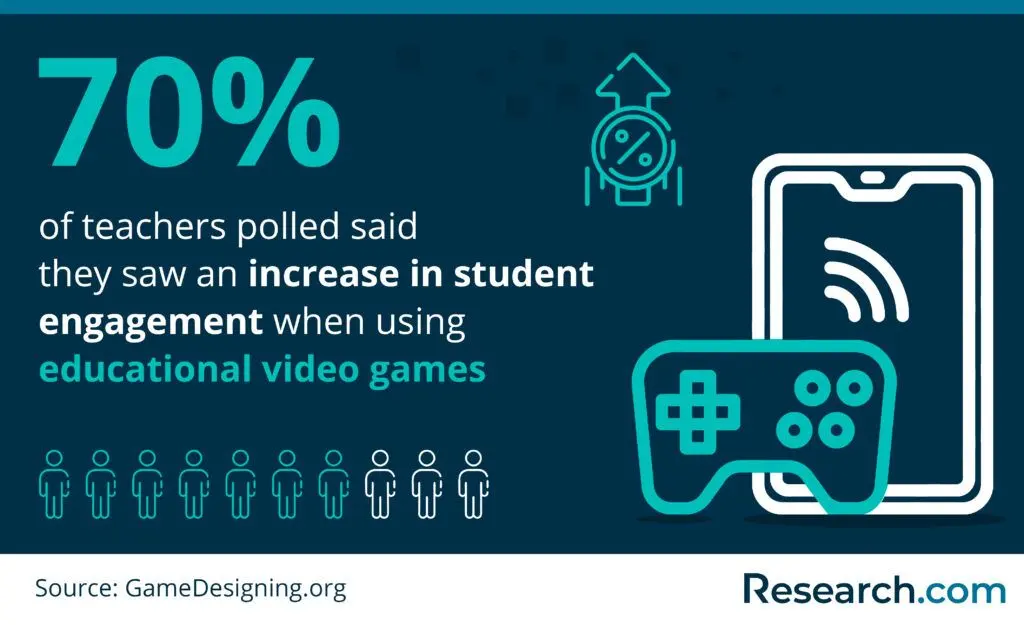
Connolly and Stansfield define game-based elearning as “the use of a computer games-based approach to deliver, support, and enhance teaching, learning, assessment, and evaluation." Games used for elearning are designed around specific learning objectives and are highly interactive to encourage complete immersion and engagement. Chieta differentiates gamification from gamified elearning in that, while gamification uses game mechanics and elements to make learning compelling, game-based elearning courses use full-fledged games to help learners achieve their objectives.
Future Trends in eLearning
The field of eLearning continues to evolve, driven by technological innovation and changing global educational needs. One of the most prominent trends shaping the future of online education is the integration of artificial intelligence (AI). This technology helps create adaptive learning pathways tailored to each student's pace, preference, and ability, enabling a more personalized and efficient educational experience.
Augmented Reality (AR) and Virtual Reality (VR) are also making their way into eLearning platforms. These immersive technologies provide hands-on, experiential learning opportunities that traditional methods cannot offer. For example, medical students can practice surgeries in a simulated virtual environment, or architecture students can explore 3D models of their designs.
Microlearning, which breaks down content into small, digestible modules, continues to grow in popularity. This approach aligns with busy schedules and shorter attention spans, making learning more manageable in today's fast-paced world. Additionally, gamification—using game design elements in learning—remains a key strategy, as it enhances engagement and encourages learners to achieve their goals through rewards and interactive challenges.
Furthermore, the increasing availability of affordable master online programs is opening doors for professionals seeking advanced degrees without incurring significant financial strain. These programs allow students to pursue specialized education while balancing work and personal responsibilities. This flexibility is especially valuable in a competitive job market where advanced qualifications often translate to better career opportunities.
As technology continues to advance, eLearning will likely incorporate more diverse modes of delivery, from social learning tools to blockchain-secured certification systems. These innovations promise to make education more accessible, efficient, and relevant to the demands of the future workforce.
Are eLearning Credentials Accredited and Recognized?
Online education programs frequently face scrutiny regarding the credibility and recognition of their certifications. Accreditation by established educational authorities and industry bodies is critical in assuring prospective students and employers of a program’s academic rigour and quality standards. Evaluating the accreditation status and industry endorsements helps ensure that online qualifications are competitive in the job market and meet professional expectations. In the healthcare sector, for example, specialized training programs and medical certifications are subject to stringent standards that enhance career prospects and industry trust.
What are the best practices for designing effective eLearning courses?
Effective eLearning course design requires clearly defined learning objectives, structured content flow, and the integration of interactive multimedia that caters to diverse learning styles. Instructors should incorporate formative assessments, real-time feedback mechanisms, and varied content delivery methods—such as simulations, discussion boards, and digital quizzes—to enhance knowledge retention and foster critical thinking. Course accessibility and mobile optimization are crucial to ensure that learners with different abilities and technological setups can participate fully. Additionally, continuous analytics and learner-monitoring tools can help educators refine instructional strategies. Institutions may also consider short-term credentials, for instance, pursuing an accelerated associate's degree online, to quickly adapt to evolving industry requirements.
How do eLearning credentials compare to traditional degrees?
Online education providers are increasingly aligning their programs with rigorous academic standards to ensure that credentials are recognized by employers and educational institutions. Quality eLearning programs maintain accreditation by reputed bodies and often benchmark their curricula against industry expectations. Prospective students should examine program evaluations, institutional partnerships, and alumni outcomes to determine if coursework is eligible for credit transfers or further academic advancement, such as pursuing a bachelor degree vs associate degree pathway. This careful assessment allows learners to ensure that their digital qualifications translate into a competitive edge in both further studies and the job market.
How Should Prospective Students Choose an eLearning Program?
Prospective students should evaluate eLearning programs by scrutinizing accreditation standards, instructor expertise, curriculum relevance, technological support, and interactive resources. Reviewing detailed syllabi, verified testimonials, and institutional partnerships can provide insights into both academic rigor and industry alignment. Additionally, comparing delivery approaches and practical assessment methods helps gauge a program’s capacity to meet personal and professional objectives. For further guidance on identifying streamlined degree options, consider reading our guide What is the easiest bachelor's degree to get?
Benefits of eLearning
Research on eLearning highlights a wide range of benefits in both educational and corporate contexts, particularly in how digital delivery can enhance learner experience and outcomes. Contemporary studies identify key advantages of eLearning that are consistently valued by learners, including greater learner control over pace and sequence, improved accessibility regardless of location, expanded availability of resources, and increased opportunities for personalized learning pathways (Devlin Peck, 2025).
With eLearning, students can engage with content on their own schedule and revisit materials as needed, while delivery methods such as interactive media, gamified modules, and collaborative tools make the learning process more immersive and engaging (Devlin Peck, 2025). These features have contributed to sustained growth in both formal education and workplace training, as organizations and institutions leverage digital technology to support flexible, learner‑centered experiences.
Moreover, elearning enables relatively faster delivery cycles. According to Gupta (n.d.), elearning enables lessons and programs to roll out within a few days or weeks. This increased effectiveness also helps students learn more quickly. Beldhuis (n.d.) also discovered other benefits of e learning from a corporate standpoint. These benefits include:
- cost reductions, as elearning lowers travel and meal expenses associated with employee training.
- modularity, since employees can study only course sections that are relevant to their needs.
- flexibility and accessibility, as elearning allows learners to choose the time and place to study courses, making training outside of work hours possible.
Online learning methods can have positive effects on the environment by significantly reducing carbon emissions compared with traditional in‑person education. A 2025 study analyzing online versus in‑person delivery of a global medical education program found that moving courses online reduced per‑participant CO₂ emissions by up to 96 % and total course emissions by 89 %, largely because online formats eliminate travel‑related emissions (Wang et al., 2025).
This and related research highlight that one of the main environmental benefits of online learning is the reduction in emissions from student and instructor travel, which is often the largest contributor to the carbon footprint of traditional education activities (Wang et al., 2025).
What emerging trends are shaping eLearning credentialing?
eLearning credentialing is rapidly evolving to meet changing industry demands and learner expectations. Emerging trends include the integration of digital badges and micro-credentials for targeted skill verification, along with adaptive assessment techniques that align course outcomes with market needs. Many institutions are incorporating condensed pathways that emphasize hands-on, project-based assessments, and some programs now offer accelerated associate degrees to fast‐track entry into competitive sectors.
How can eLearning quality be consistently maintained?
Maintaining high-quality eLearning requires a robust quality assurance framework that integrates systematic curriculum reviews, instructor training, and learner feedback mechanisms. Regular evaluation of course materials and delivery platforms is essential to align content with current industry standards and pedagogical best practices. Additionally, leveraging advanced analytics can help identify areas for improvement in real time, ensuring that technological reliability and instructional design are continuously optimized. Emphasizing structured assessment methods and agile course updates further supports effective learning outcomes while offering pathways such as the 1 year masters program online that demonstrate commitment to high-quality educational standards.
Drawbacks of eLearning
Despite the many advantages of e‑learning, it also presents challenges that researchers continue to identify. One commonly noted drawback is the reduced level of interpersonal interaction compared with traditional classroom settings, which can lead students to feel isolated and less supported by peers and instructors (Almomani, 2025).
This lack of face‑to‑face contact may diminish opportunities for social engagement and the informal feedback that helps develop communication skills and belonging in a learning community. Such social and relational gaps remain significant concerns in digital learning environments, particularly for learners who thrive on direct human interaction for motivation and collaboration (Almomani, 2025).
In less developed countries, the expansion of eLearning continues to face substantial barriers related to both human resources and technological infrastructure. Educators and institutions often lack the training, support, and digital skills needed to design, develop, and deliver quality online courses, which limits the effectiveness of digital instruction (Frontiers, 2025).
In addition, many regions struggle with inadequate infrastructure, including unreliable or limited high‑speed internet access, frequent power outages, and insufficient access to modern devices, all of which hinder participation in online learning (Frontiers, 2025). These challenges underscore the persistence of the digital divide and highlight the need for targeted investments in infrastructure and professional development to make eLearning more accessible and effective in under‑resourced contexts.
Moreover, a survey by BestColleges found that 24% of online students have concerns about the quality of education they’re getting, as well as academic support.
Top Concerns of Online Students on Online Learning Options

eLearning During the COVID Pandemic
The COVID‑19 pandemic led to widespread school closures across the globe as governments implemented social distancing measures to slow the spread of the virus. At the peak of the crisis, more than 1.6 billion learners were affected by these closures, disrupting education for students and youth in virtually every country in the world (UNESCO, 2025). These closures interrupted the functioning of education systems and triggered efforts to adopt remote learning solutions to ensure continuity of learning while schools were closed.
To mitigate the impact of school closures on students, multiple countries have implemented measures for remote learning and online learning. Many have leveraged technological systems to adapt to the changing times. Elearning tools are not the only ones that became, but curriculum management software, that has made mapping and planning curricula for elearning easier.
The World Bank has documented how countries continue to develop and refine their use of educational technology to support remote and hybrid learning, building on lessons from emergency responses to school closures. Many nations now combine multiple delivery channels—such as television, radio, online platforms, and mobile technologies—to expand access to education both during disruptions and as part of longer‑term strategies to strengthen resilient learning systems (World Bank, 2025).
These multimodal approaches aim to reach learners in diverse contexts, including those with limited internet access, by tailoring EdTech solutions to local infrastructure realities and learning needs (World Bank, 2025).
Moreover, many online learning platforms have started to offer free access to their services in response to heightened demand. BYJU, a Bangalore-based educational technology and online tutoring firm, has become the most highly valued educational technology company after raising $540 million in a fund-raising round.
Despite the rapid rise of elearning across the world, outlooks on the elearning approach and its effectiveness have been mixed. Some believe that the unplanned move to adopt elearning will result in “a poor user experience that is unconducive to sustained growth." On the other hand, educational technology experts opine that online education will eventually become integral to school education.
How does eLearning impact student engagement and motivation?
eLearning environments have unique advantages and challenges when it comes to maintaining student engagement and motivation. By understanding how eLearning impacts these areas, educators and institutions can improve course design and the learning experience.
- Self-paced learning: One of the biggest advantages of eLearning is that it allows students to learn at their own pace. This can be particularly motivating for students who prefer flexibility or those who need extra time to absorb material. However, without set deadlines, some students may struggle to stay motivated.
- Interactive tools and multimedia: eLearning platforms often incorporate interactive elements like videos, quizzes, and discussion forums. These tools can increase engagement by making learning more dynamic and hands-on, as opposed to static text-based content.
- Gamification elements: Many eLearning systems include gamified components such as badges, leaderboards, and rewards. These elements can motivate students to stay involved and complete tasks by tapping into their competitive nature and providing a sense of achievement.
- Immediate feedback: eLearning platforms can provide instant feedback through automated quizzes and assignments. This immediate response can help students understand their progress and stay motivated to improve.
- Social learning features: Discussion boards and group projects allow students to collaborate and learn from each other, which can help maintain interest and motivation throughout the course.
Is eLearning a Cost-Effective Alternative to Traditional Education?
eLearning reduces many of the financial burdens associated with traditional campus-based programs by eliminating commuting costs, minimizing physical materials, and allowing for flexible scheduling. These savings can provide a stronger return on investment for both learners and organizations, particularly in sectors where rapid skill development is crucial. Additionally, many institutions have streamlined their offerings to present competitive pricing models. For instance, some programs provide options that rank among the cheapest online masters degree available, further enhancing affordability while maintaining academic rigor.
What are the job prospects for students who complete eLearning programs?
Completing eLearning programs can lead to promising job opportunities and career growth. As the job market becomes increasingly digital and technology-driven, many employers value eLearning graduates' flexibility, self-motivation, and technical skills. This type of education often emphasizes practical, skill-based learning, making graduates well-suited for roles in IT, digital marketing, data analysis, and other tech-centric industries.
E-learning platforms frequently offer courses in high-demand fields such as computer science, graphic design, project management, and healthcare, leading to jobs that align with college degrees that pay well. In addition, eLearning graduates can also pursue careers in remote work, which has expanded significantly due to the growing trend of flexible and telecommuting jobs.
Moreover, many eLearning programs provide certificates that demonstrate specialized knowledge and can boost employability. Completing these programs shows employers that candidates are proactive, adaptable, and capable of self-directed learning—highly valued in a rapidly changing job market.
Key Insights
- Definition and Evolution: eLearning refers to the delivery of education and training through digital means, involving various technologies to facilitate learning. Its roots can be traced back to the mid-1960s, with significant advancements in the 1990s and early 2000s.
- Growth and Adoption: The eLearning market is projected to grow significantly, driven by increased investment and adoption, particularly in Asia. The COVID-19 pandemic has accelerated the global shift towards online education.
- Types of eLearning: eLearning encompasses various types, including Computer-Managed Learning (CML), Computer-Assisted Instruction (CAI), Synchronous and Asynchronous Learning, Adaptive Learning, and more. Each type offers different methods and benefits tailored to diverse learning needs.
- Delivery Methods: eLearning can be delivered through several methods such as Computer-Based Training (CBT), Web-Based Training (WBT), Blended Learning, Mobile Learning, Social Learning, and Game-Based Learning. These methods cater to different preferences and learning environments.
- Benefits: eLearning offers advantages such as learner control, accessibility, availability, personalization, cost-effectiveness, modularity, and environmental benefits. It enables flexible and self-paced learning, making education more inclusive.
- Drawbacks: Challenges of eLearning include the lack of face-to-face interaction, the need for advanced technological infrastructure, and concerns about the quality of education and academic support.
- Impact of COVID-19: The pandemic has significantly impacted education, leading to widespread school closures and a rapid shift to online learning. Countries have adopted various technological solutions to ensure continued education, with mixed opinions on the long-term effectiveness of this shift.
References:
- Adamu, S., & Awwalu, J. (n.d.). The Role of Artificial Intelligence (AI) in Adaptive eLearning System (AES) Content Formation: Risks and Opportunities involved. eLearning Africa.
- Agarwal, H., & Pandey, G. N. (n.d.). Impact of E-learning in education. International Journal of Science and Research, 2 (12), 146-147. CiteSeerX
- Arkorful, V., & Abaidoo, N. (n.d.). The role of e-learning, advantages and disadvantages of its adoption in higher education. International Journal of Instructional Technology and Distance Learning, 12 (1), 29-42. http://itdl.org/Journal/Jan_15/Jan15.pdf#page=34
- Aubron, X. (n.d.). How to use social learning in e-learning? Gutenberg Technology.
- Berg, B. (n.d.). The differences between eLearning And distance learning. eLearning Industry.
- Bonk, C. J., & Graham, C. R. (n.d.). The handbook of blended learning: Global perspectives, local designs. New York, NY: John Wiley & Sons. Google Books
- Chetia, B. (n.d.). Decoding game-based learning courses in online training: What and how. CommLab India.
- Chetia, B. (n.d.). Social learning in online learning 4 ways to get it right. CommLab India.
- Cisco Systems (n.d.). Cisco Networking Academy Program. Palo Alto, CA: Hewlett-Packard.
- Deka, S. (n.d.). Covid-19: A future perspective. In P. D. Mallya & R. D’Silva (Eds.), Impact of Covid-19 Crisis on the Global Economy and Other Sectors Worldwide. New Delhi, India: Idea Publishing. Google Books
- E-Learning models explained [Infographic]. (n.d.). Shapers.nl.
- Fry, K. (n.d.). E-learning markets and providers: some issues and prospects. Education+ Training.
- Gupta, S. (n.d.). 9 benefits of eLearning for students. eLearning Industry.
- Gutierrez, K. (n.d.). 10 great moments in eLearning history. SHIFT e-Learning.
- Hvorecký, J. (n.d.). Can E-learning break the Digital Divide?. European Journal of Open, Distance and E-Learning, 7 (2). EURODL
- Layton, J. (n.d.). How massive open online courses (MOOCs) work. HowStuffWorks.
- Lederman, D. (n.d.). New data: Online enrollments grow, and share of overall enrollment grows faster. Inside Higher Ed.
- Littlejohn, A., & Pegler, C. (n.d.). Preparing for blended E-learning. Abingdon-on-Thames, England: Routledge. Google Books
- Mason, R., & Rennie, F. (n.d.). Elearning: The key concepts. Routledge. https://doi.org/10.4324/9780203099483
- National Association of State Boards of Education Study Group. (n.d.). Anytime, any place, any path, any pace: Taking the lead on e-learning policy. NASBE.org.
- Origins of CALCampus. (n.d.). Accredited Online Courses. CALCampus.edu.
- Oye, N. D., Salleh, M., & Iahad, N. A. (n.d.). E-learning methodologies and tools. International Journal of Advanced Computer Science and Applications (IJACSA), 3 (2). ResearchGate
- Pandey, N. (n.d.). Social benefits of e-learning. KDK College Journal.
- Roy, R., Potter, S., & Yarrow, K. (n.d.). Towards sustainable higher education: environmental impacts of conventional campus, print-based and electronic/open learning systems. London, UK: The Open University.
- Sharples, M. (n.d.). The design of personal mobile technologies for lifelong learning. Computers & education, 34 (3-4), 177-193. https://doi.org/10.1016/S0360-1315(99)00044-5
- Shute, V., & Towle, B. (n.d.). Adaptive e-learning. Educational Psychologist, 38 (2), 105-114. ResearchGate
- Sirohi, V. (n.d.). E-learning: An overview. In The International Conference on e-Government (iceg’07). CiteSeerX
- Sly, L., & Rennie, L. J. (n.d.). Computer managed learning: Its use in formative as well as summative assessment. Leicestershire, UK: Loughborough University.
- Smith, S. (n.d.). The future of artificial intelligence in eLearning systems. eLearning Industry.
- Soni, A. (n.d.). Choosing the right eLearning methods: Factors and elements. eLearning Industry.
- Stauffer, B. (n.d.). What’s the difference between online learning and distance learning? Applied Educational Systems.
- Stanford-Smith, B., & Kidd, P. T. (n.d.). E-business: Key Issues, Applications, and Technologies. Amsterdam, The Netherlands: IOS Press. Google Books
- Suppes, P. (n.d.). Computer-assisted instruction at Stanford. Technical Report No. 174, Psychology and Education Series. Standford University.
- Tamm, S. (n.d.). Types of e-learning. E-Student.
- Tao, Y., Rosa Yeh, C., & Sun, S. (n.d.). Improving training needs assessment processes via the internet: System design and qualitative study. Internet Research, 16 (4), 427-449. https://doi.org/10.1108/10662240610690043
- Li, C., & Lalani, F. (n.d.). The COVID-19 pandemic has changed education forever. This is how. WEF Agenda. Cologny, Geneva: World Economic Forum.
- Trines, S. (n.d.). Educating the masses: The rise of online education in sub-Saharan Africa and South Asia. WENR.
- Twigg, C. A. (n.d.). Quality, cost and access: The case for redesign. The Wired Tower: Perspectives on the Impact of the Internet on Higher Education. Upper Saddle River, NJ: FT Press, 111-143. Google Books
- Types of online learning (n.d.). Fordham University.
- UNESCO (n.d.). COVID-19 Educational Disruption and Response. Paris, France: UNESCO.
- Warrier, S. (n.d.). How Byju built the world’s highest-valued edtech company. Rediff.
- World Bank (n.d.). How countries are using edtech (including online learning, radio, television, texting) to support access to remote learning during the COVID-19 pandemic. Washington, DC: The World Bank.
- Cahyani, D., & Aminudin. (2025). Digital transformation in education in the post‑pandemic COVID‑19: Bibliometric analysis (2020–2025). Journal of General Education and Humanities, 4(3), 719–732.
- Continu. (2025). Corporate eLearning statistics (2025): Key trends & ROI data. Continu.
- ScienceDirect. (2025). E‑learning and digital education: Concepts, tools, and practices. In Educational Technology and Society. ScienceDirect.
- Devlin Peck. (2025, January 3). What is eLearning? eLearning explained. Devlin Peck.
- HolonIQ. (2024). 2025 Global Education Outlook. HolonIQ.
- Devlin Peck. (2025). eLearning statistics and facts (2025). Devlin Peck.
- Prosperity for America. (2025, October 29). eLearning statistics 2025: Global growth trends & insights. Prosperity for America.
- Easygenerator. (2025). Synchronous vs. asynchronous learning: Advantages and disadvantages. Easygenerator.
- Wang, B., Castillo Zambrano, C., Nikravangolsefid, N., Carvalhais, R. M., Niven, A., Gajic, O., & Dong, Y. (2025). Environmental impact of online versus in‑person critical care education: Carbon footprint analysis of the CERTAIN program. JMIR Formative.
- Almomani, J. A. T. (2025). Challenges facing e‑learning and solutions. In J.‑H. Ye, W. Nong, L. Wang, & J. Li (Eds.), Development and review of e‑learning. IntechOpen.
- Frontiers. (2025). Digital learning in the 21st century: trends, challenges, and innovations in technology integration. Frontiers in Education.
- UNESCO. (2025). Education: From COVID‑19 school closures to recovery. UNESCO.
- World Bank. (2025). Digital pathways for education: Enabling greater impact for all. World Bank.
Other Things You Should Know About eLearning
eLearning is the delivery of education and training through digital means, involving technologies such as computers, the internet, and multimedia tools to facilitate learning. It allows for flexible, self-paced, and accessible learning experiences.
eLearning includes several types: synchronous, where learners join live sessions; asynchronous, allowing access to materials anytime; blended learning, which combines online and face-to-face methods; and mobile learning, utilizing apps on portable devices. Each type offers unique advantages tailored to different learning needs in 2027.
Benefits of eLearning include learner control, accessibility, availability, personalization, cost-effectiveness, modularity, flexibility, and environmental benefits. It allows learners to study at their own pace, from anywhere, and at any time, making education more inclusive and efficient.
Drawbacks of eLearning include the lack of face-to-face interaction, the need for advanced technological infrastructure, and concerns about the quality of education and academic support. In less developed countries, there may also be a shortage of qualified instructors and technological resources.
By 2026, eLearning is expected to continue evolving with advancements in AI, personalized learning experiences, and immersive technologies like VR and AR. The global demand for flexible, remote learning options will drive innovation and accessibility, reshaping traditional educational paradigms.
In 2027, common eLearning delivery methods include Learning Management Systems (LMS), live webinars, mobile apps, and interactive platforms like virtual classrooms. These methods enable flexible access, allowing learners to engage materials at their own pace while utilizing multimedia for enhanced learning experiences.
Examples of eLearning platforms include Coursera, edX, Khan Academy, BYJU's, and LinkedIn Learning. These platforms offer a wide range of courses and learning resources, catering to different educational needs and preferences.


