
Taking KSU Aquaculture Across the World

Co-Founder and Chief Data Scientist
Dr. Andrew Ray, Chair of the School of Aquaculture and Aquatic Science at KSU, traveled to South Korea to implement a Joint Project Agreement between the U.S. National Oceanic and Atmospheric Administration and the Republic of Korea’s Ministry of Oceans and Fisheries (MOF). The Joint Project Agreement is intended to foster aquaculture research and collaboration.
The project began in 2018 when Dr. Ray was approached by a South Korean researcher who specifically wanted to work on marine shrimp research projects. There are very few universities in the country who work with marine shrimp, and KSU’s marine shrimp program is highly regarded, globally. In fact, there are five marine shrimp farms in Kentucky, primarily as a result of the support they have received from KSU.
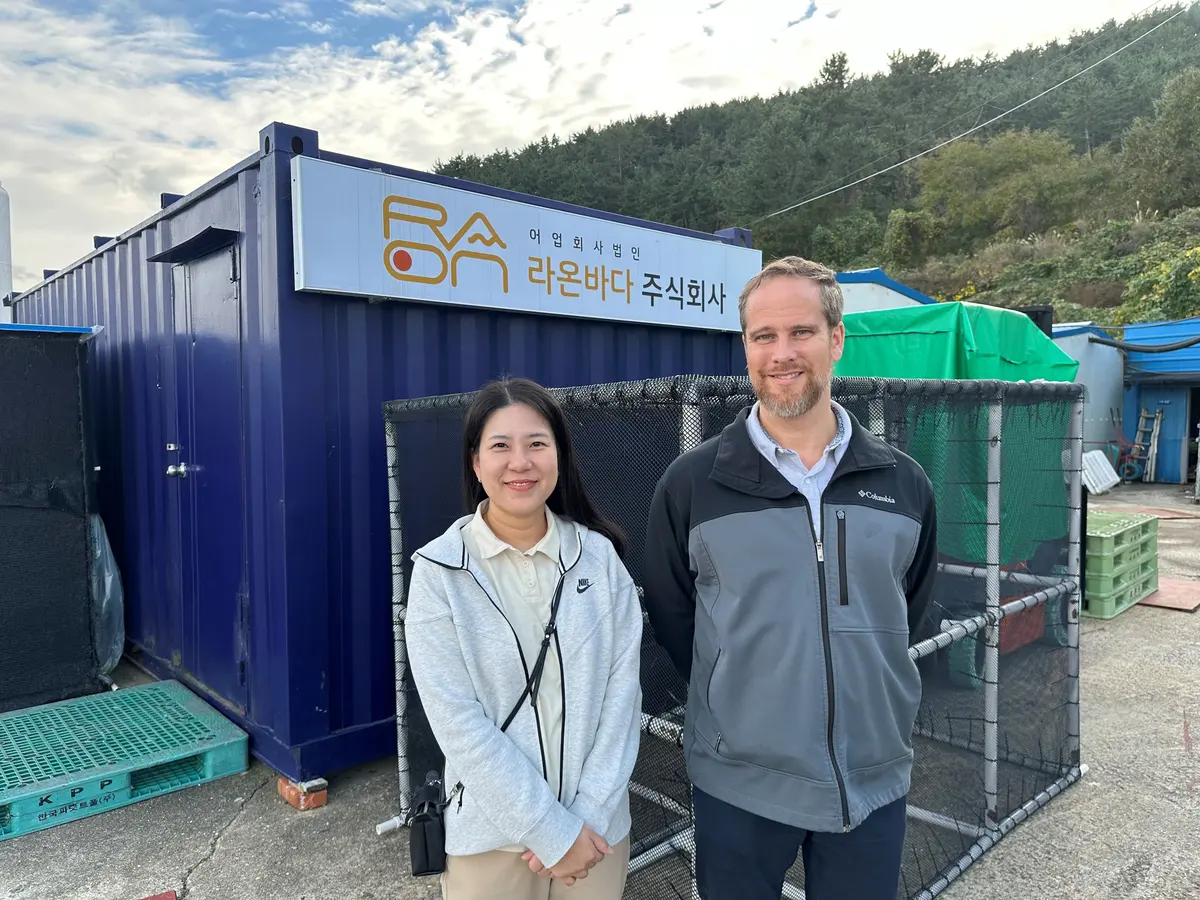
As part of the Joint Project Agreement, Dr. Ray and his South Korean counterpart, Dr. Bae Sun-Hye, will travel to each partnering country to visit aquaculture facilities, researchers, and government officials to help broaden perspectives and enhance aquaculture research potential within their countries. The grant also includes some funds to facilitate a research project each year.
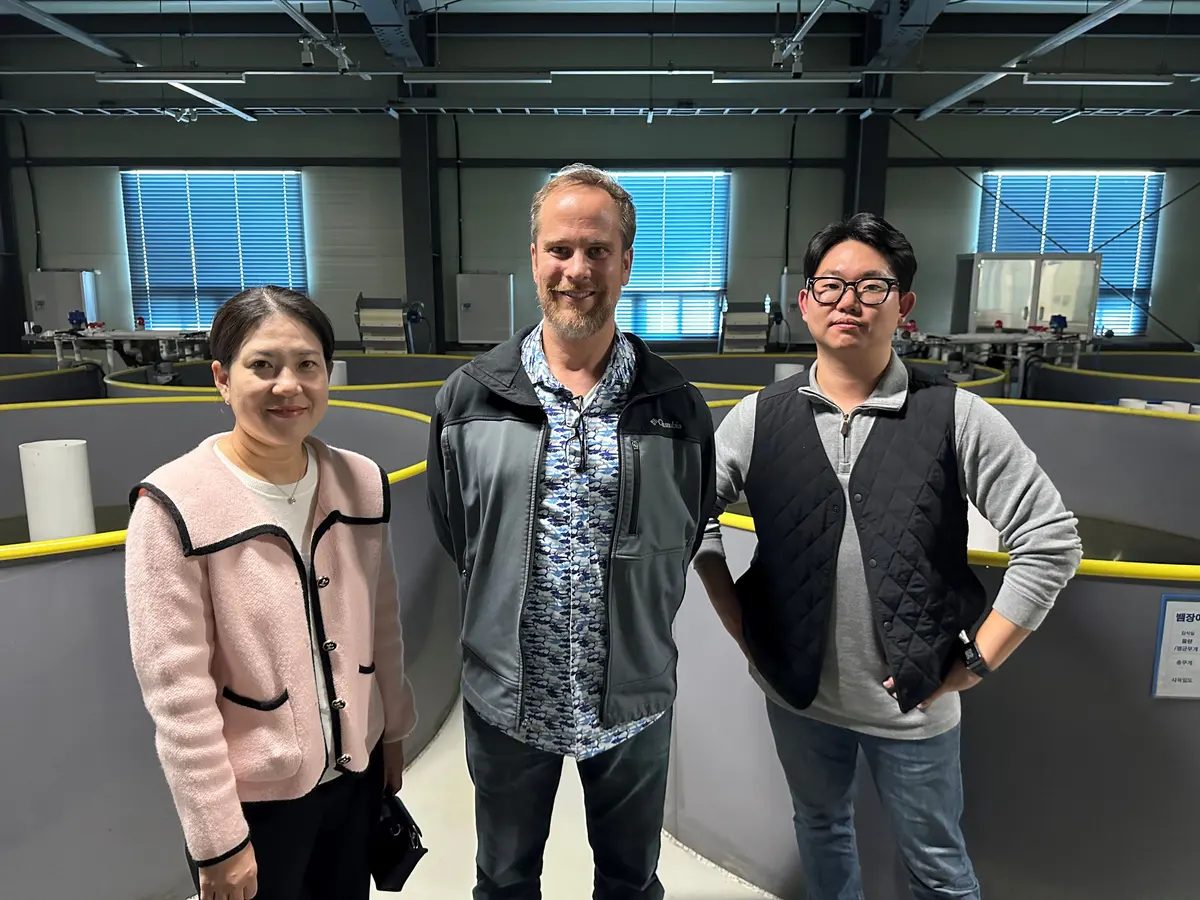
During his most recent visit to South Korea, Dr. Ray visited Raon Bada, an advanced olive flounder farm that uses recirculating aquaculture systems (RAS) technologies to produce about 40 metric tons of flounder per year. South Korea produces about 50,000 tons of Olive Flounder per year total, but like other aquaculture industries, production has been slowed by diseases. Because of this, some farmers have started to adopt RAS technology where several types of filters are used to facilitate a clean environment for the fish and allow water to be reused rather than discharged.
As a result of his work in South Korea, Dr. Ray has been conducting innovative new research on flounder for about a year and a half. One of his master’s students graduated last semester with a research project examining the effects of flounder stocking density in RAS. Research has found that the fish are very feed efficient, they have excellent flavor and texture, and they are a valuable commodity. Dr. Ray is exploring their potential for Kentucky farmers who would like to produce fresh, never-frozen, local seafood right here in the Bluegrass State.
“We are excited to be working with our friends in South Korea, it has already been a productive relationship, and I look forward to continuing it. As a country that produces a large amount of seafood, we have a lot to learn from them and as one of the top three research producing universities in Kentucky, KSU has much to offer people around the world,” said Dr. Ray.
This project represents one of many international partnerships KSU holds in addition to its regional and national collaborations, highlighting the profound impact KSU is making across many disciplines and communities.
From its modest beginning in 1886 as a small Normal school for the training of African-American teachers, Kentucky State University (KSU) has grown into a vibrant land-grant institution providing transformative educational experiences that prepare graduates to make meaningful contributions to society.
KSU became a Land-Grant University following the Second Morrill Act of 1890 which expanded the opportunities for people of color to access education, specifically in agriculture and mechanical arts. Today, the University’s Land Grant Program serves thousands annually through education, research, and extension across the Commonwealth and the world.
The University’s Aquaculture program was established as a Program of Distinction in 1999, recognizing the regional, national, and international impact and renown KSU’s aquaculture and aquatic science research and extension has garnered within the field.
Kentucky State University is an equal opportunity provider.


