2027 Online MBA for Career Advancement in Corporate Roles

Co-Founder and Chief Data Scientist
Many professionals with undergraduate degrees in unrelated fields encounter obstacles when seeking leadership roles in corporate settings. They often lack the formal business credentials needed to advance or pivot their careers. Traditional MBA programs, with their rigid schedules and on-campus demands, can be impractical for working adults.
Online MBA programs offer a flexible alternative, enabling learners to balance employment while earning essential business skills and credentials. This article explores the advantages and practical steps for pursuing an online MBA to enhance career prospects and successfully transition into corporate leadership roles.
Key Things You Should Know
- Online MBA programs in 2026 offer flexible schedules, allowing professionals to balance work and study while gaining leadership skills critical for corporate advancement.
- Graduates experience a 21% average salary increase within two years, reflecting growing employer demand for advanced business and management expertise.
- Curricula now emphasize digital transformation, data analytics, and strategic decision-making, aligning with evolving corporate priorities and market trends.
What is an online MBA and its benefits for career advancement?
An online MBA is a graduate business degree delivered through digital platforms, designed for professionals who wish to study without relocating or pausing their careers. It features the same core curriculum as traditional programs, covering finance, leadership, marketing, and operations, but offers greater flexibility to accommodate busy schedules. This makes online MBA programs for corporate career growth especially appealing to those balancing work and family commitments.
The benefits of online MBA for professional advancement include:
- Significant salary growth: Data from College Transitions shows graduates in consulting see annual salary increases between $30,000 and $70,000.
- Enhanced leadership skills: Programs emphasize strategic thinking and management, critical for advancing into senior roles.
- Expanded professional network: Virtual cohorts connect diverse professionals across industries, broadening opportunities beyond local markets.
- Access to specialized knowledge: Concentrations in areas such as finance, technology management, or marketing allow students to tailor expertise.
- Career flexibility: The degree equips graduates to transition into new roles or industries with versatile business capabilities.
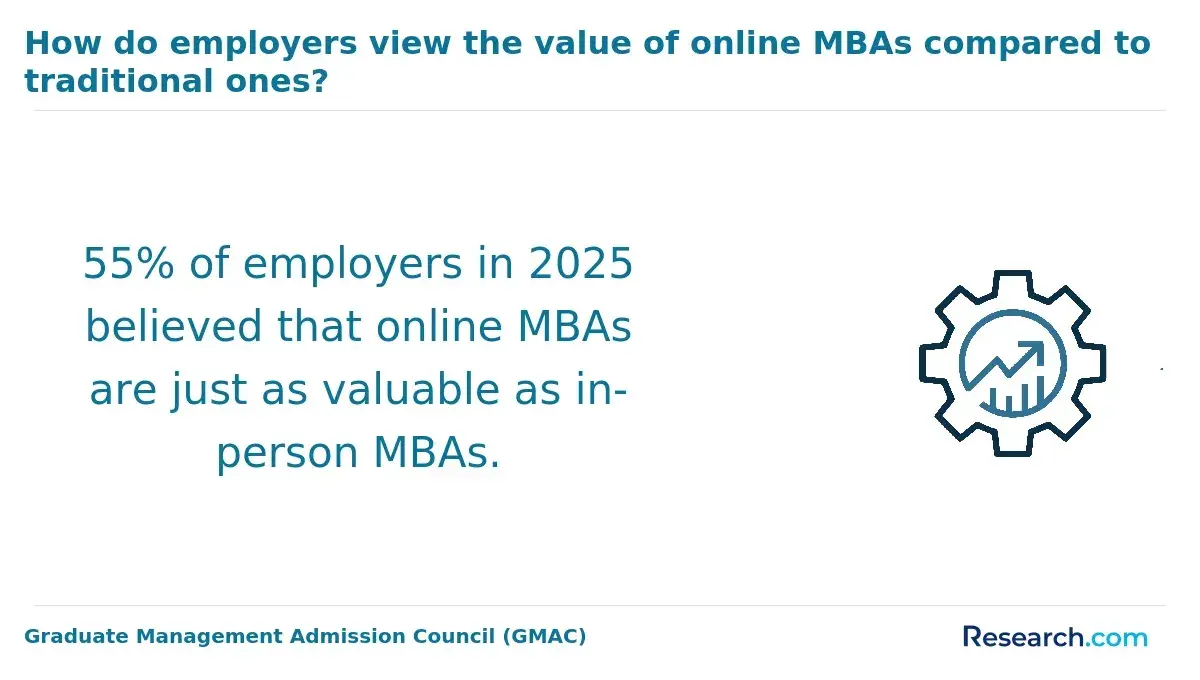
Online MBA often offer asynchronous classes and recorded lectures, enabling students to learn at their own pace and maintain work commitments. Employers increasingly accept online MBA credentials on par with traditional degrees, reducing hiring bias. Prospective students should confirm online MBA program accreditation and reputation to ensure a high return on investment.
How does an online MBA compare to traditional campus programs?
Online MBA programs provide unmatched flexibility compared to traditional campus programs, allowing professionals to balance work, family, and study without relocating or commuting. This flexibility is crucial for those focused on advancing corporate careers. The curriculum quality in reputable programs now often matches that of on-campus offerings, featuring the same faculty, rigorous assessments, and networking opportunities through virtual platforms. This demonstrates clear benefits of online MBA programs in advancing corporate roles.
While traditional programs emphasize in-person interactions and access to campus resources, online formats utilize technology like discussion boards, group projects, and live video sessions to foster engagement. This virtual environment is especially beneficial for individuals working across different time zones or industries where physical presence is impractical.
Graduates of online MBA programs have shown measurable career impacts. For instance, career profiles highlight shifts from engineering to technology product management with cumulative five-year earnings increases exceeding $250,000, underscoring the program's role in enabling successful career pivots.
However, students must exhibit strong self-discipline and effective time management. Though access to on-campus career and alumni services may be less immediate, many online programs now provide robust equivalents. Prospective students should carefully assess program accreditation, faculty credentials, and alumni outcomes to ensure alignment with their professional goals.
For those exploring options, researching the most affordable online MBA AACSB accredited programs can provide both quality and economic advantage.
Which accredited schools offer the best online MBA programs?
Top accredited schools offering the best accredited online MBA programs in the US blend rigorous coursework, experienced faculty, and flexible formats tailored for working professionals. According to CSP Global resources, 37% of employers plan to increase MBA hiring, highlighting the importance of enrolling in a respected institution for career advancement in corporate roles.
Notable programs include the University of North Carolina's Kenan-Flagler Business School, focusing on leadership and technology; Indiana University Kelley School of Business with customizable specializations; and Carnegie Mellon Tepper School of Business, known for analytics and STEM-related tracks.
Accreditation by AACSB International or the Association of MBAs (AMBA) ensures program quality and employer recognition. Prospective students should always verify accreditation status before applying.
Many working professionals seek part-time or asynchronous options to balance education and work. Schools like the University of Florida Warrington College of Business and Arizona State University W. P. Carey School offer flexible scheduling to meet these needs.
Popular specializations such as finance, supply chain, healthcare management, and technology management align with corporate demands. Northeastern University's D'Amore-McKim School emphasizes experiential learning and industry engagement, further enhancing career prospects.
Students interested in affordable options for executive study may explore the cheapest online executive MBA programs available today.
What are the admission requirements for online MBA programs?
Online MBA admission requirements for corporate careers often focus on academic credentials, professional experience, and relevant skills. Most programs mandate a completed bachelor's degree from an accredited institution. Some schools set minimum GPA requirements around 3.0 on a 4.0 scale, though exceptions may apply for candidates with strong work records. Essential qualifications for online MBA program enrollment typically include two to five years of managerial or professional experience, showcasing leadership and practical knowledge that enriches learning.
Standardized tests like the GMAT or GRE are commonly required, but many programs waive these for applicants with substantial professional experience or advanced degrees. Professional certifications such as CPA or PMP may also strengthen applications, serving as alternatives or supplements to test scores. Application packages generally consist of:
- A personal statement outlining career goals and reasons for pursuing an MBA
- Two or more letters of recommendation from supervisors, professors, or business contacts
- Resume or CV detailing work history and achievements
- Proof of English proficiency for international applicants, usually TOEFL or IELTS scores
Employers increasingly value AI fluency, with 35% prioritizing this skill in MBA graduates according to the CSP Global MBA hiring trends report. Skills in data analysis, machine learning, or AI applications give applicants a competitive edge. Some programs now require or recommend coursework or certification in these areas during admission or early curriculum.
Those interested in a cheap online MBA no GMAT option can find programs that reduce barriers while still meeting essential qualifications.
How long does an online MBA take and what is the cost?
Online MBA programs generally take between 18 months and 3 years to complete, with variations depending on enrollment status and program design. Full-time students typically finish within 18 to 24 months, while part-time students may extend their studies up to 36 months or longer to balance their work and personal commitments. Accelerated programs with intensive coursework can shorten this timeline but demand significant dedication.
Costs for online MBA programs vary significantly. Public universities usually charge between $20,000 and $60,000, whereas private institutions may range from $50,000 to over $100,000. Additional fees for technology, materials, or residency requirements can increase the total cost. Many students utilize employer sponsorships or tuition reimbursement programs to help offset expenses.
Financial returns on this investment are notable. According to CSP Global employer data, 47% of employers offer MBA graduates a 5-9% salary premium, while 33% provide increases of 10% or more. This demonstrates the degree's value in boosting career advancement and salary negotiations.
Students should consider factors such as:
- Career goals and urgency for advancement
- Workload alongside job and family commitments
- Reputation and quality of the school
- Access to financial aid or employer support
The duration and costs of an online MBA vary widely, so reviewing program specifics and potential salary benefits helps in making informed decisions aligned with professional goals.
What does the typical online MBA curriculum cover?
Online MBA programs typically cover essential business disciplines aimed at preparing professionals for leadership and strategic roles. Core subjects include finance, marketing, operations management, organizational behavior, and strategic management. For instance, finance courses focus on corporate finance, investment analysis, and budgeting, equipping students to make informed financial decisions. Marketing modules cover digital marketing strategies, consumer behavior, and brand management, fundamental for growth in competitive industries.
Leadership development is another key component, addressing negotiation, communication, and team dynamics. Organizational behavior coursework enhances understanding of workplace culture and employee motivation. Operations management introduces process optimization and supply chain logistics, while strategic management trains students to analyze competitive environments and develop long-term plans.
Many programs offer specializations or electives to align with specific career goals, such as healthcare management or entrepreneurship. Project-based learning and case studies foster real-world application and practical skills.
According to Nexford alumni data, 81% of online MBA graduates reported salary increases after completing the program, highlighting the tangible career benefits. These programs are designed for working professionals, balancing rigorous academics with flexibility and practical relevance to ensure graduates are prepared to navigate complex corporate environments effectively.
What career roles can you pursue with an online MBA?
An online MBA opens diverse corporate opportunities in management, strategy, finance, marketing, and operations. Graduates often secure roles such as project manager, business development manager, product manager, financial analyst, marketing director, and operations manager. Many use the degree to move into leadership positions or specialized areas like supply chain management and human resources leadership.
These roles emphasize decision-making, strategic planning, and team leadership. For example, project managers coordinate cross-functional teams, while business development managers drive growth strategies. Marketing directors apply analytical skills enhanced by MBA coursework to expand market reach and lead campaigns.
The job market favors candidates with strong leadership and analytical skills, both developed through an online MBA. According to Nexford alumni outcomes, 80% of their online MBA graduates received promotions after completing the program, illustrating the degree's impact on career advancement and salary growth.
Graduates targeting executive roles such as chief operations officer or chief marketing officer find the online MBA prepares them well for complex management challenges. Others pursue entrepreneurship, leveraging MBA skills in business planning and finance.
Working professionals should align MBA electives with their career goals. Finance professionals may focus on corporate finance and investment, while those in operations might prioritize supply chain management and process optimization.
What salary potential exists after an online MBA?
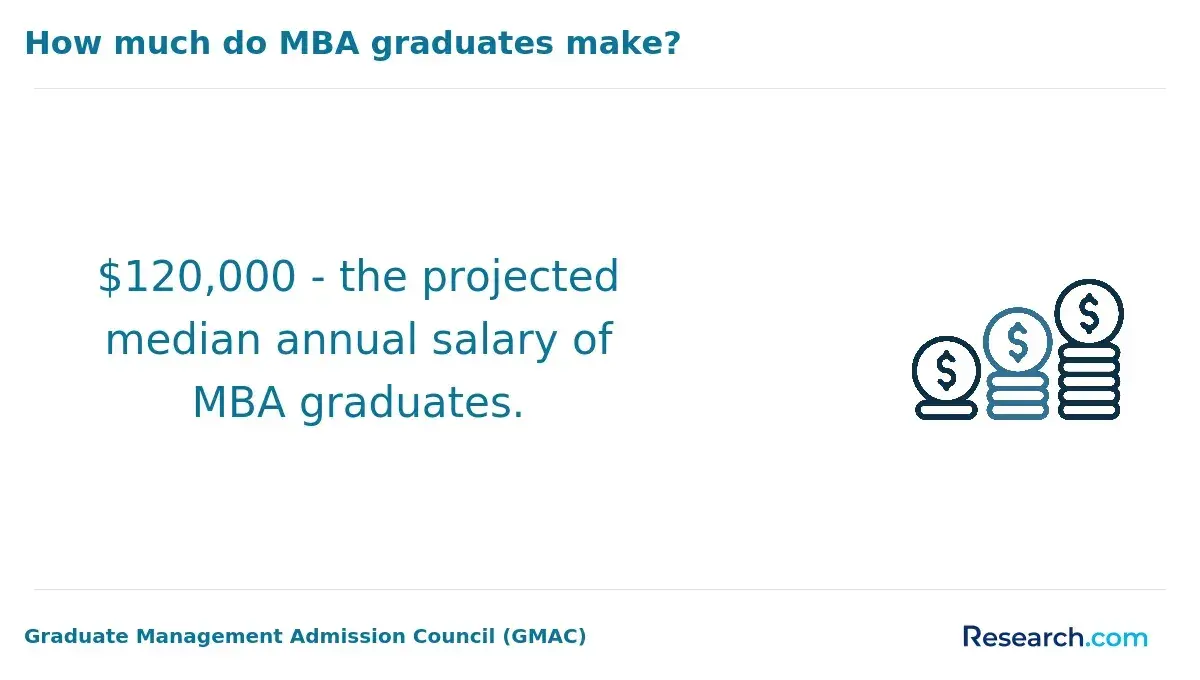
Salary potential after earning an online MBA varies widely depending on industry, experience, and location, but typically offers significant growth compared to pre-MBA earnings. The Graduate Management Admission Council reports median base salaries for MBA graduates in the U.S. range from $90,000 to $115,000, with many professionals seeing increases between 20% and 50% or more after completion.
Demand for MBA graduates continues to rise, with companies hiring recent graduates increasing from 76% to 92% over recent years, according to Schiller International University analysis. This growing demand contributes to competitive salaries in sectors like finance, consulting, and technology management.
Examples of salary ranges include:
- Financial managers earning median salaries around $134,000 annually.
- Management consultants averaging between $100,000 and $140,000, often with bonuses.
- Marketing managers with median pay near $135,000, combining base salary and incentives.
- Mid-career professionals transitioning to leadership roles may see salary jumps of $30,000 to $50,000 post-MBA.
Regional and industry-specific variations are important considerations. Metropolitan areas may offer higher salaries but come with increased living costs. Online MBA graduates with expertise in data analytics, supply chain management, or strategy tend to command premium wages. Negotiating salary by demonstrating MBA skills and leadership experience remains essential to maximizing compensation.
What is the job outlook for online MBA graduates?
The job outlook for online MBA graduates remains highly positive, especially for those pursuing roles in management, finance, marketing, and operations. Employers increasingly value the flexibility and current skills offered by online MBA programs, which align well with evolving business needs. Executive online MBA graduates often see a 30-50% salary increase after graduation, according to Talent Sprint data referenced by Schiller, highlighting the demand for enhanced leadership and strategic expertise.
These graduates can expect opportunities in mid-to-senior management roles such as project management, business analysis, and product leadership. The online format allows professionals to build on existing experience, positioning them for promotions or lateral moves into more impactful positions. Industries like consulting, technology, and financial services regard this credential as a significant advantage in leadership development.
Challenges persist, including the need to prove the credibility of online programs to some employers. Selecting accredited programs from well-known institutions helps overcome these barriers and opens access to broad networks and recruiting channels. Specializing in areas like data analytics or supply chain management can further improve marketability in competitive sectors.
How to choose a reputable online MBA program?
Verify accreditation first when selecting an online MBA program. Regional accreditations like AACSB, ACBSP, or IACBE confirm academic quality and are often required by employers and licensing boards. Check that credits transfer and are recognized within your industry. Faculty credentials matter-choose programs with professors holding terminal degrees and relevant corporate experience.
The curriculum should align with your career goals. Look for specializations such as finance, marketing, or operations management. Programs featuring case studies, real-world projects, and leadership training tend to prepare students better for corporate environments.
Career services and alumni networks play key roles in your success. Strong connections offer mentorship and job placement support. For example, Lindenwood University's ROI analysis reports full-time MBA graduates earn an average accepted salary of $101,841 plus an $18,340 signing bonus, highlighting the link between program quality and earning potential.
Consider program flexibility and delivery format. Online platforms should support interactive learning, timely feedback, and peer collaboration. Confirm if synchronous sessions or residencies fit your schedule.
Financial factors deserve full investigation. Compare tuition, fees, scholarships, and sponsorships. Know refund policies and total costs to avoid surprises. Reliable programs provide transparent pricing and strong outcomes.
Request graduation rates, job placement data, and salary reports. Trust programs that publish this information and have rankings or positive reviews from recognized sources, ensuring an objective performance snapshot.
Other Things You Should Know About MBA
In 2027, online MBA programs integrate virtual networking sessions, collaborative projects, and alumni events to facilitate career advancement in corporate roles. These programs leverage digital platforms to connect students with industry professionals and peers worldwide, offering opportunities to build valuable connections in a corporate setting.
While online MBAs do not offer face-to-face networking like traditional programs, many include virtual networking events, discussion forums, and group projects to facilitate peer interaction. Some programs also organize regional meetups or provide access to alumni networks and industry connections. These resources help students build professional relationships despite the distance-learning format.
Some online MBA programs include short residencies or on-campus immersion experiences as part of their curriculum, but this varies widely by school. Many fully online programs do not mandate any in-person attendance, offering greater flexibility for working professionals. It is important to check specific program requirements when selecting an online MBA.
The reputation of an online MBA program relies on factors such as accreditation status, faculty expertise, alumni success, and rankings by recognized education organizations. Prospective students should verify that the program holds accreditation from reputable bodies like AACSB, ACBSP, or IACBE. Additionally, strong employer connections and positive graduate outcomes enhance a program's standing in the market.
References
- Career Options After Online MBA â Entry Roles and Growth https://onlinematsuniversity.com/blog/career-options-after-online-mba-entry-roles-and-growth.html
- Online MBA Entry Requirements: Eligibility & Admission https://www.onlinecu.in/blog/cu/most-common-entry-requirements-for-online-mba-programs.php
- Best Online MBA Programs https://www.princetonreview.com/business-school-rankings
- Online MBA for working professionals: Accelerate Your Career in 2026! https://ebsedu.org/blog/online-mba-for-working-professionals/
- Online MBA Admissions Requirements by Program [Chart] https://www.bschools.org/blog/online-mba-admissions-requirements
- Online MBA 2025 https://rankings.ft.com/rankings/2998/online-mba-2025
- 2025 Online MBA Ranking: How Graduates Rated The Degree’s Career Impact https://poetsandquants.com/2024/12/16/how-online-mba-graduates-rated-the-degrees-career-impact/
- Career Opportunities After Online MBA Degree: Top Jobs, Salaries & Global Scope | SGT Online https://sgtonline.in/blogs/career-opportunities-after-online-mba-degree
- Online MBA Programs with the Best Salary Outcomes | FIND MBA Online https://findmbaonline.com/articles/online-mba-programs-with-the-best-salary-outcomes
- Are Online MBAs Worth It? | Comparing Value, Networking, and Career Impact https://www.edx.org/resources/is-an-online-mba-worth-it