2027 Transfer-Friendly Online MBA Programs for Adult Learners

Co-Founder and Chief Data Scientist
Many adult learners face challenges when seeking an online MBA program that accepts transfer credits from previous coursework. This obstacle can delay graduation, increase costs, and complicate schedules, especially for those balancing professional and personal responsibilities. The lack of flexible, accredited options that recognize prior academic achievements often discourages potential candidates from pursuing an advanced business degree.
Identifying transfer-friendly programs is crucial for streamlining the path to earning an MBA without redundant study. This article explores top online MBA programs designed for adult learners that facilitate credit transfers, helping readers find efficient, credible routes to advance their careers.
Key Things You Should Know
- Nearly 85% of transfer-friendly online MBA programs in 2026 accept 12-18 prior graduate credits, reducing time and cost for adult learners seeking degree completion.
- Flexible scheduling and asynchronous courses dominate, catering to working professionals balancing education with full-time jobs and family commitments.
- Top-ranked programs emphasize career services and networking opportunities, with 70% reporting increased post-graduation salary within two years for transfer students.
What are the best transfer-friendly online MBA programs?
Top transfer-friendly online MBA programs in the United States help remove common barriers by accepting significant transfer credits and offering streamlined evaluation processes. Schools like the University of North Carolina's Kenan-Flagler Business School permit transfer of up to 12 credits, accommodating graduate coursework previously completed. Arizona State University's W. P. Carey School of Business allows transfer of up to 30% of the program, providing relief from credit overlap for working professionals.
Key features of the best online MBA programs for adult learners allowing credit transfer include transparent credit policies, fast course equivalency evaluations, and prerequisite waivers. For instance, Indiana University's Kelley School of Business accepts up to 12 transfer credits from accredited institutions and evaluates prior quantitative coursework to speed admission. Programs often offer rolling admissions and multiple start dates to support seamless credit integration without career interruptions.
These programs save students time and tuition costs. Institutions with proven transfer policies usually assign dedicated advisors to guide adult learners through credit audits and transfer procedures. Prospective students should request detailed credit transfer evaluations before enrollment, especially if prior coursework comes from regionally accredited or international schools.
For those seeking flexible options, exploring online MBA programs with strong transfer policies is highly advisable to maximize credit acceptance and reduce total degree time.
Which online MBA programs accept the most transfer credits?
Online MBA programs with maximum transfer credits often allow up to 50-75% of required credits to be transferred, which is especially beneficial for working professionals and adult learners by shortening time and reducing costs. Notable examples include Western Governors University, permitting up to 75% transfer if course content matches degree requirements, and the University of Florida's online MBA, accepting 50% transfer credits from accredited institutions.
Many transfer-friendly online MBA programs evaluate transfer credits individually rather than imposing strict caps, favoring those with extensive graduate or undergraduate business coursework. Additionally, some programs award credit for professional certifications like CPA or PMP and verified work experience, further enhancing credit transfer opportunities.
Adult students should seek schools that disclose their transfer credit policies clearly and maintain articulation agreements with community colleges. This is increasingly important as online MBA programs grow in number but see lower average enrollments, with institutions competing by offering more transfer-friendly options.
Key factors to assess include:
- Maximum percentage of credits accepted for transfer.
- Eligibility of prior graduate coursework or certifications.
- Course equivalency requirements.
- Credit policies for exams and professional experience.
Applicants are advised to request detailed transfer credit evaluations early to avoid unexpected additional coursework. For those exploring affordable paths, the cheapest triple accredited online MBA programs often combine transfer-friendliness with solid accreditation and value.
What makes an online MBA program transfer-friendly for adults?
Transfer credit policies for online MBA programs are crucial for adult learners aiming to reduce time and cost toward degree completion. Transfer-friendly programs commonly accept credits from accredited two-year and four-year institutions, covering core business, general education, and electives. This flexibility helps students who have partial college coursework avoid repeating classes, streamlining their path to an MBA.
Key elements include transparent transfer credit policies specifying maximum transferable credits and minimum grade requirements, often a C or higher. Some programs also recognize experiential learning, granting credit for relevant professional experience such as management or leadership roles. Personalized academic advising supports adult learner transfer options in MBA programs by guiding students through transcript evaluation and transfer procedures.
Administrative barriers are often reduced with online tools for submitting transcripts and credit evaluations, speeding up the admissions process. Many programs allow partial transfers, letting students combine prior coursework with new specializations tailored to their career goals. In fall 2024, two-to-four-year transfer students made up 41.7% of transfer enrollment, underscoring the importance of clear transfer policies amid changing education dynamics.
Adult students researching transfer credit policies can also explore affordable EMBA programs that accommodate prior credits effectively, maximizing previous academic efforts toward an online MBA.
How do transfer policies work in online MBA programs?
Transfer credit evaluation process for online MBA programs typically allows students to apply previously earned graduate-level credits toward current degree requirements. Institutions often approve transfers of 6 to 12 credits from accredited schools, provided the coursework aligns with the MBA curriculum. Grades usually must meet a minimum threshold, commonly a B or higher, and credits often need to be recent-typically within five to seven years-to ensure relevance to modern business practices.
The credit transfer policies for adult learners in MBA programs accommodate individuals balancing work and family. For instance, a caregiver who completed a project management course before enrolling might transfer those credits to reduce their study load. Because 39% of graduate and adult students prefer all or mostly online classes, these flexible policies make pursuing an MBA more accessible to working professionals, women, caregivers, and those over 36.
Key factors for applicants to consider include the maximum transferable credits allowed whether core courses or electives qualifyimpact on financial aid or scholarships administrative procedures and deadlines. Programs with rolling admissions may evaluate transfers differently compared to those with fixed semester start dates. Students changing programs or returning after a break should verify their credits remain valid. Consulting admissions advisors beforehand can help avoid losing valuable credits.
Many prospective students seek options like MBA online no GMAT programs, which also feature clear transfer policies. Transparency and careful planning around transfers can significantly reduce time to degree completion and overall costs.
What are the admission requirements for transfer students?
Transfer students applying to online MBA programs typically must submit official transcripts proving completion of an accredited undergraduate degree and all previous college coursework. A minimum cumulative GPA of around 2.5 to 3.0 is usually required to demonstrate academic readiness. Many programs also request two to five years of professional work experience, although this requirement may be waived if the applicant's academic record is particularly strong.
Applicants transferring graduate credits need to provide transcripts verifying those courses, with most programs accepting 6 to 12 credit hours based on relevance and grades. Detailed course descriptions or syllabi are often necessary to evaluate transfer eligibility, potentially shortening degree completion time.
Standardized test scores such as the GMAT or GRE may be waived for transfer students who have strong undergraduate performance or relevant work experience. However, more competitive programs might still require these scores to thoroughly assess applicants' quantitative and verbal skills.
Application materials usually include a personal statement explaining the transfer rationale, letters of recommendation from professors or supervisors, and an updated resume emphasizing professional achievements. Some schools also require interviews as part of their selection process.
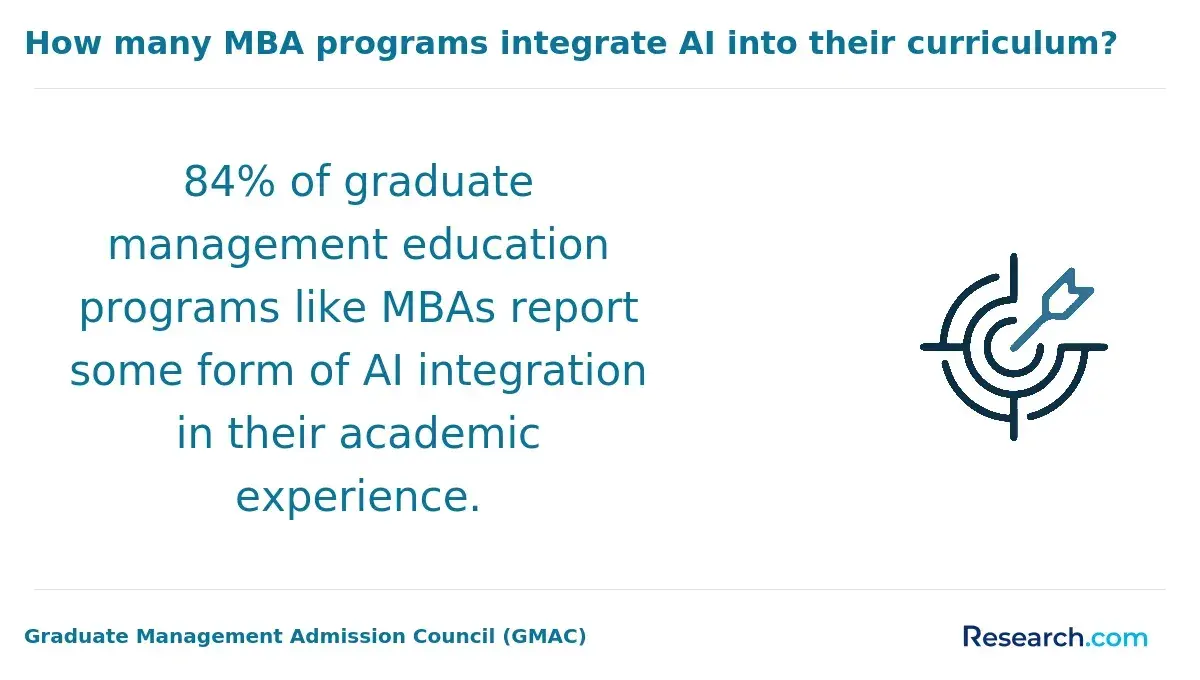
Growing demand for online MBA programs is evident in a 47% increase in exclusively distance enrollment between fall 2017 and fall 2022, while campus-based enrollment declined by 19%, per Encoura (2024). This shift influences evolving transfer policies and requirements to better support changing student demographics and learning preferences.
How long do online MBA programs take with transfers?
Online MBA programs that accept transfer credits usually take 12 to 24 months to complete, depending on how many credits are recognized and the school's curriculum structure. Most programs require 30 to 36 credit hours, and transferring courses can reduce the total credits needed, allowing students to finish faster. For instance, a student transferring 12 credits into a 36-credit program may complete the degree in as little as one year by attending full-time during accelerated terms. Part-time students might need up to two years, even with transfers.
Transfer policies differ widely, so it's important to confirm which graduate-level courses qualify. Some programs may not accept core courses in areas like finance, marketing, or management, which could affect the time to degree. Additionally, many schools limit the age of transferable credits to ensure knowledge remains current.
Enrollment trends highlight a shift toward flexible options: fully online MBA enrollment has grown from 30% to 38% among AACSB-accredited schools, while face-to-face participation dropped to 46% (AACSB, 2025). This flexibility supports transfer-friendly structures and multiple start dates, helping students balance work and study.
Key factors influencing time to degree when transferring include:
- The number of credits accepted
- Graduation credit hour requirements
- Whether transfer credits fulfill core curriculum
- Full-time versus part-time enrollment status
What is the average cost of transfer-friendly online MBAs?
Tuition costs for transfer-friendly online MBAs vary significantly, ranging from approximately $15,000 to $45,000 for the full program after applying transfer credits. Some public universities offer in-state tuition rates as low as $10,000, while private schools often charge between $30,000 and $60,000 without credit transfers. Transfer-friendly programs commonly accept 12 to 18 credits from accredited business coursework, which can reduce both time and financial commitment substantially.
For instance, if a program charges $1,200 per credit hour, applying 12 to 18 transfer credits could save between $14,400 and $21,600. Institutions such as Arizona State University and University of Florida provide clear transfer guidelines and maintain competitive prices that support working adults and parents balancing education with other responsibilities.
Additional fees like technology, application, and graduation costs may add $1,000 to $3,000 to overall expenses. Financial aid and employer tuition reimbursement programs can offset these costs but vary widely by institution. Comparing transfer policies alongside total expenses is essential for making an informed decision about enrolling in an online MBA program.
What careers can you pursue with an online MBA?
An online MBA degree opens pathways in sectors such as finance, healthcare, technology, and nonprofit organizations. Graduates often advance into leadership roles like financial manager, marketing director, operations manager, or business consultant. These roles require expertise in strategic planning, data analysis, and team management developed through MBA coursework.
Common career options include:
- Chief financial officer (CFO) or financial analyst in corporate environments
- Product manager or project leader in technology companies
- Healthcare administrator overseeing hospital operations or medical services
- Supply chain manager optimizing logistics and procurement
- Entrepreneur launching or expanding business ventures
- Marketing strategist shaping and implementing campaigns
Transfer-friendly online MBA programs accommodate working professionals by offering credit for prior education or experience, allowing progress without career interruptions. This flexibility reduces both time and cost, with the national average tuition around $30,627 and credit requirements ranging from 30 to 72 across more than 500 institutions, including 44 ranked in the U.S. News top 100 (Encoura, 2024).
Career changers acquire foundational business knowledge and networking essential for industry pivots, while experienced managers enhance leadership skills that can lead to higher positions and salaries. Many programs offer specialization options like finance, marketing, or supply chain management, helping students align studies with career goals.
Robust career support services in online MBA programs improve job placement and salary potential by applying practical skills to meet evolving business challenges across diverse roles and industries.
What is the average salary after an online MBA?
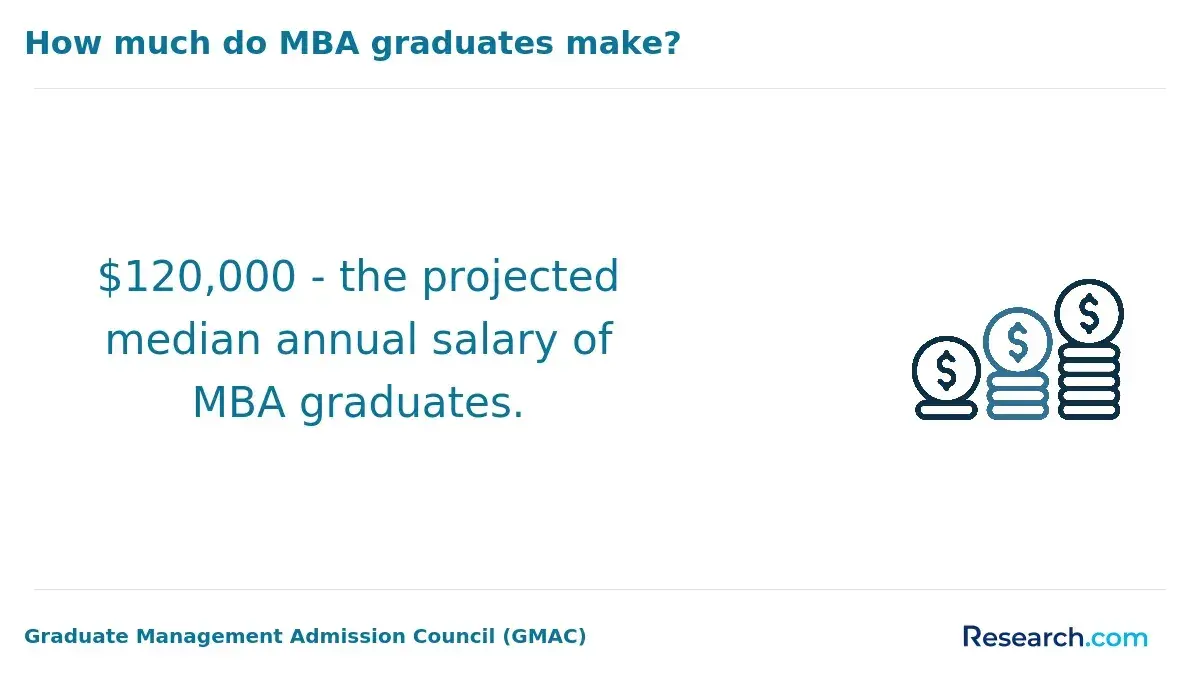
The average salary for those earning an online MBA in 2026 ranges from $90,000 to $115,000 annually, influenced by factors such as industry, prior work experience, and location. According to the Graduate Management Admission Council's 2023 MBA Alumni Perspectives Survey, graduates from online MBA programs report median starting salaries near $95,000, with mid-career salaries often climbing above $110,000.
Professionals in finance, consulting, and technology sectors tend to command higher salaries, sometimes exceeding $130,000, while those in nonprofit or public service roles typically earn between $70,000 and $85,000. Individuals with five or more years of experience before enrolling usually experience stronger salary growth after completing an online MBA.
- Salary increases are linked to the reputation and accreditation of the online program, with AACSB-accredited degrees generally valued more by employers.
- 78% of prospective MBA candidates prefer fully or partially online options for career advancement, showing a clear shift from traditional in-person learning formats.
When choosing transfer-friendly online MBA programs, it is important to evaluate program rankings, alumni salary benchmarks, and industry pay scales to ensure alignment with career goals and desired salary growth.
How to choose a reputable transfer-friendly online MBA?
Look for programs with explicit transfer policies designed for adult learners, including clear credit acceptance limits and consideration of graduate or professional coursework. Many reputable, transfer-friendly online MBA programs offer six to twelve months of credit, which can lower both the time to degree and tuition costs. Confirm that credits from accredited institutions, such as community colleges and international universities, are accepted.
Evaluate the flexibility of credit evaluation. Some programs accept credit-by-exam or recognize professional certifications like PMP or CFA to speed up degree completion. Dedicated academic advisors often assist transfer students in navigating course equivalencies and degree progression efficiently.
Check accreditation status from recognized bodies such as AACSB, ACBSP, or IACBE, ensuring the transferability and value of credits. Transfer-friendly programs usually maintain articulation agreements that allow smooth credit transfers without surprises. Investigate transfer success rates, including retention data and average transferred credits.
Transfer enrollment is rising, notably among students returning after stopouts, emphasizing the importance of flexible scheduling and support services. Prioritize programs offering clear online and asynchronous formats that accommodate working adults. Also, verify whether tuition or financial aid terms differ for transfer students.
Gather insights from current and former transfer students regarding administrative responsiveness and credit transfer transparency to better understand each program's effectiveness in supporting transfer learners.
Other Things You Should Know About MBA
In 2027, many transfer-friendly online MBA programs do accept credits from non-business undergraduate degrees. However, acceptance criteria vary by institution. Prospective students should verify specific credit transfer policies of their targeted programs to understand their flexibility and alignment with career goals.
Yes, many online MBA programs designed for adult learners offer flexible schedules, including asynchronous classes and multiple start dates throughout the year. This flexibility allows working professionals to balance studies with career and personal commitments effectively.
While online MBA programs may have fewer in-person networking events, many schools incorporate virtual networking platforms, group projects, and live sessions to foster connections among students and alumni. Some programs also offer local meet-ups or residencies to enhance networking opportunities.
Most online MBA programs prefer applicants with prior professional experience to enrich classroom discussions and peer learning. However, some programs may admit students with little or no work experience, but these are less common and may have different admission criteria.
References
- Free Online MBA Program - Swiss School of Business and Management Geneva https://www.ssbm.ch/free-online-mba-program-2/
- Best Online MBA Programs https://www.princetonreview.com/business-school-rankings
- Your Degree https://www.yourdegree.com/blog/online-mba-roi-and-salary/
- Career Changers' Guide to an Online MBA: What Transfers, What Doesn't, What Pays | IWU https://www.indwes.edu/articles/2026/03/career-changers-guide-to-online-mba
- How An Online MBA Can Lead to Career Change | Tulane https://online-business.tulane.edu/online-mba/articles/online-mba-career-change/
- How Long Does An Online MBA Take? | StudyNext Australia https://studynext.com/au/resources/how-long-does-an-online-mba-take
- MBA Course Duration | How Long to Complete an MBA? https://collegetiger.com/mba-course-duration-how-long-does-it-take-to-earn-an-mba/
- 7 Key Factors to Consider Before Choosing an Online MBA Program https://dsuonline.com/resources/blogs/7-tips-before-choosing-online-mba/
- Top 10 Online MBAs for Lifelong Learning | FIND MBA Online https://findmbaonline.com/lists/top-10-online-mba-programs-for-lifelong-learning
- Best 1 Year MBA Programs Online For Working Professionals https://hallford.education/best-1-year-mba-programs-online/