2027 Top Qualities Admissions Committees Want in SLP Applicants

Co-Founder and Chief Data Scientist
Many applicants face difficulty demonstrating what sets them apart in a competitive speech pathology admissions process. With diverse backgrounds and varying experiences, understanding what admissions committees prioritize is crucial to crafting a compelling application. This challenge often leaves promising candidates unsure how to align their strengths with program expectations.
This article explores the key qualities admissions committees seek in speech pathology applicants and offers guidance on highlighting these traits effectively. It aims to help prospective students refine their applications to enhance acceptance chances and pursue a successful career pivot into the field.
Key Things You Should Know
- Admissions committees in 2026 prioritize applicants with strong clinical experience, as 67% of programs report it directly influences admission decisions.
- Research involvement and evidence-based practice knowledge are crucial, with 53% of programs favoring candidates demonstrating up-to-date academic engagement.
- Interpersonal skills and cultural competence rank highly, reflecting the profession's move toward diverse, patient-centered care environments.
What qualities do admissions committees prioritize in SLP applicants?
Admissions committees prioritize several key skills sought by speech pathology admissions committees, reflecting a shift toward holistic evaluation. According to ASHA's 2025 CSD Education Survey, 68% of SLP programs now use holistic review processes, up from 52% in 2022. This means committees seek diverse applicant profiles beyond just GPA. Essential qualities include strong communication skills vital for effective interaction with clients, families, and interdisciplinary teams. Candidates must also demonstrate empathy and cultural competence, respecting diverse backgrounds and communication needs.
Relevant clinical and volunteer experience is highly valued in speech pathology program candidates, showing commitment and practical knowledge. Experience such as shadowing clinicians or working with communication disorder populations stands out. Leadership and teamwork abilities are critical, reflecting the collaborative nature of healthcare work. Additionally, critical thinking and problem-solving skills indicate an applicant's capability to adapt treatment plans thoughtfully.
Although academic preparedness remains important, programs increasingly favor balanced profiles combining solid records with resilience, adaptability, and ethical judgment. Clear written and spoken expression in application materials signals professionalism. Applicants should be ready to discuss their motivations for choosing SLP and connect personal values with career goals. Awareness of current industry challenges like telepractice and inclusivity also strengthens applications. For those exploring educational options, consider online MS SLP programs to advance your career with flexibility and affordability.
What academic prerequisites are required for SLP graduate programs?
SLP graduate programs require applicants to have a bachelor's degree, usually in communication sciences and disorders or a related field, to meet essential academic prerequisites for speech pathology master's programs. Key coursework typically includes anatomy and physiology of the speech mechanism, phonetics, linguistics, audiology, and research methods. Candidates from nontraditional backgrounds might qualify if they complete necessary prerequisite courses before enrollment.
Competitive admissions often hinge on academic performance. The CSDCAS Annual Report 2025 highlights an average admitted GPA of 3.62, though 22% of accepted students had GPAs between 3.0 and 3.4, often compensated by strong clinical experience, research involvement, or excellent recommendations. Programs generally expect prerequisite courses completed with grades of B or higher, ensuring solid foundational knowledge. Applicants without these may need additional courses after admission, so early planning is advised.
Standardized testing like the GRE is increasingly optional but should be confirmed per institution. Applicants should verify specific GPA and testing requirements as they vary by program and can impact acceptance chances. Beyond academics, prospective students often weigh outcomes like speech pathology salary to assess career value. For detailed insights on earning potential in this field, see speech pathology salary.
How important is clinical experience for SLP admissions?
Clinical experience requirements for slp admissions committees significantly influence acceptance chances. Applicants with more than 50 hours of guided clinical observation were 2.3 times likelier to be invited for interviews than those completing only the minimum 25 hours, according to ASHA EdFind Analytics 2025. This impact of hands-on clinical training on slp program acceptance underscores how admissions view such experience as evidence of readiness and genuine commitment.
Experience can come from shadowing licensed clinicians or volunteering in settings like pediatric clinics, hospitals, or community centers. Diverse clinical environments expose candidates to client interactions, assessment methods, and therapeutic techniques across various populations, including children with developmental delays and adults recovering post-stroke. Programs favor applicants who actively pursue clinical opportunities, even beyond formal education.
To enhance your application, prioritize exceeding minimal clinical hours by seeking roles as observers or assistants. These experiences enrich your adaptability and deepen your clinical knowledge, which strengthen interview responses and personal statements. Lack of sufficient clinical exposure can raise concerns about a candidate's familiarity with the profession's realities.
For those interested in accelerated options, SLP accelerated programs offer fast-tracked pathways that often emphasize clinical training components, helping applicants meet these critical clinical experience requirements efficiently.
What GRE scores and GPA do top SLP programs expect?
Top speech pathology programs generally expect GRE scores above the national average, with competitive applicants often presenting verbal scores of at least 150 and quantitative scores near 147 or higher. The writing section should score 3.5 or above to reflect strong analytical skills and clear communication. Some selective programs emphasize verbal reasoning more, aligning with the field's focus on language expertise. GRE score requirements for top SLP programs can be higher for those with a research focus, reflecting a demand for academic rigor.
Applicants typically need an average GPA needed for speech pathology admission of 3.5 or greater on a 4.0 scale. High grades in science and communication courses relevant to speech pathology strengthen applications. Those with lower GPAs should offset this with strong GRE results, research participation, or exceptional recommendation letters.
Research experience is increasingly important. In 2025, 41% of admits to research-oriented programs had undergraduate research experience, compared to just 12% in other programs, signaling readiness for graduate inquiry. Emphasizing research or clinical volunteer work can balance weaker academic metrics and improve admission chances. For a broader look at pathways, explore the easiest SLP masters programs to get into.
How do letters of recommendation impact SLP applications?
Letters of recommendation play a vital role in speech pathology applications by offering admissions committees an objective view of an applicant's qualifications, professionalism, and potential for success. These letters showcase qualities beyond grades and test scores, including communication skills, empathy, and leadership. Typically, strong recommendations come from clinical supervisors, professors, or employers familiar with the candidate's direct experience in speech pathology settings.
Effective letters provide specific examples of clinical competence, teamwork, and problem-solving. For example, highlighting an applicant's ability to manage complex cases or work with diverse client populations provides solid evidence of preparedness. Leadership roles, such as positions in the National Student Speech Language Hearing Association (NSSLHA), add considerable value. The NSSLHA Impact Survey 2025 found applicants with chapter leadership received 28% more positive feedback for demonstrating professional readiness.
Applicants should seek recommenders who know their work intimately and can offer personalized, detailed endorsements rather than generic praise. Supplying updated resumes and summaries of key experiences helps guide recommenders to align letters with program expectations and highlight strengths effectively. Such strategic, well-crafted letters validate an applicant's fit for graduate study and enhance their competitive edge in the admissions process.
What personal statement strategies strengthen SLP applications?
Strong personal statements for speech pathology applications highlight clinical and cultural readiness through clear, concise narratives. Admissions committees seek self-awareness, professional growth, and adaptability demonstrated through real experiences. Applicants benefit by illustrating work with diverse populations and how such interactions deepened their understanding of communication disorders and patient care. Linking personal motivation to practical outcomes-like improved patient engagement or tailored therapeutic approaches-adds persuasiveness.
Cultural competence plays a vital role. With 67% of speech pathology programs prioritizing this skill, describing involvement with multilingual or multicultural communities is advantageous. Such examples show how language diversity influences assessment and intervention strategies.
Quantifying achievements and tailoring statements to a program's mission, especially regarding diversity and inclusion, further strengthens applications. Admissions committees value reflective insight highlighting readiness to serve diverse populations with sensitivity and evidence-based care.
Are there specific certifications needed before applying to SLP programs?
No specific certifications are universally required before applying to speech pathology graduate programs in the United States. Admissions committees primarily evaluate academic records, prerequisite coursework, and relevant clinical or volunteer experience rather than pre-admission certifications.
While the Certificate of Clinical Competence in Speech-Language Pathology (CCC-SLP) is highly regarded, it is usually earned after completing the graduate program combined with supervised clinical practice. Instead, programs value applicants who show exposure to clinical settings through volunteer roles or assistant positions, which indicate practical understanding and readiness for graduate study.
Many programs recommend or require prerequisite courses in anatomy, linguistics, or psychology but treat these as academic requirements rather than formal certifications. Allied health-related credentials, such as Certified Nursing Assistant (CNA), can strengthen applications by demonstrating patient interaction experience, though they are not mandatory.
Communication skills are critically important. According to the Admit Lab Faculty Survey 2025, 34% of applicants with strong GPAs were rejected due to weak personal statements that undermined their perceived communication potential. A well-prepared personal statement reflecting strong interpersonal skills often weighs more heavily than pre-admission certification.
How do online versus campus SLP programs differ in admissions?
Campus and online speech pathology programs differ significantly in admissions priorities and expectations. Campus programs prioritize demonstrated interpersonal skills gained through direct clinical roles or team-based extracurricular activities. The ASHA Clinical Placement Report 2025 highlights that 76% of admits to hospital-affiliated campus programs showed teamwork in clinical settings, compared to only 31% in non-affiliated ones. This emphasizes the value traditional programs place on face-to-face collaboration and hands-on clinical experience.
Online programs, while rigorous, often emphasize academic credentials, self-directed learning, and digital communication skills. Because in-person clinical exposure is limited, they seek evidence of strong written communication, independent time management, and virtual teamwork via online projects or prior healthcare experience. Applicants to online programs should emphasize skills suited for remote or hybrid learning environments.
Practical considerations also play a role. Campus programs usually arrange clinical placements through hospital partnerships, requiring local engagement. Online programs may expect students to find placements independently, favoring candidates with flexible schedules and proactive planning.
Both pathways demand solid academic backgrounds. Prospective students should assess their strengths in either direct interpersonal collaboration typical of campus programs or disciplined remote study favored in online learning to boost their competitiveness in speech pathology admissions.
What interview preparation is essential for SLP admissions?
Focused preparation is essential for success in slp admissions interviews. Admissions committees place high value on candidates' professional reliability and interpersonal skills, with the SLP Admissions Deans Consortium 2025 noting 29% of applicants with GPAs above 3.8 faced rejection due to issues raised in recommendation letters concerning these traits.
Candidates should research typical questions about teamwork, clinical situations, and ethical challenges. Preparing concise, clear responses that demonstrate how you have accepted constructive feedback or adapted your approach strengthens your credibility. For example, be ready to discuss a time you improved performance after critique.
Practicing mock interviews with mentors or peers helps refine professional tone and communication. Recording these sessions can reveal tendencies like defensive language or overly long answers that need adjustment. Demonstrate punctuality, attentiveness, and respectful engagement during interviews. For virtual settings, testing your technology and environment to avoid distractions is crucial. Logging in early signals strong time management and enthusiasm.
When addressing weaknesses, frame them as learning experiences, emphasizing growth from academic or clinical challenges. Focus on examples showing perseverance, collaboration, and ethical decision-making. These qualities build a strong professional profile essential for slp program admissions.
Which accredited SLP programs best match applicant profiles?
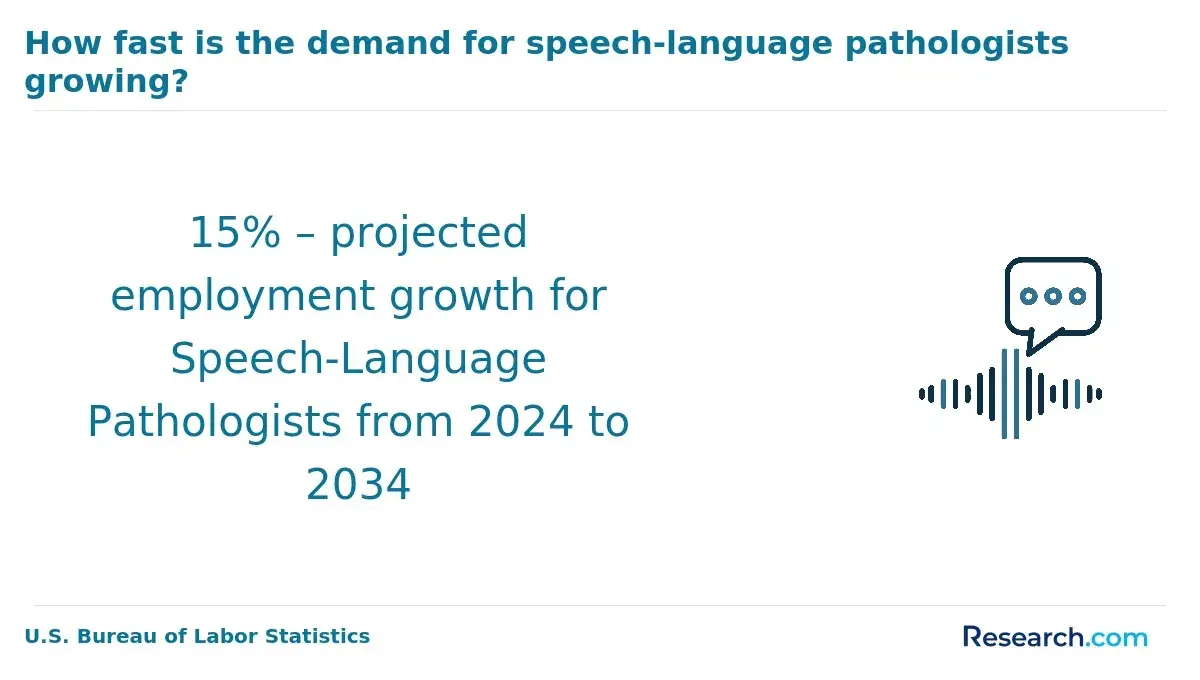
Accredited slp programs that emphasize clinical readiness and workforce alignment offer the best pathways to employment amid an 18% job growth projection from 2025 to 2030 and a median salary of $89,000 (BLS Occupational Outlook 2025). Programs with extensive practicum hours and strong partnerships in healthcare provide fast-tracked clinical experience crucial for career success.
The Council on Academic Accreditation (CAA) ensures these programs meet rigorous curricular standards. Within these accredited programs, specialization options vary; applicants focused on pediatric speech disorders should look for schools with pediatric clinics or collaborations with school districts, while those interested in adult neurogenic speech pathology benefit from ties to neurological rehabilitation centers.
Applicants with research interests may prefer universities featuring integrated research projects and faculty leadership. For those needing flexibility, hybrid or fully online accredited programs maintain clinical requirements while accommodating working adults. These factors help prospective students select accredited slp programs that maximize clinical preparedness and job market success in a rapidly expanding field.
Other Things You Should Know About Speech Pathology
By 2026, SLP admissions committees prioritize strong communication skills, cultural competence, and empathy. Applicants should also showcase evidence of critical thinking and problem-solving abilities, alongside a commitment to lifelong learning. Demonstrating a passion for helping diverse populations is also highly valued.
Cultural competence is essential for speech pathologists to provide effective, respectful care across diverse populations. Understanding a client's cultural and linguistic background helps tailor evaluation and intervention approaches that are both relevant and sensitive. This competence also reduces the risk of misdiagnosis and improves engagement by respecting clients' communication norms and values.
Technology is increasingly integral in speech pathology, with tools such as speech-generating devices, telepractice platforms, and specialized software enhancing assessment and therapy. Telepractice allows clinicians to reach clients in remote or underserved areas, improving access to services. Additionally, data tracking applications help clinicians monitor progress and adjust treatment plans efficiently.
Yes, certified speech pathologists must participate in continuing education to maintain their licensure and certifications. These requirements vary by state and certifying body but generally include completing a set number of professional development hours regularly. Ongoing education ensures clinicians stay current with advances in research, technology, and best practices within the field.
References
- Master in Speech-Language Pathology | SLP Online Program | USAHS https://www.usa.edu/college-of-rehabilitative-sciences/master-science-speech-language-pathology-ms-slp/
- Admission Requirements https://www.ualberta.ca/en/communications-sciences-and-disorders/programs/msc-in-speech-language-pathology/admissions/admission-requirements/index.html
- How to Get Into SLP Grad School in California: An Admissions Expert Guide - California Speech Pathology https://californiaspeechpathology.org/careers/speech-language-pathologist/get-into-slp-grad-school/
- Personal Statement for Graduate Application for Speech Pathology https://essayforum.com/graduate/statement-application-pathology-41202/
- Prep for the Speech Pathology School Interview https://speechpathologymastersprograms.com/become-speech-pathologist/how-to-get-into-speech-pathology-school/speech-pathology-school-interview-prep/
- Speech-Language Pathology Personal Statement Examples and Tutoring | Vince Kotchian Test Prep | GRE, SAT, & ACT Tutoring in San Diego, Near You, and Online https://vincekotchian.com/personal-statements/slp-personal-statements/
- How to Get into Speech Pathology (SLP) School https://teach.com/online-ed/healthcare-degrees/online-masters-speech-language-pathology/how-to-get-into-speech-pathology-school/
- How Hard Is It to Get into Speech Pathology? Easier with my tips! https://speechymusings.com/the-graduate-school-application-process/
- A Guide To Preparing For A Job Interview With An SLP - WELL SAID: Toronto Speech Therapy https://www.torontospeechtherapy.com/blog/2026/a-guide-to-preparing-for-a-job-interview-with-an-slp/
- LOR Secrets: What Admissions Committees Really Look For | IvyEdgeSOP Blog https://ivyedgesop.com/blogs/lor-secrets-admissions-committees