2027 Can You Become a Speech-Language Pathologist Fully Online?

Co-Founder and Chief Data Scientist
Many prospective students with unrelated undergraduate degrees face challenges balancing work, family, and education while pursuing a career shift to speech pathology. Traditional programs often require in-person attendance, creating logistical and financial barriers. This limitation can delay or deter motivated candidates from entering the field. Understanding whether a fully online pathway exists is crucial for those seeking flexibility without compromising accreditation and licensure requirements. This article explores the viability of becoming a speech-language pathologist through fully online programs, clarifying accreditation standards, clinical practice mandates, and practical steps to help readers identify credible and accessible educational options.
Key Things You Should Know
- As of 2026, accredited programs offering fully online graduate degrees in speech-language pathology remain limited due to strict clinical practicum and in-person evaluation requirements set by the American Speech-Language-Hearing Association (ASHA).
- Students must complete at least 400 supervised clinical hours, typically requiring hybrid models combining online coursework with in-person clinical training for state licensure eligibility.
- The growing adoption of telepractice allows some clinical experiences remotely, but full licensure relies on programs meeting ASHA's comprehensive competencies, restricting fully online pathways to practice.
Can you become a speech-language pathologist fully online?
You can complete master's level theoretical coursework in speech pathology programs fully online, benefiting students who need flexible schedules or live in rural areas. Accredited online speech pathology degrees for licensure typically cover essential topics such as phonetics, speech science, and language development through video lectures, interactive assignments, and virtual discussions. However, clinical practica requirements cannot be fulfilled entirely online. The American Speech-Language-Hearing Association (ASHA) mandates supervised in-person clinical hours, usually arranged locally, to ensure hands-on experience in diagnostics and therapy.
Admission to these programs remains highly competitive, with about 45% acceptance rate among over 52,000 nationwide applicants. Strengthening your application beyond GPA and GRE, such as gaining relevant experience, is crucial-especially since many online speech pathology programs attract working professionals. Selecting a program with ASHA accreditation is essential for certification and licensure across states.
Early planning for clinical placement is vital because remote alternatives cannot replace required in-person practicum hours. For prospective students exploring options, finding affordable and accredited options can be simplified by reviewing speech pathology programs online.
What are the accreditation requirements for SLP programs?
The Council on Academic Accreditation in Audiology and Speech-Language Pathology (CAA) sets rigorous accreditation standards for speech-language pathology programs. These standards ensure that curriculum, faculty qualifications, and clinical practicum experiences meet requirements for certification by the American Speech-Language-Hearing Association (ASHA) and state licensure. Students must graduate from a CAA-accredited program to qualify for these credentials.
Programs must provide comprehensive theoretical knowledge coupled with supervised clinical practice. The clinical hours involve direct contact with diverse client populations facing a variety of communication and swallowing disorders, preparing graduates for entry-level professional roles. Such certification requirements for speech-language pathologists in the United States are strictly upheld to maintain the profession's quality.
While program options include campus-based, hybrid, and a limited number of primarily online programs, accreditation demands that the quality of education and clinical experiences be equivalent across formats. Out of 326 master's SLP programs accredited or in candidacy, only about 30 offer mostly online coursework, reflecting challenges in delivering hands-on clinical training remotely.
Prospective students should confirm that online programs provide accredited in-person clinical placements near their locations. Accreditation status can vary, so checking CAA's current listings is vital to ensure program credibility. Choosing accredited programs supports eligibility for the ASHA Certificate of Clinical Competence, essential for professional and licensure pathways.
For those exploring career options, the highest paid SLP positions often require solid academic instruction combined with accredited clinical training.
Is ASHA certification possible with an online SLP degree?
The American Speech-Language-Hearing Association (ASHA) certification can be earned with an online speech pathology degree, but the program must meet strict accreditation and clinical practicum requirements. Specifically, the program needs accreditation from the Council on Academic Accreditation in Audiology and Speech-Language Pathology (CAA). Online SLP degree accreditation requirements also include supervised clinical experiences that adhere to ASHA's standards, which cannot be completed independently but must be arranged through partnerships with local healthcare or educational settings.
Many accredited online speech pathology programs combine remote coursework with on-site clinical placements to satisfy these standards. For example, James Madison University's distance SLP cohort achieved a 100% Praxis pass rate, demonstrating that earning ASHA certification through online speech pathology programs is effective even without full on-campus attendance.
Prospective students should verify that their chosen program includes:
- CAA accreditation status
- Structured clinical practicum placements available locally
- Preparation aligned with the Praxis Examination in Speech-Language Pathology
In addition to coursework, candidates must complete the Clinical Fellowship Year (CFY), involving supervised professional experience after graduation, which cannot be fully online but can be arranged near the candidate's residence. Ensuring employer or site eligibility for meeting ASHA's CFY standards is essential for state licensure.
Those interested in accelerated options might explore 5 year accelerated speech pathology programs to efficiently meet these requirements and advance their careers.
What degrees are needed to become a speech-language pathologist?
To qualify for a career as a speech-language pathologist, candidates must earn a master's degree in speech-language pathology or communication sciences and disorders from an accredited program. While a bachelor's degree in any field is acceptable, foundational undergraduate coursework in linguistics, biology, anatomy, psychology, and communication is recommended to prepare for graduate-level study.
The master's degree usually takes two years, integrating coursework with supervised clinical practicum experiences. Completion of this program is crucial for eligibility to pursue the Certificate of Clinical Competence in Speech-Language Pathology (CCC-SLP) and obtain state licensure. Some students opt for combined bachelor's and master's pathways lasting around five years, accelerating the process while maintaining the same graduate requirements.
Postgraduate doctoral degrees, such as PhD or AuD, focus primarily on research or audiology rather than clinical speech pathology practice. Admissions to master's programs remain competitive; recent data shows accepted applicants typically hold GPAs between 3.08 and 3.98 and often bring relevant volunteer or clinical experience.
Increasingly, online speech-language pathology graduate programs requirements include hybrid or fully online coursework, but all still mandate in-person clinical placements for accreditation and certification compliance. Prospective students should confirm program accreditation through the Council on Academic Accreditation (CAA) and verify availability of local practicum opportunities.
For those exploring options, information about the easiest programs to enter and their degrees required to become a speech-language pathologist online can be found at speech pathologist degree.
How does online SLP curriculum compare to on-campus?
Online speech-language pathology (SLP) programs maintain rigorous academic standards comparable to traditional on-campus curricula, ensuring alignment with Council on Academic Accreditation (CAA) criteria. However, they differ in delivery methods, relying heavily on asynchronous coursework and digital communication, which requires strong self-motivation and independent study skills.
Clinical practicum arrangements in online programs are typically the student's responsibility to coordinate locally, unlike on-campus programs where institutions often handle placement. It is important to verify how clinical hours will be supervised and whether regional restrictions affect the availability of practicum sites.
Cost is a significant factor, as tuition can vary widely. For instance, the University of Tennessee charges $286 per credit for in-state online students, while non-residents pay $817 per credit, demonstrating the impact of residency and program selection on expenses, according to onlinespeechpathologyprograms.org.
Online SLP courses offer flexibility ideal for working professionals or those with family commitments, allowing study without relocation. However, the lack of face-to-face interaction might limit mentoring and peer collaboration opportunities valued by some students.
- Check accreditation status and CAA standards alignment
- Clarify clinical practicum supervision and local placement options
- Consider tuition differences based on residency and program format
- Evaluate your learning style for remote education compatibility
- Assess access to faculty and peer support networks
What are typical admission requirements for SLP programs?
Admission to speech-language pathology programs typically requires a bachelor's degree from an accredited institution along with prerequisite coursework in subjects like anatomy, physiology, linguistics, psychology, and statistics. These foundational courses help ensure students have the necessary background for graduate studies. Many programs also set a minimum GPA requirement, commonly around 3.0 on a 4.0 scale, to reflect academic consistency.
Applicants often need to submit letters of recommendation, generally from professors or professionals familiar with their academic or clinical abilities. A personal statement outlining career goals, interest in speech pathology, and relevant experiences is usually required. Some programs prefer applicants to have clinical or volunteer experience; for instance, Western Kentucky University's online master's program requires 25 guided observation hours as part of its 60-credit curriculum.
Standardized tests like the GRE may be optional or waived by many programs, but it is important to confirm specific requirements for each school. International applicants commonly must prove English language proficiency through tests such as TOEFL or IELTS.
Programs accredited by the Council on Academic Accreditation in Audiology and Speech-Language Pathology (CAA) adhere to professional standards, preparing students effectively for certification and licensure.
How long do online SLP programs take to complete?
Online speech-language pathology (SLP) master's programs usually require two to three years to finish, similar to traditional on-campus degrees. Students enrolling full-time often complete the program in about two years, while part-time options may extend to three or more years, allowing flexibility for working professionals or those with other commitments.
Program pacing varies by institution, with some offering accelerated paths through heavier course loads or year-round enrollment, including summer sessions. Others provide a more extended schedule to accommodate clinical practicum placements, which remain essential in SLP training, even for online learners. Clinical hours required for certification must be completed in person and are arranged locally by students in coordination with their programs.
Idaho State University's online SLP program demonstrates successful outcomes with a three-year average Praxis pass rate of 97%, highlighting the effectiveness of well-structured online curricula and clinical support. Prospective students should verify a program's accreditation and support for clinical placements to ensure they can complete required practicum hours on time.
Consider these factors when selecting a program:
- Full-time vs. part-time enrollment options
- Availability of accelerated study tracks
- Support for arranging local clinical practicum sites
- Accreditation and program outcomes such as Praxis pass rates
Expect to invest two to three years in an online speech pathology master's degree, with the timeline influenced by your scheduling preferences and the program's clinical integration model.
What is the average cost of an online SLP master's degree?
The cost of an online master's degree in speech-language pathology (SLP) varies widely, typically ranging from $30,000 to $70,000 based on factors like institution type, residency status, and program length. Public universities often offer in-state tuition rates between $30,000 and $40,000, while private schools and out-of-state students may encounter tuition fees above $60,000. Many programs charge per credit hour, typically between $800 and $1,200, with most requiring around 60 to 70 credits in total.
Beyond tuition, additional expenses may include technology fees, textbooks, and clinical practicum costs, which can add several thousand dollars. Financial aid, scholarships, and assistantships are sometimes available for online learners and can help reduce these costs.
Purdue University's online master's in speech-language pathology program is notable, boasting a 96% on-time graduation rate and a 100% pass rate for the Praxis exam among its recent graduates, as reported by bestcolleges.com. These outcomes illustrate the importance of evaluating program quality alongside price.
When comparing program costs, consider total fees instead of just per-credit tuition. Also review accreditation, online student support, and clinical placement assistance, as these factors influence educational quality and career prospects. Careful budgeting and researching graduate outcomes ensures your investment supports your professional goals in speech pathology.
What is the salary outlook for speech-language pathologists?
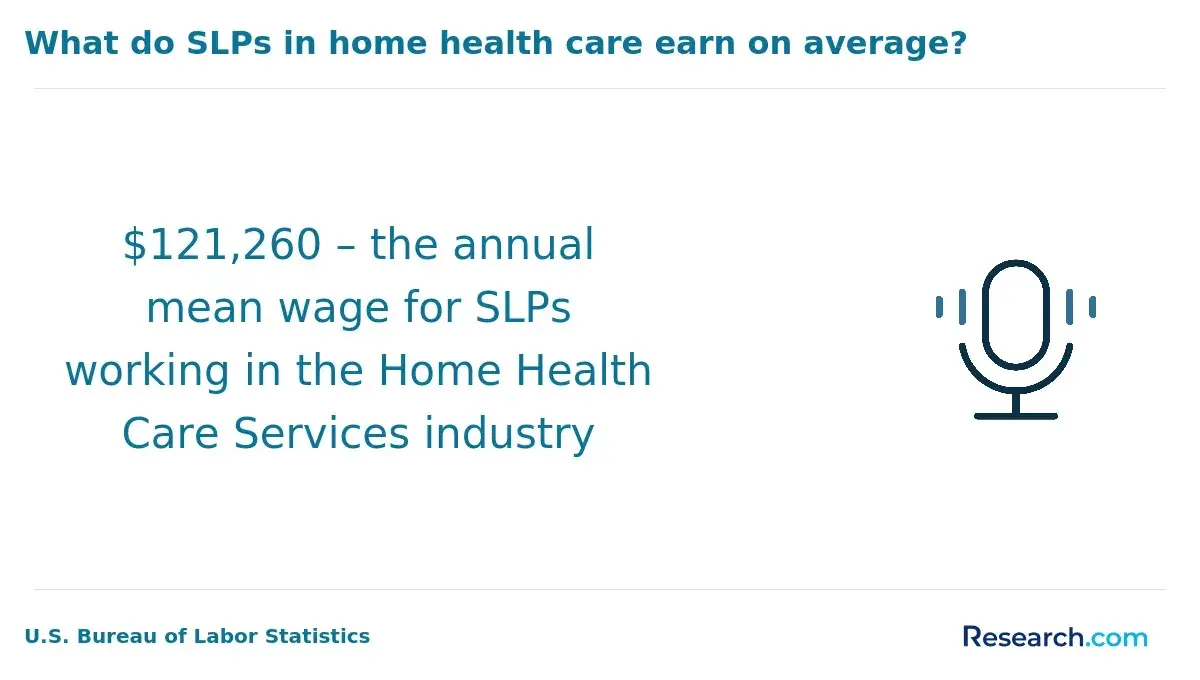
The salary outlook for speech-language pathologists shows strong growth driven by demand in healthcare and education. According to the U.S. Bureau of Labor Statistics, the median annual wage was about $82,000 in 2024, with the top 10% earning over $120,000. Salaries vary based on setting, location, and experience.
Speech-language pathologists working in hospitals or specialized healthcare often earn more than those in school environments. Urban areas with higher living costs typically offer better pay compared to rural regions. Advancing through certification or earning a doctorate can boost earning potential.
Specializing in areas like pediatric or neurological speech disorders may lead to premium salaries due to higher demand. Expertise in telepractice is increasingly valuable, enabling broader client access and additional income streams.
The University of North Carolina-Chapel Hill's speech pathology program graduates enjoy a 98.5% on-time graduation rate over three years, helping students enter the workforce sooner and maximize earnings. Timely completion and licensure are critical factors when assessing education investments in this field.
Career paths in speech pathology are shaped by education quality, specialization, location, and how effectively one leverages new practice methods like telehealth to meet today's digital demands.
What is the job outlook for speech-language pathologists?
Employment for speech-language pathologists is expected to grow by 21% from 2024 to 2034, according to the U.S. Bureau of Labor Statistics, driven by an aging population and increased recognition of developmental speech disorders. This growth rate is much faster than average for all occupations.
Career opportunities exist in various settings: schools use speech-language pathologists to support children with speech and language impairments under federal education laws; hospitals hire them to assist patients recovering from neurological conditions; and rehabilitation centers and private practices also provide employment options.
Prospective students should consider the financial commitment involved in education. Emerson College offers an online MS in Communication Disorders at $1,495 per credit, totaling $80,730 for the 54-credit program. This specialized training and the licensure process are essential steps for entering the profession.
Graduates need state licensure and often national certification to practice. Continuous professional development remains important due to advances in treatment technology and evolving disorders. Focusing job searches on areas with growing elderly populations or underserved schools can improve employment prospects.
Other Things You Should Know About Speech Pathology
Candidates must complete a supervised clinical fellowship to qualify for certification by the American Speech-Language-Hearing Association (ASHA). This fellowship typically requires at least 36 weeks of full-time professional experience or its part-time equivalent, involving direct patient care under the supervision of a licensed SLP. Practical exposure helps candidates develop essential skills in assessment, intervention, and professional conduct.
Speech pathology offers various specializations such as pediatric speech therapy, voice disorders, swallowing disorders, and fluency therapy. Specialists often pursue additional certifications or training areas to enhance expertise and career prospects. These focused skills allow practitioners to better serve specific populations or address niche communication challenges.
Licensed speech-language pathologists must engage in continuing education to maintain state licensure and ASHA certification. Requirements vary by state but generally include completing a minimum number of professional development hours every few years. This ongoing learning ensures that practitioners stay current with evolving techniques, technology, and best practices in the field.
References
- How Long to Become an SLP in California? A Step-by-Step Timeline - California Speech Pathology https://californiaspeechpathology.org/careers/speech-language-pathologist/how-long/
- Master of Science in Speech-Language Pathology (M.S.) https://delval.edu/programs/graduate-programs/speech-language-pathology
- Top 10 Budget-Friendly Online Master’s in Speech Therapy for 2024 – Specialist Language Courses https://specialistlanguagecourses.com/top-10-budget-friendly-online-masters-in-speech-therapy-for-2024/
- Best Online Speech-Language Pathology (SLP) Programs 2025 https://onlinespeechpathologyprograms.org/best-online-slp-programs/
- Admission Requirements https://www.ualberta.ca/en/communications-sciences-and-disorders/programs/msc-in-speech-language-pathology/admissions/admission-requirements/index.html
- Becoming an SLP https://speechandhearingbc.ca/professional/careers/becoming-an-slp/
- How Long Does It Take to Become a Speech-Language Pathologist? https://slponline.ithaca.edu/blog/how-long-become-speech-pathologist
- The Future Career Outlook for Speech-Language Pathologists https://shccares.com/blog/allied-health/the-future-career-outlook-for-speech-language-pathologists/
- Speech-Language Pathology Prerequisites Online https://www.longwood.edu/slponline/
- How to Become a Speech-Language Pathologist https://www.mghihp.edu/news-and-more/opinions/csd-discussions/how-become-speech-language-pathologist