2027 Bilingual and Multicultural Speech Pathology Programs

Co-Founder and Chief Data Scientist
Choosing a bilingual and multicultural speech pathology program is not just about finding a speech-language pathology degree with a language elective. The key question is whether the program prepares you to assess, diagnose, and treat communication disorders fairly across languages, dialects, cultures, and care settings. That matters because inappropriate assessment or limited cultural preparation can lead to misdiagnosis, weaker therapy outcomes, and fewer career options in schools, hospitals, clinics, and community-based services.
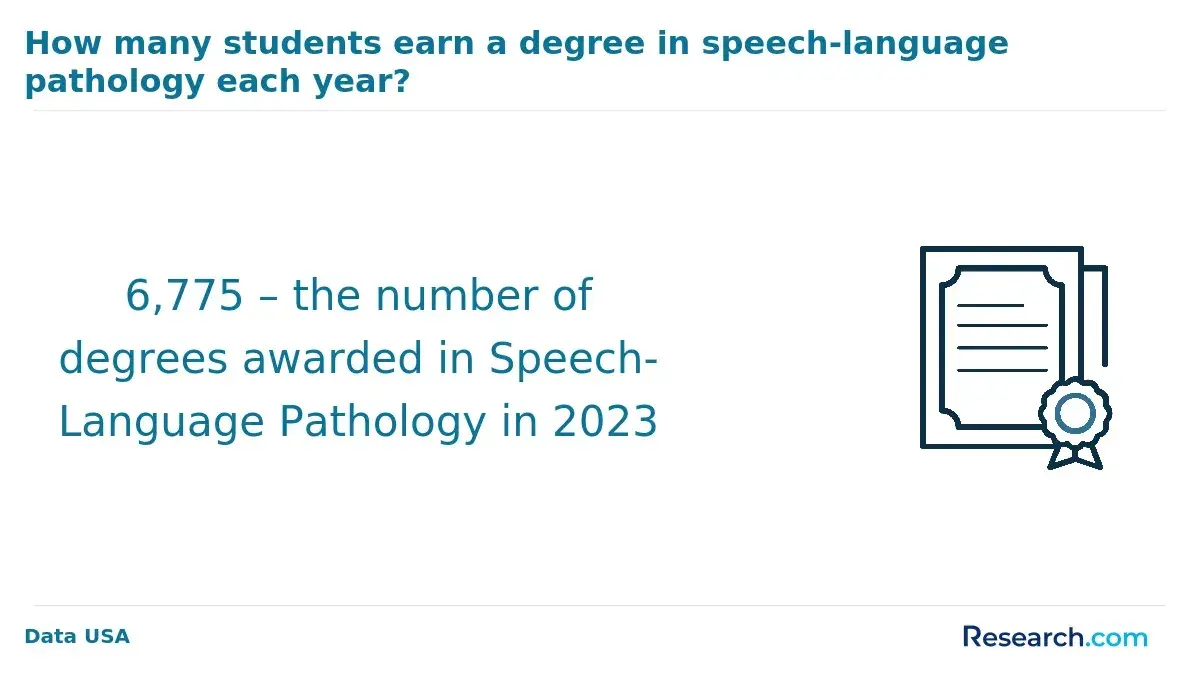
These programs are designed for aspiring or current speech-language professionals who want stronger preparation for multilingual clients, culturally responsive care, and communication differences that cannot be evaluated through a one-language, one-culture lens. With 6,775 degrees awarded nationwide and growth of 3.01% annually, bilingual and multicultural speech pathology is a focused path within a high-demand clinical field.
This guide explains how long these programs take, where graduates work, salary expectations, typical costs, financial aid options, prerequisites, coursework, specializations, program selection criteria, career paths, and the job market. It is written to help you compare programs carefully and choose one that supports licensure, clinical readiness, and long-term career goals.
What are the benefits of pursuing a bilingual and multicultural speech pathology programs?
- Employment of speech-language pathologists is projected to grow 15% from 2024 to 2034, much faster than the average for all occupations.
- The median annual wage for speech-language pathologists was $89,290, with the top 10% earning more than $129,930.
- Graduates can work in schools, hospitals, rehabilitation centers, nursing homes, and private practices, addressing a wide range of speech and language disorders.
How long does it take to complete a bilingual and multicultural speech pathology program?
A bilingual and multicultural speech pathology program typically takes two to four years to complete, depending on the degree level, enrollment status, clinical placement requirements, and whether the program is offered online, on campus, or in a hybrid format. Most students preparing to become licensed speech-language pathologists pursue a graduate-level program because clinical practice generally requires advanced training and supervised clinical experience.
Students in master’s-level programs often complete advanced coursework in language development, speech sound disorders, assessment, intervention planning, research methods, and culturally responsive clinical practice. Doctoral pathways take longer and are usually designed for students interested in research, higher education, leadership, or advanced clinical specialization.
Online and accelerated formats can shorten the time to graduation for students who already meet prerequisites and can manage a heavier course load. However, faster does not always mean easier. Students still need to complete supervised clinical practica, meet program performance standards, and prepare for certification or licensure requirements. Before enrolling in accelerated speech pathology programs online, confirm how clinical placements are arranged, whether bilingual or multicultural placement sites are available, and whether the program supports the credentialing requirements in the state where you plan to practice.
- Full-time master’s route: Often the quickest route for students who already have the required academic background.
- Part-time route: Better for working adults, but it usually extends the timeline.
- Doctoral route: Appropriate for students focused on research, university teaching, policy, or advanced specialization.
- Accelerated online route: Convenient and potentially faster, but students should verify accreditation, clinical support, and state authorization before applying.
Where can you work with a bilingual and multicultural speech pathology degree?
Graduates with bilingual and multicultural speech pathology preparation can work in many of the same settings as other speech-language pathologists, but their training is especially valuable in environments serving multilingual families, immigrant communities, culturally diverse school districts, and patients whose communication needs are shaped by more than one language or dialect.
The best workplace depends on the population you want to serve, the pace of care you prefer, and whether you want a school-year schedule, medical setting, private caseload, or community-based role.
- Healthcare (44%): Many speech-language pathologists work in hospitals, outpatient clinics, rehabilitation centers, nursing care facilities, and home health settings. Bilingual and multicultural skills are especially useful when evaluating patients after strokes, brain injuries, neurological conditions, or swallowing-related disorders when language access and family communication are critical.
- Education (30%): Schools need clinicians who can distinguish language disorders from typical second-language acquisition or dialect variation. Professionals in preschools, K-12 schools, and universities may support individualized education plans, classroom communication strategies, family meetings, and culturally appropriate evaluations.
- Professional services (10%): Private practices and specialized clinics often serve children, adults, and families seeking individualized therapy. This setting may allow clinicians to focus on bilingual assessment, accent modification, pediatric therapy, adult rehabilitation, or culturally responsive intervention.
- Government (3%): Government roles may involve public health programs, early intervention services, disability services, or community outreach. These positions can be a strong fit for professionals interested in access, policy, and services for underserved populations.
- Nonprofits (3%): Nonprofit organizations may serve refugees, low-income families, children with developmental needs, older adults, or communities with limited access to speech-language services. Bilingual clinicians can help reduce barriers to care and improve service equity.
When comparing job settings, look beyond the job title. Ask about caseload size, interpreter support, documentation expectations, supervision, language access policies, and whether the employer has assessment tools appropriate for multilingual clients.
How much can you make with a bilingual and multicultural speech pathology degree?
A bilingual and multicultural speech pathology degree can lead to competitive earnings, but income depends on the role, location, employer type, credentials, experience, and clinical specialty. The average annual salary is $87,654, or approximately $42 per hour. Entry-level professionals earn around $58,275 annually, while top earners can make up to $122,425 per year.
Salary should be evaluated alongside benefits, workload, contract length, and clinical support. For example, a school role may offer a different work calendar than a hospital position, while private practice may provide more flexibility but require stronger business, billing, and client-management skills.
| Salary factor | How it can affect earnings |
| Experience level | New clinicians usually start lower on the pay scale, while experienced professionals, supervisors, specialists, and practice owners may earn more. |
| Location | Pay varies by state and labor market. California averages $96,682, while Texas averages $85,497. |
| Work setting | Healthcare settings often pay more than educational institutions, especially when the role requires medical knowledge, swallowing expertise, or complex rehabilitation work. |
| Education and certification | Advanced degrees, professional certifications, and licensure-aligned training can improve access to higher-responsibility roles. |
| Specialization | Focused expertise in areas such as pediatric or geriatric therapy may strengthen job prospects and earning potential. |
Bilingual ability can be an advantage, but it does not automatically guarantee higher pay. The strongest candidates can document clinical competence, cultural responsiveness, assessment skill, and the ability to provide services ethically across languages.
What is the average cost of a bilingual and multicultural speech pathology program?
The average cost of a bilingual and multicultural speech pathology program varies widely by institution type, residency status, degree level, and delivery format. Students can expect to pay between $12,000 and $70,000 for the entire program.
In-state tuition at public universities averages around $17,500 per year, while private institutions can charge significantly more. Published tuition may not reflect the full cost of attendance, so applicants should review required fees, clinical placement expenses, textbooks, technology requirements, travel, background checks, immunizations, and any costs tied to in-person residencies or practica.
Online programs can reduce relocation and commuting costs, but they are not automatically cheaper. Some online programs charge technology fees or require students to secure clinical placements near their home community. On-campus programs may offer stronger local clinical networks but can require relocation or a higher cost of living.
- Ask for total program cost, not just per-credit tuition. A low per-credit rate may still be expensive if the program requires more credits or added fees.
- Compare public and private options carefully. Public universities may be more affordable for residents, while private programs may offer institutional scholarships.
- Budget for clinical training. Clinical placements may involve transportation, professional clothing, health documentation, liability coverage, or site-specific requirements.
- Confirm whether tuition differs for online students. Some schools charge the same rate regardless of residency, while others do not.
What are the financial aid options for students enrolling in a bilingual and multicultural speech pathology program?
Financial aid can reduce the out-of-pocket cost of a bilingual and multicultural speech pathology program, but students should compare aid packages carefully. The most affordable option is not always the school with the lowest tuition; it is the program with the best combination of total cost, grants, scholarships, loan terms, clinical quality, and licensure alignment.
- Federal grants: Grants such as the Pell Grant do not need to be repaid and are awarded based on financial need. Eligibility may depend on degree level and student status.
- Federal loans: Direct Subsidized and Unsubsidized Loans can help students finance tuition and related costs. Borrow only what you need and compare repayment obligations before accepting the full amount offered.
- Scholarships: Universities, foundations, and professional organizations may offer merit-based or need-based awards for speech pathology students. Some awards may prioritize bilingual students, students serving underserved communities, or applicants with strong academic records.
- Work-study programs: Federal work-study allows eligible students to earn money through part-time employment. Field-related campus or clinic roles can also build experience.
- State aid: Some states offer grants, tuition assistance, or workforce incentives for residents pursuing graduate-level health professions.
- Employer tuition assistance: Healthcare organizations, school districts, and clinics may provide partial or full tuition reimbursement for employees pursuing relevant degrees. Check whether reimbursement requires continued employment after graduation.
- Private loans: Banks and credit unions may offer loans to cover remaining costs. These should usually be compared after federal and institutional options because rates, repayment protections, and deferment terms can differ.
Before committing to a program, request a written estimate of tuition, fees, and aid for the full degree. Also ask whether scholarships are renewable, whether assistantships are available, and whether financial aid continues during clinical practicum terms.
What are the prerequisites for enrolling in a bilingual and multicultural speech pathology program?
Prerequisites vary by school, but most bilingual and multicultural speech pathology programs look for applicants with strong preparation in communication sciences, language development, anatomy, and clinical observation. Programs also evaluate whether applicants understand the ethical and practical demands of working with multilingual and culturally diverse clients.
- Bachelor’s degree: Most programs require a degree in communication sciences, linguistics, psychology, or a related field. Students from other majors may need leveling or bridge coursework before beginning graduate study.
- Prerequisite coursework: Courses in anatomy, physiology, phonetics, and language development are often required. Some programs may also expect coursework in speech and hearing science, audiology, statistics, or research methods.
- GPA requirements: A minimum GPA, often around 3.0, demonstrates academic readiness. Competitive programs may consider the overall GPA, major GPA, prerequisite GPA, and recent academic performance.
- Standardized tests: Some programs require GRE scores, although many schools have made them optional. If the GRE is optional, applicants should decide whether scores strengthen or weaken the overall application.
- Clinical or volunteer experience: Hands-on work with speech-language populations can strengthen an application, especially if it shows exposure to multilingual, pediatric, adult, medical, school-based, or community settings.
- Letters of recommendation: Two to three letters from professors, supervisors, clinicians, or research mentors are usually needed. Strong letters should speak to academic ability, communication skills, professionalism, and readiness for clinical training.
- Statement of purpose: The essay should explain career goals, interest in bilingual and multicultural therapy, relevant experience, and how the program fits the applicant’s professional plans.
Applicants should not assume that being bilingual is the same as being clinically prepared to serve bilingual clients. Programs may value language skills, but they also expect applicants to understand assessment ethics, language difference versus disorder, cultural humility, and evidence-based intervention.
What courses are typically in a bilingual and multicultural speech pathology program?
A bilingual and multicultural speech pathology program includes courses that build clinical judgment, diagnostic skill, intervention planning, and cultural responsiveness. The strongest curricula connect theory with supervised practice so students learn how communication disorders appear across languages, dialects, ages, and care settings.
- Language development: Students study typical language acquisition across age groups and cultural contexts, including how multilingual development may differ from monolingual development without indicating a disorder.
- Speech disorders: This course covers identification and treatment of articulation, fluency, and voice disorders. Students learn how to avoid confusing dialect features or second-language influence with clinical impairment.
- Bilingual assessment techniques: Students learn strategies for evaluating speech and language in multilingual individuals, including case history, dynamic assessment, interpreter collaboration, and culturally appropriate testing practices.
- Neurological and medical aspects of communication: This coursework examines how neurological conditions, illness, injury, and medical treatment can affect speech, language, cognition, and swallowing.
- Clinical practicum: Supervised hands-on experience allows students to apply classroom knowledge with real clients under professional guidance. Applicants should ask whether practicum sites include multilingual and multicultural populations.
- Research methods: Students learn to evaluate and conduct evidence-based research, interpret clinical data, and apply findings to improve assessment and therapy outcomes.
Other courses may address counseling, ethics, audiology, augmentative and alternative communication, literacy, dysphagia, cognitive-communication disorders, and professional issues. When reviewing a curriculum, look for more than a single diversity course. Strong programs integrate cultural and linguistic considerations across assessment, intervention, practicum, and research.
What types of specializations are available in a bilingual and multicultural speech pathology program?
Specializations allow students to focus their clinical training on a population, disorder area, or practice setting. In bilingual and multicultural speech pathology, the best specialization is one that matches both your language strengths and your preferred client population.
- Pediatric speech therapy: Focuses on diagnosing and treating speech and language disorders in children, including those from multilingual households. This path is common for students interested in schools, early intervention, and child development clinics.
- Adult rehabilitation: Prepares students to work with adults recovering from strokes, brain injuries, or neurological disorders. This track often connects to hospitals, rehabilitation centers, skilled nursing facilities, and outpatient clinics.
- Accent modification and dialect coaching: Trains clinicians to help clients adjust speech patterns for clearer communication in professional or social settings. Ethical practice is important because accent and dialect differences are not disorders.
- Multilingual communication disorders: Emphasizes assessment and therapy techniques for clients who speak multiple languages or dialects. Students learn to evaluate communication ability without relying on inappropriate monolingual norms.
- Clinical leadership: Prepares graduates to manage therapy programs, supervise staff, coordinate services, or direct speech-language services in healthcare or educational settings.
Speech pathology graduate programs may allow students to combine specialized coursework with targeted clinical practica. When comparing specializations, ask how many placement sites serve the population you want to work with, whether faculty have relevant clinical expertise, and whether students receive supervision from clinicians experienced in bilingual or multicultural practice.
How to Choose the Best Bilingual and Multicultural Speech Pathology Program
The best bilingual and multicultural speech pathology program is the one that prepares you for competent clinical practice, meets credentialing expectations, fits your budget, and gives you access to the populations you want to serve. A program can look attractive online but still be a poor fit if it lacks supervised bilingual clinical experiences or does not align with state licensure requirements.
- Accreditation: Ensure the program is accredited by the Council on Academic Accreditation (CAA) to meet certification and licensure requirements. Accreditation is one of the first items to verify because it can affect eligibility for professional credentials and employment.
- Clinical experience: Look for programs that offer diverse, supervised clinical practica with multilingual and multicultural populations. Ask who arranges placements, whether placements are guaranteed, and how the program handles students who live far from campus.
- Program length and format: Consider online, hybrid, full-time, part-time, and accelerated options. A speech pathology accelerated program may help you finish sooner, but only if you can manage the pace and complete clinical requirements without compromising preparation.
- Faculty expertise: Faculty with experience in bilingual and multicultural therapy can provide specialized mentorship, research opportunities, and stronger feedback on clinical decision-making.
- Tuition and financial aid: Compare total program costs, not just tuition. Review scholarships, assistantships, employer support, and loan obligations before deciding.
Questions to ask before applying
- Does the program include bilingual assessment and culturally responsive intervention across multiple courses?
- Are clinical supervisors experienced with multilingual and multicultural clients?
- How are online students placed in clinical sites?
- Does the program meet requirements in the state where you want to practice?
- What are the graduation, certification, and employment outcomes for recent students?
- How much debt do students typically take on, and what support exists for scholarships or assistantships?
A common mistake is choosing a program based only on convenience or speed. For this field, clinical quality matters as much as format. Graduates need to be ready to make accurate decisions for clients whose communication patterns may reflect culture, language exposure, disability, or a combination of factors.
What career paths are available for graduates of a bilingual and multicultural speech pathology program?
Graduates of bilingual and multicultural speech pathology programs can pursue roles in schools, hospitals, rehabilitation facilities, private practice, research, and higher education. The right path depends on whether you prefer children or adults, educational or medical work, structured employment or independent practice, and direct care or research-focused work.
1. School Speech-Language Pathologist
School-based speech-language pathologists assess and treat students with speech, language, communication, fluency, and related challenges. They collaborate with teachers, families, administrators, interpreters, and support staff to develop individualized education plans and classroom-based supports.
Bilingual and multicultural preparation is especially valuable in schools because clinicians must distinguish a true communication disorder from typical multilingual development, dialect variation, or limited exposure to the language of instruction.
Median salary: $77,510 per year
2. Hospital Speech-Language Pathologist
Hospital speech-language pathologists provide assessment and therapy for patients recovering from strokes, injuries, surgeries, neurological disorders, and other medical conditions. They may address communication, cognition, voice, swallowing, and patient-family education.
In multicultural settings, these clinicians need strong collaboration skills, careful documentation, and the ability to work appropriately with interpreters, caregivers, and interdisciplinary medical teams.
Median salary: $91,000 per year
3. Rehabilitation Center Specialist
Rehabilitation specialists work with clients who need intensive therapy after illness, injury, or functional decline. They coordinate with physicians, occupational therapists, physical therapists, nurses, psychologists, and families to support recovery and daily communication.
This path is a strong fit for clinicians interested in adult communication disorders, neurological rehabilitation, and culturally responsive patient-centered care.
Median salary: $89,500 per year
4. Private Practice Clinician
Private practice clinicians provide individualized therapy for clients across age groups. Some specialize in bilingual therapy, pediatric services, accent modification, adult rehabilitation, literacy, fluency, or family-centered intervention.
This path can offer flexibility and specialization, but it also requires attention to scheduling, billing, referrals, compliance, documentation, and sustainable caseload management.
Median salary: $86,000 per year
5. Researcher or Academic
Researchers and academics study language acquisition, communication disorders, assessment practices, intervention methods, and outcomes across populations. They may publish research, teach future clinicians, develop culturally responsive assessment approaches, and contribute to evidence-based practice.
This path is often best suited for graduates who enjoy research design, data analysis, writing, teaching, and long-term questions about how speech-language services can become more accurate and equitable.
Median salary: $82,000 per year
What is the job market for graduates of a bilingual and multicultural speech pathology program?
The job market for graduates of bilingual and multicultural speech pathology programs is strong. Employment is projected to grow 15% from 2024 to 2034, much faster than average occupations. Demand is supported by aging populations, increased awareness of speech and language disorders in children, medical needs related to neurological and swallowing conditions, and the need for clinicians who can serve multilingual communities effectively.
Graduates with bilingual and multicultural expertise may be especially competitive in school districts, hospitals, rehabilitation settings, home health, skilled nursing, community clinics, and private practices that serve diverse populations. Industries such as home health and skilled nursing can offer some of the highest paid speech pathologist positions. The highest-paid professionals can earn over $132,850 annually, and approximately 13,300 openings are projected yearly.
Still, job quality varies. Strong candidates should evaluate more than salary. Important factors include caseload expectations, supervision, clinical resources, interpreter access, documentation demands, benefits, schedule, continuing education support, and whether the employer values culturally and linguistically appropriate care.
- Best-fit candidates: Graduates who combine clinical competence, ethical bilingual practice, cultural responsiveness, and strong documentation skills.
- High-demand settings: Schools, healthcare systems, rehabilitation providers, home health agencies, skilled nursing facilities, and clinics serving multilingual communities.
- Career advantage: The ability to assess and treat clients across languages and cultures can make graduates more useful to employers, especially where language access is a persistent need.
Other Things You Need to Know About the Career Advancement Options for Licensed Speech Pathologists
In 2027, bilingual skills significantly enhance job prospects for speech pathologists. Schools and healthcare facilities increasingly seek professionals who can cater to diverse populations, valuing bilingualism for effective communication. This demand leads to better job opportunities and competitive salaries for bilingual speech pathologists.
Yes, certification is typically required for career advancement in bilingual and multicultural speech pathology in 2027. Obtaining the Certificate of Clinical Competence in Speech-Language Pathology (CCC-SLP) from the American Speech-Language-Hearing Association (ASHA) is commonly necessary for higher-level positions and specializations.
Yes, speech pathologists can pursue multiple specializations, such as pediatric therapy, adult rehabilitation, or accent modification. Specializing in several areas allows professionals to work with diverse populations and expand their client base. This versatility improves career flexibility and can lead to higher salaries and leadership opportunities.
Certification, such as the CCC-SLP from the American Speech-Language-Hearing Association, is often required for advanced roles. Holding this credential demonstrates professional competence, allows for licensure in most states, and increases eligibility for leadership or specialized positions. Certified professionals are more competitive in the job market and trusted by employers.
References
- Bureau of Labor Statistics. (2024). Speech-language pathologists. U.S. Department of Labor. https://www.bls.gov/ooh/healthcare/speech-language-pathologists.htm#tab-6
- Bureau of Labor Statistics. (2024). Occupational employment and wages, May 2023: Speech-language pathologists. U.S. Department of Labor. https://www.bls.gov/oes/2023/may/oes291127.htm
- Data USA. (n.d.). Speech-language pathology. https://datausa.io/profile/cip/speech-language-pathology
- Data USA. (n.d.). Speech-language pathologists (SOC 29-1127). https://datausa.io/profile/soc/speechlanguage-pathologists
- Salary.com. (n.d.). Speech and language pathologist salary. https://www.salary.com/research/salary/benchmark/speech-and-language-pathologist-salary
- Zippia. (n.d.). Speech-language pathologist jobs: Demographics and industry statistics. https://www.zippia.com/speech-language-pathologist-jobs/demographics/