2027 Top States That Pay the Most for Speech Pathologists

Co-Founder and Chief Data Scientist
For speech-language pathologists, location can change more than the number on a job offer. State pay levels, local demand, licensing rules, cost of living, employer type, and access to advancement all affect whether a role is financially worthwhile.
According to the Bureau of Labor Statistics, the annual mean wage in top-paying states such as California and the District of Columbia exceeds $112,000 and $111,000, respectively. Those figures make these markets attractive, but they do not tell the full story. A high salary in an expensive metro area may leave less disposable income than a lower salary in a more affordable region.
This guide explains which states pay speech-language pathologists the most in 2027, how regional trends affect compensation, when high pay does or does not translate into stronger take-home income, and what employment settings, certifications, and career paths can improve long-term earning potential.
Key Things You Should Know About Top States That Pay the Most for Speech Pathologists
- Speech-language pathologists enjoy a strong earning potential nationwide. The top-paying states are California and New York.
- SLPs are licensed professionals in demand across healthcare, education, and private practice settings.
- Those working in hospitals, home health care, or skilled nursing facilities in urban centers report higher average wages.
Which states pay speech-language pathologists the highest salaries in 2027?
The median annual wage for SLPs is $95,410, with the top 10 percent earning more than $132,850. Pay can vary sharply by state because SLP compensation is tied to local demand, healthcare and school funding, population needs, cost of living, and the concentration of hospitals, clinics, districts, and rehabilitation facilities. Graduates of SLP accelerated programs should compare both salary and market conditions before choosing where to practice.
The following states and jurisdictions report the highest average annual salaries for SLPs in 2027:
| State or jurisdiction | Average salary | What to consider before relocating |
| California | $112,030 per year | California leads the nation in SLP compensation, supported by strong demand across healthcare, schools, early intervention, and private practice. Major markets such as San Francisco and Los Angeles offer many openings, but housing and daily living costs can reduce the advantage of a higher salary. |
| District of Columbia | $111,110 per year | The District of Columbia offers competitive pay because of its concentration of federal agencies, medical institutions, schools, and specialized service providers. It can be a strong market for experienced SLPs, though the cost of living is high. |
| Colorado | $107,780 per year | Colorado combines high average pay with demand in urban centers such as Denver. SLPs may find opportunities in hospitals, outpatient care, schools, and rehabilitation settings, but should compare wages against local housing costs. |
| Hawaii | $106,790 per year | Hawaii’s geography and healthcare access needs can support attractive SLP salaries. However, the state’s high cost of living means candidates should evaluate housing, transportation, and relocation expenses carefully. |
| New Jersey | $102,820 per year | New Jersey benefits from proximity to major metropolitan markets, including New York City. SLPs can find opportunities in suburban districts, hospitals, clinics, and private practices, often with competitive pay. |
These states can be strong choices for salary growth, but the best location depends on your practice setting, licensure status, preferred client population, and financial priorities. A school-based SLP, hospital-based clinician, and private practice provider may experience the same state very differently.
Are there regional trends in speech pathologist salaries across the U.S.?
Yes. Speech-language pathologist salaries tend to be higher in the Western and Northeastern United States than in many parts of the South and Midwest. This pattern reflects differences in cost of living, state and local funding, demand for pediatric and adult services, and the density of healthcare and education employers.
Graduates of SLP programs online may have more geographic flexibility than campus-based students, especially if they are willing to relocate after completing clinical training and licensure requirements. That flexibility can help new clinicians target regions with stronger demand or better compensation.
Common regional patterns
- West: States such as California often report high SLP salaries, especially in large metro areas with extensive healthcare systems and school service needs. The trade-off is typically a higher cost of living.
- Northeast: Dense populations, large school districts, and major medical systems can support competitive wages, particularly near large cities. Licensing and school credential rules may be more complex in some states.
- South: Population growth in several Southern states can create strong demand, especially in schools and pediatric services. Salaries may be lower than in some coastal states, but housing costs may also be lower.
- Midwest: Many Midwestern markets offer steadier salary growth and lower living expenses. High-paying opportunities may be concentrated in hospitals, rehabilitation centers, and larger school systems.
Urban centers generally offer more job options because they have more hospitals, schools, outpatient clinics, universities, and specialty practices. Rural and less populated areas may have fewer openings, but some employers may offer recruitment incentives, broader clinical responsibility, or faster access to leadership roles. For SLPs considering relocation, the practical question is not simply “Which region pays most?” but “Which region offers the best balance of pay, workload, licensure fit, and living costs?”
Do high-paying states always mean higher take-home income for SLPs?
No. A higher SLP salary does not automatically mean higher take-home income or a better standard of living. Gross pay is only one part of the financial picture. Taxes, housing, transportation, insurance, childcare, student loan payments, and commuting costs can change the real value of a job offer.
California illustrates this trade-off. Its cost of living index is 137.6, well above the national average, and housing costs in cities such as San Francisco can be especially steep. Hawaii is even more expensive, with the highest cost-of-living index at 184, nearly double the national average. In these markets, a high SLP salary may be necessary just to maintain a moderate lifestyle.
By comparison, states with lower living costs, such as Oklahoma and Mississippi, may offer more affordable housing, groceries, and transportation. Oklahoma has a cost-of-living index of 86.0, significantly lower than California or Hawaii. Even when average SLP salaries are lower, some clinicians may keep more disposable income because monthly expenses are lower.
How to compare offers realistically
- Calculate estimated monthly take-home pay: Use salary after federal, state, and local taxes rather than the advertised annual salary.
- Compare housing first: Rent or mortgage costs usually have the largest effect on disposable income.
- Review benefits: Health insurance premiums, retirement contributions, paid time off, continuing education support, and loan repayment options can materially change total compensation.
- Account for commute and schedule: A higher-paying job may be less attractive if it requires long commutes, unpaid documentation time, or irregular hours.
- Consider career growth: A slightly lower starting salary may be worthwhile if the employer offers supervision, specialty training, promotion pathways, or leadership opportunities.
For many SLPs, the strongest financial choice is not the state with the highest average salary. It is the location where compensation, expenses, professional growth, and quality of life align.
Do licensing requirements differ between top-paying states for speech-language pathologists?
Yes. Licensing requirements differ by state, including among the highest-paying states for speech-language pathologists. All states require a master’s degree from an accredited program, supervised clinical experience, and passing the national Praxis exam. Beyond that baseline, states may set different requirements for clinical hours, fellowship structure, documentation, school credentials, background checks, renewal cycles, and continuing education.
For example, California requires 300 clinical hours and a 36-week clinical fellowship. Other states may set different hour requirements or allow part-time fellowships. These details matter because a move to a high-paying state can be delayed if an SLP does not meet that state’s specific licensing or school authorization requirements.
Licensure issues to check before accepting an out-of-state job
- Clinical fellowship rules: Confirm whether your fellowship hours, supervisor qualifications, and work setting meet the destination state’s standards.
- School-based credentials: Some school roles require education department certification or an endorsement in addition to an SLP license.
- Temporary or provisional licenses: Ask whether you can begin work while your full license is pending.
- Continuing education: Renewal requirements vary, and missing them can affect your ability to keep practicing.
- Telepractice rules: Remote services may require licensure in the state where the client is located, not only where the SLP lives.
Some states participate in the Audiology and Speech-Language Pathology Interstate Compact (ASLP-IC), which allows SLPs licensed in one member state to practice in other member states without obtaining a new license. As of September 2027, 37 jurisdictions have enacted ASLP-IC legislation. However, not all high-paying states participate in the compact, so SLPs should verify compact status and eligibility before relying on it for mobility.
Which employment settings offer the highest pay for SLPs in 2027?
In 2027, SLP pay varies substantially by employment setting. Healthcare roles often pay more than school-based roles, but they may also involve productivity requirements, weekend coverage, medically complex cases, or less predictable schedules. Graduates of online SLP master programs should compare not only salary but also workload, benefits, mentorship, caseload type, and long-term advancement.
The following settings are commonly associated with higher or more distinct compensation patterns for speech-language pathologists in 2027:
- Skilled Nursing Facilities (SNFs): SLPs in SNFs often work with older adults who need rehabilitation after illness, injury, surgery, stroke, or cognitive decline. Pay can be strong because the work requires clinical judgment in swallowing, cognition, communication, and interdisciplinary care. Candidates should ask about productivity expectations, documentation load, and staffing levels.
- Hospitals: SLPs in hospitals typically earn about $101,560 annually. These roles may include acute care, inpatient rehabilitation, dysphagia management, neurological disorders, and collaboration with physicians, nurses, dietitians, and therapists. Hospital work can offer strong clinical growth, but the pace is often demanding.
- Offices of Physical, Occupational, and Speech Therapists, and Audiologists: In outpatient clinics, SLPs make around $98,470 per year. This setting may involve children, adults, or mixed caseloads, depending on the clinic. It can offer more regular schedules than hospitals, though clinicians may have productivity goals and administrative responsibilities.
- Schools: SLPs working in schools earn approximately $80,280 annually. School-based clinicians assess and treat students, write reports, attend IEP meetings, and collaborate with teachers and families. While pay is often lower than in healthcare settings, some SLPs value the school calendar, public benefits, predictable schedule, and long-term relationships with students.
Choosing a setting by career goal
- Highest clinical intensity: Hospitals and rehabilitation settings may offer the strongest exposure to complex adult medical cases.
- Schedule predictability: Schools and some outpatient clinics may offer more consistent hours.
- Specialization: Pediatric feeding, voice, fluency, AAC, dysphagia, and neurological rehabilitation may be easier to build in settings with concentrated caseloads.
- Leadership potential: Large hospitals, districts, and multi-site clinics may have clearer paths to lead clinician or supervisor roles.
Are telepractice or remote speech therapy jobs paid differently?
Yes. Telepractice and remote speech therapy jobs can pay differently from in-person SLP roles, depending on the employer, contract model, state licensure requirements, caseload, benefits, and whether the role is full-time, part-time, employee-based, or contractor-based. These positions deliver services through online platforms, often to schools, rural communities, or clients who cannot access in-person care.
Remote SLP jobs often offer competitive pay, with the average hourly rate for remote SLP jobs around $44.25, depending on experience, specialty, and employer. However, hourly pay alone can be misleading if a role does not include paid documentation time, cancellations, health insurance, retirement benefits, or paid time off.
Telepractice Positions
Telepractice roles involve providing speech therapy remotely, often to school-aged children or adults in rural areas. These jobs can offer flexibility and the ability to work from home, which may reduce commuting costs and expand access to clients outside an SLP’s immediate area. The average annual salary for telepractice SLPs is approximately $92,039, with a typical range between $37.74 and $50.96 per hour.
Before accepting a telepractice role, SLPs should confirm who provides the therapy platform, testing materials, scheduling support, interpreters if needed, and technical assistance. They should also verify licensure requirements for every state where clients are located.
Remote Speech Therapy Jobs
Remote SLP positions can include school contracts, private practice work, telehealth company roles, and employer-based therapy services. Some remote jobs pay similarly to in-person positions, while others pay less because of contract structure, location-based rate setting, or unpaid administrative work. The average annual salary for remote SLPs is approximately $91,346, with a typical range between $37.74 and $50.96 per hour.
For a fair comparison, SLPs should evaluate total compensation, not just posted rates. A remote contractor rate may look higher than an employee salary, but the SLP may be responsible for taxes, equipment, professional liability coverage, unpaid cancellations, and benefits.
What regions are experiencing the fastest SLP job growth?
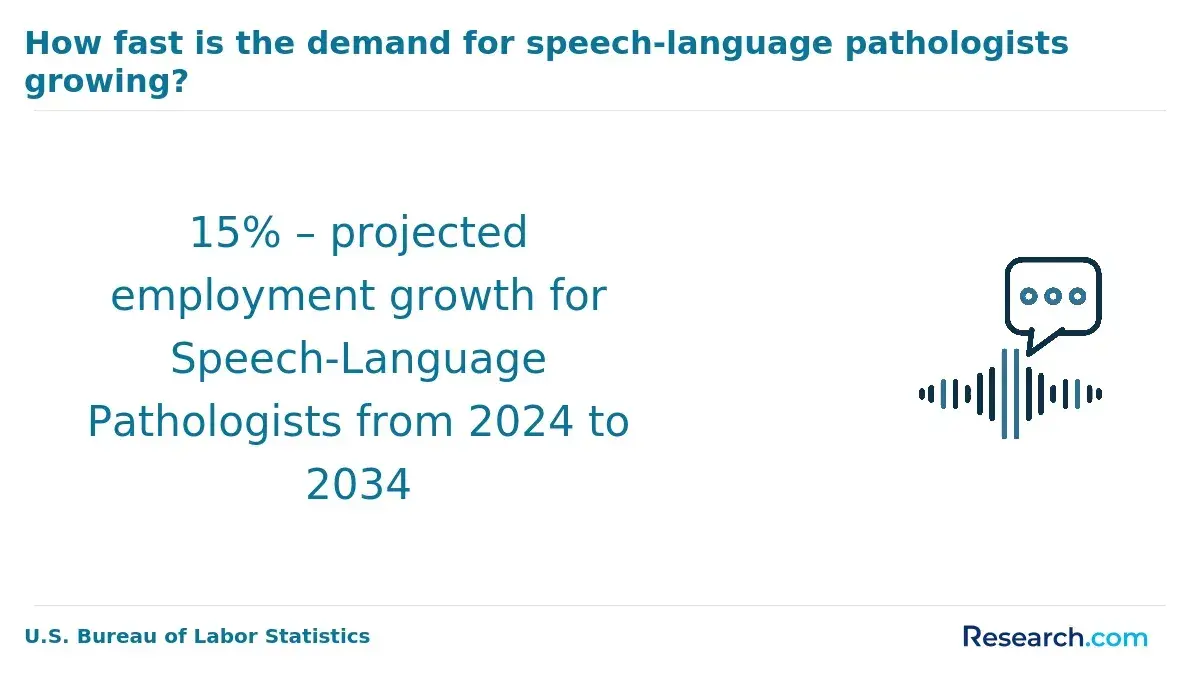
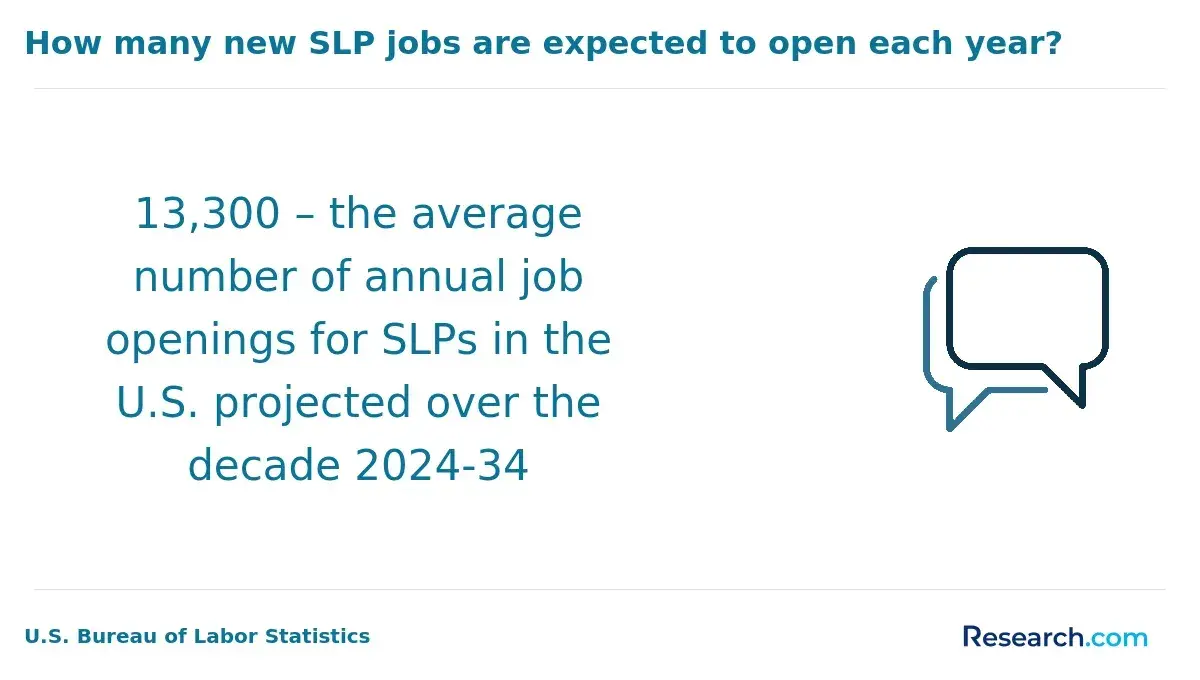
According to the U.S. Bureau of Labor Statistics, employment of SLPs is expected to increase by 15% until 2034. This growth is anticipated to result in approximately 13,300 openings for SLPs each year, driven by factors such as an aging population and increased awareness of speech and language disorders.
In 2027, job growth is not limited to one part of the country. Demand is expanding across regions, but the reasons vary: population growth, retirements, school service needs, healthcare expansion, and shortages in specific communities.
- Western States: States like California, Arizona, and Nevada are experiencing rapid growth in SLP job opportunities. California, for instance, is projected to see a 16.4% increase in SLP employment until 2026, which is higher than the national average. Western markets may offer strong salaries, but SLPs should weigh those salaries against housing and licensure considerations.
- Southern States: The Southern U.S., including Texas and Florida, is seeing rising demand for SLPs. Population expansion and growth in educational institutions are contributing to the need for speech therapy services, especially in schools and pediatric care.
- Northeastern States: Northeastern states such as New York and Connecticut are facing notable shortages in SLP positions. For example, Hartford, Connecticut, has 13 open SLP roles as of February 2027, highlighting the need for professionals in the region.
- Midwestern States: The Midwest, including states like Ohio and Illinois, is experiencing steady growth in SLP job opportunities. Demand is supported by an aging population and broader recognition of speech, language, cognitive, and swallowing disorders.
How to use job growth data
Growth projections can help identify opportunity, but they should not be the only factor in a job search. SLPs should compare job postings by setting, caseload, salary, benefits, supervision, productivity expectations, and advancement potential. A fast-growing market may still be a poor fit if the available roles do not match your clinical interests or licensing status.
Are urban areas paying more than rural areas for speech pathology roles?
In general, urban areas pay more for speech-language pathology roles than rural areas. According to data from ASHA, SLPs working in urban settings earned a median annual salary of $88,000, while those in rural areas earned $80,000. The U.S. BLS also reports that SLPs in metropolitan areas often receive higher compensation, partly because of greater demand, larger employer budgets, and cost-of-living adjustments.
Urban areas usually have more hospitals, school districts, outpatient clinics, universities, rehabilitation centers, and private practices. This concentration creates more job openings and can increase competition among employers. It may also give SLPs more chances to specialize, move between settings, or pursue leadership roles.
Rural positions may pay less on average, but they can still be financially and professionally attractive. Lower housing costs, smaller caseload communities, less competition for openings, broader clinical responsibilities, and the chance to serve underserved populations can make rural practice rewarding. In some cases, rural employers may offer hiring incentives or flexibility to attract qualified clinicians.
Urban vs. rural trade-offs
- Urban advantages: Higher median pay, more employers, greater specialization, and more networking opportunities.
- Urban challenges: Higher housing costs, longer commutes, more competition, and heavier demand in some settings.
- Rural advantages: Lower living costs, strong community need, broader scope of practice, and potentially less competition for roles.
- Rural challenges: Fewer employers, professional isolation, travel between sites, and limited access to specialty mentorship.
The better choice depends on the SLP’s financial goals, family needs, preferred caseload, and comfort level with either specialization or broader generalist practice.
What certifications help speech pathologists earn more money?
Certifications can improve an SLP’s earning potential when they signal advanced competence, meet employer requirements, or qualify the clinician for specialized roles. They do not guarantee higher pay by themselves, but they can strengthen a resume, support promotion, and open doors in hospitals, schools, specialty clinics, and private practice.
- Certificate of Clinical Competence in Speech-Language Pathology (CCC-SLP): Offered by the American Speech-Language-Hearing Association (ASHA), this credential is widely recognized and often required or preferred by employers. It can support mobility, credibility, and access to a broader range of jobs.
- Specialization Certifications: Certifications in focused clinical areas can make SLPs more competitive for higher-paying or hard-to-fill roles. Examples include the Pediatric Feeding and Swallowing Certificate, Voice Disorders Specialist Certification, and Fluency Disorders Certification. These credentials may be especially useful in specialty clinics, hospital programs, and private practice niches.
- State-Specific Certifications: Some states require or offer additional credentials for school-based practice or specialized authorization. Examples include New York State Education Department (NYSED) certification for school-based SLPs, Texas Teacher Certificate with SLP endorsement, and California Clinical SLP License with School Authorization. These credentials can help SLPs qualify for roles that would otherwise be unavailable.
How to choose a certification strategically
- Match it to your setting: A school credential may matter more for district roles, while dysphagia or medical specialization may be more valuable in hospitals or rehabilitation.
- Check employer demand: Review job postings in your target market before investing in a credential.
- Consider return on investment: Compare certification costs, training time, renewal requirements, and likely salary impact.
- Build experience alongside credentials: Certifications are strongest when paired with supervised practice, measurable outcomes, and a clear clinical focus.
Where do speech-language pathologists have the best promotion opportunities?
Speech-language pathologists often find the strongest promotion opportunities in organizations large enough to have formal career ladders. Healthcare systems, rehabilitation networks, large school districts, university-affiliated clinics, and specialized clinical practices may offer paths from staff clinician to senior clinician, lead SLP, clinical educator, program coordinator, department supervisor, or administrator.
Graduates of online master's SLP programs entering these environments can benefit from structured supervision, interdisciplinary teams, continuing education, and access to specialized caseloads. These features can make it easier to build expertise and qualify for advancement.
Hospitals and rehabilitation centers may offer promotion into supervisory, program development, quality improvement, or managerial roles. SLPs who develop expertise in dysphagia, neurological rehabilitation, acute care, or interdisciplinary care may be especially competitive for leadership positions.
Large public school systems may provide advancement into lead SLP, mentor, evaluation specialist, assistive technology coordinator, or district coordinator roles. These roles often require strong documentation skills, knowledge of special education procedures, collaboration with teachers and families, and the ability to support other clinicians.
Specialized clinics focusing on pediatric feeding, voice disorders, fluency, AAC, or neurological rehabilitation can also offer advancement, particularly for SLPs who combine clinical expertise with program development, supervision, referral-building, or business skills.
Signs an employer offers real promotion potential
- Clear job levels: The organization defines roles such as staff SLP, senior SLP, lead clinician, and supervisor.
- Mentorship and training: Experienced clinicians provide supervision, case consultation, and specialty development.
- Administrative exposure: SLPs can participate in scheduling, program design, compliance, quality improvement, or team leadership.
- Continuing education support: The employer funds or protects time for professional development.
- Internal hiring: Leadership roles are commonly filled by current clinicians rather than only outside candidates.
The best promotion opportunities usually go to SLPs who combine clinical skill with communication, documentation, leadership, and problem-solving ability. Choosing an employer with a visible advancement path can be just as important as choosing a high-paying state.
Other Things to Know About the Top States that Pay the Most for Speech Pathologists in 2027
The cost of living significantly impacts salaries for speech-language pathologists. In states with a higher cost of living, salaries are typically higher to compensate for increased expenses. Conversely, in areas with a lower cost of living, salaries may be comparatively lower.
Entry-level SLPs in top-paying states typically earn between $60,000 and $75,000, depending on the region and employment setting. Hospitals and home health services often offer higher starting pay than schools or smaller clinics, reflecting both demand and complexity of patient care.
Yes, states offering higher salaries, like California and New York, often have specific licensing requirements. These may include obtaining a master's degree from an accredited program, passing the Praxis exam, and fulfilling supervised clinical experience hours as defined by each state's speech-language pathologist licensing board.
References
- American Speech-Language-Hearing Association (ASHA). (2025). Speech-Language Pathologist (SLP) average salary by state. Retrieved from https://careers2.asha.org/salary/speech-language-pathologist-slp-2
- Bureau of Labor Statistics (BLS). (2024). Speech-Language Pathologists. Retrieved from https://www.bls.gov/oes/2023/may/oes291127.htm
- Bureau of Labor Statistics (BLS). (2024). Speech-Language Pathologists: Occupational Outlook. Retrieved from https://www.bls.gov/ooh/healthcare/speech-language-pathologists.htm
- Careers2. (2025). Speech-Language Pathologist (SLP) Salary (October 2025). Retrieved from https://careers2.asha.org/salary/speech-language-pathologist-slp-2
- World Population Review. (2025). Speech Pathologist Salary by State 2025. Retrieved from https://worldpopulationreview.com/state-rankings/speech-pathologist-salary-by-state
- ZipRecruiter. (2025). What Is the Average SLP Salary by State? Retrieved from https://www.ziprecruiter.com/Salaries/What-Is-the-Average-SLP-Salary-by-State