2027 What Does a Molecular Biologist Do: Responsibilities, Requirements, and Salary

Co-Founder and Chief Data Scientist
Only 4% of biology majors specialize in molecular biology (U.S. BLS, 2025), yet this small group plays a major role in shaping today’s breakthroughs in genetics, medicine, and biotechnology. A molecular biologist explores how DNA, RNA, and proteins interact to drive life processes, work that fuels innovation across research and healthcare.
In this guide, I will assist students in understanding what it truly means to work in this field, from daily responsibilities and key skills to education requirements, salary potential, and long-term career growth. I will also help aspiring students decide whether pursuing a path in molecular biology aligns with their goals and interests.
What are the benefits of becoming a molecular biologist?
- Molecular biology offers the thrill of discovery, letting scientists uncover life’s molecular mechanisms and drive innovation.
- Graduates find roles in academia, biotech, pharmaceuticals, or healthcare, applying their skills to real-world challenges.
- Molecular biologists also help advance medicine, sustainability, and technologies that benefit people and the planet.
What does a molecular biologist do on a typical workday?
A molecular biologist’s typical day blends laboratory experiments, data analysis, and collaboration to explore how DNA, RNA, and proteins shape biological processes, core functions that define many careers in biology today. Their work often alternates between hands-on research and digital communication, reflecting the increasingly interdisciplinary nature of modern science.
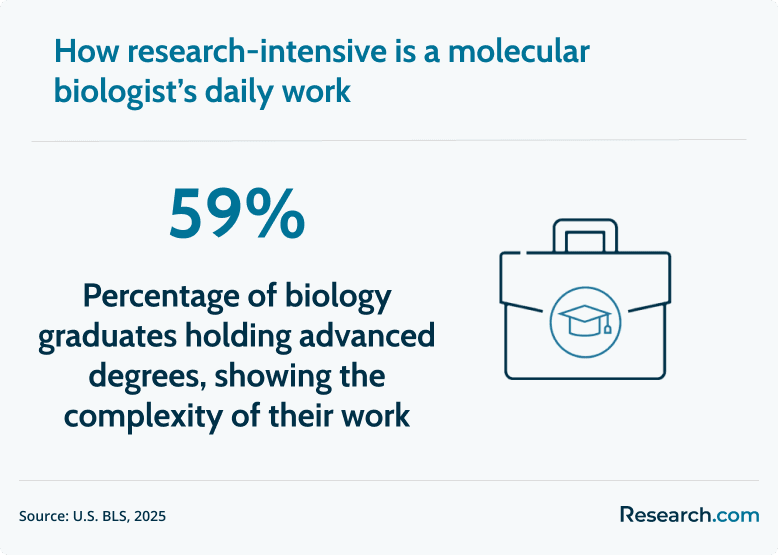
Because molecular biology research requires deep technical and analytical expertise, many professionals pursue graduate-level education to advance in the field. In fact, 59% of workers with a biology degree hold an advanced degree, a reflection of the complex, research-intensive nature of their day-to-day responsibilities.
Here are some of the daily activities of molecular biologists:
- Designing and running experiments: They plan and conduct tests examining genetic material or protein functions using methods such as PCR, gel electrophoresis, or gene cloning.
- Working with cell cultures: Molecular biologists maintain and study bacterial, yeast, or mammalian cells to observe gene expression or molecular behavior.
- Analyzing data: After experiments, they use statistical or bioinformatics tools to interpret results and identify meaningful patterns.
- Documenting findings: Maintaining detailed lab notes and digital records ensures accuracy and reproducibility of experiments.
- Reviewing research and collaborating: They read recent studies, discuss findings with colleagues, and sometimes mentor students or junior researchers.
What educational background is required to become a molecular biologist?
To become a molecular biologist, you need a strong academic foundation in the life sciences, supported by years of laboratory experience and research training. The educational path is progressive. It starts with a broad understanding of biology and chemistry and narrows toward advanced molecular techniques and independent research.
Interestingly, many students who wonder, “is biology good for medical school,” also find molecular biology an ideal starting point, as it provides the same rigorous grounding in biological systems and scientific analysis. The most common degree among molecular biologists is a bachelor’s degree (61%), followed by a master’s degree (22%), while a significant proportion hold doctoral degrees for leadership and research-focused roles.
A bachelor’s degree opens entry-level opportunities, but a Ph.D. remains the standard for leadership and discovery-driven careers in molecular biology. Below are the educational pathways to becoming a molecular biologist:
- Bachelor’s degree (B.S.): The first step is earning a degree in molecular biology, biochemistry, microbiology, or biotechnology. Undergraduate coursework covers genetics, cell biology, organic chemistry, physics, and statistics. Hands-on lab experience and research internships are essential for developing technical proficiency.
- Master’s degree (M.S.): A master’s typically takes two to three additional years and focuses on advanced molecular genetics, bioinformatics, and experimental design. It prepares students for mid-level research or technical roles in biotechnology or clinical labs.
- Doctoral degree (Ph.D.): A Ph.D. is essential for those pursuing independent research, academic teaching, or senior R&D roles. It involves 4 to 6 years of intensive research culminating in a dissertation. Many graduates also complete postdoctoral fellowships to deepen expertise.
The chart below from Zippia shares the most common degrees for molecular biologists.
What specializations exist within molecular biology?
Molecular biology is a broad discipline with multiple specializations that bridge chemistry, genetics, and cellular science. Each branch focuses on a distinct layer of molecular function, allowing researchers to study how genes, proteins, and cells interact to sustain life or contribute to disease.
With new technologies and flexible learning options, such as earning the fastest biochemistry degree online, students can now enter the field more efficiently and tailor their expertise to modern scientific needs.
The core specializations in molecular biology include:
- Molecular genetics: Examines how genes are structured, expressed, and regulated. Researchers investigate DNA replication, gene mutations, and hereditary mechanisms underlying genetic diseases.
- Biochemistry: Explores the chemical reactions that sustain life, focusing on proteins, enzymes, and metabolic pathways that drive cellular processes.
- Cell biology: Studies how molecular mechanisms control cell behavior, including cell signaling, division, and death.
- Structural biology: Analyzes the 3D structure of macromolecules such as proteins and nucleic acids to understand their functions and interactions.
Meanwhile, these are the emerging and applied subfields in molecular biology:
- Genomics and proteomics: Focus on large-scale analysis of genes and proteins to map biological systems and identify disease biomarkers.
- Bioinformatics: Integrates computing and statistics to analyze genetic data and model molecular interactions.
Molecular medicine and biotechnology: Apply molecular tools to diagnose, treat, and engineer biological systems, driving innovation in healthcare and industry.
What skills are essential for success as a molecular biologist?
Success as a molecular biologist depends on a balanced combination of technical mastery, analytical thinking, and collaborative communication. The field demands precision and intellectual flexibility, as scientists often work at the intersection of biology, chemistry, and data science.
Based on recent occupational data, reading comprehension (5.02) and writing (4.75) rank among the most critical skills, highlighting how essential it is for molecular biologists to understand scientific literature and communicate their own results effectively. Whether in academia, biotechnology, or pharmaceuticals, professionals must continuously refine both laboratory and computational competencies to stay relevant in this rapidly evolving field.
Some of the technical and laboratory expertise aspiring molecular biologists should have include:
- Molecular techniques: Mastery of core methods such as PCR, gene cloning, gel electrophoresis, and protein purification is fundamental for manipulating and studying DNA, RNA, and proteins.
- Cell culture and microscopy: Maintaining bacterial, yeast, or mammalian cells and using imaging tools to observe molecular processes in real time.
- Instrument proficiency: Skilled operation of spectrophotometers, DNA sequencers, and chromatography systems ensures accurate data collection.
In terms of analytical and computational skills, here’s what they need:
- Data analysis: Ability to interpret complex biological data using statistical software and bioinformatics tools.
- Programming literacy: Familiarity with R or Python helps automate data processing and visualize experimental results.
As for transferable skills, they should have the following:
- Critical thinking and problem-solving: Essential for troubleshooting experiments and refining hypotheses.
- Communication and teamwork: Clear writing, data presentation, and collaboration across disciplines drive progress.
- Attention to detail: Precision and organization ensure reliable, reproducible scientific outcomes.
This chart from Data USA shows the essential skills that molecular biologists must develop to succeed.
What is the typical career path for a molecular biologist?
A career in molecular biology follows a structured yet flexible path, blending education, research experience, and technical specialization. It begins with a strong scientific foundation, often built through one of the best biological science degree programs, and progresses toward advanced research, innovation, and leadership roles in academia, biotechnology, or healthcare.
Success in this field depends on both formal education and practical experience, along with the ability to adapt to emerging technologies and interdisciplinary collaboration. Here’s what a typical molecular biology career path looks like:
- Early career and education: Most begin with a bachelor’s degree in molecular biology, biochemistry, or genetics and gain lab experience as research assistants or technicians. Graduate studies (M.S. or Ph.D.) help them develop specialized research and technical expertise.
- Postdoctoral and mid-level roles: After a Ph.D., many complete postdoctoral fellowships to expand their research skills before moving into scientist or research associate positions in academia, government, or industry.
- Advanced and leadership positions: Experienced molecular biologists often become principal investigators, lab managers, or research directors, leading major projects or teams in biotechnology, pharmaceuticals, or academia.
- Alternative paths: Others apply their expertise in science communication, education, policy, or entrepreneurship, showcasing the field’s versatility and broad career potential.
What is the average salary for a molecular biologist?
The average salary for molecular biologists in the United States reflects the field’s high level of technical skill, research expertise, and interdisciplinary focus. As of 2025, the mean annual pay is about $68,899, with income strongly influenced by experience, education, and industry specialization.
Here are the average earnings of molecular biologists by career stage:
- Entry level (Less than 1 year): Receives $54,000 annually, typical for new graduates entering research or lab technician roles.
- Early career (1 to 4 years): Takes home $65,000, often in roles supporting academic or corporate research projects.
- Mid-career (5 to 9 years): Gets $72,000, reflecting growing independence in experimental design and data analysis.
- Experienced (10 to 19 years): Earns $76,000, with increased responsibility for managing lab operations or leading research teams.
- Senior/Expert (20+ years): receives $86,000, common for principal scientists or research directors in biotech and pharmaceutical firms.
Some of the factors that influence molecular biology pay are:
- Education level: Ph.D. holders typically earn more and qualify for leadership or independent research positions, while bachelor’s or master’s degree holders often work as lab managers, associates, or specialists.
- Industry and location: Salaries are higher in biotech hubs like San Francisco, Boston, and San Diego, where demand for molecular expertise and living costs are greater.
What is the job outlook for molecular biologists?
The future of molecular biology is shaped by steady growth driven by innovation across biotechnology, healthcare, and data science. Key factors fueling demand include breakthroughs in genomics, expanded biomedical research funding, and the integration of artificial intelligence into molecular analysis. Together, these trends ensure that molecular biologists remain central to scientific and medical progress.
Some of the molecular biology growth drivers include:
- Advances in biotechnology: The continued development of gene therapies, molecular diagnostics, and precision medicine sustains demand for molecular expertise.
- Increased investment in biomedical research: Both public and private funding are fueling projects in genomics, oncology, and infectious diseases.
- Interdisciplinary collaboration: The growing overlap between biology, data science, and computational modeling requires professionals with cross-disciplinary skills.
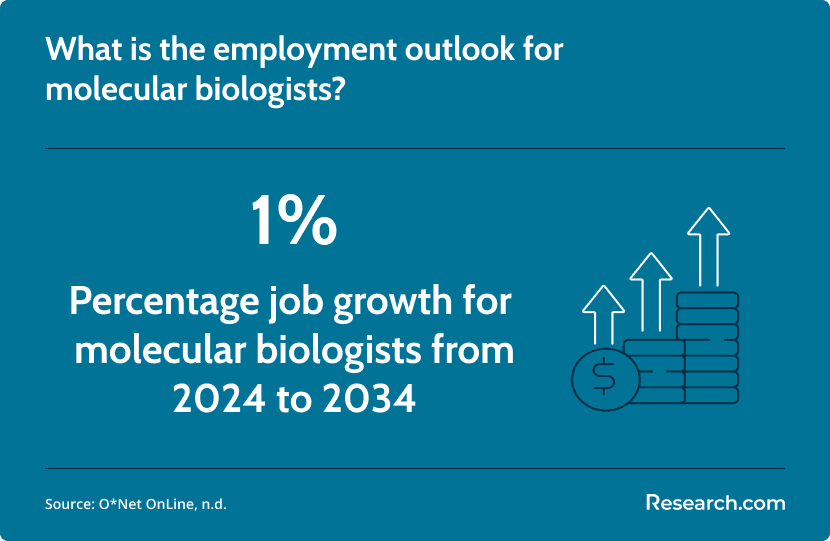
As of 2024, approximately 63,700 molecular biologists are employed in the United States, with employment expected to rise to 64,500 by 2034, a 1% increase over the decade. Though growth is modest, the field remains stable and specialized, offering consistent opportunities for those with advanced training. There will also be 4,800 job openings annually over the decade, largely from retirements, career shifts, and the continued demand for molecular research in health and technology sectors.
What are the alternative careers for molecular biologists?
Molecular biologists possess a uniquely transferable skill set. They have analytical precision, experimental design, and data interpretation, that opens doors to a wide range of alternative biology careers beyond the laboratory.
As biotechnology and data-driven science continue to expand, many professionals are successfully transitioning into non-bench roles that integrate biology with technology, business, policy, and communication.
In fact, 6% of workers with biology degrees work in business and financial operations, while 10% are employed in educational instruction and library occupations. This highlights the field’s adaptability across industries. Molecular biologists who broaden their expertise can find rewarding opportunities in fields such as:
Industry and Business Careers
Molecular biologists can thrive in roles that bridge science and strategy. Scientific business development specialists identify commercialization opportunities for emerging technologies, while product managers oversee the development and market positioning of assays, reagents, or diagnostic tools. Those with strong communication skills often excel in technical sales or management consulting, where they translate complex scientific ideas into actionable business insights.
Regulatory and Legal Roles
Careers in regulatory affairs and clinical research allow molecular biologists to ensure compliance and safety in drug and device development. Others pursue intellectual property law, becoming patent agents or attorneys specializing in life sciences innovations.
Data and Communication Fields
With growing emphasis on big data, roles like bioinformatician or data scientist are in high demand, combining molecular expertise with coding and analytics. Alternatively, science writers, medical communicators, and policy analysts help shape public understanding and research governance.
This chart from the U.S. BLS illustrates how workers with biology degrees are distributed across different occupational groups.
What are the biggest challenges molecular biologists face today?
Molecular biologists face a range of modern challenges that stem from the fast pace of scientific and technological progress. Research in genetics, biotechnology, and artificial intelligence evolves. As such, professionals must balance innovation with accuracy, ethics, and adaptability.
Below are the challenges that molecular biolosits encounter:
- Rapid technological change: The rise of AI, automation, and bioinformatics requires ongoing learning. Molecular biologists must now combine laboratory skills with computational expertise to stay relevant.
- Funding and job competition: Research grants are limited, especially in academia, where competition for tenure-track roles and project funding remains intense.
- Complex biological systems: Understanding how genes, proteins, and cells interact at a systems level continues to be a major scientific hurdle, demanding new methods and interdisciplinary collaboration.
- Reproducibility issues: Many studies are difficult to replicate due to inconsistent experimental materials or reporting, affecting the credibility of findings.Industry pressures and ethics: In private sectors, researchers face shifting R&D priorities, regulatory hurdles, and ethical concerns surrounding gene editing and data privacy.
- Intellectual property disputes: As genetic discoveries become commercially valuable, competition over patents and research ownership is intensifying.
How can you tell if a career in molecular biology is the right fit for you?
Choosing a career in molecular biology requires more than a love for science, it demands curiosity, persistence, and a genuine fascination with life at the molecular level. As molecular biology continues to evolve alongside breakthroughs in genomics, artificial intelligence, and biotechnology, professionals in this field must balance technical precision with creativity and resilience. The best way to know if it’s the right fit is to reflect on your interests, skills, and preferred work style.
If you are driven by curiosity, precision, and a passion for discovery, molecular biology offers an intellectually stimulating and meaningful career path. Below are additional indicators that suggest this field may be the right fit for you.
- Passion for discovery: You’re deeply curious about how genes, proteins, and cells interact to shape life and disease, and find fulfillment in uncovering these invisible mechanisms.
- Patience and precision: You enjoy hands-on lab work, detailed record-keeping, and troubleshooting complex experiments, even when outcomes are unpredictable.
- Analytical mindset: You like interpreting data, identifying patterns, and using computational or statistical tools to solve biological questions.
- Commitment to learning: You’re ready to pursue advanced education and continuously adapt to new technologies like CRISPR, bioinformatics, or single-cell sequencing.
- Collaborative spirit: You thrive in team-based research settings and can clearly communicate your findings to both scientists and non-scientists.
- Resilience under uncertainty: You can handle experimental failure, tight deadlines, and long research cycles with persistence and optimism.
What Professionals Who Work as Molecular Biologists Say About Their Careers
- Alexia: "Studying molecular biology taught me how to think critically about life at its most fundamental level. The combination of lab research and data analysis gave me both precision and creativity, skills I now use every day in biotech. It was challenging but incredibly rewarding to see theory come to life under the microscope. "
- Rima: "My molecular biology degree opened doors I didn’t expect, from research internships to collaborations with chemists and computer scientists. The program pushed me to ask deeper questions and approach problems with scientific rigor. I left not just with technical skills, but with a genuine sense of curiosity that drives my career. "
- Miggy: "What I loved most about studying molecular biology was how it connected classroom learning to real-world impact. From decoding genetic sequences to understanding disease mechanisms, every project felt meaningful. The hands-on experience built my confidence and confirmed my passion for discovery. "
Key Findings
- 59% of biology graduates hold advanced degrees, showing the research-intensive nature of their work.
- 6% work in business and financial operations, and 10% in education and library roles, showing the field’s versatility.
- Reading comprehension (5.02%) is the top skill, vital for understanding and communicating research.
- Mean annual pay is $68,899, reflecting solid earning potential across science sectors.
- Employment is projected to grow 1% from 2024 to 2034, driven by advances in genetics and biotechnology.
Other Things You Need to Know About Becoming a Molecular Biologist
In 2027, artificial intelligence is revolutionizing molecular biology by enabling faster data analysis, facilitating genome editing with increased precision, and automating complex processes such as protein folding simulations. AI-driven tools enhance collaboration, drive innovation, and offer new insights, advancing the field in unprecedented ways.
In 2027, molecular biologists commonly find employment in biotechnology and pharmaceutical companies, government research labs, healthcare, and agriculture sectors. They may also work in forensic science, environmental organizations, and biotech startups, where they contribute to research and development.
In 2027, molecular biologists frequently utilize advanced CRISPR tools for gene editing, next-generation sequencing for DNA analysis, and bioinformatics software to handle large datasets. New AI-driven platforms also assist in predictive modeling and experimental design, enhancing research precision and efficiency.
References
- Data USA (n.d.). Molecular Biology. Retrieved from https://datausa.io/profile/cip/molecular-biology#skills
- O*Net OnLine (n.d.). National Employment Trends 19-1029.02 - Molecular and Cellular Biologists. Retrieved from https://www.onetonline.org/link/localtrends/19-1029.02?st=
- Payscale (2025). Average Molecular Biologist Salary. Retrieved from https://www.payscale.com/research/US/Job=Molecular_Biologist/Salary
- U.S. BLS (2025). Field of degree: Biology. Retrieved from https://www.bls.gov/ooh/field-of-degree/biology/biology-field-of-degree.htm
- Zippia (2025). Molecular biologist education requirements. Retrieved from https://www.zippia.com/molecular-biologist-jobs/education/