2027 Understanding Clinical Hours and Practicum Requirements in Online SLP Programs

Co-Founder and Chief Data Scientist
Choosing an online speech-language pathology program is not only a coursework decision. It is also a clinical training decision. To become a practicing speech-language pathologist, students must complete supervised observation and hands-on practicum hours that show they can evaluate, treat, document, and communicate effectively with real clients.
That requirement matters because SLP is a highly applied profession. In the U.S., more than 187,000 speech-language pathologists support people with communication and swallowing disorders, and that workforce is growing alongside healthcare and education needs (HRSA, 2024). Online programs can offer strong academic flexibility, but students still need to understand how clinical placements work, who supervises them, which hours count, and how early they should begin planning.
This guide explains how clinical hours are structured in online SLP programs, what ASHA requires for certification eligibility, which experiences typically count toward practicum requirements, and what distance learners should ask before enrolling. It is designed for prospective and current graduate students comparing online, hybrid, and accelerated SLP pathways.
What are the benefits of understanding clinical hours and practicum requirements in online SLP programs?
- Builds strong clinical foundations, ensuring students gain hands-on experience essential for effective client assessment and therapy.
- Prepares students for ASHA certification, aligning their academic progress with professional credentialing requirements.
- Enhances career readiness, allowing learners to plan coursework and practicum schedules efficiently for timely program completion.
What are clinical hours in online speech-language pathology (SLP) programs in 2027?
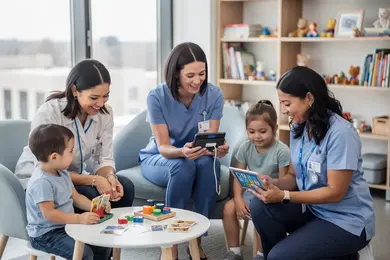
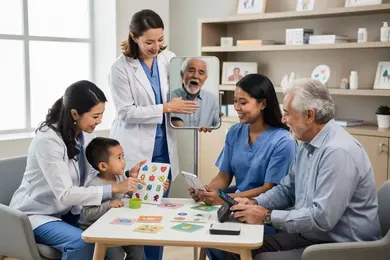
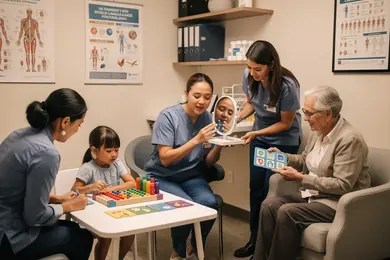
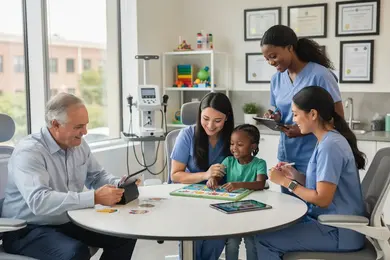
Clinical hours are supervised training experiences in which SLP students move from classroom knowledge to direct professional practice. In online SLP programs, coursework may be delivered remotely, but clinical education still requires students to observe, assess, treat, counsel, and document services for real or simulated clients under approved supervision.
These hours are not a formality. They are the part of the degree where students learn how to make clinical decisions, adjust therapy in real time, communicate with families and care teams, follow ethical standards, and document progress accurately. Because the work is client-facing, it often involves close interaction; 80% of students reported working in very close range, often near touching, reflecting the hands-on nature of the field (O*Net OnLine, n.d.).
Clinical training may include experience with several major areas of speech-language pathology:
- Speech sound disorders: Students help clients, often children, improve articulation and phonological patterns through structured intervention.
- Language disorders: Learners support expressive and receptive language development using evidence-based therapy plans.
- Fluency disorders: Practicum experiences may include work with people who stutter and need strategies for fluency, confidence, and communication participation.
- Voice disorders: Students may assist with therapy for vocal strain, dysphonia, resonance concerns, or related conditions.
- Swallowing disorders (dysphagia): Under appropriate supervision, students may observe or participate in assessment and management of feeding and swallowing concerns.
- Augmentative and alternative communication (AAC): Students learn how communication devices, apps, and other tools support clients with complex communication needs.
- Early intervention: Learners may work with infants, toddlers, and families to support early communication and caregiver coaching.
For online students, the key point is that “online” describes the academic delivery format, not the complete absence of clinical contact. A strong program should clearly explain where clinical hours take place, how sites are approved, how supervision is verified, and what support students receive if placements are limited in their area.
How many clinical practicum hours are required for SLP graduate students in 2027?
Graduate students in speech-language pathology must complete the practicum standards set by the American Speech-Language-Hearing Association (ASHA). Under current certification requirements, students need a minimum of 400 supervised clinical hours to qualify for professional certification.
The required total includes two major categories:
- 25 hours of guided observation: Students observe certified clinicians providing assessment, intervention, counseling, and related services. These hours help students understand professional behavior, clinical reasoning, session structure, and client interaction before they take an active role.
- 375 hours of direct client or patient contact: Students earn these hours by participating in supervised assessment, treatment, counseling, and other qualifying clinical activities with clients or patients.
At least 325 of these hours must occur at the graduate level. Up to 50 hours from undergraduate or assistant-level programs may count toward the total if they meet supervision and documentation standards (ASHA, n.d.). Students should not assume prior hours will transfer automatically; each program determines whether earlier experiences meet its requirements and ASHA-aligned documentation expectations.
Most programs sequence hours gradually. Students usually begin with observation and lower-complexity clinical tasks, then progress to more independent planning, service delivery, documentation, and case management under supervision. This progression helps students build competence without being placed into advanced clinical responsibilities too early.
Before enrolling, applicants should ask the program how clinical hours are distributed by semester, whether any intensives are required, how many placements are typical, and what happens if a student needs additional time to demonstrate competency.
What types of clinical experiences count toward online SLP practicum requirements in 2027?
Clinical experiences count toward online SLP practicum requirements when they involve approved supervised activities that align with professional preparation standards. The strongest programs give students experience across ages, settings, communication needs, and service models rather than relying on one narrow placement type.
Common qualifying experiences include:
- Pediatric language therapy: Working with children in schools, clinics, early intervention programs, or teletherapy settings to support language development and communication participation.
- Adult neurogenic communication disorders: Providing services to adults with conditions related to stroke, traumatic brain injury, or other neurological changes.
- Voice and resonance therapy: Supporting clients with vocal misuse, dysphonia, resonance differences, or speech concerns related to structural or functional factors.
- Fluency and stuttering management: Helping clients improve communication confidence, reduce avoidance, and use fluency-supporting strategies when appropriate.
- Articulation and phonological therapy: Supporting accurate and functional speech sound production through structured assessment and intervention.
- AAC implementation: Helping clients use communication devices, software, symbols, or alternative access methods to communicate more effectively.
- Geriatric communication care: Working with older adults who may have cognitive-communication, swallowing, or speech-language needs related to aging or medical conditions.
Students may also gain experience through diagnostic evaluations, treatment planning, caregiver counseling, progress documentation, interdisciplinary meetings, and supervised telepractice. However, not every activity automatically counts as direct clinical contact. Administrative tasks, unsupervised work, general shadowing beyond approved observation, or activities outside the program’s standards may not qualify.
Online students should keep careful records from the beginning. Useful documentation typically includes the client population, disorder area, service type, setting, date, amount of time, supervisor information, and verification that the experience met program requirements.
How do online SLP programs arrange clinical placements for distance learners in 2027?
Online SLP programs usually arrange clinical placements through a combination of university partnerships, student location information, site approval procedures, and supervisor verification. This placement system is especially important as the number of speech-language pathology jobs reached 187,400 in 2024 and continues to grow (U.S. BLS, 2025).
Good online programs do not simply tell students to “find hours.” They provide a defined placement process, clear deadlines, and staff who understand state rules, site contracts, and ASHA supervision expectations. The level of support varies by institution, so applicants should review placement policies before committing to a program.
A typical placement process includes:
- Student location and preference review: Students submit information about where they live, commute limits, availability, and preferred settings.
- Site matching: Placement coordinators identify potential clinics, schools, hospitals, rehabilitation centers, private practices, or community programs near the student.
- Site approval: The university confirms that the site can provide appropriate client contact, supervision, documentation, and learning opportunities.
- Supervisor verification: Supervisors must hold the ASHA Certificate of Clinical Competence (CCC-SLP) when required by the program and certification standards.
- Affiliation agreements: The school and clinical site may need formal agreements before a student can begin.
- Telepractice integration: Some programs include remote clinical opportunities using HIPAA-compliant teletherapy platforms.
- Interprofessional exposure: Students may rotate through settings where they collaborate with educators, physicians, occupational therapists, physical therapists, psychologists, nurses, or social workers.
Distance learners should start placement planning early, especially if they live in a rural area, near a state border, or in a region with limited SLP providers. A placement that is convenient geographically still must meet academic, supervision, and state authorization requirements.
Can you complete SLP clinical hours entirely online in 2027?
Most students should not expect to complete all SLP clinical hours entirely online. Online coursework can often be completed remotely, and some clinical activities may be delivered through telepractice, simulation, or remote observation. However, SLP preparation typically still includes in-person components because students must develop hands-on clinical skills and meet certification, program, and licensure expectations.
Hybrid clinical models are becoming more common, particularly as the field includes a younger, technology-comfortable workforce; the average age of speech-language pathologists is now 38 (Zippia, 2025). Still, a program that advertises online delivery should explain exactly which requirements are remote, which are local in-person placements, and whether any campus visits or intensive experiences are required.
Online or hybrid clinical activities may include:
- Telepractice sessions: Students provide therapy remotely while an approved supervisor observes, guides, and evaluates their work.
- Virtual simulations: Programs use interactive tools to help students practice decision-making, assessment planning, counseling responses, or treatment strategies.
- Remote observations: Learners observe live or recorded therapy sessions through secure platforms when permitted by the program.
- Supervised online assessments: Students may participate in virtual assessment activities when appropriate for the client, setting, and supervision model.
- Collaborative case studies: Students analyze client information, discuss intervention options, and practice clinical reasoning with peers and faculty online.
The practical answer is that some hours may be completed online, but many programs still require local or in-person placements. Students should also remember that state licensure rules can differ from certification requirements. Before enrolling, ask whether the program’s clinical model supports licensure in the state where you plan to work.
What are the ASHA clinical hour requirements for SLP certification in 2027?
ASHA clinical hour requirements are designed to ensure that new speech-language pathologists are prepared for supervised professional practice across populations, settings, and disorder areas. To earn certification in 2027, students must complete a minimum of 400 supervised clinical hours, including guided observation and direct client or patient contact.
In practice, meeting ASHA requirements involves more than reaching a number. Students must also show that they can apply knowledge and skills appropriately. Programs evaluate whether students are developing professional competence in assessment, intervention, documentation, ethics, cultural responsiveness, and communication with clients, families, and teams.
Important ASHA-aligned clinical expectations include:
- Diverse populations: Students should work with clients from different age groups, backgrounds, and communication needs.
- Varied disorder areas: Clinical education should include exposure to speech, language, voice, fluency, swallowing, and related communication concerns.
- Multiple settings: Experiences may occur in schools, hospitals, clinics, rehabilitation centers, community programs, or telepractice environments.
- Qualified supervision: Students must receive oversight from appropriately credentialed supervisors who provide feedback, verify hours, and evaluate performance.
- Documented competence: Programs must confirm that students can meet professional standards, not simply accumulate time.
Meeting ASHA’s requirements is essential for program completion and eligibility to apply for the Certificate of Clinical Competence in Speech-Language Pathology (CCC-SLP). Because certification and state licensure are separate processes, students should also confirm the requirements in the state where they intend to practice.
How do supervised clinical hours work in online SLP programs in 2027?
Supervised clinical hours in online SLP programs work through planned oversight, feedback, documentation, and competency evaluation. Whether the student is in a local clinic, school, hospital, private practice, or telepractice setting, the supervisor is responsible for guiding clinical development and confirming that hours meet program standards.
This supervised training can also affect future readiness for employment and may influence SLP salary opportunities over time because employers value graduates who can enter clinical fellowships with strong assessment, treatment, documentation, and collaboration skills. However, salary outcomes depend on many factors, including setting, location, experience, credentials, and employer type.
Common supervision practices include:
- Live observation: Supervisors watch sessions in real time, either in person or through secure video platforms.
- Recorded session review: Students may submit recorded sessions when allowed by policy and consent procedures, then receive detailed feedback.
- Pre-session planning: Supervisors help students prepare goals, materials, prompts, data collection methods, and contingency plans.
- Post-session debriefing: Students review what worked, what changed during the session, and what should happen next.
- Weekly consultation: Regular meetings help students connect clinical experiences to coursework and professional standards.
- Skill-based feedback: Supervisors evaluate clinical reasoning, rapport, pacing, cueing, documentation, and communication with families or teams.
- Competency assessment: Programs track whether students are ready for increasing responsibility and, eventually, entry-level professional practice.
Students should expect supervision to become more developmental over time. Early placements may involve close direction, while later experiences often require more independent planning and clinical judgment. If supervision is unclear, inconsistent, or not properly documented, students should contact the program immediately rather than waiting until the end of the placement.
What is the difference between observation hours and clinical practicum hours in SLP programs in 2027?
Observation hours and clinical practicum hours serve different purposes in SLP training. Observation hours help students learn by watching qualified clinicians. Clinical practicum hours require students to provide supervised services directly to clients or patients.
The distinction matters because only certain activities count toward each category. Watching a clinician lead a session is valuable, but it is not the same as planning therapy, delivering intervention, collecting data, counseling a caregiver, or completing clinical documentation under supervision.
- Observation hours: Typically 25 hours focused on watching assessment, treatment, counseling, and professional interactions.
- Clinical practicum hours: At least 375 hours of active, supervised client or patient contact.
- Student role: Observation places the student in a learner-observer role; practicum places the student in a clinician-in-training role.
- Learning focus: Observation builds exposure and professional awareness; practicum develops applied clinical skill.
- Supervision level: Practicum supervision is more intensive because students are performing clinical tasks and assuming responsibility under guidance.
A common mistake is treating observation as passive screen time or simple shadowing. Strong students use observation hours strategically: they take notes on session structure, cueing, data collection, client response, caregiver education, and how clinicians adjust their approach. That preparation makes the transition into direct practicum smoother.
How can students find approved clinical sites for online SLP programs in 2027?
Students can find approved clinical sites by working closely with their program’s placement team, starting early, and confirming that each site meets supervision and documentation standards. Most accredited SLP online programs provide placement support, but the amount of support can vary significantly.
Potential placement sources include:
- University placement portals: Some programs maintain databases of affiliated clinics, schools, healthcare organizations, and community partners.
- State and local school systems: Public schools often host graduate clinicians and provide experience with pediatric speech and language services.
- Hospitals and rehabilitation centers: These settings may offer exposure to medically complex cases, swallowing concerns, cognitive-communication needs, and interdisciplinary care.
- Private practices: These sites can provide one-on-one therapy experience and a closer view of outpatient service delivery.
- Telepractice providers: Some organizations offer virtual clinical experiences for students in areas with limited local access.
- Community health programs: These placements may expose students to diverse populations, outreach services, and family-centered care.
Students should avoid committing to a site before the university approves it. A site may be reputable and still not meet program requirements. Before a placement begins, confirm the supervisor’s credentials, client population, expected schedule, documentation process, required background checks, immunizations, liability coverage, and any state-specific rules.
A practical approach is to create a placement planning file with contact names, site requirements, deadlines, commute times, supervisor information, and copies of approval emails. This reduces the risk of missed paperwork delaying clinical hours.
What challenges do online SLP students face when completing clinical requirements in 2027?
Online SLP programs offer flexibility, but clinical requirements can be the most difficult part of the degree to schedule and complete. This is true even for students in SLP accelerated programs, where the pace can leave less room for placement delays, travel issues, or schedule conflicts.
Common challenges include:
- Limited local sites: Students in rural or highly competitive areas may need to commute farther, adjust availability, or consider temporary relocation.
- Licensure variability: State-specific requirements can affect whether a placement is approved or whether a program supports practice in a particular state.
- Technology access: Telepractice and remote supervision require reliable internet, appropriate devices, privacy safeguards, and compliant platforms.
- Time management: Students must balance coursework, practicum schedules, documentation, supervisor meetings, employment, and personal responsibilities.
- Supervision coordination: Securing an ASHA-certified supervisor and finalizing agreements can take longer than expected.
- Client availability: Cancellations, school breaks, medical schedules, and caseload changes can affect how quickly hours accumulate.
- Documentation errors: Missing signatures, incomplete logs, or unclear activity descriptions can create problems when hours are reviewed.
The best way to reduce these risks is to plan several terms ahead. Students should ask programs for placement timelines, maintain regular contact with coordinators, keep hour logs updated weekly, and raise concerns as soon as a site or schedule becomes uncertain. Online SLP students who treat clinical planning as a core part of the degree—not an afterthought—are better positioned to complete requirements on time and move into the next stage of professional preparation.
Other Things You Should Know About Online SLP Clinical Hours and Practicum Requirements
In 2027, students in online SLP programs are required to complete a minimum of 400 clinical hours. This includes both direct client contact and indirect activities. These hours ensure students gain the necessary hands-on experience to meet ASHA certification standards.
In 2027, students in online SLP programs may encounter limitations on practicum locations due to state-specific licensure requirements and availability of qualified supervisors. Practical experiences often require in-person interaction to meet accreditation standards, making it important for students to verify state-specific guidelines and program partnerships.
Yes, many programs feature dedicated placement teams that work to secure appropriate off-campus settings near the student’s residence. For instance, one institution promises to find a site as near to your home as possible.
References
- ASHA (n.d.). Certification Standards for Speech-Language Pathology Frequently Asked Questions: Clinical Practicum. Retrieved from https://www.asha.org/Certification/Certification-Standards-for-SLP-Clinical-Practicum/
- HRSA (2024). State of the U.S. Health Care Workforce, 2024. Retrieved from https://bhw.hrsa.gov/sites/default/files/bureau-health-workforce/state-of-the-health-workforce-report-2024.pdf
- O*Net OnLine (n.d.). Speech-Language Pathologists. Retrieved from https://www.onetonline.org/link/summary/29-1127.00
- U.S. BLS (2025). Speech-Language Pathologists. Retrieved from https://www.bls.gov/ooh/healthcare/speech-language-pathologists.htm
- Zippia (2025). What is a Speech Language Pathologist and How to Become One. Retrieved from https://www.zippia.com/speech-language-pathologist-jobs/