2027 SLP vs Occupational Therapy: Which Career Path Is Right for You?

Co-Founder and Chief Data Scientist
Choosing between speech-language pathology and occupational therapy is not just a choice between two healthcare careers. It is a choice between two different ways of helping people participate more fully in daily life. Speech-language pathologists focus on communication, cognition, feeding, and swallowing. Occupational therapists focus on the skills people need to function independently at school, work, home, and in the community.
Both careers can be rewarding for people who want direct patient or client contact, long-term problem-solving, and work that blends science with human connection. They also require graduate education, supervised clinical experience, licensure, and a willingness to collaborate with families, teachers, physicians, nurses, psychologists, and other rehabilitation professionals.
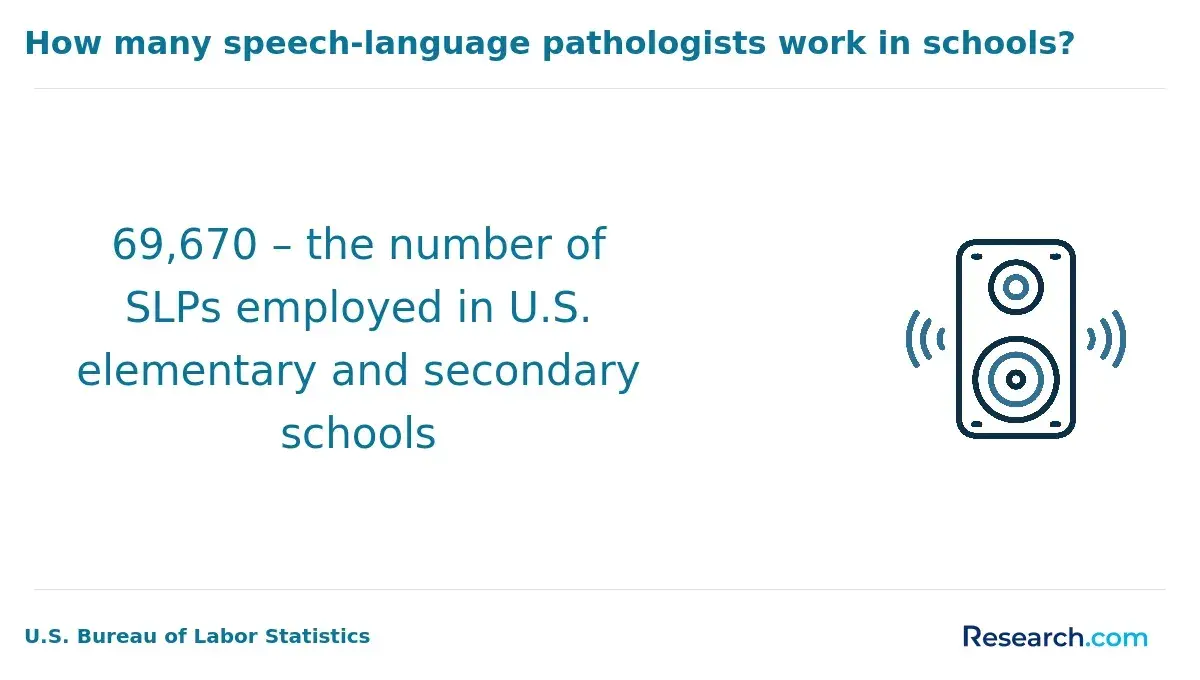
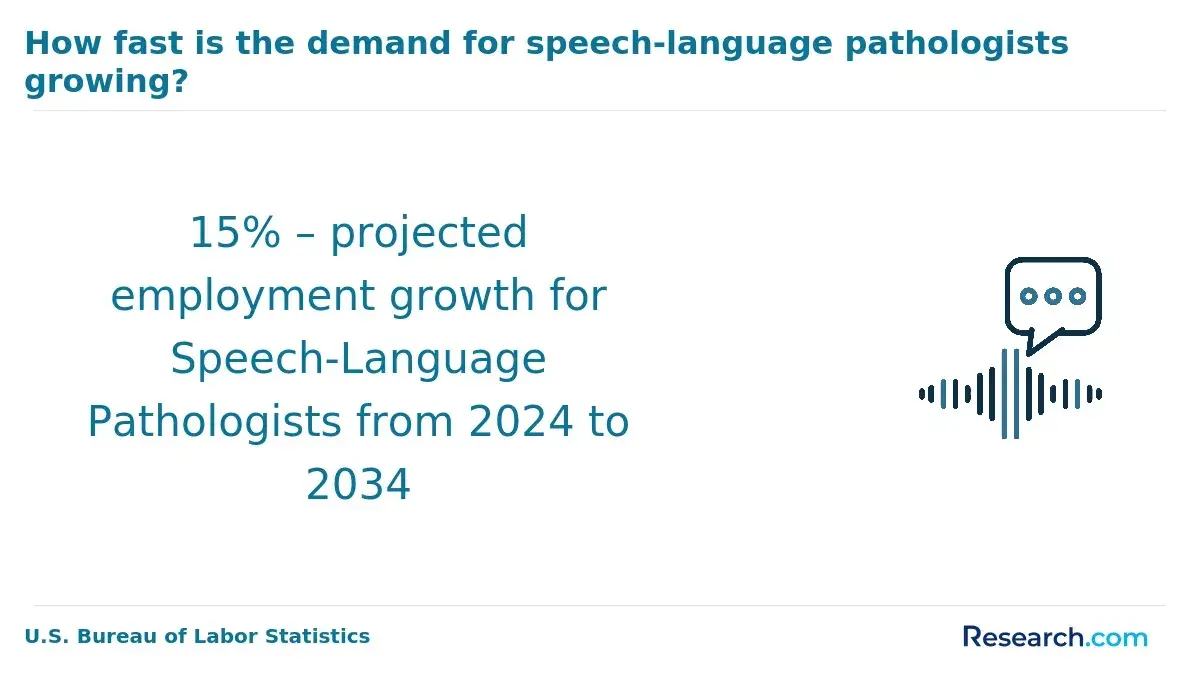
According to the Bureau of Labor Statistics (BLS), employment of speech-language pathologists is projected to grow 15% from 2024 to 2034, much faster than average for all occupations. This guide compares SLP and OT in practical terms: what each professional does, how the training differs, where graduates work, how salaries compare, and how to decide which path better fits your strengths and long-term goals.
Key Things You Should Know About SLP VS Occupational Therapy
- SLPs and OTs both help clients regain vital life skills—communication and daily functioning—but their expertise and therapy methods differ.
- Employment for SLPs is expected to rise by 15% and for OTs by 14% through 2034, signaling strong growth across healthcare and education sectors.
- Understanding educational requirements, salary trends, and personality fit will help you choose the path aligned with your career goals.
How are speech-language pathology and occupational therapy connected?
Speech-language pathology and occupational therapy are connected because both fields help people function better in real life, not just perform isolated clinical tasks. An SLP may help a child communicate needs, understand directions, or swallow safely. An OT may help that same child hold a pencil, manage sensory input, or complete classroom routines. The professions are different, but their goals often meet around participation, independence, and quality of life.
Both SLPs and OTs work across the lifespan. They may support infants with developmental delays, school-age children with disabilities, adults recovering from neurological injuries, and older adults adjusting to changes in cognition, movement, or swallowing. In many settings, they are part of the same care team.
Where SLP and OT work often overlaps
- Early intervention: SLPs and OTs may both serve infants and toddlers with developmental delays. The SLP may focus on language, feeding, or early communication, while the OT may address sensory processing, motor development, and self-care routines.
- Rehabilitation: In hospitals and rehabilitation centers, both professionals may treat patients recovering from stroke, brain injury, surgery, or progressive conditions. Coordinated goals help prevent fragmented care.
- Schools: SLPs often address speech, language, fluency, and social communication. OTs may support handwriting, fine motor skills, sensory regulation, and classroom access.
- Feeding and swallowing support: The two fields may intersect when a client has difficulty eating, drinking, positioning, or using adaptive feeding tools.
The key difference is the lens each profession uses. SLPs evaluate communication, cognition, language, speech sound production, voice, fluency, feeding, and swallowing. OTs evaluate how physical, sensory, cognitive, and environmental factors affect daily activities. Students comparing programs, including online SLP graduate school options, should expect interprofessional collaboration to be part of coursework, simulation, and clinical placement.
What does each profession actually do day to day?
Day to day, SLPs and OTs both assess clients, set measurable goals, deliver therapy, document progress, and communicate with families or care teams. The difference is what they are trying to improve. SLPs work on communication and swallowing-related needs. OTs work on functional independence in everyday tasks.
| Area of work | Speech-language pathologist | Occupational therapist |
| Primary focus | Speech, language, communication, cognition, voice, fluency, feeding, and swallowing | Daily living skills, fine motor skills, sensory processing, adaptive equipment, and functional independence |
| Common assessments | Speech sound, language, fluency, voice, cognitive-communication, and swallowing evaluations | Motor, sensory, self-care, environmental, and activity-based evaluations |
| Typical therapy goals | Improve intelligibility, comprehension, expression, social communication, memory strategies, or safe swallowing | Improve dressing, handwriting, feeding, toileting, work skills, mobility-related routines, or use of adaptive tools |
| Example in rehabilitation | Help a stroke patient communicate, follow directions, recall information, or swallow safely | Help a stroke patient button a shirt, transfer safely, use one hand effectively, or adapt the home environment |
What SLPs commonly do
- Evaluate speech, language, cognitive-communication, voice, fluency, feeding, or swallowing concerns.
- Create treatment plans with measurable communication or swallowing goals.
- Provide therapy to children or adults individually or in groups.
- Teach families, teachers, or caregivers strategies that support progress outside the therapy room.
- Document services, progress, recommendations, and discharge plans.
What OTs commonly do
- Evaluate how physical, sensory, cognitive, or environmental barriers affect daily activities.
- Design treatment activities that build or restore functional skills.
- Recommend adaptive tools, splints, positioning strategies, or environmental modifications.
- Support self-care skills such as dressing, feeding, grooming, handwriting, or work-related tasks.
- Coordinate with families, educators, employers, or medical teams to improve real-world participation.
Both roles require patience and clinical judgment. Progress can be gradual, and therapy plans often need adjustment. A strong SLP is usually interested in communication, language, swallowing, and cognition. A strong OT is usually interested in function, movement, adaptation, sensory needs, and practical problem-solving.
How do the educational paths for SLPs and OTs compare?
Both careers require graduate-level education, supervised clinical training, and licensure. The academic content differs because each profession prepares students for a different scope of practice.
Typical SLP education path
- Complete a bachelor’s degree, often in communication sciences and disorders or a related field.
- Complete prerequisite coursework if your undergraduate major is not aligned with speech-language pathology.
- Earn a master’s degree in speech-language pathology.
- Complete required supervised clinical experiences through the graduate program.
- Meet state licensure requirements, which typically include a national exam and supervised professional experience.
Typical OT education path
- Complete a bachelor’s degree, often in a related field such as biology, psychology, health science, or kinesiology.
- Complete required prerequisites for occupational therapy admission.
- Earn a master’s degree or entry-level doctorate in occupational therapy.
- Complete required fieldwork experiences.
- Meet state licensure requirements, including the required national exam and supervised practice expectations.
Students should compare programs carefully because admission requirements can vary. Some SLP applicants enter with a communication sciences background, while others complete leveling or prerequisite courses before graduate study. Some OT applicants come from health science or psychology programs but still need specific coursework before admission.
Accelerated routes can reduce time in school for some students, but they are not automatically easier. Accelerated 5 year SLP programs combine undergraduate and graduate study in a structured sequence. Students considering flexible formats should verify accreditation, clinical placement support, and state licensure alignment before enrolling. Hybrid and 5 year SLP programs may help some students balance study with work or family obligations, but hands-on clinical training remains essential.
What kind of training and clinical experience will you need?
Clinical training is where SLP and OT students learn to turn classroom knowledge into safe, ethical, client-centered care. Both paths require supervised experience before independent practice, and both demand more than technical skill. Students must learn documentation, professional communication, goal writing, treatment planning, cultural responsiveness, and collaboration.
Clinical requirements by field
- SLPs: Must complete around 400 supervised clinical hours during graduate study, often across settings such as schools, hospitals, university clinics, or private practices.
- OTs: Complete fieldwork levels I and II, totaling at least 24 weeks of supervised practice.
For SLP students, clinical experience may include child language therapy, speech sound intervention, adult neurogenic communication disorders, fluency therapy, voice, feeding, or swallowing. For OT students, fieldwork may include pediatrics, rehabilitation, mental health, hand therapy, acute care, school-based practice, or community-based services.
What to look for in clinical preparation
- Placement support: Ask how the program helps students secure approved clinical sites, especially if coursework is online or hybrid.
- Setting variety: Exposure to more than one setting can help you decide whether you prefer schools, hospitals, outpatient clinics, home health, or private practice.
- Supervisor quality: Strong supervision helps students improve clinical reasoning, treatment planning, documentation, and professional confidence.
- Licensure alignment: Confirm that the program’s clinical experiences meet the requirements for the state where you plan to practice.
Students in SLP grad school online programs should understand that online coursework does not eliminate in-person clinical obligations. Many programs combine remote classes with local or arranged clinical placements in schools, hospitals, clinics, or other approved sites. The same principle applies to OT preparation: the profession cannot be learned from coursework alone.
Clinical training also helps students test their assumptions. A student who expected to prefer pediatrics may discover a strong interest in adult rehabilitation, while another may find that school-based practice is the best fit. Treat each placement as both training and career research.
Where can SLPs and OTs work after graduation?
SLPs and OTs can work in many of the same broad sectors, including healthcare, education, home-based services, and private practice. The best setting depends on the population you want to serve, the pace of work you prefer, your tolerance for documentation, and whether you want a predictable schedule or more varied daily travel.
Common work settings
- Hospitals and rehabilitation centers: Both professionals may work with patients recovering from injuries, neurological events, surgeries, or complex medical conditions.
- Schools: SLPs commonly support students with speech and language needs, while OTs address fine motor, sensory, self-care, and access needs that affect school participation.
- Private practice: Clinicians may specialize by population or treatment area and often have more control over caseload focus, though business responsibilities may increase.
- Home health: Professionals deliver therapy where clients live, which can reveal real-world barriers that may not appear in a clinic.
- Outpatient clinics: Clients may attend therapy for developmental, orthopedic, neurological, communication, feeding, or functional concerns.
How setting affects the job
| Setting | Why an SLP might choose it | Why an OT might choose it |
| Schools | Interest in child language, speech sound disorders, fluency, social communication, and educational access | Interest in handwriting, sensory regulation, fine motor development, and classroom participation |
| Hospitals | Interest in swallowing, cognition, communication after stroke or injury, and medical teamwork | Interest in acute care, rehabilitation, functional recovery, and discharge planning |
| Private practice | Interest in specialized caseloads, family-centered therapy, and flexible service models | Interest in hands-on intervention, niche populations, and customized treatment environments |
| Home health | Interest in functional communication and swallowing support in the client’s actual living environment | Interest in home safety, adaptive equipment, routines, and independence in daily tasks |
Occupational therapists may also work in community-based mental health programs, ergonomic consulting, assistive technology, and workplace injury prevention. Speech-language pathologists may specialize in areas such as neonatal intensive care, swallowing disorders, voice, augmentative and alternative communication, or adult neurogenic disorders. In specialized medical roles, such as neonatal intensive care, NICU SLP salary levels tend to be among the highest due to advanced clinical demands.
Before choosing a field, try to observe professionals in more than one setting. A school-based SLP job can look very different from a hospital-based SLP job. The same is true for OT in pediatric outpatient care compared with adult inpatient rehabilitation or home health.
How do client populations and therapy goals differ?
SLPs and OTs may serve the same client, but they define progress differently. SLP goals are usually tied to communication, language, cognition, feeding, or swallowing. OT goals are usually tied to independence, participation, motor skills, sensory regulation, adaptive strategies, or daily routines.
SLP client populations and goals
- Children with speech sound disorders, language delays, fluency concerns, or social communication needs.
- Adults recovering from stroke, traumatic brain injury, or neurological disease.
- Clients with voice, swallowing, feeding, or cognitive-communication needs.
- Older adults with dementia or other conditions affecting communication and safety.
Common SLP goals include improving speech clarity, understanding and using language, communicating wants and needs, participating in conversation, using communication devices, improving memory strategies, or swallowing more safely.
OT client populations and goals
- Children with developmental, sensory, fine motor, or self-care challenges.
- Adults recovering from orthopedic injuries, hand injuries, stroke, or neurological conditions.
- Clients who need adaptive equipment, environmental modifications, or new strategies for daily routines.
- People with physical, sensory, cognitive, or psychosocial barriers to participation.
Common OT goals include improving dressing, feeding, toileting, grooming, handwriting, tool use, workplace function, home safety, energy conservation, sensory regulation, and independence in daily activities.
In a school, an SLP might help a student produce speech sounds clearly, understand classroom instructions, or participate in peer conversations. An OT might help the same student improve pencil grasp, tolerate sensory input, or use classroom tools more effectively. In rehabilitation, the SLP may rebuild communication and swallowing function, while the OT helps the client complete daily tasks safely and independently.
The distinction is useful for career choice: if you are most interested in how people express themselves, understand others, think, and swallow, SLP may fit better. If you are most interested in how people move through daily routines, adapt environments, and regain independence, OT may be the stronger match.
Which career offers a higher salary in 2027?
According to the BLS (2024 data), the median annual salary for speech-language pathologists is $89,290, while occupational therapists earn $93,180 on average. Based on those figures, occupational therapists have the higher median annual salary. However, the difference should not be the only factor in your decision because pay varies by employer, geographic location, setting, specialization, experience, and schedule.
| Career | Median annual salary | What can affect earnings |
| Speech-language pathologist | $89,290 | Work setting, medical specialization, contract work, experience, location, and advanced clinical skills |
| Occupational therapist | $93,180 | Home health, nursing facilities, specialty practice, experience, location, and supervisory responsibilities |
Both fields offer competitive pay, but salary comparisons are most useful when tied to the setting where you actually want to work. A school-based role may offer a more predictable calendar, while a medical or home health role may involve different compensation structures, productivity expectations, or travel demands.
Top-paying settings commonly associated with each field
- SLPs: Hospitals, private clinics, and contract services.
- OTs: Home health care and nursing facilities.
Advanced skills can influence earning potential. A medical SLP with experience in swallowing or neurogenic communication disorders may have different opportunities than an entry-level school-based clinician. An OT in home health may see higher hourly rates than an OT in some other settings, but may also need to account for travel, documentation time, scheduling variability, and productivity requirements.
The best salary decision is not simply “Which field pays more?” A better question is: “Which profession offers the type of work I can do well for many years, in settings where compensation, schedule, and advancement fit my life?”
What does the job outlook look like for both careers?
The job outlook is strong for both professions, supported by demand for rehabilitation, school-based services, disability support, aging-related care, and access to therapy across healthcare and education settings.
- Speech-language pathology: Expected to grow 15% from 2024 to 2034, driven by aging populations and increased awareness of communication disorders.
- Occupational therapy: Projected to grow 12% during the same period, reflecting greater demand for rehabilitation and adaptive care.
These growth rates suggest favorable long-term demand, but local job markets can still vary. A rural district, large hospital network, pediatric clinic, or home health agency may each have different hiring needs. Licensure rules, caseload expectations, reimbursement patterns, and employer budgets can also affect available positions.
Where demand may be especially practical for graduates
- Schools: Demand may be steady where districts need support for students with speech, language, fine motor, sensory, or access-related needs.
- Hospitals and rehabilitation centers: Aging populations and neurological conditions can increase demand for clinicians who support recovery and safety.
- Home health: Clients who cannot easily travel may need in-home therapy services.
- Telehealth and hybrid services: Remote service delivery can expand access in some cases, especially for speech-language pathology, though appropriateness depends on client needs, setting, and regulations.
Graduates from accredited programs, including applicants who compare options such as the easiest SLP masters to get into, should still prioritize program quality, accreditation, clinical placement support, and licensure preparation over admission convenience alone. An easier admission process is not helpful if the program does not prepare you for clinical practice and state requirements.
Both professions are also adapting to hybrid service models. SLPs, in particular, can deliver some services remotely when clinically appropriate and allowed by the employer, payer, and state rules. OT telehealth may also be used in some contexts, especially for coaching, home routines, environmental assessment, and caregiver education, but hands-on needs may limit remote delivery for some clients.
Which career path fits your personality and strengths best?
The better fit depends on the type of problem-solving that energizes you. SLP often attracts people who are fascinated by language, communication, cognition, and swallowing. OT often attracts people who enjoy hands-on adaptation, functional movement, sensory strategies, and practical independence.
You might thrive as an SLP if you:
- Enjoy language, communication, linguistics, psychology, education, or behavioral sciences.
- Like analyzing how people understand, express, process, or organize information.
- Are comfortable working on goals that may require repetition, patience, and long-term progress tracking.
- Can explain strategies clearly to families, teachers, patients, and caregivers.
- Are interested in speech, language, fluency, voice, swallowing, or cognitive-communication disorders.
You might thrive as an OT if you:
- Enjoy anatomy, human movement, activity analysis, psychology, and hands-on problem-solving.
- Like helping people adapt tasks, tools, environments, and routines.
- Are comfortable addressing physical, sensory, cognitive, and environmental barriers together.
- Prefer therapy that often involves real-world activities such as dressing, feeding, writing, transfers, or workplace tasks.
- Are interested in independence, participation, rehabilitation, adaptive equipment, and daily function.
Both careers require these traits
- Empathy without overpromising outcomes.
- Strong documentation and professional communication.
- Comfort with feedback from supervisors, families, clients, and care teams.
- Patience when progress is slow or nonlinear.
- Respect for evidence-based practice, ethics, and cultural differences.
Do not choose based only on which title sounds better. Shadow professionals, review actual job postings, compare graduate coursework, and ask about productivity expectations, caseload size, documentation demands, and typical workdays. The right field should match not only your interests but also the kind of daily work you can sustain.
How can you decide which path is right for you?
To decide between SLP and OT, start with the core difference: SLP helps people communicate, think, eat, drink, and swallow more effectively; OT helps people perform daily activities and participate more independently. Both careers improve quality of life, but they approach that goal from different clinical angles.
Use these questions to narrow your choice
- Which outcomes feel most meaningful to you? If you are drawn to helping someone speak, understand language, communicate socially, or swallow safely, SLP may be the better fit. If you are drawn to helping someone dress, write, cook, work, regulate sensory input, or use adaptive tools, OT may be stronger.
- Which coursework interests you more? SLP programs emphasize communication sciences, language development, speech disorders, swallowing, hearing-related topics, and cognitive-communication. OT programs emphasize activity analysis, anatomy, function, neuroscience, assistive technology, psychosocial practice, and rehabilitation.
- What setting do you picture yourself in? SLPs often work in schools, clinics, hospitals, and telepractice. OTs work in many similar settings but may also spend more time addressing home, workplace, and task-specific environments.
- What kind of therapy style suits you? SLP therapy may involve structured communication practice, language modeling, swallowing strategies, or cognitive exercises. OT therapy may involve hands-on activities, movement, environmental changes, adaptive equipment, and task modification.
- How do you feel about medical complexity? Both fields can be medically complex, especially in hospitals and rehabilitation. SLP medical roles may involve swallowing and cognition, while OT medical roles may involve mobility, self-care, adaptive equipment, and discharge planning.
A practical decision plan
- Shadow at least one SLP and one OT in settings that interest you.
- Compare prerequisite courses for graduate programs before choosing an undergraduate major or post-baccalaureate plan.
- Review state licensure requirements where you plan to work.
- Look at job postings in your preferred city or region to see which settings are hiring and what qualifications they request.
- Talk with current graduate students about workload, clinical placements, supervision, and program support.
- Choose the field whose daily responsibilities, not just mission, match your strengths.
Both careers can offer stability, flexibility, and meaningful work. The best choice is the one that aligns with how you want to help: through communication, cognition, and swallowing as an SLP, or through function, adaptation, and daily independence as an OT.
Other Things You Should Know About SLP VS OT
In 2027, SLPs must obtain a master's degree and pass the Praxis exam, followed by a clinical fellowship. OTs require a master's or doctoral degree and must pass the NBCOT exam. Both careers require state-specific licenses, with varying continuing education requirements.
In 2027, both SLPs and OTs can offer telehealth services, but the extent and method vary. SLPs often focus on speech and language apps or video sessions, while OTs use virtual tools for physical therapy exercises. Regulations, technology availability, and patient needs influence service delivery.
In 2027, SLP programs typically focus on speech-language pathology, including communication disorders and swallowing issues, while OT programs emphasize restoring daily living skills and occupational tasks. SLPs usually require a master's degree, whereas OTs need a master's or doctoral degree. Both fields require clinical practicums and licensing exams but cater to distinct healthcare areas.
In 2027, the average salary for Speech-Language Pathologists (SLPs) is approximately $80,000 per year, while Occupational Therapists (OTs) earn around $85,000 annually. Salaries can vary based on geographic location, years of experience, and specific employment settings.
References
- Bureau of Labor Statistics. (2024). Speech-language pathologists. U.S. Department of Labor. https://www.bls.gov/ooh/healthcare/speech-language-pathologists.htm#tab-6
- Bureau of Labor Statistics. (2024). Occupational employment and wages, May 2023: Speech-language pathologists. U.S. Department of Labor. https://www.bls.gov/oes/2023/may/oes291127.htm
- Bureau of Labor Statistics. (n.d.). Occupational therapists. U.S. Department of Labor. https://www.bls.gov/ooh/healthcare/occupational-therapists.htm
- Data USA. (n.d.). Speech-language pathology. https://datausa.io/profile/cip/speech-language-pathology
- Data USA. (n.d.). Speech-language pathologists (SOC 29-1127). https://datausa.io/profile/soc/speechlanguage-pathologists
- Salary.com. (n.d.). Speech and language pathologist salary. https://www.salary.com/research/salary/benchmark/speech-and-language-pathologist-salary
- Zippia. (n.d.). Speech-language pathologist jobs: Demographics and industry statistics. https://www.zippia.com/speech-language-pathologist-jobs/demographics/
- American Occupational Therapy Association. (2024). OT career outlook and trends. https://www.aota.org/practice