2027 How to Write a Strong Personal Statement for SLP Grad School

Co-Founder and Chief Data Scientist
Your SLP personal statement has one main job: to help an admissions committee understand whether you are ready for graduate training in speech-language pathology and why you are a strong fit for their program. Grades, prerequisite courses, observation hours, and recommendations show part of your preparation. The statement explains the judgment, maturity, communication skills, and professional motivation behind those credentials.
A strong statement is not a biography, a résumé summary, or a dramatic story about wanting to help people. It is a focused admissions essay that connects your experiences to the work of speech-language pathologists: supporting communication, swallowing, learning, access, independence, and quality of life across diverse settings. It should also show that you understand the demands of graduate school, including clinical training, evidence-based practice, ethical responsibility, and collaboration with clients, families, educators, and healthcare teams.
This guide explains how to clarify your motivation, choose the right experiences, discuss client interactions ethically, tailor your essay to each program, avoid common mistakes, and prepare your final draft for 2027 applications.
Key things you should know about SLP grad school:
- SLP graduate programs typically require both advanced coursework and at least 400 clinical observation hours before graduation.
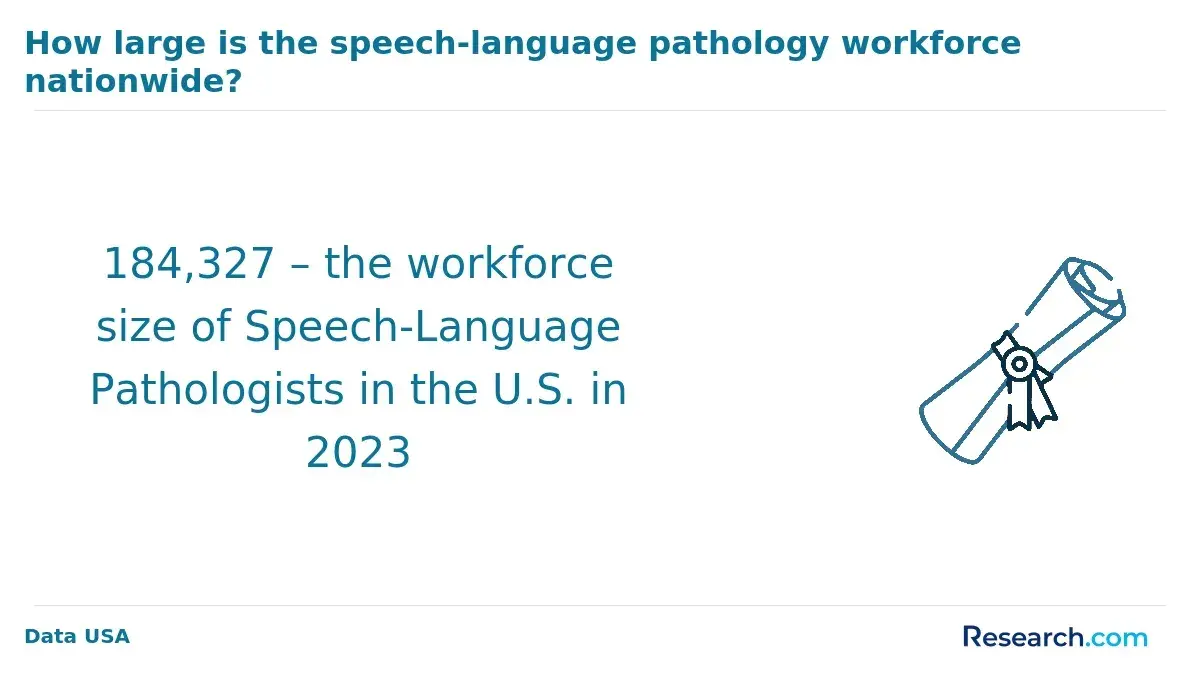
- Employment in speech-language pathology is projected to grow 21% over the next decade, reflecting strong job opportunities.
- Successful applicants often have strong GPAs, relevant clinical or volunteer experience, and well-crafted personal statements to stand out.
What is the main goal of a personal statement for Speech-Language Pathology (SLP) grad school?
The main goal of an SLP graduate school personal statement is to show admissions readers who you are as a future clinician and graduate student—not just what appears on your transcript. It should explain why speech-language pathology is the right field for you, what experiences have shaped that decision, and how you have developed the qualities needed for rigorous academic and clinical training.
Admissions committees use the statement to evaluate several things at once: your written communication, self-awareness, professionalism, understanding of the field, and fit with the program. A strong essay gives specific evidence that you can reflect on experience, learn from feedback, work with diverse people, and communicate with clarity and care.
Your statement should answer three questions clearly:
- Why SLP? Explain the experiences, values, and intellectual interests that led you to communication sciences and disorders.
- Why are you ready now? Show how coursework, observation, research, employment, volunteer work, or lived experience has prepared you for graduate-level expectations.
- Why this program? Connect your goals to the program’s curriculum, clinical opportunities, faculty interests, community partnerships, or learning model.
For applicants who need flexibility, online SLP programs may make it possible to complete coursework and some supervised clinical experiences remotely while pursuing graduate preparation. If you mention an online or hybrid format in your statement, focus on why that structure supports your learning and professional goals—not simply convenience.
What trends or expectations in 2027 should SLP applicants be aware of?
For 2027 applications, SLP admissions committees are looking for applicants who understand where the profession is headed and can respond thoughtfully to changing client, school, healthcare, and community needs. You do not need to use buzzwords, but your statement should show awareness of the field beyond a basic desire to help.
- Cultural and linguistic responsiveness: Programs value applicants who recognize that communication is shaped by language, culture, identity, access, and environment. If you have worked with multilingual communities, underserved populations, or people from backgrounds different from your own, explain what you learned and how it changed your approach.
- Technology and telepractice: Digital tools, remote service delivery, and assistive technologies continue to influence SLP practice. If relevant, describe your comfort with virtual communication, accessibility tools, or technology-supported learning while avoiding claims that you are already an expert unless your experience supports it.
- Evidence-based practice: Graduate programs want students who can connect compassion with clinical reasoning. Mention coursework, research exposure, data collection, or observation experiences that taught you to ask, “What does the evidence suggest, and how does it apply to this individual?”
- Advocacy and accessibility: SLPs often advocate for services, accommodations, communication access, and family-centered care. If you have advocated for students, clients, patients, or community members, show the specific role you played and the outcome or insight gained.
- Reflection and professional maturity: A polished statement should demonstrate good judgment. Admissions readers notice whether you can discuss challenges without blaming others, describe clients respectfully, and explain growth without exaggeration.
The best way to address these expectations is to integrate them naturally into your story. Do not add a paragraph just to mention diversity, technology, or research. Instead, choose experiences that show how you already think like a developing professional.
What should you know about each SLP program before tailoring your statement?
Before tailoring your personal statement, study each program closely enough to explain why it fits your goals. A generic statement can make even a qualified applicant seem less prepared. A tailored statement shows that you understand the program’s training model and can see yourself contributing to its learning community.
Focus your research on details that directly connect to your goals:
- Mission and priorities: Identify whether the program emphasizes clinical preparation, research, community engagement, equity, interprofessional practice, medical settings, school-based services, or another focus. Use this information to explain fit, not to flatter the school.
- Clinical training opportunities: Look for information about practicum settings, on-campus clinics, school partnerships, hospitals, rehabilitation centers, community agencies, or specialty clinics. Then connect those opportunities to the populations or settings you hope to serve.
- Faculty expertise: Review faculty profiles for research or clinical interests aligned with yours. Mention a faculty member only if the connection is meaningful and accurate; name-dropping without explanation can feel superficial.
- Curriculum and focus areas: Note whether the program offers experiences related to bilingualism, autism spectrum disorders, aphasia, dysphagia, augmentative and alternative communication, pediatric practice, medical SLP, or other areas. Explain how those options support your development.
- Program format and expectations: Understand whether the program is campus-based, online, hybrid, full-time, part-time, cohort-based, or structured around particular clinical sequences. This matters because your statement should show that you understand the demands of the model you are choosing.
- Admissions instructions: Read the prompt carefully. Some programs ask about diversity, resilience, research interests, ethical decision-making, or professional goals. Answer the specific prompt before adding broader personal narrative.
If you are comparing flexible pathways, online SLP programs can allow students to complete graduate-level coursework from different locations while still meeting academic and clinical requirements. When tailoring your statement for these programs, emphasize readiness for independent learning, time management, collaboration in virtual settings, and the ability to meet clinical expectations.
How can you identify your core motivations for pursuing speech-language pathology?
To identify your core motivation, move beyond the broad statement that you want to help people. SLP is a helping profession, but admissions committees need to understand why communication, swallowing, language, learning, or access matters to you specifically—and why you are prepared to do the demanding work required.
Start by listing the moments that shaped your interest, then look for patterns. The most useful examples are usually specific: observing a therapy session, supporting a child in a classroom, helping a family member navigate communication challenges, taking a course that changed how you understood language, or participating in research related to speech, hearing, cognition, or development.
Use these questions to clarify your “why”:
- What experience first made the field feel real? Identify a concrete moment rather than a general childhood memory.
- What kept you interested after the first exposure? Graduate programs want evidence of sustained interest, not only inspiration.
- What populations or settings draw your attention, and why? Be honest if your interests are still developing. You can show openness while naming areas you want to explore.
- What strengths do you bring? Consider listening, patience, analytical thinking, language learning, collaboration, cultural humility, problem-solving, or resilience.
- What have you learned about the hard parts of the profession? Mature applicants understand that SLP work involves documentation, data, family communication, interdisciplinary collaboration, ethical decisions, and emotional complexity.
Your statement does not need a dramatic origin story. A thoughtful explanation of steady growth, careful observation, and informed commitment is often more convincing than an overly sentimental narrative.
How do you discuss client interactions ethically while maintaining HIPAA compliance?
When discussing client interactions in an SLP personal statement, protect privacy first. Admissions committees want to see what you learned from the experience, not identifying details about a client, patient, student, family, school, clinic, or medical setting. Your writing should demonstrate ethical judgment and respect for confidentiality.
De-identify every example. Do not include names, birthdays, addresses, school names, clinic names, medical record numbers, exact locations, or unusual details that could make a person recognizable. Also avoid indirect identifiers, such as a rare diagnosis combined with a specific age, language, family circumstance, or setting.
Use general, respectful descriptions instead. For example, you might write about “a preschool-aged child receiving language support in a school setting” or “an adult patient working on communication after a neurological event.” Keep the focus on your observation, learning, and professional growth.
Ethical discussion should emphasize clinical reasoning and reflection. Instead of describing a client’s personal history in detail, explain what you noticed about rapport-building, family-centered care, data collection, therapy adaptation, or interprofessional collaboration. If you are unsure whether an example is appropriate, ask a supervisor, such as a licensed speech pathologist, or follow your program’s privacy and supervision guidelines.
If an experience involved written notes, recorded material, case presentations, or protected health information, never reuse details in an application unless they are fully de-identified and permitted by the setting. For formal publication or presentation, written authorization or institutional review may be required. In a personal statement, the safest approach is simple: protect the person, generalize the context, and center what the experience taught you.
What experiences best illustrate your readiness for graduate-level work?
The strongest experiences are not always the most impressive-sounding ones. They are the experiences you can reflect on with depth and connect directly to graduate-level expectations. Choose examples that show preparation for academic rigor, clinical learning, ethical responsibility, and service to diverse clients.
- Relevant coursework: Courses in communication sciences, linguistics, anatomy, psychology, neuroscience, child development, statistics, or research methods can show your academic foundation. Rather than listing classes, explain how one course sharpened your understanding of the field.
- Clinical observation or shadowing: Observing SLPs can demonstrate that you understand the profession’s daily realities. Strong reflections often mention documentation, goal-setting, caregiver education, rapport, data collection, or treatment adaptation.
- Volunteer or work experience: Schools, hospitals, rehabilitation centers, childcare programs, senior services, disability organizations, tutoring programs, and community agencies can all provide relevant preparation. Focus on transferable skills: communication, patience, professionalism, reliability, and cultural responsiveness.
- Research involvement: Research experience can show attention to evidence, detail, and critical thinking. Even if your role was introductory, explain what you learned about asking questions, interpreting data, or applying research to practice.
- Leadership and advocacy: Peer mentoring, student organizations, awareness events, accessibility work, or community service can show initiative. Connect leadership to the responsibilities of an SLP, such as collaboration, education, and advocacy for communication access.
- Personal or lived experience: If personal experience influenced your interest, use it carefully. Keep the focus on insight, maturity, and professional direction—not on another person’s private story or an emotional appeal.
As you select examples, ask whether each one proves something important about your readiness. A smaller experience with strong reflection is usually more effective than a long list of activities with little analysis.
How can you connect your experiences to the skills and values of the SLP profession?
To connect your experiences to the SLP profession, use a simple pattern: describe the experience briefly, explain what you did or observed, identify what you learned, and connect that lesson to a professional skill or value. This keeps your statement from becoming a résumé summary.
For example, if you volunteered in a classroom, do not stop at saying you worked with children with speech delays. Explain how the experience taught you to listen carefully, adjust communication to the learner, collaborate with educators, or recognize the importance of early support. If you observed therapy, describe what it taught you about evidence-based decision-making, documentation, rapport, or family involvement.
Strong connections often involve these professional values:
- Client-centered care: Show that you understand each client’s needs, goals, culture, and communication environment may differ.
- Evidence-based practice: Connect curiosity and compassion with data, research, and clinical reasoning.
- Ethical judgment: Demonstrate respect for confidentiality, boundaries, supervision, and professional responsibility.
- Cultural humility: Explain what you learned from working across languages, communities, abilities, or lived experiences.
- Collaboration: SLPs work with families, teachers, physicians, occupational therapists, audiologists, psychologists, and other professionals. Use examples that show teamwork.
- Adaptability: Graduate training requires responding to feedback, revising plans, and learning from mistakes.
If you are considering faster or flexible education options, reviewing accelerated speech pathology programs online may help you understand different program structures. In your statement, however, the key is not speed; it is showing that your chosen path matches your readiness, discipline, and long-term professional goals.
What are the most common mistakes in SLP personal statements, and how can you avoid them?
Common SLP personal statement mistakes usually come from being too vague, too broad, or too focused on impressing the reader instead of helping the reader understand your fit. Avoiding these problems can make your essay clearer and more credible.
- Writing a generic “I want to help people” essay: Helping others is important, but it is not specific to SLP. Replace broad claims with concrete examples of why communication, language, swallowing, learning, or access matters to you.
- Repeating your résumé: The committee already has your application materials. Use the statement to interpret your experiences: what you learned, how you grew, and why the experience matters for graduate training.
- Relying on clichés: Phrases such as “I have always known” or “communication is the key to everything” can sound flat unless supported by specific evidence. Lead with real experiences and precise reflection.
- Overusing emotional stories: Personal experiences can be meaningful, but they should not depend on another person’s private details or suffering. Keep the focus on your development, insight, and professional direction.
- Ignoring program fit: Submitting the same statement to every school misses an opportunity. Add specific, accurate reasons each program supports your goals.
- Making unsupported claims: If you call yourself compassionate, resilient, or culturally competent, provide evidence. Let the example prove the trait.
- Sounding overconfident: You are applying to learn. Avoid implying that you already know how to be an SLP. Show readiness, humility, and openness to supervision.
- Poor organization: A statement that jumps between unrelated experiences is hard to follow. Use a clear structure: motivation, preparation, fit, and future goals.
- Weak editing: Errors in grammar, punctuation, spelling, or formatting can undermine your message. SLP is a communication-centered profession, so polish matters.
A useful final test is to ask whether your statement could only belong to you. If another applicant could submit the same essay with minor edits, it needs more specificity.
What formatting or submission guidelines should you double-check for 2027 applications?
For 2027 applications, follow each program’s instructions exactly. A well-written statement can still create a poor impression if it ignores word limits, file rules, prompts, or submission procedures. Before uploading, check the details for every school separately.
- Prompt requirements: Confirm whether the program asks for a general personal statement or specific responses about diversity, goals, research, clinical interests, challenges, or program fit.
- Word or page limits: Stay within the stated limit. If no limit is provided, keep the statement focused and concise rather than trying to include every experience.
- Font and readability: Use a professional, readable font such as Times New Roman or Arial in 11- or 12-point size unless the program gives different instructions.
- Margins and spacing: Check whether the school requires single spacing, double spacing, specific margins, or a particular document layout.
- File type: Submit the required format, such as PDF or Word document. If a PDF is allowed, review it after exporting to make sure formatting did not shift.
- File name: Follow any naming convention exactly, such as a format using your last name and document type.
- Portal instructions: Some systems require an upload, while others require text pasted into a box. If you paste text, check for lost paragraph breaks, special characters, or spacing problems.
- Supplemental essays: Make sure you are not repeating the same content across multiple required responses. Each answer should serve a purpose.
- Final proofread: Read the final submitted version, not just the draft. Look for school-name errors, outdated program references, formatting glitches, and accidental omissions.
One of the most damaging mistakes is leaving another school’s name in the statement. Create a separate final file for each program and verify every customized detail before submission.
Who should review your personal statement draft for feedback (e.g., mentors, professors, peers)?
The best reviewers are people who can evaluate different parts of your statement: professional accuracy, academic readiness, clarity, and authenticity. Choose reviewers carefully. Too many opinions can make the essay unfocused, but the right feedback can strengthen both content and delivery.
Clinical supervisors or SLP mentors can help you confirm that your examples reflect the profession accurately. They may notice whether you are using respectful terminology, protecting confidentiality, and connecting experiences to real clinical skills.
Professors or academic advisors can assess whether your statement shows readiness for graduate study. They can help you clarify research interests, strengthen your discussion of coursework, and avoid claims that sound unsupported or too broad.
Peers or classmates can tell you whether the essay is engaging and easy to follow. Choose peers who will be honest and specific, not only encouraging. A good peer reviewer can identify confusing transitions, repetitive points, or sections that do not sound like you.
Writing center staff or professional editors can help with organization, grammar, sentence clarity, and flow. If you use an editor, make sure the final statement remains in your own voice. Admissions committees expect polished writing, not a statement that sounds manufactured.
Limit your review group to three or four people. Ask each reviewer for a specific type of feedback: content accuracy, program fit, structure, or line editing. After receiving comments, look for patterns rather than trying to accept every suggestion. Your final statement should be clear, ethical, tailored, and unmistakably yours.
Other things you should know about writing a strong personal statement for SLP grad school
Use a clear, professional format for your 2027 personal statement. Typically, this includes 12-point font, 1-inch margins, and double-spacing. Ensure it fits within any specified word or page limits stated by the grad school, often around 500–750 words.
Yes, tailoring your personal statement to each SLP program is crucial. Highlight specific aspects of the program that align with your career goals, and mention any faculty members whose work inspires you. This demonstrates your genuine interest and understanding of what each program offers.
References
- American Speech-Language-Hearing Association. (2024). CE courses / Augmentative and Alternative Communication (AAC). ASHA
- Council on Academic Accreditation in Audiology and Speech-Language Pathology. (n.d.). Programs — Accreditation of graduate education programs in audiology and speech-language pathology. CAA ASHA
- Emily Diaz, SLP. (n.d.). AAC resource library: free tools, checklists, and printable supports for AAC implementation. Emily Diaz SLP
- SpeechPathologyDegrees.com. (2025). Best CAA/ASHA accredited online master’s programs in speech-language pathology. SpeechPathologyDegrees.com
- The AAC Academy. (n.d.). Live and on-demand AAC + learning opportunities for professionals, families, and communicators across the globe. The AAC Academy