2027 Adult and Geriatric Speech Pathology Specializations

Co-Founder and Chief Data Scientist
Choosing adult or geriatric speech-language pathology means preparing for some of the most complex work in the profession: helping adults recover communication after stroke or brain injury, supporting people with dementia or Parkinson’s disease, and managing swallowing disorders that can affect safety, nutrition, and quality of life. The need is growing quickly. According to the U.S. Bureau of Labor Statistics, employment of speech-language pathologists is projected to grow 15% from 2024 to 2034.
This guide explains how adult and geriatric SLP specialization works in 2027, including education and certification steps, clinical hour expectations, competitive skills, common employers, work settings, salaries, advancement paths, and job outlook. It is designed for prospective graduate students, current SLP students, clinical fellows, and practicing clinicians who want to move toward medical, rehabilitative, or older-adult care.
What are the benefits of pursuing geriatric speech pathology specializations?
- Online geriatric speech pathology programs offer flexibility, allowing students to complete coursework around work or clinical schedules.
- They expand access to accredited programs nationwide; as of 2025, more than 60% of U.S. universities with CAA-accredited SLP programs offer fully or partially online options.
- Online learning platforms often integrate virtual simulations and tele-practice training, helping students gain real-world experience with adult and geriatric clients in digital healthcare settings.
How do you become a certified specialist in adult or geriatric speech pathology?
Becoming an adult or geriatric speech-language pathologist starts with the same professional foundation required of all SLPs: graduate education, supervised clinical training, a clinical fellowship, licensure, and professional certification. Specialization then comes through the type of clinical placements, continuing education, mentorship, and advanced credentials you pursue.
According to the Bureau of Labor Statistics, over 55% of licensed speech-language pathologists now work with adult and older adult populations. That makes adult neurogenic communication, dysphagia, cognitive-communication treatment, and geriatric care important areas for students comparing campus-based and SLP online programs.
The usual pathway includes the following steps:
- Earn the required graduate degree: Complete a master’s degree in speech-language pathology from a CAA-accredited program. Accreditation matters because it affects eligibility for certification, licensure, and many employer requirements.
- Build adult-focused clinical experience: Seek placements in hospitals, inpatient rehabilitation, outpatient rehabilitation, skilled nursing facilities, or home health. These settings expose students to aphasia, dysarthria, voice disorders, cognitive-communication disorders, and dysphagia.
- Complete the clinical fellowship: Aspirants must complete a clinical fellowship (CF), a supervised postgraduate experience lasting 36 weeks or at least 1,260 hours. It is as required by the American Speech-Language-Hearing Association.
- Pass the licensure examination: Pass the Praxis Exam in Speech-Language Pathology, which evaluates broad professional competency, including areas relevant to adult communication and swallowing disorders.
- Meet state licensure rules: Apply for licensure in the state where you plan to practice. State rules can differ, so candidates should verify requirements before accepting a position or moving across state lines.
- Earn professional certification: Obtain ASHA certification (CCC-SLP) and, after gaining advanced experience, consider optional specialty certification such as the Board Certified Specialist in Swallowing and Swallowing Disorders (BCS-S).
The most competitive candidates do not wait until after graduation to specialize. They choose adult-oriented practicum sites, develop comfort with medical documentation, observe instrumental swallowing assessments when possible, and seek supervisors who regularly treat neurogenic and geriatric caseloads.
How many clinical hours are required to specialize in adult or geriatric speech-language pathology?
Graduate-level SLP students enrolled in online speech pathology programs must complete at least 400 supervised clinical hours, including 25 observation hours and 375 direct contact hours, as required by ASHA certification standards. Students aiming for adult or geriatric practice typically try to make a meaningful portion of those hours medical or rehabilitation focused.
Those specializing in adult or geriatric care typically log 150–200 hours in hospital, rehabilitation, or skilled nursing settings. These experiences help students apply classroom knowledge to real adult cases, including stroke recovery, progressive neurological disease, dysphagia management, and cognitive-communication treatment.
The clinical fellowship adds another 1,260 hours of mentored practice. Together, graduate clinical training and the fellowship prepare future SLPs to manage complex adult communication disorders such as aphasia, dysarthria, and cognitive-communication deficits.
| Training stage | Hours stated | Why it matters for adult and geriatric specialization |
| Observation | 25 observation hours | Helps students see evaluation, treatment planning, documentation, and family counseling before leading sessions. |
| Direct clinical contact | 375 direct contact hours | Builds hands-on skill with assessment and treatment across communication and swallowing needs. |
| Total supervised graduate hours | At least 400 supervised clinical hours | Meets baseline ASHA certification standards and supports entry into the clinical fellowship. |
| Adult or geriatric-focused experience | 150–200 hours | Strengthens readiness for medical, rehabilitation, skilled nursing, and older-adult roles. |
| Clinical fellowship | 1,260 hours | Provides mentored post-graduate practice and helps new clinicians transition into independent decision-making. |
Students should track not only the number of hours but also the quality and variety of cases. A transcript of hours is more useful when it shows exposure to adult assessment, treatment, documentation, team meetings, discharge planning, and caregiver education.
What skills make an SLP competitive for adult and geriatric specialist roles?
Adult and geriatric SLP roles require more than general communication therapy skills. Employers want clinicians who can make safe decisions, work in medical teams, document clearly, educate families, and adjust care plans when patients have multiple diagnoses or changing health status.
- Neurological assessment: Evaluate and interpret communication or swallowing disorders associated with stroke, dementia, Parkinson’s disease, brain injury, and other neurological conditions.
- Clinical reasoning: Select appropriate assessments, interpret results, prioritize risk, and design individualized treatment plans rather than relying on generic exercises.
- Dysphagia knowledge: Understand swallowing physiology, aspiration risk, diet recommendations, compensatory strategies, and when instrumental assessment may be needed.
- Instrumental proficiency: Develop competence with tools such as VFSS (Videofluoroscopic Swallowing Study) and FEES (Fiberoptic Endoscopic Evaluation of Swallowing), including appropriate referral and interpretation within the SLP scope of practice.
- Medical documentation: Write clear, defensible notes that connect evaluation findings, treatment goals, patient progress, discharge planning, and payer requirements.
- Interpersonal and counseling skills: Communicate with adults and families facing loss of independence, progressive disease, or long recovery timelines with empathy and realism.
- Interprofessional collaboration: Work effectively with physicians, nurses, dietitians, occupational therapists, physical therapists, social workers, and case managers.
- Adaptability: Modify treatment for fatigue, cognition, hearing loss, mobility limitations, comorbidities, and changing medical status.
- Continued learning: Stay current in dementia care, voice rehabilitation, cognitive-communication therapy, and dysphagia management to remain competitive.
A common mistake is treating adult specialization as only a dysphagia track. Swallowing expertise is important, but strong adult and geriatric clinicians also understand language, cognition, motor speech, voice, counseling, ethics, and functional outcomes.
What types of employers hire adult and geriatric speech-language pathologists?
Adult and geriatric SLPs are hired by employers that serve patients after illness, injury, surgery, neurological change, or functional decline. About 37% of speech-language pathologists work in healthcare settings outside of schools, including 23% in hospitals and 14% in nursing and residential care facilities.
The right employer depends on the pace and type of care you want. Hospitals often involve urgent evaluations and discharge planning. Rehabilitation centers may provide more intensive therapy. Skilled nursing and home health roles often require strong independence, documentation discipline, and comfort with chronic or progressive conditions.
- Hospitals: SLPs in acute and post-acute care assess and treat adults recovering from stroke, brain injury, respiratory illness, surgery, or other medical events affecting communication or swallowing.
- Rehabilitation centers: These facilities provide intensive therapy for patients working to regain communication, cognition, and safe swallowing after neurological or physical trauma.
- Skilled nursing facilities (SNFs): Geriatric SLPs help residents manage chronic conditions affecting speech, language, cognition, and swallowing, often in coordination with nursing and rehabilitation teams.
- Home health agencies: Clinicians provide in-home therapy for patients transitioning from hospital or rehabilitation to home care, with an emphasis on safety, caregiver training, and functional routines.
- Outpatient clinics: These settings support adults who need ongoing treatment for voice, fluency, cognitive-communication, motor speech, language, or swallowing concerns.
- Telepractice providers: With telehealth expansion, many SLPs deliver remote therapy, especially to older adults in rural or mobility-limited populations.
- Hospice and palliative care teams: Some SLPs support comfort-focused communication and swallowing decisions for adults with advanced illness.
When evaluating job postings, candidates should look beyond the job title. Caseload mix, productivity expectations, supervision, access to instrumental assessment, documentation systems, and interdisciplinary support can affect both clinical quality and workload.
What career advancement opportunities are available for adult and geriatric speech-language pathologists?
Employment for speech-language pathologists is projected to grow by 15% from 2024 to 2034. This growth supports a range of advancement paths for clinicians who build strong adult and geriatric expertise, particularly those using a master's in speech pathology online to meet entry-level requirements or expand professional qualifications.
Career advancement in this area usually comes from one of four directions: deeper clinical specialization, leadership, teaching or research, or independent practice. Each path requires different preparation.
- Clinical specialist roles: Focus on higher-complexity caseloads such as adult dysphagia, aphasia, neurogenic communication, cognitive-communication disorders, or progressive neurological disease. Specialist credentials and documented experience can support advanced clinical positions.
- Supervisory and leadership positions: Lead SLP teams, mentor clinical fellows, oversee service delivery in medical or residential settings, and contribute to quality improvement or program development.
- Research and academic appointments: Move into teaching, clinical education, research coordination, publication, or university-affiliated clinics that shape evidence-based adult and geriatric care.
- Consultancy and private practice: Build a niche practice or consulting role in older-adult swallowing disorders, cognitive-communication intervention, caregiver training, or telehealth services.
- Program director or department head: Oversee SLP departments across hospitals, rehabilitation centers, or long-term care systems, including staffing, budgets, clinical standards, and organizational strategy.
Clinicians who want advancement should document outcomes, pursue high-quality continuing education, seek mentorship in advanced procedures, and develop leadership skills early. Technical expertise opens doors, but communication, reliability, and sound judgment are often what move clinicians into senior roles.
What are the typical work settings for professionals in adult and geriatric speech pathology?
According to ASHA’s 2024 Health Care Survey, more than 60% of medical speech-language pathologists primarily work with adults and older adults across a range of clinical environments. These settings differ significantly in pace, caseload, autonomy, documentation load, and treatment goals.
| Setting | Typical focus | Best fit for clinicians who want |
| Acute care units | Rapid assessment, swallowing safety, communication screening, discharge planning | Fast-paced medical work and close collaboration with hospital teams |
| Inpatient rehabilitation | Daily therapy to rebuild communication, cognition, and safe swallowing after illness or injury | Intensive treatment planning and measurable functional progress |
| Long-term care facilities | Management of progressive disorders, chronic impairment, caregiver education, quality of life | Ongoing relationships with older adults and interdisciplinary care teams |
| Outpatient rehabilitation centers | Scheduled therapy for chronic, mild, or post-acute impairments | Continuity of care and structured follow-up over weeks or months |
| Community-based and day programs | Communication maintenance, participation, social interaction, and functional support | Person-centered therapy focused on independence and daily life |
- Acute care units: SLPs in hospitals provide rapid assessments for patients recovering from stroke, brain injury, respiratory illness, or other medical events. The goal is often to support safe eating, basic communication, and appropriate discharge decisions.
- Inpatient rehabilitation: Specialists deliver frequent therapy sessions to help adults regain independence in communication, cognition, and swallowing after neurological or traumatic injury.
- Long-term care facilities: These settings focus on managing progressive disorders such as Alzheimer’s, Parkinson’s, and ALS through ongoing therapy, compensatory strategies, and caregiver education.
- Outpatient rehabilitation centers: Patients receive scheduled therapy for chronic or mild impairments, allowing clinicians to track progress over weeks or months.
- Community-based and day programs: These programs support adults with developmental or acquired conditions, promoting social interaction, speech maintenance, participation, and quality of life.
Before choosing a setting, new clinicians should ask about supervision, productivity standards, caseload complexity, access to instrumental swallowing evaluations, and how the employer supports continuing education.
What is the average salary range for adult and geriatric speech-language pathologists in 2027?
The median speech therapy salary in 2027 is $95,410. Salaries typically range from $60,480 for entry-level positions to over $132,850 for highly experienced professionals, depending on setting and location.
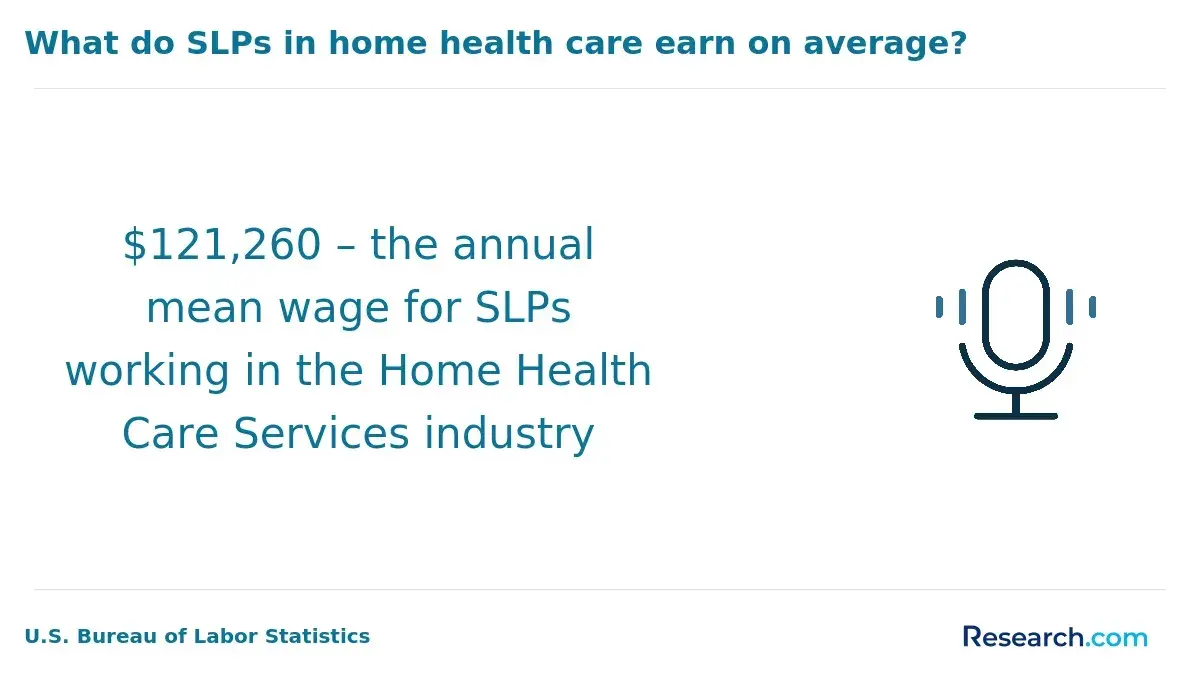
Adult and geriatric SLPs may earn higher wages in healthcare environments where medical complexity, travel, scheduling flexibility, or specialized dysphagia skills are valued. For instance, SLPs employed in home health care services report an average salary of $121,410, reflecting the advanced skills required for complex medical and rehabilitative cases.
| Salary figure | Amount | How to interpret it |
| Median speech therapy salary in 2027 | $95,410 | A midpoint figure; actual pay varies by setting, region, experience, and role responsibilities. |
| Entry-level range noted | $60,480 | More common for newer clinicians or roles with lower specialization demands. |
| Highly experienced professionals | Over $132,850 | May reflect advanced experience, higher-paying locations, leadership, specialization, or complex medical caseloads. |
| Home health care services average salary | $121,410 | Often associated with independent work, travel, adult medical cases, and home-based rehabilitation needs. |
When comparing offers, look at total compensation rather than salary alone. Benefits, mileage reimbursement, productivity requirements, documentation time, continuing education support, supervision, and caseload expectations can change the real value of a position.
What certifications are available for speech-language pathologists who want to specialize in adult and geriatric care?
Certification in adult and geriatric speech pathology usually starts with the CCC-SLP and then builds through advanced practice experience, continuing education, and optional specialty recognition. Students in traditional or fast-track speech pathology programs should understand that graduate admission and program speed do not replace supervised clinical requirements, licensure, or post-graduate experience.
ASHA designates the “Board Certified Specialist” (BCS) credential to recognize SLPs who demonstrate advanced knowledge and skills in a specialty area of practice. For adult and geriatric clinicians, the most directly relevant credential named here is swallowing-focused specialization.
- Certificate of Clinical Competence in Speech-Language Pathology (CCC-SLP): This foundational credential from ASHA is required before pursuing most specialist certifications and is widely recognized by employers.
- Board Certified Specialist in Swallowing and Swallowing Disorders (BCS-S): For SLPs who focus on adult dysphagia and swallowing disorders, this certification demonstrates advanced expertise in a high-demand area of medical SLP practice.
- Board Certified Specialist (BCS): Although not every specialty area is specific to adults or geriatrics, a BCS credential signals advanced competence in a defined area of practice and may strengthen a clinician’s profile for specialized roles.
Certification should match the work you actually want to do. A clinician focused on skilled nursing, hospitals, or home health may prioritize dysphagia training and BCS-S preparation, while a clinician focused on cognitive-communication or aphasia may pursue targeted continuing education, mentorship, and documented clinical experience in those areas.
What challenges do new practitioners face in adult and geriatric speech pathology?
New practitioners often find adult and geriatric speech pathology demanding because patients rarely present with a single, simple diagnosis. A patient may have stroke-related aphasia, dysphagia, reduced mobility, hearing loss, fatigue, medication effects, and family stress all at the same time. Clinical decisions must account for safety, function, prognosis, patient goals, and team recommendations.
According to ASHA’s 2024 Health Care Survey, early-career SLPs cite case complexity and documentation requirements as their top sources of stress. This is especially true in settings where clinicians must balance evaluations, therapy sessions, team communication, discharge planning, and payer documentation.
- Complex medical caseloads: New clinicians may need time to become comfortable with medically fragile patients, progressive neurological disease, tracheostomy considerations, or dysphagia risk.
- Documentation pressure: Notes must be accurate, timely, and tied to skilled need, progress, and treatment decisions.
- Productivity expectations: Healthcare settings may require clinicians to manage tight schedules while still providing thoughtful, ethical care.
- Emotional demands: Dementia, ALS, end-of-life care, and loss of communication can be difficult for patients, families, and clinicians.
- Technology and systems: Electronic health records, telehealth platforms, instrumental assessment workflows, and reimbursement protocols can create a steep learning curve.
- Interdisciplinary communication: New SLPs must learn how to present recommendations clearly to physicians, nurses, therapists, dietitians, case managers, patients, and caregivers.
The best way to manage these challenges is to seek strong supervision during the clinical fellowship, ask for structured feedback, keep a reliable documentation routine, and choose continuing education that matches the setting and caseload. New practitioners should also learn when to ask for support; safe practice depends on good judgment, not pretending to know everything immediately.
What is the job outlook in 2027 for SLPs specializing in adult and geriatric populations?
The job outlook for speech-language pathologists specializing in adult and geriatric populations remains highly promising. The U.S. Bureau of Labor Statistics reports an estimated 187,400 employed SLPs in 2024, with an expected increase of about 28,100 new positions by 2034.
Demand is not driven only by overall job growth. The ASHA 2023 Healthcare Survey found that 90% of SLPs serving adult clients list swallowing disorders among their top caseload areas, showing the importance of dysphagia management in adult medical practice.
Several factors support long-term demand. The U.S. population aged 65 and older is projected to surpass 80 million by 2040, increasing the need for clinicians who understand stroke, Parkinson’s disease, dementia-related communication changes, cognitive-communication disorders, and swallowing safety. Expanding access to telehealth and home-based rehabilitation also broadens employment options for clinicians, particularly those serving rural or mobility-limited populations.
Healthcare systems are also relying more on interdisciplinary rehabilitation teams, which creates roles for SLPs in hospitals, skilled nursing facilities, outpatient clinics, home health, and related care models. For students and clinicians who want a stable healthcare career with room for specialization, adult and geriatric speech-language pathology offers strong prospects, but the best opportunities will favor SLPs with solid medical knowledge, ethical judgment, documentation skill, and supervised experience with complex adult cases.
Other Things to Know About Adult and Geriatric Speech Pathology Specializations in 2027
In 2027, adult and geriatric speech-language pathologists frequently treat conditions like stroke-related aphasia, Parkinson’s disease, dementia, traumatic brain injuries, and voice disorders. These conditions require specialized interventions to improve communication and swallowing functions, integral to patient quality of life.
In 2027, new therapeutic techniques for adult and geriatric speech pathology include virtual reality exercises for cognitive challenges and AI-driven personalized intervention plans. These innovations enhance patient engagement and provide tailored therapy, making them more effective in addressing communication disorders in aging populations.
References
- American Speech-Language-Hearing Association. (2024). Supply and demand resource list for speech-language pathologists. https://www.asha.org/siteassets/surveys/supply-demand-slp.pdf ASHA
- Bureau of Labor Statistics. (2024, May). Speech-language pathologists: Occupational outlook handbook. U.S. Department of Labor. https://www.bls.gov/ooh/healthcare/speech-language-pathologists.htm Bureau of Labor Statistics
- Rivelsrud, M. C., et al. (2022). Prevalence of oropharyngeal dysphagia in adults in different clinical settings: A systematic review. PMC (Open Access). https://www.ncbi.nlm.nih.gov/articles/PMC9873728/ PMC
- Sevitz, J. S., et al. (2023). Telehealth management of dysphagia in adults: A survey of speech-language pathologists’ experiences and perceptions. Dysphagia, 38, 1184–1199. https://doi.org/10.1007/s00455-022-10544-z SpringerLink
- US News & World Report Careers. (2024). What is the future outlook for speech-language pathology careers? https://careers.asha.org/getting-started/future-job-outlook-speech-language-pathology/ careers.asha.org
- USA.edu. (2024). Speech pathologist salary: How much do speech pathologists make? https://www.usa.edu/blog/masters-in-speech-language-pathology-salary-guide/ USAHS
- Vennitti, C. (2025). Speech-language pathology evaluation is associated with improved outcomes in geriatric dysphagia. PMC. https://www.ncbi.nlm.nih.gov/articles/PMC12494601/ PMC
- Swavely, M. (2018). Dysphagia in the older adult and the role of speech-language pathologists. Fox Rehabilitation. https://foxrehab.org/opportunities-for-speech-therapy-to-benefit-older-adults-dysphagia/