2027 Synchronous vs Asynchronous Learning in Online Speech Pathology Programs

Co-Founder and Chief Data Scientist
Choosing an online speech-language pathology program is not just a question of “online or campus.” For many applicants, the harder decision is whether to enroll in a program with live scheduled classes, mostly self-paced coursework, or a hybrid model that uses both. That choice affects your weekly calendar, interaction with faculty, clinical placement planning, and how much structure you will have while preparing for licensure and practice.
The stakes are real. According to the Bureau of Labor Statistics, employment of speech-language pathologists is projected to grow 15 % from 2024 to 2034, making this a rapidly expanding field. Online programs can help career changers, working professionals, and students outside major metro areas enter the field, but the format must fit the way you actually learn and manage responsibilities.
Backed by the research team from Research.com with over ten years’ experience in career planning, this guide explains how synchronous, asynchronous, and hybrid online SLP programs work. It compares flexibility, cost, collaboration, clinical placements, admissions, retention, employer perception, and the practical trade-offs you should review before applying.
Key Things You Should Know About Synchronous vs Asynchronous Learning in an Online Speech Pathology Program
- A hybrid online speech pathology program blends real-time (synchronous) lectures with self-paced (asynchronous) modules to offer versatility and structured interaction.
- Scheduling flexibility is generally greater in asynchronous formats, which allow working students to complete coursework on their own timeframe rather than attend fixed class times.
- Costs, student retention, employer perceptions, and practicum scheduling may differ significantly between synchronous and asynchronous formats, affecting both your academic and career outcomes.
How does a hybrid online speech pathology program combine synchronous and asynchronous coursework?
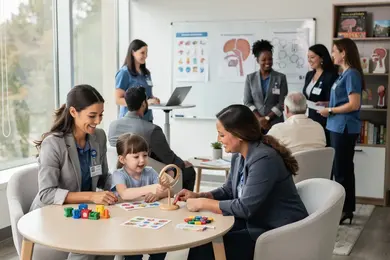
A hybrid online speech pathology program combines live class meetings with coursework students complete on their own schedule. The goal is to preserve the interaction needed for clinical training while giving students more control over when they complete readings, recorded lectures, quizzes, and written assignments.
In a well-designed hybrid model, synchronous and asynchronous work are not separate tracks. They support each other. Students may review a recorded lecture on language development before attending a live case discussion, or complete an online module on assessment procedures before practicing clinical decision-making with faculty and peers.
How the two formats usually work together
| Program component | Typical synchronous use | Typical asynchronous use |
| Foundational content | Live review sessions, faculty Q&A, applied discussions | Recorded lectures, readings, quizzes, and knowledge checks |
| Clinical skill building | Role-plays, live case analysis, group treatment planning | Recorded demonstrations, reflection assignments, practice documentation |
| Peer interaction | Breakout rooms, cohort discussions, presentations | Discussion boards, peer review, shared projects |
| Faculty support | Scheduled class meetings, office hours, real-time feedback | Written feedback, announcements, learning modules, recorded guidance |
Key features
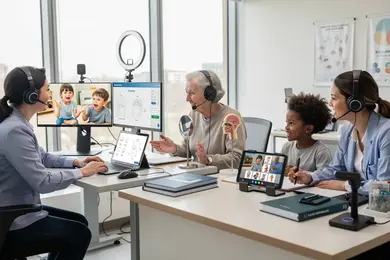
- Synchronous components: Scheduled live class sessions through video conferencing for lectures, clinical discussions, presentations, or group work.
- Asynchronous components: Pre-recorded videos, discussion boards, quizzes, readings, assignments, and other course materials available outside scheduled meeting times.
- Integration approach: Many hybrid online speech pathology master’s programs reserve live sessions for applied work, such as role-plays or live case studies, while using asynchronous modules for theory and foundational instruction.
- Benefits and trade-offs: Hybrid programs can provide accountability and community without requiring students to be online for every class activity. The trade-off is that students must manage both scheduled meetings and independent deadlines.
- Considerations: Before enrolling, ask how much of the program is synchronous versus asynchronous, whether live sessions are recorded, how often attendance is required, and whether the program meets ASHA-related accreditation expectations.
Which SLP program format offers the most scheduling flexibility for working students?
Primarily asynchronous online SLP programs usually offer the most scheduling flexibility because students can watch lectures, review materials, and complete much of the coursework outside fixed class times. This format is often the strongest fit for students balancing employment, caregiving, commuting, or variable work shifts.
Synchronous programs offer less schedule control because students must attend live sessions at set times. However, that structure can be useful for students who need regular deadlines, real-time discussion, and immediate faculty feedback. Hybrid programs sit between the two: they reduce the number of required live meetings but still include scheduled interaction.
Best fit by student situation
| Student priority | Best-fitting format | Why it may work |
| Maximum control over study time | Primarily asynchronous | Coursework is often accessible 24/7, allowing students to study around work or family obligations. |
| Regular structure and live discussion | Synchronous | Scheduled classes create accountability and more immediate interaction with faculty and peers. |
| Balance of independence and connection | Hybrid | Students complete some work independently while still attending selected live sessions. |
| Unpredictable work schedule | Primarily asynchronous or low-residency hybrid | Fewer fixed class meetings reduce the risk of schedule conflicts. |
Working students should look beyond the label a program uses. Ask how many live meetings are required each week, whether attendance is mandatory, whether sessions are recorded, how group projects are scheduled, and how clinical placements are arranged. A program advertised as flexible may still require daytime clinical hours or evening live sessions that conflict with employment.
Are there accelerated online SLP programs that are primarily asynchronous to speed up degree completion?
Yes. Some online speech-language pathology programs use a primarily asynchronous structure with accelerated pacing, allowing students to move through coursework more quickly than in a traditional schedule. These programs can appeal to students who want to enter the field sooner, but the faster timeline usually means a heavier weekly workload.
Accelerated does not mean less rigorous. Online SLP programs still need to prepare students for clinical training, supervised practice, and licensure-related requirements. Students should confirm that the program’s pace does not weaken access to faculty support, clinical placement assistance, or preparation for required professional milestones.
Key elements
- Asynchronous design: Programs may use fewer live meetings and rely on recorded lectures, independent assignments, online discussions, and self-directed study.
- Intensive pacing: Shorter terms or heavier course loads may help students finish sooner, especially in 5 year speech pathology programs.
- Ideal for career changers: These formats may suit students who already have relevant prerequisites, strong academic preparation, or the ability to study full time.
- Accreditation: Programs must still meet ASHA standards and practicum hour requirements.
- Trade-offs: Faster completion can reduce downtime between assignments, increase weekly reading and project demands, and make time management essential.
Questions to ask before choosing an accelerated asynchronous option
- How many courses are taken at once during the most demanding term?
- Are live check-ins optional or required?
- How early does the program begin planning clinical placements?
- What happens if a student needs to slow down or repeat a course?
- How accessible are faculty when most coursework is self-paced?
What strategies do asynchronous online SLP programs use to ensure effective student‑to-student collaboration?
Asynchronous online SLP programs cannot depend on spontaneous classroom conversation, so strong programs build collaboration directly into the course design. The best models use structured discussion, peer review, group clinical exercises, and cohort-based assignments to help students practice communication and teamwork even when they are not online at the same time.
Structured discussion-based learning
Students may participate in guided forums where they analyze case studies, compare evidence-based resources, and respond to peer reflections on topics such as AAC, speech sound disorders, fluency treatment, and clinical documentation. Clear prompts and rubrics help move discussions beyond short agreement-based replies.
Collaborative clinical preparation
Group assignments can mirror the teamwork expected in schools, hospitals, private practices, and other clinical environments. Students may co-develop treatment plans, SOAP notes, therapy materials, or assessment summaries using shared digital tools such as Google Workspace or collaboration features inside the learning-management platform.
Peer feedback and accountability systems
Peer review gives students practice evaluating clinical reasoning, written documentation, and recorded therapy activities. This matters because SLPs must be able to explain decisions clearly, accept feedback, and adjust treatment plans based on evidence and client response.
Cohort-based program design
Some asynchronous programs move students through a planned sequence together, which can create a stronger sense of community. Cohort models may include peer partners, small groups, or recurring project teams so students build relationships over time rather than interacting only in isolated courses.
What to look for in a collaborative asynchronous program
- Required discussion participation with meaningful instructor moderation
- Group assignments tied to clinical decision-making, not just general presentations
- Peer review opportunities with clear feedback criteria
- Accessible tools for shared documents, video comments, and project management
- Faculty expectations for respectful, professional online communication
How are clinical placements and practicum hours scheduled differently for synchronous vs asynchronous online SLP students?
Clinical placement scheduling depends less on whether coursework is live or self-paced and more on how the program coordinates sites, supervisors, and student availability. Still, synchronous and asynchronous formats can create different planning pressures.
Synchronous programs often align clinical experiences with a fixed cohort calendar. This can make expectations clearer but may leave less room to adjust around work or family obligations. Asynchronous programs may offer more flexibility in when students complete coursework, but practicum hours still depend on site availability, supervisor schedules, and client needs.
Common differences
| Factor | Synchronous online SLP programs | Asynchronous online SLP programs |
| Course schedule | Live classes may be tied to a set cohort timeline. | Coursework may be completed with more timing flexibility. |
| Practicum planning | Clinical schedules may follow more standardized program milestones. | Students may have more room to coordinate coursework around placements. |
| Student responsibility | Students still need to meet placement requirements and attend supervised experiences. | Students must be proactive because flexible coursework does not guarantee flexible clinical sites. |
| Support systems | Programs may coordinate placements through partnerships and structured supervision timelines. | Programs may coordinate placements through partnerships, local site arrangements, and telepractice platforms. |
Both formats must meet ASHA’s 400-hour practicum requirement. Students in asynchronous programs should confirm placement options early to avoid scheduling conflicts with coursework, employment, and site availability.
Questions to ask about clinical placements
- Does the program place students, or must students identify potential sites?
- Can placements be completed near the student’s home location?
- Are any daytime hours required?
- How are supervisors approved?
- What support is available if a placement falls through?
Which format has higher student retention rates: synchronous or asynchronous online SLP courses?
Retention often tends to be stronger when online courses include synchronous elements because scheduled interaction can increase accountability, reduce isolation, and give students more immediate access to faculty and peers. However, the best format depends on the student’s learning habits, support system, and ability to manage deadlines independently.
According to research from the U.S. Department of Education (2024), online courses that combine synchronous elements report retention rates up to 10% higher than fully asynchronous ones.
Why synchronous elements can support retention
- Regular contact: Live meetings make it harder for students to disappear from the course unnoticed.
- Immediate clarification: Students can ask questions in real time when clinical concepts are difficult.
- Peer connection: Cohort interaction can help students feel less isolated during demanding terms.
- Structured pacing: Scheduled sessions can keep students moving through complex material.
Why asynchronous students can still succeed
- Schedule control: Students can study when they are most focused and available.
- Replayable content: Recorded lectures can be reviewed multiple times.
- Independence: Self-directed learners may perform well without frequent live meetings.
Students who prefer structure often do better in synchronous or hybrid formats, while disciplined self-starters may thrive asynchronously. For those seeking extra support, consider programs listed among the easiest SLP grad schools to get into for smoother academic progression.
Are asynchronous online SLP programs generally less expensive than synchronous programs due to reduced infrastructure costs?
No. Asynchronous online SLP programs are not generally less expensive simply because they use recorded lectures or fewer live meetings. Delivery format may affect some operating costs, but it is usually not the main driver of tuition in a graduate speech-language pathology program.
The major expenses behind tuition include faculty instruction, curriculum development, online learning platforms, student support services, clinical placement coordination, and supervision-related administration. These costs remain significant whether a lecture is delivered live or recorded.
The clinical component is especially important. A program still needs to prepare students for supervised practice and meet ASHA-related expectations. That requires planning, documentation, approved supervision, and coordination across clinical settings. Those requirements do not disappear in an asynchronous format.
Why tuition may look similar across formats
- Faculty expertise is still required: Recorded content still needs qualified instructors, updates, grading, feedback, and office-hour support.
- Clinical coordination remains complex: Programs must help students complete supervised clinical experiences regardless of course format.
- Technology costs still exist: Asynchronous programs rely heavily on learning platforms, video tools, digital libraries, and student support systems.
- Accreditation expectations remain the same: Programs cannot reduce academic or clinical quality simply because coursework is more flexible.
Students should compare total program cost, fees, residency expenses, clinical travel costs, and financial aid options rather than assuming asynchronous delivery will automatically be cheaper.
What is the typical cost per credit hour comparison for the top synchronous vs asynchronous programs?
Cost per credit hour can vary by institution, residency status, fees, and program structure. Still, students often see synchronous programs priced higher per credit than asynchronous programs, though the difference is not always large enough to be the deciding factor.
- Synchronous programs: $900–$1,200 per credit due to live teaching and smaller class sizes.
- Asynchronous programs: $700–$1,000 per credit, reflecting reduced real-time instruction.
- Total cost: Most online speech pathology master’s programs require around 60 credits, totaling roughly $45,000–$70,000.
- In-state discounts: Some public universities offer reduced rates for residents. Be sure to review each institution’s tuition page for the most current data.
Cost factors to compare before applying
| Cost item | Why it matters |
| Tuition per credit | This is the starting point, but it does not always show the full cost of attendance. |
| Program fees | Online, technology, clinical, or student service fees can add to the total bill. |
| Residency or campus requirements | Travel, lodging, and missed work can increase the true cost of a program. |
| Clinical placement expenses | Students may need to budget for commuting, background checks, immunization records, or placement-related requirements. |
| Time to completion | A faster program may reduce time out of the workforce, while a slower program may be easier to manage while employed. |
The best value is not always the lowest per-credit price. A more expensive program may be worth considering if it provides stronger clinical placement support, better faculty access, clearer licensure preparation, or a schedule that helps you finish without stopping out.
What Learning Management Systems (LMS) are most commonly used for delivering asynchronous SLP course content?
In an asynchronous SLP program, the Learning Management System is the main classroom. It is where students watch lectures, download readings, submit assignments, join discussions, check grades, receive announcements, and often interact with classmates and faculty. A strong LMS setup can make an online program easier to navigate; a poorly organized one can create unnecessary stress.
The platform itself matters less than how well the program uses it. Students should look for clear weekly modules, consistent due dates, accessible lecture recordings, easy communication tools, and organized clinical resources.
Canvas
Canvas is widely used because it is straightforward to navigate. Students can usually see upcoming deadlines, grades, modules, announcements, and discussion activity in one place. Its mobile tools can be useful for reviewing materials between work, study time, and clinical obligations.
Blackboard Learn
Blackboard Learn is often structured around course areas for assignments, tests, announcements, discussions, and grades. It can work well for programs with many moving parts when faculty organize materials consistently and keep communication centralized.
Moodle
Moodle is highly customizable, which means the student experience can vary by program or instructor. When well designed, it can support long-term projects, discussion-based courses, resource libraries, and clinical preparation activities.
What to evaluate during an online program search
- Are sample course modules available before enrollment?
- Are lectures captioned and easy to replay?
- Are assignments, rubrics, and due dates clearly posted?
- Does the LMS support discussion, peer review, and group work?
- How quickly do faculty typically respond through the platform?
Do synchronous online SLP programs have stricter application deadlines or interview processes than asynchronous ones?
There is generally no direct link between delivery format and admissions strictness. Synchronous online SLP programs are not automatically harder to apply to than asynchronous programs, and asynchronous programs are not automatically more relaxed. Admissions standards are more likely to reflect program reputation, accreditation status, cohort size, faculty capacity, applicant volume, and clinical placement capacity.
Both formats may require careful attention to deadlines for prerequisites, official transcripts, recommendations, test scores if required, personal statements, and other materials. Missing a deadline can affect admission regardless of whether the program uses live classes or recorded lectures.
Both synchronous and asynchronous programs may also use interviews, often virtually, to evaluate communication skills, professionalism, clinical motivation, ethical judgment, and readiness for graduate-level work. These traits matter in speech-language pathology because students must eventually work with clients, families, supervisors, and interdisciplinary teams.
What applicants should compare instead of format
- Application deadline type, such as fixed deadline or rolling review
- Prerequisite course requirements
- Interview requirements and format
- Minimum academic expectations
- Clinical observation or experience expectations
- Program capacity and cohort model
- Accreditation status and licensure preparation
Applicants should build a deadline calendar and confirm requirements directly with each program. The admissions process focuses on applicant readiness and fit, not whether lectures are synchronous or asynchronous.
Do SLP employers and hiring managers currently prefer graduates from synchronous or asynchronous online programs?
Most SLP employers are less concerned with whether online coursework was synchronous or asynchronous and more concerned with whether the graduate is eligible for licensure, completed appropriate clinical preparation, and can perform competently in real practice settings. Accreditation, supervised clinical experience, professional communication, and readiness for the workplace generally carry more weight than class delivery format.
That said, each format can help students develop different strengths. Synchronous programs may give students more frequent live interaction, immediate feedback, and practice communicating in real time. Asynchronous programs may help students demonstrate independence, planning skills, and persistence while balancing competing responsibilities.
What employers are more likely to evaluate
- Accreditation and licensure pathway: Employers want confidence that a graduate’s education supports the required professional pathway.
- Clinical experience: Placement quality, client populations served, supervisor feedback, and documented competencies matter.
- Communication skills: SLP roles require clear interaction with clients, families, educators, healthcare teams, and administrators.
- Professional judgment: Hiring managers look for ethical decision-making, documentation skills, and the ability to apply evidence-based practice.
- References and outcomes: Strong recommendations, practicum performance, and job placement indicators can strengthen a candidate’s profile.
A well-structured program that meets standards for supervised clinical placements, faculty mentorship, and student outcomes can hold strong credibility in hiring whether it is synchronous, asynchronous, or hybrid. When comparing programs, prioritize accreditation status, clinical training quality, placement support, faculty access, and licensure preparation.
For context, see how much does a speech pathologist make to understand how both program types can lead to comparable earning potential when properly accredited.
Other Things You Should Know About Synchronous vs Asynchronous Learning in Online Speech Pathology Programs
In 2027, technology plays a crucial role in both synchronous and asynchronous learning in speech pathology programs. For synchronous learning, platforms like Zoom facilitate real-time interaction, while asynchronous learning uses Learning Management Systems for flexible access to recorded lectures, resources, and forums.
Synchronous formats often facilitate real-time discussions and immediate feedback, enhancing peer interaction. In contrast, asynchronous formats offer flexibility but may lead to delayed responses. Both formats are vital in online speech pathology programs in 2027, balancing immediate engagement with scheduling flexibility for students.
References
- American Speech-Language-Hearing Association. (n.d.). Future outlook: job opportunities in speech-language pathology. Retrieved from https://careers.asha.org/getting-started/future-job-outlook-speech-language-pathology
- Bureau of Labor Statistics. (2024). Occupational outlook handbook: Speech-language pathologists. Retrieved from https://www.bls.gov/ooh/healthcare/speech-language-pathologists.htm#tab-6
- Bureau of Labor Statistics. (2023, May). Occupational employment and wages, May 2023: Speech-language pathologists (SOC 29-1127). Retrieved from https://www.bls.gov/oes/2023/may/oes291127.htm
- Teach.com. (2024). Speech pathologist career outlook. Retrieved from https://teach.com/online-ed/healthcare-degrees/online-masters-speech-language-pathology/career-salary
- University of St. Augustine for Health Sciences. (2024). Speech pathology career paths & outlook (2024 guide). Retrieved from https://www.usa.edu/blog/speech-pathology-career
- U.S. Department of Education. (2024). Trends in retention and engagement in online learning environments. Retrieved from https://www.ed.gov