2027 Can You Become an SLP After Earning a Psychology Degree?

Co-Founder and Chief Data Scientist
A psychology degree can be a useful starting point for speech-language pathology, but it is not enough by itself to qualify for practice. The main decision is whether you are willing to complete the missing communication sciences prerequisites, earn a CAA-accredited master’s degree, meet supervised clinical requirements, and obtain state licensure.
This guide explains how psychology graduates can move into speech-language pathology, what coursework may be missing, how to compare graduate programs, what online options to verify carefully, and what to expect from admissions, timelines, certification, salaries, and career paths. It is written for psychology majors, recent graduates, and career changers who want a realistic path into SLP practice without wasting time or money on the wrong program.
Key Things You Should Know
- Psychology graduates can pursue a master's in speech pathology; programs typically require prerequisite coursework, including linguistics and anatomy of communication.
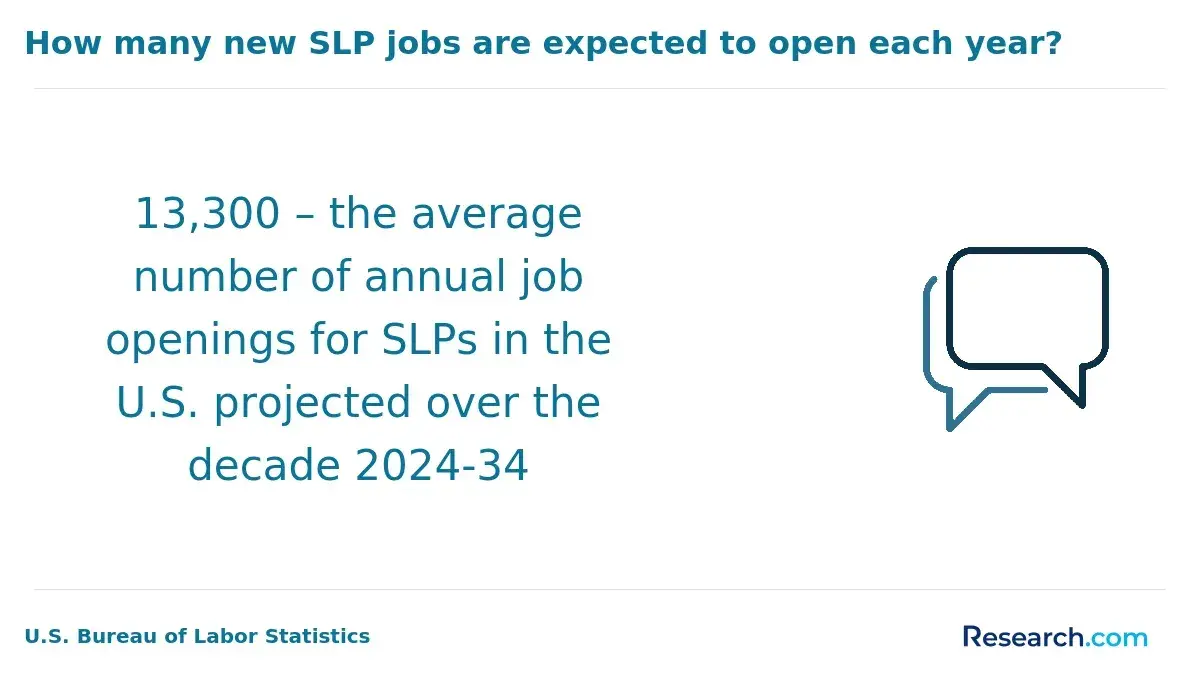
- The demand for speech pathologists is projected to grow 16% from 2024 to 2034, making it a promising career shift for psychology majors.
- Certification requires a master's degree, a clinical fellowship, and passing the Praxis exam, with average graduate program lengths of 2-3 years.
Can You Become an SLP with a Psychology Degree?
Yes. You can become a speech-language pathologist with a psychology degree, but you must complete graduate-level speech-language pathology training and meet certification and licensure requirements. A psychology bachelor’s degree does not replace the required master’s degree, clinical practicum, supervised fellowship, Praxis exam, or state licensing process.
Psychology is still a strong academic foundation for this career. Courses in human development, cognition, learning, behavior, research methods, and abnormal psychology connect closely with SLP work, especially in schools, pediatric clinics, hospitals, rehabilitation settings, autism services, and cognitive-communication treatment.
The gap is usually not your psychology background; it is the missing communication sciences and disorders coursework. Most psychology graduates need prerequisites in areas such as phonetics, speech and hearing science, anatomy, linguistics, audiology, communication disorders, and neuroanatomy before or during graduate study.
Many accredited graduate programs consider applicants from non-CSD majors, including psychology, as long as they complete the required prerequisites. Some schools offer formal leveling or bridge pathways, while others expect applicants to finish prerequisite courses before starting the master’s curriculum.
Outcomes can be strong when students choose a well-structured program. Data from the University of Washington Speech & Hearing Sciences highlight a 100% on-time completion rate and a 98.7% employment rate for their 2025 SLP graduates, showing that students who complete the proper training can move into the workforce successfully.
If flexibility and cost are major factors, psychology graduates may want to compare accredited campus-based, hybrid, and online masters in speech pathology options. The key is not just format; it is whether the program is accredited, supports clinical placement, and prepares graduates for certification and licensure.
What Prerequisites Are Needed for SLP Programs?
Most SLP master’s programs require foundational coursework in communication sciences and disorders. Psychology majors often have useful background in development and behavior, but they commonly lack the technical speech, hearing, language, and anatomy courses expected before graduate-level clinical training.
Typical prerequisite areas include:
- Anatomy and physiology of the speech and hearing mechanism
- Phonetics
- Language development
- Audiology
- Speech and hearing science
- Introduction to communication disorders or speech disorders
- Linguistics or related language science coursework
- Neuroanatomy or neurological bases of communication, when required
These prerequisites often total 9 to 12 credit hours, though the exact requirement depends on the graduate program. Some schools review transcripts course by course and may waive a requirement if a psychology course substantially overlaps with the expected content. Others require all non-CSD majors to complete a specific leveling sequence.
Leveling and post-baccalaureate options
Psychology graduates usually have three ways to complete missing prerequisites:
- Before applying: Complete prerequisite courses through a university or post-baccalaureate CSD program, then apply as a stronger candidate.
- After conditional admission: Enter a program that admits non-CSD majors but requires leveling coursework before full graduate progression.
- Integrated with the master’s program: Choose a program that allows prerequisite work to be completed alongside early graduate coursework, which may reduce delays.
Reports from Reddit r/slpGradSchool users suggest psychology majors who use leveling pathways may graduate only one semester behind traditional CSD undergraduates. Treat this as anecdotal, not a guarantee. Your actual timeline depends on course availability, clinical placement scheduling, program structure, and whether you attend full time or part time.
Programs may also ask for supervised clinical observation hours, commonly 25 to 50, along with GRE scores if required, recommendation letters, a personal statement, and evidence that you understand the SLP role. Before enrolling in any prerequisite course, ask each target program whether it will accept that course. This can prevent wasted credits and unexpected delays.
Because graduate training is a significant investment, it also helps to understand the career outlook and salary range before committing. Reviewing resources on how much do speech pathologists make can help you compare the cost of prerequisites and graduate school with potential long-term earnings.
Which Master's Programs Accept Psychology Majors?
Many SLP master’s programs accept psychology majors, but acceptance is usually conditional on completing required communication sciences prerequisites. The best-fit programs are those that clearly explain how non-CSD applicants are evaluated, whether leveling courses are available, and how clinical requirements are completed.
Accredited graduate speech pathology programs for psychology degree holders may require coursework in communication sciences, anatomy, physiology, linguistics, and speech and hearing science before enrollment or early in the program. Case Western Reserve University is one example of a program where applicants from different academic backgrounds may need prerequisite preparation in these areas.
Boston University and the University of Texas at Austin explicitly allow psychology majors to apply, conditional on completion of necessary prerequisites through prior or post-baccalaureate study. This is a common model: the psychology major is acceptable, but the applicant must still show readiness for graduate SLP coursework.
What to check before applying
- CAA accreditation: Confirm the program is accredited by the Council on Academic Accreditation in Audiology and Speech-Language Pathology.
- Prerequisite policy: Look for a published list of required courses for non-CSD majors.
- Leveling structure: Ask whether prerequisites are built into the program, completed before entry, or taken through a separate post-baccalaureate option.
- Clinical placement support: Verify how the program helps students secure supervised practicum sites.
- Praxis and completion outcomes: Review publicly available student achievement data when provided.
- Fit for psychology graduates: Ask whether current students or alumni entered with psychology degrees.
Academic outcomes can signal whether a program prepares students effectively. Case Western Reserve University’s Communication Sciences program reported a 100% Praxis pass rate, with all exam takers passing on their first attempt. While one statistic does not determine fit, strong Praxis outcomes can indicate that the curriculum supports certification readiness.
Psychology graduates should build an application strategy around both eligibility and competitiveness. Completing prerequisites with strong grades, gaining observation or volunteer experience, and writing a focused personal statement can help show that the transition to SLP is intentional rather than exploratory. Applicants who want a shorter path may also compare whether a speech pathology accelerated program fits their timeline and academic background.
What Does an SLP Master's Curriculum Cover?
An SLP master’s curriculum prepares students to assess, diagnose, and treat communication and swallowing disorders across the lifespan. For psychology graduates, the program adds the specialized speech, hearing, language, medical, and clinical training that a psychology degree does not provide.
Core coursework typically includes anatomy and physiology of speech and hearing mechanisms, language development, speech sound disorders, fluency disorders, and voice disorders. Students also study assessment methods, treatment planning, documentation, ethics, counseling in clinical practice, and culturally responsive care.
Advanced coursework often includes cognitive-communication disorders, swallowing disorders known as dysphagia, augmentative and alternative communication (AAC), motor speech disorders, neurogenic communication disorders, and intervention for children and adults with complex needs. These topics are especially relevant for psychology graduates interested in developmental, behavioral, neurological, or rehabilitation-focused practice.
Clinical training is central
SLP graduate programs are not only classroom-based. Students complete supervised clinical practicum experiences where they work with clients under the guidance of qualified speech-language pathologists. These placements help students connect theory to real assessment, treatment, caregiver communication, documentation, and interprofessional collaboration.
Research methods and evidence-based practice are also part of the curriculum. Students learn how to evaluate clinical evidence, apply data to treatment decisions, and adjust interventions based on client progress. This is an area where psychology graduates may have an advantage if they already have training in research design, statistics, and behavioral science.
Clinical competency requirements align with standards set by the American Speech-Language-Hearing Association (ASHA) for students pursuing certification. The Bureau of Labor Statistics projects a 15% job growth for speech-language pathologists from 2023 to 2033, which reinforces the value of rigorous graduate preparation in a field with strong demand.
Applicants who are still building their school list may find it useful to review the easiest SLP grad schools to get into, but admissions selectivity should not be the only factor. Accreditation, clinical training quality, Praxis preparation, cost, and licensure alignment matter more than ease of entry alone.
Are There Accredited Online SLP Programs?
Yes. Accredited online SLP programs are available, including options for students who hold a psychology degree and need a flexible route into speech-language pathology. However, “online” does not mean entirely remote. SLP training requires supervised clinical practice, so students should expect in-person clinical placements even when coursework is delivered online.
The most important factor is accreditation by the Council on Academic Accreditation in Audiology and Speech-Language Pathology (CAA). CAA accreditation helps ensure the curriculum and clinical training meet professional standards connected to certification and licensure requirements in most U.S. states.
Many online master’s programs offer bridge courses, leveling courses, or prerequisite modules for students from related fields such as psychology. Some provide part-time, fully online academic coursework combined with local clinical placements, which can work well for students who are employed, caregiving, or unable to relocate.
Questions to ask before choosing an online program
- Is the program currently CAA-accredited?
- Are psychology majors eligible for admission?
- Which prerequisites must be completed before starting?
- Does the school arrange clinical placements, or is the student responsible for finding sites?
- Can the program meet licensure requirements in the state where you plan to work?
- Are there required campus visits, intensives, or residency components?
- What are the program’s completion, Praxis, and employment outcomes?
Students should verify accreditation status through the American Speech-Language-Hearing Association (ASHA) and confirm whether the program supports eligibility for the Certificate of Clinical Competence in Speech-Language Pathology (CCC-SLP). State licensure rules can vary, so applicants should also check requirements in the state where they intend to practice.
According to the Bureau of Labor Statistics, speech-language pathologists earn a median annual wage of $95,410, compared with the median of $84,940 for school psychologists. Salary should not be the only reason to switch fields, but it can be part of a practical return-on-investment analysis when comparing online program costs, prerequisite expenses, and time away from full-time work.
What Are Typical Admission Requirements for SLP?
SLP master’s admission requirements vary by school, but most programs evaluate applicants on academic readiness, prerequisite completion, communication skills, clinical exposure, recommendations, and fit with the profession. A psychology degree can be acceptable, especially when paired with strong grades and completed CSD prerequisites.
Typical admission requirements include:
- A bachelor’s degree in communication sciences, speech pathology, psychology, or a related field
- Prerequisite courses such as anatomy and physiology of the speech and hearing mechanism, phonetics, and speech science
- A minimum GPA around 3.0 on a 4.0 scale, depending on the program
- GRE scores, if the program still requires them
- Two or three letters of recommendation, often from faculty, clinical supervisors, or relevant professional supervisors
- A personal statement explaining motivation, preparation, and career goals
- Relevant observation, volunteer, research, school, healthcare, or clinical experience
- TOEFL scores for some international students to verify English proficiency
Some programs conditionally admit students with non-communication bachelor’s degrees if foundational coursework is completed before matriculation or during an approved leveling period. Others require all prerequisites to be finished before application review. Because policies differ, psychology graduates should create a prerequisite checklist for each target school rather than assuming one course plan will satisfy every program.
How psychology majors can strengthen an application
- Earn strong grades in science, statistics, language development, and prerequisite CSD courses.
- Gain direct exposure to SLP settings through observation, volunteering, or related work.
- Use the personal statement to explain why SLP is the right clinical path, not just a backup option.
- Ask for recommendations from people who can speak to academic ability, professionalism, empathy, and communication skills.
- Apply to a balanced list of programs with different formats, costs, prerequisite policies, and competitiveness levels.
Completion of a master’s in speech-language pathology leads to median annual earnings near $95,000, which is substantially higher than many psychology bachelor’s-level positions, which typically fall below $70,000. Applicants should still weigh tuition, living costs, time in school, and clinical placement logistics before deciding whether the SLP pathway is financially realistic.
How Long Do SLP Programs Take After Psychology?
After a psychology degree, the SLP pathway usually takes 2 to 3 years for the master’s program, plus additional time for certification and licensure steps after graduation. The exact timeline depends on whether prerequisites are already complete, whether you attend full time or part time, and how the program structures clinical training.
Full-time students often finish the master’s degree within 24 to 28 months. Part-time programs can extend beyond three years. If a psychology graduate still needs foundational CSD coursework, that can add about a semester, though some programs integrate leveling coursework into the graduate plan.
Students typically complete 400 clinical clock hours through supervised practicum and internships. These hours are essential for certification preparation, and they can influence program length because clinical placements must match program standards, supervisor availability, client populations, and scheduling requirements.
Typical sequence for psychology graduates
- Complete missing SLP prerequisites or enter an approved leveling pathway.
- Apply to CAA-accredited master’s programs.
- Complete graduate coursework and supervised clinical practicum.
- Graduate with the required SLP master’s degree.
- Pass the Praxis exam.
- Complete the clinical fellowship required for full professional practice.
- Apply for state licensure and, when appropriate, the CCC-SLP credential.
After graduation, obtaining the Certificate of Clinical Competence in Speech-Language Pathology (CCC-SLP) involves passing the Praxis exam and completing a clinical fellowship year, which adds several months before full licensure. State requirements may also affect timing.
The University of Washington reports a 98% employment rate within one year for their MedSLP and EdSLP graduates, suggesting strong workforce preparation for students who complete the pathway. To avoid unnecessary delays, ask each program about credit transfer policies, prerequisite sequencing, clinical placement support, accreditation status, and whether the degree meets requirements in the state where you plan to work.
What SLP Career Paths and Salaries Can You Expect?
Speech-language pathologists work in schools, hospitals, rehabilitation centers, skilled nursing facilities, outpatient clinics, early intervention programs, private practices, and telepractice settings where permitted. A psychology background can be especially useful when clients have developmental, behavioral, emotional, cognitive, or neurological needs alongside communication challenges.
Common SLP career paths include:
- School-based SLP: Supports students with speech, language, fluency, social communication, and educational communication needs.
- Pediatric clinical SLP: Works with children who have developmental delays, autism, speech sound disorders, language disorders, or feeding-related concerns.
- Medical SLP: Serves patients in hospitals or rehabilitation settings after stroke, traumatic brain injury, surgery, or neurological disease.
- Cognitive-communication specialist: Focuses on attention, memory, executive function, and communication after neurological injury or illness.
- Private practice SLP: Provides evaluation and treatment services independently or as part of a multidisciplinary clinic.
- Behavioral or interdisciplinary roles: Combines communication intervention with behavioral, developmental, or mental health-informed approaches.
Salaries vary widely by setting, location, experience, and specialization. Entry-level positions typically offer annual pay between $60,000 and $75,000, while specialists in pediatric or neurogenic communication disorders can earn over $90,000. According to U.S. Bureau of Labor Statistics data, the median wage for SLPs is about $82,000, with the top 10% making more than $120,000.
Geographic demand also matters. Irvine, CA; New York, NY; and San Diego, CA are identified as hotspots with high demand for professionals with school psychology degrees and SLP skills, suggesting potential opportunities in larger urban markets. However, salaries in these areas should be weighed against cost of living, caseload expectations, commuting, and state licensure requirements.
For psychology graduates, the strongest career fit is often in roles where communication, cognition, learning, and behavior overlap. Still, becoming an SLP requires the same advanced degree, clinical training, CCC-SLP pathway, and state licensure process as other candidates. A psychology background can strengthen your clinical perspective, but it does not shorten the formal professional requirements unless a program grants specific prerequisite waivers.
What SLP Licensure and Certification Steps Follow?
After earning a psychology degree, the licensure path begins with a master’s degree in speech-language pathology from a CAA-accredited program. The undergraduate psychology degree may support admission and clinical insight, but it does not meet the professional training requirements for independent SLP practice.
The usual post-graduate steps include:
- Complete the accredited master’s degree: Finish required coursework and supervised clinical practicum through a CAA-accredited SLP program.
- Pass the Praxis Exam in Speech-Language Pathology: This exam, administered by ETS, is used to demonstrate entry-level professional knowledge.
- Complete a supervised clinical fellowship: Candidates complete a fellowship lasting about nine months with at least 1,260 hours of patient care under appropriate supervision.
- Apply for state licensure: States typically require the master’s degree, clinical fellowship, Praxis exam, and application materials. Some states may also require jurisprudence tests or background checks.
- Pursue the CCC-SLP credential: Many professionals seek the Certificate of Clinical Competence from ASHA because employers commonly value it and it may support broader career mobility.
Licensure is state-specific, so psychology graduates should not assume that completing a program in one state automatically satisfies every requirement elsewhere. Before enrolling, confirm that the program can support the licensure pathway in the state where you intend to work.
The CCC-SLP is not the same as state licensure. Licensure gives legal permission to practice in a state, while the CCC-SLP is a professional certification. Many SLPs pursue both. Keeping these steps clear helps applicants plan the full transition from psychology graduate to practicing speech-language pathologist.
How to Choose the Best SLP Program?
The best SLP program for a psychology graduate is the one that is accredited, transparent about prerequisites, strong in clinical training, realistic for your schedule and budget, and aligned with the state where you plan to practice. Do not choose based only on convenience, speed, or admissions odds.
Start with CAA accreditation. Accreditation by the Council on Academic Accreditation in Audiology and Speech-Language Pathology is essential for certification and licensure eligibility. If a program is not properly accredited, it may not lead to the professional outcome you need.
Key factors to compare
- Prerequisite pathway: Look for clear bridge, leveling, or post-baccalaureate options for non-CSD applicants.
- Clinical training: Confirm that supervised placements meet the American Speech-Language-Hearing Association (ASHA) 400-hour clinical requirement and include varied populations and settings.
- Program outcomes: Review on-time completion, Praxis pass, and employment data when available.
- Format: Compare campus, hybrid, online, accelerated, and part-time options based on your work and family responsibilities.
- Cost: Include tuition, fees, prerequisite courses, travel, clinical placement expenses, and lost income if you reduce work hours.
- Licensure alignment: Ask whether the program satisfies requirements in your intended state of practice.
- Faculty and advising: Look for faculty expertise in your areas of interest, such as pediatrics, medical SLP, neurogenic disorders, autism, fluency, AAC, or school-based practice.
- Career support: Ask about clinical placement assistance, fellowship guidance, alumni networks, and job placement resources.
Completion rates can indicate whether students are supported through the program. Data from Case Western Reserve show a 100% on-time completion rate for speech pathology programs, which helps counter the concern that students from non-CSD backgrounds must necessarily face major delays. Still, each applicant’s timeline depends on prerequisites, course sequencing, and clinical placement availability.
Psychology graduates should also speak with admissions counselors and, when possible, alumni who entered from psychology or other non-CSD majors. Ask direct questions about workload, leveling courses, clinical placements, faculty accessibility, and preparation for the Praxis and fellowship year.
A strong program should make the transition from psychology to speech-language pathology clear before you enroll. If a school cannot explain prerequisite requirements, clinical placement responsibilities, accreditation status, or state licensure alignment, keep looking.
Other Things You Should Know About Speech Pathology
In 2027, to become an SLP with a psychology degree, one typically must pursue a master's degree in speech-language pathology, complete clinical practicum hours, and pass the national SLP certification exam. Having a background in psychology can be beneficial in understanding developmental and cognitive aspects critical to the field.
To become an SLP in 2027 with a psychology degree, you typically need a master's in speech-language pathology. The program should be accredited by the Council on Academic Accreditation (CAA) and include required clinical experience. Passing the Praxis Exam and obtaining state licensure are also essential steps in the career path.
A psychology graduate must complete prerequisite courses such as biology, anatomy, and communications sciences to qualify for SLP graduate programs in 2027. These courses may vary by program, and applicants should check specific requirements for each institution.
Continuing education is required to maintain certification and licensure for speech-language pathologists. Regular professional development ensures practitioners stay updated with the latest research, techniques, and ethical standards in the field.
References
- The Two Most Important Variables to Consider When Choosing a Graduate Program for Speech Therapy https://speechisbeautiful.com/2018/02/two-important-variables-consider-choosing-graduate-program-speech-therapy/
- Online Master of Science in Speech-Language Pathology - General Pathway https://slponline.ithaca.edu/programs/masters-speech-language-pathology-online
- How to Get Into SLP Grad School | 2025 Guide https://www.speechpathologygraduateprograms.org/blog/how-to-get-into-slp-grad-school/
- Homepage https://speechpathologymastersprograms.com/
- How to Become a Speech Pathologist with a Psychology Degree - California Speech Pathology https://californiaspeechpathology.org/speech-pathologist-with-psychology-degree/
- Best Online Master’s In Psychology Programs For 2025 https://www.psychology.org/degrees/masters/
- How To Choose an SLP Program: Seven Factors To Consider https://www.usa.edu/blog/how-to-choose-a-slp-program/
- What Degree Is Required for a Career in Speech Therapy? | Advanced Therapy Clinic https://www.advancedtherapyclinic.com/blog/what-degree-is-required-for-a-career-in-speech-therapy
- Best Online Speech-Language Pathology (SLP) Programs 2025 https://onlinespeechpathologyprograms.org/best-online-slp-programs/
- Psychology - SWPS University https://english.swps.pl/academics/warsaw/ma-programs/psychology