2027 Top Tips to Strengthen Your SLP Application (Experience, Essays, Shadowing)

Co-Founder and Chief Data Scientist
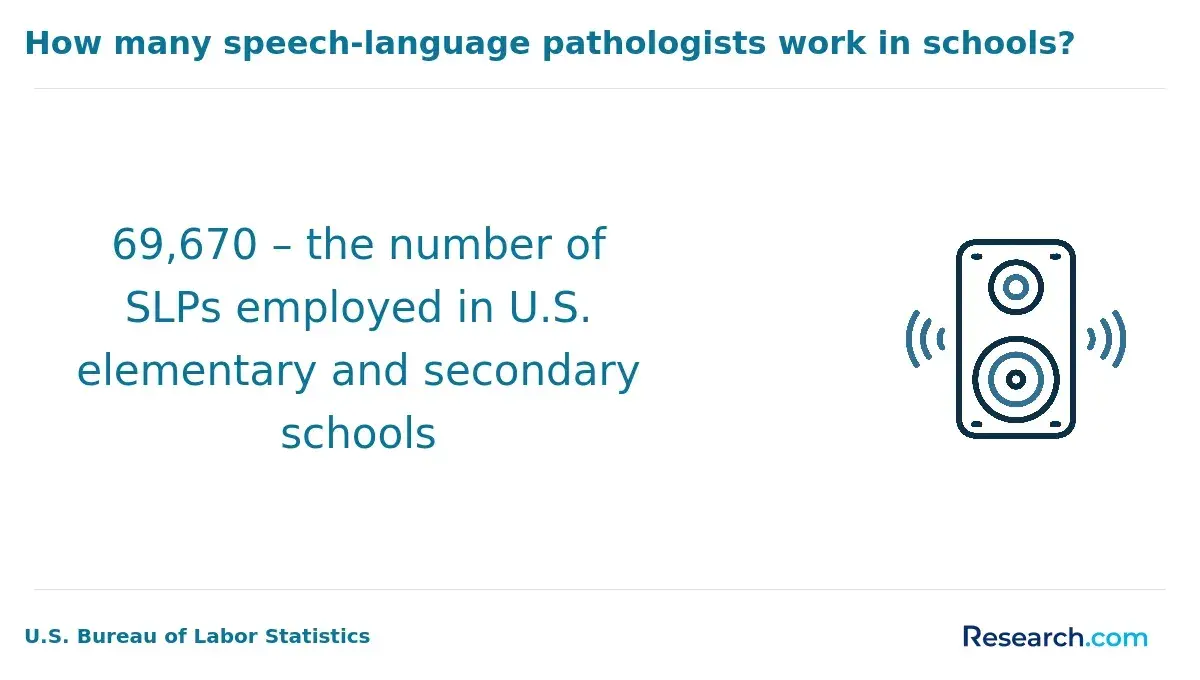
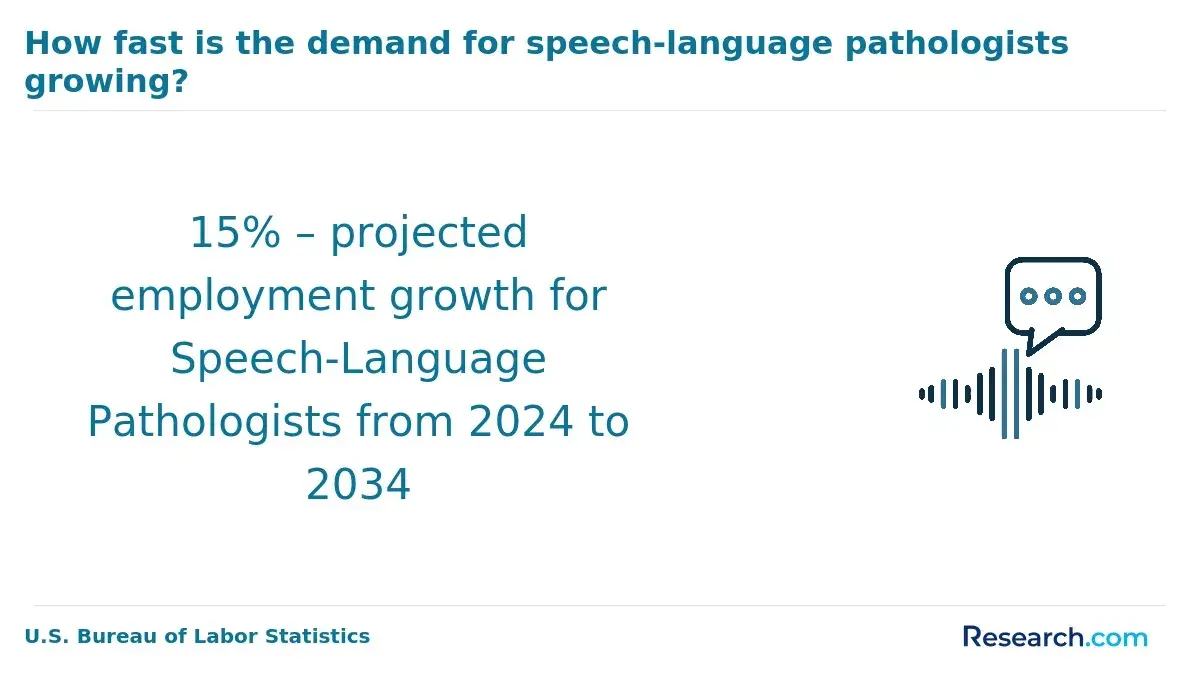
Applying to speech-language pathology graduate programs in 2027 is a high-stakes decision because admission is competitive and the profession requires both academic preparation and strong evidence of client-centered potential. As of 2027, demand for speech-language pathologists is projected to grow by 18% until 2033, driven by an aging population, increased awareness of speech and language disorders, and continued emphasis on early intervention in schools and healthcare settings.
A strong SLP application is not built around one impressive item. Admissions committees usually look for a clear pattern: solid prerequisite coursework, meaningful exposure to the field, reflective writing, strong recommendations, and evidence that you understand what SLPs actually do. This guide explains how to strengthen each part of your application, from clinical experience and shadowing to personal statements, portfolios, prerequisites, extracurriculars, and test scores.
Key Things You Should Know About Strengthening Your SLP Application
- Clinical and observation experience is crucial for demonstrating your understanding of the field and commitment to the profession.
- Strong letters of recommendation from professors and professionals who know your work ethic are essential for validating your academic and personal readiness.
- A compelling personal statement that clearly articulates your passion for SLP and connects your past experiences to your future goals will set you apart from other applicants.
How much clinical experience do you need to make your SLP application competitive?
The strongest SLP applicants usually have enough clinical exposure to show that they understand the profession beyond the classroom. You do not need to enter graduate school with all required clinical hours completed, but you should have observation, volunteer, work, or assistant experience that proves you have seen SLP practice in real settings and can reflect on what you learned.
The American Speech-Language-Hearing Association (ASHA) requires a minimum of 400 supervised clinical hours for professional preparation, including at least 375 hours in direct client contact and 25 hours in guided observation. Of these, 325 hours must be completed at the graduate level, which makes supervised experience during an online master’s speech pathology program especially important.
For admissions purposes, the quality of your pre-admission experience often matters more than the raw number of hours. A few well-documented experiences where you observed assessment, treatment planning, family communication, school-based services, or interdisciplinary care can be more persuasive than many loosely connected hours with little reflection.
What competitive experience usually demonstrates
- Exposure to multiple populations: Children, older adults, bilingual clients, neurodivergent clients, or individuals with swallowing, voice, fluency, speech sound, or language needs.
- Understanding of settings: Schools, hospitals, rehabilitation centers, private clinics, early intervention programs, or skilled nursing facilities.
- Professional readiness: Reliability, confidentiality, empathy, active listening, and the ability to accept feedback.
- Reflection: The ability to explain what you observed, why it mattered, and how it shaped your goals as a future clinician.
A common mistake is presenting experience as a checklist. Instead, describe the setting, your role, what you learned about client care, and how the experience prepared you for graduate clinical training.
Does paid vs. unpaid experience affect SLP application strength?
Paid experience is not automatically stronger than unpaid experience, and volunteer work is not automatically weaker. Admissions committees care most about relevance, responsibility, supervision, and reflection. A paid role in a school, clinic, hospital, childcare program, rehabilitation setting, or disability services environment can be highly valuable if it gave you meaningful exposure to communication, learning, behavior, or client support. A volunteer role can be just as strong if it involved consistent service, professional observation, and direct insight into client needs.
Unpaid experience is often useful for applicants who are still exploring the field. It can help you observe SLPs, interact with diverse populations, and understand day-to-day clinical workflow before committing to graduate study. These experiences also help you build language for your essays because you can discuss specific moments that clarified your interest in speech-language pathology.
Paid positions can strengthen an application when they show sustained responsibility. For example, work in education, healthcare, behavioral support, tutoring, caregiving, or rehabilitation may demonstrate dependability, communication skills, patience, and the ability to manage tasks under supervision. These qualities matter because graduate-level clinical training is structured, demanding, and feedback-intensive.
How to evaluate the strength of an experience
- Strong experience: You worked or volunteered consistently, interacted with relevant populations, observed communication or swallowing-related needs, and can explain what you learned.
- Moderate experience: The setting was related to helping professions, but your role had limited connection to communication, disability, healthcare, or education.
- Weak experience: The role sounds impressive but gives you little to say about SLP practice, client interaction, or graduate readiness.
If you are applying to intensive options such as 5-year speech pathology programs, use both paid and unpaid experiences to show that you can handle academic expectations while maintaining professionalism and service-oriented judgment.
How can shadowing experiences be highlighted in your application essay?
Shadowing should not be described as passive observation. In an SLP application essay, it should show that you paid attention to clinical reasoning, communication style, client dignity, family involvement, and the complexity of treatment decisions. Admissions committees want to see that shadowing helped you move from general interest to informed commitment.
The best essays use one or two specific shadowing moments rather than summarizing every setting you visited. Choose examples that reveal something important about the profession, such as how an SLP adapted a session, collaborated with a teacher, explained progress to a family, modified communication supports, or responded to a client’s frustration.
Effective ways to write about shadowing
- Describe a specific interaction or case you observed without revealing private or identifying information.
- Explain what the SLP did, why it stood out, and what it taught you about clinical care.
- Connect the observation to your motivation for becoming an SLP.
- Show growth in your understanding of assessment, therapy planning, collaboration, cultural responsiveness, or ethics.
- Highlight skills you began developing, such as careful observation, empathy, communication, and professional curiosity.
- Discuss different settings or specializations only if they helped clarify your goals.
- Explain how shadowing prepared you for the expectations of speech pathology programs and graduate-level clinical training.
A strong reflection might focus less on “I saw an SLP help a child speak better” and more on how the clinician used evidence, patience, family input, and individualized strategies to support communication. That level of insight makes the essay feel mature and credible.
What key elements should be included in an SLP personal statement?
A strong SLP personal statement answers three questions clearly: Why this field, why you are prepared, and why this program fits your goals. It should not simply repeat your résumé. Instead, it should connect your experiences, academic preparation, personal qualities, and future goals into a focused argument for admission.
Key elements to include in an SLP personal statement
- Motivation for SLP: Explain what drew you to speech-language pathology using a specific experience, observation, or turning point. Avoid broad claims such as wanting to “help people” unless you support them with concrete evidence.
- Academic and clinical background: Highlight relevant coursework, observation, volunteer work, research, or employment that prepared you for graduate study.
- Shadowing and observations: Reflect on what you learned from seeing professionals work with clients, families, teachers, or healthcare teams.
- Personal qualities: Show empathy, patience, adaptability, cultural awareness, and communication skills through examples rather than labels.
- Program fit: Explain why the specific program aligns with your interests, such as clinical placements, faculty expertise, research opportunities, service models, or population focus.
- Growth from challenges: If you discuss obstacles, focus on accountability, resilience, and what changed in your habits or perspective.
- Future goals: End with a realistic direction for your career and explain how graduate training will help you serve clients competently and ethically.
What a personal statement should prove
Your essay should leave the reader with a clear picture of your readiness. It should show that you understand the academic rigor of SLP training, respect the responsibility of working with clients, and can communicate clearly in writing. Since communication is central to the profession, the quality of your writing is itself part of the evidence.
What are the biggest mistakes that weaken SLP application essays?
Many aspiring speech-language pathologists lose admission opportunities not because of their grades or experience, but because their essays do not make a clear case for readiness. Graduate admissions officers report that nearly 60% of essays fail to stand out due to vague writing, lack of reflection, or poor structure.
A strong SLP essay must do more than tell a personal story. It should connect your motivation, preparation, and fit with the profession in a way that feels specific, honest, and well organized.
Biggest mistakes that weaken an SLP application essay
- Including unrelated experiences: Do not spend valuable space on jobs or activities unless you can connect them to communication, learning, healthcare, disability support, client care, leadership, or professional growth.
- Listing achievements instead of reflecting: An essay is not a résumé. Select a few meaningful experiences and explain how they changed your understanding of the field.
- Writing without program research: Avoid submitting the same generic essay to every school. Tailor your discussion to the curriculum, clinical focus, values, or opportunities offered by specific online SLP programs.
- Using filler and vague statements: Phrases such as “I have always loved helping others” or “communication is important” need specific examples to be convincing.
- Failing to link shadowing to growth: Do not only describe what you saw. Explain what you learned about assessment, therapy, collaboration, ethics, or client-centered care.
- Ignoring communication skills: Admissions committees look for evidence of listening, empathy, collaboration, and clear expression, not only academic performance.
- Using overly formal or robotic language: Write professionally but naturally. Clear, direct writing is stronger than inflated language or unnecessary jargon.
- Overusing hardship narratives: If you mention a challenge, connect it to growth and readiness rather than relying on emotion alone.
- Forgetting the reader: Admissions reviewers need to understand why you are a good fit for graduate clinical training, not just why the field interests you.
Before submitting, read the essay aloud. If it sounds like a generic statement that could fit any healthcare profession, revise it until the connection to speech-language pathology is unmistakable.
Who should write letters of recommendation to strengthen your SLP application?
The best recommendation letters come from people who can provide specific evidence of your academic ability, professionalism, communication skills, reliability, and clinical potential. Most programs require two to three recommendation letters, so choose recommenders who know your work well rather than people with impressive titles but limited direct knowledge of you.
Strong choices for SLP recommendation letters
- Academic professors: Professors who taught you in communication sciences, linguistics, psychology, biology, statistics, or related courses can speak to your academic readiness, writing, analytical ability, and consistency. Their letters are especially valuable when they can compare your performance with other students.
- Clinical supervisors: Supervisors from observation, practicum, assistant, or volunteer settings can describe your professionalism, punctuality, client interaction, response to feedback, and understanding of clinical environments.
- Speech-language pathologists: SLPs you shadowed or supported can comment on your curiosity, empathy, observation skills, and awareness of professional responsibilities.
- Research mentors: Faculty members or lab directors can discuss your critical thinking, attention to detail, data skills, and ability to engage with evidence-based practice.
- Volunteer or internship coordinators: Supervisors from relevant service settings can confirm your reliability, teamwork, compassion, and ability to work with diverse populations.
- Workplace supervisors, if relevant: Managers from roles in education, healthcare, tutoring, childcare, disability services, or communication-heavy environments can highlight leadership, patience, adaptability, and professionalism.
Who to avoid asking
- People who know you only personally, such as family friends or community contacts without academic or professional supervision.
- Professors who gave you a good grade but do not remember your work in detail.
- Supervisors who cannot speak to skills relevant to graduate study or clinical practice.
- Anyone who seems hesitant, rushed, or unable to write a strong letter.
Ask recommenders early and provide a résumé, unofficial transcript, draft personal statement, program list, deadlines, and a short reminder of your work with them. The easier you make the process, the more specific and useful the letter is likely to be.
Which prerequisite courses are essential for a competitive SLP application?
Prerequisite coursework is one of the clearest ways to show academic readiness for graduate SLP training. In 2027, most accredited U.S. programs follow ASHA standards, requiring coursework in biological, physical, social, and statistical sciences. These subjects support the scientific and behavioral foundation needed for speech, language, hearing, swallowing, assessment, and intervention coursework.
Requirements vary by program, so applicants should confirm each school’s prerequisite list before applying. Some programs accept applicants with missing prerequisites and require completion before enrollment or during a leveling sequence, while others expect all prerequisites to be finished before admission.
Prerequisite areas most SLP programs expect
- Biological Sciences, such as Human Anatomy & Physiology: These courses help you understand the physical systems involved in speech, language, hearing, and swallowing. A strong foundation in anatomy, physiology, or biology supports later clinical coursework.
- Physical Sciences: Programs often require physics or chemistry because speech and hearing science depend on concepts such as acoustics, sound transmission, and physical properties of speech production.
- Statistics: A dedicated statistics course, not embedded within another subject, demonstrates that you can interpret research and data. This is essential for evidence-based practice.
- Social/Behavioral Sciences, such as Psychology, Sociology, or Anthropology: These courses help applicants understand human behavior, development, culture, and social context across the lifespan.
- Communication Sciences & Disorders Foundations, such as Phonetics, Language Development, and Audiology: Courses in phonetics, speech science, audiology, child language development, and related areas show that you have field-specific preparation for advanced graduate work.
How to strengthen your prerequisite record
- Prioritize missing prerequisites before application deadlines when possible.
- Earn strong grades in science, statistics, and communication disorders courses because these subjects closely relate to graduate performance.
- Keep syllabi for completed courses in case a program needs to verify content.
- Do not assume one program’s prerequisite policy applies to another; check each school directly.
Are standardized test scores like the GRE still relevant for SLP applications in 2027?
In 2027, many graduate SLP programs have either eliminated the GRE requirement or made it optional. As a result, GRE scores are less central to many admissions decisions than they were in the past. Strong verbal and quantitative skills still matter, but programs increasingly evaluate those skills through GPA, prerequisite performance, writing samples, recommendations, and evidence of readiness for clinical training.
If a program does not require the GRE, a high score usually will not compensate for weak prerequisites, limited experience, or an unfocused personal statement. If the GRE is optional, submitting scores may help only when they add useful evidence. For example, strong scores might support an applicant whose academic record has an uneven period, but they are unlikely to replace the need for relevant experience and clear writing.
How to decide whether to submit GRE scores
- Required: Submit scores according to the program’s instructions and deadlines.
- Optional: Submit only if the scores strengthen your academic profile and align with the program’s guidance.
- Not accepted: Do not send scores if the program states that it will not review them.
Applicants should check each program’s current policy before applying. GRE requirements can vary by school, application cycle, delivery format, and department-level admissions rules.
What types of extracurricular activities impress SLP admissions committees?
Extracurricular activities are most impressive when they show sustained commitment, leadership, service, communication skills, and exposure to populations SLPs may serve. According to application guidance from ASHA, committees look for “activities that developed your leadership, time management, or other skills important to your success in graduate school.”
The strongest activities are not necessarily the most prestigious. Admissions committees usually value depth over scattered involvement. One long-term role with clear responsibility can be stronger than a long list of short activities with no reflection.
Types of extracurricular activities that can strengthen an SLP application
- Clinical-related volunteering: Volunteering in hospitals, rehabilitation centers, speech clinics, schools, or disability support settings can build empathy, observation skills, and familiarity with diverse client needs.
- Leadership in SLP-focused organizations: Serving as an officer or active member in the National Student Speech Language Hearing Association (NSSLHA) or similar groups can demonstrate leadership, collaboration, advocacy, and professional interest.
- Research or academic projects: Faculty-led research, independent projects, literature reviews, or poster presentations can show analytical thinking, attention to detail, and readiness for evidence-based practice.
- Relevant work or internship experience: Jobs or internships in schools, healthcare settings, therapy centers, childcare, tutoring, or support services can demonstrate responsibility, adaptability, and communication skills.
- Community service and advocacy: Sustained involvement in disability awareness, literacy programs, language access, communication support, or inclusion initiatives can show cultural awareness and service orientation.
- Peer mentoring or tutoring: Helping peers or younger students can demonstrate patience, instructional skill, listening, and the ability to explain concepts clearly.
- Workshops and continuing education: Attending ASHA conventions, online seminars, or certification workshops can show initiative and awareness of current issues in the profession.
- Creative communication activities: Theater, debate, public speaking, writing, or performance-based activities may support expressive communication, confidence, and audience awareness when connected thoughtfully to SLP skills.
How to present extracurriculars effectively
For each activity, focus on what you did, who you served, what responsibility you carried, and what skill you developed. Avoid padding the application with memberships that involved little participation. Admissions committees are more persuaded by evidence of commitment than by a long activity list.
What should a strong SLP application portfolio include?
A strong SLP application portfolio organizes the evidence behind your application: coursework, experience, reflections, work samples, and professional development. Not every program requires a portfolio, but preparing one can help you write stronger essays, complete interviews more confidently, and document the experiences that support your candidacy. One guide highlights that the portfolio should include clinical testing, evaluation, and progress reports to showcase competency and readiness. These qualities may even influence speech-language pathology salary potential later on.
If you include client-related materials, remove all identifying information and follow privacy, confidentiality, and site-specific rules. When in doubt, use de-identified summaries or reflective descriptions rather than original documents.
Key elements of a strong SLP application portfolio
- Resume or curriculum vitae: Include education, relevant coursework, work experience, volunteer roles, clinical exposure, research, certifications, leadership, and professional memberships.
- Clinical experience summary: List observation and practicum-related hours when applicable, along with settings, populations served, disorders observed, and your role.
- Work or volunteer samples: Include de-identified session plans, therapy materials, data-tracking examples, case summaries, or educational resources when allowed by the setting.
- Reflection or learning statement: Add brief reflections explaining what you learned from key experiences, how your understanding of SLP developed, and what skills you still want to build.
- Letters of recommendation or evaluations: Include formal evaluations if permitted, or keep a record of supervisors and instructors who can verify your competencies.
- Research or project evidence: Add papers, posters, presentations, literature reviews, or evidence-based project summaries that show research literacy and critical thinking.
- Professional portfolio presentation: Use a clean digital file or organized binder with a table of contents, clear headings, consistent formatting, and concise descriptions.
What to avoid in a portfolio
- Including confidential client information or documents without permission.
- Adding every assignment you have completed instead of selecting your strongest evidence.
- Using cluttered formatting that makes the portfolio hard to review.
- Including materials you cannot explain in an interview.
A good portfolio should make your application easier to understand. It should show a coherent pattern of preparation, not just a collection of documents.
Other Things to Know About Strengthening Your SLP Application in 2027
Engaging in volunteer experiences such as working with speech and hearing associations or participating in communication workshops can bolster your application. These experiences demonstrate dedication and understanding of the field, enhancing the competitiveness of your SLP application for 2027.
When writing your SLP application essays for 2027, include a clear narrative of your passion for speech-language pathology, specific experiences that shaped your interest, and concrete examples demonstrating relevant skills. Discuss challenges faced and learning outcomes, ensuring your statement aligns with the program's values and goals.
References
- American Speech-Language-Hearing Association. (n.d.). Applying for certification in speech-language pathology. Retrieved from https://www.asha.org/certification/slpcertification/
- American Speech-Language-Hearing Association. (n.d.). FAQs: Clinical practicum for certification in speech-language pathology. Retrieved from https://www.asha.org/certification/certification-standards-for-slp-clinical-practicum/
- Baylor University. (2025). Online speech-language pathology graduate program. Retrieved from https://csd.robbins.baylor.edu/graduate/online-csd-graduate-program
- DePaul University. (n.d.). Admission requirements – Speech Language Pathology (MS). Retrieved from https://csh.depaul.edu/academics/speech-language-pathology/graduate-program/speech-language-pathology-ms/Pages/admission-requirements.aspx
- Kotchian, V. (n.d.). Speech-language pathology personal statement tips. Retrieved from https://vincekotchian.com/slp-personal-statements
- Massey, J. (2019, October 15). 5 things to make your SLP graduate school application stand out. CoreMedical Group. Retrieved from https://www.coremedicalgroup.com/blog/5-things-to-make-your-slp-graduate-school-application-stand-out
- National Student Speech Language Hearing Association. (2020, July 7). Personal statements: A guide to writing “good”. Retrieved from https://blog.nsslha.org/2020/07/07/personal-statements-a-guide-to-writing-good/
- University of Southern California. (n.d.). Admissions – MS in Speech-Language Pathology. Retrieved from https://keck.usc.edu/speech-language-pathology-ms-program/admissions/