
2027 How to Choose the Right Online SLP Program for Your Career Goals

Co-Founder and Chief Data Scientist
Choosing an online speech-language pathology program is not just a question of convenience. It is a licensing, clinical training, and career-readiness decision. The program you choose will shape whether you qualify for certification, where you can complete supervised clinical hours, how prepared you feel for the Praxis exam, and which work settings you can realistically enter after graduation.
This guide is for prospective graduate students comparing online SLP programs, including career changers, working adults, and applicants trying to balance flexibility with rigorous clinical preparation. It explains what to verify first, how to compare formats and curricula, what to ask about clinical placements, and how to judge whether a program is worth the cost.
The goal is not to chase a generic “best” program. The goal is to identify the best fit for your state requirements, schedule, learning style, clinical interests, and long-term career plans.
What are the benefits of choosing the right online SLP program?
- Ensures Path to Licensure: Selecting a properly accredited program is the non-negotiable first step to guaranteeing you will be eligible for state licensure and national certification upon graduation.
- Maximizes Career Opportunities: The right program equips you with specialized knowledge and a strong professional network, opening doors to higher-demand settings and populations that match your interests.
- Provides a Strong Return on Investment: A careful evaluation of costs, financial aid, and program outcomes ensures your degree accelerates your earning potential and minimizes financial strain.
Why is Choosing the Right Online SLP Program So Critical for Your Career?
Choosing the right online SLP program is critical because the degree must prepare you for a regulated clinical profession. A strong program does more than deliver online lectures. It helps you meet academic requirements, complete supervised clinical experiences, prepare for certification, and build the judgment needed to work with clients across ages, disorders, and care settings.
The consequences of a poor fit can be serious. A program with weak placement support may make it harder to secure local clinical sites. A curriculum that does not match your interests may leave you underprepared for the setting you want, such as schools, hospitals, outpatient clinics, skilled nursing facilities, or private practice. A program without the right accreditation can affect your eligibility for certification and licensure.
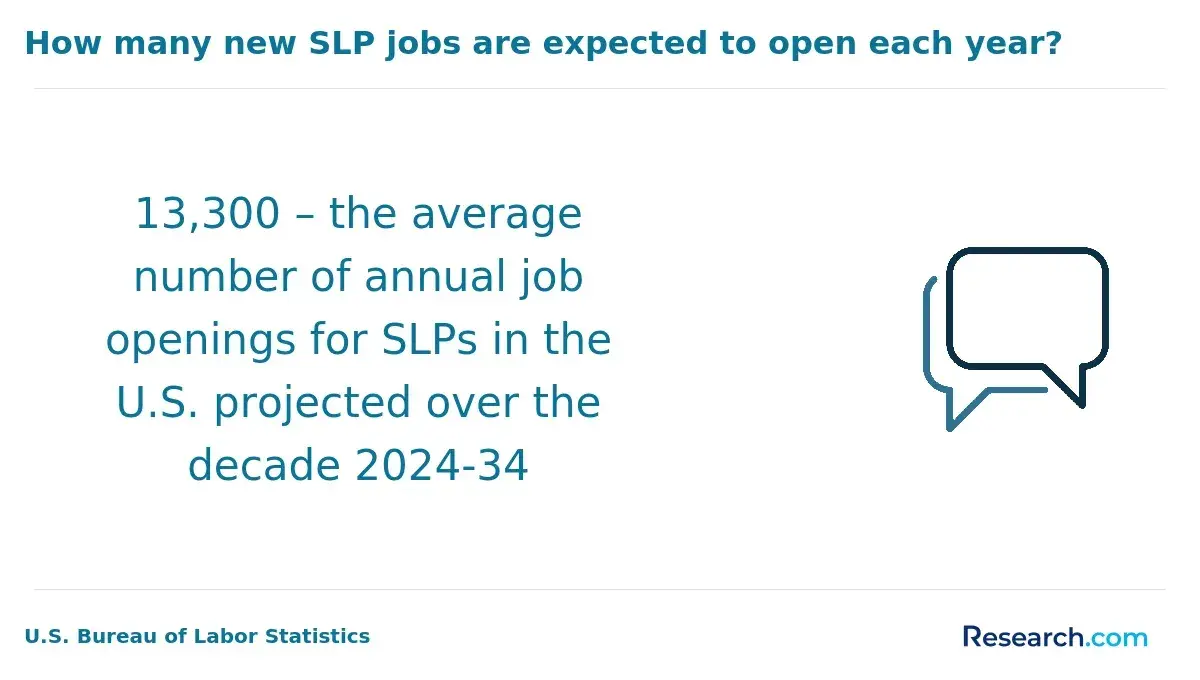
Demand also makes preparation matter. According to the U.S. Bureau of Labor Statistics, employment for speech-language pathologists is projected to grow 15% from 2024 to 2034, which is significantly faster than the average for all occupations. Growth can create more openings, but competitive candidates still need strong clinical training, good references, and evidence that they can step into professional practice with confidence.
A well-chosen program functions as a career launchpad. It should help you develop clinical reasoning, documentation skills, professional ethics, assessment competence, intervention planning, and the ability to collaborate with families, educators, physicians, and other professionals.
What is the Most Important Factor to Verify First?
The first factor to verify is whether the program is accredited by the Council on Academic Accreditation in Audiology and Speech-Language Pathology (CAA). This step should happen before you compare tuition, course schedules, faculty profiles, or admissions requirements.
The CAA is part of the American Speech-Language-Hearing Association (ASHA), the national professional organization connected to the Certificate of Clinical Competence in Speech-Language Pathology (CCC-SLP). Graduating from a CAA-accredited program is central to eligibility for ASHA certification and is also important for state licensure in most cases.
CAA accreditation tells you that the program has been reviewed against established standards for curriculum, clinical education, faculty qualifications, student outcomes, and program administration. It is the baseline quality check for graduate SLP education. You can verify a program's status through ASHA’s official resources and compare accredited online SLP programs before applying.
Be careful with programs listed as “candidacy.” Candidacy means the program is seeking accreditation and has not yet reached full accreditation. Some candidacy programs may be appropriate for certain applicants, but they carry more risk than fully accredited programs. Before enrolling, ask what happens if accreditation is delayed or denied, and request written clarification on how that could affect certification and licensure eligibility.
Accreditation check before applying
- Confirm the exact program name, not just the university name, because accreditation applies to specific programs.
- Check the accreditation status directly through an official source rather than relying only on marketing pages.
- Ask about your state if you plan to practice in a specific location, since licensure rules can vary.
- Get answers in writing when a program is in candidacy or undergoing accreditation review.
How Do You Evaluate a Program's Curriculum for Your Specific Goals?
You evaluate an online SLP curriculum by looking past the list of required courses and asking whether the program supports the type of clinician you want to become. Accredited programs cover core knowledge and clinical competencies, but they can differ meaningfully in electives, faculty expertise, research emphasis, placement options, and exposure to specific populations.
Start by mapping the curriculum to your intended setting. A student interested in school-based practice should look for strong preparation in language disorders, literacy, individualized education programs, collaboration with educators, and pediatric assessment. A student interested in medical SLP roles should look closely at coursework and placements involving dysphagia, motor speech disorders, cognitive-communication disorders, aphasia, and interprofessional care.
Curriculum elements to compare
- Advanced electives: Look for courses tied to your interests, such as pediatric dysphagia, aphasia, augmentative and alternative communication (AAC), fluency, voice disorders, autism spectrum disorders, or bilingual service delivery.
- Clinical sequence: Review when clinical experiences begin, how they build in complexity, and whether the program prepares students before they enter placements.
- Faculty expertise: Faculty backgrounds often reveal the program’s real strengths. A program with several faculty members in a specialty area may offer stronger mentoring and more relevant projects.
- Specialized tracks: Some programs offer formal pathways, such as bilingual, school-based, or medical SLP preparation. A track can be valuable if it aligns with your career goal.
- Research opportunities: If you are considering doctoral study, academic work, or specialized clinical roles, ask whether online students can participate in faculty-led research.
- Capstone or thesis options: A capstone can help build an applied portfolio, while a thesis may be more useful for students considering research or doctoral programs.
Questions that reveal curriculum fit
- Which populations and disorders receive the most clinical emphasis?
- Are electives offered regularly, or only when faculty are available?
- Can online students access the same specialty courses as campus students?
- How does the program prepare students for documentation, ethical decision-making, and interprofessional collaboration?
- Can students tailor clinical placements toward school, medical, pediatric, adult, or private practice settings?
What's the Difference Between Synchronous and Asynchronous Formats?
The main difference is timing. Synchronous courses require live attendance at scheduled class times, while asynchronous courses let students complete lectures, discussions, and assignments within set deadlines. Neither format is automatically better. The right choice depends on your schedule, learning style, time zone, work responsibilities, and need for interaction.
Synchronous learning can feel closer to a traditional classroom. You can ask questions in real time, participate in live discussions, and build relationships more naturally with faculty and classmates. The trade-off is reduced flexibility, which can be difficult for students working fixed shifts or managing family responsibilities.
Asynchronous learning offers more control over when you study. It works well for disciplined students who can manage deadlines without live class meetings. The trade-off is that you may need to be more proactive about asking questions, staying engaged, and building peer connections.
| Format | Best for | Potential drawback |
| Synchronous | Students who want live discussion, structure, immediate feedback, and regular interaction | Less schedule flexibility because classes meet at set times |
| Asynchronous | Working adults, caregivers, and self-directed students who need flexible study hours | Requires strong time management and more initiative to connect with faculty |
| Hybrid | Students who want flexibility but still benefit from live sessions for complex clinical topics | May require careful planning around occasional mandatory meetings |
Many online SLP programs use a hybrid structure. For example, foundational courses may be asynchronous, while clinical methods, case discussions, or simulation-based activities may require live participation. This can be a strong model when the program is clear about attendance expectations before enrollment.
For students who want a faster path, some accelerated SLP programs online may rely more heavily on structured scheduling to keep cohorts moving quickly. Before choosing an accelerated option, confirm whether the format is realistic alongside work, clinical hours, and personal responsibilities.
How Can You Assess the Quality of Faculty in an Online Setting?
You can assess faculty quality by reviewing clinical experience, credentials, teaching involvement, research activity, and accessibility to online students. In speech-language pathology, strong faculty should understand both evidence-based practice and the realities of clinical service delivery.
Look for faculty who hold the ASHA Certificate of Clinical Competence (CCC-SLP), have relevant clinical backgrounds, and maintain current expertise in the areas they teach. A professor teaching dysphagia, for example, should have experience or scholarship connected to swallowing disorders. A faculty member teaching school-based practice should understand educational systems, legal documentation, collaboration, and service delivery models.
What to review on faculty pages
- Credentials: Confirm whether faculty hold relevant professional certifications and advanced degrees.
- Clinical background: Look for experience in schools, hospitals, rehabilitation centers, clinics, early intervention, skilled nursing facilities, private practice, or other settings that match your goals.
- Research and publications: Recent publications, conference presentations, and grant work can indicate active engagement with the field.
- Teaching role: Identify whether core courses are taught by full-time faculty, adjunct instructors, or a mix of both.
- Student mentorship: Look for evidence that faculty supervise research, capstones, clinical preparation, or professional development projects.
Faculty accessibility is especially important online. Ask how often faculty hold virtual office hours, how quickly they respond to student questions, and whether online students can form mentoring relationships. A polished learning platform cannot compensate for faculty who are unavailable or disconnected from students.
One useful test is to contact admissions with a specific academic question and see whether they can connect you with a faculty member or program director. Programs that encourage informed conversations usually have a stronger culture of student support.
How Do Clinical Placements Work in an Online Program?
Clinical placements in an online SLP program are supervised, in-person experiences usually completed in or near the student’s local community. The university, the student, and approved clinical supervisors typically work together to identify sites that meet program and professional standards.
ASHA requires a minimum of 400 hours of supervised clinical experience. Because those hours are essential for professional preparation, placement support should be one of your top decision factors. A strong online program should not leave students to solve clinical placement on their own without guidance, vetting, and documentation support.
The placement process often begins with the student sharing location, schedule constraints, interests, and possible sites. The university then reviews whether a site and supervisor meet requirements, completes affiliation agreements, and tracks clinical documentation. Some programs have established placement networks; others expect students to play a larger role in identifying options.
What to ask before enrolling
- Placement responsibility: Does the program locate sites, or are students expected to find their own?
- Geographic coverage: Has the program placed students successfully in your state or region?
- Setting availability: Can students pursue school, medical, pediatric, adult, or specialty placements?
- Supervisor requirements: How does the program verify supervisor qualifications?
- Affiliation agreements: How long do agreements usually take, and what happens if a site falls through?
- Scheduling flexibility: Are evening, weekend, part-time, or full-time placement options possible?
Clinical placement is where online flexibility meets real-world constraints. Even if coursework is flexible, clinical hours may require weekday availability, commuting, background checks, immunizations, site onboarding, or specific blocks of time. Ask for a realistic explanation of what the clinical phase looks like before you commit.
What Kind of Student Support Services Should You Look For?
You should look for student support services built specifically for online graduate students, not simply campus services copied onto a website. SLP programs are academically demanding and clinically intensive, so students need reliable advising, technical help, placement guidance, and professional support from the start.
Strong support is not a bonus feature. It can affect whether you progress on time, secure placements, prepare for certification, and stay connected in a remote learning environment.
Essential support services
- Dedicated academic advising: You should have access to an advisor who understands SLP course sequencing, certification milestones, clinical requirements, and graduation timelines.
- Clinical placement coordination: Confirm that a dedicated team or coordinator supports online students with site identification, approval, affiliation agreements, and placement documentation.
- Technical support: Online students need reliable help with the learning management system, video platforms, testing tools, and simulation software. Extended-hour or 24/7 support is especially valuable.
- Writing and research support: Graduate SLP coursework often involves literature reviews, case reports, documentation, and evidence-based practice assignments.
- Praxis preparation: Ask whether the program offers review sessions, practice resources, or structured exam preparation.
- Community building: Cohorts, peer groups, virtual organizations, mentoring programs, and discussion spaces can reduce isolation and support persistence.
- Accessibility and accommodations: Confirm how online students request accommodations and whether services are responsive for remote learners.
A practical way to compare support is to ask who your first point of contact would be for common problems: a course issue, a failed placement lead, a technology outage, a degree plan question, or preparation for the Praxis exam. Clear answers suggest mature systems. Vague answers suggest you may spend too much time navigating bureaucracy.
Should You Look for a Program With a Specific Specialization?
You should look for a specialization if you already have a clear career direction or want stronger preparation for a high-need practice area. A master’s degree in speech-language pathology is broadly designed, but targeted coursework and placements can help you become a stronger candidate for certain roles.
Specializations may be formal, such as a named track or certificate, or informal, based on electives, faculty expertise, research opportunities, and clinical placement options. A formal specialization can be helpful, but it is not the only sign of depth. A program without a named track may still be strong in an area if it has experienced faculty and consistent placement opportunities.
Common areas to consider
- Bilingual service delivery: Useful for students who want to work with multilingual clients and families.
- Autism spectrum disorders: Relevant for school, pediatric clinic, and early intervention settings.
- Dysphagia: Important for students interested in hospitals, rehabilitation, skilled nursing facilities, or adult medical practice.
- Augmentative and alternative communication: Valuable for working with clients who use communication devices or alternative communication methods.
- Voice disorders: Relevant for clinical work involving professional voice users, medical referrals, and specialized therapy.
- Fluency disorders: Useful for students interested in stuttering and related communication needs.
For example, a focus on dysphagia can support preparation for medical or skilled nursing settings. Aligning your education with in-demand clinical skills can also influence your speech therapy salary and job options, although compensation will also depend on location, employer, experience, credentials, and setting.
The best reason to choose a specialization is career alignment. Do not choose a narrow focus only because it sounds prestigious. Choose it because the coursework, placements, and mentorship will help you serve the population you plan to work with.
How Can You Gauge a Program's Career Services and Alumni Network?
You can gauge career services and alumni strength by asking for outcomes, reviewing graduate employment information, and confirming what support is available specifically to online SLP students. Strong programs can explain how they help students move from coursework to certification preparation, clinical fellowship applications, and employment.
Look for transparency around graduate outcomes. Programs may publish Praxis exam pass rates, employment data, graduation rates, or examples of work settings where graduates are employed. Praxis performance is one useful indicator of academic preparation, but it should be considered alongside clinical placement quality, advising, faculty support, and employer connections.
Career services to ask about
- Resume and cover letter reviews tailored to SLP roles and clinical fellowship applications
- Mock interviews for school, medical, pediatric, adult, and private practice settings
- Clinical fellowship guidance, including how to evaluate supervision and employer expectations
- Virtual career fairs or employer information sessions for online students
- Alumni mentoring or informational interview opportunities
- Praxis preparation resources and timelines for exam planning
An active alumni network can be a long-term asset. Alumni may share advice about clinical placements, hiring timelines, state licensure processes, and workplace expectations. You can often learn a lot by reviewing alumni profiles on a program website or searching for graduates on LinkedIn to see whether their career paths align with your goals.
Ask admissions whether online students have the same access to career services as campus students. If the answer is unclear, request examples of recent online student support, such as employer events, alumni panels, or clinical fellowship workshops.
How Do You Compare Program Costs and Financial Aid Options?
You compare program costs by calculating the full cost of attendance, not just the advertised per-credit tuition rate. Online SLP programs can vary in tuition, fees, travel requirements, clinical costs, and residency expenses, so a program that appears cheaper at first may not be the lowest-cost option overall.
Start by requesting a written cost estimate from each program. Make sure it includes tuition, university fees, technology fees, books, clinical materials, background checks, required health documentation, travel for any campus visits or residencies, and potential costs tied to placements.
| Cost category | What to confirm |
| Tuition | Per-credit rate, total credits, and whether online students pay in-state or out-of-state rates |
| University and technology fees | Mandatory online learning, student services, platform, or program fees |
| Clinical costs | Background checks, immunizations, liability insurance, onboarding, and required materials |
| Residency or travel | Any required campus visits, intensives, simulations, or orientation sessions |
| Books and materials | Textbooks, assessment materials, software, and exam preparation resources |
| Time away from work | Potential income reduction during intensive coursework or clinical placements |
After comparing total cost, review financial aid. Complete the Free Application for Federal Student Aid (FAFSA) if you plan to seek federal aid and the program participates in federal student aid programs. Then ask the financial aid office about scholarships, grants, payment plans, employer tuition assistance, and graduate assistantships available to students in the speech pathology masters online program.
Also ask whether scholarships are tied to service commitments, high-need areas, academic performance, or specific populations. Service-linked funding can reduce debt, but you should understand the obligation before accepting it.
The lowest-cost program is not always the best value. A more expensive program may be worth considering if it has stronger placement support, better outcomes, and a curriculum aligned with your career goals. A cheaper program may be a poor investment if it delays graduation or leaves you struggling to secure clinical experiences.
What Are the Key Questions to Ask Admissions Counselors Before Applying?
The best admissions questions focus on what the student experience is actually like. Program websites often explain admissions requirements and course lists, but they may not reveal how placements work, how responsive faculty are, or how online students are supported when problems arise.
Use admissions conversations to test clarity, transparency, and fit. Strong programs should answer specific questions directly. If the counselor cannot answer, they should connect you with someone who can.
Questions about accreditation and eligibility
- Is the specific online SLP program currently CAA-accredited?
- How does the program support students pursuing ASHA certification and state licensure?
- Are there any states where the program does not meet educational requirements or where students should verify additional rules?
Questions about clinical placements
- Can you describe the process for securing clinical placements for online students in my state?
- What is the placement team’s role, and what is the student’s role?
- Has the program placed students in my region before?
- What happens if a placement site cancels or an affiliation agreement is delayed?
- Can students pursue placements in specific settings, such as schools, hospitals, private practices, or pediatric clinics?
Questions about format and workload
- Which courses are synchronous, asynchronous, or hybrid?
- Are live sessions mandatory, and when are they usually scheduled?
- How many hours per week should students expect to spend on coursework?
- Is the program realistic for students who work while enrolled?
Questions about faculty and support
- What is the typical class size for online courses?
- How do online students access faculty for one-on-one guidance?
- Are online students assigned an academic advisor?
- What technical support is available outside standard business hours?
- How does the program build community among online students?
Questions about outcomes and career preparation
- What is your program's most recent three-year average pass rate for the Praxis exam?
- What are the most common work settings for your graduates?
- Do online students receive resume reviews, mock interviews, and clinical fellowship guidance?
- Are online students connected with alumni or employers before graduation?
Take notes during each conversation and compare answers across programs. The right program should be able to explain not only why it is strong, but how it will help you progress from applicant to graduate clinician.
Other Things You Should Know About How to Choose the Right Online SLP Programs
In 2027, online SLP programs typically require a stable internet connection, a computer meeting specific specifications, and access to online learning platforms. Students may also need peripherals like a webcam for virtual interactions and specialized software for simulations.
In 2027, online master's programs in speech pathology typically offer flexible timelines ranging from two to three years. Some programs may allow part-time enrollment options, enabling students to adjust their study pace to fit personal and professional commitments.
References
- American Speech-Language-Hearing Association. (n.d.-a). 2020 standards for the Certificate of Clinical Competence in Speech-Language Pathology (CCC-SLP). Retrieved from https://www.asha.org/certification/2020-slp-certification-standards/
- American Speech-Language-Hearing Association. (n.d.-b). About the CAA. Council on Academic Accreditation in Audiology and Speech-Language Pathology. Retrieved from https://caa.asha.org/
- American Speech-Language-Hearing Association. (n.d.-c). State licensure data. Retrieved from https://www.asha.org/advocacy/state/
- Educational Testing Service. (n.d.). The Praxis tests: Speech-language pathology. Retrieved from https://www.ets.org/praxis/slp.html
- U.S. Bureau of Labor Statistics. (2025, August 28). Speech-language pathologists. Occupational Outlook Handbook. Retrieved from https://www.bls.gov/ooh/healthcare/speech-language-pathologists.htm

























![2027 Best Advanced Standing Online MSW Programs [CSWE Accredited] thumbnail](/uploads/Online_Advanced_Standing_MSW_301dbd5368.jpg)


