2027 Highest-Paying Jobs You Can Get With a Data Analytics Degree

Co-Founder and Chief Data Scientist
Choosing a career in data analytics raises questions about financial payoff-especially compared to alternative credentials or on-the-job training. Many candidates wonder how graduate degrees influence earning potential, or how professional certifications impact salary growth and job stability. In fact, data analytics professionals with advanced degrees earn on average 20% more annually than those without, reflecting a significant wage premium. Geographic location and industry sector further shape these outcomes, making it essential to understand variation across markets. This article explores the highest-paying jobs available to those with a data analytics degree-detailing wage premiums, certification benefits, and return on investment to guide informed career decisions.
Key Things to Know About the Highest-Paying Jobs You Can Get With a Data Analytics Degree
- Graduate credentials in data analytics offer a wage premium-master's degree holders earn approximately 20% more than bachelor's degree graduates in equivalent roles.
- Professional certifications, such as Certified Analytics Professional (CAP), can increase salary potential by 10-15%-significantly enhancing employability in competitive markets.
- Compared to self-taught or bootcamp routes, a data analytics degree typically provides higher long-term return-on-investment due to better starting salaries and career advancement opportunities.
What Exactly Does a Data Analytics Degree Qualify You to Do in Today's Job Market?
A data analytics degree qualifies individuals to interpret complex data sets and translate them into actionable business insights-a skill set highly valued in today's job market. According to the U.S. Bureau of Labor Statistics (BLS) and the Institute for Operations Research and the Management Sciences (INFORMS), graduates typically perform tasks such as data mining, statistical analysis, predictive modeling, and data visualization. These competencies open diverse job opportunities for data analytics graduates in the US across industries.
Core competencies distinguishing degree holders from those with only on-the-job experience include:
- Technical Skills: proficiency in programming languages like Python and R, expertise in database management with SQL, and experience with machine learning software to enhance data processing capabilities.
- Analytical Ability: a solid foundation in statistics, probability, and hypothesis testing enables uncovering business trends that improve decision-making quality.
- Interpersonal Communication: the ability to clearly present complex data findings to non-technical stakeholders, ensuring that data-driven strategies are implemented effectively.
It is important to note what a data analytics degree does not qualify graduates to do. Careers in this field usually do not require formal licensure-providing open-entry paths for many roles. However, some employer-preferred certifications, such as the Certified Analytics Professional (CAP), help validate specialized expertise in advanced roles rather than routine data tasks. This credential-gated employment is often linked to the highest-paying careers with a data analytics degree.
Finally, this article explores high-earning roles attainable with a data analytics degree-such as data scientist, business intelligence analyst, and quantitative analyst-and compares salary prospects across bachelor's, master's, and doctoral degree levels. Prospective students who seek the greatest return on investment and well-aligned career trajectories should also consider factors like graduate credentials and professional certifications. Those exploring easy degrees to enter the field may find additional insights in easy degrees that complement data analytics skillsets.
Which Data Analytics Jobs Command the Highest Salaries Right Now?
The highest-paying jobs for those holding a data analytics degree indicate a clear correlation between technical expertise, industry demand, and the level of education attained. According to recent figures from the Bureau of Labor Statistics (BLS) Occupational Employment and Wage Statistics, the National Compensation Survey, and industry benchmarks, data analytics graduates can expect substantial salary ranges-reflecting median, 75th percentile, and top decile earnings-for various specialized roles.
- Data Scientist: Leading the salary rankings, data scientists employ advanced statistical methods and machine learning.
- Bachelor's degree holders typically earn a median salary near $95,000; the 75th percentile reaches approximately $130,000, and top earners exceed $160,000 annually.
- Qualifications at the master's and doctoral levels can boost earnings by 15% to 30%, especially in areas like artificial intelligence and predictive analytics.
- Technology, finance, and healthcare sectors offer the highest salaries, with metropolitan hubs such as San Francisco, New York, and Seattle yielding premium wages.
- Business Intelligence Analyst: This role merges analytics with strategic business insights-critical for competitive operations.
- Median pay generally hovers around $85,000, with experienced professionals earning upwards of $120,000.
- Certifications in BI tools combined with a data analytics degree enhance salary potential, notably in retail, banking, and consulting industries.
- Mid-sized city job markets provide competitive salaries but are often below those of primary tech centers.
- Data Engineer: Charged with creating and optimizing data workflows, data engineers earn salaries reflecting high demand for specialized coding skills.
- The median salary starts near $90,000; the 75th percentile surpasses $125,000, and top decile compensation approaches $160,000.
- A data analytics degree paired with computer science coursework or certifications significantly boosts earning potential.
- Top-paying employers are in cloud computing and e-commerce sectors, often including performance-linked bonuses.
- Quantitative Analyst: Focused largely in finance, quants combine statistics with domain expertise.
- Median salary begins close to $100,000, with the 75th percentile at $140,000 and top earners exceeding $200,000.
- Data analytics graduates sometimes compete with candidates holding advanced math, physics, or finance degrees.
- Professional licensure and certifications further improve salary opportunities, especially in finance centers like New York and Chicago.
- Marketing Analyst: While generally earning less than more technical analytics roles, marketing analysts with strong data skills see rising salaries.
- Median pay is about $65,000; 75th percentile salaries reach around $90,000; top performers exceed $110,000 annually.
- Combining digital marketing expertise with analytics increases marketability.
- Agency roles typically offer lower pay compared to corporate or tech firm positions in competitive urban markets.
Salary potential for data analytics graduates depends heavily on degree level-graduate studies offer distinct premium advantages-and specialization within analytics fields. Geographic location also plays a crucial role, with tech and finance-centric urban markets often providing higher pay than government or nonprofit sectors. Prospective students should consider these variables carefully when evaluating career paths and income expectations.
For those exploring flexible education options, a business degree online could complement or serve as an alternative credential pathway in related domains.
Overall, the highest paying data analytics jobs in the US-and top data analytics careers with highest salaries-reflect a competitive landscape where degree attainment, certification, and sector choice define earning potential.
How Does Degree Level-Bachelor's vs. Master's vs. Doctoral-Affect Data Analytics Earning Potential?
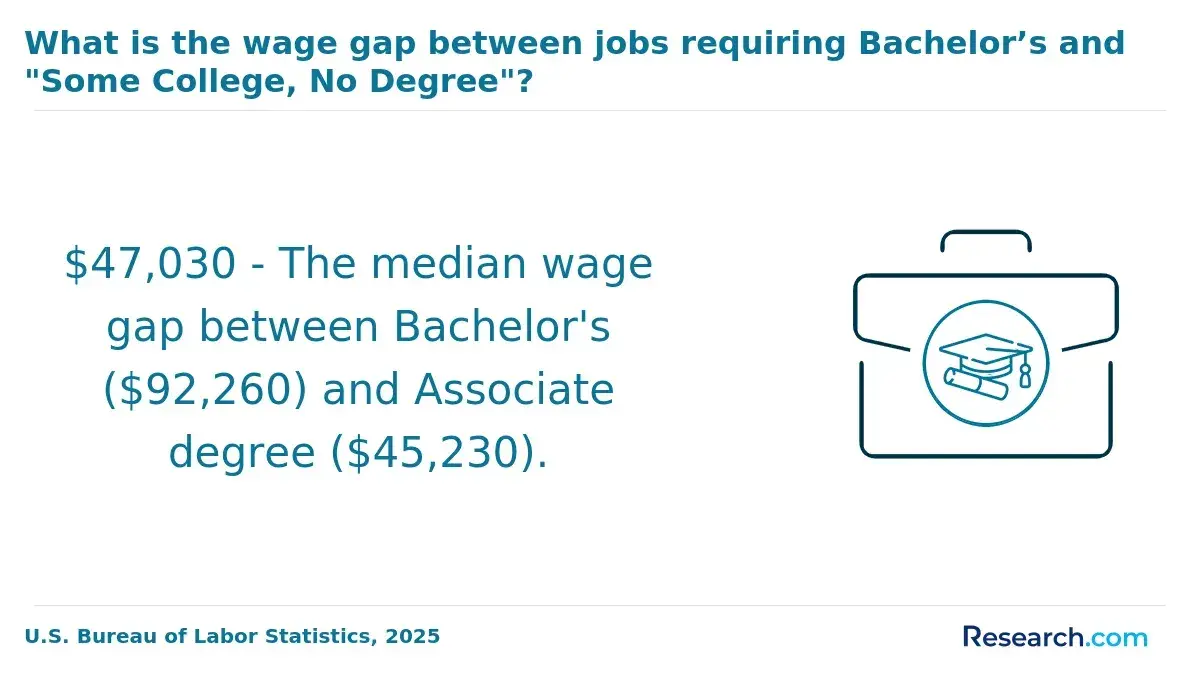
Salary Differential: Earnings among data analytics professionals rise notably with advanced degrees. On average, master's degree holders make 15% to 25% more than those with a bachelor's, while doctoral graduates-typically in research or strategic roles-can earn an additional 10% to 20% above master's level pay. Yet, this wage premium differs depending on the role and sector.
- Role-Specific Requirements: Higher-paying positions such as data science managers, machine learning experts, and senior quantitative analysts commonly require a master's degree due to the complex technical skills and leadership responsibilities involved. Although professional doctorates are uncommon, PhDs open doors to research-focused careers in academia, R&D, and specialized institutions by emphasizing original research and theoretical innovation.
- Credential Gatekeeping: Employers and certification boards often mandate a master's degree for jobs involving advanced modeling, predictive analytics, or strategic insights. Doctorate degrees are expected when roles demand novel algorithm creation or foundational advances in data analytics methodologies.
- Time-to-Payoff Considerations: Undertaking graduate studies involves tuition costs and lost income-two factors students should weigh carefully. For many, the added two years required for a master's is justified by sizable salary gains. In contrast, doctoral programs require a longer commitment and yield financial returns primarily in specialized academic or senior research roles.
- Pathways for Different Backgrounds: Candidates with a relevant bachelor's degree may enter the workforce quickly and pursue graduate studies part-time to boost earnings later. Career changers often benefit from enrolling full-time in graduate programs to rapidly acquire necessary expertise for top-tier positions that prefer advanced degrees.
Reflecting on his journey, a professional who completed a data analytics degree recalled the balancing act between immediate financial needs and long-term career goals. "Finishing my master's full-time was challenging-juggling coursework, family, and the tuition expenses required careful planning," he shared. "Yet, the boost in job offers and salary after graduation proved invaluable. It wasn't just about the money-it was the confidence and access to roles I hadn't imagined before." His experience underscores the complex decisions behind choosing to advance beyond a bachelor's in data analytics-decisions that vary greatly depending on one's background and career ambitions.
Which Industries and Employers Pay Data Analytics Graduates the Most?
Compensation for data analytics graduates varies widely depending on industry and employer type, shaped by factors like organizational scale, regulatory demands, and talent shortages. The technology sector frequently leads in salaries-large companies in software, cloud computing, and internet services offer premium pay driven by intense competition for skilled analysts and engineers focused on machine learning or big data roles.
- Technology Sector: High revenues and market competition result in some of the highest wages for data analytics professionals, especially those with advanced skills.
- Finance and Insurance: The financial industry values analytics expertise for risk modeling, fraud prevention, and automated trading. Salaries here rival tech, reflecting complex regulatory frameworks and high-stakes decisions.
- Healthcare and Pharmaceuticals: With a strong dependence on patient data, clinical research, and personalized treatment analytics, this sector offers above-average pay tied to specialized knowledge and growing industry demand.
- Government and Public Sector: Salaries tend to lag behind private companies, but roles in defense, intelligence, and public health feature competitive pay due to the sensitive nature and scarcity of qualified professionals.
- Nonprofit Organizations: Compensation is generally modest, though larger nonprofits may offer moderate salaries for roles involving policy analytics and impact evaluation.
- Self-Employed and Consulting: Independent consultants and freelancers can earn high hourly rates depending on their reputation, expertise, and client networks.
Industry choice intersects with job title and educational attainment-master's degree holders usually command higher starting salaries than bachelor's degree graduates in comparable positions. For example, an analyst with a master's in finance might begin at $90,000 annually, while a similarly credentialed individual in a nonprofit may earn around $55,000. Adding industry-specific skills and certifications, such as Python or Tableau, amplifies earning potential. Targeting top-paying employers requires strategic skill-building, internships, and networking-practices that boost prospects for maximum financial reward.
Those considering advanced credentials may benefit from exploring affordable online masters programs designed to combine cost efficiency with career-enhancing benefits, supporting a financially sound investment in their professional future.
What Geographic Markets Offer the Best-Paying Data Analytics Jobs?
Identifying metropolitan areas with the best-paying data analytics jobs involves examining wage data adjusted for the cost of living to reveal true purchasing power-not just nominal salaries. According to Bureau of Labor Statistics metropolitan wage information combined with cost indices like those from C2ER, several U.S. regions stand out for high median compensation and a substantial concentration of data analytics employers.
- San Francisco Bay Area, California: Tech giants and startups drive some of the country's highest wages here. Despite steep living costs, the region's adjusted salaries remain competitive, reflecting a strong demand for advanced analytics talent.
- New York City Metro, New York-New Jersey: Financial services, media, and consulting sectors support lucrative pay, with cost-of-living adjustments still placing these wages well above the national average.
- Seattle, Washington: With a large presence of cloud computing and software firms, Seattle compensates data analysts with salaries that offer real purchasing power even as housing and living expenses rise.
- Washington, D.C. Metro Area: This area's demand from government and policy organizations translates into attractive compensation packages, particularly for roles tied to public sector data analysis.
- Austin, Texas: Growing tech employers coupled with a lower cost of living make Austin a hotspot where adjusted wages often surpass those in high-cost coastal metros.
- Boston-Cambridge, Massachusetts: Healthcare, biotech, and education industries here provide strong earning potential with favorable cost-of-living offsets.
Remote and hybrid work models have softened traditional geographic pay gaps. Many well-paying roles-especially in software development, e-commerce analytics, and consulting-can be done from lower-cost regions, allowing professionals to earn competitive incomes without relocating. However, positions requiring in-person involvement, access to secure data, or local licensure remain anchored to specific locations. This dynamic means candidates must balance salary potential with lifestyle costs and job access.
One professional who launched her career after earning a data analytics degree shared that navigating these factors was initially daunting. "I had to weigh the allure of high salaries in expensive metros against the quality of life I wanted," she explained. After exploring remote roles, she found that working from a medium-sized city allowed her to keep more of her paycheck while still engaging in challenging projects. "It wasn't just about the highest number on the offer letter-it was what stretched furthest once rent, taxes, and daily expenses were factored in." Her experience underscores how thoughtful geographic decisions can enhance both career satisfaction and financial wellbeing.
How Do Professional Certifications and Licenses Boost Data Analytics Salaries?
Professional certifications can notably increase earnings for data analytics specialists, often providing a clear wage boost that validates the effort and expense involved. Several credentials are widely respected and linked to higher pay.
- Certified Analytics Professional (CAP): Administered by INFORMS, this certification demands a bachelor's degree, five years of experience in analytics, and successful completion of an exam covering the analytics lifecycle. Renewal occurs every three years through continuing education or retesting. CAP holders typically see a 10%-15% salary increase compared to non-certified analysts.
- Microsoft Certified: Data Analyst Associate: Targeted at professionals working with Microsoft Power BI, this credential requires passing one exam. Renewal is annual, involving updated tests or continued learning. Salary gains range from 8%-12% in Microsoft-centric roles.
- SAS Certified Data Scientist: This credential, spanning programming, machine learning, and data manipulation, requires multiple exams. Recertification is recommended periodically. SAS certifications often correspond to salaries 12% above average according to industry surveys.
- Google Data Analytics Professional Certificate: Focused on practical skills for early-career candidates, this affordable credential mainly improves employability and entry-level wages rather than direct salary premiums.
Before investing, candidates should identify industry-preferred certifications and confirm accreditation by bodies like ANSI or NCCA to avoid less credible providers. Understanding exam formats, costs-from several hundred to over a thousand dollars-and renewal policies is critical for evaluating the long-term financial benefit aligned with career goals.
What Is the Salary Trajectory for Data Analytics Professionals Over a Full Career?
The career earnings of data analytics professionals tend to rise steadily as experience grows, reflecting enhanced skills, responsibilities, and growing demand in the labor market. Entry-level roles typically offer annual salaries ranging from $55,000 to $75,000-these early years focus on building strong technical capabilities and gaining industry exposure.
- Mid-Career Growth: Between five and ten years of experience, compensation commonly rises to $85,000-$120,000 as professionals advance to senior analyst or specialist roles. Key milestones include earning advanced certifications like the Certified Analytics Professional (CAP) or completing graduate degrees in data science or business analytics.
- Leadership and Specialization: Moving into management positions or niche areas such as machine learning, data engineering, or business intelligence can push salaries beyond $130,000. Leadership over analytics teams and contributions to strategic business development often yield premium compensation.
- Peak Career Earnings: After 15 to 20 years, data analytics experts in high-demand sectors-finance, technology, healthcare-frequently reach or exceed $160,000 annually. Success at this stage is typically driven by continuous upskilling, an established professional reputation, and impactful cross-functional engagement.
- Strategic Decisions: High earners distinguish themselves by developing both technical and soft skills, pursuing advanced licenses, and maintaining broad professional networks. These strategies help propel compensation ahead of those with similar educational backgrounds, enhancing long-term career growth.
Which Data Analytics Specializations and Concentrations Lead to the Highest-Paying Roles?
Specializations within data analytics that lead to the highest-paying roles often reflect the complexity and demand of specific industries. For instance, expertise in financial analytics positions graduates for lucrative careers in banking and investment-fields driven by large datasets and regulatory scrutiny requiring precise, compliant analysis. Similarly, healthcare analytics specialists command premium salaries because of the sensitive nature of medical data and the growing use of predictive models to improve patient outcomes. Both areas face talent shortages, pushing salaries upward. These specializations rank among the highest-paying data analytics specializations in the US, highlighting their value in the current job market.
The concentration in machine learning and artificial intelligence also opens doors to high-paying roles, especially in tech companies focused on automation and innovation. These positions demand deep technical skills and ongoing education, justifying their compensation premiums. In contrast, business intelligence centers on interpreting data to guide strategy, offering strong-but comparatively lower-salary potential. For students exploring the top data analytics concentrations for salary growth, assessing occupational wage data alongside job posting demand is essential to making an informed choice.
Students early in their academic planning should align specialization decisions with labor market demand and growth projections-rather than choice alone. Those already enrolled in general data analytics programs can use targeted internships, continuing education, and certification stacking-such as becoming a Certified Analytics Professional (CAP)-to access high-paying niches without pursuing additional degrees. Online programs may also offer advantages in this regard.
- ROI: Top online data analytics programs often deliver strong salary boosts post-graduation due to industry connections and skill rigor.
- Certification: Professional licenses amplify earnings by signaling verified expertise to employers.
- Market Conditions: Specialized roles in regulated industries command higher wages due to scarce talent and compliance complexity.
For career changers or professionals seeking affordable pathways, exploring online MBA programs no GMAT low cost may offer alternative routes to build managerial competencies that complement technical analytics skills and enhance salary prospects.
How Does the Data Analytics Job Market's Growth Outlook Affect Long-Term Earning Stability?
The long-term earning potential for data analytics professionals is strongly influenced by labor market trends and the Bureau of Labor Statistics (BLS) projections. Key roles like data scientists and data analysts are expected to grow more than 20% over the next decade-well above average-driven by big data integration, AI advancements, and data-driven decision-making adopted across industries. This growth underpins salary stability in many data analytics job markets.
Several forces shape this outlook. Low automation risk marks many high-level analytics positions because they require complex problem-solving and critical thinking. Demographic shifts, especially in healthcare and finance, spur sustained demand for advanced analytics skills. Furthermore, legislative changes around data privacy increase the need for professionals adept at regulatory compliance. Rapid technological innovation continually creates emerging niches within data analytics, expanding opportunities further. These factors strongly relate to data analytics job market growth and salary stability.
- Strong Growth: Roles like data scientist and business intelligence analyst enjoy robust employment growth and expanding opportunities in diverse sectors.
- Automation Resistance: High-level analytics roles combining statistics, programming, and business insight face minimal automation threats.
- Demand Drivers: Healthcare analytics and cybersecurity analytics benefit from regulatory and demographic pressures boosting job stability.
- Structural Headwinds: Some data technician and reporting roles face outsourcing risks and budget cuts-credentialing and upskilling are essential to compete.
- Credential Inflation: The proliferation of certifications and advanced degrees raises barriers but also differentiates candidates.
- Risk vs. Reward: High-paying contract or freelance analytics roles offer lucrative wages but involve cyclical demand and limited job volume-understanding this distinction is vital.
Investing in a data analytics degree aligned with growth sectors and continuous skills development can yield lasting financial rewards. For those exploring cost-effective education routes, knowing what are the cheapest online colleges could significantly impact return on investment calculations.
What Leadership and Management Roles Are Available to High-Earning Data Analytics Graduates?
Leadership positions represent the highest compensation levels for professionals with a data analytics degree, typically involving strategic oversight, team management, and significant budget responsibilities. Common roles at this tier include Data Analytics Manager, Director of Analytics, Chief Data Officer, and Vice President of Business Intelligence-usually situated at mid-to-senior executive levels within organizations.
- Salary Premium: Data analytics managers earn substantially more than individual contributors, with median salaries often ranging from $130,000 compared to about $85,000 for data analysts. This increase reflects additional duties such as directing teams, managing budgets, and ensuring analytical projects align with business strategies.
- Experience and Credentials: Achieving leadership typically requires 7 to 10 years of professional experience plus advanced credentials like an MBA or specialized certificates in analytics management to demonstrate business insight and leadership abilities.
- Career Pathways: Progression often follows a path from entry-level analyst roles through senior analyst or project lead positions before moving into management. Developing strong communication skills, project coordination experience, and the ability to collaborate across departments is essential for advancement.
- Professional Development: Continuous education-such as graduate degrees combined with analytics credentials-and active networking contribute to qualification for executive roles. Leaders frequently engage in ongoing learning opportunities and mentorship to sharpen their management competencies.
- Organizational Impact: Executives in data analytics turn complex data into strategic decisions that boost profitability, mitigate risk, and drive innovation, justifying their elevated salaries and organizational influence.
Which Emerging Data Analytics Career Paths Are Positioned to Become Tomorrow's Highest-Paying Jobs?
Emerging roles within data analytics are rapidly evolving-propelled by AI advancements, stricter data privacy regulations, and increased use of cloud computing. These developments create opportunities for several high-growth, lucrative occupations forecasted by labor market research including O*NET and the World Economic Forum.
- AI and Machine Learning Specialists: Experts who develop algorithms enabling autonomous decision-making are in growing demand as businesses leverage AI for automation and predictive insights.
- Data Privacy and Compliance Analysts: Professionals ensuring adherence to complex regulations such as GDPR and CCPA are increasingly critical amid expanding data protection laws globally.
- Cloud-Focused Data Engineers: Engineers skilled in designing and maintaining scalable data infrastructures in cloud environments are essential as analytics migrate away from traditional on-premises systems.
- Explainable AI Analysts: This emerging role emphasizes making AI outputs transparent and understandable-vital in high-stakes sectors like finance and healthcare.
Data analytics degree programs are adapting by incorporating machine learning foundations, AI ethics, and cloud computing into their curricula. Students and mid-career professionals should consider augmenting their education with targeted micro-credentials, including cloud certification, ethical AI workshops, and intensive coding boot camps centered on Python and R.
Choosing an emerging career requires balancing potential early mover advantages with the uncertainty of adoption timelines and evolving job definitions. Roles backed by robust technological trends and regulatory environments-particularly data privacy and cloud engineering-offer more stable prospects.
Staying informed through labor market intelligence platforms such as Lightcast, Burning Glass, and LinkedIn Economic Graph, alongside memberships in relevant professional associations, helps maintain current knowledge of compensation shifts and emerging opportunities in data analytics careers.
What Graduates Say About the Highest-Paying Jobs You Can Get With a Data Analytics Degree
- Callahan: "The wage premium that comes with holding graduate credentials in data analytics truly surprised me-it opened doors to roles I hadn't even considered. I found that companies in finance and tech sectors pay a significant salary boost for certified skills, making professional licensure feel invaluable. Reflecting on my journey, investing in this degree proved a smarter decision financially compared to bootcamps or self-study alone."
- Saul: "Working across different states has shown me how much industry type and geographic location influence salaries for data analytics professionals. Cities with a dense tech presence offer significantly higher pay, which validates my choice to relocate after graduation. Also, pursuing certifications alongside the degree amplified my earning potential more than I initially expected."
- Adam: "From a professional standpoint, comparing my data analytics degree to alternative education paths was eye-opening-this degree has consistently delivered the highest ROI for me. Adding professional licensing only reinforced my credibility and salary growth. It's clear now that the best-paying opportunities come from combining formal education with recognized credentials in booming industries."
Other Things You Should Know About Data Analytics Degrees
Internships, practicums, and early work experience play a crucial role in improving starting salaries for data analytics graduates. Employers value real-world experience that demonstrates practical skills and problem-solving ability. Students who complete internships or practicum placements typically receive higher job offers because they enter the workforce with applied knowledge and professional networking connections.
Employer type significantly impacts data analytics compensation levels. Private sector jobs often offer the highest salaries, especially in industries like technology and finance. Public sector and nonprofit organizations may provide lower base pay but can offer other benefits such as job stability and comprehensive healthcare. Graduates should consider employer type alongside salary offers to find the best overall compensation package for their goals.
Successful negotiation starts with thorough research on market salary ranges and the specific employer's pay standards. Data analytics graduates should highlight their technical skills, internship experience, and any certifications during negotiations. Asking for formal offers in writing and being prepared to discuss competing offers can also strengthen negotiating leverage and help secure better salary terms.
References
- Data Analyst Job Outlook 2026: Growth, Salaries & Career Guide https://skillifysolutions.com/blogs/data-science/data-analyst-job-outlook/
- 5 Data Analytics Certifications to Help Boost Your Income - Experian https://www.experian.com/blogs/ask-experian/data-analytics-certifications-to-help-boost-your-income/
- Is the Data Analyst Market Overcrowded? Realistic Job Outlook for 2026 https://datamites.com/blog/is-the-data-analyst-market-overcrowded/
- Data career paths: 2026 job guide https://www.pluralsight.com/resources/blog/ai-and-data/data-career-guide
- What High-Paying Jobs Can You Get After Learning Data Analytics? Full Guide https://talentele.in/what-high-paying-jobs-can-you-get-after-learning-data-analytics/
- Careers You Didn’t Know You Could Have With a Data Analytics Degree | University of Bridgeport https://www.bridgeport.edu/news/careers-you-didnt-know-you-could-have-with-a-data-analytics-degree/
- Top Advantages of Earning a Data Analytics Certification - CertLibrary Blog https://www.certlibrary.com/blog/top-advantages-of-earning-a-data-analytics-certification/
- Certifications that Increase Data Analyst Jobs Salary - IABAC https://iabac.org/blog/certifications-that-increase-data-analyst-jobs-salary
- Top Highest Paying Data Analytics Jobs in 2024 https://www.codingtemple.com/blog/highest-paying-data-analytics-jobs-in-2024/
- Data Analyst Salary: Skills and Tips for Maximizing It https://www.dice.com/career-advice/data-analyst-salary-skills-and-tips-for-maximizing-it