Does Financial Aid Cover Housing for 2027?

Student Finance & Loan Expert
Finding accurate and comprehensive information on how financial aid can be used to cover housing costs can be challenging. Many students and families are unsure of the details and nuances involved. Financial aid, including grants, loans, and scholarships, can indeed be used to cover a portion of housing expenses, such as rent, utilities, and other living costs. However, the specific coverage and application of aid can vary significantly based on factors like institution, living situation, and individual financial circumstances. As an expert on this topic, I aim to provide clarity and guidance. Understanding these complexities is key to maximizing your financial aid and meeting your housing needs.
Key Things You Should Know About Financial Aid Coverage for Housing
- Federal financial aid covers housing, but to varying degrees; it all depends on your university's cost of attendance and other factors.
- Federal aid sometimes does not cover full board and lodging, so other alternatives such as scholarships or grants, part-time work, and off-campus living are good options to consider.
- You can use your financial aid package for rent and include utilities such as electricity and internet bills.
- Private loans can be an option, but higher interest rates and no loan forgiveness options are but a few of the things you should consider carefully.
- Always abide by the terms and conditions of your aid and loans - if you do not maintain good academic standing, your financial aid may be revoked.
- Several U.S. universities are facing the most severe student housing shortages numbering over more than 27,000 to 35,000 beds lacking.
- Rent prices decrease significantly for off-campus locations, and most students are located in off-campus accommodations.
- Forecasts to 2031 show a steady increase in all types of student living arrangements throughout the USA.
- Rent also varies based on the university you go to - some have much higher rent than others.
- Does Financial Aid Cover Housing for 2027?
- How does financial aid differ for on-campus vs. off-campus housing?
- What are the requirements to receive financial aid that covers housing?
- How does my Expected Family Contribution (EFC) affect my housing aid eligibility?
- How can I obtain safe and affordable off-campus housing?
- What strategies can I use to save money on housing while in college?
- What are the risks associated with taking out student loans for housing?
- Do housing aid options vary based on academic major?
- Can alternative credentials help manage housing expenses?
- Will upcoming policy changes influence my financial aid for housing?
- How do local rental market trends affect housing aid adequacy?
- Can I access immediate student loans for urgent housing needs?
- What are the interest rates and repayment terms for student loans used for housing?
- Are there any tax implications when using financial aid for housing?
- Are there alternative options if student loans are not viable for housing?
- What do MBA students need to know about leveraging financial aid for graduate housing?
- How do student loans for housing impact my long-term financial health?
- Can a Cosigner Enhance My Student Loan Conditions for Housing?
- How do degree choices and projected career earnings influence housing aid options?
Does Financial Aid Cover Housing for 2027?
The short answer is yes, financial aid can cover the cost of housing. However, it is a little more nuanced than that. Here's a deeper dive into how financial aid can cover housing costs:
Understanding Cost of Attendance and Financial Aid
Cost of Attendance (COA)
- This is a figure determined by your school that reflects the estimated total cost of attending for a year.
- It typically includes tuition and fees, college room and board (on-campus housing and meal plan), books and supplies, transportation, and miscellaneous personal expenses.
Financial Aid Package
- Based on your financial need (calculated from the FAFSA), your school will assemble a financial aid package to help cover your COA.
- This package can include grants, scholarships, work-study awards, and federal student loans.
How Financial Aid Can Be Used for Housing
- Grants and Scholarships: These free award funds (ideally!) can be used towards any cost of attendance expense, including housing.
- Work-Study: This program allows you to work part-time on campus or for approved employers. You earn money that can be used for any educational expense, including housing.
- Federal Student Loans: These are borrowed funds that you'll need to repay with interest. While not ideal, they can be used for the full cost of attendance, including housing.
Important Considerations
- Financial aid awards may not cover the full cost of attendance. This means you might still have a gap to fill, even with financial aid.
- On-campus housing costs are typically factored into the COA. If you choose on-campus housing, the financial aid award might directly pay the school for your housing.
- Off-campus housing requires more planning. The financial aid office estimates a standard housing cost for off-campus students. You'll receive the funds directly and are responsible for managing them towards rent and utilities.
Tips for Maximizing Financial Aid for Housing
- Apply for scholarships and grants that specifically target housing costs. Research state and local scholarship opportunities as well. Many states and localities offer grant programs for students facing financial hardship. These might have specific eligibility criteria related to residency or area of study, but some could contribute towards housing costs.
- Explore affordable housing options like living with roommates or finding cheaper off-campus apartments.
- Create a budget to manage your financial aid effectively and ensure it covers all housing expenses.
Contact your school's financial aid office for specific details on how financial aid works at your institution, including deadlines and eligibility requirements. Explore government resources like the Federal Student Aid website for additional information and tools.
Just how much is the average rent for apartments? According to the National Multifamily Housing Council (NMHC), the median gross rent for apartment units in the United States varies depending on the number of bedrooms. In 2023, renters living in studios or zero-bedroom units paid a median gross rent of $1,200, while those in one-bedroom units paid a slightly higher median of $1,213. Two-bedroom units saw a significant jump to a $1,456 median gross rent, and apartments with three or more bedrooms had the highest median at $1,510. These are shown in the graph below.
How does financial aid differ for on-campus vs. off-campus housing?
Here's a breakdown of how financial aid differs for on-campus vs. off-campus housing:
On-campus Housing
- Simpler Process: The cost of on-campus housing is usually factored directly into your school's Cost of Attendance (COA). Your financial aid award might be used to pay the school directly for your room and board (housing and meal plan).
- Streamlined Payment: You might not receive a separate allocation for housing in your financial aid award. The school may automatically deduct your financial aid towards your housing bill.
- Less Flexibility: Financial aid might be tied to specific on-campus housing options. You might have less flexibility in choosing your room type or roommate situation.
Off-campus Housing
- More Planning: The COA includes an estimated standard cost for off-campus housing. You'll receive the portion of your financial aid allocated for housing directly and manage it yourself.
- Budgeting Responsibility: You'll be responsible for finding affordable housing that fits within your financial aid allocation and managing utilities and other living expenses.
- Flexibility: You have more freedom in choosing your housing type (apartment, shared house), location, and roommates, which can potentially lead to cost savings.
Additional points to consider
- Financial aid award amounts might differ: Sometimes, financial aid awards for on-campus housing are slightly higher than the off-campus estimate due to the bundled cost of room and board.
- Double-check with your school: Always check with your financial aid office to understand how your specific institution handles on-campus vs. off-campus housing and financial aid.
Ultimately, the best choice depends on your needs and preferences. Consider factors like cost, convenience, desired living environment, and your ability to manage a budget when making your decision.
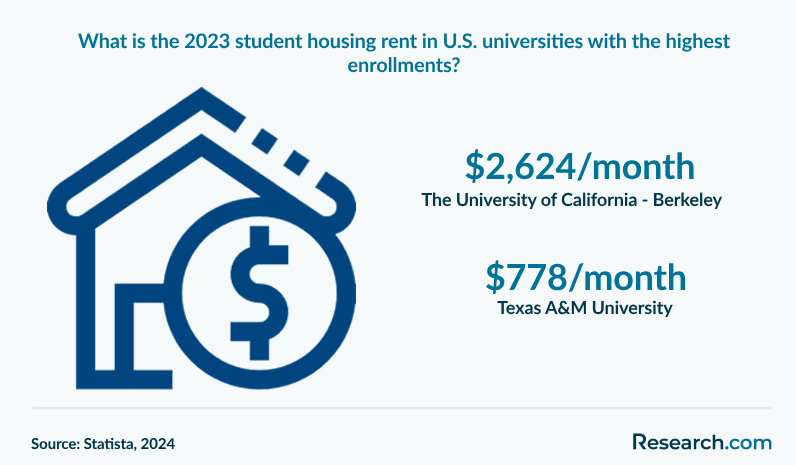
According to Statista data from 2024, the average price for student housing in the United States in 2023 is $1,114 per bed, if located within a 0.5-mile radius of the campus, with costs dropping to $713 per bed for properties located more than two miles away from campus. It also depends on your university - for example, the University of California at Berkeley boasts a significantly high rent average of $2,624/month compared to Texas A&M University at $778/month as shown in the graphic below.
What are the requirements to receive financial aid that covers housing?
Here's a breakdown of the general requirements to receive financial aid that covers housing:
Financial Need
- The core requirement revolves around demonstrating financial need. This means showing that your family's financial resources aren't enough to cover the full cost of attending college (COA), including housing.
- You'll need to complete the Free Application for Federal Student Aid (FAFSA) which gathers information on your income, assets, and household size.
- The FAFSA results in an Expected Family Contribution (EFC), which estimates how much your family can contribute towards college expenses.
Eligibility
- You must be enrolled at least half-time (usually defined as 6 credit hours) in a degree or certificate program at a Title IV-eligible institution.
- You must be a U.S. citizen or eligible non-citizen.
- You must have a valid Social Security number (unless you're an eligible non-citizen).
- You must be making satisfactory academic progress according to your school's standards.
Additional Considerations
- Dependency status: Your dependency status (independent vs. dependent on parents) can affect your EFC and potentially your financial aid award for housing.
- Type of Financial Aid: Eligibility requirements can vary slightly depending on the specific type of financial aid (grants, scholarships, work-study) that contributes to your housing costs.
- School-Specific Requirements: Some schools might have additional requirements or limitations on financial aid for housing.
Tips to maximize your chances of receiving financial aid for housing
- Apply for FAFSA early (October 1st is the earliest): This ensures you're considered for all federal and state grants.
- Research scholarships and grants: Explore scholarships offered by your state, field of study, or even your high school. Some may specifically target housing costs. Have a look at some current trends in student aid for more information.
- Contact your school's financial aid office: They can answer specific questions about your eligibility and the application process.
Remember, financial aid for housing is not guaranteed, but by fulfilling these general requirements and taking initiative, you can increase your chances of receiving assistance with your college housing expenses.
Here’s What Students Say About Their Financial Aid and Housing
The financial aid I received from FAFSA covered not just my tuition, but also my off-campus housing costs. This allowed me to focus on my studies without worrying about making rent each month. The extra support gave me the freedom to get involved in campus organizations and really make the most of my college experience. Emily
My student loans helped me afford to live in the university's on-campus dorms all four years. Having that stable, convenient housing made transitioning to college life so much easier. The financial aid package I received also included grants that didn't need to be repaid, which was a huge relief. I'm grateful for the support that allowed me to thrive both academically and socially. Javier
Thanks to my financial aid, I was able to find an affordable apartment near campus and live independently during college. The freedom of off-campus living was invaluable for my personal growth. My student loans covered not just tuition, but also living expenses like rent, groceries, and utilities. This holistic support empowered me to fully immerse myself in my studies and extracurriculars. Samantha
How does my Expected Family Contribution (EFC) affect my housing aid eligibility?
Your Expected Family Contribution (EFC) plays a significant role in determining how much financial aid you'll receive for housing, including grants, scholarships, and federal student loans. Here's how it works:
- Lower EFC = Higher Eligibility: A lower EFC indicates greater financial need. This typically translates to a larger financial aid package, including a potentially higher allocation for housing costs.
- Higher EFC = Lower Eligibility: A higher EFC means your family is expected to contribute more towards your college expenses. This could result in a smaller financial aid award overall, potentially impacting the amount allocated for housing.
Here's a breakdown of the impact
- Grants and Scholarships: These free-award programs prioritize students with higher financial need (lower EFC). You might be eligible for more grant and scholarship funding that can be used towards housing costs if you have a lower EFC.
- Federal Student Loans: While loan eligibility isn't directly tied to EFC, the total financial aid package, including loans, might be higher for students with lower EFCs. This could provide more funds to cover housing costs, but remember, student loans need to be repaid with interest.
Important Points to Remember
- Financial aid for housing is not solely based on EFC.
- Other factors like your school's cost of attendance (COA) and the type of housing you choose (on-campus vs. off-campus) also influence the amount you receive.
- Even with a higher EFC, you might still qualify for some aid:
- Don't be discouraged if your EFC is higher.
- Explore scholarship opportunities, work-study programs, and budgeting strategies to manage your housing costs alongside your financial aid package.
Here are some proactive steps you can take
- Appeal your EFC if you believe it's inaccurate: If you have extenuating circumstances not reflected in the FAFSA, you can contact your school's financial aid office to discuss an appeal.
- Explore alternative housing options: Consider cost-saving measures like living with roommates or finding affordable off-campus housing to make the most of your financial aid allocation.
By understanding how your EFC affects housing aid eligibility, you can be more strategic in planning your college finances and explore all available options to manage your housing costs effectively.
How can I obtain safe and affordable off-campus housing?
Finding safe and affordable off-campus housing requires some research and planning. Here are some key strategies to help you obtain safe and affordable off-campus housing.
Establish Your Budget
- Review your Financial Aid Award: Determine how much financial aid is allocated for housing in your award letter. This will be your baseline budget for rent and utilities.
- Factor in Additional Costs: Don't forget to account for utilities (electricity, water, internet), transportation costs, and potential furniture rental if needed.
- Consider Roommate Income: If you plan to live with roommates, factor in their contribution to rent and utilities to determine your individual budget.
Research and Compare
- Utilize online resources: Search reputable platforms like ForRentUniversity, Apartment List, Trulia, and Campus Rent to browse listings near your university. These sites allow you to filter by criteria like price, distance to campus, safety features, and amenities.
- Explore College Resources: Many colleges maintain off-campus housing listings or partner with rental agencies. Check your school's housing website or contact the student affairs office for recommendations.
- Prioritize Safety and Security: When evaluating potential housing options, prioritize safety features like secure building access, good lighting, and on-site security. Research the neighborhood's crime rates and walkability. Reach out to current or former students for recommendations on safe, affordable areas near campus.
- Schedule Virtual or In-Person Tours: Once you shortlist potential options, schedule tours to assess the condition of the property, amenities offered, and overall safety of the surrounding area.
Negotiate and Secure the Lease
- Understand Lease Terms: Read the lease agreement carefully before signing. Pay close attention to rent amount, security deposit details, utility responsibilities, and roommate agreements (if applicable).
- Negotiate Rent: Especially if there's high vacancy in the area, politely negotiate the rent if it slightly exceeds your budget.
- Consider a Security Deposit Guarantee Service: These services can help cover upfront security deposit costs in exchange for a small monthly fee. Explore this option if the security deposit feels overwhelming.
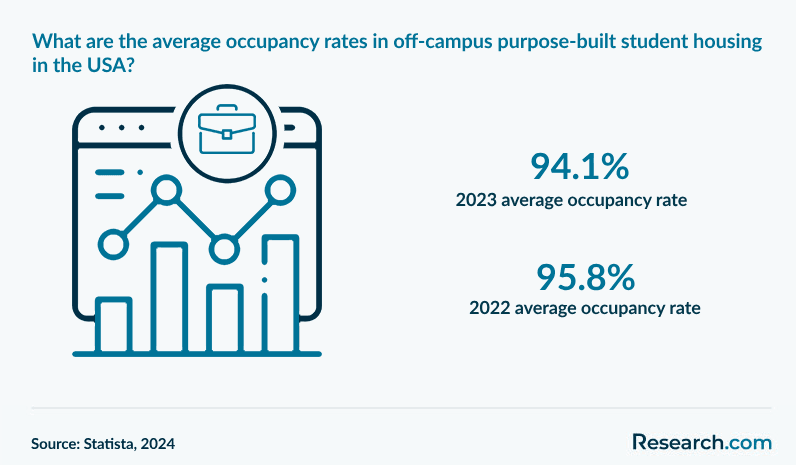
Off-campus student housing in the United States is in high demand, with an average occupancy rate reaching 94.1% in 2023. This represents a slight decrease from the already strong occupancy rate of 95.8% observed in 2022, as shown in the graphic below.
Additional Tips
- Connect with Upperclassmen: Talk to seniors or students who have lived off-campus for recommendations on safe and affordable housing options.
- Beware of Scams: Be cautious of online listings with unusually low rent or pressure to send money upfront. Verify property details and meet landlords in person before committing.
- Consider Renter's Insurance: While not mandatory, renter's insurance can offer valuable protection for your belongings in case of theft or damage.
Finding safe and affordable off-campus housing can be a rewarding experience. By following these steps and prioritizing your needs for safety and budget, you can secure a comfortable and secure place to call home during your college years.
What strategies can I use to save money on housing while in college?
Here are some key strategies you can use to save money on housing while in college:
On-Campus vs. Off-Campus Housing
- Consider On-Campus Options: On-campus housing can be convenient and sometimes includes a meal plan, but it might not always be the most budget-friendly choice. Compare costs with off-campus options before deciding.
- Explore Off-Campus Options: Living off-campus can offer more flexibility and potentially lower rent. Explore apartments, shared houses, or consider living further from campus if transportation is feasible.
Finding Affordable Off-Campus Housing
- Start Your Search Early: The best deals go fast! Cast a wide net by searching online resources like ForRentUniversity, Apartment List, and Campus Rent. Utilize filters for price, distance, and amenities.
- Explore College Resources: Many colleges maintain off-campus housing listings or partner with rental agencies. Check with your school's housing office for recommendations.
- Prioritize Safety: Don't compromise on safety. Look for secure buildings, good lighting, and research neighborhood crime rates. Talk to current or former students for recommendations on safe and affordable areas.
- Negotiate Rent: Especially in areas with high vacancy, politely negotiate rent if it slightly exceeds your budget.
Sharing Costs with Roommates
- Find Compatible Roommates: Living with roommates can significantly reduce your housing costs. Choose responsible roommates who align with your living style
- Set Clear Agreements: Establish clear agreements with roommates regarding rent, utilities, chores, and guest policies.
Budgeting and Managing Expenses
- Factor in All Costs: Don't just consider rent. Account for utilities (electricity, water, internet), transportation costs, and potential furniture rental if needed.
- Create a Budget: Develop a detailed budget outlining your income from financial aid, scholarships, and any potential job earnings. Track your expenses to stay within your means.
- Prioritize Needs vs. Wants: Be mindful of your spending habits. Prioritize essential expenses like rent, groceries, and transportation. Consider cutting back on non-essential spending like eating out or entertainment.
Additional Strategies
- Become a Resident Assistant (RA): If you live on campus, consider becoming an RA. RAs often receive free or discounted housing in exchange for providing residential life support.
- Explore Alternative Housing Options: Think outside the box! Some students consider co-ops or student housing cooperatives, which can offer lower costs and a unique living experience.
Financial Aid and Resources
- Maximize Financial Aid: Apply for scholarships and grants that specifically target housing costs. Explore work-study programs to earn money and contribute towards rent.
- Financial Aid Appeals: If your financial aid award doesn't cover your housing costs, consider appealing if you have extenuating circumstances.
By following these strategies, you can find affordable housing solutions that fit your budget and lifestyle while you focus on your education! Remember, prioritizing your needs, planning ahead, and utilizing available resources can go a long way in saving money on college housing.
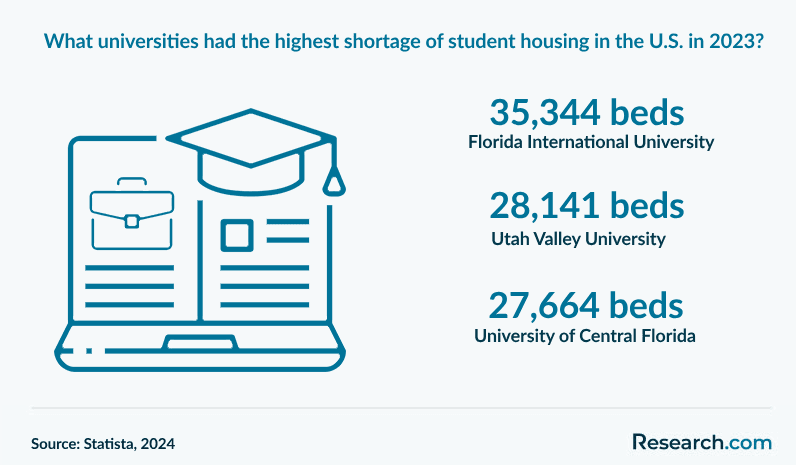
What universities had the highest shortage of student housing in the U.S? Florida International University faced the most severe student housing shortage in the US during 2023, lacking over 35,000 beds to meet student enrollment. Utah Valley University and the University of Central Florida followed closely behind, grappling with deficits exceeding 27,000 beds each. The University of California (Santa Barbara) rounded out the top 20 with a shortage of over 12,000 beds. These are shown in the graphic below.
What are the risks associated with taking out student loans for housing?
While student loans can help cover the gap between your financial aid and your housing costs, there are some risks to consider before you take this route. Here's a breakdown of the potential downsides:
- Increased Debt Burden: Student loans add to your overall debt load. This can impact your financial situation after graduation, potentially delaying milestones like buying a car or a house.You'll be responsible for repaying the loans with interest, which can be a significant financial burden.
- Limited Loan Options: Student loans used for housing might have different interest rates and repayment terms compared to traditional student loans used for tuition. These loans might also have stricter eligibility requirements.
- Potential for Default: If you struggle to find a job after graduation or face unexpected financial difficulties, keeping up with student loan payments can become challenging. Defaulting on student loans can have serious consequences, including damage to your credit score, wage garnishment, and difficulty securing future loans.
- Limited Financial Flexibility: Large student loan debt can limit your financial flexibility. You might have to make sacrifices in other areas of your life, like travel or saving for retirement, to manage your loan repayments.
Forecasts made by the National Multifamily Housing Council predict that over 2.2 million students will reside in on-campus housing at public four-year institutions (2,204,504), with a significantly smaller number opting for public two-year colleges (79,071). Private institutions also see a larger on-campus population projected at 1,110,884 for four-year colleges, while private two-year colleges are expected to house only 790 students.
Looking beyond on-campus options, the NMHC forecast suggests that a substantial number of students will seek off-campus housing. Among public institutions, over 3.5 million students are expected to rent near four-year schools (3,555,086), with public two-year colleges reaching over 2.4 million renters (2,487,975). The trend continues for private schools, with an estimated 1.2 million students renting near four-year institutions (1,275,067) and nearly 100,000 renting near private two-year colleges (98,074). These figures shown in the graph below highlight the significant role off-campus housing plays in accommodating the student population across the United States.
Here are some additional points to consider:
- Compare Costs: Before relying on student loans for housing, compare the total cost of borrowing with other options like finding a more affordable place to live, seeking additional scholarships or work-study opportunities, or talking to your financial aid office about alternative resources.
- Borrow Responsibly: If you do decide to take out student loans for housing, only borrow what you absolutely need. Be mindful of the total amount of debt you're accumulating and create a realistic repayment plan for after graduation.
- Explore Alternatives: Exhaust all other options first. Consider living with roommates, looking for cheaper housing options, or talking to your family about contributing to your housing costs before resorting to student loans.
Remember: Student loans can be a valuable tool to finance your education, but they should be used strategically. Carefully weigh the risks and benefits before taking out student loans for housing. By exploring other options and borrowing responsibly, you can minimize the financial burden and ensure a smooth transition into life after graduation.
Do housing aid options vary based on academic major?
While financial aid for housing is generally determined by overall financial need and institutional policies, select academic programs may offer supplementary assistance through specialized grants or assistantships. These program-specific benefits do not alter standard aid packages but can provide additional resources to offset living expenses. Students are encouraged to review their department's offerings and program guidelines for any unique support options. For insights on how academic focus may relate to broader financial opportunities, consider exploring majors in college.
Can alternative credentials help manage housing expenses?
Many students are exploring alternative credentials to boost their income and ease housing costs. Earning additional qualifications can create part-time or freelance opportunities that supplement financial aid, reducing the need for extra borrowing. For instance, researching programs offering certifications that pay well can provide a competitive edge and enhance earning potential during and after your studies. Before enrolling, verify the credibility of the certification program and ensure it aligns with your long-term career objectives.
Will upcoming policy changes influence my financial aid for housing?
Emerging regulatory adjustments and evolving market conditions can shape future financial aid programs and lending practices for housing. It is imperative to monitor updates from federal agencies and local institutions since policy shifts may affect eligibility criteria, disbursement timelines, and repayment options. Keeping abreast of these developments through official government resources and institutional communications will allow you to adjust your financial strategy in real time. Additionally, consider that graduate programs, including quick masters degrees online, may adapt their structured aid programs proactively to align with new standards, ensuring that housing support remains both competitive and sustainable.
How do local rental market trends affect housing aid adequacy?
Analyzing localized rental market dynamics is crucial for aligning housing financial aid with actual living costs. Factors such as regional economic shifts, varying vacancy rates, and differences between urban and rural areas can significantly impact rent levels beyond generalized financial aid estimates. Evaluating these trends helps in identifying potential funding gaps and guides strategic decisions regarding budgeting and housing selection. Moreover, considering advanced educational paths like a doctorate without dissertation can diversify income prospects and improve long-term affordability.
Can I access immediate student loans for urgent housing needs?
In urgent housing scenarios, borrowers may require expedited funding options designed to bridge sudden financial gaps for housing. These specialized loan products typically involve a streamlined application process with accelerated approval times. Prospective borrowers should closely evaluate eligibility requirements and any premium fees or higher interest rates associated with rapid disbursement. Researching lender policies and confirming processing timelines with your institution can help ensure that funds are received promptly. For guidance on urgent funding options, consider exploring immediate student loans.
What are the interest rates and repayment terms for student loans used for housing?
Unlike traditional student loans used for tuition and fees, there isn't a single, standardized interest rate or repayment term for student loans used specifically for housing. The rates and terms can vary depending on several factors:
Loan Type
There are two main loan types you might consider for housing costs:
- Federal Direct PLUS Loans: These loans are offered directly by the U.S. Department of Education to graduate and professional students, as well as parents of undergraduate students, to help cover the full cost of attendance, which includes housing. However, PLUS loans typically have higher interest rates compared to traditional subsidized or unsubsidized student loans.
- Private Loans: Private lenders offer student loans for various purposes, including housing. Interest rates on private loans can be higher or lower than federal PLUS loans depending on your creditworthiness and the specific lender.
Your Creditworthiness
Your credit score plays a significant role in determining the interest rate you qualify for on any student loan, including those used for housing. Generally, borrowers with good credit scores will receive lower interest rates compared to those with lower credit scores.
Lender (for Private Loans)
If you're considering a private loan for housing costs, interest rates, and repayment terms will vary depending on the specific lender you choose. Carefully compare rates and terms from different lenders before making a decision.
Here are some resources to help you find more specific information about interest rates and repayment terms:
- Federal Student Aid website: This website provides details on federal student loan programs, including PLUS loans. You can find information about current interest rates and repayment terms for these loans.
- Private Loan Lenders: Many private lenders will have information about their interest rates and repayment terms readily available on their websites. You can also contact lenders directly to inquire about rates for student loans used for housing costs.
Here are some additional points to keep in mind:
- Federal PLUS Loans: While PLUS loans can be used for housing costs, they typically have higher interest rates compared to subsidized or unsubsidized federal student loans. Additionally, PLUS loans require a credit check, and you might be denied if you have a poor credit history.
- Private Loans: Private lenders may offer more flexible repayment options compared to federal PLUS loans. However, interest rates on private loans can be variable and potentially higher than federal loans. It's crucial to compare rates and terms from different lenders before committing to a private loan.
Remember: Carefully research interest rates and repayment terms before taking out any student loan, including those used for housing costs. Consider all your options and weigh the risks and benefits of borrowing before making a decision.
Are there any tax implications when using financial aid for housing?
When allocating financial aid toward housing expenses, it is essential to understand that not all funds share the same tax treatment. While amounts used for qualified education expenses—such as tuition and required fees—are generally non-taxable, housing costs may not qualify under federal regulations if they exceed the allowed limits. This discrepancy can potentially lead to portions of your aid package being subject to tax. Students should review how their institution calculates the Cost of Attendance and separates qualified from non-qualified expenses. Consulting a tax professional can help clarify your individual circumstances. Additionally, exploring educational options, such as the best affordable online bachelor degree programs, may provide further financial clarity and support your long-term financial strategy.
Are there alternative options if student loans are not viable for housing?
For some families, relying on student loans to cover housing costs may not be ideal or feasible due to concerns about debt accumulation or eligibility challenges. In such cases, considering alternative options is crucial to manage housing expenses effectively without compromising the student's financial security.
1. Work-Study Opportunities
Many colleges include work-study positions as part of their financial aid offer. These jobs, often located on or near campus, provide students with a steady income that can be used to help pay for living expenses. As an added benefit, work-study positions typically offer flexible hours, allowing students to balance work and academic commitments.
2. Part-Time Jobs or Side Gigs
For students not eligible for work-study, taking up a part-time job or side gig can be another effective way to manage housing costs. With the rise of gig economy platforms, students can find flexible work that fits their schedules, such as freelancing, tutoring, or ride-sharing services. It’s important to balance employment with academic responsibilities to avoid burnout.
3. Parental Support and Co-Signing
Sometimes, parents can provide direct financial assistance or co-sign private loans to secure more favorable terms. Families with poor credit may feel limited by their financial history, but exploring resources specifically tailored for college loans for parents with bad credit can help identify suitable options.
4. Community and Institutional Grants
Local community organizations, private foundations, and universities often offer grants or scholarships to support students with housing needs. These opportunities are typically merit—or need-based and do not require repayment, making them excellent options for eligible students.
5. Shared Housing Initiatives and Co-Living Spaces
Sharing accommodations with roommates reduces costs and fosters a sense of community. Many co-living spaces cater specifically to students, offering affordable rents and shared amenities. Researching these options through student housing networks or university classifieds can uncover hidden gems that fit your budget.
6. Leveraging Savings and Budgeting Tools
If possible, tapping into personal savings can reduce reliance on borrowed funds. Additionally, budgeting tools and apps can help students track expenses, identify areas to cut costs, and allocate funds more effectively toward housing expenses.
What do MBA students need to know about leveraging financial aid for graduate housing?
Pursuing an MBA is an exciting journey, but the cost of housing can be a significant concern, especially for graduate students living off-campus. Thankfully, financial aid can help alleviate some of these expenses if planned strategically. Here’s how MBA students can make the most of their financial aid for housing:
- Understand Graduate Cost of Attendance (COA). Graduate COA typically includes tuition, fees, books, and living expenses, including housing. While MBA programs often have higher tuition costs, housing allocations within the COA can still be substantial. Ensure you review your institution's COA breakdown to understand how much aid can go toward housing.
- Explore MBA-Specific Scholarships and Grants. Many organizations offer scholarships specifically for MBA students. Some of these awards are designed to offset living expenses, including rent. For example, professional associations like the Forte Foundation or National Black MBA Association provide financial support to MBA candidates.
- Federal and Private Loans for Housing. Graduate students can rely on federal loans like Direct Unsubsidized Loans and Grad PLUS Loans to cover the full COA, including housing. For additional funding, consider private loans tailored for MBA students, which may offer competitive rates and flexible repayment terms. For a detailed comparison of options, check out MBA student loans.
- Maximize Work Opportunities. Many MBA programs encourage internships or part-time jobs that provide additional income for living expenses. While juggling work and study can be challenging, the financial relief can be significant.
- Living with Peers. Sharing accommodations with fellow MBA students can significantly reduce housing costs. Living with peers also fosters a collaborative environment, allowing for professional networking and shared academic experiences.
- Budgeting is Key. Develop a realistic budget that aligns with your financial aid disbursements. Track your monthly expenses and ensure you allocate funds for rent, utilities, groceries, and unexpected costs. Using budgeting tools or apps can help you stay on track.
How do student loans for housing impact my long-term financial health?
Utilizing student loans for housing expenses can affect your financial profile over time by influencing your debt-to-income ratio and credit utilization. Careful repayment planning and periodic financial reviews are essential to ensure that increased liabilities do not hinder future borrowing opportunities. Exploring refinancing options and comparing competitive opportunities, such as the College Ave loan, can assist in managing debt more effectively while maintaining long-term financial stability.
Can a Cosigner Enhance My Student Loan Conditions for Housing?
Utilizing a cosigner can significantly improve approval odds and secure more favorable interest rates, especially for borrowers with limited credit history. A dependable cosigner can help achieve better loan conditions and streamline access to additional funding for housing. Review options from lenders offering cosigner release to understand how early cosigner release may benefit your overall financial strategy while ensuring that both the borrower and cosigner are clear on their responsibilities.
How do degree choices and projected career earnings influence housing aid options?
Lenders and institutions may factor in anticipated career earnings when assessing risk and determining funding terms. Students pursuing degrees with higher future income potential might be offered more favorable loan conditions or alternative aid opportunities. Assessing these projections alongside your chosen academic path can inform a more strategic approach to managing housing expenses. For insights into degree earnings, consider exploring the highest bachelor degree salary to understand how your academic choices might contribute to a robust financial future.
Key Findings
- In 2023, renters living in studios or zero-bedroom units paid a median gross rent of $1,200, while those in one-bedroom units paid a slightly higher median of $1,213.
- Two-bedroom units saw a significant jump to a $1,456 median gross rent, and apartments with three or more bedrooms had the highest median at $1,510.
- The average price for student housing in the United States in 2023 is $1,114 per bed, if located within a 0.5-mile radius of the campus
- It is at $713 per bed for properties located more than two miles away from campus.
- The University of California at Berkeley boasts a significantly high rent average of $2,624/month compared to Texas A&M University at $778/month.
- The average occupancy rate reached 94.1% in 2023 compared to the already strong occupancy rate of 95.8% observed in 2022.
- Florida International University faced the most severe student housing shortage in the US during 2023, lacking over 35,000 beds.
- Utah Valley University (28,141 beds) and the University of Central Florida (27,664 beds) followed closely behind.
- The University of California (Santa Barbara) had a shortage of over 12,000 beds.
References:
- National Multifamily Housing Council. (2024). Quick facts: Market conditions. National Multifamily Housing Council.
- National Multifamily Housing Council. (2024). The future of student housing demand. National Multifamily Housing Council.
- Statista. (2024, April 10). Occupancy rate in student housing in the U.S. 2017-2023. Statista.
- Statista. (2024, May 10). Student housing rent by university 2023. Statista.
- Statista. (2024). Student housing average price per bed by distance from the campus USA. Statista.
- Statista. (2024). U.S. student housing shortage by university 2023. Statista.
Other Things You Should Know About Financial Aid and Housing
Yes, financial aid can often cover on-campus housing costs in 2027. Many financial aid packages include components like grants, scholarships, and loans that can be used for housing, as long as the expenses are part of the cost of attendance for your institution.
If the cost of your chosen housing option exceeds the amount allocated for housing in your financial aid award, it means you'll have a funding gap to cover. Here's how to navigate this situation:
- Explore More Affordable Housing: Revisit your off-campus housing search and consider more budget-friendly options. Look for apartments or houses with lower rent, find roommates to share costs, or explore living further from campus if transportation is feasible.
- Review Your Financial Aid Award: Double-check your award letter to see if there are any additional resources or grants you might qualify for. You could also contact your school's financial aid office to inquire about any last-minute scholarship opportunities or emergency aid programs
- Private Scholarships: Research and apply for private scholarships specifically designated for housing costs. These might be offered by organizations related to your field of study, community groups, or even religious affiliations.
- Work-Study Programs: If you haven't already, explore work-study programs offered by your school. These programs allow you to earn money on campus or for approved employers to contribute towards your housing costs.
- Part-Time Job: Consider taking on a part-time job to supplement your income and cover the housing gap. However, be mindful of balancing work with your academic studies.
- Negotiate Rent (if applicable): If you're considering off-campus housing, you might have some room for negotiation, especially if there's high vacancy in the area. Politely approach your landlord and explain your situation. Sometimes, a small reduction in rent can make a significant difference.
- Financial Planning and Budgeting: Develop a detailed budget that outlines your income from financial aid, scholarships, and any potential earnings from work-study or a part-time job. Factor in all your housing expenses (rent, utilities, internet), along with food, transportation, and other living costs.
- Prioritize Needs vs. Wants: Be mindful of your spending habits. Prioritize essential expenses like rent, utilities, and groceries. Consider cutting back on non-essential spending for entertainment or eating out to manage your housing costs.
- Seek Guidance: Talk to Your School's Financial Aid Office - they are there to help! Explain your situation and explore any additional resources or payment plan options they might offer.
- Financial Aid Counselor: Consider scheduling an appointment with a financial aid counselor at your school. They can provide personalized guidance on managing your finances and exploring solutions to bridge the gap in your housing costs.
Remember :While it can be stressful when your housing costs exceed your financial aid award, there are ways to manage the gap. By exploring alternative housing options, seeking additional funding sources, and creating a budget, you can find solutions to make your off-campus housing work within your financial means.