Best Law School Loans in 2027

Student Finance & Loan Expert
Choosing the right law school loan is a crucial step in financing your legal education. With the rising costs of law school, understanding the different types of loans available can make a significant difference in your financial future. The best law school loan for you will depend on various factors, including interest rates, repayment terms, eligibility criteria, and forgiveness options.
In this article, I will present the best law school loans and what makes them stand out, helping you make an informed decision. By knowing the various types of law school loans, you can select the one that best aligns with your financial needs and career goals, ensuring that your investment in legal education is both manageable and worthwhile.
What You Should Know About the Best Law School Loans
- Maximize federal loans first. Always prioritize federal loans due to their lower interest rates and better borrower protections.
- Compare all costs. Consider not just interest rates but also fees, repayment terms, and borrower protections when comparing lenders.
- Don't rush. Take your time to research, compare, and choose the loan option that best suits your financial situation and long-term goals.
Best Law School Loans Table of Contents
- 2027 Best Law School Loans
- Here’s What Law Students Have to Say About Their Law School Loans
- What are the different types of law school loans available?
- How do federal law school loans differ from private loans?
- Which type of loan should I prioritize for law school?
- What are the pros and cons of Direct Unsubsidized vs. Direct GRAD Plus law school loans?
- What factors should I consider when comparing law school loan lenders?
- What are the eligibility criteria for federal law school loans?
- How do you apply for federal law school loans?
- What documents are required to apply for private law school loans?
- Other Things You Need To Know About Law School Loans
2027 Best Law School Loans
Based on some factors, including fixed and variable APR, as well as minimum credit score, you can select the best law school loan that meets your needs. The following are a few of the options you can consider:
Direct Unsubsidized Loan
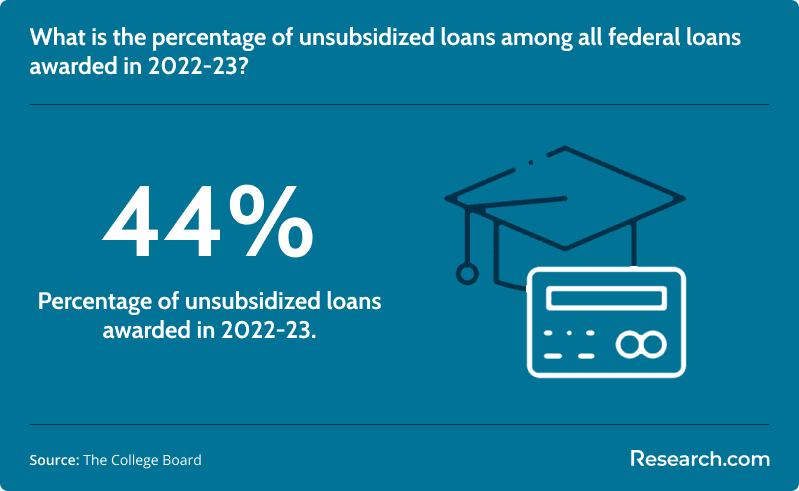
This is the primary federal loan program for law students. It does not require a credit check for eligibility and offers fixed interest rates. However, unlike subsidized loans for undergraduate studies, the U.S. Department of Education does not subsidize the interest on unsubsidized loans while you are in school. Interest accrues from the time the loan is disbursed.
- Minimum credit score: None
- Fixed APR: 5.50-7.05%
- Variable APR: N/A
Federal Grad PLUS Loan
This loan program is for graduate and professional students, including law students. It allows you to borrow a higher amount than the unsubsidized loan program, potentially covering the full cost of attendance minus any other financial aid you receive. However, unlike unsubsidized loans, Grad PLUS Loans require a credit check and generally have higher fixed interest rates.
- Minimum credit score: None
- Fixed APR: 7.54-7.54%1
- Variable APR: N/A
Sallie Mae Law School Loan
This program is no longer offered for new borrowers. However, if you have a Sallie Mae Law School Loan from before it was discontinued, Sallie Mae will continue to service your loan, handling your billing and any questions you have about it.
- Minimum credit score: Mid-600's
- Fixed APR: 4.25-14.47%
- Variable APR: 5.37-14.97%
College Ave Law Student Loan
This private loan is for students enrolled at least half-time in an accredited law school. They consider factors like creditworthiness and may require a cosigner if you have limited credit history. College Ave boasts a user-friendly application process and offers flexible repayment terms.
- Minimum credit score: Mid-600s
- Fixed APR: 4.22-14.49%
- Variable APR: 5.59-14.49%
Ascent Law Student Loan
Similar to College Ave, Ascent offers private loans for law students enrolled at least half-time. They assess creditworthiness and might require a cosigner for borrowers with limited credit history. Ascent stands out for not charging application, origination, or prepayment fees.
- Minimum credit score: Low-Mid 600s
- Fixed APR: 5.04-15.21%
- Variable APR: 7.74-15.85%
Earnest Law School Loan
Another private loan option, Earnest caters to law students enrolled at least half-time. They consider creditworthiness and may require a cosigner. Earnest emphasizes a fast application process, does not charge origination fees, and aims for transparent communication about rates and terms.
- Minimum credit score: 650
- Fixed APR: 4.45-14.90%
- Variable APR: 4.99-15.30%
SoFi Law School Loan
SoFi offers private law school loans for students enrolled at least half-time. Creditworthiness is a factor, and a cosigner might be necessary. SoFi highlights potential member benefits like career coaching and unemployment deferment programs (depending on your membership level).
- Minimum credit score: Mid-600s
- Fixed APR: 4.74-14.83%
- Variable APR: 5.74-15.86%
Brazos Private Student Loan
This private loan option is restricted to Texas residents enrolled at least half-time in a qualifying Texas law school. A good credit history is generally expected, and a cosigner might be required. Brazos offers competitive fixed and variable interest rates. Brazos does not charge application, origination, or prepayment fees.
- Minimum credit score: 680
- Fixed APR: 2.77-6.96%
- Variable APR: 5.00-9.44%
MPOWER Private Student Loan
This private loan caters specifically to international students enrolled at least half-time in accredited U.S. law schools. A cosigner is required, and interest rates can be fixed or variable.
- Minimum credit score: None
- Fixed APR: 12.99-15.99%
- Variable APR: N/A
Here’s What Law Students Have to Say About Their Law School Loans
Getting a federal law school loan allowed me to focus on my studies without constantly worrying about finances. The fixed interest rate and flexible repayment options were lifesavers, making it possible for me to pursue my dream of becoming a lawyer. I couldn't have done it without this support. Emily
Choosing a private loan for law school was the best decision for me. The application process was straightforward, and the customer service was exceptional. Now, with a competitive interest rate, I'm on a clear path to repaying my loan without stress. Daniel
The loan forgiveness program was a game-changer for me. Not only did it make law school affordable, but it also gave me peace of mind knowing that I could work in public service and have my loans forgiven after a set period. This opportunity truly transformed my career prospects. Sarah
What are the different types of law school loans available?
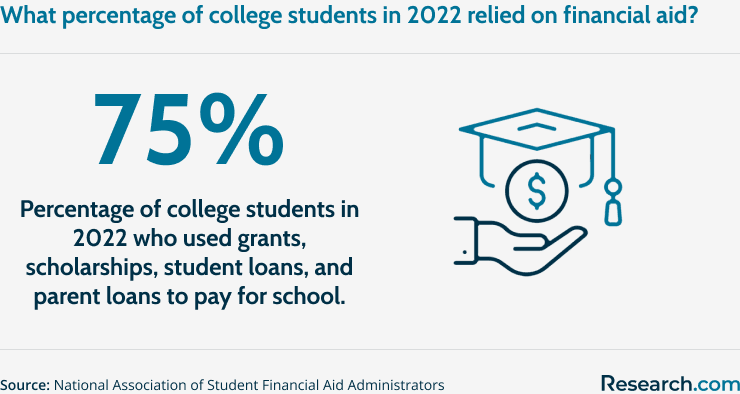
There are two main types of law school loans, federal direct law school loans and private law school loans. In 2022, 75% of college students reported using grants, scholarships, student loans, and/or parent loans to pay for school.
Federal Direct Law School Loans
Federal direct law school loans are offered by the U.S. Department of Education and come with several benefits such as fixed interest rates, income-driven repayment plans, and forgiveness programs.
Types of Federal Direct Law School Loans
- Direct Unsubsidized Loan: This is the most common type and is not based on financial need. You can borrow up to a yearly maximum amount set by the government.
- Direct Grad PLUS Loan: This is a loan for graduate and professional students, including law students. It is based on the difference between your cost of attendance and other financial aid you receive. However, unlike unsubsidized loans, there's a credit check requirement.
Private Law School Loans:
Private law school loans are offered by private lenders like banks and credit unions. Private lenders generally have variable interest rates which can be higher than federal loan rates. This type of student loan does not offer the same borrower benefits as federal loans, such as income-driven repayment or forgiveness programs.
Based on student loan statistics, federal direct law school loans are generally the preferred option due to their lower interest rates and borrower benefits. However, private loans can be an additional resource if you need to cover remaining costs after using up your federal loan eligibility.
How do federal law school loans differ from private loans?
As of the first quarter of 2023, students in the U.S. were expected to repay private student lenders $128.77 billion. Federal and private law school loans differ significantly in several key areas.
Interest Rates
- Federal: Generally have fixed interest rates, meaning the rate you qualify for remains the same throughout the life of the loan. This offers predictability and stability in your repayment plans.
- Private: Typically have variable interest rates, which can fluctuate over time based on market conditions. This can potentially lead to higher payments down the road if interest rates rise.
Repayment Options
- Federal: Offer a variety of flexible repayment plans. These plans often consider your income and allow you to adjust your monthly payments accordingly. Some plans offer forgiveness programs, like Public Service Loan Forgiveness (PSLF), which can discharge the remaining balance after a set number of qualifying payments while working in public service.
- Private: Generally have fewer repayment options and may not offer income-driven repayment plans or loan forgiveness programs.
Eligibility Requirements
- Federal: Eligibility for federal loans is typically based on financial need and requires you to complete the Free Application for Federal Student Aid (FAFSA).
- Private: Private lenders will generally have stricter credit score requirements and may look at your overall financial health more comprehensively.
Borrower Protections
- Federal: Federal loans come with various borrower protections, such as deferment options if you experience financial hardship and forbearance options if you encounter temporary difficulties making payments.
- Private: The borrower protections offered by private lenders can vary significantly. It's crucial to carefully examine the terms of the loan before signing to understand the specific protections available.
Which type of loan should I prioritize for law school?
As of July 2024, federal loan interest rates range from 6.53% to 9.08%. You should prioritize federal law school loans when financing your legal education for the following reasons:
- Lower Interest Rates: Federal loans typically offer significantly lower fixed interest rates compared to private loans. This can save you a substantial amount of money on interest payments over the long term.
- Flexible Repayment Options: Federal loans come with income-driven repayment plans, allowing you to adjust your monthly payments based on your income after graduation. This can be particularly beneficial if you enter a lower-paying public service career path.
- Loan Forgiveness Programs: Federal programs like Public Service Loan Forgiveness (PSLF) can discharge the remaining balance of your loan after a set number of qualifying payments while working in public service. This can be a game-changer if you pursue a career in government, non-profit, or legal aid.
- Borrower Protections: Federal loans offer deferment and forbearance options if you encounter financial hardship or need to temporarily pause your payments. These protections can provide valuable breathing room for your law school debt during challenging times.
What are the pros and cons of direct unsubsidized vs. direct Grad PLUS law school loans?
Although both options are classified as federal loans, interest rates vary between these two types of loans. Aside from graduate study loans, dependent undergraduate students can borrow up to $31,000 for their undergraduate study.
Direct Unsubsidized Loans
Direct unsubsidized loans typically have lower fixed interest rates compared to Direct Grad PLUS Loans. Eligibility is not based on credit score, making them more accessible for students with limited credit history. It also offers income-driven repayment plans and potential forgiveness programs like Public Service Loan Forgiveness (PSLF).
However, direct unsubsidized loans have annual and lifetime borrowing limits, potentially not covering your entire law school cost. It also requires completion of the FAFSA and consideration of financial need during award determination.
Direct Grad PLUS Loans
With Direct Grad PLUS, you can borrow up to the full cost of attendance minus other financial aid received, potentially covering more of your law school expenses. There is no financial need requirement to avail of this loan.
One disadvantage is higher fixed interest rates compared to Direct Unsubsidized Loans.
Also, this requires a credit check, potentially making it harder for students with limited credit history to qualify or secure a favorable rate. Compared to direct unsubsidized loans, this type of law school loan has fewer repayment options and may not qualify for income-driven repayment or forgiveness programs.
What factors should I consider when comparing law school loan lenders?
In 2022-23, 40% of college expenses were covered by parents' income and savings while 39% by free money from grants and scholarships. When comparing law school loan lenders, both federal and private, consider these key factors:
Interest Rates and Fees
This is a crucial factor. Prioritize loans with the lowest possible interest rates, whether fixed or variable. Lower interest rates translate to significant savings over the long term.
Origination fees are one-time fees charged by the lender for processing the loan. Look for lenders with lower or no origination fees. You should also be aware of any additional fees, such as late payment fees or prepayment penalties, associated with the loan.
Repayment Terms
Compare repayment options offered by different lenders. Federal loans generally have more flexible repayment plans, including income-driven repayment and potential forgiveness programs.
A longer loan term typically translates to lower monthly payments, but you will end up paying more interest overall. Choose a term that balances affordability with minimizing interest costs.
Borrower Protections
Deferment and forbearance options allow you to temporarily pause or reduce your loan payments under certain circumstances such as financial hardship or military service.
If you have a cosigner, see if the lender offers cosigner release after a certain period of on-time payments, allowing your cosigner to be released from their obligation.
Lender Reputation and Customer Service
Research the lender's reputation online and read reviews from other borrowers. Consider factors like customer service quality and responsiveness.
Compare the eligibility criteria for different lenders, including credit score requirements and enrollment status.
What are the eligibility criteria for federal law school loans?
Between 2002-03 and 2022-23, the average grant aid per full-time equivalent (FTE) college student grew by 81%. Here are the main eligibility criteria for federal direct law school loans (both Unsubsidized and Grad PLUS):
- U.S. Citizenship or Eligible Non-Citizen: You must be a U.S. citizen, permanent resident, or eligible non-citizen with a valid Social Security number (with some exceptions for specific island territories).
- Valid Social Security Number: A valid Social Security number is required (except for students from the Republic of the Marshall Islands, Federated States of Micronesia, or the Republic of Palau).
- Selective Service Registration: Males aged 18-25 must be registered with Selective Service.
- Enrollment Status: You must be enrolled at least half-time (usually defined as 6 credit hours per semester) in a Juris Doctor (JD) program at a Title IV-eligible law school.
- Satisfactory Academic Progress (SAP): You must maintain satisfactory academic progress towards your degree as defined by your law school.
Additional Requirements for Direct Grad PLUS Loans:
- Credit Check: For Direct Grad PLUS Loans, you will undergo a credit check.
- No Adverse Credit History: If you have an adverse credit history, you may be required to obtain a cosigner or other additional steps to qualify such as credit counseling or repayment plans for existing debts.
How do you apply for federal law school loans?
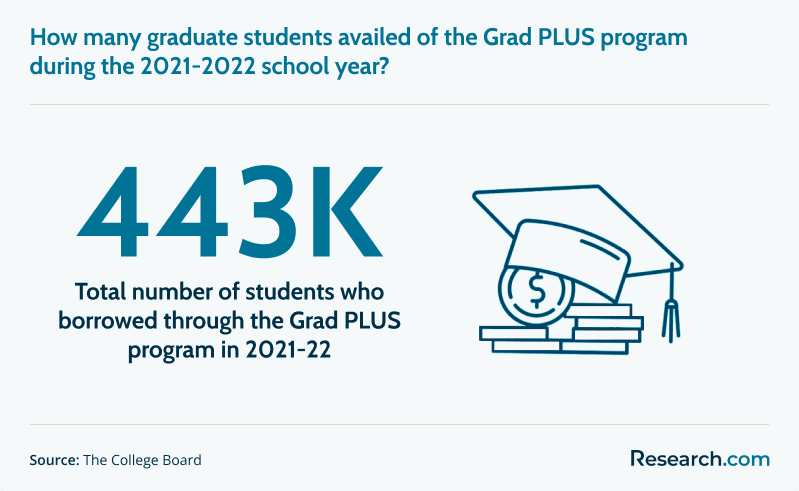
In 2021-22, a total of 443,000 graduate students borrowed through the Grad PLUS program, while 1.4 million borrowed unsubsidized loans. Applying for federal law school loans involves a two-step process:
Step 1: Complete the Free Application for Federal Student Aid (FAFSA)
The FAFSA is the essential first step for accessing federal student aid, including federal law school loans. Here's what you need to do:
- Gather Documents: You will need your Social Security number, tax information, and information on assets and investments.
- Apply Online: Complete the online FAFSA application, ensuring all information is accurate.
- List Your Law School: On the FAFSA, you will have the option to list the law school(s) you are planning to attend. This will allow your financial aid information to be sent directly to those schools.
- Meet Deadlines: Federal deadlines for the FAFSA application typically apply. However, each law school may have its deadlines for receiving your FAFSA information. Submit your FAFSA early to maximize your eligibility for federal aid.
Step 2: Accept Your Loan Offer
- FAFSA Results: After submitting your FAFSA, you will receive a Student Aid Report (SAR) summarizing your eligibility for federal student aid, including estimated loan amounts.
- Law School Financial Aid Package: Your law school's financial aid office will create an aid package detailing your financial aid options, including federal loan amounts.
- Accepting Your Loan: Carefully review the terms and conditions of the loan offer before accepting. Most law schools will have an online system for accepting your loan offer.
What documents are required to apply for private law school loans?
Based on student debt data, nonfederal education loans increased from $10 billion in 2009-10 to about $13 billion in 2021-22. The specific documents required to apply for private law school loans can vary depending on the lender, but here's a general list of what you can expect:
- Government-issued ID: This could be your driver's license or passport.
- Social Security Number: This is used to verify your identity and credit history.
- Proof of Income: This could include pay stubs, W-2 forms, tax returns, or other documents that demonstrate your income and ability to repay the loan.
- Bank Statements: Recent bank statements can provide a snapshot of your current financial situation and spending habits.
- Enrollment Verification: A document from your law school verifying your enrollment status (at least half-time) and program (JD degree).
- Cost of Attendance: Documentation from your law school detailing your tuition, fees, and other school-related expenses. This helps the lender determine your loan amount needs.
Some lenders may also require:
- Resume or Curriculum Vitae: Private lenders may ask for your resume or CV to assess your professional background and career goals.
- Cosigner Information: If you are applying with a cosigner, you will need to provide their documents as well, including proof of income, credit history verification, and contact information.
Key Findings
- In 2022, 75% of college students reported using grants, scholarships, student loans, and/or parent loans to pay for school.
- Aside from graduate study loans, dependent undergraduate students can borrow up to $31,000.
- In 2022-23, 40% of college expenses were covered by parents' income and savings while 39% by free money from grants and scholarships.
- In 2021-22, a total of 443,000 graduate students borrowed through the Grad PLUS program, while 1.4 million borrowed unsubsidized loans.
- Based on student debt data, nonfederal education loans increased from $10 billion in 2009-10 to about $13 billion in 2021-22.
Other Things You Need to Know About Law School Loans
Can you get law school loans without a cosigner?
Qualifying for a law school loan without a cosigner is possible, but it can be more challenging. Here's a breakdown of your options:
Federal Direct Law School Loans:
You don't necessarily need a cosigner for federal Direct Unsubsidized and Grad PLUS Loans. However, for Direct Grad PLUS Loans, if you have an adverse credit history, you may be required to obtain a cosigner or complete additional steps to qualify.
Private Law School Loans:
Private lenders typically place more emphasis on creditworthiness and may require a cosigner for borrowers with limited credit history or lower income. However, some private lenders offer loans without a cosigner, especially for established borrowers with strong credit scores and income.
Alternatives to a Cosigner:
Some private lenders offer alternative ways to qualify without a cosigner, such as using a strong co-borrower or offering smaller loan amounts for those with limited credit history. In rare cases, a lender might allow you to use an asset like a car as collateral to secure the loan. However, this comes with the risk of losing the asset if you default on the loan.
How can I minimize the amount of law school loans I need to take out?
Minimizing law school loans requires a multi-pronged approach. Prioritize completing the FAFSA each year to access federal Direct Unsubsidized and Grad PLUS Loans. These offer lower interest rates and better borrower protections compared to private loans.
Diligently research scholarships and grants specifically offered for law students. Many organizations, law schools themselves, and government programs offer financial aid opportunities based on merit, need, or specific demographics.
Consider the cost of attendance when choosing a law school. A less expensive law school can significantly reduce your overall loan burden. Only consider private loans as a last resort. If you do need private loans, thoroughly compare interest rates and terms from different lenders. Choose the loan with the lowest possible interest rate to minimize long-term debt.
What are the common mistakes to avoid when applying for law school loans?
Here are some common mistakes to avoid when applying for law school loans:
Borrowing More Than You Need: Don't take out more loans than absolutely necessary for tuition, fees, and essential living expenses. Factor in additional expenses beyond tuition, like books, bar exam prep courses, and living costs. This will help you determine the true amount of loan needed.
Not Prioritizing Federal Loans: Maximize federal loans before considering private loans due to their significant advantages. Federal loans typically have lower interest rates and offer income-driven repayment options and potential loan forgiveness programs.
Not Understanding Loan Terms: Carefully review all loan terms and conditions before signing. This includes interest rates, repayment schedules, fees, and any potential penalties for late payments or default.
Neglecting Cosigner Considerations: If you need a cosigner, understand that you're putting their creditworthiness at risk if you default on the loan. Choose a cosigner who understands the commitment and has a strong financial standing.
Are there specific law school loans for part-time students?
Federal Direct Law School Loans (both Unsubsidized and Grad PLUS) are generally available to both full-time and part-time law students, as long as they meet the eligibility requirements.
Here's what you need to keep in mind for part-time law students and federal loans:
- Enrollment Status: You must be enrolled at least half-time (usually defined as 6 credit hours per semester) to be eligible for federal loans.
- Loan Amounts: The loan amounts for part-time students are typically prorated based on your enrollment status. So, if you're enrolled in half the number of credit hours as a full-time student, you'll likely be eligible for half the loan amount.
However, there are some limitations to consider for part-time students:
- Federal Work-Study: This program is typically geared towards full-time students, so part-time students might have limited availability.
- Loan Repayment: While federal loans offer income-driven repayment options, the minimum payment amount can still be a challenge on a part-time income.
References:
- American Bar Association. (n.d.). Law student debt survey.
- Bankrate. (n.d.). Average law school debt: Private.
- National Association of State Student Loan Administrators (2023). 2023 National Profile.
- Sallie Mae. (2022). How America pays for college.
- The College Board. (2023). Trends in College Pricing and Student Aid 2023.
- Trellis Company. (2023). SFWS Aggregate Report, Fall 2022.
Other Things You Should Know About
Yes, student loans for law school typically cover both tuition and reasonable living expenses such as housing, food, and transportation. Federal loans and many private loan programs allow you to borrow an amount that includes estimated living costs, but it is important to only borrow what you need to avoid unnecessary debt.
The best law school loans in March 2027 include Federal Direct Unsubsidized Loans and Grad PLUS Loans, as well as private lenders like SoFi and CommonBond, which offer competitive interest rates and flexible repayment options suitable for law students.
You may be eligible to deduct interest paid on your law school student loans on your federal income tax return, up to a certain limit. This deduction applies to qualified student loans and can reduce your taxable income, but it is subject to income phase-outs based on your filing status and adjusted gross income.
In some cases, you may qualify for loan discharge if you withdraw or fail to complete law school due to total and permanent disability or school closure. Federal loans offer specific discharge provisions, but private loans often have stricter terms that do not include discharge for withdrawal, making it important to understand your loan's policies before borrowing.