MEFA Student Loans Review in 2027

Student Finance & Loan Expert
Many prospective graduate students face uncertainty when deciding how to finance their advanced education, especially if their undergraduate degree is in an unrelated field. Navigating student loans can be confusing, with concerns about eligibility, interest rates, and repayment options. MEFA student loans offer one possible solution, but understanding their terms and benefits is crucial to making an informed choice.
Navigating the world of student loans can be a daunting task, especially with the multitude of options available to finance higher education. Among these options, MEFA (Massachusetts Educational Financing Authority) student loans stand out as a reliable choice for many students and their families. Designed to bridge the gap between financial aid and the actual cost of education, MEFA loans offer competitive rates and flexible repayment plans.
This guide aims to provide a comprehensive guide to MEFA student loans, helping readers understand how they work and how to navigate the application and repayment processes. Additionally, it will offer insights into the benefits and potential drawbacks of MEFA student loans, ensuring that readers can weigh their options carefully and choose the best financial solution for their needs.
Key things you should know about MEFA student loans
- Eligibility and Accessibility: MEFA student loans are available to both undergraduate and graduate students attending accredited colleges and universities nationwide, not limited to Massachusetts residents.
- Flexible Repayment Options: MEFA offers various repayment plans, including immediate repayment, interest-only payments while in school, and deferred repayment until after graduation, accommodating different financial situations.
- Competitive Interest Rates: Borrowers can choose between fixed and variable interest rates, which are determined based on creditworthiness and the selected repayment plan, providing options to manage costs effectively.
- What are MEFA student loans and how do they work?
- Who is eligible for MEFA student loans?
- What are the interest rates for MEFA student loans?
- How do MEFA student loans compare to federal student loans?
- How do I apply for a MEFA student loan?
- What are the pros and cons of MEFA student loans?
- What are the repayment options for MEFA student loans?
- Can I refinance my MEFA student loan to get a lower interest rate?
- Are MEFA student loans better than private bank loans?
- Other things you should know about MEFA student loans
What are MEFA student loans and how do they work?
MEFA (Massachusetts Educational Financing Authority) student loans are private education loans designed to help students and their families finance higher education costs. Here is an overview of how they work:
- Application: Students and their families apply for the loan by submitting the necessary documents and financial information. A cosigner may be required to enhance approval chances.
- Approval: MEFA reviews the application, checks credit scores, and evaluates the applicant’s financial situation. Considering the percent of college graduates by race, MEFA aims to provide equitable loan opportunities. If approved, the loan terms and interest rate are set.
- Disbursement: Once the loan is approved, the funds are disbursed directly to the educational institution to cover tuition and other expenses.
- Repayment: Depending on the repayment plan selected, the borrower either starts making payments immediately, pays interest only while in school, or defers all payments until after graduation. Monthly payments are made according to the agreed-upon schedule.
- Loan Management: Throughout the life of the loan, MEFA provides support and resources to help borrowers manage their payments and explore any available options for deferment or forbearance in case of financial hardship.
In other words, MEFA provides loans to cover the full cost of education, including tuition, fees, room and board, and other related expenses. These loans are available to undergraduate and graduate students attending accredited colleges and universities, and they are not limited to Massachusetts residents—students from other states can also apply. According to recent data, the average federal student loan debt balance is $37,853, while the total average balance, including private loan debt, may be as high as $40,681. This highlights the critical need for accessible and flexible loan options like those offered by MEFA, which help students manage their educational expenses. The chart below shows a comparison of the average federal student loan debt and the total average student loan:
Who is eligible for MEFA student loans?
Generally, eligibility requirements for MEFA student loans include:
- U.S. Citizens or Permanent Residents: Applicants must be U.S. citizens or permanent residents to qualify.
- Enrollment in Accredited Institutions: Students must be enrolled at least half-time in an accredited college or university.
- Undergraduate and Graduate Students: Both undergraduate and graduate students are eligible to apply for MEFA student loans.
- Creditworthy Borrower or Cosigner: Applicants typically need to demonstrate creditworthiness, either through their own credit history or by securing a creditworthy cosigner.
- Not Limited to Massachusetts Residents: MEFA student loans are available to students from any state, not just Massachusetts.
What are the interest rates for MEFA student loans?
MEFA student loans offer competitive interest rates that vary based on the borrower's credit profile and the chosen repayment plan. They provide both fixed and variable interest rate options, which can help students manage their education expenses effectively.
- Fixed Interest Rates: These rates remain constant throughout the life of the loan, providing predictable monthly payments.
- Variable Interest Rates: These rates can change periodically based on market conditions, which may result in fluctuating monthly payments.
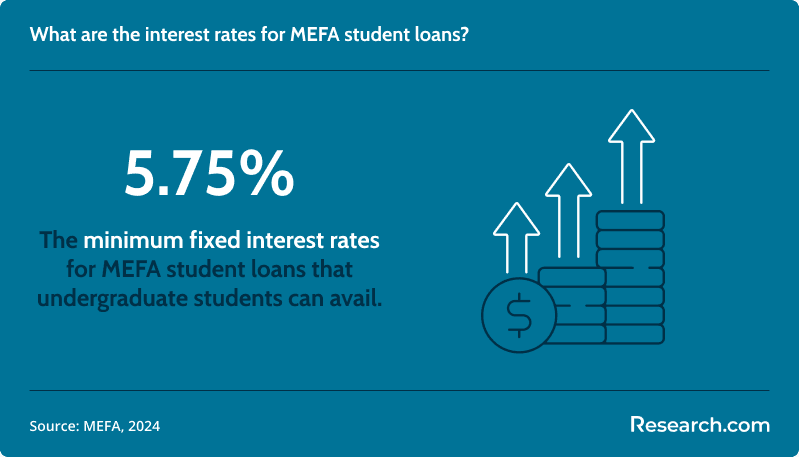
According to our research, MEFA offers a fixed interest rate for undergraduate loans, which is around 5.75% to 8.95%. This comes in multiple repayment options with no origination or application fees. The exact rates are determined during the application process and are influenced by factors such as creditworthiness, the presence of a cosigner, and the specific loan terms selected. Considering the differences in college cost by country, MEFA's flexible interest rates and repayment options are designed to meet the needs of students facing varying financial challenges.
How do MEFA student loans compare to federal student loans?
MEFA student loans and federal student loans each offer unique benefits and considerations. Here is a comparison of the two:
Interest Rates
- MEFA Student Loans: Offer both fixed and variable interest rates based on creditworthiness and chosen repayment plan. Rates can be competitive but may vary.
- Federal Student Loans: Fixed interest rates set by Congress are often lower than private loans, especially for undergraduate students.
Eligibility
- MEFA Student Loans: Available to both undergraduate and graduate students attending accredited institutions. A credit check is required, and a cosigner may be needed for those with limited credit history.
- Federal Student Loans: These are available to all students regardless of credit history, with no need for a cosigner. Eligibility is determined through the FAFSA.
Repayment Options
- MEFA Student Loans: Various repayment plans, including immediate repayment, interest-only payments while in school, and deferred repayment until after graduation.
- Federal Student Loans: Multiple repayment plans, including standard, graduated, and several income-driven options. Offers deferment and forbearance options, and potential loan forgiveness programs.
Loan Limits
- MEFA Student Loans: Can cover the full cost of education, including tuition, fees, room and board, minus any other financial aid received.
- Federal Student Loans: Have annual and aggregate loan limits that may not cover the full cost of education. Limits vary by year in school and dependency status.
Forgiveness and Assistance Programs
- MEFA Student Loans: Not eligible for federal loan forgiveness programs.
- Federal Student Loans: Eligible for various forgiveness programs, such as Public Service Loan Forgiveness (PSLF) and Teacher Loan Forgiveness.
According to statistics, in the first quarter of 2024, 91.2% of all student loan debt was federal, and only 8.84% were from private loans. This significant disparity underscores the reliance on federal student loans by the majority of borrowers due to their more favorable terms and protections. However, private loans, such as those offered by MEFA, still play a crucial role in filling the financial gaps that federal loans may not cover, particularly for students who face higher education costs beyond federal loan limits. The chart below shows the distribution between the total federal and private student loans:
How do I apply for a MEFA student loan?
Here is the process for applying for a MEFA student loan:
- Gather Necessary Information: Collect all required documents, including personal identification, Social Security number, financial information, and details about your school and program of study. If you need a cosigner, gather their information as well.
- Visit the MEFA Website: Go to the official MEFA website and navigate to the student loans section. Here, you will find detailed information about the loan options available.
- Complete the Online Application: Fill out the online application form with accurate and up-to-date information. This will include personal details, school information, and financial data. If a cosigner is required, they will also need to complete their portion of the application.
- Submit Required Documents: Upload or send any required supporting documents as specified by MEFA. This may include proof of enrollment, financial statements, and identification documents.
- Credit Check and Approval: MEFA will conduct a credit check to determine your creditworthiness and that of your cosigner if applicable. The approval decision will be based on this credit assessment.
- Review Loan Terms: If approved, you will receive details about the loan terms, including the interest rate, repayment options, and any associated fees. Carefully review these terms to ensure they meet your financial needs.
- Accept the Loan: Once you agree to the loan terms, formally accept the loan. This may involve signing a promissory note and agreeing to the repayment schedule.
- Disbursement of Funds: After acceptance, the loan funds will be disbursed directly to your educational institution to cover your tuition, fees, and other related expenses.
What are the pros and cons of MEFA student loans?
Pros
- Competitive Interest Rates: MEFA offers both fixed and variable interest rates, which can be competitive and often lower than other private loan options, depending on the borrower's credit profile.
- Flexible Repayment Options: MEFA provides various repayment plans, including immediate repayment, interest-only payments while in school, and deferred repayment until after graduation, catering to different financial situations and needs.
- No Fees: MEFA student loans typically come with no application, origination, or prepayment fees, which can help reduce the overall cost of borrowing. Considering the rise in historical tuition rates by college, the absence of these fees makes MEFA loans a more attractive and affordable option for financing higher education.
- Availability to All U.S. Students: While MEFA is a Massachusetts-based organization, their student loans are available to students nationwide, providing broader access to their competitive loan products.
- High Loan Limits: MEFA loans can cover up to the full cost of education, including tuition, fees, room and board, and other related expenses, making them a comprehensive option for financing higher education.
Cons
- Creditworthiness Requirement: MEFA loans require a credit check, and applicants with limited or poor credit history may need a cosigner to qualify, which can be a barrier for some students.
- Not Eligible for Federal Benefits: Unlike federal student loans, MEFA loans are not eligible for federal loan forgiveness programs, income-driven repayment plans, or other federal borrower protections.
- Variable Rates Can Increase: While variable interest rates may start lower, they can increase over time based on market conditions, potentially leading to higher monthly payments in the future.
- No Federal Subsidy: MEFA loans do not offer the interest subsidy that some federal loans do, where the government pays the interest while the student is in school or during deferment periods.
- Repayment Flexibility: Although MEFA offers flexible repayment options, they may not be as comprehensive or generous as the federal repayment plans that can adjust based on income and family size.
What are the repayment options for MEFA student loans?
Here are the primary repayment options available:
- Immediate Repayment: Borrowers start making full principal and interest payments shortly after the loan is disbursed. This option results in a lower overall cost due to the immediate reduction of principal but requires immediate financial ability to make payments, which may be challenging for students still in school. For those wondering how to pay for MBA programs and other costs related to education, immediate repayment plans can be a practical option if they have the financial resources to manage the payments while studying.
- Interest-Only Repayment: Borrowers make interest-only payments while in school and for a short period after graduation, typically six months. This option keeps monthly payments lower during school and reduces the amount of interest that accrues, but the principal balance remains unchanged until full repayment begins, potentially increasing the overall cost.
- Deferred Repayment: Borrowers defer all payments until six months after graduation or dropping below half-time enrollment. This option provides financial relief during the study period by postponing payments, but interest accrues during deferment, increasing the total amount to be repaid.
- Fixed Repayment: Borrowers make small, fixed monthly payments while in school and for six months after graduation, then transition to full principal and interest payments. This option offers a manageable payment structure during school with a smoother transition to full payments, but interest accrues on the unpaid principal balance, potentially increasing the overall cost.
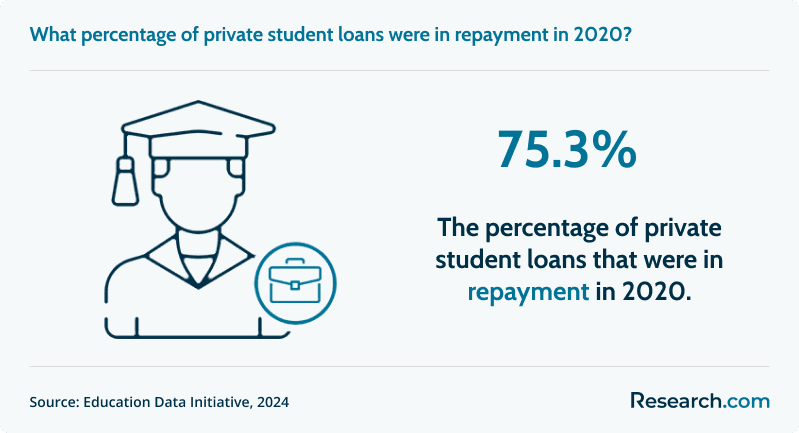
In 2020, around 75.3% of private student loans were in repayment. This high percentage underscores the significant number of borrowers actively managing their private loan obligations. As many students complete their education and enter the workforce, they begin repaying their loans, reflecting the critical role that private loans play in financing higher education. With various repayment options available, such as those offered by MEFA, borrowers can choose plans that best fit their financial situation and career trajectory, helping to manage their debt effectively and achieve financial stability.
Can I refinance my MEFA student loan to get a lower interest rate?
Yes, you can refinance your MEFA student loan to potentially get a lower interest rate. Refinancing involves taking out a new loan to pay off your existing MEFA loan, often with better terms and a lower interest rate. Given the high average private college tuition, refinancing can be an effective way to manage your educational debt more affordably. Be sure to compare rates and terms to ensure refinancing will benefit you.
Refinancing can also help you consolidate multiple loans into a single loan with one monthly payment, making it easier to manage your finances. Additionally, if you have improved your credit score or financial situation since taking out the original loan, you might qualify for a lower interest rate, which can save you money over the life of the loan.
Are MEFA student loans better than private bank loans?
Whether MEFA student loans are better than private bank loans depends on individual circumstances and preferences. Here is a comparison to help you evaluate which might be more suitable for you:
MEFA Student Loans
- Interest Rates: Often competitive, with both fixed and variable rates. Rates may be lower compared to some private bank loans, especially if you have a strong credit profile.
- Repayment Options: Offers flexible repayment plans, including immediate, interest-only, and deferred repayment options. This flexibility can accommodate different financial situations.
- Fees: Typically no application, origination, or prepayment fees.
- Eligibility: Available to a broad range of students nationwide, not limited to Massachusetts residents. Creditworthiness is required, and a cosigner may be needed.
Private Bank Loans
- Interest Rates: Can vary widely based on the lender, credit score, and market conditions. Some banks offer competitive rates, but they can also be higher than MEFA’s rates.
- Repayment Options: Repayment plans and flexibility vary by lender. Some lenders may also require a cover letter for scholarship applications to provide additional context about the borrower's financial needs and educational goals.
- Fees: These may include application, origination, or prepayment fees, which can add to the overall cost of borrowing.
- Eligibility: Generally requires a strong credit history or a creditworthy cosigner. Loan terms and conditions depend on the individual bank’s policies.
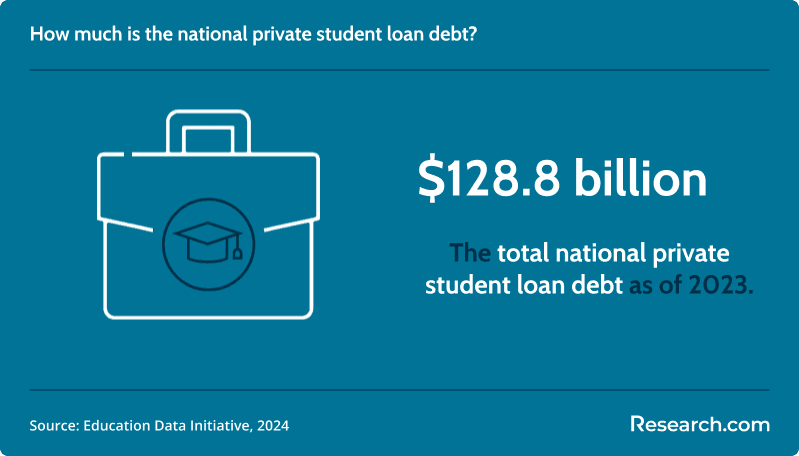
In 2023, the total national private student loan balance was $128.8 billion, making it making it a significant portion of the overall student loan debt landscape. This substantial figure highlights the growing reliance on private loans to cover educational costs, often bridging the gap between federal loan limits and the total cost of education. With such a large amount of debt carried by borrowers, comparing options like MEFA student loans and private bank loans becomes crucial.
Here's what graduates say about MEFA student loans
"MEFA student loans made it possible for me to afford my education without the stress of overwhelming debt. Their competitive interest rates and flexible repayment options gave me peace of mind during my studies and beyond. I highly recommend MEFA for anyone seeking reliable financial support." - Sarah
"Thanks to MEFA student loans, I could focus on my classes rather than worrying about tuition fees. The application process was straightforward, and their customer service was incredibly helpful. MEFA truly understands the needs of students." - Jason
"MEFA’s deferred repayment option was a lifesaver, allowing me to start my career before beginning to repay my loan. The manageable interest rates and transparent terms made it easier to plan my finances post-graduation. I'm grateful for MEFA's support." - Remy
Key Findings
- The total average balance for private student loan debt is around $40,681.
- MEFA offers a fixed interest rate for undergraduate students of around 5.75% to 8.95%.
- MEFA provides a variety of repayment plans, including immediate, interest-only, and deferred repayment.
- 91.2% of all student loan debt was federal, and only 8.84% were from private loans during the first quarter of 2024.
- MEFA student loans typically have no application, origination, or prepayment fees, which helps reduce the overall cost of borrowing.
- In 2020, around 75.3% of private student loans were in repayment
- The total national private student loan balance in 2023 is $128.8 billion.
Other things you should know about MEFA student loans
Are there any fees associated with MEFA student loans?
MEFA student loans typically have no fees associated with them, including application, origination, or prepayment fees. This absence of fees can significantly reduce the overall cost of borrowing, making MEFA loans an attractive option for students looking to finance their education without incurring additional costs. By not charging these common fees, MEFA provides a more straightforward and affordable loan option compared to many private lenders.
How long does it take to get approved for a MEFA student loan?
The approval process for an MEFA student loan generally takes a few weeks. After submitting the application and all required documentation, MEFA conducts a credit check and reviews the application details. If a cosigner is needed, their information will also be reviewed. Once the review is complete and the loan is approved, the borrower will be notified and provided with the loan terms.
Can international students apply for MEFA student loans?
International students are not eligible to apply for MEFA student loans. MEFA student loans are primarily available to U.S. citizens and permanent residents. However, international students may need to explore other financing options, such as private lenders that specialize in loans for international students or seek a U.S. cosigner to qualify for other loan programs.
Resources:
- Education Data Initiative. (2024). Student Loan Debt Statistics. https://educationdata.org/student-loan-debt-statistics
- MEFA: Student Loans and Guidance on Ways to Pay for College. (2024). Private Student Loans from MEFA. https://www.mefa.org/private-student-loans
Other Things You Should Know About
In 2027, MEFA student loans can be used for both undergraduate and graduate programs. They cater to a range of degrees, including professional programs, making them versatile for a variety of educational pursuits.
Most MEFA student loans require a co-signer, usually a creditworthy adult such as a parent or guardian, to help secure the loan. However, some borrowers with strong credit profiles may qualify for loans without a co-signer, though this is less common.
Beyond standard forbearance options, MEFA provides some borrower support resources but does not have extensive loan forgiveness programs like federal loans. Borrowers experiencing financial hardship should contact MEFA directly to discuss possible alternatives, including temporary payment relief options.
Once a MEFA loan is approved and all documents are submitted, funds are typically disbursed directly to the school before the start of the academic term. The timing can vary slightly depending on the institution's processing times, but it generally takes a few weeks from loan approval to actual disbursement.