Best Student Loans for Community College in 2027

Student Finance & Loan Expert
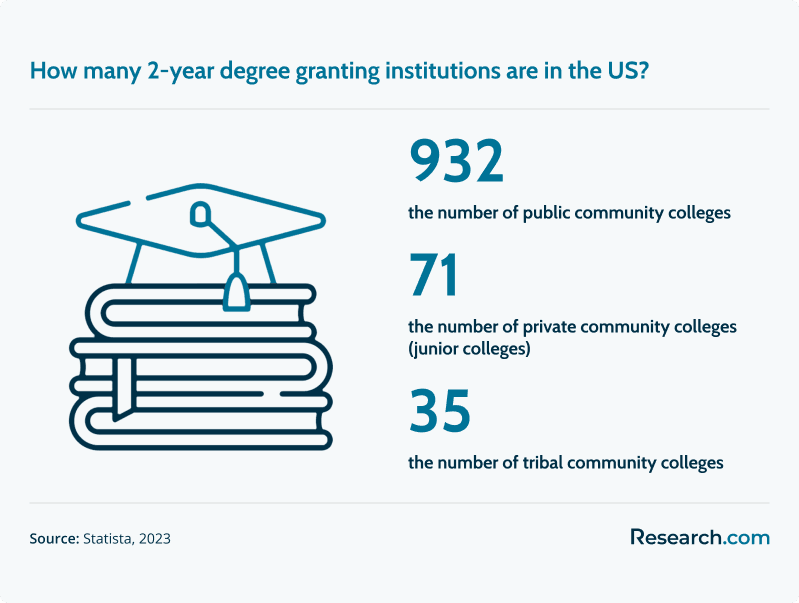
Did you know there are over 1,000 community colleges in the US, offering a fantastic starting point for your higher education journey? Whether you want to jumpstart your career or transfer to a four-year program, community college can be a smart option. But navigating the financial side of things can feel overwhelming.
Using my decades of experience in academic and career planning, I put together this guide, to discuss your options for community college student loans in 2027. With this data, you can make informed decisions about financing your education.
Key Things You Should Know About the Best Student Loans for Community College
- While tuition is the primary expense, student loans can also help cover essential costs like books, supplies, housing, and living expenses. This is especially important at private community colleges, where the data shows a higher percentage of students (73% for-profit, 74% non-profit) rely on loans compared to public institutions (15%).
- For the 2024-2025 school year, the interest rate for federal direct undergraduate loans will be 6.53%, while the rate moves up to 8.08% for graduate students.
- Meanwhile, interest rates for community college student loans range from 4.10% to nearly 15.70%.
- In 2023, students received a total of $98.2 billion from federal and nonfederal loans. Meanwhile, students got a total of $157.2 billion in state, institutional, and private and employer grants, the federal work-study program, and education tax benefits.
- According to 2023 data, 43% of borrowers owed between $10,000 to $39,999 in federal loan debt.
- Best Student Loans for Community College in 2027
- What are federal student loans for community college?
- How do you apply for federal student loans for community college?
- What are private student loans for community college?
- How do you apply for private student loans for community college?
- How can you improve your chances of getting approved for a private student loan for community college?
- What are the differences between federal and private student loans for community college?
- What are alternative funding options for community college?
- What types of scholarships and grants are available for community college students?
- Other Things You Should Know About the Best Student Loans for Community College
Best Student Loans for Community College in 2027
1. Ascent
Ascent caters to students seeking private loans with unique features. In addition to standard undergraduate, graduate, and medical school loans, Ascent offers an Outcomes-Based Loan program for eligible college juniors and seniors. This program is an alternative to traditional credit checks and cosigner requirements, focusing instead on a student's academic performance through factors like school, major, and GPA. Ascent also provides a Progressive Repayment option for lower initial payments that gradually increase over time.
- Loan Amounts: Loan amounts range from a minimum of $2,001 to cover the annual cost of attendance at your community college, with lifetime limits of $200,000 for undergraduate students and $400,000 for graduate students.
- Eligibility: This program requires US citizenship/DACA status, half-time enrollment at a qualified school, and meeting financial/creditworthiness standards. International students may qualify with a cosigner meeting program requirements. Applicants not meeting these standards may still be considered with a qualified cosigner.
- Minimum Credit Score: Undisclosed
- Minimum Income: Undisclosed
- Loan Terms: 5, 7, 10, 12, 15, or 20 years
- Interest Rates: Fixed or variable
- Consigner Release: 12 months
2. Citizens
Citizens Bank offers private student loans and community college student loans for undergraduates, graduates, and parents. A key feature is multi-year approval. Once qualified, students can borrow for future years with a simplified process and a soft credit check. Borrowers can postpone payments while enrolled and for six months after graduation. Additionally, automatic payments qualify for a 0.25% interest rate reduction, and existing Citizens account holders (US cosigner included) can receive a loyalty discount of another 0.25%.
- Loan Amounts: Loan limits vary depending on the degree program. For undergraduate and graduate degrees, the minimum is $1,000 and the maximum is $150,000. MBA and law programs have a higher maximum of $250,000. Healthcare professions offer two maximum limits: $180,000 or $350,000, depending on the specific degree.
- Eligibility: This program requires US citizenship/permanent residency, half-time enrollment in a qualified degree program, and meeting financial/creditworthiness standards. International students may qualify with a US cosigner meeting the program requirements.
- Minimum Credit Score: 720
- Minimum Income: Undisclosed
- Loan Terms: 5, 10, or 15 years (student loans); 5 or 10 years (parent loans)
- Interest Rates: Fixed or variable
- Consigner Release: 36 months
3. College Ave
College Ave caters to a wide range of undergraduate degrees with in-school loans and offers various repayment options. A unique feature is their extended eight-year repayment term. Additionally, graduate, dental, and medical students benefit from longer grace periods. While obtaining multi-year approval with a cosigner is generally easy for undergraduates (90% approval rate), removing a cosigner later can be challenging. College Ave requires completing at least half of the repayment term, which is stricter than some lenders allowing cosigner release after one or two years of on-time payments.
- Loan Amounts: Loan amounts start at $1,000 and can go up to cover the annual cost of attendance at your community college. However, the maximum amount you can borrow over your lifetime depends on your chosen degree program and your creditworthiness.
- Eligibility: This program requires US citizenship/permanent residency and enrollment at a qualified institution. International students with a Social Security number can qualify with a US cosigner meeting program requirements. Applicants not meeting these standards may still be considered with a qualified US cosigner.
- Minimum Credit Score: Undisclosed
- Minimum Income: Undisclosed
- Loan Terms: 5, 8, 10, or 15 years; Select tracks (students taking law, dental, medical, and other health programs can have up to 20 years)
- Interest Rates: Fixed or variable
- Consigner Release: After half of the scheduled repayment period has elapsed
4. Custom Choice
Custom Choice, powered by Cognition Financial, offers community college student loans for undergraduates and graduates. Minimum loans start at $1,000, with annual borrowing limits up to $99,999 and a total lifetime maximum of $180,000. Cosigners can potentially be released after 36 on-time monthly payments. Setting up automatic payments reduces the interest rate by 0.25%, and graduates can receive a 2% principal balance reduction. Custom Choice boasts no application, origination, prepayment, or late fees. They also offer forbearance options for qualified borrowers facing unemployment or natural disasters.
- Loan Amounts: Loan amounts range from $1,000 to a maximum of $99,999 per year, with a total lifetime limit of $180,000.
- Eligibility: US citizenship/permanent residency and enrollment at a qualified institution are required. Applicants must meet Custom Choice's income and credit standards or apply with a qualified US cosigner. Eligible non-citizens (e.g., DACA recipients) can also qualify with a US cosigner meeting program requirements.
- Minimum Credit Score: Undisclosed
- Minimum Income: Undisclosed
- Loan Terms: 7, 10, or 15 years
- Interest Rates: Fixed or variable
- Consigner Release: 36 months
5. INvestEd
INvestED offers private loans to qualified borrowers who meet income and creditworthiness standards, or who utilize a cosigner that does. Loan amounts start at $1,001 and can reach the full cost of attendance minus any other financial aid received by the student. While prequalification with a soft credit check isn't available, INvested provides clear eligibility information to help borrowers decide if applying is right for them. A unique benefit is cosigner release after only 12 on-time monthly payments, making it easier to remove the cosigner from the loan obligation than many other lenders. This program, however, is exclusive to Indiana residents and their parents.
- Loan Amounts: Minimum loans start at $1,001 and can go up to the maximum certified cost of attendance for your chosen community college program, after subtracting any other financial aid you receive.
- Eligibility: Indiana residency is mandatory. Borrowers must meet credit and income standards, including a FICO score of at least 670, a debt-to-income ratio below 30% (or a minimum monthly income of $3,333), continuous employment exceeding two years, and a clear credit history without major collections or defaults. Applicants who fall short of these requirements can apply with a cosigner.
- Minimum Credit Score: 670
- Minimum Income: Undisclosed
- Loan Terms: 5, 10, or 15 years
- Interest Rates: Fixed or variable
- Consigner Release: 12 months
6. MEFA
Massachusetts Educational Financing Authority (MEFA) is a non-profit lender offers fixed-rate community college student loans to students across the nation. MEFA loans may have lower interest rates compared to other private lenders. While using a cosigner can improve your chances of getting the best rate, cosigner release is difficult. Only one repayment plan allows it, and it requires four years of consecutive on-time payments on top of meeting additional credit and income standards.
- Loan Amounts: Minimum loans start at $1,500 and can go up to the maximum certified cost of attendance for your chosen community college program, after subtracting any other financial aid you receive.
- Eligibility: US citizenship/permanent residency, half-time enrollment in a qualified degree-granting program at a non-profit institution, and maintaining satisfactory academic progress are required. Applicants must have a clean credit history with no defaults on educational loans or bankruptcies/foreclosures within the past 60 months. Those who fall short of credit/income requirements can apply with a cosigner.
- Minimum Credit Score: 670
- Minimum Income: Undisclosed
- Loan Terms: 10 or 15 years
- Interest Rates: Fixed
- Consigner Release: 48 months
7. Sallie Mae
Sallie Mae's Smart Option Student Loan caters to undergraduates seeking private loans. Borrowers can apply once a year to cover the full annual cost of attendance certified by their school. The program offers streamlined reapproval for future years, and using a cosigner can potentially qualify you for a more favorable interest rate. Sallie Mae also offers a variety of graduate loan options for specialized programs like MBA, law, medicine, and healthcare professions.
- Loan Amounts: Minimum loans start at $1,000 and can go up to the maximum certified cost of attendance for your chosen community college program, after subtracting any other financial aid you receive.
- Eligibility: US citizenship/permanent residency and enrollment in a qualified program are required. Non-citizens can qualify with a US cosigner meeting program requirements.
- Minimum Credit Score: Undisclosed
- Minimum Income: Undisclosed
- Loan Terms: The Smart Option Student Loan offers repayment terms ranging from 10 to 15 years. Law school, MBA, and other graduate school loans have a standard 15-year repayment term, while medical school loans can be repaid over 20 years.
- Interest Rates: Fixed or variable
- Consigner Release: 12 months
Here's What Graduates Have to Say About Getting Student Loans for Community College
"Juggling work and childcare left little room for college savings. A student loan for community college allowed me to pursue my nursing degree without putting extra strain on my family. The flexible course schedule at community college fit my busy life, and the lower tuition made the loan amount manageable. Today, with a rewarding career and financial stability, I'm grateful for the opportunity a student loan for community college gave me." - Jackson
"My high school grades weren't great, and a four-year university felt overwhelming. A student loan for community college gave me a second chance. The smaller class sizes and personalized attention helped me build confidence and excel academically. Now, transferring to a prestigious university with a strong scholarship feels amazing, and it all started with a community college education funded by my student loan." - Lynn
"Fresh out of high school, I wasn't sure what career path to choose. Using a student loan for community college allowed me to explore different courses and find my passion for graphic design. The loan covered tuition and software I needed, and the community college offered industry-standard programs at a fraction of the cost. Now, debt-free and with a thriving freelance career, I wouldn't trade my community college experience for anything." - Rain
What are federal student loans for community college?
Federal student loans are a great option to finance your community college education. They are awarded based on financial need and typically offer lower interest rates and more flexible repayment options than private loans. These benefits can help you manage your debt burden after graduation.
Federal community college student loans include Direct Subsidized Loans (for undergraduates with demonstrated financial need) and Direct Unsubsidized Loans (available to all undergraduate and graduate students, regardless of need).
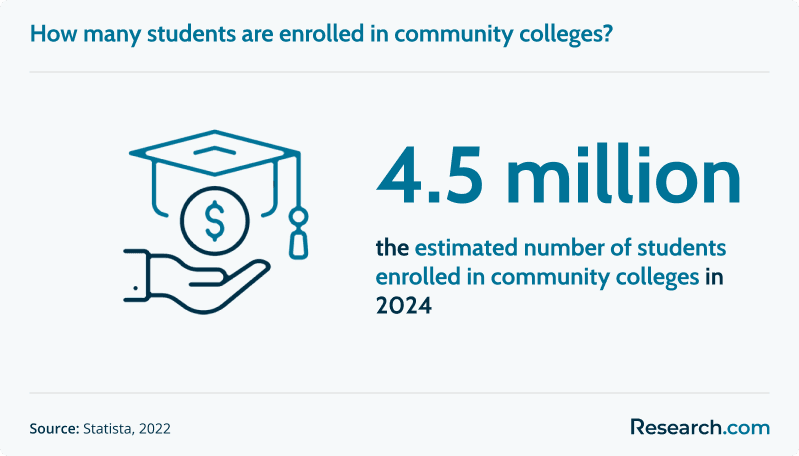
Latest estimates show that in 2024, there will be about 4.5 million students enrolled in community colleges in the US. More than 10% have student loans.
How do you apply for federal student loans for community college?
Applying for community college student loans through federal aid is a straightforward process:
- Complete the Free Application for Federal Student Aid (FAFSA). What do you need for the FAFSA? This is the primary application for federal student aid, including grants and loans. You can submit your FAFSA electronically at fafsa.gov starting on October 1st of each year.
- List your schools. Be sure to include the community college you plan to attend on your FAFSA application.
- Review your Student Aid Report (SAR). Once you submit your FFSA, you'll receive a Student Aid Report (SAR) that summarizes the information you provided. Carefully review this document and make any necessary corrections.
- Follow your school's instructions. Your community college will receive your FAFSA data and may have additional steps for accepting your federal student loans. Contact your school's financial aid office for specific instructions.
In SY 2022/23, the total amount of student loans in the US reached $98.2 billion. See the chart below for historical data.
What are private student loans for community college?
Private community college student loans can be an option for community college students who need additional funding after exhausting federal loan options or grant aid. Unlike federal loans, which are awarded based on financial need, private loans are based on your creditworthiness and cosigner strength (if applicable). This means applicants with a strong credit history or a qualified cosigner are more likely to qualify.
Here are some common features of private student loans:
- Interest Rates: Many private student loans have variable interest rates, which means the interest rate can fluctuate based on market conditions. Private student loan interest rates can vary widely, ranging from around 4.10% to nearly 15.70%.
- Loan Terms: Loan terms for private student loans can vary widely. Common terms range from 5 to 15 years.
- Loan Limits: Private student loans can cover up to the total cost of attendance, including tuition, fees, books, supplies, and living expenses. The loan amount you can borrow may be influenced by your creditworthiness and the cost of your education.
Private student loans for community college can be a vital resource for covering educational expenses and other types of fees in college when other forms of financial aid fall short. It's important to thoroughly research and compare different lenders, understand the terms and conditions, and consider the long-term impact of borrowing.
How do you apply for private student loans for community college?
Unlike federal loans, there's no centralized application process for applying for community college student loans from private banks and lenders. Here's a breakdown of the typical steps involved:
- Research and compare lenders. Explore lenders specializing in private student loans for community college students. Compare their interest rates, fees, repayment terms, and unique features, such as cosigner release options.
- Gather required documents. This may include proof of enrollment at your community college, academic transcripts, income documentation (yours and your cosigner's if applicable), and a credit report.
- Pre-qualify (optional). Some lenders offer pre-qualification options that allow you to see estimated rates and terms without impacting your credit score.
- Submit a formal application. Once you've chosen a lender, complete their application form and submit all required documents.
- Review loan terms and conditions. Carefully review the loan agreement before accepting the loan. This includes details like interest rates, repayment schedule, fees, and any potential penalties.
- Complete loan processing. Once approved, the lender will finalize the loan process and disburse funds directly to your school or to you in some cases.
How can you improve your chances of getting approved for a private student loan for community college?
Getting approved for community college student loans from private lenders involves completing several steps. Here are some tips to improve your chances of getting approved for a private student loan for community college:
- Build a strong credit history. This is the most important factor for private lenders. If you have limited credit history, consider becoming an authorized user on a parent's credit card or applying for a credit card you can responsibly manage.
- Meet income requirements. Private lenders typically have minimum income requirements for borrowers and cosigners (if applicable). Having a steady source of income will reassure lenders of your ability to repay the loan.
- Consider a cosigner. A cosigner with good credit can significantly improve your chances of approval and potentially qualify you for a lower interest rate. Choose a cosigner who understands the commitment and can reliably meet repayment obligations if needed.
- Shop around and compare lenders. Don't settle for the first offer you receive. Research different lenders and compare their interest rates, fees, repayment terms, and any cosigner release options.
- Borrow only what you need. Private loans often have higher interest rates than federal loans. Carefully assess your financial needs and borrow only the amount absolutely necessary to cover your education costs.
In 2023, it is estimated that 74% of students in 2-year private not-for-profit degree-granting institutions have student loans. The figure is just a little lower for those in private for-profit junior colleges. See the chart below for comparisons.
What are the differences between federal and private student loans for community college?
Federal and private community college student loans offer distinct advantages and disadvantages for financing a community college education.
Federal student loans generally have lower interest rates, flexible repayment plans, and even forgiveness programs. They are typically awarded based on financial need. In contrast, private loans can cover any remaining costs after federal loans, which are determined by your creditworthiness. They often have higher interest rates and stricter repayment terms.
Below, I've provided a breakdown of the key differences:
- Interest Rates and Fees. Federal loans typically boast lower interest rates and minimal fees than private loans. This can significantly reduce your overall borrowing costs.
- Eligibility. Federal loans are awarded based on financial need, demonstrated through the FAFSA application process. Private loans, on the other hand, rely on your creditworthiness and may require a cosigner with a strong credit history.
- Repayment Options. Many community college student loans offer flexible repayment plans that consider your income after graduation. Private loan repayment terms are generally less flexible and may not adjust based on your financial situation.
- Loan Forgiveness. Some federal loan programs offer forgiveness options under specific circumstances, such as public service careers or income-driven repayment plans. Private loans rarely offer such benefits.
- Application Process. Federal loans require completing the FAFSA, while private loans involve applying directly to individual lenders and gathering required documents.
In Q1 of 2024, the value of outstanding student loans in the US reached $1.75 trillion. See the chart below for the historical trend.
What are alternative funding options for community college?
While federal and private loans are common financing options, exploring alternative funding avenues can help minimize your reliance on debt. Here are some options to consider:
- Scholarships and Grants. These are free sources of financial aid awarded based on academic merit, financial need, or specific criteria set by the scholarship or grant provider. Research scholarship opportunities through your community college, local organizations, and online resources.
- Work-Study Programs. Federal Work-Study programs provide on-campus or community service jobs that allow you to earn money while attending school. This can help cover educational expenses and living costs.
- Community College Payment Plans. Many community college student loans offer payment plans that allow you to spread out payments over a semester or academic year. This can ease the financial burden of paying large sums upfront.
- Employer Assistance. Some employers offer tuition reimbursement programs for employees pursuing higher education. If your employer has such a program, it can significantly reduce your out-of-pocket costs.
- Military Benefits. If you are a veteran or active-duty service member, you may be eligible for educational benefits that can help finance your community college education.
What types of scholarships and grants are available for community college students?
Aside from community college student loans, community college students have a wealth of scholarship and grant opportunities available to help finance their education. Here's a breakdown of some common types:
- Academic Merit-Based Scholarships. These scholarships reward students with outstanding academic performance, typically measured by GPA and standardized test scores. Check with your community college's financial aid office or scholarship database for school-specific merit awards.
- Need-Based Grants. These grants are awarded to students demonstrating financial hardship. The FAFSA automatically considers you for federal need-based grants, but there may also be state and local grants available. Research opportunities through your community college and local organizations.
- Program-Specific Scholarships. Some scholarships target students enrolled in specific programs, like nursing, engineering, or early childhood education. Explore scholarship opportunities offered by professional associations or industry organizations related to your chosen field.
- Diversity Scholarships. These scholarships support students from underrepresented backgrounds or those pursuing studies in diversity-related fields. Look for scholarship opportunities offered by organizations focused on diversity and inclusion in higher education.
- Private Scholarships. Numerous private foundations and organizations offer scholarships for community college students. Research online scholarship databases and explore resources provided by your community college's financial aid office. Remember, scholarship applications often require essays or letters of recommendation, so plan accordingly.
Key Findings
- An estimated 4.5 million students were enrolled in community colleges in 2024, highlighting the significant role these institutions play in higher education.
- Total student loan debt in the US continues to climb, reaching $1.7 trillion in Q1 of 2024.
- Community college students are less likely to borrow than four-year university students, with only 15% of public community college students relying on student loans.
- The decline in total student loan amounts issued over the past three years (from $109.30 billion in 2020/21 to $98.20 billion in 2022/23) suggests a potential shift towards exploring alternative funding options for higher education.
- Loan reliance is significantly higher at private two-year colleges (73%-74%) compared to public institutions (15%).
Other Things You Should Know About the Best Student Loans for Community College
What is the best loan for a college student?
The "best" loan for a college student depends on your individual circumstances. Federal community college student loans typically offer lower interest rates and flexible repayment options than private loans. They are awarded based on financial need as demonstrated through the Free Application for Federal Student Aid (FAFSA). If you've exhausted federal loan options or need additional funding, private loans can be an option, but they often come with higher interest rates and stricter repayment terms. Explore all possibilities and compare loan terms carefully before making a decision.
Which type of student loan is the most ideal?
Federal student loans are generally considered the most ideal due to their lower interest rates, flexible repayment options, and potential forgiveness programs. However, eligibility is based on financial need. If you don't qualify for enough federal aid, private community college student loans can fill the gap, but be sure to compare lenders and terms to find the most favorable option for your situation.
Can international students in the USA get student loans?
Obtaining student loans as an international student in the USA can be challenging. Generally, you'll need a US citizen or permanent resident as a cosigner to qualify for most private loans. Federal student loans are typically unavailable to international students unless you meet certain criteria, such as having a valid visa status that qualifies you for in-state tuition. Carefully research your options and eligibility requirements before applying for community college student loans.
References:
- Blakely, A. (2024, January 31). How to get financial aid for community college. Sallie Mae.
- College Board. (2023). Trends in college pricing 2023. College Board.
- Hanson, M. (2022, January 21). Average cost of community college [2023]: Tuition + fees. Education Data Initiative.
- Whalen, M. (2024, January 5). Community college vs university: Pros and cons of cost, class size, and student experience. National Society of High School Scholars.
Other Things You Should Know About
Yes, some private lenders offer student loans to community college students without requiring a cosigner, but this is less common. Lenders typically evaluate credit history and income to determine eligibility. Having a cosigner with good credit often improves approval chances and may result in lower interest rates.
Yes, community college students can benefit from federal student loan interest deductions in 2027. Eligible students may deduct up to $2,500 of interest paid, which can reduce taxable income. This is applicable to all qualifying federal and private student loans used for educational expenses.
Yes, student loans for community college are reported to credit bureaus and can affect credit scores. On-time payments typically improve credit history, while missed or late payments can damage it. Managing loans responsibly contributes to building a positive credit profile useful for future borrowing.
Part-time community college students may qualify for federal student loans if they meet minimum enrollment requirements, which usually means being enrolled at least half-time. Private lenders may have varying criteria for part-time students. It is important to check specific loan eligibility rules based on enrollment status.