What Is Refinancing Student Loans, Really for 2027?

Student Finance & Loan Expert
In 2023, 44% of families didn't discuss student loan repayment plans, despite 98% expecting their students to contribute to the payments. This disconnect highlights a significant issue for many students facing the burden of loan debt. As someone with over a decade of experience in career planning, I understand the complexities of managing student loans.
In this article, I will clarify what refinancing student loans entails, offering practical insights and solutions to help you make informed decisions about your financial future.
Key Things You Should Know About Refinancing Student Loans
- Refinancing allows borrowers to replace their existing student loans with a new loan, often with a lower interest rate, potentially saving money over the life of the loan.
- To qualify for refinancing, borrowers generally need a good credit score and a stable income. Specific eligibility requirements can vary by lender.
- Refinancing can change the terms of your loan, such as the interest rate and repayment period. This can lead to lower monthly payments but might extend the repayment period.
- While refinancing can lead to savings, the average student loan debt in 2024 is $40,681, indicating significant financial commitment. The actual savings will depend on individual circumstances and the terms of the new loan.
- It is important to consider factors such as your current interest rate, loan term, and whether you might lose federal loan benefits, as 91.2% of all student loan debt comes from federal sources.
- You might consider refinancing if you have a stable income, a good credit score, and can secure a lower interest rate than your current loans.
- What is student loan refinancing?
- How does student loan refinancing work?
- Who is eligible for student loan refinancing?
- What should I consider before student loan refinancing?
- What documents are needed for student loan refinancing?
- How does student loan refinancing affect my credit score?
- What are the tax implications of student loan refinancing?
- How does student loan refinancing compare to other funding options?
- Should health professionals consider refinancing their student loans?
- What common pitfalls should borrowers avoid during student loan refinancing?
- What are the pros and cons of refinancing student loans?
- When is the best time to refinance student loans?
- Are current economic conditions favorable for student loan refinancing?
- Should I choose a fixed or variable interest rate for refinancing?
- Can refinancing help manage housing expenses?
- Can affordable education options improve my refinancing outcomes?
- How does my field of study influence my refinancing options?
- How can I find the best lender for student loan refinancing?
- Can I do student loan refinancing more than once?
- How can career advancement impact my refinancing decision?
- Can supplemental education boost my refinancing strategy?
What is student loan refinancing?
Student loan refinancing is the process of replacing one or more existing student loans with a new loan, typically from a private lender. The primary goal of refinancing is to secure better loan terms, such as a lower interest rate, which can result in reduced monthly payments and overall savings. This process involves applying for a new loan to pay off the old ones, and the new loan comes with different terms and conditions.
For example, suppose a borrower has federal student loans with an average interest rate of 6.8% and monthly payments of $350. By refinancing through a private lender, they may qualify for a new loan with a 4.5% interest rate. If they refinance for the same loan term, their monthly payment might decrease to $300. Over the life of the loan, this reduced rate can lead to significant savings.
It is important to note that refinancing federal loans can result in the loss of certain benefits, such as income-driven repayment plans and loan forgiveness options. Therefore, individuals should carefully evaluate their financial situation and consider whether the benefits of a lower interest rate outweigh the potential loss of federal loan protections.
Considerations Regarding Federal Loan Benefits
When refinancing federal student loans, borrowers may lose important benefits associated with federal loans. These benefits include income-driven repayment plans, which adjust monthly payments based on income, and loan forgiveness programs, such as Public Service Loan Forgiveness (PSLF), which can forgive remaining loan balances after a certain number of qualifying payments.
Additionally, federal loans offer deferment and forbearance options that allow borrowers to temporarily pause payments during financial hardship. Before refinancing, borrowers should weigh the value of these federal benefits against the potential savings from a lower interest rate. Consulting with a financial advisor can help you make a well-informed decision.
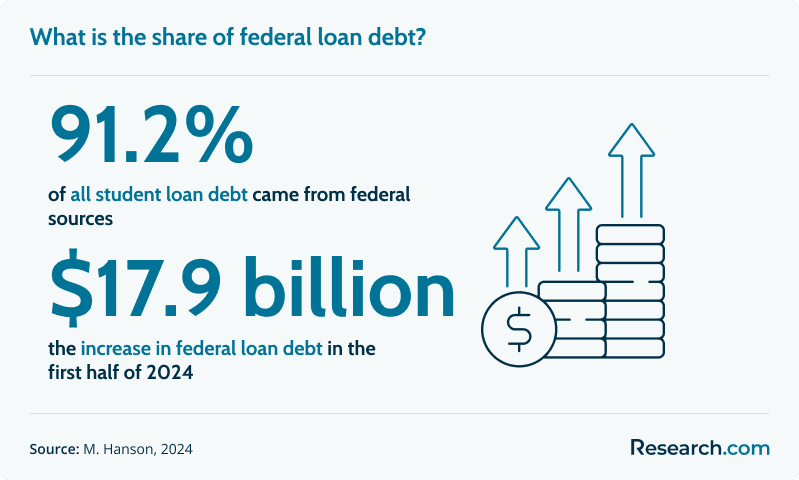
In Q1 of 2024, 91.2% of all student loans come from federal sources. Also, in the first half of the year, there has been an increase of $17.9 billion in federal loan debt.
How does student loan refinancing work?
Student loan refinancing involves several key steps and mechanics to replace existing loans with a new one, often aimed at securing better terms. Here’s how it typically works:
- Application. The borrower applies for refinancing through a private lender. The lender evaluates the borrower’s credit score, income, and debt levels to determine eligibility and potential terms.
- Loan Offer. Based on the application, the lender provides an offer detailing the new loan’s interest rate, term length, and repayment conditions.
- Disbursement. Upon acceptance, the refinancing lender pays off the borrower’s existing student loans with the new loan funds.
- New Payments. The borrower begins making payments on the new loan according to the revised terms. This loan consolidates the previous debts into a single obligation with the new interest rate and payment schedule.
For example, if a borrower consolidates several loans with varying interest rates into a single refinanced loan at a lower rate, they may see a reduction in monthly payments. Additionally, refinancing can provide an opportunity to choose a loan term that fits their budget, whether a shorter term for a quicker payoff or a longer one for smaller monthly payments.
Overall, refinancing can simplify loan management and potentially reduce interest costs, but it is essential for borrowers to carefully review the terms and consider any loss of federal loan benefits before proceeding.
Who is eligible for student loan refinancing?
Eligibility for student loan refinancing typically depends on several factors. Understanding these criteria can help borrowers determine if refinancing is a viable option for them. Here’s a breakdown of common eligibility requirements:
- Credit Score. Most lenders require a good to excellent credit score for student loan refinancing, typically ranging from 680 to 740 or higher. A higher credit score often qualifies borrowers for better interest rates and terms.
- Income. Lenders generally look for stable and sufficient income to ensure that the borrower can manage the new loan payments.
- Loan Type. Eligibility often varies based on whether the loans are federal or private. Some lenders may only refinance private student loans, while others offer refinancing for federal and private loans.
- Debt-to-Income Ratio. A favorable debt-to-income ratio demonstrates the borrower’s ability to handle additional debt. Lenders use this ratio to assess financial stability.
- Education and Degree: While not always a requirement, having a degree from an accredited institution can positively influence refinancing options.
So, while many borrowers may meet the basic criteria for refinancing, it is essential to review individual lender requirements and consider personal financial circumstances. Meeting these eligibility criteria can help borrowers secure better loan terms and potentially achieve significant savings.
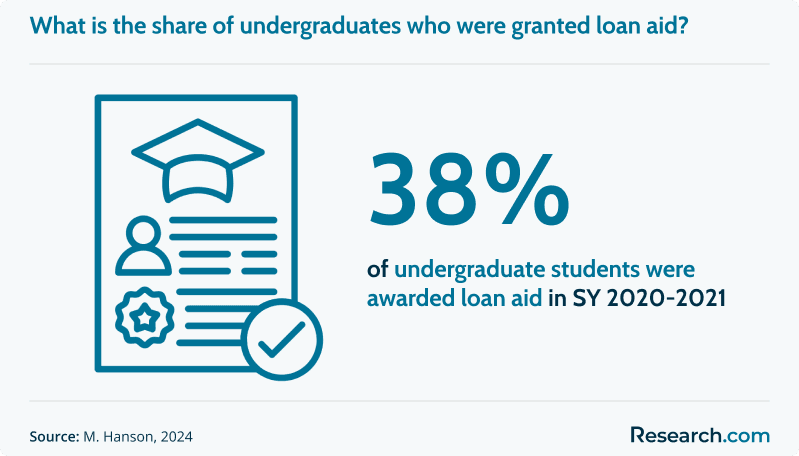
In SY 2020-21, 38% of undergraduate students were awarded loan aid.
What should I consider before student loan refinancing?
Before refinancing student loans, it is important to carefully evaluate several factors to ensure that the decision aligns with your financial goals. Here are key considerations:
- Current Loan Terms. Review the terms of your existing loans, including interest rates, repayment schedules, and any special benefits. Compare these with the terms offered by refinancing to ensure the new loan offers a clear advantage.
- Federal Loan Benefits. If you have federal student loans, consider the loss of federal benefits such as income-driven repayment plans, deferment options, and loan forgiveness programs. Weigh these potential losses against the benefits of refinancing.
- Credit Score and Financial Health. Assess your credit score and overall financial situation. A strong credit score can help you secure better refinancing terms, while a poor credit score might not offer significant savings.
- Interest Rates. Compare the new interest rate with your current rates to determine potential savings. Ensure that the new rate is lower enough to justify the refinancing process.
- Fees and Costs. Investigate any fees or costs associated with refinancing, such as application fees or prepayment penalties. Ensure that these costs do not negate the benefits of a lower interest rate.
- Loan Terms and Flexibility. Consider the terms of the new loan, including the repayment period and payment flexibility. Choose terms that align with your budget and long-term financial plans. Do note that the average time to pay off student loans is around 10 years.
Evaluating these factors can help you make a well-informed decision about refinancing and ensure that it meets your financial needs and goals.
For three consecutive quarters, the amount of federal student loans has dropped. From $1.63 trillion in Q3 of 2023, the figure dropped to $1.62 in Q2 of 2024. See the chart below for the current student loan debt trend.
What documents are needed for student loan refinancing?
When preparing to refinance student loans, having the right documentation is crucial to ensure a smooth application process. Lenders require various documents to assess your financial situation and eligibility. Here are the key documents typically needed for student loan refinancing:
- Proof of Identity. A government-issued ID, such as a driver’s license or passport, is required to verify your identity.
- Proof of Income. Recent pay stubs, tax returns, or bank statements demonstrate your income and financial stability. Self-employed individuals may need to provide additional documentation.
- Credit Report. Lenders will review your credit report to assess your credit history and score. It’s beneficial to check your credit report beforehand to ensure its accuracy.
- Student Loan Statements. Current statements from your existing student loans show the balance, interest rates, and payment history, which are necessary for the lender to evaluate and pay off your existing loans.
- Employment Verification. Some lenders may require a letter from your employer confirming your employment status and income.
In conclusion, gathering these documents ahead of time can help streamline the refinancing process and increase your chances of securing favorable loan terms. It is advisable to check with potential lenders for any additional documentation they might require and to ensure all information is accurate and up-to-date.
How does student loan refinancing affect my credit score?
Student loan refinancing can impact your credit score in several ways. Initially, when you apply for refinancing, a hard inquiry on your credit report may slightly lower your score. Once approved, the old loans are paid off and replaced with a new loan, which can reduce your credit utilization ratio. Maintaining timely payments on the new loan can positively affect your credit score over time. However, missing payments on the refinanced loan or applying for multiple refinancings in a short period can negatively impact your score. Managing the new loan responsibly is key to maintaining or improving your credit score.
What are the tax implications of student loan refinancing?
When refinancing student loans, borrowers should be mindful of potential tax implications that might affect their financial planning. Generally, the interest paid on student loans is tax-deductible up to $2,500 annually, depending on your modified adjusted gross income (MAGI). This tax benefit, however, applies only to qualified student loans, which typically include federal and private loans initially taken for educational purposes. Once these loans are refinanced, particularly with private lenders, they may no longer qualify as student loans in the eyes of the IRS, disqualifying you from this tax deduction.
For example, if you refinance your federal student loans into a private loan offering a better interest rate, you might lose access to this deduction, resulting in a higher taxable income. Additionally, any refinanced loan used for non-educational expenses would not be eligible for the deduction.
It's advisable to consult with a tax professional to understand the full ramifications of refinancing on your taxes. If you're a law student considering refinancing after taking out educational loans, you can review details about the best law school loans to determine if restructuring aligns with your long-term financial goals. This decision should take into account both immediate savings and any potential loss of tax benefits.
Careful planning and informed decision-making can help you maximize both your tax advantages and your refinancing benefits, ensuring that you manage your student loan repayments efficiently.
How does student loan refinancing compare to other funding options?
When evaluating student loan refinancing, it's valuable to understand how it stacks up against other funding opportunities. One such option is securing tailored student loans for specific fields, such as student loans for nursing school, which often provide versatile repayment options and additional support programs for those pursuing a career in healthcare.
Unlike refinancing, which focuses on achieving better terms for existing loans, these specialized loans are crafted to address the unique financial needs of students in specific disciplines. For instance, some loans for nursing students may include deferment during residency or loan forgiveness for working in underserved areas. These benefits might outweigh the savings gained from refinancing, particularly if borrowers anticipate leveraging such incentives.
Moreover, if you're considering borrowing additional funds for future education, comparing the in-built benefits of these targeted loans versus general refinancing can clarify which aligns best with your career goals and repayment capabilities. Always weigh the short-term savings from refinancing against the broader benefits that other funding options may offer.
Should health professionals consider refinancing their student loans?
Health professionals navigate unique financial dynamics during and after their education. Refinancing might lower interest rates and reduce monthly payments; however, it can also remove access to federal repayment benefits essential during residency or early career stages. Evaluating tailored financial programs, such as those available through health professional student loans, may provide more flexible repayment options aligned with industry-specific challenges. Assess how the immediate savings from refinancing align with long-term career goals and the need for financial stability during periods of variable income.
What common pitfalls should borrowers avoid during student loan refinancing?
When navigating student loan refinancing, borrowers must be vigilant about pitfalls that could undermine their financial goals. Failing to thoroughly review lender terms may expose borrowers to hidden fees or unfavorable conditions that are not immediately apparent. Additionally, neglecting to compare multiple refinancing offers can result in settling for suboptimal interest rates or loan terms. It is crucial to verify that documentation requirements and repayment structures align with long-term financial planning without compromising credit health. Moreover, entering refinancing without exploring supplemental educational opportunities—such as pursuing an associate degree in 6 months online accredited to boost income potential—might limit future financial flexibility.
What are the pros and cons of refinancing student loans?
Refinancing student loans comes with both advantages and disadvantages. Here are some key pros and cons to consider:
Pros of Student Loan Refinancing
- Lower Interest Rates. Refinancing can reduce your interest rate, which may lower monthly payments and reduce the total cost of the loan over time.
- Simplified Payments. Consolidating multiple loans into a single loan streamlines payments and reduces the complexity of managing various due dates and amounts.
- Flexible Terms. Refinancing offers the opportunity to adjust the loan term, allowing for either shorter repayment periods with higher payments or longer terms with lower payments.
- Potential Savings. Lower interest rates and reduced monthly payments can lead to significant savings over the life of the loan.
Cons of Student Loan Refinancing
- Loss of Federal Benefits. Refinancing federal student loans through a private lender results in the loss of federal loan benefits, such as income-driven repayment plans and loan forgiveness programs
- Application Process. The refinancing process involves applying for a new loan, which can be time-consuming and requires thorough documentation.
- Potential Fees. Some lenders may charge fees for refinancing, which could offset the benefits of a lower interest rate.
- Credit Score Impact. A hard inquiry during the refinancing application process may temporarily affect your credit score, and missing payments on the new loan can harm your credit.
When is the best time to refinance student loans?
The best time to refinance student loans depends on various factors related to your financial situation and market conditions. Here are key considerations for determining the best time to do so:
- Interest Rates. Refinance when interest rates are low to maximize savings. Monitoring market trends and rates can help you take advantage of favorable conditions.
- Credit Score Improvement. Consider refinancing when your credit score has improved significantly. A higher credit score can help you qualify for better rates and terms.
- Financial Stability. Refinance when your income is stable and your financial situation is secure. This stability can help ensure that you can manage new loan payments comfortably.
- Completion of School. Refinancing is often best after graduation when you clearly understand your income potential and are no longer in deferment.
- Current Loan Terms. Refinance if your existing loan terms are unfavorable, such as high interest rates or inflexible repayment options, and if you can secure better terms through refinancing.
- Federal Loan Benefits. Be cautious about refinancing federal loans if you rely on benefits like income-driven repayment plans or loan forgiveness. Assess whether the potential savings outweigh the loss of these benefits.
Timing your refinance to align with these factors can help you achieve the best possible terms and financial outcomes.
In SY 2020-21, the average loan amount for undergraduate students in 4-year public institutions was $7,492. This is more than $1,000 lower than those attending private institutions. See the chart below for details.
Are current economic conditions favorable for student loan refinancing?
Evaluating the economic environment is essential when considering student loan refinancing. Rising inflation, central bank policies, and shifting market sentiment can influence lender interest rates and loan terms. Borrowers should track these macroeconomic indicators and review market forecasts to determine optimal timing for refinancing. Moreover, understanding how these conditions may affect future financial stability can guide more strategic decisions. Additionally, for those looking to enhance career prospects while managing debt, exploring options such as a cheap masters degrees online may offer further financial flexibility.
Should I choose a fixed or variable interest rate for refinancing?
When evaluating your refinancing options, assessing the benefits and risks of fixed versus variable rates is crucial. A fixed rate offers predictable payments over the loan term, which can simplify long-term budgeting in a stable economic environment. In contrast, a variable rate may initially provide lower payments and could benefit you if market rates decline, but it carries the risk of increased payments if rates rise. Consider your financial stability, risk tolerance, and future market trends to determine which option aligns best with your objectives. Also, review factors such as processing timelines to better prepare for refinanced terms; check out our guide How long does student loan take to process? for detailed insights on processing durations.
Can refinancing help manage housing expenses?
A strategic refinancing decision may not only lower your monthly payments but also free up funds that could contribute to housing stability. Evaluate your overall budget to determine if the reduced financial burden supports timely rent payments or a larger security deposit. Additionally, compare refinancing options with alternatives such as private student loans for housing to ensure your financial strategy addresses both debt management and living expenses.
Can affordable education options improve my refinancing outcomes?
Researching affordable education options can directly influence your overall debt management and refinancing potential. Lower tuition costs mean less debt accumulation, which may result in stronger credit profiles and improved qualification for competitive refinancing terms. For instance, opting for cheap online colleges that accept FAFSA can reduce the amount borrowed, enabling a more favorable debt-to-income ratio when lenders assess refinancing applications. This strategic approach to education spending complements refinancing efforts by underlining fiscal responsibility and enhancing future financial flexibility.
How does my field of study influence my refinancing options?
Evaluating your academic background can provide key insights into your future earning potential, which in turn may affect the refinancing terms lenders offer. Choosing a field with strong market demand and financial returns can strengthen your credit profile and boost repayment capacity, factors that are pivotal in securing favorable interest rates. For further insights on aligning your major with lucrative career opportunities, review the most profitable majors.
How can I find the best lender for student loan refinancing?
Finding the best lender for student loan refinancing involves careful research and comparison. Here are steps to help you choose the right lender:
- Compare Interest Rates. Look for lenders offering competitive interest rates. Lower rates can lead to significant savings over the life of your loan. Use online tools and calculators to compare rates from different lenders.
- Evaluate Loan Terms. Assess the terms offered by each lender, including repayment periods, flexibility, and any options for early repayment or deferment. Choose a lender whose terms align with your financial goals and needs.
- Check Fees and Costs. Investigate any fees associated with refinancing, such as application fees, origination fees, or prepayment penalties. Select a lender with minimal fees to maximize your savings.
- Read Reviews and Ratings. Research lender reviews and ratings from other borrowers. Look for feedback on customer service, application processes, and overall satisfaction to gauge the lender’s reputation.
- Consider Customer Support. Evaluate the level of customer support provided by each lender. Reliable customer service can be crucial if you encounter issues or have questions during the refinancing process.
- Examine Eligibility Requirements. Ensure that you meet the eligibility criteria set by the lender, such as credit score, income level, and loan type. Choose a lender whose requirements match your financial situation.
By carefully comparing these factors, you can find a lender that offers favorable terms and aligns with your refinancing goals.
Can I do student loan refinancing more than once?
Yes, you can refinance student loans more than once. For example, if you initially refinanced to a lower interest rate but later improved your credit score or secured a higher income, you might be eligible for even better terms. Each refinancing can potentially lower your interest rate or adjust your loan terms to better fit your financial situation. However, it is important to weigh the benefits against any associated fees and the potential loss of federal loan benefits. Careful consideration of these factors will help determine if refinancing again is advantageous for your financial goals.
As a parting word, it is also important to discuss student loan repayment with your family. Open communication about how repayment will be managed can help avoid misunderstandings and ensure that everyone involved is on the same page. Establishing a clear plan for managing and repaying student loans can alleviate potential stress and financial strain in the future.
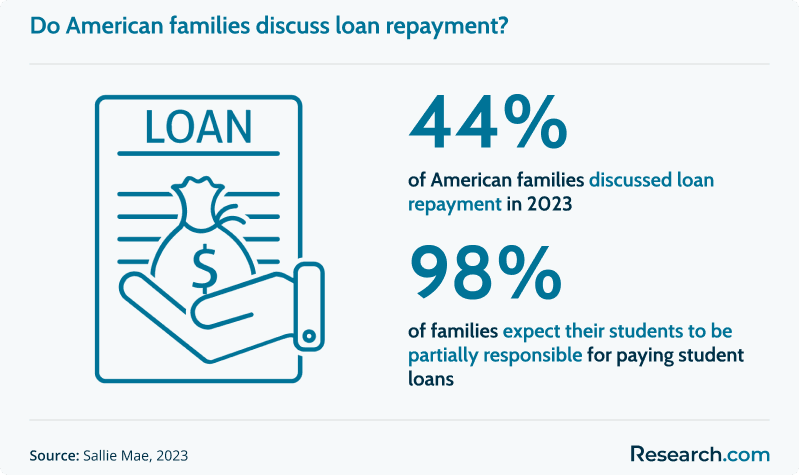
In 2023, 44% of American families did not discuss student loan repayment plans, while 98% of families expected their students to contribute to loan payments. This highlights a significant gap between expectations and planning. Addressing this issue proactively can prevent conflicts and provide a more structured approach to handling loan obligations.
How can career advancement impact my refinancing decision?
A borrower’s future earning potential plays a crucial role when deciding to refinance student loans. An upward career trajectory can justify more aggressive refinancing strategies by improving creditworthiness and negotiating power. Assessing professional growth opportunities, such as acquiring highest paying certifications, may indicate a stable income increase that supports long-term financial commitments. Aligning refinancing decisions with clear career objectives and enhanced qualifications can help ensure that loan terms are both attainable and strategically beneficial.
Can supplemental education boost my refinancing strategy?
Pursuing targeted supplemental education can improve your income potential and strengthen your credit profile, which may lead to more favorable refinancing terms. Focused programs, such as short certificate programs that pay well, offer practical skills and expedited pathways to higher earnings. This additional qualification can enhance your overall financial stability and provide a competitive edge when engaging with potential lenders.
Key Findings
- In 2024, the average student loan debt per borrower is $40,681. This figure highlights the significant financial burden faced by many graduates.
- As of Q1 2024, 91.2% of all student loan debt is federal, underscoring the dominance of federal loans in the student loan market.
- In 2023, 50% of college costs were covered by family income and savings, indicating a major reliance on personal funds for education.
- Federal student loan debt increased by $17.9 billion in the first half of 2024, reflecting a growing trend in federal borrowing.
- In 2023, 44% of American families did not discuss student loan repayment plans, while 98% of families expected their students to contribute to loan payments, highlighting a gap in planning and expectations.
References:
- Hanson, M. (2024). Student loan debt statistics [2023]: Average + total debt. Education Data Initiative. Retrieved July 30, 2024, from EDI.
- National Center for Education Statistics. (2023). Loans for undergraduate students and debt for bachelor’s degree recipients. Retrieved July 30, 2024, from NCES.
- National Center for Education Statistics. (2023). Fast facts: Student debt (900). Retrieved July 30, 2024, from NCES.
- Sallie Mae. (2024). How America pays for college 2023. Sallie Mae.
Other Things You Should Know About Refinancing Student Loans
Whether refinancing student loans is worthwhile depends on your financial situation. If you have a good credit score and can secure a significantly lower interest rate, refinancing could lead to substantial savings over the life of the loan.
However, it's essential to weigh the potential benefits against the risks, such as losing access to federal loan benefits. Carefully consider your options and use refinancing calculators to estimate potential savings.
When refinancing student loans in 2027, consider fees such as origination fees, application fees, and prepayment penalties. While many lenders offer low or no fees, it's crucial to read the fine print to avoid unexpected costs that could offset the benefits of a lower interest rate.
Refinancing student loans in 2027 can offer benefits such as lower interest rates, reduced monthly payments, and the ability to consolidate multiple loans into one. However, borrowers must weigh these benefits against potential downsides like losing federal loan protections or benefits.